Direct answer
Dismantling furniture can reduce the space it takes up and the time a crew needs to carry and load it, which may help when carriers estimate your job, although no carrier is obliged to lower its price and the effect varies. The best candidates are bed frames, simple wardrobes, shelving units, tables with removable legs and flat-pack furniture, as long as you have the right tools, enough time and can do it safely. Leave alone anything that is fragile, glass, electrical, gas-related, built in or already unstable, and do not take risks with heavy parts. Photograph the items first, bag the fixings, flatten boxes, and tell each carrier what you have done when you ask for quotes.
Contents
- Why dismantling can help
- Where the time goes in a clearance
- Realistic expectations
- Which items are worth dismantling
- Beds and bed frames
- Wardrobes and storage units
- Tables, desks and shelves
- What to leave alone
- Electrical items and appliances
- Sofas and upholstered furniture
- Tools and preparation
- Personal safety
- A step-by-step approach
- Order of work through the house
- Bagging fixings and keeping parts together
- Items for reuse or sale
- Boxes, bags and small items
- Cardboard, paper and recycling
- Telling carriers what you have done
- Photographing the result
- On the day
- Common mistakes
- Allowing enough time
- Frequently asked questions
Why dismantling can help
Space and time are what you pay for.
A house clearance is priced mainly on the amount of material to be removed, the effort of carrying it and the time on site. A fully assembled wardrobe takes up far more space in a vehicle than the same wardrobe in flat panels, and it can be awkward to get down stairs and through doors. Taking it apart changes both the volume and the handling.
This is why many carriers like to know whether large items have been dismantled. Flat panels stack neatly and can fill the vehicle efficiently, and smaller pieces are easier and safer for a crew to carry.
Whether a quote goes down depends on the carrier and the job. Some carriers will take dismantling into account, while others will not, particularly if their method does not change much. Treat it as something that may help, not a guaranteed saving. Our guide to pricing by volume explains how carriers think about space.
Where the time goes in a clearance
Carrying, not driving.
Most of a crew's time on a clearance is spent carrying items from rooms to the vehicle, particularly on stairs. Large assembled items slow this down because they have to be tilted, turned and sometimes lifted over banisters. Flat panels can be carried more quickly and safely.
Loading is the next biggest part. Awkward shapes leave gaps in a vehicle, and fewer items fit. Panels stack tightly, and that can mean one trip instead of two.
These are the real reasons dismantling helps. It is not magic, but it does make the job physically simpler.
Realistic expectations
Helpful, not guaranteed.
Carriers set their prices according to their own methods. Some price by the volume they expect to load, in which case dismantling may reduce it. Others price by time or a flat rate for a type of job, in which case dismantling may make less difference.
If you can, ask the carrier. A simple question such as "if I take the wardrobe apart, will that change the price?" gives a direct answer.
Do not put yourself at risk for a small saving. If the job is difficult, the time and safety cost to you may outweigh any benefit.
Which items are worth dismantling
Start with the simple ones.
The best candidates are items designed to be assembled, such as flat-pack wardrobes, chests of drawers, shelving, desks and bed frames. They usually come apart with basic tools, and the pieces are flat. Tables with removable legs, bunk beds and some headboards are also good examples.
Larger items that take up a lot of space for their weight, such as sofa beds and fitted-style units, can be harder. Our guides to bed frame removal, dining table and chair removal and sofa bed removal have item-specific advice.
If you are unsure whether an item will come apart, look for screws, bolts or cam fittings, and check that you can reverse them without damaging the item. If it is solid and glued, it may not be worth the effort.
Beds and bed frames
Often easy wins.
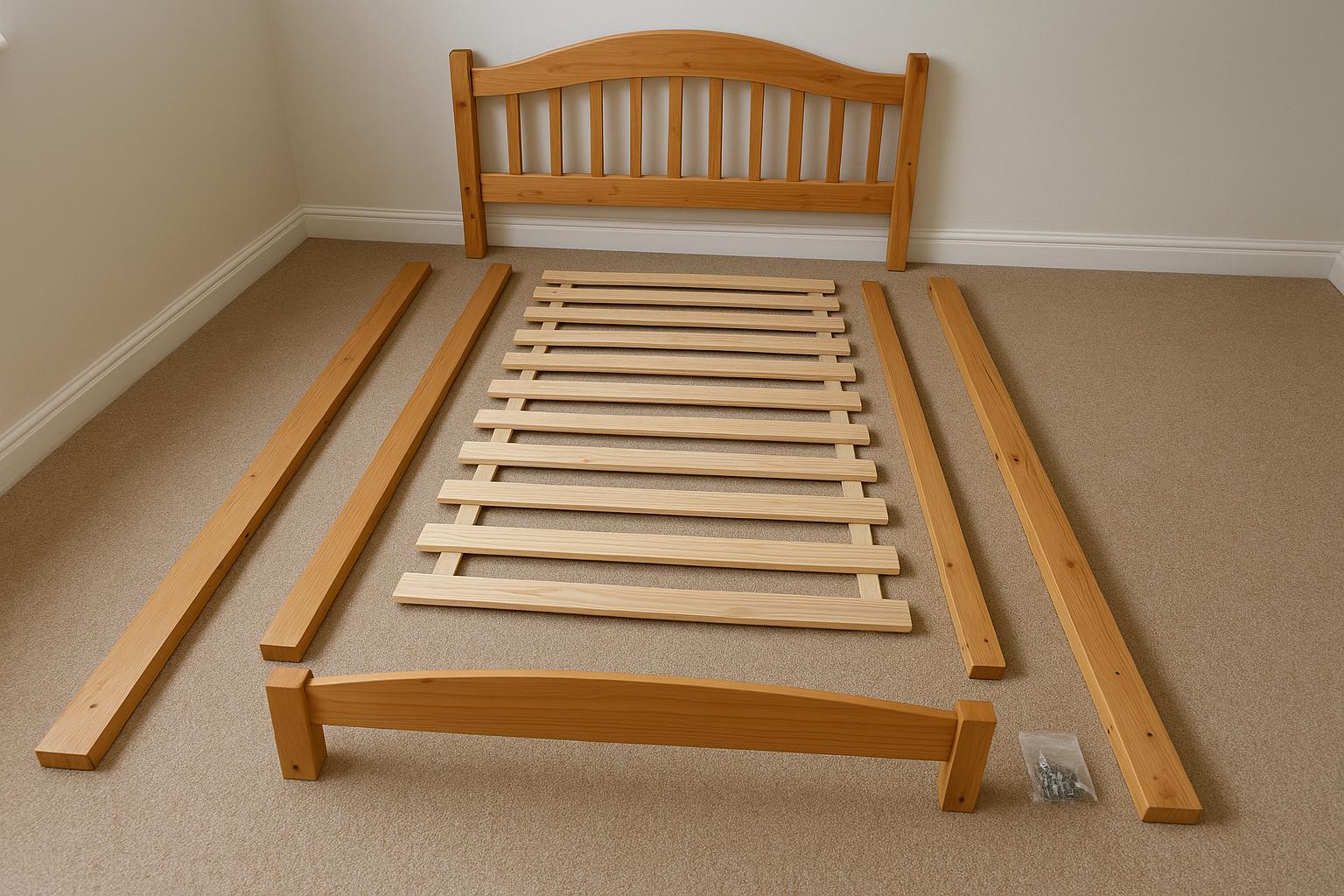
Many bed frames have bolts or screws holding the side rails to the headboard and footboard. Slats lift out or are screwed in. Once apart, the pieces are flat and easy to stack. Divan bases are different, as they are bulky and often cannot be dismantled, and mattresses need their own disposal route.
Our guide to disposing and recycling a mattress explains the options. Tell the carrier about mattresses and divans, because they take up space and may be handled differently.
Take care with metal frames and sharp bolts, and use gloves.
Wardrobes and storage units
Check the construction.
Flat-pack wardrobes usually have a back panel, side panels, a top, a base, shelves and doors. Begin by removing doors and shelves, then take off the top and unscrew the sides. The back panel is often thin and fixed with small nails, so lift it carefully.
If the wardrobe is old and solid, it may not come apart easily, or it may have been glued. In that case it is often better to leave it assembled and describe it to the carrier.
Remember that tall items can tip over, so work with a helper and keep clear of falling panels.
Tables, desks and shelves
Legs and leaves.
Many tables have legs that unscrew or fold, and some have extension leaves that can be removed. Desks may have separate drawers and panels. Bookcases and shelving units usually have adjustable shelves that can come out, which makes them lighter to carry.
Glass tops should be left to the crew, or removed very carefully with help. Wrap them in a blanket and keep them upright.
Keep any removed legs with the top, tied or taped together, so they do not get lost.
What to leave alone
Do not create a hazard.
Do not dismantle anything that is unsafe to take apart. This includes electrical and gas appliances, anything with mains wiring, glass or mirrored panels that could break, heavy items that could fall on you and anything already damaged or unstable. Fridges and freezers contain refrigerants and should not be opened.
Built-in furniture, fitted wardrobes and kitchen units can be heavy and attached to walls or services, and removal may need a professional. Our guide to fitted wardrobe and built-in furniture removal explains the issues.
If you are not confident, leave the item as it is and tell the carrier. A crew with the right tools and experience can often do the job quicker and more safely than you can.
Electrical items and appliances
Not for taking apart.
Electrical appliances, including cookers, washing machines, fridges and TVs, should not be dismantled at home. They can contain hazardous parts and need specialist recycling. Our guides to washing machine removal, TV removal and WEEE recycling explain how to handle them.
You can help by disconnecting them safely, emptying them and moving them to an accessible spot. If you are not confident about disconnecting, ask a qualified person.
Tell the carrier which appliances you have, so that they can plan for them.
Sofas and upholstered furniture
Usually left whole.
Sofas and armchairs are generally not suited to dismantling, because their frames are fixed and the materials are bulky. Some have removable legs or cushions that you can take off. Others have fire safety labels that should stay attached.
Our guide to sofa and upholstered furniture disposal explains why they are treated carefully at disposal. Do not cut into upholstery.
If a sofa is too big for a doorway, tell the carrier in advance, so they can plan how to get it out.
Tools and preparation
Keep it simple.
Most flat-pack furniture comes apart with a screwdriver, an allen key set and perhaps a small spanner or pliers. A cordless screwdriver speeds up the job, but be careful not to strip screw heads. Work gloves, sturdy shoes and a clear floor make a big difference to safety.
Before you start, clear a space, lay down a dust sheet or old blanket to protect floors, and have bags or boxes ready for screws and small parts. If you still have the instructions, they can help with reversing the steps.
Work with another person for heavy panels and check weights before lifting. If something feels too heavy, it probably is. Our guide to moving heavy furniture safely covers the basics.
Personal safety
Protect yourself first.
Wear gloves, closed shoes and, where needed, eye protection. Keep children and pets away from the work area, and make sure that you have good lighting and a clear floor.
Do not work on a ladder or at height. If you need to reach something high, ask for help. Take breaks, because tiredness leads to mistakes.
Our guide to PPE for heavy house clearances describes what professionals use and why.
A step-by-step approach
Take it one item at a time.
Work through each item in the same way, so that you do not lose parts or create a mess.
- Photograph the item and any labels or fixings before you start
- Empty it completely and remove drawers, shelves and doors
- Unscrew or unclip the parts in the reverse of the way they were assembled
- Put screws, dowels and cams in a labelled bag and tape it to a panel
- Stack the panels flat, with the finished faces together
- Tie or strap the stack so that it stays together
- Move it to a ground floor space near the exit, if safe
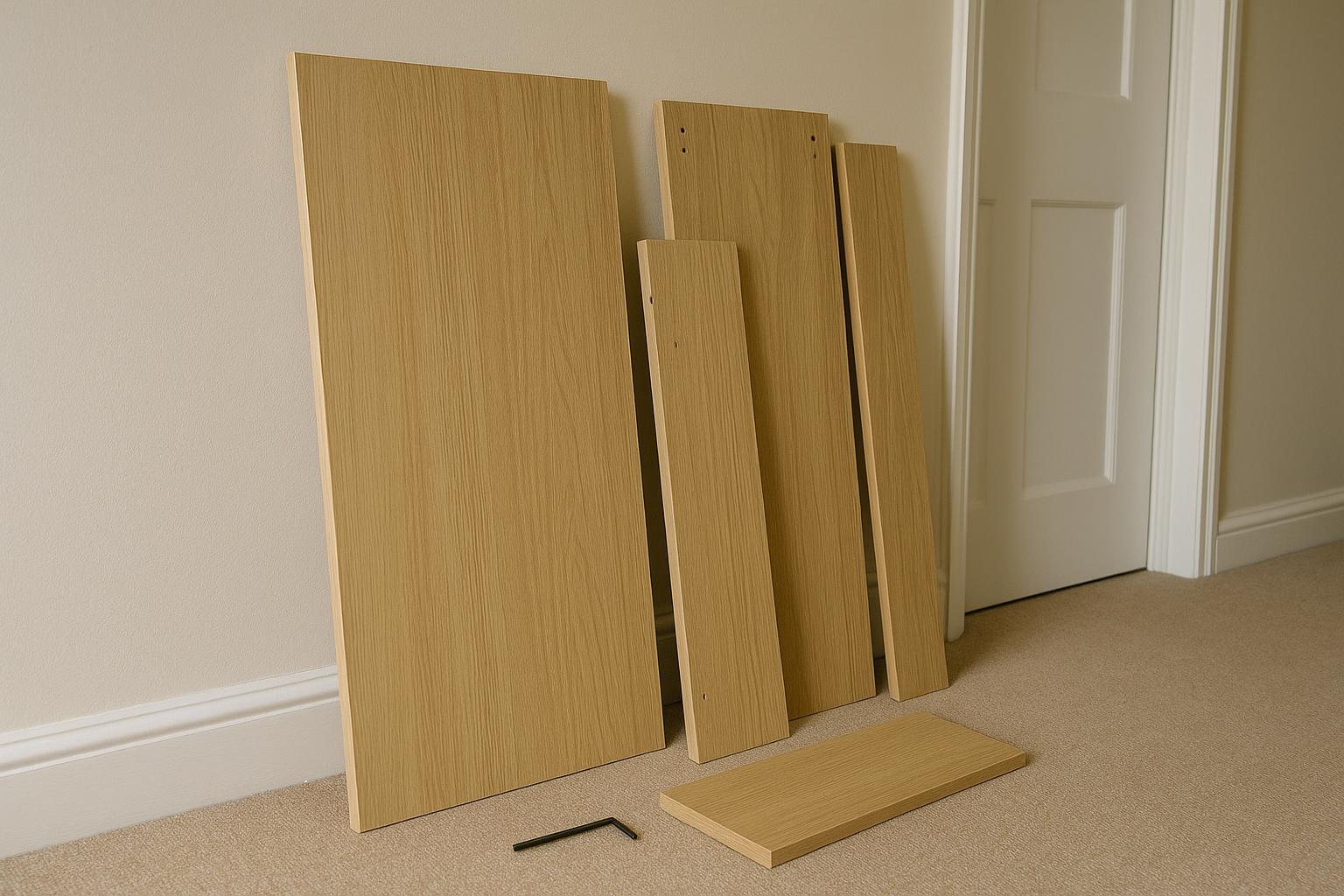
You do not need to be perfect. The goal is to reduce the bulk and make the pieces easier to handle.
Order of work through the house
Plan the route.
Start with the rooms furthest from the exit, and work towards the door, so that you do not block the route. Keep a clear path through the hallway, and do not stack panels in front of doors, stairs or fire exits.
Moving flat-packed items to the ground floor or near the exit, if safe to do so, can save the crew time. If you cannot move them safely, leave them in the room and tell the carrier.
Label stacks if you are keeping some items, for example with tape and a note, so that the crew knows what to leave.
Bagging fixings and keeping parts together
Small parts, big difference.
If the furniture is going to be reused, such as being donated or sold, keeping the fixings with it matters. A wardrobe without its screws is much harder to reassemble, and a charity or buyer may not accept it. Tape the bag to the largest panel.
If the furniture is going for disposal, fixings are less important, but loose screws on the floor can be a hazard. Collect them in a bag and keep them out of the way.
Our guide to donating working appliances and the charity furniture collection guide explain how reuse is handled, and note that many charities have rules on what they will take.
Items for reuse or sale
Keep them in good condition.
If you plan to sell or donate furniture, keep it clean and complete. Wipe surfaces, keep the fixings and the instructions if you have them, and photograph the item. A complete, clean item is much more likely to find a new home.
Our guides on upcycling old furniture and giving items away free have more ideas.
Be realistic about time. If an item will not be collected before the clearance date, tell the carrier and have a fallback.
Boxes, bags and small items
Do not forget the smaller stuff.
Flatten cardboard boxes, bundle them and keep them dry. Tie loose items such as curtain poles and shelving together. Put small items in sturdy bags or boxes that can be lifted, and avoid overfilling them.
Sort items into groups: to keep, to donate or sell, to recycle and to dispose of. A crew can work much more efficiently when it can see what is going where, and that can help the job go quickly. Our bulky item preparation guide explains how to arrange items for collection.
Do not mix hazardous items, such as paint and chemicals, with general waste. See our guide to hazardous waste for more.
Cardboard, paper and recycling
Keep it dry.
Cardboard and paper are easy to recycle if they are clean and dry. Flatten boxes, remove tape if you can and bundle them. Wet or soiled cardboard is harder to recycle.
Check what your council accepts in kerbside recycling, and use it for what you can. Tell the carrier if you have large amounts left over.
Avoid overfilling bags and boxes. They need to be lifted by a person, and a bag that splits can make a mess.
Telling carriers what you have done
Say it in your request.
When you request quotes, say which items you have dismantled and show them in your photos. Photograph each room before and after if you can, and describe how the flat-packed items are stored. If you plan to do more before the crew arrives, say so.
Be honest. If you say something is dismantled and it is not, the crew may need more time or a different vehicle, and that can lead to a price change. If you did not manage to dismantle something, tell them early.
Ask whether the quote takes account of what you have done and whether it is fixed once they have seen the photos. Our guide to reading a waste collection quote explains what else to ask.
Photographing the result
Show what is ready.
Take photos of the dismantled and flat-packed items as well as the rest of each room. Show the stacks, any bags of fixings and the route to the exit. This gives carriers a better idea of the job.
Send the same photos to each carrier, so that the quotes are comparable. Our guide to the house clearance checklist lists other preparation steps worth doing.
If anything changes after you send the photos, update the carrier as soon as possible.
On the day
Be ready and clear.
Make sure the flat-packed items are accessible, that the route is clear and that anything you want to keep is clearly separated and, if possible, out of the way. Be present, or have someone who can answer questions and make decisions.
Walk the crew through the property and point out anything that has changed since the quote. Agree how any extra items will be handled before work starts.
After the job, check the property and keep any paperwork, as explained in our guide to invoices and records.
Common mistakes
Avoid these.
The most common mistakes are dismantling something that cannot be safely taken apart, losing parts that were needed for reuse, leaving panels where they block exits, injuring yourself on heavy pieces and starting too late. Another is assuming that a lower price is certain.
- Do not dismantle electrical, gas, glass or unstable items
- Do not leave sharp screws or panels where people could trip
- Do not attempt heavy lifts alone
- Do not assume the carrier will reduce the price
- Do not start the day before the crew arrives if you are short of time
If you get stuck, stop and leave the item for the crew. A half-dismantled wardrobe can be harder to move than a whole one.
Allowing enough time
Do not leave it to the last minute.
Dismantling takes longer than people expect. A single wardrobe may take an hour or more, and a whole house of furniture can take days. Plan accordingly, and start with the easiest and most valuable items to reduce.
If the timeline is tight, concentrate on the largest and simplest pieces, and leave the rest to the crew. Partial preparation is still useful.
If you run out of time, tell the carrier what is and is not done. They would rather know than find out on the day.
Frequently asked questions
Common questions about dismantling and flat-packing before a clearance.
Will dismantling furniture lower my clearance quote?
It may, because it can reduce the space and handling time, but it depends on the carrier and the job. Ask whether the quote takes it into account.
Which furniture is easiest to dismantle?
Flat-pack wardrobes, drawers, shelving, desks and bed frames usually come apart with basic tools.
What should I not dismantle?
Electrical or gas appliances, fridges and freezers, glass or mirrored items, unstable furniture and built-in units that are fixed to walls or services.
Should I keep the screws?
Yes, in a labelled bag taped to a panel, especially if the item is being donated or sold. Collect them for safety even if it is going for disposal.
Do I need to tell the carrier?
Yes. Mention it in your request and show it in your photos, so that the quote reflects what is really there.
Is it safe to do it myself?
Only if you have suitable tools, enough room and help for heavy parts. If in doubt, leave it to the crew.
Will charities take dismantled furniture?
Some will, if it is complete and can be reassembled, but many have rules on what they accept. Check with the charity first.
Can I flatten boxes and bundle items?
Yes. It reduces volume and makes loading faster. Keep cardboard dry and tie bundles securely.