
Direct answer
A mattress is a mix of steel springs, foam, fibres and fabric, which makes it bulky and difficult to recycle. The most environmentally friendly options are to extend its life, return it through a retailer take-back scheme, or send it to a specialist mattress recycler that dismantles it into steel, foam, fibre and textile. Many local councils collect mattresses for a fee and some send them for recycling, but practices differ. Used mattresses are rarely accepted by charities because of hygiene rules. Avoid illegal dumping, and ask any carrier where the mattress will go, how it will be treated and for a waste transfer note.
Contents
- Why mattresses are an environmental problem
- Why the scale matters
- What is inside, and what each part can become
- How the type of mattress changes the answer
- The waste hierarchy applied to a mattress
- Disposal routes compared
- What to ask each provider
- How mattress recycling works
- How much can really be recovered
- What to avoid
- Storing a mattress while you wait
- Bed bugs, mould and damaged mattresses
- Mattresses in a house clearance
- Landlords, agents and end-of-tenancy mattresses
- Buying your next mattress with less waste
- Extending the life of the mattress you already have
- Frequently asked questions
Why mattresses are an environmental problem
Big, bulky and made of mixed materials.
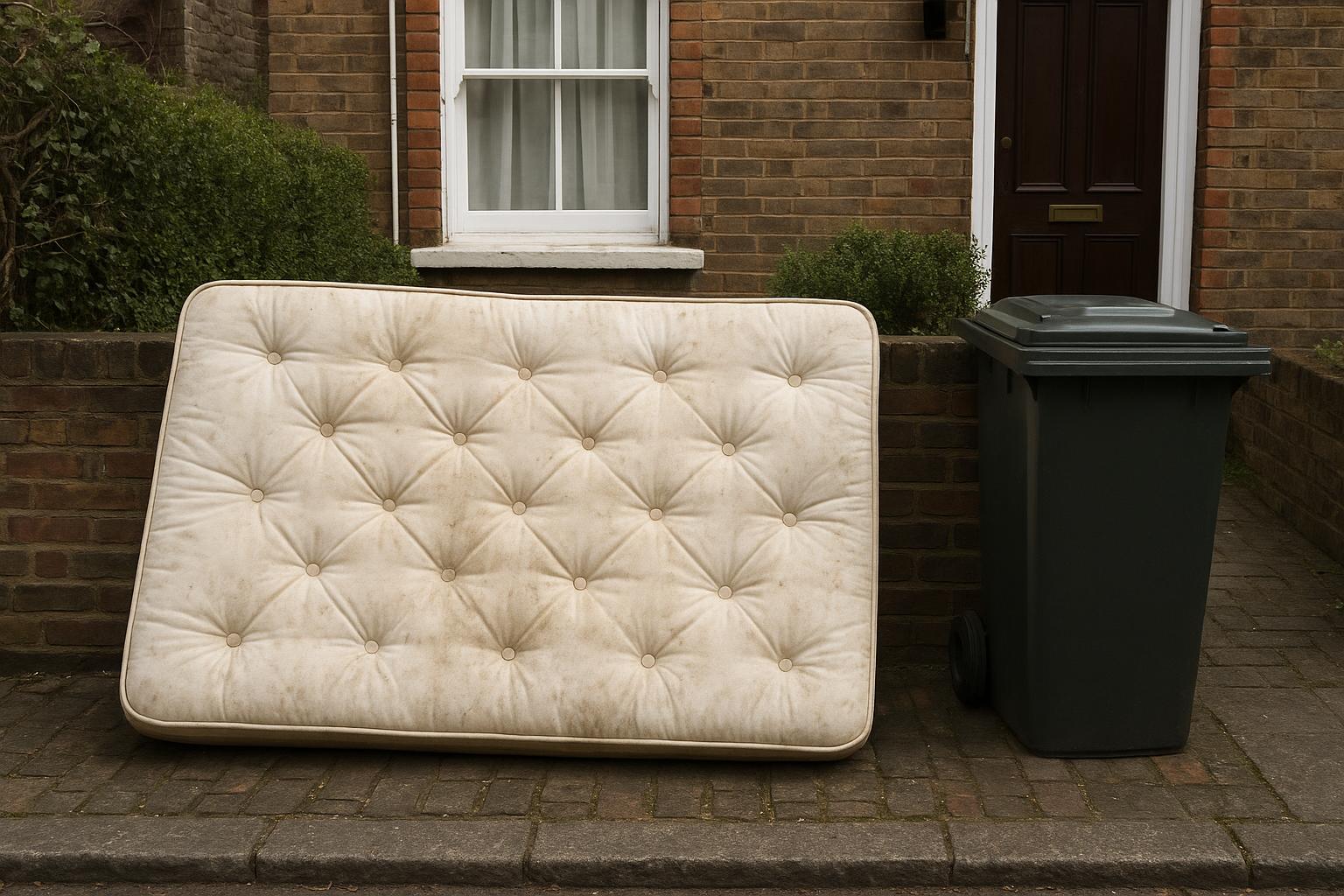
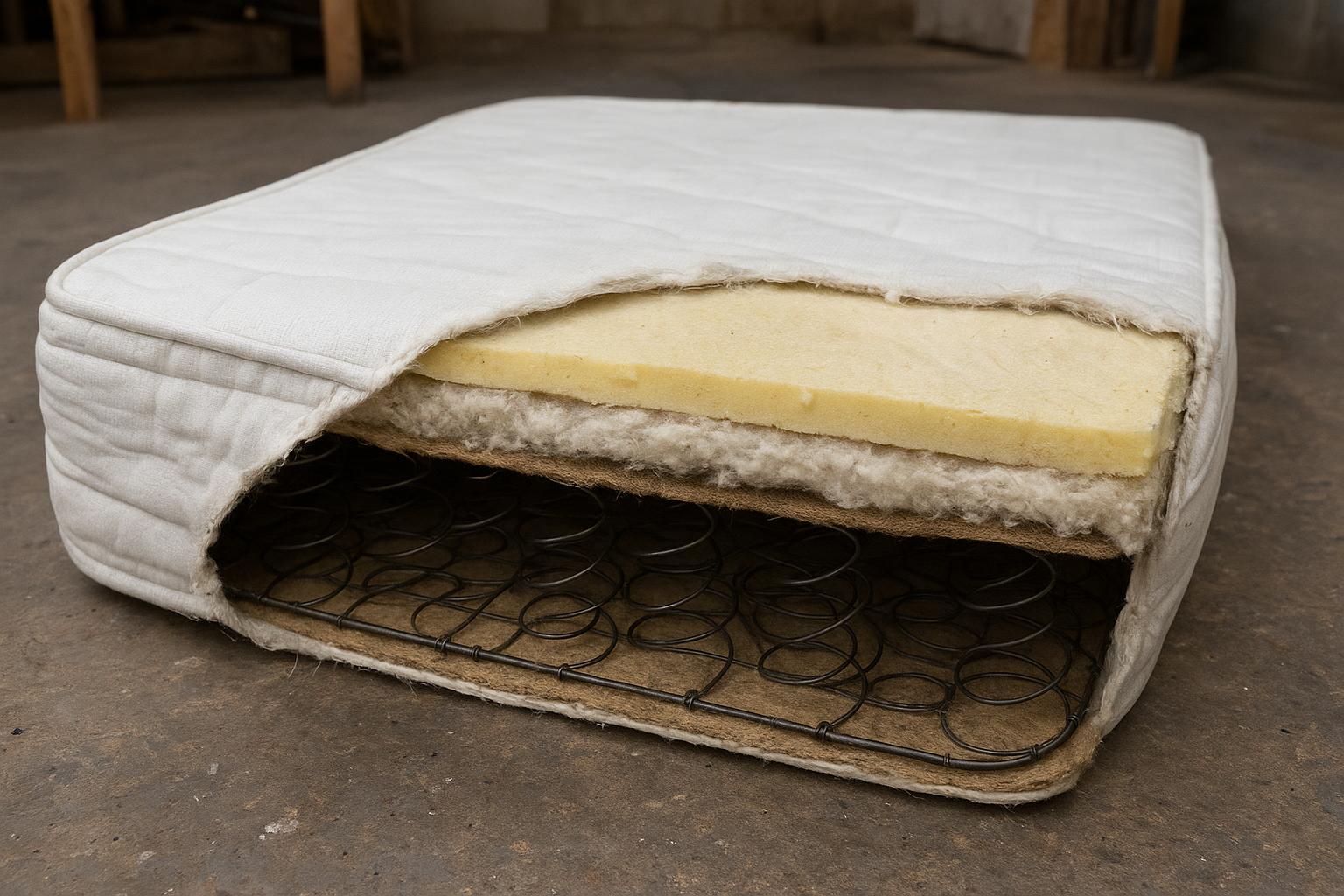
A typical mattress is not a single material. It usually contains a steel spring unit or a foam core, layers of polyurethane or latex foam, natural or synthetic fibres, and a fabric cover held together with stitching and adhesive. Each of these materials could in principle be recycled, but they are bonded together, which makes separation slow and labour-intensive.
Mattresses are also very bulky. They take up a lot of room in a refuse vehicle, spring back when compressed and can cause problems at landfill sites, where they tend to rise to the surface. For this reason many landfill operators charge extra to accept them or ask for them to be separated. The quantity discarded across the UK each year is large, which is why mattress recycling has become a growing industry.
The good news is that the main components have value. Steel is a recyclable metal, foam can be reprocessed into carpet underlay or used as fuel, and fibres can be used in insulation or padding. The challenge is getting the old mattress to a facility that can do it.
Why the scale matters
Small items, large totals.
One mattress is a household problem. Millions of them are a national one. Because every household replaces beds every few years, the total volume of discarded mattresses is large, and each one occupies far more space than its weight suggests. That is why councils, recyclers and retailers have all started to look for better routes than landfill.
The scale also explains why prices vary. A council with its own recycling contract may collect a mattress cheaply. A private carrier who has to pay a gate fee at a transfer station will charge for that cost. A specialist recycler may charge more per mattress, but the material is recovered rather than lost.
None of this means that you have to feel guilty about replacing a worn-out bed. It means that the way you dispose of the old one is the part you can control.
What is inside, and what each part can become
A material-by-material view.
Understanding the parts helps explain the recycling process.
- Steel springs: removed with magnets or by hand and sent to scrap metal recyclers, where the steel is melted and reused.
- Polyurethane foam: shredded and bonded into carpet underlay or similar products, or used as a fuel in energy recovery.
- Latex and memory foam: sometimes recycled into new foam products, but options are narrower than for standard polyurethane.
- Natural fibres such as wool, cotton and coir: can be reused as padding or insulation if they are clean and dry.
- Fabric covers: may be recycled into low-grade textile products, or used for energy recovery if contaminated.
- Wooden frames in divan bases: chipped for board or used as biomass fuel if they cannot be reused.
How much of each is actually recovered depends on the recycler, the condition of the mattress and local demand for the recycled materials. A clean, dry mattress is much easier to process than one that has been stored outside in the rain.
How the type of mattress changes the answer
Not all beds recycle equally.
Open-coil and pocket-sprung mattresses are the easiest to recycle because the steel is clearly separated from the filling. Memory foam and latex mattresses contain little or no metal, so the focus shifts to the foam, which has fewer outlets. Hybrid mattresses combine springs, foam and fibre in several layers, and the more layers there are the more time it takes to separate them.
Divan bases often contain a timber frame covered in fabric and a sprung top. The wood and fabric go through different routes, and the springs may be recycled as scrap metal. Sofa beds combine a mattress with a metal and timber mechanism, which is why our sofa bed disposal guide treats them separately.
Children's mattresses, cot mattresses and camping mattresses follow the same logic. Cot mattresses are usually foam or fibre with a waterproof cover, and inflatable mattresses are made of plastic, which may not be accepted by the same recyclers. When in doubt, tell the collector what type you have.
The waste hierarchy applied to a mattress
Reuse is rarely an option, so recycling matters.
The waste hierarchy asks you to prevent waste first, then reuse, then recycle, then recover energy, and only then dispose. For most items, reuse is the best option. For mattresses, however, reuse is rarely practical. Used mattresses can hold dust mites, sweat and, in the worst case, bed bugs, and most charities and reuse organisations will not accept them for hygiene and safety reasons.
That makes prevention and recycling the key options. Prevention means making a mattress last longer through rotating it, using a protector and replacing it only when it has genuinely worn out. Recycling is the best end-of-life route because it recovers steel, foam and fibre and keeps them out of landfill.
Our guide to how to dispose of a mattress for free covers the cost side of the decision, while this article looks at the environmental impact of each choice.
Disposal routes compared
Pick the one that fits your situation.
There are several ways to dispose of an old mattress. They differ in cost, convenience and environmental benefit.
- Retailer take-back: many bed retailers collect your old mattress when they deliver a new one, sometimes for a small fee. Ask what they do with it, and whether it goes to a recycler.
- Council bulky waste collection: most London boroughs collect mattresses for a fee. Some send them for recycling, but not all do, so ask your council directly. See our guide to council bulky waste versus private clearance.
- Household waste recycling centre: some sites have a dedicated mattress container. Others do not accept them at all. Check your local site before travelling.
- Specialist mattress recyclers: a growing number of firms collect and dismantle mattresses. Ask whether they publish recycling rates and ask for paperwork.
- Registered waste carrier or clearance firm: a legitimate option, as long as the firm is licensed and tells you where the mattress goes.
What to ask each provider
The right questions reveal the real route.
Whichever route you choose, a few questions will tell you whether the mattress will really be recycled.
- Where will the mattress go after collection, and is it dismantled or sent for energy recovery?
- Do you charge per mattress, and is there a fee for stairs or poor access?
- Will you give me a waste transfer note or a receipt that names the carrier?
- How soon will you collect it, and does it need to be wrapped?
- Do you take old divan bases and headboards at the same time?
Retailers can be vague on the second question because they use contractors, so ask for the name of the company that actually takes the mattress. A council can usually tell you which facility takes its bulky waste, and some publish an annual report of where each material goes.
How mattress recycling works
From truck to raw materials.
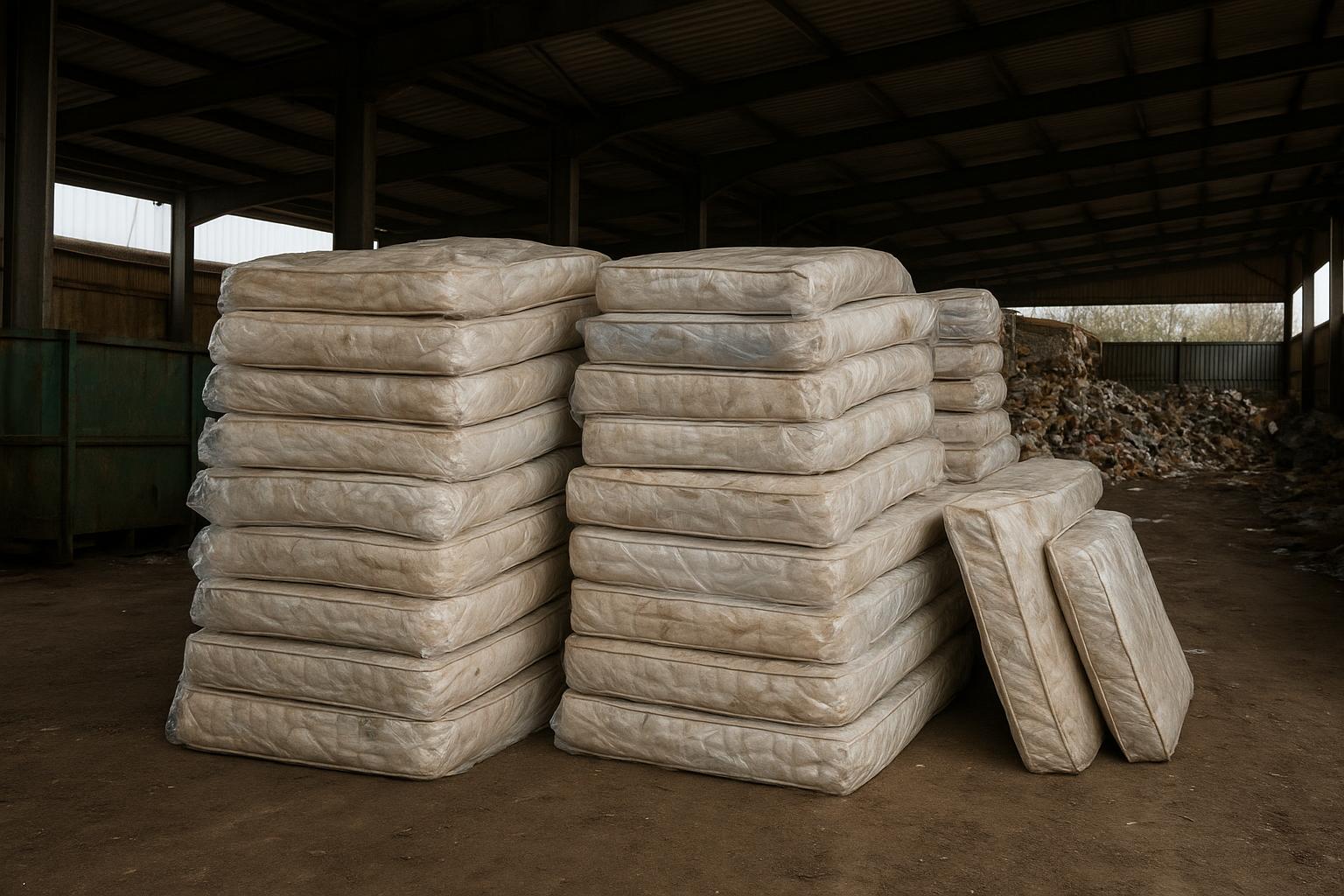
At a mattress recycling facility, mattresses are first checked and sorted. Wet, mouldy or heavily soiled ones may be rejected or treated differently. The rest go to a dismantling line, where workers or machines remove the cover, cut the mattress open and separate the materials.
Steel is pulled out and baled. Foam is shredded and cleaned. Fibres are separated and, if they are in good condition, baled for reuse. The materials are then sold on to manufacturers or processed further. Some facilities use semi-automated machinery, while others rely on manual labour, particularly for complex or unusual mattresses.
The process takes more time than crushing a mattress and sending it to landfill, which is why recycling can cost more. In return, the environmental benefit is significant because it reduces the use of virgin materials and avoids landfill.
How much can really be recovered
Expect a range, not a single figure.
Recyclers sometimes quote high recovery rates, and some of those are genuine. The steel is easy to recover, and where a plant sells the foam and fibre the overall figure can be high. Where the foam is burned for energy because there is no buyer, the figure for true recycling falls.
This is the same issue discussed in our guide to zero waste to landfill and recycling rates. The honest answer to the question how much is recycled is that it depends on the mattress, the plant and the market for the materials that year.
A good recycler will tell you what proportion is recycled and what proportion goes for energy recovery, and will not describe the second as the first. If you are planning a bulk disposal, for example for a landlord or a hotel, ask for a certificate or a summary report.
What to avoid
Common mistakes with mattresses.
The most important thing to avoid is fly-tipping. Leaving a mattress on the street or in a back lane is illegal and harms the neighbourhood. The householder can be held responsible if a collector they hired dumps the mattress, as explained in our guide to fly-tipping penalties and liabilities.
Also avoid leaving a mattress outside uncovered while waiting for collection. Rain makes it heavier, harder to handle and less suitable for recycling. Do not try to burn a mattress, which releases toxic smoke, and do not cut it open at home, since that creates loose foam, dust and mess.
Finally, beware of very cheap offers from unlicensed collectors who arrive on social media with no paperwork. Our guide to the risks of hiring an unlicensed man and van shows why this can end badly.
Storing a mattress while you wait
Keep it clean, dry and out of the way.
If your collection is a few days away, keep the mattress indoors or in a dry covered space such as a garage. Standing it on its side saves space, but keep it off a damp floor and away from heaters. A fitted plastic mattress bag costs very little and keeps dust, rain and pests away.
Do not leave it on the pavement overnight unless the council has told you to put it out on a specific day. An unattended mattress outside a property is easy to mistake for fly-tipping, and neighbours or enforcement officers may report it.
Bed bugs, mould and damaged mattresses
Special cases need special care.
If your mattress has bed bugs, do not drag it through the building. Seal it in a heavy-duty plastic cover, label it clearly and tell the collector. Some councils have specific rules for infested items, and a responsible carrier will take extra precautions. A mouldy or wet mattress should also be sealed and the carrier warned, because it may need different handling.
Mattresses from a property that has been affected by a flood, a leak or a long period of neglect are usually unsuitable for recycling and are more likely to go to energy recovery. Our guide to energy from waste explains what that means.
In hoarded or heavily soiled properties the mattress is just one of many items that need special treatment. See our guide to biohazard clearance and extreme squalor for what to expect.
Mattresses in a house clearance
Plan for them early.
A whole-house clearance usually contains several mattresses, from double beds to children's single beds, plus sofa beds and camp beds. Tell the carrier how many there are and their approximate condition, so the quote and the disposal route can be planned correctly.
If you are clearing a property for a relative or as an executor, you may not know the age of each mattress. Take photographs, note the size and say whether any are stained or damp. A good crew will keep them dry, wrap them for the vehicle and keep them separate from other waste so they can go to a recycler if one is available.
Our guide to sofa bed removal and disposal covers a related item that combines a mattress and a metal frame, and the guide to preparing bulky items for collection explains how to get items ready for the crew.
Landlords, agents and end-of-tenancy mattresses
Fast turnarounds, high stakes.
Landlords and managing agents often face a sudden need to clear a mattress at the end of a tenancy. A mattress left behind in a rented flat is usually the landlord's responsibility to dispose of if the tenant leaves it, and the landlord must still use a licensed carrier. Using a cheap anonymous collector is risky because the landlord can be traced if the mattress is dumped.
Keep a record of what was in the property, with dated photographs, the collector's details and the waste transfer note. If you are using a clearance company for the whole property, ask for mattresses to be itemised, so that you have evidence if a deposit dispute arises.
Our guide to the householder duty of care explains why you cannot pass responsibility to someone else just by paying them. If you are in doubt, check the carrier on our licence check page.
Buying your next mattress with less waste
Prevention is the best option.
The most effective way to cut mattress waste is to make the next one last longer. Choose a mattress with a good warranty, use a protector, rotate or turn it as the manufacturer advises and replace it only when it is worn. Some companies make mattresses designed to be taken apart, with fewer glued layers and more recyclable materials.
When you buy, ask what happens to the old mattress. A retailer who offers to collect it should be able to say whether it goes to a recycler. You can also ask about the materials used, whether the filling is recycled, and whether the company takes the mattress back at end of life.
Finally, think about what you actually need. A mattress topper or a replacement base can sometimes solve a comfort problem without throwing away the whole bed.
Extending the life of the mattress you already have
The cheapest and greenest mattress is the one you keep.
Before replacing a bed, check whether the problem can be solved another way. A sagging feel can sometimes be fixed by turning the mattress, replacing a worn base or adding a topper. Stains can often be treated with a suitable cleaner, and a protector prevents new ones. If the issue is back pain, a different firmness may help more than a new bed.
If you are moving home, check whether the mattress is worth the cost of carrying and storing. If it is relatively new and clean, it is usually better to take it with you or to sell it, since there is a market for nearly new mattresses from reputable sellers who clean and certify them.
When the mattress really is finished, wrap it in a mattress bag to keep it dry and clean until collection. Mark it with the collection date if the council has given you one, and take a photograph as a record. These small habits help the recycler and protect you if the collection goes wrong.
Frequently asked questions
Common questions about mattress disposal and recycling in the UK.
Can mattresses be recycled in the UK?
Yes. Specialist recyclers dismantle them into steel, foam, fibre and textile. Availability depends on where you live and which collector or council you use.
Can I donate a used mattress to charity?
Most charities do not accept used mattresses because of hygiene and safety rules. Ask the charity directly, and consider recycling instead.
Will the council take my old mattress?
Most London councils collect mattresses through bulky waste services for a fee. Ask whether they send them for recycling.
Can I take a mattress to the tip?
Some household waste recycling centres accept mattresses, others do not. Check your local site before travelling.
What should I do with a mattress that has bed bugs?
Seal it in a heavy-duty plastic cover, label it clearly and tell the collector or council. Do not drag it through shared areas.
Why is mattress recycling expensive?
Mattresses are bulky and made of bonded mixed materials, so dismantling takes time and labour. That cost is reflected in collection and recycling fees.
Is it illegal to leave a mattress on the street?
Yes. It is fly-tipping, and you can be held responsible if you pass the mattress to someone who dumps it. Always use a licensed carrier or council service.
