
Direct answer
WEEE stands for waste electrical and electronic equipment. In the UK it is regulated under the WEEE Regulations, and anything with a plug, a battery or a circuit board that has reached the end of its life is generally covered, including TVs, fridges, washing machines, laptops, phones, kettles and power tools. It should not be put in household bins or sent to landfill. You can usually return it to a retailer when you buy a replacement, take it to a council recycling centre, use a council collection, or have a registered waste carrier remove it as part of a clearance. Remove your personal data and loose batteries first, and ask for a waste transfer note so there is a record of where it went.
Contents
- What WEEE is and why it is regulated
- Which household items are covered
- A room-by-room electricals checklist
- Your right to return electricals to a retailer
- Reuse and repair before you recycle
- Council collections and recycling centres
- Wiping your personal data first
- Batteries and fire risk
- Older and unusual electricals
- Electricals in a house clearance
- Business clearances and larger quantities
- What it costs and what affects it
- Ways to keep the cost down
- Illegal dumping of electricals
- Questions to ask any carrier about electricals
- Frequently asked questions
What WEEE is and why it is regulated
Electrical waste contains both valuable and harmful materials.
WEEE is the standard term for waste electrical and electronic equipment. The UK rules come from the WEEE Regulations, which place responsibilities on manufacturers, retailers, councils and anyone who disposes of electricals. The aim is to keep hazardous components out of landfill and to recover metals and other materials that can be reused.
Many electricals contain materials that need careful handling. Fridges and freezers can contain refrigerant gases and insulating foam. Older televisions and monitors may contain leaded glass. Circuit boards contain metals that are worth recovering. Batteries can be a fire risk if they are crushed or damaged. This is why electricals are collected separately and processed at specialist facilities.
For a householder the practical message is simple. If it has a plug, a battery or a cable, it does not belong in the general rubbish or in a bulky waste skip. It should be reused, returned or sent for recycling through an authorised route.
Which household items are covered
Far more than people expect.
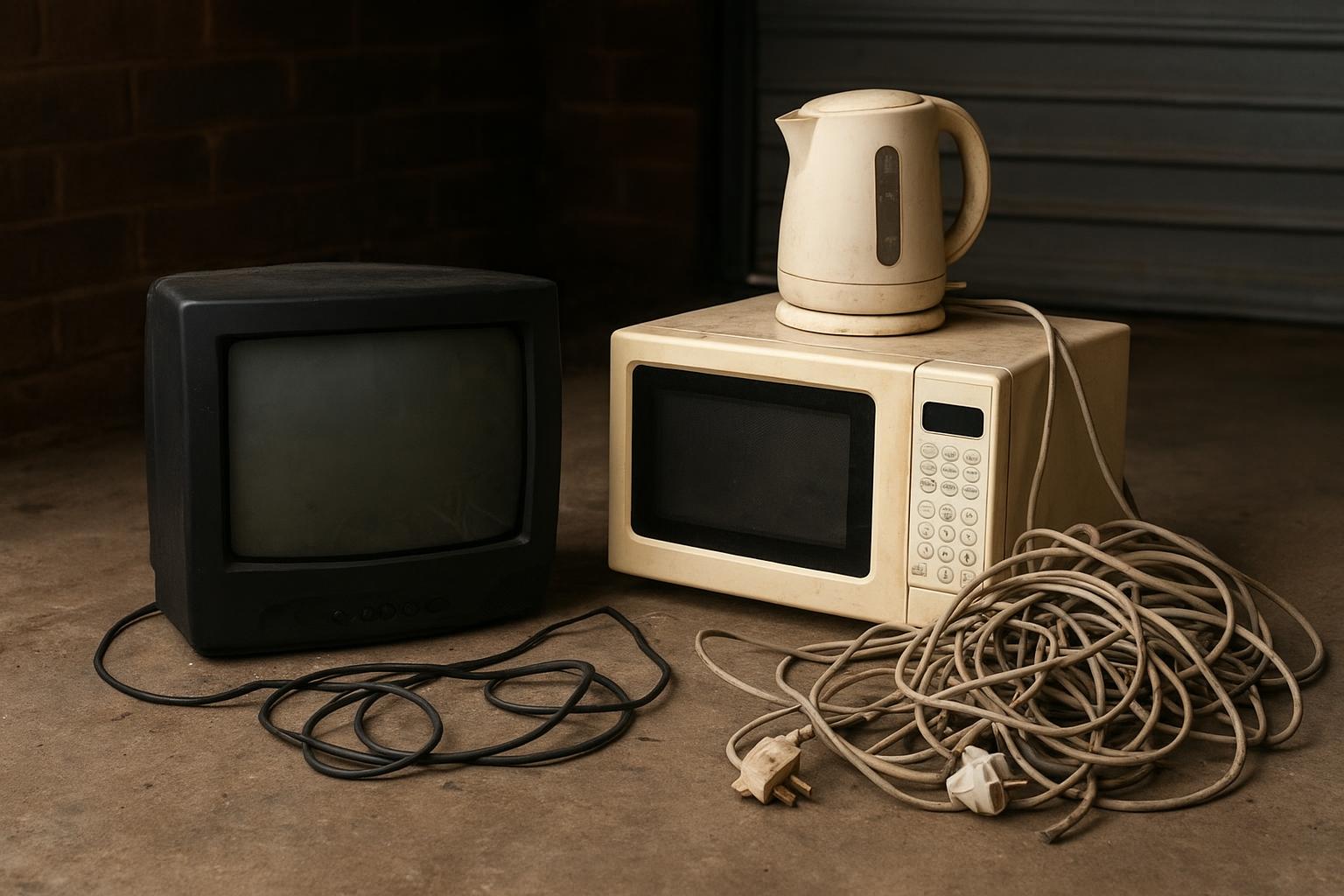
Household items that count as WEEE include large appliances such as fridges, freezers, washing machines, dishwashers, cookers and tumble dryers; screens such as TVs and monitors; IT equipment such as laptops, tablets, printers and phones; and small appliances such as kettles, toasters, hairdryers, vacuum cleaners and electric toothbrushes. Lamps and light fittings with electrical components, power tools, toys with batteries or circuits, and electric garden tools are also usually included.
A helpful rule is the crossed-out wheelie bin symbol. Many electrical products carry it, and it means the item should be collected separately at the end of its life. If an item has no symbol but has a plug or battery, treat it the same way.
Some items sit on the edge of the category, for example light bulbs and fluorescent tubes. These are covered in our guide to hazardous household waste and why clearance firms refuse it, because some bulbs and tubes need separate collection.
A room-by-room electricals checklist
Walk through the house so nothing is missed.
Electricals turn up in every room, and a clearance is the moment when forgotten ones appear. Use this list to count what you have before asking for a quote.
- Kitchen: fridge-freezer, cooker, hob, microwave, dishwasher, washing machine, kettle, toaster, blender, coffee machine, extractor fan.
- Living room: television, set-top boxes, speakers, games consoles, lamps, heaters, fans, DVD and Blu-ray players, old stereo equipment.
- Bedrooms and study: laptops, printers, routers, monitors, hairdryers, electric blankets, clocks, phone chargers, alarm clocks.
- Bathroom: electric shavers, toothbrushes, heated towel rails, fans, hair stylers.
- Garage, shed and loft: power tools, lawnmowers, strimmers, extension reels, Christmas lights, old fridges used for storage, dehumidifiers.
Counting items matters because some carriers price electricals by number, and the large ones, such as a chest freezer, take much more space and handling than a pile of small devices. Take a photo of each group so you can show the carrier exactly what is there.
Your right to return electricals to a retailer
Take-back is built into the system.
Under the UK scheme, retailers who sell electrical equipment must offer a way for customers to return old items. When you buy a new product, the retailer should take back an old item of the same type, free of charge, on a like-for-like basis. This applies to deliveries too, so when a new fridge is delivered the delivery team should be able to take the old fridge.
Larger retailers with a significant electrical sales floor have an additional duty to take back very small electricals, such as a hairdryer or a charger, without requiring a purchase. The exact thresholds and wording are set out in the regulations and on GOV.UK, so check the current position before relying on it.
To make use of this right, ask before you buy. Check that the old appliance will be removed on the delivery day, whether it needs to be disconnected and emptied beforehand, and whether there is a charge for access difficulties. Keep the order confirmation in case a dispute arises later.
Reuse and repair before you recycle
The waste hierarchy puts reuse first.
Recycling is better than landfill, but reuse is better still. A working washing machine, a laptop that only needs a new battery or a television that still has a good picture may have years of life left. Reuse extends the working life of the product and avoids the energy and materials needed to make a replacement.
Options include selling the item online, offering it for free to a neighbour or community group, passing it to a charity reuse shop that tests electricals, or asking a repair café whether the fault can be fixed. Charities usually require electricals to be safe and complete, so a working item with a damaged plug or missing cable may not be accepted.
Be honest about condition. Describing a faulty item as working can lead to complaints and returns, and giving away an unsafe appliance can create a real risk for the next owner. If you are unsure, a sticker saying "for parts or recycling" is more helpful than a hopeful guess.
Council collections and recycling centres
The most common route for householders.
London councils provide several ways to dispose of electricals. Most boroughs run bulky waste collections that accept large appliances for a fee, and some accept small electricals at the kerbside or from flats. Household waste recycling centres accept electricals in separate containers, and some have a reuse area for working items. Rules, booking systems and van and trailer restrictions differ from site to site.
Our guides to the borough recycling sites, such as Brent, Harrow and Hounslow, show how a local site works, and the guide on council bulky waste versus private clearance explains the trade-offs.
Check your council's website before travelling. Some sites require proof of address, some limit the number of items per visit, and some have separate arrangements for fridges and freezers.
Wiping your personal data first
Do this before the item leaves the house.
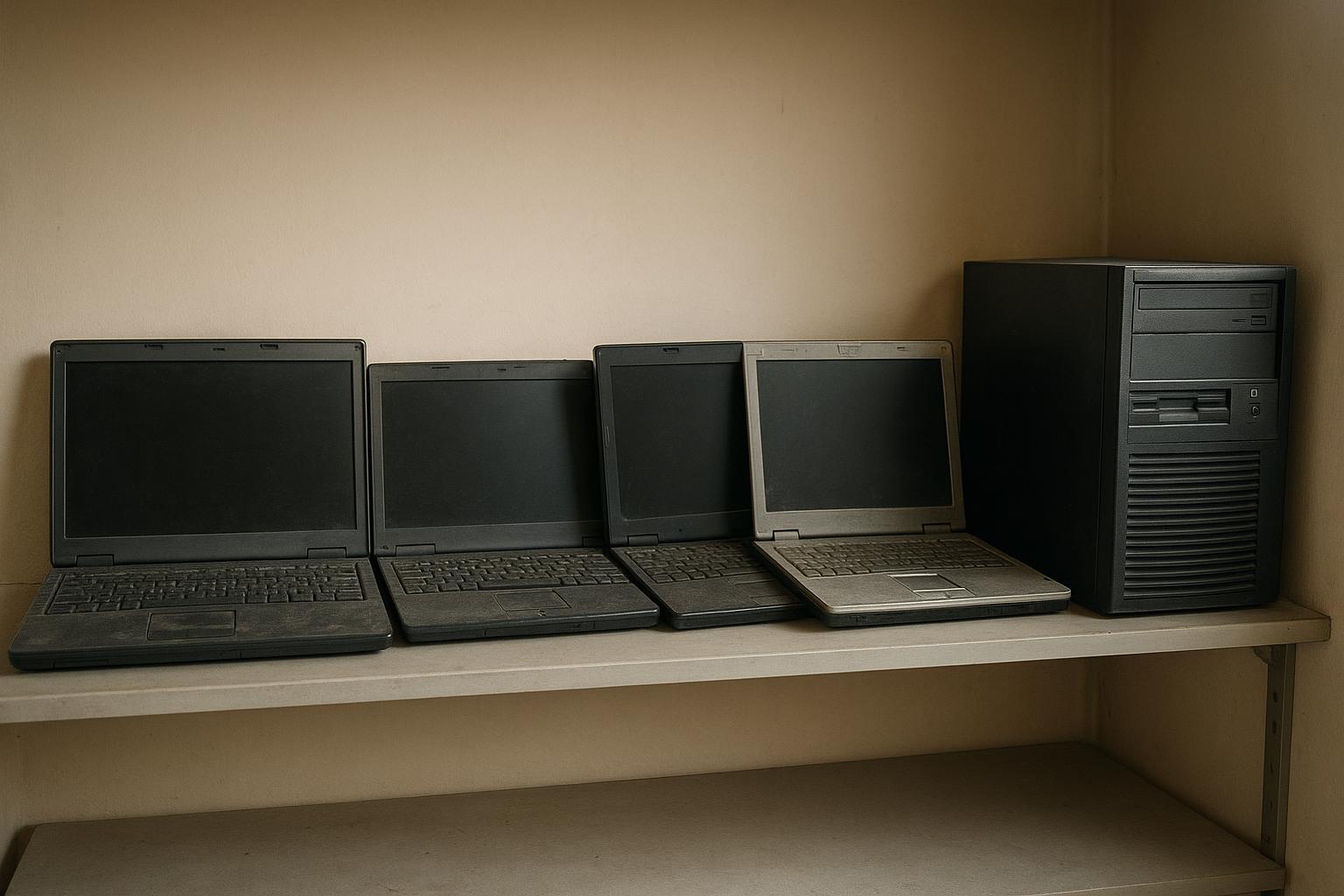
Phones, laptops, tablets, desktop computers, games consoles, smart TVs, printers with memory and even some smart speakers can hold personal information. Once you hand a device over for recycling, you may not control what happens to the data on it. Take these steps before you part with it.
- Back up anything you want to keep, then sign out of all accounts such as email, cloud storage, app stores and streaming services.
- Use the factory reset option in the device settings. On computers, follow the manufacturer's guide to securely erase or reset the drive.
- Remove SIM cards and memory cards.
- For an old hard drive that no longer works, consider asking a specialist data destruction service for a certificate, particularly for business or financial data.
- Keep the receipt or confirmation of the reset for your records if the device held sensitive information.
If you are clearing the home of someone who has died, take extra care. Do not discard phones or computers without checking whether they contain documents or accounts that the executor will need. See our guide to hidden family valuables and documents for what to look for before anything is thrown away.
Batteries and fire risk
Remove them where you safely can.
Lithium-ion batteries in laptops, phones, vapes, power tools and e-bikes can ignite if they are damaged, crushed or short-circuited. Fires have started in waste vehicles and recycling plants because batteries were hidden in general rubbish. If a battery is easy to remove, take it out and put it in a battery recycling point, which many supermarkets and council sites provide. If it is built in, leave it in the device and hand the whole item over for WEEE recycling.
Never throw batteries in the bin, and do not try to prise open a swollen or damaged battery. Tape the terminals of loose lithium batteries, store them in a cool dry place and tell your carrier if you have any that look damaged. A clearance crew will normally ask about e-bikes and scooters because the batteries need special care.
Older and unusual electricals
Some items need a moment of thought.
Older equipment can raise extra questions. Cathode ray tube televisions and monitors are heavy and contain leaded glass, so they should always go through a WEEE route and never in a skip. Old heaters, storage heaters and some night storage units can contain materials that need careful handling, and a few very old appliances may have parts that are no longer standard. If you are not sure what an item contains, say so and ask the carrier or council what to do.
Items that are part of the building, such as an electric shower unit, a fitted cooker or a wired-in extractor, should be disconnected by a qualified electrician before removal. A crew can lift out a freestanding appliance, but they should not be asked to make electrical or gas disconnections unless they are qualified to do so. Our guide to preparing bulky items for collection covers the practical steps, including emptying and defrosting fridges ahead of time.
Electricals in a house clearance
What a responsible crew does with them.
A house clearance typically includes dozens of electricals, from the fridge-freezer and washing machine to lamps, radios, extension leads and old computers. A registered carrier will normally separate these from general waste, load them so they are not crushed, and take them to an authorised treatment facility or a recycler. Fridges and freezers are kept upright where possible and are not compacted.
The carrier should describe the electricals on the waste transfer note. Our guides to waste transfer notes and the householder duty of care explain why that record matters and what you should keep.
If an item still works, you may want to donate or sell it first. Our guide to furniture donation in London is a good starting point, though charities set their own rules for electrical safety and often will not take items without safety checks.
Business clearances and larger quantities
Different rules apply to commercial electricals.
If you are clearing an office, a shop or a rented unit, the electricals are business waste rather than household waste, and different obligations apply. Businesses have a duty of care for their waste, and the WEEE rules place particular responsibilities on those who dispose of equipment in volume. Keep a written record of what is passed to whom, particularly if the equipment held customer data.
For businesses that are not sure whether their waste counts as commercial or household, our guide to commercial versus household waste laws explains how the line is drawn. In a mixed-use property, the shop and the flat above it produce different kinds of waste and should be handled separately.
For large quantities, ask the carrier whether the equipment will be sorted before treatment, and whether they can supply a certificate or a record that shows what was recycled. This is helpful for audit purposes and for company environmental reporting.
What it costs and what affects it
Rates vary by item and route.
The cost of disposing of electricals varies by item, route and borough. Some councils offer free kerbside collection for small electricals; others charge per item for large appliances. A retailer take-back with a new delivery is often included, while a clearance firm will usually price electricals as part of the overall volume or as a per-item line.
Fridges and freezers tend to cost more because of the specialist treatment required for refrigerant gases. Cathode ray tube televisions can also carry a higher charge. If a quote shows electricals as a separate line, ask what the extra covers and where the items will go.
Our guide to furniture and bulky item removal costs explains how volume, access and item type affect the final price.
Ways to keep the cost down
Small choices that reduce the bill.
Electricals are often the cheapest part of a clearance to handle properly if you plan ahead. Use the retailer take-back for any appliance you are replacing, because it is normally free with a delivery. Take small items to a council recycling centre yourself if you are making the trip anyway, and group the remaining items together so that a carrier can collect them in one visit.
Ask whether the quote is per item or by volume. A flat volume price can be good value if you have many small electricals, while a per-item price can be better if you only have one or two large appliances. Clear access also saves money, so move items to the ground floor or a hallway if you safely can and tell the carrier about stairs, lifts and parking.
Finally, avoid the cheapest quote that does not mention paperwork. A price that looks low because it ignores proper recycling may cost far more if the items are dumped and traced to you. Get the licence number, get the transfer note and keep both for at least two years.
Illegal dumping of electricals
A growing problem on London streets.
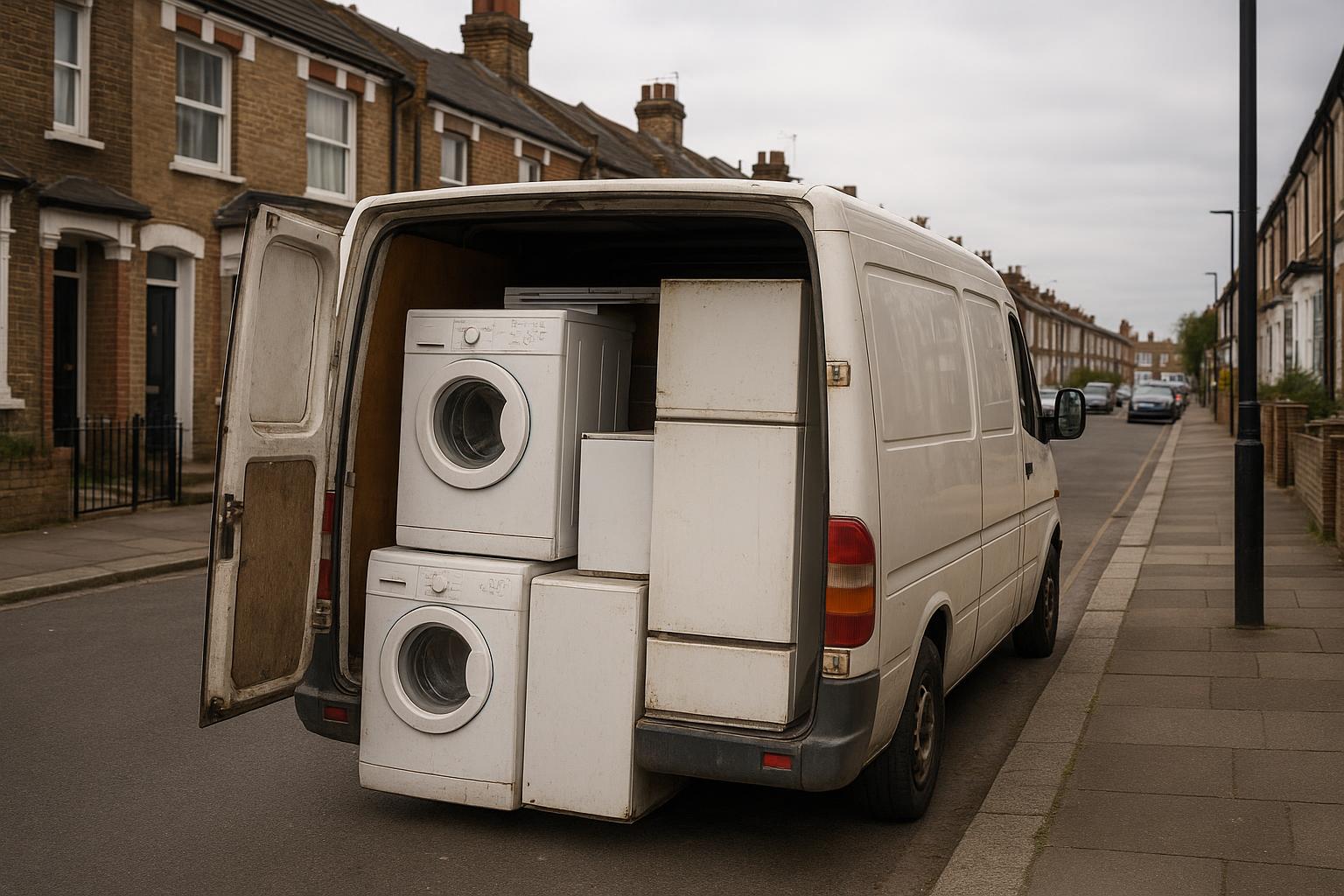
Fridges, televisions and washing machines are among the items most often left on pavements and in alleyways. If someone collects your appliance and dumps it, you can be held responsible if you did not check that the person was authorised. Always ask for a waste carrier licence number and look it up using our licence checking page.
For the penalties that can follow, see our guide to fly-tipping penalties and liabilities. In short, a cheap offer to take away an old fridge without any paperwork is a risk to your own wallet as well as the environment.
Questions to ask any carrier about electricals
Check before you book.
Before agreeing a price, ask these questions and note the answers.
- Are you a registered waste carrier, and can I see the licence number?
- Will you separate WEEE from general waste, and where will it be taken?
- Will fridges and freezers be handled separately?
- Will the waste transfer note describe the electricals?
- Is there an extra charge for fridges, TVs or large appliances?
Frequently asked questions
Common questions about WEEE, electrical recycling and disposal in London.
What does WEEE stand for?
WEEE stands for waste electrical and electronic equipment. It covers items that use a plug, battery or circuit and have reached the end of their life.
Can I put an old kettle or hairdryer in the general bin?
No. Small electricals are covered by the WEEE rules and should be recycled. Take them to a council recycling centre, a retailer take-back point or a council small electricals collection.
Do shops have to take my old appliance?
When you buy a new item of the same type, the retailer must offer to take the old one back. Larger retailers also have take-back duties for very small electricals. Check the current rules on GOV.UK.
How do I wipe my laptop or phone before recycling?
Back up what you need, sign out of all accounts, use the factory reset option, and remove SIM and memory cards. For sensitive data, consider a certified data destruction service.
Why are fridges more expensive to dispose of?
Fridges and freezers contain refrigerant gases and insulating foam that need specialist treatment, so recycling them costs more than for most other electricals.
What should I do with a broken lithium battery?
Do not put it in the bin or try to open it. Keep it somewhere cool and dry, tape the terminals if loose, and take it to a battery recycling point or tell your carrier about it.
Can a clearance firm take my electricals?
Yes, if they are a registered waste carrier and handle the items correctly. Ask for the licence number, where the items will go and a waste transfer note.
