Direct answer
There is no single list of PPE that is "mandatory" for every house clearance. In England, the law requires employers to assess the risks of the job and then provide suitable protective equipment, free of charge, where risks cannot be removed in other ways. For a heavy-duty clearance, with hoarded rooms, dust, sharps, heavy items or poor hygiene, that normally means sturdy gloves, safety footwear, eye protection, a coverall and a properly fitted respirator, plus sensible health precautions such as handwashing and safe lifting. If you are a relative or executor rather than an employer, the same logic applies: do not start until you know what is in the property.
Contents
- What "mandatory" actually means for PPE in England
- What makes a house clearance heavy-duty
- Risk assessment first, PPE second
- The core kit for a heavy-duty clearance
- Respirators and dust masks: where people get it wrong
- Manual handling: the injury that actually happens most
- Specific hazards that change the PPE
- Health precautions before, during and after the job
- Putting kit on, taking it off and getting rid of it
- If you are a relative, executor or volunteer helper
- What to ask a carrier about PPE and health and safety
- Where houseclearance.co fits
- Frequently asked questions
What "mandatory" actually means for PPE in England
Legal duty sits with the employer and the person in control of the work.
People searching for mandatory PPE usually want one answer: what must a crew wear in a house clearance? English law does not publish a trade-specific uniform. Instead it sets duties. Under the Health and Safety at Work etc. Act 1974, employers must look after the health and safety of their employees so far as is reasonably practicable, and must also avoid putting other people, such as clients and neighbours, at risk from the work. The Management of Health and Safety at Work Regulations 1999 require a suitable and sufficient risk assessment, and employers with five or more employees have to record the significant findings.
PPE is then a second-line control. The Personal Protective Equipment at Work Regulations 1992 require employers to provide suitable PPE to people at work who may be exposed to a risk to their health or safety, unless the risk has been adequately controlled in other ways. The Health and Safety Executive (HSE) describes PPE as the last resort, after hazards have been removed or reduced at source. The regulations were amended in 2022 so that the employer duty also covers limb (b) workers, and the equipment must be provided free of charge. If a company tells its crew to buy their own gloves and boots, that deserves a question. Self-employed people are generally responsible for their own protection; the HSE PPE pages give the current position.
What makes a house clearance heavy-duty
The kit that suits a tidy three-bed flat is not the kit that suits a packed hoarded house.
"Heavy-duty" is not a legal term, but in practice it describes jobs where the ordinary risks of lifting and carrying are joined by something more. Common triggers include rooms packed floor to ceiling, blocked routes, heavy items such as safes, pianos, old appliances and solid furniture, large volumes of dust or mould, signs of rodents or insects, bags of unknown contents, sharps and medicines, garden or garage chemicals, old paint, broken glass and damaged ceilings or floors.
A routine downsizing clearance, where rooms are accessible and the contents are normal household items, mainly raises manual handling and slips-and-trips risks. A hoarded home, a long-vacant property, a deceased estate left untouched for years or a landlord's abandoned-property job adds airborne and contact hazards. Our step-by-step guide to a house clearance for someone with hoarding disorder and our guide on the legal and psychological line between collecting and compulsive hoarding explain why the contents of some properties cannot be judged from the doorway.
Where there is also contamination from bodily fluids, faeces, sewage or heavy infestation, you are in specialist territory. Read the biohazard clearance guide first, because PPE alone is not a solution there, and some of those jobs should not be attempted without a professional assessment.
Risk assessment first, PPE second
Why the right question is "what could hurt us?" rather than "what should we wear?"
HSE's approach is to work through controls in order of effectiveness: eliminate the hazard, substitute something safer, isolate or reduce exposure, change the way the work is done and only then rely on PPE. In a clearance, that translates into practical choices that cost nothing but time.
- Remove the hazard. Leave a suspect material alone instead of breaking it up, and have a specialist deal with it.
- Change the method. Damp-wipe rather than sweep dry dust, carry items instead of dragging them through loose debris, and clear top-down so that nothing falls onto people below.
- Limit exposure. Keep the number of people inside the dusty zone small, rotate tasks, open windows and doors for ventilation, and keep helpers who do not need to be there outside.
- Use the right equipment. Sack trucks, trolleys, lifting straps and stair-climbing aids reduce the need to carry heavy items by hand.
- Then PPE. Choose protection for the hazards that remain, make sure it fits the wearer and train people to use it.
The core kit for a heavy-duty clearance
Head to toe: what each item is for, and what to look for.
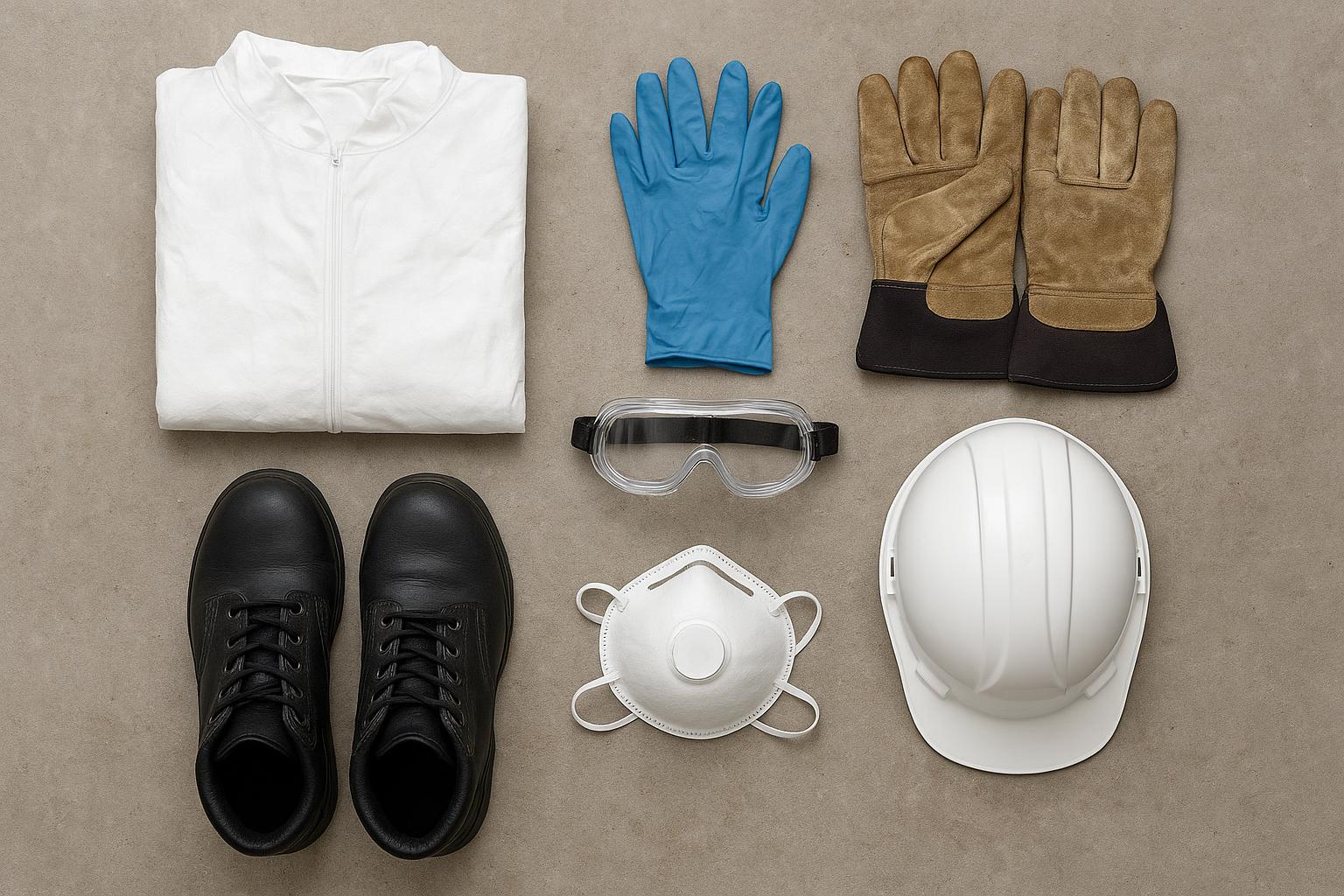
No kit list can replace a risk assessment, but the following items are the usual starting point for demanding clearances. Check that each product carries the required marking for sale in Great Britain, which is currently the UKCA or CE mark depending on the product and transition rules, and check current gov.uk guidance if you are buying equipment yourself. Look also for the relevant European or British standard number on the product.
Hand protection. Gloves are the most used and most mis-chosen item. Thin disposable nitrile gloves protect against contact with dirt and some contaminants but not against cuts or punctures. Heavy-duty work gloves resist abrasion and cuts and are tested to EN 388, which rates mechanical performance, while EN ISO 374 relates to protection against chemicals and micro-organisms. Many crews wear disposable gloves under or over work gloves depending on the task. No glove is needle-proof, even those marketed as puncture resistant, so gloves are never a reason to pick up sharps by hand.
Safety footwear. Steel or composite toe caps protect against dropped items, and a puncture-resistant midsole guards against nails, screws and broken glass underfoot. Safety footwear is generally tested to EN ISO 20345, and codes such as S1P or S3 describe the features it has. Trainers and sandals are poor choices in a cluttered house where floors are hidden under stacked bags and fallen debris.
Eye protection. Safety glasses protect against flying particles, but sealed goggles are a better choice where there is fine dust or splash, for example when pulling down old curtains, shaking out upholstery or using spray cleaning products. Eye protection is commonly marked to EN 166.
Coveralls. A disposable coverall keeps dust and dirt off clothes, so that contamination is not carried to the van or home. Types 5 and 6 are often used for particulate and limited splash protection. A coverall is not a substitute for a respirator, and a poorly fitting one can snag and trip a worker, so size matters.
Head protection. A hard hat, usually to EN 397, is sensible where there is a risk of objects falling from above, such as when clearing lofts, stacked shelving or overloaded wardrobes, or where ceilings are damaged. A bump cap helps with low beams but is not a hard hat.
Respirators and dust masks: where people get it wrong
A mask only protects if it is the right type, fitted properly and worn at the right time.
Dust is the most underestimated hazard in a heavy clearance. Moving long-stored boxes, old bedding, insulation and papers can raise fine particles that are not visible. Respiratory protective equipment, known as RPE, comes in several forms, and the HSE publishes guidance on selection, fit and maintenance.
Disposable filtering facepieces are classed FFP1, FFP2 or FFP3, with FFP3 giving the highest level of protection among them. A plain cloth face covering or surgical mask is not respiratory protection for dust, because it is designed mainly to stop the wearer from spreading droplets and does not seal to the face. For properties with heavy dust, mould, droppings or unknown airborne material, many contractors choose FFP3 or a reusable half-mask with the appropriate filters, with the specific choice depending on the assessment.
Tight-fitting masks must seal to the face. The HSE states that employers should arrange face-fit testing so that each wearer is issued a mask that suits their face. Facial hair under the seal breaks it, and so can stubble. Wearers should also carry out a fit check each time they put the mask on. Disposable masks should be replaced when damaged, wet or hard to breathe through, and should not be reused after contamination. Reusable masks need cleaning, storage and filter changes in line with the manufacturer's instructions.
Anyone with breathing difficulties, a heart condition or other health issue should talk to a doctor or occupational health service before heavy respirator use, because wearing RPE adds effort to breathing. Employers have a duty to consider whether workers are fit to wear it. Helpers who have asthma or other lung conditions are better placed outside the property, even when masked.
Manual handling: the injury that actually happens most
Strains cause more lost time than exotic hazards, and PPE does not prevent them.
In practice, the most common injuries in clearance work are musculoskeletal: back strain, shoulder injury, crushed fingers and twisted knees. The Manual Handling Operations Regulations 1992 require employers to avoid hazardous manual handling where reasonably practicable, to assess the tasks that cannot be avoided and to reduce the risk of injury. HSE stresses that there is no absolute safe weight for lifting; the risk depends on the load, the task, the working environment and the individual.
Practical controls for heavy-duty clearances include breaking loads into smaller ones, taking apart wardrobes and beds before moving them, using a sack truck for appliances, getting two or more people to lift awkward or bulky items, planning the route before lifting and removing trip hazards along it, and resting between heavy loads. Where stairs are involved, plan who goes first, who takes the weight and where to set items down. Our how to move heavy furniture safely goes into techniques for particular items.
Specific hazards that change the PPE
Five things you may meet, and the sensible response to each.
Sharps. Needles, razor blades, broken glass and knives can be hidden in bags, drawers and bedding. Never push a hand into a bag you cannot see inside; tip it carefully onto a tray or use litter pickers or tongs, and put sharps into a proper rigid sharps container, not into a carrier bag. The HSE page on blood-borne viruses explains the infection risks from needlestick injuries. If someone is injured, the commonly advised first response is to encourage bleeding, wash the wound thoroughly with soap and running water, not to suck it, cover it with a waterproof dressing and seek urgent medical advice, such as through an accident and emergency department or an occupational health service, because treatment may be time sensitive.
Asbestos. Many buildings built or refurbished before 2000 contain asbestos-containing materials. They are not a danger when undisturbed, but damaged material can release fibres. The Control of Asbestos Regulations 2012 apply to work that may disturb it, and the HSE asbestos pages explain more. A clearance crew should not break up, drill or strip suspect boards, pipe lagging, textured coatings or damaged ceiling tiles. If damaged material is found, stop work in that area, keep people out and arrange expert advice.
Mould and damp. Heavy mould growth releases spores when disturbed. Wear eye protection and a suitable respirator, avoid dry brushing and bag mould-affected soft items. The NHS says that mould can irritate the airways and may make symptoms worse in people with asthma or allergies, so those individuals should stay clear of the work.
Chemicals. Garages, sheds and under-sink cupboards often hold old paint, solvents, pesticides, gas bottles, aerosols, batteries and unlabelled containers. The Control of Substances Hazardous to Health Regulations 2002, known as COSHH, require employers to assess risks from hazardous substances. Read labels where possible, never mix products, keep containers upright, and treat gas cylinders and old aerosols as potentially dangerous. Do not pour unknown liquids down a drain. Our garage clearance preparation guide covers a typical place where these turn up.
Pests and droppings. Rodent droppings, nests and insect infestations carry disease risk and can mean that dust-control is critical. The NHS notes that leptospirosis can be caught through contact with the urine of infected animals, such as rats, usually via cuts or the lining of the mouth, nose and eyes. Wear gloves, cover cuts with waterproof dressings and wash hands before eating or touching your face. Where infestation is serious, pest control may need to come first, as covered in our biohazard clearance guide.
Health precautions before, during and after the job
Protection also means looking after the people, not only the equipment.
Before. Check whether anyone taking part is pregnant, has a condition that affects breathing or immunity, or is recovering from injury, and decide whether they should be in the property at all. Ask whether you are up to date with routine vaccinations. The NHS advises that tetanus bacteria can enter the body through cuts and puncture wounds contaminated with soil or manure, and that people who have not completed the vaccination course or whose protection may be out of date should speak to their GP. Some employers offer hepatitis B vaccination to staff at higher risk of contact with blood; that is a decision for occupational health, not an item for a family helper to organise at short notice.
During. Plan for drinking water, breaks and shade or warmth. Heavy lifting in a closed property in summer in coverall and mask can cause overheating quickly, and working in an unheated property in winter makes hands clumsy and increases the risk of injury. No eating, drinking, smoking or vaping in the work area, because contaminated hands and gloves go to the mouth. Keep a first aid kit on site, know where the nearest A&E is, and make sure everyone knows the address in case they need to call 999.
After. Wash hands and forearms thoroughly with soap and water before eating, drinking or touching your face, and shower and change as soon as practical. Do not wear work clothes in the car home. Cuts, bites, rashes, unusual coughs or fever in the days afterwards should be mentioned to a GP or NHS 111, along with the fact that you were working in a dusty or contaminated property. Employers should also consider reporting duties under the Reporting of Injuries, Diseases and Dangerous Occurrences Regulations 2013 (RIDDOR) where they apply.

Putting kit on, taking it off and getting rid of it
Most contamination happens when PPE comes off.
Kit is put on before entering the work area and removed at a defined point, usually at the doorway or just outside. A sensible order for putting on is coverall, then boots, then respirator, then eye protection, then gloves over the coverall cuffs. Removal reverses the thinking: the most contaminated outer layers come off first, without touching the outside with bare hands, and the respirator comes off last, outside the work area. Wash hands after removing each stage and again at the end.
Disposable items such as coveralls, disposable gloves and filtering masks are bagged and treated as waste. Where PPE is only dusty or dirty, it normally goes with the general waste stream. If it is contaminated with blood, bodily fluids or sharps, it may need to be treated as clinical or hazardous waste. Waste classification depends on what the waste is and how it was produced, so ask the carrier how they classify it, and see the biohazard clearance guide and our guide to waste transfer notes for house clearance. To check a carrier's registration, see how to choose a licensed house clearance company, and for what happens when waste is mishandled, see waste carrier licensing and fly-tipping liability.
If you are a relative, executor or volunteer helper
The same hazards apply to you, without the safety net of an employer.
When family members clear a home, there is no employer and no regulator checking the PPE. The hazards are the same. HSE duties apply to the businesses and people who carry out work as a trade, but the dust, sharps and heavy items do not know who is paying. A few rules keep unpaid helpers safe.
- Do a survey walk first, and stop if you find sharps, bodily fluids, strong smells, rodent activity, signs of asbestos or structural damage.
- Buy proper gloves, safety boots, eye protection and a correctly rated respirator, not just a paper mask. Check the fit and consider whether the person can wear it comfortably for long enough.
- Keep children, pets, pregnant relatives and anyone with a respiratory condition out of the work area.
- Do not lift alone. Use trolleys. Say no to loads that are too heavy.
- Work in short shifts and take breaks away from the dust.
- If anyone is unwell afterwards, seek advice from a GP, pharmacist or NHS 111.
If the property is a hoarded home where the occupier is still living, safety and dignity go together. A person-centred approach and the right pace are as important as gloves. Our hoarding clearance guide for families and our guide on how councils can intervene in a hoarded property help you understand who else may need to be involved before bulk work begins. The Mental Capacity Act 2005 assumes that adults have capacity to decide, so the occupier's consent is not a technicality. If they are anxious about letting things go, see our guide on how to support someone who is anxious about discarding items.
What to ask a carrier about PPE and health and safety
Seven questions that reveal whether a firm has really thought about it.
On houseclearance.co you describe the job and independent, licensed local waste carriers may contact you with quotes. Safety practices are not something we verify for each firm, so asking the right questions yourself is important. Our house clearance checklist helps you gather what carriers need, and our man and van insurance guide covers insurance questions.
- Have you assessed this property? Ask whether they will visit, or review photographs and your description, before confirming. Quotes given blind for a heavy property are a warning sign.
- What PPE will the crew use? You want specifics: gloves, footwear, eye protection, coveralls and respirator, not just a general reassurance.
- Is PPE supplied and are respirators fit-tested? This indicates whether they follow the regulations.
- What training has the crew had? Manual handling, hazard awareness, sharps and first aid are relevant answers.
- How will you handle sharps, chemicals and suspected asbestos? The right answer for asbestos is that they will stop and seek specialist advice, not carry on.
- What insurance do you hold? Ask for evidence of public liability insurance and employers' liability insurance if they employ staff.
- How will waste be separated and documented? Look for waste carrier registration and transfer paperwork.
Our insurance and safety page sets out how houseclearance.co approaches vetting and what remains the client's own checking responsibility. No marketplace can inspect every crew on every job, so treat quotes as an introduction and make your own checks before you agree.
Where houseclearance.co fits
A quote-matching marketplace, not a clearance company.
houseclearance.co is a marketplace. You describe the job, and independent, licensed local waste carriers may contact you with quotes. We do not carry out clearances ourselves, we do not give prices on this page and we cannot promise that any carrier will accept a particular job. Each carrier is responsible for its own equipment, training and insurance.
When you post a job, give the information that decides the kit: how full the rooms are, the floor level and stairs, whether there are lofts, sheds or garages, any sharps, mould, droppings or chemicals you have noticed, whether anyone lives there and whether the house is older than about 2000. Honest detail helps carriers plan the right team and equipment, and helps you compare like with like. For a hoarded property, our hoarding clearance in London page explains how this type of job is handled.
Ready to see your price?
When you are ready to move forward, describe the job and we will pass it to vetted, licensed local carriers, who may contact you with quotes.
Frequently asked questions
The questions that come up most often about PPE and health on heavy-duty clearances.
Is PPE legally mandatory on a house clearance?
In England, employers must carry out a risk assessment and provide suitable PPE free of charge where risks remain after other controls. There is no fixed national list for house clearances, so what is required depends on the property and the work. Self-employed people are generally responsible for choosing and using suitable protection themselves.
What PPE should a heavy-duty house clearance crew wear?
A typical starting point is sturdy gloves, safety footwear with toe protection, eye protection, a coverall and a suitable respirator, with hard hats and hi-vis added where hazards call for them. The right choice comes from the risk assessment for the actual property, not a standard checklist.
Is a paper dust mask enough for a dusty or hoarded property?
Usually not. A cloth or surgical mask does not seal to the face or filter fine dust effectively. Contractors often choose an FFP3 filtering facepiece or a reusable half-mask with suitable filters, and tight-fitting masks should be face-fit tested for the wearer.
What should I do if I am pricked by a needle during a clearance?
Encourage the wound to bleed, wash it with soap and running water, do not suck it, cover it with a waterproof dressing and get urgent medical advice from A&E or occupational health, because treatment can be time-sensitive. Report the incident to whoever is in charge.
What if I think I have found asbestos?
Stop work in that area, keep others out, do not break or sweep the material and get expert advice. Asbestos is generally not dangerous when undisturbed, but damaged material can release fibres. The HSE asbestos pages explain the duties under the Control of Asbestos Regulations 2012.
Can family members safely clear a hoarded home without a professional?
Sometimes, if conditions are ordinary clutter, but not if there are sharps, mould, infestation, structural damage or unknown chemicals. Even then you need proper PPE, safe lifting, short working periods and a plan for waste. If in doubt, get a carrier to assess the property.
Should I be vaccinated before helping with a clearance?
Ask your GP. The NHS advises that tetanus can enter through cuts and puncture wounds, and that people whose vaccinations are incomplete or out of date should check. Hepatitis B vaccination is typically considered for people at higher occupational risk, and is a matter for medical advice.
How should used PPE be disposed of?
Dusty or dirty disposable PPE normally goes into the waste stream with the clearance waste. PPE contaminated with blood, bodily fluids or sharps may need to be handled as clinical or hazardous waste. Ask the carrier how it classifies and documents the waste.
How does houseclearance.co fit into this?
houseclearance.co is a marketplace, not a clearance company. You describe the job and independent, licensed local carriers may contact you with quotes. Each carrier is responsible for its own risk assessment, PPE, training and insurance, so ask the questions in this guide before you choose.