
Direct answer
Several UK charities and community reuse organisations collect large furniture from homes, often free of charge or for a donation, but services vary by borough, change over time and have strict rules. Most accept clean, safe, good-condition furniture such as wardrobes, tables, chairs, beds and sideboards, and many require a fire safety label on upholstered items. They usually refuse damaged, stained, infested or very large quantities. Check each charity's current service area, accepted items and booking process on its own website or by phone before you rely on it, take photographs, and have a backup plan with a licensed carrier if no one can collect before your deadline.
Contents
- How free furniture collection works
- Why services vary so much
- Reuse networks and umbrella bodies
- Types of organisation to look for
- How to search effectively
- What they usually accept
- Why safety rules matter
- What they usually refuse
- What to do with refused items
- How to book a collection
- On the day of collection
- Preparing your furniture
- A donor checklist
- If no charity can collect
- Drop-off options
- Beware of fake charity collections
- What a genuine charity will give you
- Frequently asked questions
How free furniture collection works
Charities collect because they can resell.
Charities that collect furniture usually do so because the items can be cleaned, checked and sold in their shops or passed to people in need. A collection service costs them money in vehicles, fuel and staff time, so they are selective. They look for items that are likely to sell, are safe and are in good condition.
The service may be free, or the charity may ask for a donation or a small fee towards the cost of the visit. Some services are run by volunteers and operate only on certain days or in certain areas. Others are linked to a particular shop and cover only a few postcodes.
Because services change with funding, volunteer availability and storage space, any list you read online can be out of date. Always check the charity's website or call to confirm what is currently offered.
Why services vary so much
Funding, space and people.
Furniture collection depends on three scarce resources: vehicles and drivers, warehouse or shop space, and volunteers or staff to clean, test and sell. A charity may have all three in one borough and none in the next. When a shop closes or a volunteer driver retires, a service can stop with little notice.
Demand also changes the rules. After a busy period, such as the end of the university year or a period of house moves, a charity may stop taking certain items because storage is full. Some pause bookings in winter when vans are less reliable, and others limit collections to a few postcodes to keep journeys short.
This is why the safest advice is to treat any published list as a starting point. Call, ask what is currently accepted and note the date of the conversation in case there is any misunderstanding later.
Reuse networks and umbrella bodies
A way to find local projects.
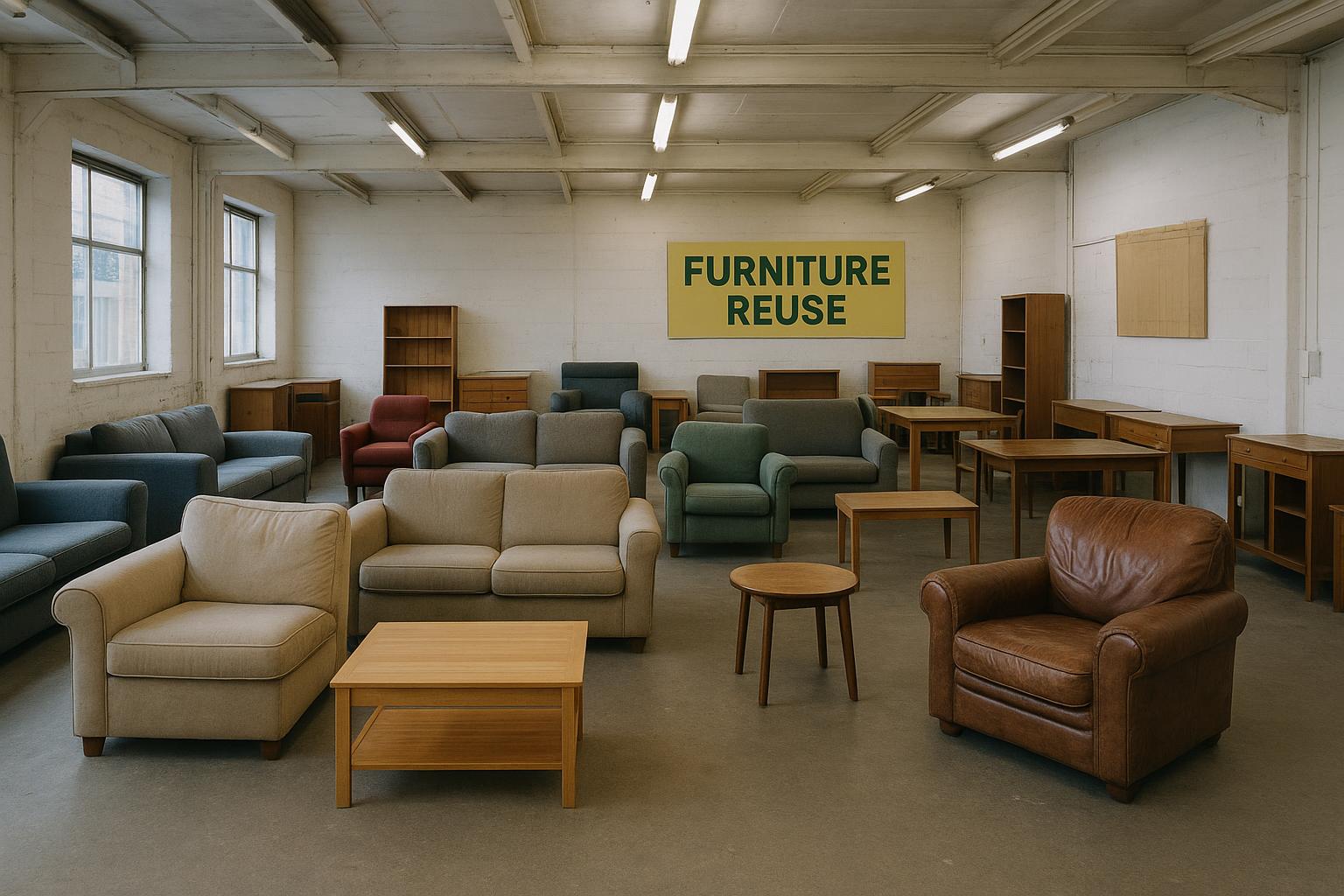
Furniture reuse in the UK is supported by networks of local projects, some linked to national umbrella bodies, that share good practice and help the public find a local service. These projects are often social enterprises that employ trainees and volunteers, refurbish furniture and sell it at low prices.
Searching for the national reuse network and your borough can lead you to a local project that may not appear in a generic search. Many of these organisations also take work from councils and housing providers, so they have regular collection rounds and often respond faster than a general charity shop.
If you find one, ask whether it takes items from private households, whether it has a service area that includes your postcode and whether it charges a fee. Even a small fee may be worthwhile if it guarantees that your furniture will be reused rather than discarded.
Types of organisation to look for
Not only high-street charity shops.
The organisations that collect furniture fall into a few groups.
- National charity furniture services: some large charities have run furniture and electrical collection services from their shops or regional hubs. Availability varies, so check current details.
- Local charity shops and hospices: many collect from nearby addresses using their own van or volunteers.
- Furniture reuse charities and social enterprises: these refurbish furniture and sell or give it to people on low incomes, and often collect from homes in their area.
- Housing associations and community groups: some run furniture stores for tenants and local residents.
- Refugee and homelessness support organisations: they sometimes accept furniture for people setting up new homes, but often by arrangement only.
Search by borough name and the words furniture reuse, charity furniture collection or community furniture project. Your council's waste or reuse pages may also list local partners. Our guide to furniture donation in London gives further background.
How to search effectively
A short routine that saves time.
Start with your council. Many London boroughs list local reuse partners and may run a reuse scheme alongside bulky waste collections. Next, search for furniture reuse and your borough name, and look at the websites of local charity shops, hospices and community groups.
Check social media pages and community noticeboards, because small organisations often post their latest needs there. Call or message rather than relying on an old web page, and ask whether they collect from your postcode, what they accept and how long the wait is.
Keep a simple list of the organisations you have contacted, the date, what they said and who you spoke to. If you are clearing a whole property, you may need several different charities for different items, and a list helps to keep the plan clear.
What they usually accept
Clean, safe, saleable.
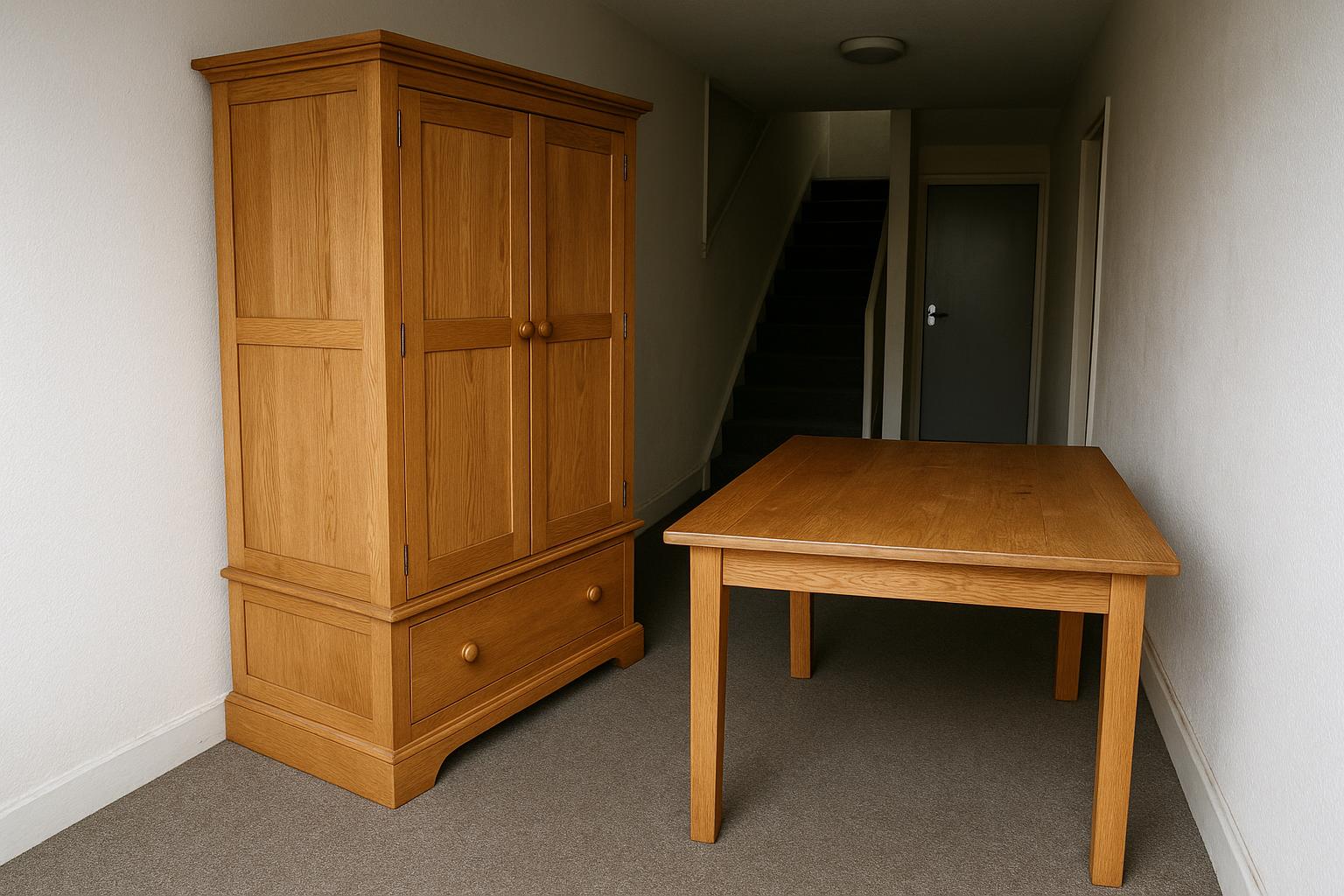
Typical accepted items include solid wood wardrobes, chests of drawers, dining tables and chairs, bookcases, sideboards, bed frames, desks, coffee tables and clean upholstered sofas and armchairs that carry the correct fire safety label. Some will take working white goods, such as washing machines and fridges, if they can be tested and are safe. Others do not take electrical items at all.
Items that are modern, flat-pack in good condition, complete and clean are more likely to be accepted than damaged or very old ones. Brown wooden furniture is often harder to sell, so a charity may accept it only if it is of high quality.
Upholstered furniture is the item that is most often refused. Our guide to POPs in old sofas explains why age and labels matter, and the next articles in this series cover fire safety labels and excluded items in more detail.
Why safety rules matter
Charities are responsible for what they sell.
When a charity sells or gives away furniture, it takes on responsibility for the safety of that item. In the UK, upholstered furniture sold second-hand is expected to meet fire safety rules, which is why a permanent label matters. Electrical items need to be tested, and children's items such as cots must meet safety standards.
This is a practical reason for the charities' strictness, not just a preference. A charity that sells an unsafe item can face legal and reputational risk. The rules are explained on GOV.UK and in the guidance of reuse networks.
As a donor, you can help by checking labels, photographing them and being honest about the age and history of the item. If you are not sure whether an item is safe to pass on, ask the charity before you book.
What they usually refuse
Know this before you book.
Common reasons for refusal are damage, stains, strong smells, missing parts, pest infestation, unsafe construction, a lack of a fire safety label on upholstered items, and items that are too large or heavy for the crew to carry safely. Mattresses are almost always refused for hygiene reasons, as explained in our guide to recycling mattresses.
Some charities also refuse very old furniture, items that have been stored in damp conditions, items from smoking homes and furniture that needs significant repair. Bulky built-in items such as fitted wardrobes are generally not accepted.
A refusal is not a criticism of you or the item. It reflects what the charity can sell and handle safely. If an item is refused, you will need another route, such as sale, upcycling or disposal by a licensed carrier.
What to do with refused items
Other ways to keep them in use.
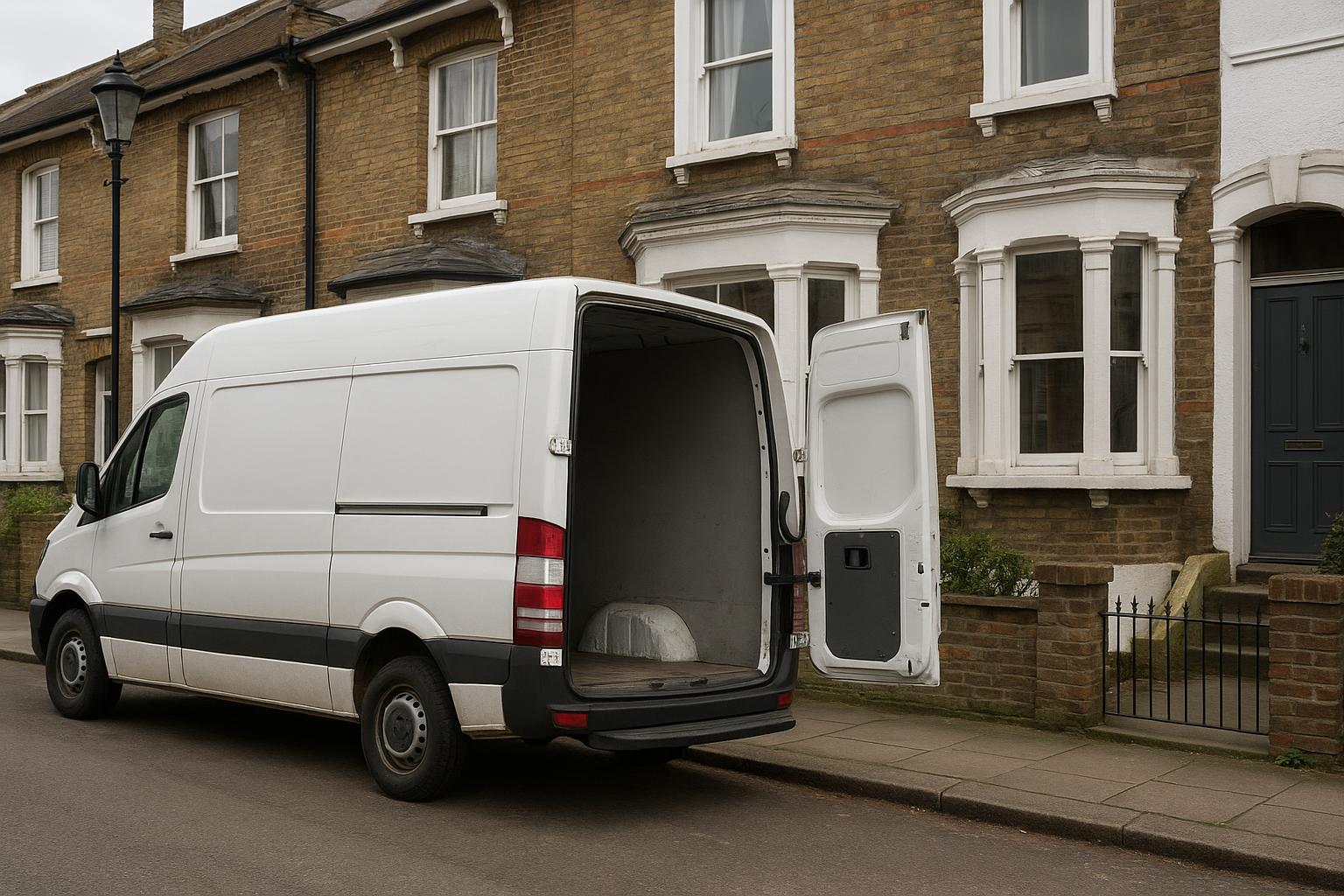
If a charity refuses an item, that does not always mean it has no value. You can sell it online, list it as free to collect, offer it to a neighbour or take it to a community group that accepts a wider range of goods. A wardrobe that a charity shop will not take may still be wanted by a student, a first-time renter or a tradesperson who needs a workshop cabinet.
Some items are better restored. A solid but scratched table can be sanded and refinished, as described in our guide to upcycling old furniture. If nothing else works, a licensed carrier can take the item for recycling or recovery.
Keep photographs and notes of what you tried, particularly if you are clearing a property for someone else. They show that you made reasonable efforts to find a home for the items before disposal.
How to book a collection
A short, clear process.
Most charities ask you to complete an online form or call a phone number. Be ready to give your address and postcode, a list of items with approximate sizes, a description of condition, details of access such as stairs and lifts, and your preferred days. Many ask for photographs, which allow them to decide before sending a crew.
Ask what they need from you on the day. Typically, items must be ready at the door or in a ground-floor room, disassembled where possible and with clear access. Some ask someone to be present to hand over the items and sign a donation form. If you are donating on behalf of an estate, tell them so, because they may need to see authority to act.
Ask for the collection window and a contact number for the day. Waiting lists can be several weeks in busy areas, so book early if you have a deadline.
On the day of collection
What to expect.
Collection crews are often volunteers or small teams, and they follow strict routines. They will check the items against the booking, look for damage and refuse anything that does not match what you described. Be ready for this, and have your photos and notes to hand.
Make sure the route to the door is clear, pets are secured and any parking is arranged. If you live in a flat, check the lift booking and the building rules. Tell the crew about fragile floors, narrow stairs and anything else that affects the carry.
Ask for a donation receipt if you want one. For gifts of higher value items, a charity may be able to provide a record that helps with your own paperwork, and if you are a UK taxpayer you may be asked about Gift Aid, which we cover in a later article in this series.
Preparing your furniture
Small things that stop a refusal.
Clean the item, empty drawers and wardrobes, remove personal items and take photographs from several angles. Check for the fire safety label on upholstered pieces and photograph it. Make sure the item is dry and free of odours and pests.
Take apart items that are easy to dismantle, such as bed frames and tables, and keep screws and fittings in a labelled bag taped to the item. Measure bulky pieces and your doorways and stairs, so the crew knows what to expect.
Our guide to preparing bulky items for collection has more tips, and the advice on moving heavy furniture safely will help if you need to move items to the door.
A donor checklist
Run through this before you call.
A short checklist makes the booking call quick and avoids surprises on the day.
- List each item with height, width and depth and a note of its condition.
- Photograph each item from the front, side and any damage, and photograph fire safety labels.
- Check that the item is clean, dry, odour-free and complete.
- Note stairs, lifts, parking and any narrow doorways.
- Have your preferred days and a mobile number ready.
- Decide in advance what you will do with anything that is refused.
If you are clearing an entire home, group items by room and book the charity visits close together. That gives the crews a clear picture and keeps your timeline under control.
If no charity can collect
Plan B options.
Sometimes no charity can collect in your area or before your deadline. In that case, you have several options. You can deliver the item yourself or ask a friend to help. Some charities will accept drop-offs at their shop or warehouse even if they cannot collect. You can sell or give away the item on a local marketplace, though you should be careful about safety when meeting buyers.
A licensed house clearance firm can remove furniture and, if it has reuse partners, may pass good items to them. Ask whether the firm will take items to a charity or reuse centre on your behalf and whether it charges for the service. Use our carrier licence check to confirm the firm is registered.
The council bulky waste service is another route for items that are not suitable for donation. See our guide to council bulky waste versus private clearance for how this compares.
Drop-off options
You can take it to them.
Many charity shops and furniture projects accept drop-offs even when they cannot collect. Check opening times, ask where to unload and whether a staff member can help you carry large items. Never leave furniture outside a closed shop. It becomes fly-tipping, and the charity may have to pay to remove it.
If you do not have a car, you may be able to hire a van for a few hours or ask a local volunteer driver scheme. Some community groups offer low-cost transport for people on low incomes. When you load a vehicle, secure the furniture so it does not move, and wrap it to protect it from rain.
A drop-off also lets you speak to a member of staff, who can tell you what sells well and what they need most. That information can guide your next donation.
Beware of fake charity collections
Check the details.
Some collectors pose as charities in order to gather free furniture to resell for profit, or leave leaflets that do not carry a registered charity number. Genuine charities show their registered number, a contact address and a phone number, and they should be able to explain how the proceeds are used.
You can check a charity's registration on the public register of charities for England and Wales or the equivalent register in Scotland and Northern Ireland. If a collector cannot give you a name, a charity number or a receipt, do not hand over your goods.
If a collector says they will take everything for free and does not ask about the condition of the items, be careful. Items that are dumped in the street could be traced back to you. Our guide to the risks of hiring an unlicensed man and van explains the wider risk.
What a genuine charity will give you
Receipts and clarity.
A genuine charity will tell you its name, its registered charity number and the purpose of the collection. It should confirm the booking in writing, describe what it will take and tell you what to do if you need to cancel. It may offer a receipt or acknowledgement of the donation.
It will not pressure you to hand over items on the doorstep, ask for payment in cash without explanation or promise a value for your goods. If you are unsure, take a name and number, end the call and look up the charity independently before you decide.
Frequently asked questions
Common questions about charity furniture collections in London.
Do charities collect furniture for free in London?
Some do, but services vary by borough and charity and change over time. Check the charity's website or phone to confirm what is currently available, and whether a donation is requested.
What furniture do charities take?
Usually clean, safe, good-condition items such as wardrobes, tables, chairs, bookcases and sofas with a correct fire safety label. They often refuse damaged, stained or infested items.
Why do charities refuse my sofa?
Often because it lacks a fire safety label, is worn or stained, or is too old. Upholstered furniture is one of the most commonly refused items.
How do I book a charity collection?
Use the charity's online form or phone line. Give your address, item list, sizes, condition and access details, and send photos if asked.
Can I donate on behalf of an estate?
Yes, but tell the charity that you are acting for an estate. They may ask for proof of your authority, particularly for valuable items.
What if no charity can collect before my deadline?
Ask whether you can drop items off, sell them locally, or use a licensed clearance firm that works with reuse partners. Check the carrier's licence.
How can I check that a collector is a real charity?
Ask for the registered charity number and look it up on the official charity register. Be cautious if there is no name, number or receipt.
