Direct answer
Persistent organic pollutants (POPs) are chemicals that last a long time in the environment and build up in living things. Some older upholstered domestic seating, such as sofas, armchairs and sofa beds, contains flame retardants that are classed as POPs. In the UK, waste upholstered seating that contains them above set limits must be handled so that the POPs are destroyed or irreversibly transformed, normally by high-temperature incineration, rather than being landfilled or recycled. Not every sofa is affected, and the risk is higher for older items. Check the label and the age of the piece, keep it separate from other waste, tell your carrier, and ask for paperwork that shows where it went. Official guidance from the Environment Agency and GOV.UK is the best source for the current rules.
Contents
- What POPs are and why sofas come into it
- Which furniture is most likely to be affected
- Common examples from a typical London home
- How to check your sofa or chair
- What the rules say about disposal
- Why crews keep affected furniture separate
- Storage and transport on the day
- Your duty of care and the paperwork
- Your options for getting rid of an older sofa
- How this affects a house clearance
- If you are clearing a property as an executor or landlord
- Cost and what affects it
- Questions to ask any carrier
- Frequently asked questions
What POPs are and why sofas come into it
A long-lived chemical issue, not a sudden new rule.
Persistent organic pollutants, usually shortened to POPs, are man-made chemicals that break down very slowly, travel long distances through air and water, and accumulate in animals and people. Several are restricted or banned internationally under the Stockholm Convention, and the UK applies those controls through its own POPs Regulations.
Some of the substances on the list are flame retardants that were widely used in the past to help foam and fabrics meet fire-safety standards. Older upholstered furniture, particularly seating filled with polyurethane foam, can contain them in the foam or in the fabric covering. When that furniture reaches the end of its life, it becomes waste that may carry a POPs content, and the waste rules then apply.
This is one reason a standard sofa removal can be less simple than it looks. The item is bulky and heavy, but it may also need separate handling and a different destination from the general bulky waste that a crew would normally take to a transfer station.
Which furniture is most likely to be affected
Age, type and construction all matter.
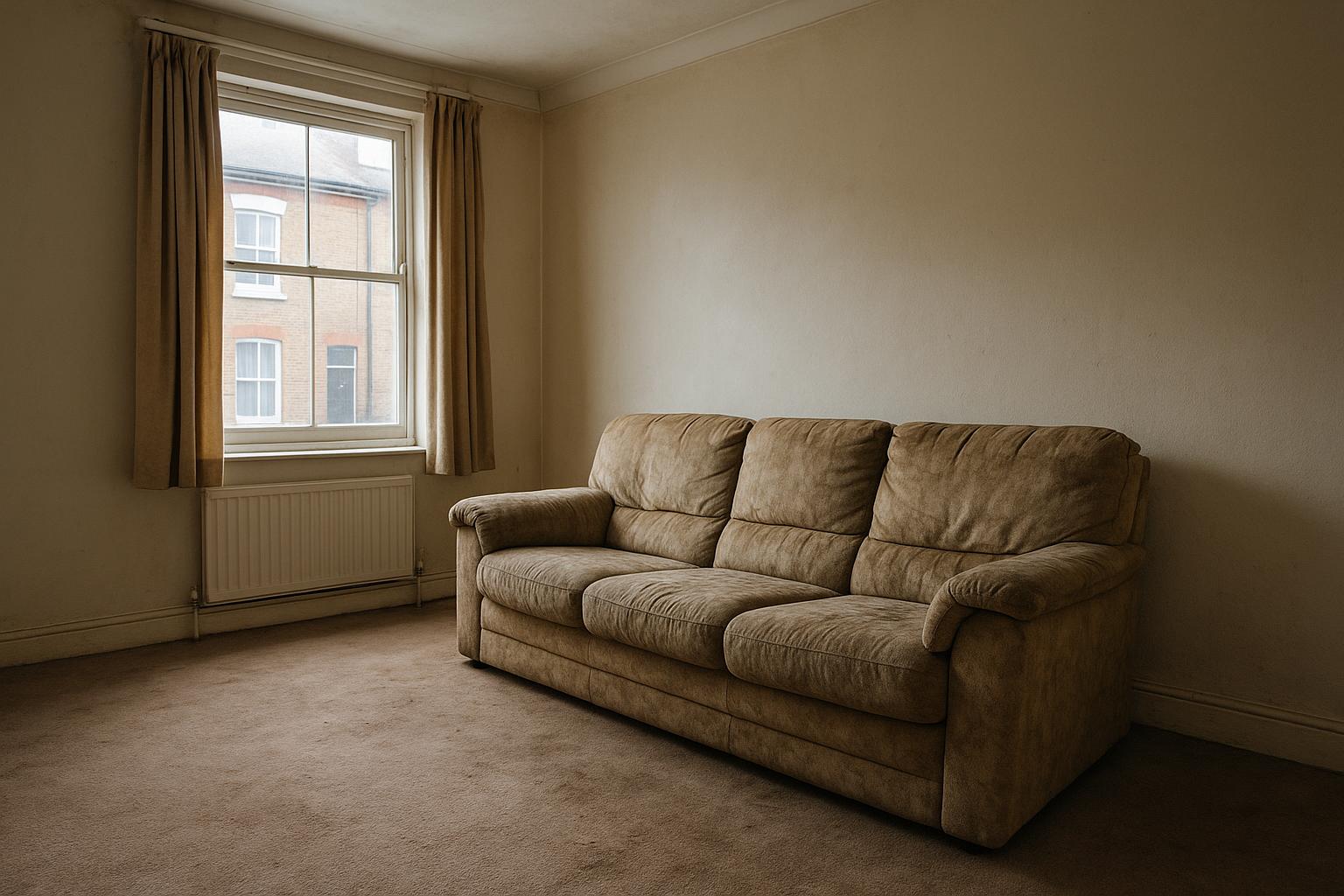
The rules concern upholstered domestic seating. In practice that means items such as sofas, settees, armchairs, sofa beds, recliners, dining chairs with padded seats, footstools and similar household furniture with foam or fabric padding. Furniture without padding, such as a solid wooden table, a metal bed frame or a bookcase, is not the concern here.
Age is the main clue. The flame retardants of most concern were phased out over time, so the risk is generally higher for older pieces than for recently made ones. Official guidance has treated furniture made before the mid-2000s as more likely to contain them, and it also says a newer date is not an absolute guarantee. Because this advice is updated from time to time, check the current wording on GOV.UK rather than relying on a date you have heard second-hand.
Foam-filled seating is the main area of concern. Items with natural fillings such as feathers or wool, or with no foam at all, are less likely to be affected, although you should not assume this without checking the label or asking your carrier.
Common examples from a typical London home
What you are likely to find when you walk through.
In a typical London terraced house or flat clearance, the upholstered items that raise the question are usually the three-seater sofa in the front room, one or two armchairs, a sofa bed in the spare room, a footstool or pouffe, padded dining chairs and sometimes a headboard or an upholstered bed base. Older conservatory furniture with thick cushions can also qualify.
Mattresses are a different category with their own handling rules, and our guides on how to dispose of a mattress for free and sofa bed removal and disposal cover those items. A sofa bed is both: it has upholstered seating and a folding frame, so mention it by name when you request a quote.
Cushions that can be removed, such as loose seat pads and scatter cushions, may be treated as part of the item or separately depending on what they are filled with. If you are unsure, ask the carrier rather than bagging them with other soft waste.
How to check your sofa or chair
Look for the label before the crew arrives.
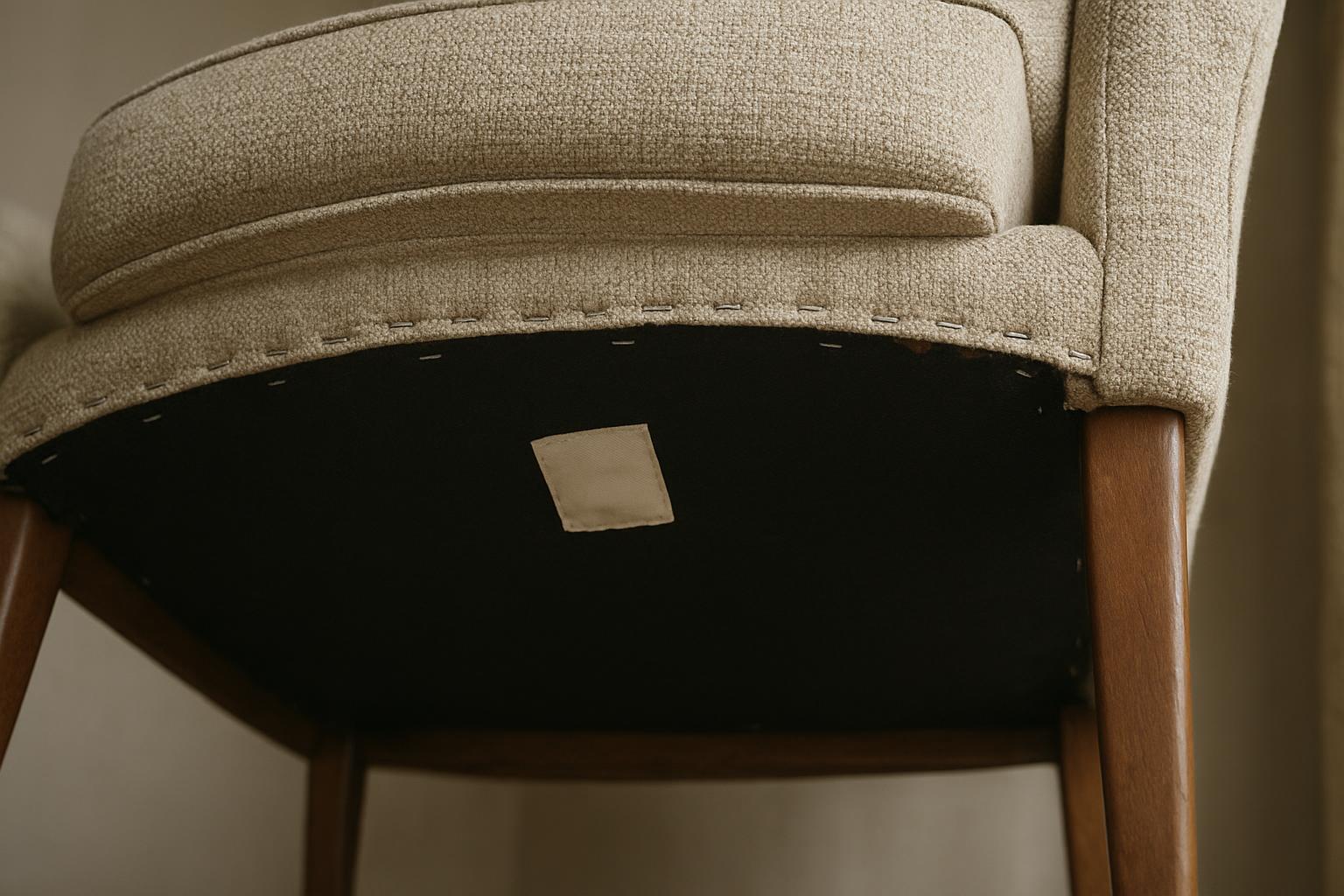
Most upholstered furniture sold in the UK carries a permanent label, often stitched under a cushion, along the back or beneath the frame. This label usually shows the fire-safety information required for the product and may give the manufacturer or a date. It is the best starting point for judging the age of the item.
- Check under the seat cushions, along the back seam and around the underside of the base for a stitched fabric label.
- Look for a manufacturing date, a batch code or a statement about fire-resistance. Take a clear photograph so you can show your carrier.
- Note the type of padding if the label says: polyurethane foam, fibre, feather, or a mixture.
- If you bought the item, find the receipt or order confirmation, which will show the purchase date even if the label is missing.
- If there is no label and you cannot tell the age, say so. A responsible carrier will then treat the item cautiously rather than guess.
Do not cut open a sofa to look inside. Breaking up foam-filled furniture at home creates dust and loose foam, serves no useful purpose and can make it harder to describe the item correctly on the paperwork. Leave the item whole and let the carrier assess it.
What the rules say about disposal
Destruction, not landfill or recycling.
Under the UK POPs Regulations, waste containing POPs above the permitted concentration limits must be treated so that the POPs are destroyed or irreversibly transformed. For upholstered domestic seating that is found or presumed to contain them, the usual route is high-temperature incineration at a facility permitted to take such waste. The waste should not be landfilled, and it should not be sent for ordinary recycling, because that could allow the chemicals to re-enter products or the environment.
The Environment Agency publishes guidance for businesses that handle this waste, including how to classify it, how to describe it on paperwork and how to keep it separate. The GOV.UK pages are the right place to confirm the current position, including any change to the list of substances or to the dates it refers to.
The practical effect for a householder is that a POPs-affected sofa is not an ordinary piece of bulky waste. The carrier who takes it has duties of their own, and they will normally ask questions about the item before agreeing to collect it.
Why crews keep affected furniture separate
Mixing it would contaminate other waste.
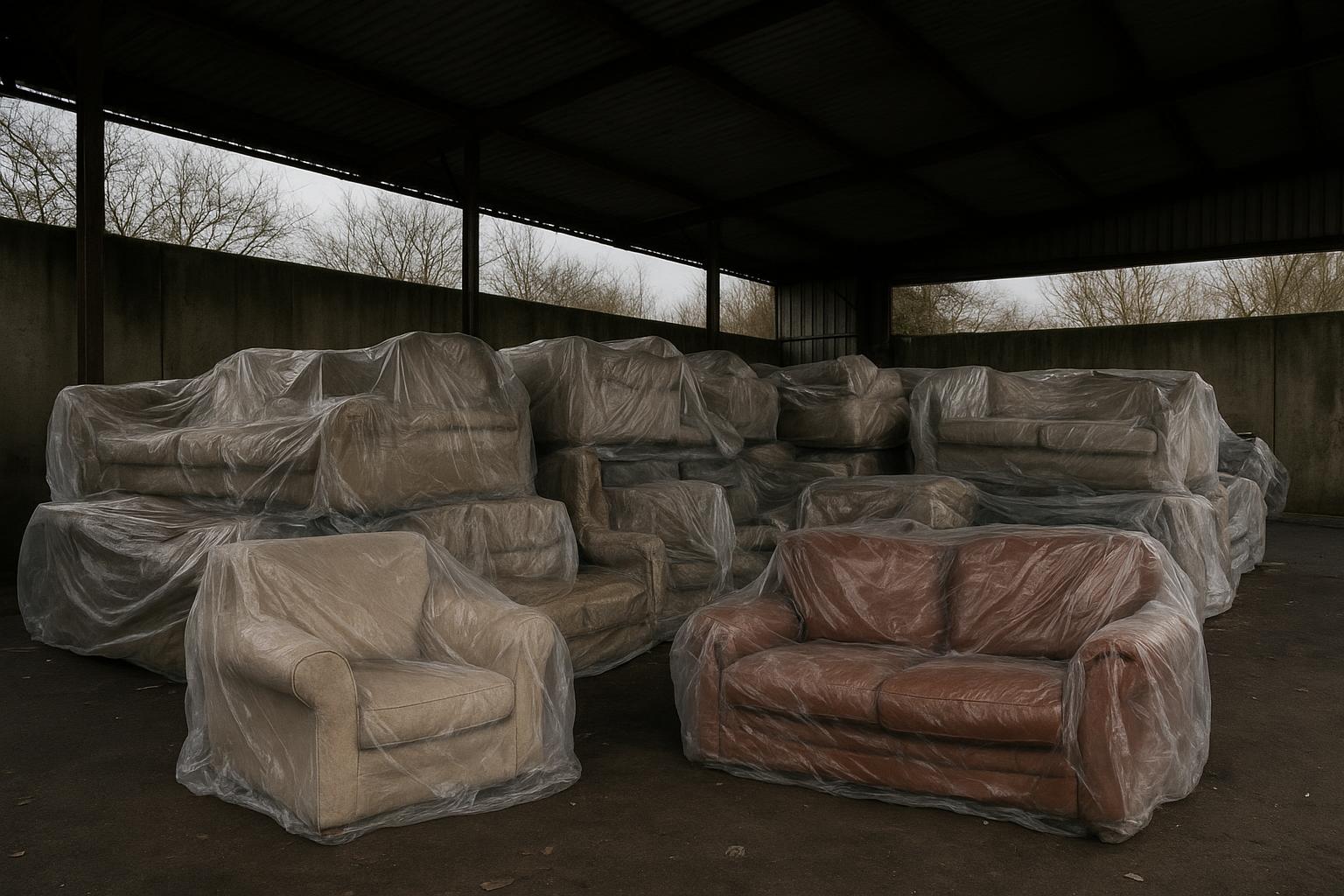
A clearance crew usually loads a van or lorry with many different items. If a POPs-affected sofa is thrown in with general waste, the whole load can end up being treated as contaminated, which affects where it can go and what it costs. For this reason a careful carrier will pick the item out, keep it apart, and take it through a route that can deal with it.
This can also affect timing. A carrier may need to arrange a separate collection, a dedicated container or a specific disposal facility, and that is reflected in the price. It is another reason to mention upholstered items when you ask for a quote, rather than leaving them to be discovered on the day.
The same logic explains why some firms will not take certain items at all. Our guide to hazardous waste and why clearance firms refuse it covers the wider picture of items that need separate treatment.
Storage and transport on the day
Small details that keep the item compliant.
Affected furniture should be kept dry and whole until it is collected. Wrapping the item in plastic sheeting helps protect it and keeps foam fragments from spreading in the van. Crews will normally avoid crushing or compacting such items in the vehicle, because that can break up the foam and mix it with other waste.
If the property has a communal hallway, stairwell or lift, tell the carrier in advance so they can plan the carry and protect the walls. Heavy sofas are a common cause of damage and injury during clearances, and the item may take two or more people. Our guide to moving heavy furniture safely explains what a careful team does.
After the job, keep any photographs of the items before loading, the carrier's invoice and the waste transfer note together. If a question comes up later, this is your evidence that the furniture was passed to an authorised person and described correctly.
Your duty of care and the paperwork
Pass it to the right person and keep proof.
As the householder, you have a duty of care to pass your waste only to an authorised person. That means a registered waste carrier, a council collection or a licensed site, and not an unknown collector who turns up on a social media post. Our guide to the householder duty of care explains what that involves in plain terms.
When a carrier collects waste, the transfer should be recorded on a waste transfer note with a description of the waste. For furniture that may contain POPs, the description should say so, so that everyone down the chain knows how to handle it. Read our guide to waste transfer notes and ask to see the note, or a copy, after the job.
If a collector says they will take everything, does not ask about the age of the sofa and cannot show a carrier licence, treat that as a warning sign. See the risks of hiring an unlicensed man and van for more on how illegal dumping of unwanted furniture happens and who is held responsible.
Your options for getting rid of an older sofa
Several routes, each with trade-offs.
Which route is best depends on the item, its condition and how it was made. These are the main choices.
- Council bulky waste collection. Many London boroughs collect sofas for a fee and handle upholstered seating under their own arrangements. Ask the council whether it separates POPs items and what it needs to know in advance.
- A registered waste carrier or clearance firm. Tell them the age and type of the item, share photographs of the label and ask how they will dispose of it and what paperwork you will receive.
- Donation or reuse. A sofa in good condition may be accepted by a furniture reuse charity, but many have rules about fire-safety labels and condition. See our guide to furniture donation in London and check the charity's requirements first.
- Retailer take-back. Some retailers collect your old sofa when they deliver a new one. Ask what they do with it and whether they follow the POPs rules for older items.
- Household waste recycling centre. Rules differ by borough, and some sites do not accept upholstered seating or ask you to place it in a separate container. Check your local site before travelling.
If you are comparing prices, our guides on how to get rid of a sofa for free and what the council charges to remove a sofa give a wider view. Always weigh the cheapest quote against whether the collector will treat the item properly.
How this affects a house clearance
Plan for upholstered items before the day.
In a whole-house clearance there are often several sofas, armchairs, dining chairs and sofa beds, some of them decades old. A carrier assessing the job will usually walk through the property or review photographs and make a note of how many upholstered items there are and roughly how old they look.
If you are clearing a property for a relative or as an executor, you may not know when each item was bought. In that case take photographs of any labels you can find and tell the carrier that you are unsure. Together you can agree how the items will be treated, and who covers the extra cost if a disposal route turns out to be more expensive than first assumed.
For a whole-property job, the order of work matters. Upholstered items that need separate handling should be identified early, cleared out of the way of other waste and loaded separately so that they do not contaminate the rest of the load. This is the kind of detail a competent crew will already plan for.
Our guide to furniture and bulky item removal costs in London explains how the size and number of items affect the price. Upholstered pieces are usually among the largest.
If you are clearing a property as an executor or landlord
Records matter more when you act for someone else.
Executors, landlords and managing agents have an extra reason to take care. You are acting on behalf of an estate or an owner, and you may be asked later to account for what was done with the contents. Keep a simple inventory that lists each upholstered item, a photo of its label, and the disposal route the carrier used.
Where the property is let, check the tenancy and any inventory first, because some furniture may belong to the tenant. Disposing of an item that is not yours to dispose of is a separate problem from the POPs rules, and it is easier to avoid than to fix.
If the estate is being valued, a sofa in good condition may have some resale or donation value, while older foam-filled items may have none. Take advice from your solicitor or probate adviser if you are unsure how to treat the contents.
Cost and what affects it
Expect a range, not a fixed price.
We do not give a fixed price for POPs furniture disposal because it varies by carrier, borough, volume and route. What usually affects the cost is the number of upholstered items, how heavy they are, how many floors they must be carried down, whether the carrier must make a separate trip or use a separate container, and the gate fee at the facility that accepts them.
It is reasonable to expect a collector who handles these items properly to charge more than one who throws everything into the same load. A very low quote for sofas in particular may mean the item will not be handled as the law expects, and that risk comes back to you if the waste is traced to your address.
Ask for the price in writing, and ask whether upholstered furniture is itemised or included in a flat volume rate. If you are getting several quotes, our pricing by volume guide helps you compare them on the same basis.
Questions to ask any carrier
Five questions that separate careful firms from careless ones.
Before booking, ask these questions and note the answers.
- Are you a registered waste carrier, and can I see your licence number?
- Do you separate older upholstered furniture that may contain POPs, and how do you dispose of it?
- Will the waste transfer note describe the sofa correctly?
- Which facility will the furniture go to, and can you tell me its name?
- Is the cost of separate handling included in the quote, or added later?
Our page on how to check a waste carrier licence shows how to verify the first answer yourself in a couple of minutes.
Frequently asked questions
Common questions about POPs, sofas and upholstered furniture disposal.
What does POPs mean in the context of sofas?
POPs stands for persistent organic pollutants, chemicals that last a long time in the environment. Some older sofas and chairs contain flame retardants that are classed as POPs, so their disposal is regulated.
Do all old sofas contain POPs?
No. Risk is higher for older foam-filled upholstered seating, but not every item contains them. Check the label and age, and ask your carrier to assess it.
Can I put an old sofa in a skip or take it to landfill?
If it contains POPs above the permitted limits, it should not go to landfill. Ask your carrier or council how they handle upholstered seating before you book.
How do I tell if my sofa has POPs?
Look for the stitched fire-safety label, check for a manufacturing date or receipt, and note the type of padding. If you cannot tell, say so and let a professional carrier decide how to treat it.
Is it illegal to give away an old sofa?
Donating or selling furniture is not automatically illegal, but charities and sellers have their own rules about labels and condition. Check the current GOV.UK guidance and the charity's requirements first.
Who is responsible if my sofa is fly-tipped?
You can be held responsible if you pass waste to someone who is not a registered carrier and it is dumped. Always check the licence and keep your paperwork.
Why does my quote say sofas are charged separately?
Some carriers charge extra for upholstered seating because it may need separate handling, a different disposal route and a higher gate fee. Ask for the reason in writing.