
Boroughs and postcodes covered
The City of London, Westminster, and Kensington and Chelsea - grouped here as Central London for convenience.
"Central London" isn't a London borough in its own right - it's a grouping of three boroughs that houseclearance.co covers individually: the City of London, Westminster and Kensington and Chelsea. If your address sits inside any of them, you're in scope for house clearance in Central London - exactly which carriers are free to quote on a given day still depends on who's operating nearby when you post the job.
- City of London - the Square Mile, Barbican and Smithfield, across EC1, EC2, EC3 and EC4. The smallest and most unusual of the three, with a large daytime working population and comparatively few residential addresses.
- Westminster - Mayfair, Soho, Pimlico and Marylebone, across W1, W2, WC2 and SW1. Mansion blocks, mews houses and converted terraces, with wide variation in property size within the same borough.
- Kensington and Chelsea - Kensington, Chelsea and Notting Hill, across W8, W10, W11, SW3, SW5, SW7 and SW10. Stucco-fronted terraces converted into flats, plus mansion blocks and mews properties.
Each borough runs as its own coverage area rather than one combined pricing zone - a carrier quoting on a Chelsea job isn't necessarily the same carrier who'd quote on one near Smithfield. This page exists to give a single overview of the three together, since they sit next to each other and share a lot of the same access challenges, but your job is still posted against your specific postcode and borough. See each borough's own page - linked above - for the full detail on postcodes, neighbourhoods and borough-specific FAQs.
If none of the three are the right fit for your address, houseclearance.co also covers the wider area through North London, West London, South London and East London - the same estimate-then-quote process applies in each.
Property types and access across Central London
Mansion blocks, period conversions and managed buildings - driveways are the exception, not the rule.
Property types vary between the three boroughs, but the overall pattern across Central London is consistent: dense, often period buildings carved into flats, with off-street parking rare and a meaningful share of buildings run by a porter, concierge or managing agent rather than a simple front-door key. In Kensington and Chelsea, that typically means tall stucco-fronted terraces split into two or three flats, or mansion blocks with their own rules about service lifts and permitted collection times. In Westminster, the mix runs from Mayfair mansion-block flats and mews houses to upper-floor flats above Soho shopfronts and the wide stucco terraces of Pimlico. The City of London is different again - a largely commercial borough where a clearance is as likely to be an office or set of chambers as a residential flat, often in a building with a security desk and restricted loading bay access.
Because off-street parking is the exception across all three boroughs, a carrier quoting on a house clearance in Central London job is more likely to ask about the nearest loading point, controlled parking zones or a building's access procedure than about a driveway. Mentioning stairs, lift availability, porter or security arrangements, and any restricted loading window when you post the job means it's priced in from the start, rather than adjusted on the day.
Recent case studies in Central London
Genuine completed clearance jobs documented from verified historical job records, with real before-and-after photos.
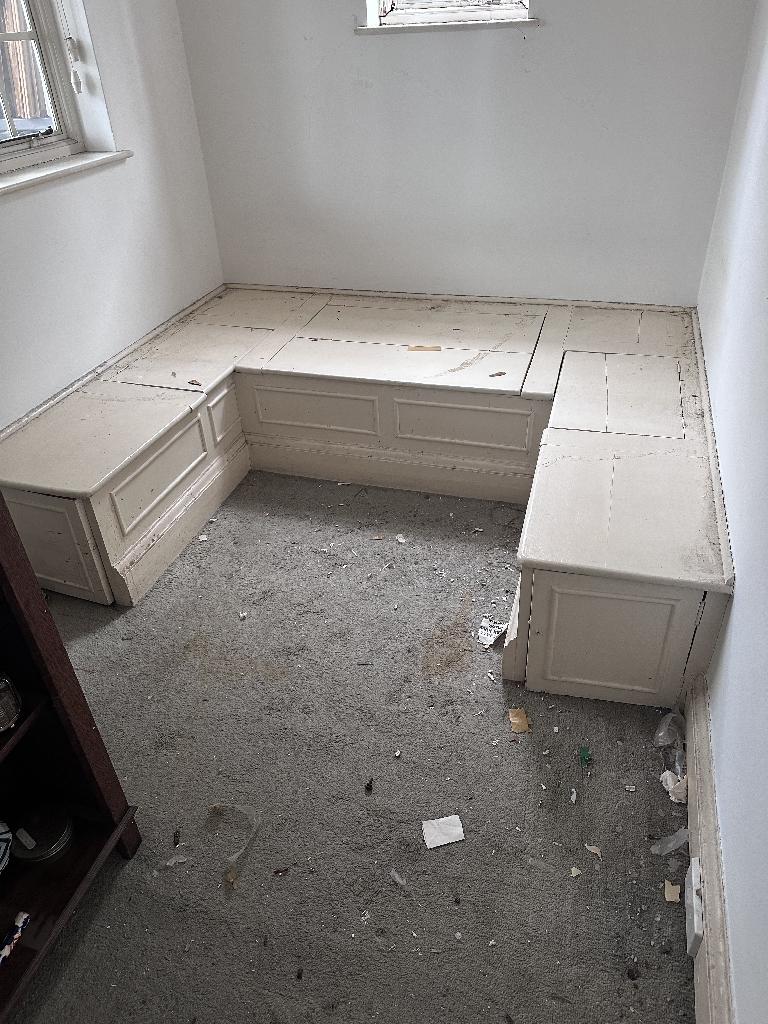 Multi-Room Flat Clearance in Chelsea, SW3
Flat clearance in Chelsea SW3 with a £1,800.00 job clearing boxes, bagged waste and furniture from a corridor, bathroom and living area in 150 minutes, documented from a verified historical job record published on houseclearance.co.
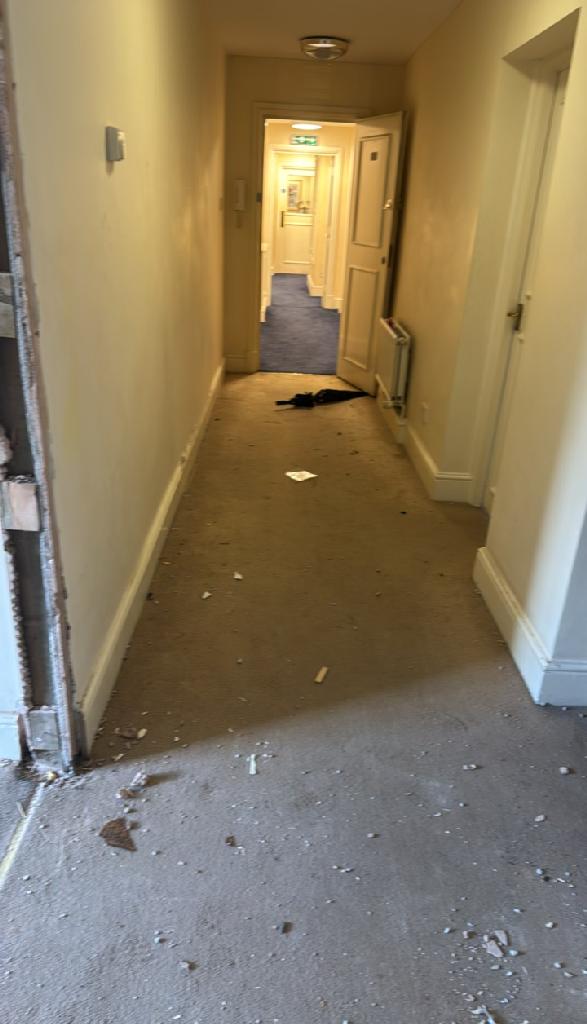 Home Renovation Waste Clearance in Marylebone, W1
Renovation waste clearance in Marylebone: a £910.00 job removing construction waste from a recent interior works phase, completed in 47 minutes.
See all case studies across London.
How the estimate-then-quote process works
No fixed rate card - an estimate first, then real quotes from carriers.
houseclearance.co isn't a single removals firm with one van and a fixed catchment area. Instead, the job is shared with suitable licensed carriers operating in or near the relevant postcode, and interested carriers with capacity that week can provide a quote. The process runs the same way whether your address is in the City of London, Westminster or Kensington and Chelsea.
- Post the job using the job request form, with roughly what needs clearing.
- Post the job with your postcode and any access details - stairs, parking, lift availability, porter or security arrangements.
- Licensed carriers covering your borough review the job and submit their own quotes.
- You compare the quotes on offer and choose one - or none, if nothing suits you.
- The carrier attends, clears the property, and sorts items for reuse, recycling or disposal as they go.
There's no fixed house clearance price across Central London, for the same reason there's no single rate card - carriers set their own quotes. See how it works for the fuller walkthrough of the process end to end. Two similarly sized jobs, even in neighbouring boroughs, can attract different offers, since pricing reflects carrier availability that week, congestion and ULEZ considerations, and how much access detail you've given, not a fixed zone-wide rate.
What's included in a house clearance
Furniture, appliances and household items make up most residential jobs; office contents are common in the City.
A typical house clearance job across Central London's residential boroughs - Westminster and Kensington and Chelsea - touches furniture, appliances and everyday household items, with garden waste added in if you flag it up front for one of the few properties with a garden square or courtyard. Boxed belongings, worn carpets, mattresses, and the clutter that builds up over years in a flat all fall into the same job rather than a separate one. In the City of London, a meaningful share of jobs are office or chambers clearances instead - desks, filing cabinets and IT equipment - so if your job is primarily commercial, the office clearance London page covers that in more detail.
Volume matters just as much as item type across all three boroughs. A single wardrobe and a full period-conversion flat clearance both fall under "furniture and household items" broadly speaking, but they take very different amounts of time and vehicle space, and that shows up directly in the quotes you receive. Photos usually help carriers judge volume more accurately than a written description alone, particularly where a modest-looking street frontage hides several floors of original Victorian or Georgian proportions, common across Kensington, Chelsea and parts of Marylebone.
Items that need special handling
A few categories worth flagging before you post, not on the day.
A short list of items falls outside what a standard clearance automatically covers, so it pays to mention them when posting: hazardous waste such as chemicals, paint tins and gas canisters; anything containing or suspected of containing asbestos, not uncommon in older Central London buildings that predate modern regulations; and large electricals, fridges or freezers that need WEEE-compliant disposal because of the refrigerants inside them. In the City of London specifically, confidential paperwork and office IT equipment are worth a separate mention, since secure disposal or data destruction may need agreeing on top of a standard clearance. None of these rule a job out on their own - they just mean the carrier can line up the right disposal route beforehand instead of finding out on the day.
Rubble, plasterboard and old kitchen units from building or renovation work fall into much the same bracket - don't assume it's automatically included, say so explicitly. What's actually within scope for a given job gets settled between you and the carrier at posting and again when they submit their quote, rather than being fixed upfront by houseclearance.co.
Common reasons people arrange a clearance here
Moving, downsizing, letting a property, lease ends, or dealing with an estate.
Because Central London's housing mix leans so heavily towards converted flats and managed blocks rather than self-contained houses, a lot of the clearance work across these three boroughs is tied to a change of occupant rather than a whole household moving as a unit: a tenancy ending in Westminster, a flat in Kensington and Chelsea being sold on, or a single flat within a larger building being emptied after a bereavement. In the City of London, the pattern looks a little different again - office or chambers leases reaching their end, or a business relocating and leaving furniture behind. Add the more familiar situations - downsizing to somewhere smaller, or a landlord turning a property around between lets - and most Central London jobs fall into one of these categories. A moving-day or lease-end clearance tends to run to a hard deadline, while a probate clearance usually needs more time for sorting sentimental items - worth flagging when you post, so the quotes reflect the right pace.
Probate, lease-end and tenancy clearances
Situations that usually need a bit more care than a routine job.
Carriers working across the City of London, Westminster and Kensington and Chelsea handle probate clearances and inherited-property clearances regularly, including full properties where belongings need sorting - kept, valued or passed on - rather than simply removed. These jobs often run to a timeline set by solicitors or family circumstances. If it would help to see how a clearance like this reads in practice, the case studies section has examples of similar jobs.
End-of-tenancy clearances work to their own logic - a landlord or letting agent sets a fixed handover date rather than the outgoing occupant, and the property generally has to be properly empty and ready for re-letting or sale. In the City of London, the equivalent is an end-of-lease office clearance, usually driven by a landlord's handback date and sometimes a specific dilapidations standard. Giving the carrier that date, plus who'll be there to grant access, is usually enough for them to plan the job around it.
What affects your quotation
The practical details carriers weigh up before they quote.
There's no rate card behind a Central London clearance quote - it comes down to what individual carriers quote once they know the details. Here's what typically shapes that number:
- Overall volume of contents and number of bulky items
- Access - stairs, lift availability, porter or security procedures, and distance to the parked vehicle
- Parking or loading restrictions, including the controlled parking zones that cover most of Zone 1
- Whether any items need dismantling before removal
- Specialist waste requiring separate handling, including IT equipment or confidential paperwork for office jobs
- How many loads the job is likely to need
- How urgent the job is, including any lease handback or tenancy deadline
- Congestion charging and Ultra Low Emission Zone considerations, which apply across all three boroughs
None of the above works like a set multiplier - each one just adds or removes time and vehicle space, and carriers price accordingly. Sharing this upfront when you post generally produces a tighter, more reliable quote than letting a carrier find it all out on site, which matters more here than in boroughs where parking right outside is the norm rather than the exception.
Preparing for the day
A few simple steps that make the job quicker for everyone.
After a quote's accepted, a bit of groundwork keeps the day on track: separate out what you're keeping, flag any controlled parking zone or loading restriction on your street ahead of time, let a building's porter, concierge or managing agent know a carrier is due if one applies, and agree who's giving access on the day. None of it's mandatory, but skipping it raises the odds of a delay or requote, especially on Zone 1 streets where finding a legal spot to park can take longer than loading the van.
Council bulky collection vs. houseclearance.co carriers
Two different routes to the same outcome - which suits your job.
Each Central London borough runs its own paid bulky waste collection booking - Westminster City Council, the Royal Borough of Kensington and Chelsea's "Too Big For The Bin" service, and the City of London Corporation's own scheme. The trade-offs are fairly consistent across all three: a cap on how many items go in one booking, a wait measured in days rather than hours, and construction, garden or commercial waste generally excluded altogether. It's also a kerbside or collection-point service rather than an inside collection, so whoever books it still has to get everything out themselves - a genuine problem if the property has stairs and no lift, sits behind a managed building's security desk, or you're arranging the clearance for someone else.
| Consideration | Council bulky collection | houseclearance.co carriers |
|---|---|---|
| Item limits | Usually capped per booking | Set by the carrier's quote, not a fixed cap |
| Typical wait | Often days for a slot | Depends on carrier availability |
| Where collected from | Kerbside or collection point | Can include inside collection, agreed with the carrier |
| Construction/garden/office waste | Generally excluded | Can be included if agreed when posting |
A carrier network like houseclearance.co is one alternative when you need more flexibility than that - inside collection, a wider range of item types in one visit, or a faster turnaround than a scheduled council slot allows. It isn't a replacement for the council service in every case: for a single item with plenty of notice, a council booking may well be the simpler and cheaper route. A carrier network tends to help more for larger or mixed jobs, tighter timelines, or properties where getting items to the kerb yourself isn't realistic. Check each borough's own council page - linked from the borough pages above - for the current booking system, since fees and slots are set by the council, not by us.
Responsible disposal across Central London
Reuse and recycling first, landfill only as a last resort.
Waste doesn't get bundled into one load and sent to a single place - it's sorted as the property is cleared. What's still usable typically goes to local charities or reuse schemes, metal, wood and electricals are separated for recycling, and landfill is reserved for whatever's genuinely beyond reuse or recycling. The specifics can vary a little between carriers, so ask about it when comparing quotes if it matters to you. See responsible disposal for more on how the platform expects this to work, and waste carrier licence for what licensed waste carrier verification on the platform involves.
Fly-tipping and local recycling centre arrangements differ by borough - each council handles its own enforcement and runs or shares its own household waste recycling centre. The City of London, Westminster and Kensington and Chelsea borough pages each link directly to their council's fly-tipping report form and recycling centre page, with the current address, opening hours and any booking requirements.
Example clearances from the area
Real completed clearance projects from across Central London.
If you'd like to see how the estimate-to-completion process reads in practice before posting your own job, there's a real completed example from Chelsea, SW3 - a multi-room flat clearance that cleared boxes, bagged waste and furniture from a corridor, bathroom and living area in 150 minutes for £1,800.00 - and another from Marylebone, W1, a renovation waste clearance removing construction waste from a recent interior works phase in 47 minutes for £910.00. Each write-up reflects a genuine completed job, documented from a verified historical job record rather than a hypothetical example. For a wider set of clearance write-ups across London, see the main case studies section.
Quick checklist before you post a job
The details that help carriers quote accurately first time.
- Your postcode and borough, and a rough idea of property or office size
- Photos of the rooms or areas to be cleared, if you have them
- Any items needing special handling - hazardous waste, suspected asbestos, large fridges/freezers, confidential paperwork or IT equipment
- Access details: stairs, lift, porter or security procedures, controlled parking zones, distance to the road
- Any deadline - moving date, tenancy handover, lease handback, property sale
- Who will be present to give access on the day
Get a price estimate for your Central London clearance
Real quotes from licensed carriers.
Get my priceFrequently asked questions
Questions worth clearing up before you post a job in Central London.
How much does house clearance in Central London cost?
There isn't a set price, since every quote comes from a carrier's individual quote rather than a published rate. The job request form lets you post your job, and that posting brings in real offers from carriers covering your specific borough.
Is "Central London" a borough you cover directly?
Not as a single administrative area - Central London is our name for three boroughs houseclearance.co covers individually: the City of London, Westminster and Kensington and Chelsea. Your job is posted against your actual postcode and borough, and each has its own coverage page with full detail.
Is house clearance in Central London more expensive than elsewhere in London?
Not by design. Pricing comes down to volume, access and which carriers happen to have capacity that week, not a zone-wide premium baked into the platform. That said, controlled parking zones, congestion charging and the Ultra Low Emission Zone are more consistently present here than in outer boroughs, and carriers do factor those practicalities into a quote.
What if no carrier is available near me in Central London?
It happens now and then, mostly during particularly busy stretches, and more often in the smaller City of London than in Westminster or Kensington and Chelsea. Rather than the listing dropping off, it just stays open, so a carrier can still take it on once availability frees up.
Can a carrier collect from a flat with no lift or a managed building with a porter?
Yes, and this is routine rather than exceptional across all three boroughs, given how much of Central London's building stock is converted period property or mansion blocks with their own access rules. Mentioning the stairs, a porter or security arrangement, or the distance from the front door to wherever a vehicle can stop, at posting stage means it's built into the quote from the start rather than renegotiated once the carrier's arrived.
Do you clear offices as well as homes in Central London?
Yes, particularly in the City of London, where a meaningful share of jobs are office or chambers clearances rather than residential ones. See office clearance London if your job is primarily commercial.
Do you clear probate or inherited properties in Central London?
Yes - carriers on the platform handle probate and inherited-property clearances across the City of London, Westminster and Kensington and Chelsea, often to a timeline set by solicitors or family circumstances, and involving belongings that need to be kept, valued or passed on before the rest of the property is cleared. See the case studies section for examples of similar jobs.
What happens to items after they're collected?
They're sorted rather than dumped as one job lot: usable items typically go to local charities or reuse schemes, recyclable materials are separated out, and only what genuinely can't be reused or recycled ends up in landfill. The exact process can differ slightly carrier to carrier, so ask if it's important to you when comparing quotes.
Is same-day house clearance available in Central London?
Whether a carrier can turn it around the same day comes down to who's already working near your postcode and has room left in their schedule that day - it happens, but it isn't guaranteed for every job or date. See same-day clearance for more on how that works.
Does parking or a controlled zone affect the price in Central London?
It can. Controlled parking zones, restricted loading windows and congestion charging are consistently present across the City of London, Westminster and Kensington and Chelsea, and a carrier who has to park further away or wait for a loading bay will usually factor that into their quote. Mentioning any known restriction on your street when you post the job helps carriers price it accurately rather than adjusting once they've already arrived.
Nearby parts of London
Central London sits at the middle of the map, bordered by other parts of the city houseclearance.co also covers - North London, West London, South London and East London. If your street sits closer to one of these than to the City of London, Westminster or Kensington and Chelsea, it's worth checking whichever page matches your postcode most closely. houseclearance.co covers all of them, and the same process - post the job, then real carrier quotes - applies in each.
Looking for a different area? See the full London coverage map, or read the House Clearance London overview.