
Direct answer
Working white goods such as fridges, freezers, washing machines, dishwashers and cookers can be donated to reuse projects, housing and welfare schemes, and some charities, but only if they are safe, clean and tested. Check for damage, check the make and model against product recall notices, and clean the appliance inside and out. Gas cookers and gas-fired appliances need a Gas Safe registered engineer to check and disconnect them, and many organisations refuse them. Contact the organisation first to confirm what it accepts, and if no one can take the appliance use retailer take-back or WEEE recycling instead of leaving it outside. Be honest about the age and condition.
Contents
- Why donating appliances matters
- What a second-hand appliance saves
- Safety checks before you donate
- Energy efficiency and running costs
- Gas cookers and gas appliances
- Electric cookers, hobs and microwaves
- Who accepts appliances in London
- Referral-based schemes
- Preparing the appliance for collection
- Washing machine and dishwasher specifics
- Costs, charges and transport
- Records to keep
- If nobody can take the appliance
- Repair and spare parts
- Appliances in a house clearance
- Timing a donation within a tight clearance
- Short checklist for donors
- Common donor mistakes
- Frequently asked questions
Why donating appliances matters
A big expense for families on low incomes.
White goods are expensive to buy new, and a broken fridge or washing machine can push a household into debt or into expensive hire-purchase deals. Many families, people leaving homelessness or domestic abuse refuges and new arrivals setting up a home cannot afford even a second-hand appliance from a shop.
Reuse projects and welfare schemes fill that gap by collecting working appliances, testing them, cleaning them and supplying them at low cost or free. The environmental benefit is also large, because reusing an appliance saves the energy and materials needed to make a new one.
Donation is therefore one of the most helpful things you can do with a working appliance at the end of a clearance, as long as it is safe and the receiving organisation can take it.
What a second-hand appliance saves
Money and materials.
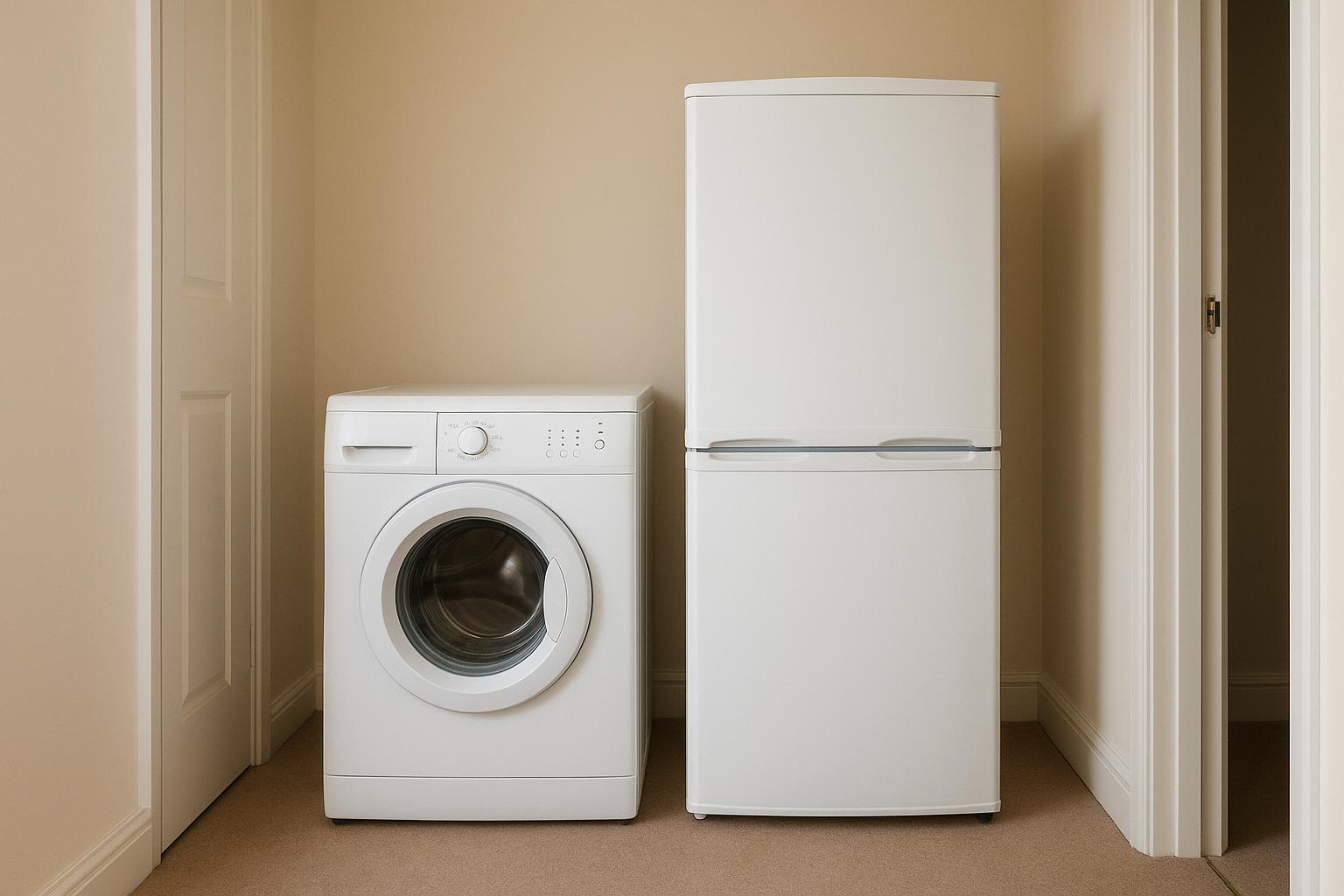
A new washing machine can cost several hundred pounds, and a fridge freezer is a similar price. For a household on a tight budget, that money is simply not available. Buying on credit or through rent-to-own schemes can cost far more over time than the sticker price, which is why a donated appliance can be a lasting help.
The environmental side is just as real. Making an appliance uses steel, copper, plastics and electronic parts, and a lot of energy. Keeping a working machine in use for several more years avoids that production burden. This is the logic of the waste hierarchy, which puts reuse ahead of recycling.
It also keeps the machine out of the WEEE stream for longer, which reduces pressure on recycling plants and the risk of illegal dumping.
Safety checks before you donate
Do not pass on a risk.
An appliance that works is not always safe. Before offering it, check these points.
- Visible damage: frayed cables, cracked plugs, scorch marks, rust in the base or door seals that are split.
- Recall notices: check the make and model on the official product recall pages, because some appliances have been recalled for fire or electrical risks.
- Age: very old appliances may be inefficient or unsafe, and many organisations have an age limit.
- Operation: run the appliance through a cycle, or check that a fridge cools properly over several hours.
- Cleanliness: remove food, clean seals and filters and empty water trays.
- Documents: keep any manuals, receipts and guarantees and pass them on.
If you are in doubt about electrical safety, ask a qualified electrician to check it, or accept that recycling may be the better option. Our guide to WEEE and electrical recycling explains the alternatives.
Energy efficiency and running costs
A question of fairness to the recipient.
Older appliances can use much more electricity and water than modern ones. A fridge freezer from the 1990s may cost noticeably more to run than a recent model. Reuse projects often have age limits for this reason, because passing on an inefficient machine can leave a low-income family with higher bills.
If you know the energy rating label, note it. If not, the age is a good guide. Recipients should understand what they are getting and the likely running cost. Honest information from the donor helps reuse projects to decide.
Where an appliance is very old but still works, a reuse project may still accept it if the need is urgent and the recipient is aware of the running cost. Ask rather than assume.
Gas cookers and gas appliances
A special case.
Gas cookers, gas hobs and gas boilers must only be installed, disconnected and checked by a Gas Safe registered engineer. A householder should not disconnect or reconnect a gas appliance. If you want to donate a gas cooker, it must be disconnected safely before collection, and the receiving organisation may need a Gas Safe engineer to test it before reuse.
Because of the cost and risk, many charities refuse gas appliances or accept them only from projects that have an engineer. Electric cookers are easier because they can be tested with standard electrical checks. Our guide to built-in furniture removal covers other fixtures that need a professional to remove.
If you suspect a gas leak, leave the property, do not use switches and call the national gas emergency number from outside.
Electric cookers, hobs and microwaves
Easier to rehome.
Electric cookers, ovens, hobs and microwaves are more commonly accepted than gas ones, but they have their own checks. Fixed electric cookers are usually wired into a dedicated circuit, and disconnecting them should be done by a competent electrician. Freestanding cookers with a plug are simpler.
Clean the oven, grill pan and hob thoroughly. Burnt-on grease is a fire risk and makes an appliance look unloved. Check the door seals, the controls and the glass, and test every ring or element. A broken element or a cracked glass door will usually lead to a refusal.
Microwaves should be tested for heating, checked for damaged doors and cleaned inside. An old microwave with a damaged door seal is a safety risk and should not be passed on.
Who accepts appliances in London
Types of organisation to approach.
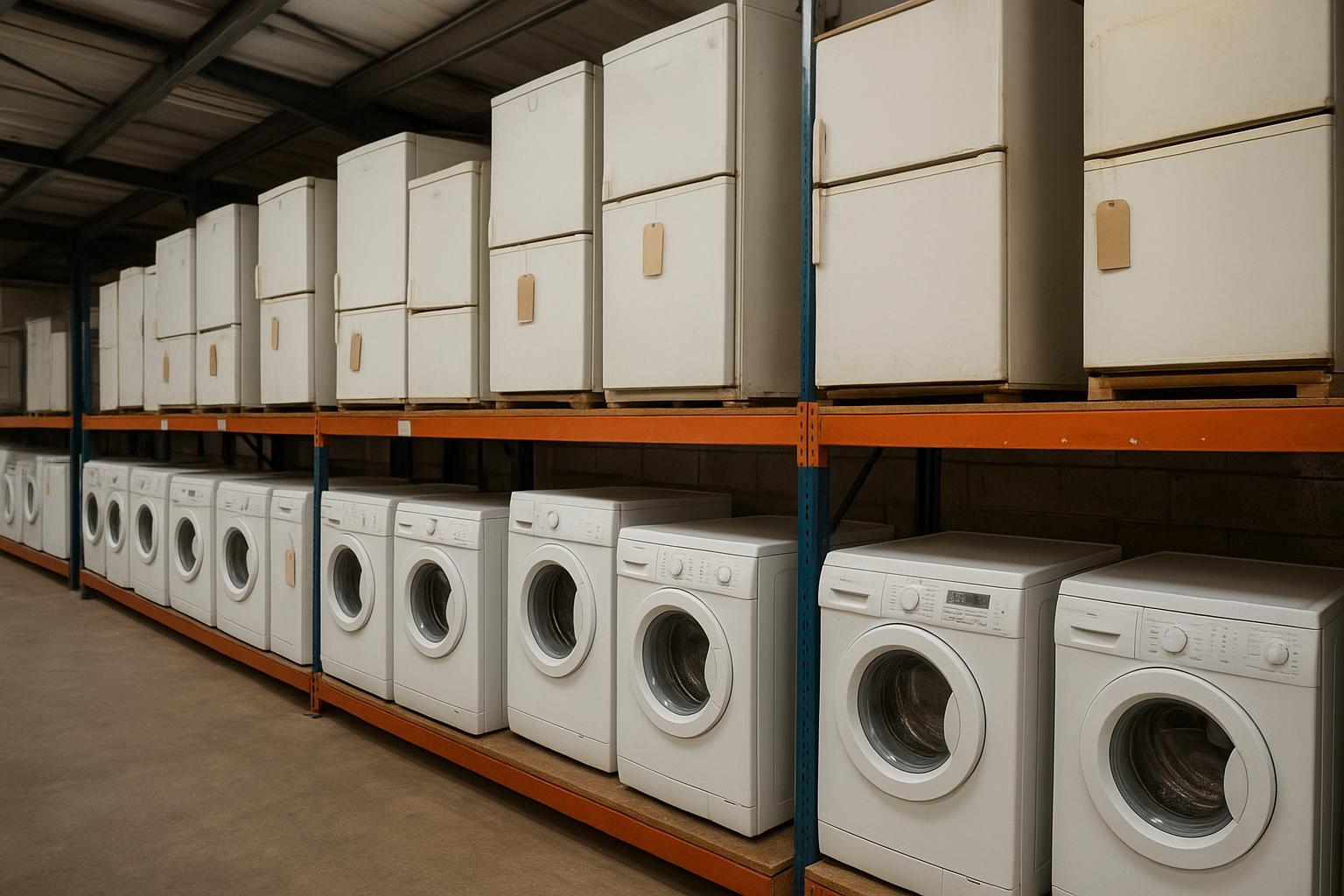
The organisations that accept white goods include furniture and appliance reuse projects, some housing associations and local welfare assistance schemes, community groups linked to food banks or refugee support, and a few national charities with their own testing arrangements. Their coverage varies by borough and changes over time, so check each organisation's website and phone them before you offer anything.
Ask what they accept, the maximum age, whether they test items themselves, whether they collect and whether there is a charge. Some organisations only take items from households referred to them by social workers, schools or health visitors, and others accept direct donations.
Our guides on charity furniture collections in London and furniture donation in London cover the process of finding and booking a collection, which is similar for appliances.
Referral-based schemes
How some organisations decide who gets what.
Many appliance reuse schemes work on a referral basis. Social workers, housing officers, schools, health visitors, food banks and community groups put forward households that need help, and the scheme matches appliances to those needs. The donor does not usually meet the recipient.
This system is fair because it directs limited stock to people with the greatest need. It also means that you may need to wait for a match, particularly if you are offering a less common item. Be patient, and keep the appliance in a clean, dry place until it is collected.
If you know a family in need, you may be tempted to give directly. That is generous, but check that the appliance is safe and tell the recipient about its age and history, in the same way a charity would. If you are in doubt, a referral scheme can help to match the gift safely.
Preparing the appliance for collection
Practical steps.
Clean the inside and outside, defrost freezers and fridges at least twenty-four hours in advance and leave the door slightly open to prevent mould. Disconnect washing machines and dishwashers, drain the hoses and tape or tie the hoses to the back so they do not leak or tangle.
Remove shelves and drawers from fridges and wrap them separately. Take out any racks or trays from ovens. Keep the appliance upright, particularly fridges and freezers, because tilting can allow compressor oil to move into the cooling system. Many reuse projects ask that fridges stand upright for a few hours before transport.
Clear the route to the door, protect the floor and arrange helpers for heavy items. Our guide to moving heavy furniture safely and the advice on preparing bulky items for collection apply here too.
Washing machine and dishwasher specifics
Details that stop leaks and damage.
Run a hot empty cycle with a washing machine cleaner or white vinegar to remove limescale and odours. Clean the detergent drawer and filter and dry the door seal. Disconnect the water supply and drain the machine thoroughly, because water left inside can leak or freeze in transit.
Fit the transit bolts or secure the drum as the manual recommends. If you no longer have the bolts, tell the organisation, as they may have spares. Tape the power cable to the back and wrap the hoses in a bag. For dishwashers, remove the racks and filter, clean the spray arms and leave the door slightly open until collection.
Take photographs of the machine in working order if you can, for example a clean drum and a clear cycle display. That helps the organisation to decide quickly and shows that you made a real effort to prepare it.
Costs, charges and transport
Free is not always possible.
Some organisations collect appliances free of charge. Others ask for a donation, or charge a small fee for collection because of the effort and fuel involved. If you can deliver the appliance yourself, ask whether that reduces the charge or avoids it.
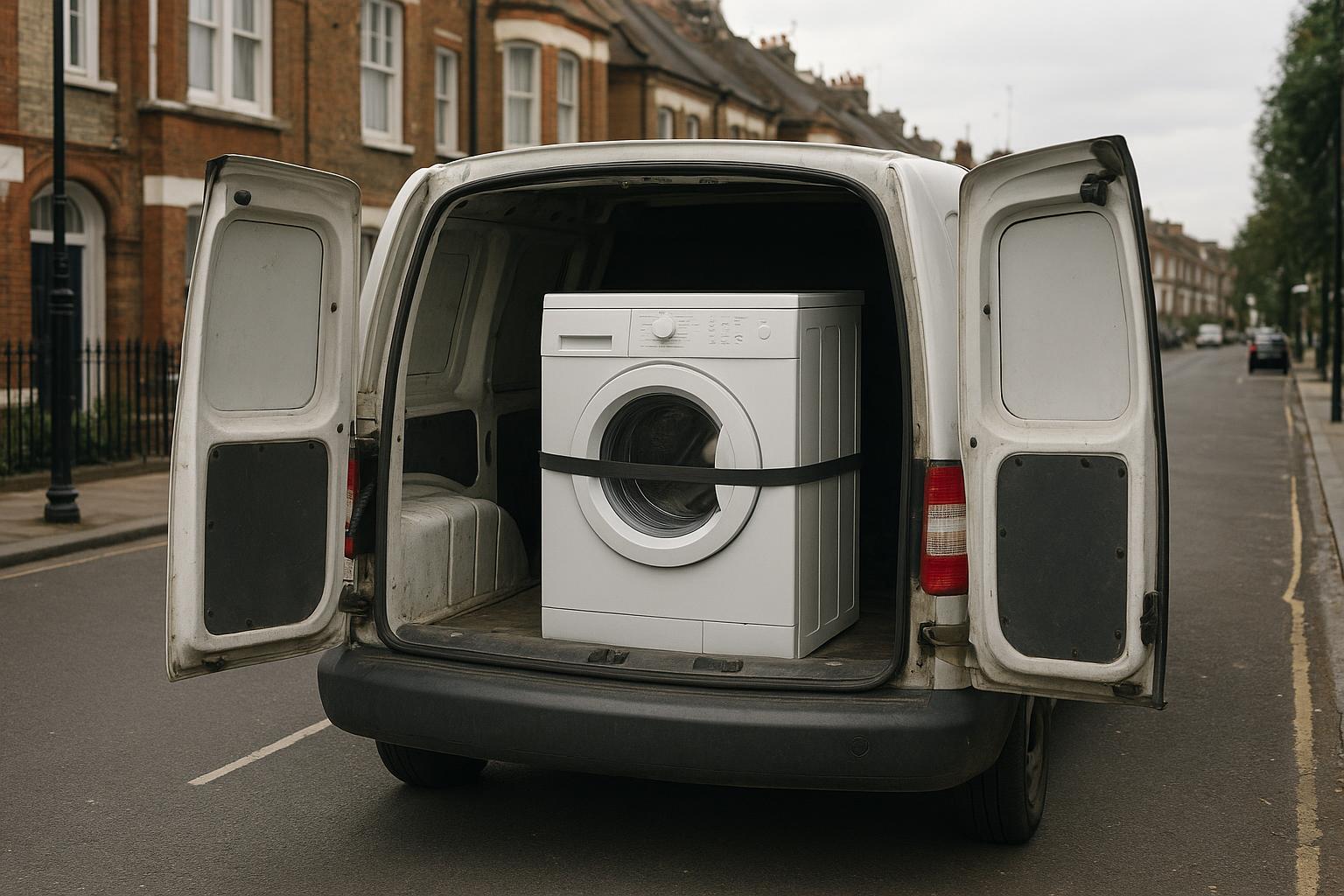
Transport needs care. Washing machines should be fixed so the drum cannot swing, as set out in the manual, and fridges should be strapped upright in the van. If you hire a van, you are responsible for loading safely. If you hire a clearance firm, ask whether it can take working appliances to a reuse partner and what it charges.
If the cost of delivery is more than the value of the appliance, it may be better to use retailer take-back or WEEE recycling.
Records to keep
A simple paper trail.
Keep a short record of what you donated: the date, the organisation, the appliance type, make and model, and any reference number. If you can, take a photograph of the appliance on collection. If the organisation gives a receipt, keep it with your papers.
This matters most if you are acting for an estate or a landlord, but it is a good habit for anyone. A record protects you if a dispute arises and shows that the appliance went to a legitimate reuse route rather than being dumped.
If nobody can take the appliance
Alternatives to donation.
If the appliance is too old, faulty or not wanted by any local organisation, the correct route is recycling. A retailer that sells a replacement must offer to take back the old one, as explained in our WEEE guide. Council bulky waste services and household recycling centres also accept appliances, with rules that differ by borough.
Selling or giving the appliance away on a local marketplace is another option. Be honest about condition and age, and do not describe a faulty appliance as working. A broken but repairable machine might be wanted by a hobbyist or repairer who will fix it, and that can be a good outcome if the buyer understands what they are getting.
Never leave appliances outside a shop, a charity bin or a street. That is fly-tipping. Our guide to fly-tipping penalties and liabilities sets out the consequences.
Repair and spare parts
A second life for broken machines.
Not every broken appliance has to be scrapped. A faulty washing machine may need only a new pump or belt, and a fridge may only need a new thermostat. Repair cafes, community workshops and independent repairers can sometimes fix these problems at low cost, and some will take broken machines for spare parts.
If you think the fault is minor, ask a local repairer for a quote before deciding. If the repair costs more than the machine is worth, offer it for spares or take it to a WEEE recycling point. Be careful to describe the fault accurately in any listing or conversation.
Whichever way you go, keep the paperwork. If you are an executor, the record shows what happened to each appliance, and that can help with probate accounts.
Appliances in a house clearance
Plan before the day.
In a house clearance, appliances can be the heaviest and most awkward items. Decide in advance which are in good working order and could be donated, and tell the crew. Ask the firm whether it has partners who take white goods, how it tests them and whether there is any additional charge.
If you are acting for an estate, note the make, model and age of each appliance and keep photographs and any receipts. Appliances that are not suitable for donation should be recycled through the WEEE route with a waste transfer note, as explained in our guide to waste transfer notes.
A carrier that handles electricals correctly will keep fridges upright, avoid crushing them in the vehicle and take them to an approved facility. That is a sign of a firm that takes its duties seriously.
Timing a donation within a tight clearance
Order of work.
If you have a firm deadline, such as the end of a tenancy, book donations early. Appliances are often the first items to be collected because they are heavy and need specific handling. Allow a few days for defrosting fridges and freezers, and avoid leaving appliances until the last day.
If a donation falls through, have a backup plan. Book a retailer take-back or a licensed carrier for the same week, so that the property is empty on time and you are not left with an appliance and no outlet. A short phone call to confirm each collection the day before also reduces the chance of a missed appointment.
Short checklist for donors
Before you phone.
Before you call a charity or reuse project, have this information ready.
- Type of appliance, make, model and approximate age.
- Photographs of the front, label and any marks.
- Confirmation that it works and when you last used it.
- Details of gas or electric supply and any fittings.
- Access to your property: stairs, lifts and parking.
- Your preferred dates and a contact number.
If the organisation says no, ask whether it can suggest another group. Small projects often know who else is in the area and what they need.
Common donor mistakes
And how to avoid them.
The most common mistake is offering an appliance without checking that it works. The second is forgetting to clean it, which turns a good item into a refusal. The third is leaving a fridge full of food or a washing machine full of water, which creates mess and delay. The fourth is arriving with a van at a site that has no one to unload it.
A final mistake is assuming that every organisation will want every appliance. Stock changes with the seasons and with demand, so a project that needed washing machines last month may be full of them now. A polite phone call, a clear description and a willingness to try another route will usually resolve the problem.
Frequently asked questions
Common questions about donating appliances to low-income families.
Can I donate a working washing machine or fridge?
Yes, to reuse projects, welfare schemes and some charities. They will usually check that it is clean, safe and not too old. Call first to confirm what they accept.
Do I need a Gas Safe engineer to donate a gas cooker?
A gas cooker must be disconnected and checked by a Gas Safe registered engineer. Many organisations refuse gas appliances, so ask before you offer one.
How do I check if my appliance has been recalled?
Search the make and model on official product recall pages, and check any registration paperwork. Do not donate a recalled appliance until the issue has been fixed.
Should I defrost my fridge before donation?
Yes. Defrost at least a day before and clean it, leaving the door ajar. Keep it upright during transport.
What if no charity wants my old appliance?
Use retailer take-back, council recycling or a licensed carrier for WEEE recycling. Do not leave it outside a shop or on the street.
Can a clearance firm donate appliances for me?
Some can, if they have reuse partners. Ask which organisations they work with, whether items are tested and whether there is a charge.
Will charities collect appliances free of charge?
Some do, others ask for a donation or fee. Services vary, so check current terms with the organisation.
