Direct answer
A household waste recycling centre (HWRC), often called a tip, is a council-run site where residents can take household waste for free or reduced cost. In Greater London there is no single set of rules. Boroughs and joint waste authorities set their own, but most sites share common features: you must be a resident of the area served, you may need photo ID and proof of address, many require an online booking, vans, pickups and trailers are often restricted or need a permit, and trade or commercial waste is not accepted. Some materials, such as soil, rubble, plasterboard and asbestos, may be limited, charged for or refused. Always check your own council's page for current rules before you travel.
Contents
- What a household waste recycling centre is
- Why the rules differ so much across London
- Who can use a London HWRC
- Proof of address in practice
- Booking, ID and what to bring
- Booking tips
- Cars, vans, pickups and trailers
- Hired vans and borrowed vehicles
- What is usually accepted
- Reuse areas and donations
- What is limited, charged for or refused
- A word on asbestos and unknown materials
- Household versus trade waste
- Grey areas: landlords, tenants and relatives
- How to find your nearest site and its rules
- A checklist to complete before you go
- Preparing your load
- Safety at the site
- If the centre will not take your load
- Council bulky waste and private collection
- Common mistakes
- Frequently asked questions
What a household waste recycling centre is
Councils provide them for residents.
A household waste recycling centre, or HWRC, is a site where residents can drop off household waste that is not collected at the kerbside or is too large for a normal bin. Many people call them "the tip" or "the dump". Some councils now call them reuse and recycling centres, to emphasise that items can be reused or recycled rather than only disposed of.
Under UK law, councils in England have a duty to provide places where residents can deposit household waste. How they do it, and what rules they set, is largely a local decision. In London, some sites are run by individual boroughs, and others by joint waste authorities that serve several boroughs together.
The sites are for household waste from a home. They are not for business waste, building waste produced by a contractor or waste from a commercial activity. That distinction matters in practice, and we come back to it below.
Why the rules differ so much across London
A patchwork of providers.
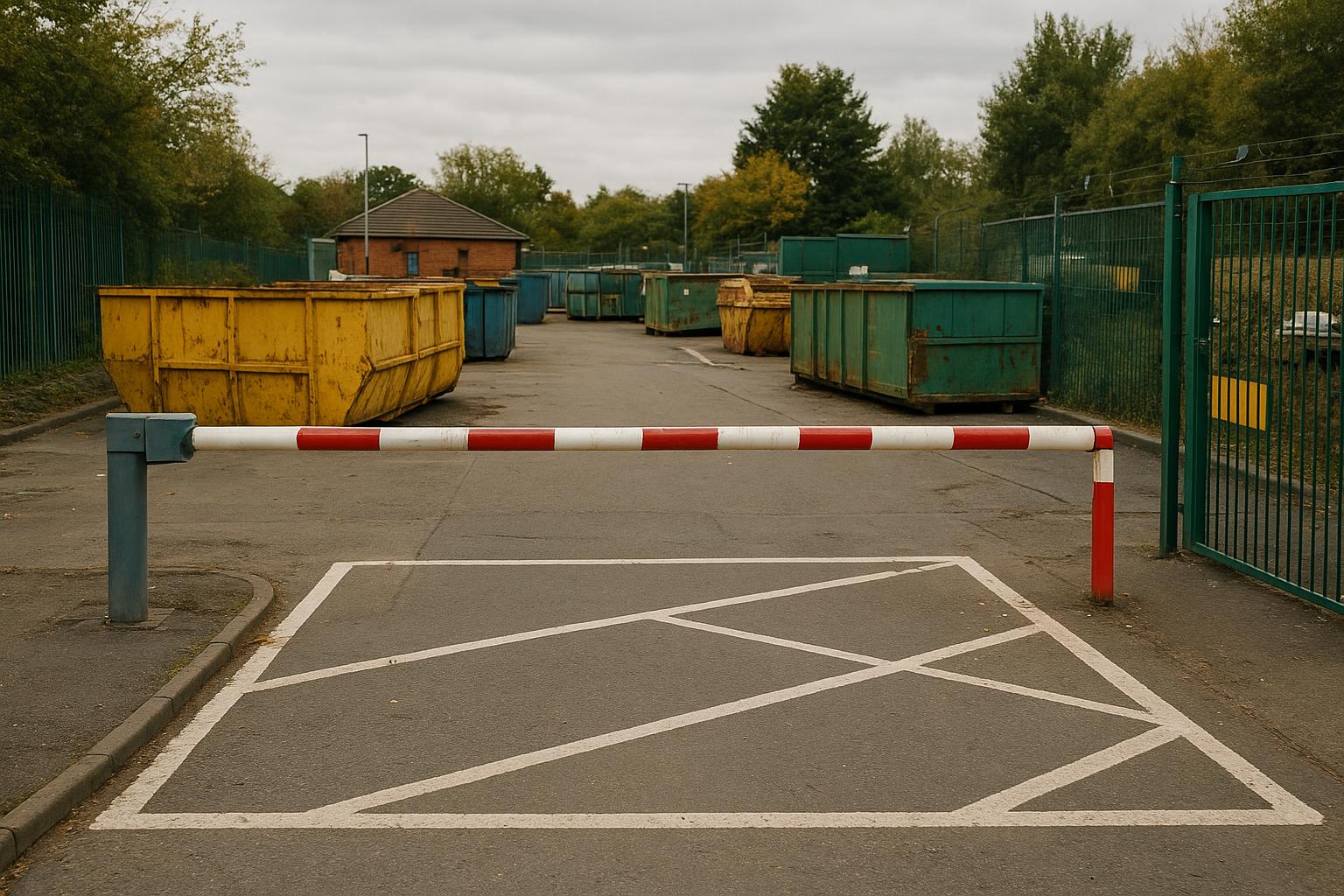
Greater London has thirty-two boroughs and the City of London, and waste services are organised in several different ways. Some boroughs run their own sites, some are part of joint waste authorities and some contract private companies to operate sites on their behalf.
That is why one borough may require booking while a neighbour does not, and why a van may be welcome in one place and banned in another. The differences are not random, since each reflects local policy, site layout, traffic and past problems with commercial waste.
For residents, the practical lesson is that you cannot assume. Check the specific site and the council that runs it, every time you plan a trip.
Who can use a London HWRC
Residency is the usual test.
In most cases, sites are intended for residents of the area they serve. You may be asked to show photo ID, such as a driving licence, and proof of address, such as a recent council tax bill or utility bill. Rules differ on how recent the proof must be and which documents are accepted, so check your council's page.
Some boroughs share sites through agreements, which means residents of one borough may be able to use a site in another. Others do not allow this. If a site is physically closer to you but belongs to a different council, check whether you are allowed to use it before you drive there.
Non-residents are generally refused. If you are a tenant, landlord or friend helping a resident, be aware that the site's checks apply to whoever is bringing the waste, and to the home it came from. Our guide to doing a tip run in London sets out the common requirements in more detail.
Proof of address in practice
Have it ready.
If proof of address is required, a recent council tax bill, a utility bill or a bank statement is typically accepted, though the council decides. Some sites will not accept a digital copy on a phone, and others will. Check, and bring paper if in doubt.
If you live in a flat or share a house, make sure the document shows your name and the address. If you are a tenant, a tenancy agreement may not be enough on its own, so check what the council asks for.
If you are helping an elderly relative, or clearing a home for someone else, you may be asked for the resident's details. Our guide to house clearance after bereavement explains the practicalities in that situation.
Booking, ID and what to bring
Many sites now run a booking system.
A growing number of London sites ask residents to book a visit online. Slots may be short, a limited number may be allowed per day or week and you may need your vehicle registration. Booking requirements can change, and some sites do not require booking at all, so check the council's current guidance.
When you arrive, expect to show your booking confirmation, photo ID and proof of address if the site requires them. Staff may ask what is in the vehicle, and may look at the load. Keep items sorted and accessible so that you can unload quickly.
Our guide to the Harrow tip at Forward Drive shows how one London council sets out its booking, ID and van rules, and is a useful example of the kind of detail to look for on your own council's page.
Booking tips
Plan your slot.
If slots are limited, book as early as the system allows, especially for weekends and bank holidays. Weekday mornings may be quieter, though this varies.
Allow time to load, travel, queue and unload. A booking is typically for a time window, and arriving late may mean losing it. If you cannot make it, cancel if the system allows, so that someone else can use the slot.
Keep your confirmation on your phone or print it. Make sure the vehicle registration on the booking matches the one you arrive in.
Cars, vans, pickups and trailers
The most common source of refusal.
Cars are generally allowed. Vans, pickups and trailers are often restricted, because they are more likely to carry large or commercial loads. Some sites ban them outright, some allow them with a permit and some allow a limited number of visits per year.
Permits are usually applied for in advance, sometimes online, and may require proof of residency, the vehicle registration and sometimes proof of how the vehicle is used. A hired van may be treated differently from a vehicle you own, and rules on hired vehicles vary, so ask before you hire one.
If you plan a larger job, our guide to van sizes and our guide to estimating waste volume help you decide how much you are taking, and whether a tip run is realistic.
Hired vans and borrowed vehicles
A common trap.
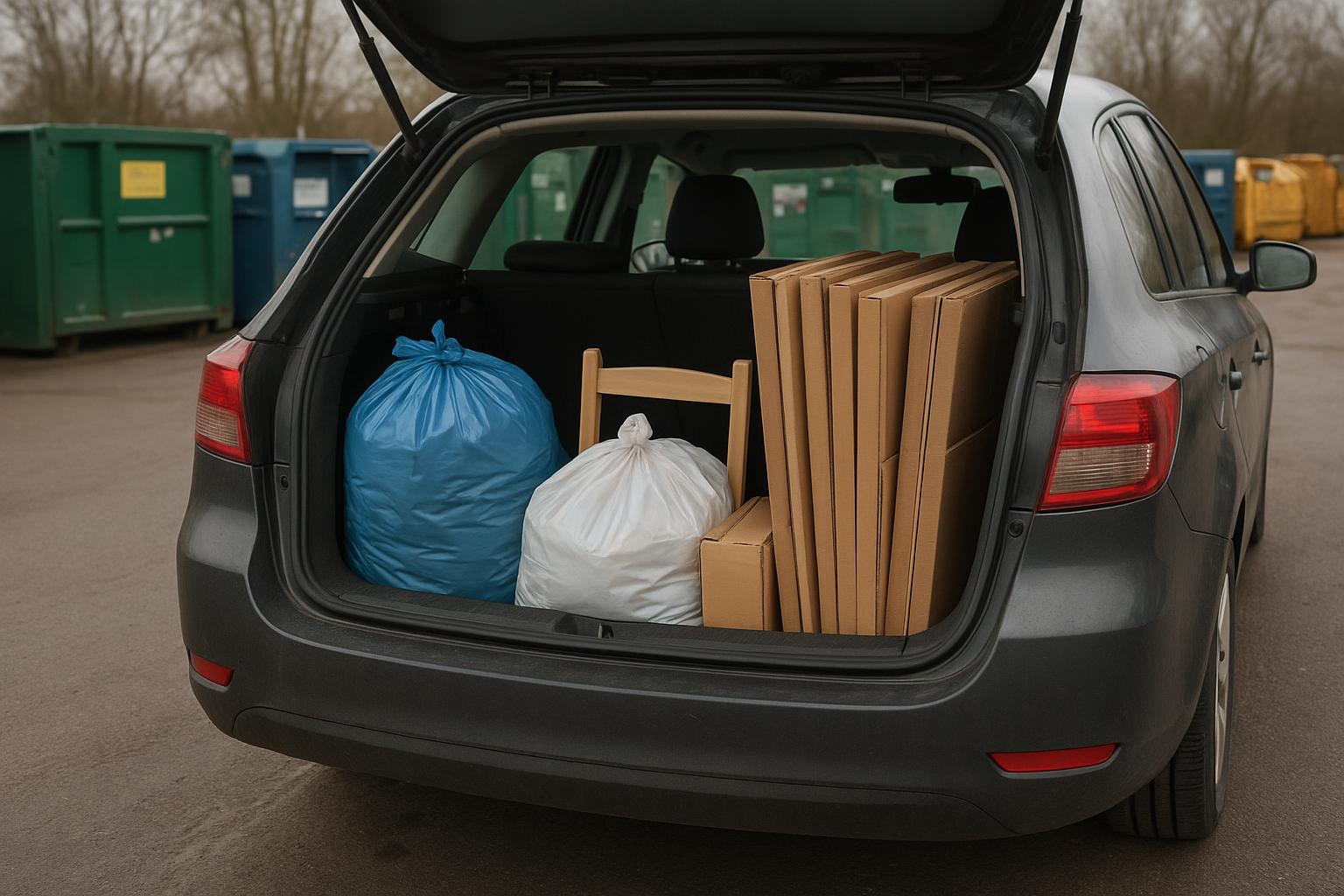
Hiring a van for a clear-out seems sensible, but many sites have restrictions that make it more difficult than expected. Some require a permit that is linked to a vehicle you own. Others set limits on the number of visits per year, or ban hire vehicles outright.
If you borrow a friend's van, the site may ask whether the vehicle is used for work. Be honest. Giving a false answer can lead to a refusal, and may breach the rules.
Before you hire, ask the site or council what applies, and weigh the cost of the hire and fuel against a collection. Our guide to how much a man and van costs in London can help you compare.
What is usually accepted
Everyday household waste.
Most sites accept general household waste, paper and cardboard, glass, metal, garden waste, wood, textiles, small electricals, large appliances, mattresses at some sites and household batteries. Sites typically have separate containers, and staff direct you to the right one.
Reuse areas, where available, accept items in good condition such as furniture, books and household goods. Some sites partner with local charities, though arrangements differ, so do not assume that anything you leave will be reused.
Check the list of accepted items on the council's page. It will usually say which items are accepted, which are limited in quantity and which are charged for. Our guide to recycling old electronics in London explains why electrical items go to a separate area.
Reuse areas and donations
Give items a second life.
Some sites have a reuse shop or container where items in good condition can be left. Typical items include furniture, bicycles, tools, books and household goods. Arrangements vary, and some sites do not offer reuse at all.
Staff may decide whether an item is suitable, and they may refuse anything dirty, damaged or unsafe. Do not leave items beside the container, since this can be classed as dumping.
If you think an item has a better future, consider charity shops, local groups or a giveaway site first. Our guide to giving items away free explains the options.
What is limited, charged for or refused
Check before you load.
Sites often limit or refuse certain materials. Commonly affected items include asbestos, which is not accepted at most household sites, gas cylinders, large quantities of soil, rubble and plasterboard, tyres, car parts and trade waste. Some sites accept small amounts of DIY waste, and some charge for it.
The rules about charging for DIY waste have been the subject of national debate and change, so check what your council currently says rather than relying on what a neighbour told you last year.
Hazardous items are treated separately. Paint, chemicals, fluorescent tubes and similar items may have their own collection point, or may be refused. Our guide to hazardous waste classification explains why, and our guide to disposing of household chemicals sets out safe routes.
A word on asbestos and unknown materials
Do not guess.
If you think a material contains asbestos, such as old roofing sheets, textured coatings or insulation boards, do not break it or take it to a household site. Most household sites do not accept it. Check with your council or the Health and Safety Executive for the correct route.
Our guide to asbestos roofs and outbuildings explains the risks and the usual approach.
If you are not sure what a material is, leave it alone and ask for advice. A wrong guess is much more costly than a short delay.
Household versus trade waste
Why contractors cannot use the tip.
HWRCs are for household waste. If a tradesperson or clearance business brings waste to a site, it is usually treated as commercial waste, and the site will refuse it. This is true even if the waste came from a home, since the person transporting it is carrying it as part of a business.
It can also affect residents who hire a friend with a van, or a person who offers to remove waste. If the load is large, or the vehicle looks commercial, staff may ask questions. Using an unlicensed person to dispose of your waste can leave you responsible if it is dumped illegally.
Our guides on your waste duty of care as a householder and commercial versus household waste explain the law in more detail.
Grey areas: landlords, tenants and relatives
Who is the householder?
The line between household and commercial waste can be unclear in some situations. A landlord clearing a rented property is generally treated as producing commercial waste, even though the waste is from a home. A tenant clearing their own home is a householder.
A relative helping to clear a home may be treated as acting for the householder, but the site will decide. If you are in a grey area, contact the council before you travel, and have the resident's details to hand.
If the site cannot accept the waste, a licensed carrier can. Our guide on how to choose a licensed house clearance company explains what to check, including waste carrier registration.
How to find your nearest site and its rules
Start with the council, not a map app.
Map apps are useful for locating a site, but they can show out-of-date opening times and rules. The reliable source is your own council's website, or the joint waste authority that runs the site. Search for your borough name with "recycling centre" or "household waste recycling centre".
Look for the address, opening hours, booking rules, vehicle restrictions, accepted and refused items, ID requirements and any temporary closures. Take a screenshot or note the key points before you travel. If anything is unclear, phone the council and ask.
Some London areas are served by sites just outside the borough boundary, in neighbouring counties. Our existing guides on specific sites, such as Greenford recycling centre, Richmond Townmead Road, Brent recycling centre and Hounslow tips, show what to check.
A checklist to complete before you go
Five minutes of checking.
Use a simple list before each visit, so that you do not forget anything.
- Confirm the site is open on the day, and check for temporary closures.
- Check whether booking is needed, and book if so.
- Check ID and proof of address requirements.
- Check vehicle rules, permits and limits on loads.
- Check that every item you are bringing is accepted.
- Sort and load the vehicle in the order you will unload.
If you are unsure about any item, phone the council. It is better to ask than to be turned away.
Preparing your load
Fast, safe and compliant.
Sort the waste at home. Separate recyclables, wood, metal, garden waste and general rubbish into bags or boxes so you can unload each into the right container. Flat-pack furniture and cardboard where you can, so that more fits.
Load the vehicle so that the first items you will unload are at the back. Secure loose items, and do not overload. Wear gloves and sturdy shoes, and be careful lifting heavy items. If you are not able to lift something, do not risk injury. Our guide on preparing bulky items offers practical tips.
Keep hazardous items separate and clearly identified. Do not mix chemicals, and do not bring anything unlabelled or leaking without checking first.
Safety at the site
Take care on site.
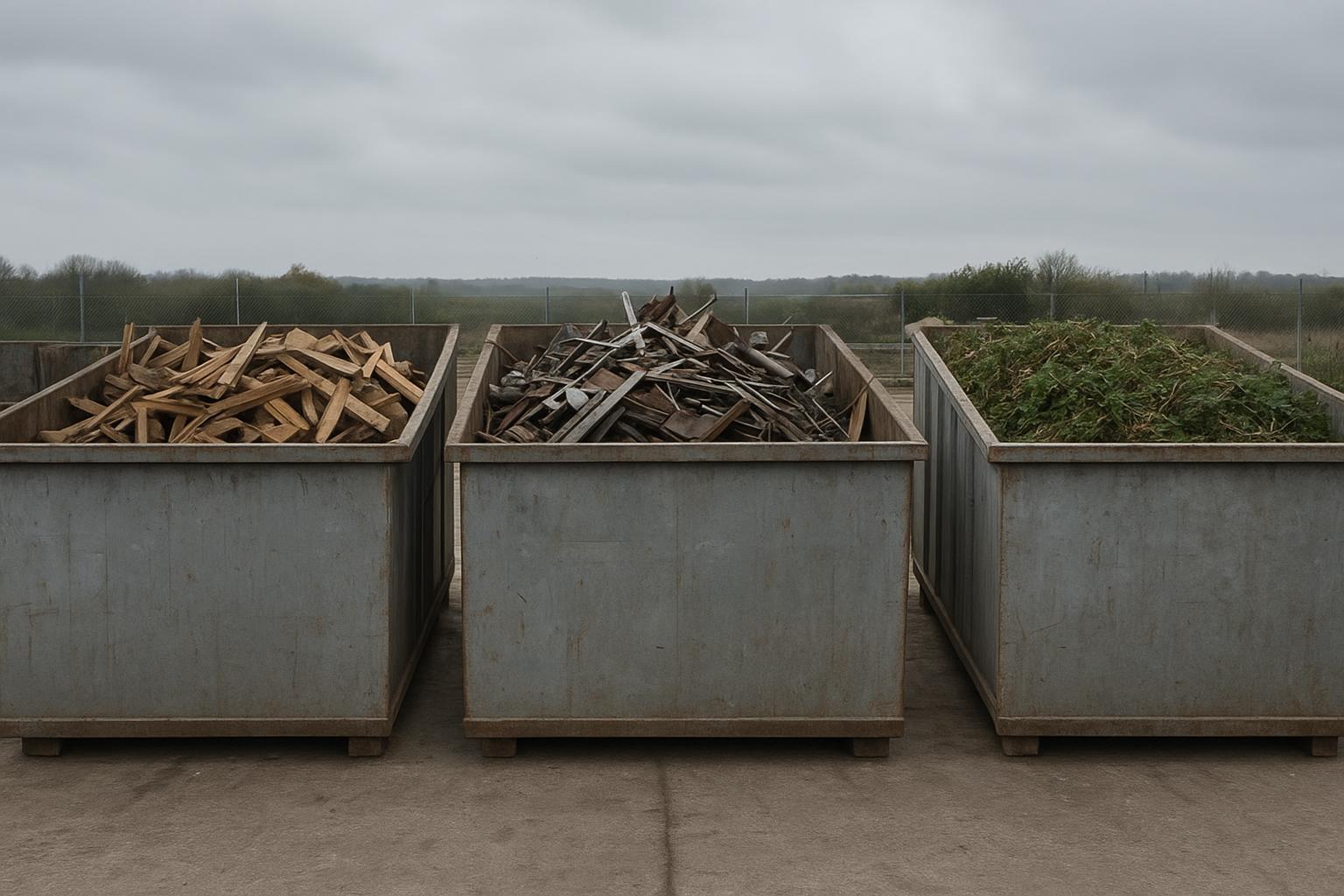
Recycling centres are busy places with moving vehicles and drops from height. Follow staff instructions, stay in your vehicle where told to and keep children and pets in the car. Wear sturdy footwear and gloves, and avoid carrying items that are too heavy.
Do not climb into containers or reach into them. If you drop something, ask staff for help rather than retrieving it yourself. Do not leave valuables on show in your vehicle.
If you are using a trailer or van, take care when reversing, and ask for help if you need it. Our guide to moving heavy furniture safely has useful lifting advice.
If the centre will not take your load
Know the alternatives.
If a site refuses your waste, ask politely why, and what you can do. The reason may be a missing booking, a vehicle restriction, a material not accepted or concerns about trade waste. Sometimes the answer is simple and fixable, such as booking a slot for another day.
If the site cannot take the waste, there are other routes. Your council may have a bulky waste collection, which is often a better fit for large items. A private collection from an independent carrier is another route, and you can request quotes through houseclearance.co and compare what each includes.
Whichever route you choose, check how the waste will be handled, and keep any paperwork. Never leave waste outside the gates or at the roadside, since that is fly-tipping and can lead to a fine. Our guide to fly-tipping penalties in London explains the risks.
Council bulky waste and private collection
Often the easier route for big items.
If you have large items such as sofas, wardrobes or mattresses, a council bulky waste collection can be easier than a tip run. Councils usually charge a fee, and may limit the number of items. You normally book in advance, and put the items out on the agreed day.
A private collection can be quicker, and may be able to take a wider range of items. Compare cost, lead time, what is included and what is excluded. Our guide to council bulky waste versus private clearance compares the two.
Whichever you choose, make sure the waste is handled legally, and keep records. If you request quotes through houseclearance.co, ask each carrier about how waste is handled and what paperwork you will receive.
Common mistakes
Avoid a wasted journey.
The most common mistakes are turning up without a booking, forgetting proof of address, bringing a van without a permit and carrying material the site does not accept. Another is assuming that the rules in a neighbouring borough apply in yours.
Some people also arrive just before closing time with a large load, and find that there is not enough time to unload. Others do not sort their waste, which slows things down and can lead to refusals.
A few minutes of checking the council page the day before can save a wasted trip, and a fuel bill. If your load is big, consider whether a collection would be easier overall.
Frequently asked questions
Common questions about London recycling centres.
Do I need to book a visit to a London recycling centre?
Many sites now require online booking, but not all. Check your council or waste authority's page for the current rule for your site.
What ID do I need?
Usually photo ID and proof of address, such as a recent council tax or utility bill. Accepted documents vary, so check the council's guidance.
Can I use a recycling centre in a different borough?
Only if the council allows it. Some boroughs share sites, while others restrict them to their own residents, so check before you travel.
Can I take a van or pickup?
Often only with a permit or under restrictions, and sometimes not at all. Apply in advance if a permit is required, and check how hired vehicles are treated.
Can I take building waste or soil?
Some sites limit or charge for DIY waste such as rubble, soil and plasterboard, and many refuse asbestos. Check the council's current rules for your site.
Can a tradesperson or clearance company use the tip?
Generally not. Waste brought as part of a business is treated as commercial waste, which household sites usually refuse.
Is there a London-wide map of recycling centres?
Rules and sites are set locally, so the most reliable source is your own council's page, which gives the address, hours and requirements for your site.
What if the centre refuses my waste?
Ask why, check whether you can fix it, for example with a booking or permit, or use a council bulky waste collection or a private carrier. Never leave waste outside the site.