
Direct answer
If an old shed, garage or outbuilding has a corrugated or flat sheet roof that could be asbestos cement, do not saw, drill, break, scrub or pressure-wash it. Undamaged asbestos cement is generally low risk if left alone, but disturbing it can release fibres that cause serious lung disease years later. Have a suspect material identified by an accredited surveyor or laboratory, and use a competent contractor if it has to be removed. Asbestos waste is hazardous, needs special packaging and disposal, and many carriers and council sites will not take it. For the rest of the building, check structure, services and wildlife before demolition, and ask your council about building control and any local requirements. Follow HSE and GOV.UK guidance.
Contents
- Why old outbuildings raise the asbestos question
- Where else asbestos hides in outbuildings
- Spotting a possible asbestos roof
- Looking for records
- What you must not do
- The moss and cleaning trap
- Testing and surveying
- Who can test and survey
- Leaving it, encapsulating it or removing it
- Judging the condition of the material
- Householders and contractors
- Questions for an asbestos contractor
- Disposing of asbestos waste
- Small amounts from a home
- Demolishing a dilapidated outbuilding
- Services and hidden hazards
- A simple demolition sequence
- Notices, permission and neighbours
- Boundaries, party walls and neighbours
- Clearing the debris
- After the demolition
- Frequently asked questions
Why old outbuildings raise the asbestos question
A material that was everywhere.
Asbestos was used widely in British buildings for much of the twentieth century because it is strong, fire resistant and cheap. Its use was progressively restricted and then banned in the UK in 1999, so outbuildings built or repaired before then can contain it. Garages, sheds, lean-tos, prefabricated buildings and farm buildings from the 1950s to the 1990s are common examples.
The most familiar form is asbestos cement, used in corrugated roofing sheets, flat wall panels, gutters, downpipes and flue pipes. In this form the fibres are bound into cement, so the material is relatively stable while it is in good condition.
The danger comes when the material is damaged, weathered or broken and fibres are released into the air. Breathing them in can cause diseases including asbestosis, lung cancer and mesothelioma, often decades after exposure. That is why guidance is cautious.
Where else asbestos hides in outbuildings
Beyond the roof.
Roof sheets are the most obvious place, but asbestos cement was also used for wall cladding, soffits, gutters, rainwater pipes, water tanks and flue pipes. In garages and workshops there may be insulation board around a boiler or heater, textured coatings and old floor tiles.
Some prefabricated garages from the post-war period were built almost entirely from asbestos cement panels on a concrete or timber frame. Farm outbuildings and allotment sheds can also contain it.
You may find asbestos in a mixed building where only part of it is original. If a building has been repaired over the years, different sections may differ. A survey will help to identify each material.
Spotting a possible asbestos roof
You cannot tell for certain by eye.
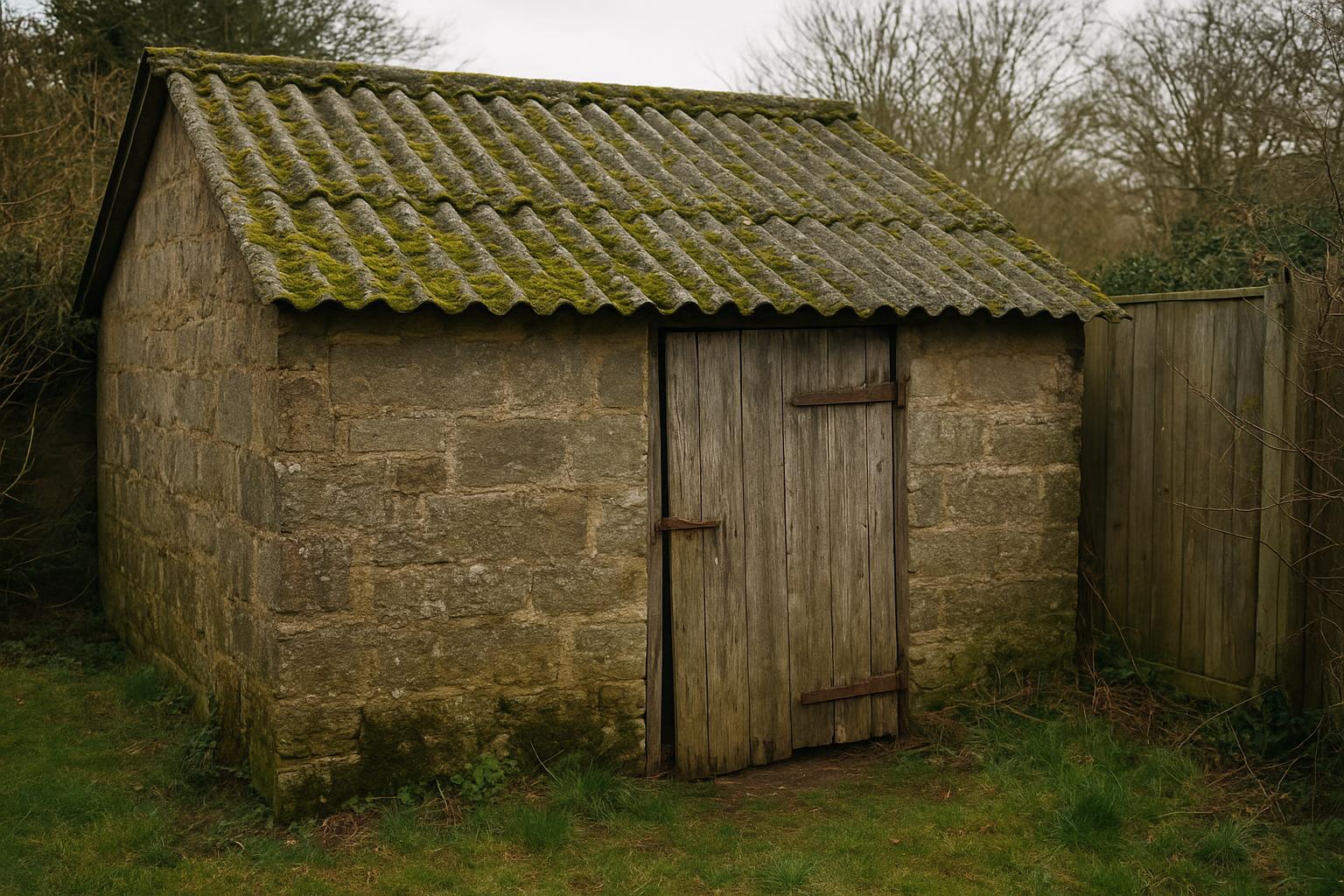
Corrugated grey sheets on a garage or shed roof from the mid-twentieth century are often asbestos cement, but you cannot be sure by looking. Newer fibre cement and other materials can look similar. Moss, lichen and weathering also change the appearance.
Clues include the age of the building, the profile of the sheet, markings on the underside, how it was fixed and whether other buildings of the same period on the site have it. Houses and outbuildings built or refurbished before 2000 may contain asbestos somewhere, including in soffits, textured coatings, floor tiles and insulation board.
If you cannot be sure, treat it as if it is asbestos until a competent person has identified it. Do not remove a small piece to test it yourself, because that can disturb the material.
Looking for records
Paperwork can help.
If you own a property, your deeds, survey reports and previous work records may mention asbestos. If you have bought recently, look in the survey and property information forms. If you rent, ask your landlord, who has duties in some situations to manage asbestos in non-domestic parts.
Local council building control and planning records may show when an outbuilding was built or altered. This helps date the materials, though it does not prove what is there.
If you find a record, keep a copy. If there is no record, assume nothing and test before any work that would disturb the material.
What you must not do
The short list.
Official guidance is clear that you should avoid actions that damage asbestos cement. Do not break it, smash it, drill it, saw it or sand it. Do not pressure-wash or scrub the roof, because this can release fibres and spread contamination. Do not use power tools on it, and do not walk on a fragile roof.
- Do not break or snap sheets to get them into a skip.
- Do not scrape off moss with a wire brush or hose.
- Do not burn or crush the material.
- Do not put it in household bins, garden waste or a general skip.
- Do not let children or pets play near damaged sheets.
Walking on old roofs is also a serious fall risk. Fragile roofs cause deaths each year, and asbestos cement can crack under a person’s weight. If a roof needs work, use a competent contractor with proper equipment.
The moss and cleaning trap
Do not scrub.
A common mistake is to clean a mossy roof with a pressure washer or stiff brush. On an asbestos cement roof this can release fibres, spread contamination across the garden and contaminate guttering and soil. HSE guidance specifically warns against it.
If moss is a problem, the safest options are to leave it, because it does not necessarily harm asbestos cement, or to ask a specialist about approved treatment. Do not use a wire brush, scraper or hose.
If you have already cleaned a roof, do not panic. Stop, keep the area clear and take advice about whether any further action is required.
Testing and surveying
Get it identified.
The reliable way to know whether a material contains asbestos is to have a sample analysed by a laboratory accredited for asbestos testing. A surveyor with the right training can take the sample safely, usually while wearing protective equipment and limiting disturbance. Taking a sample yourself can release fibres.
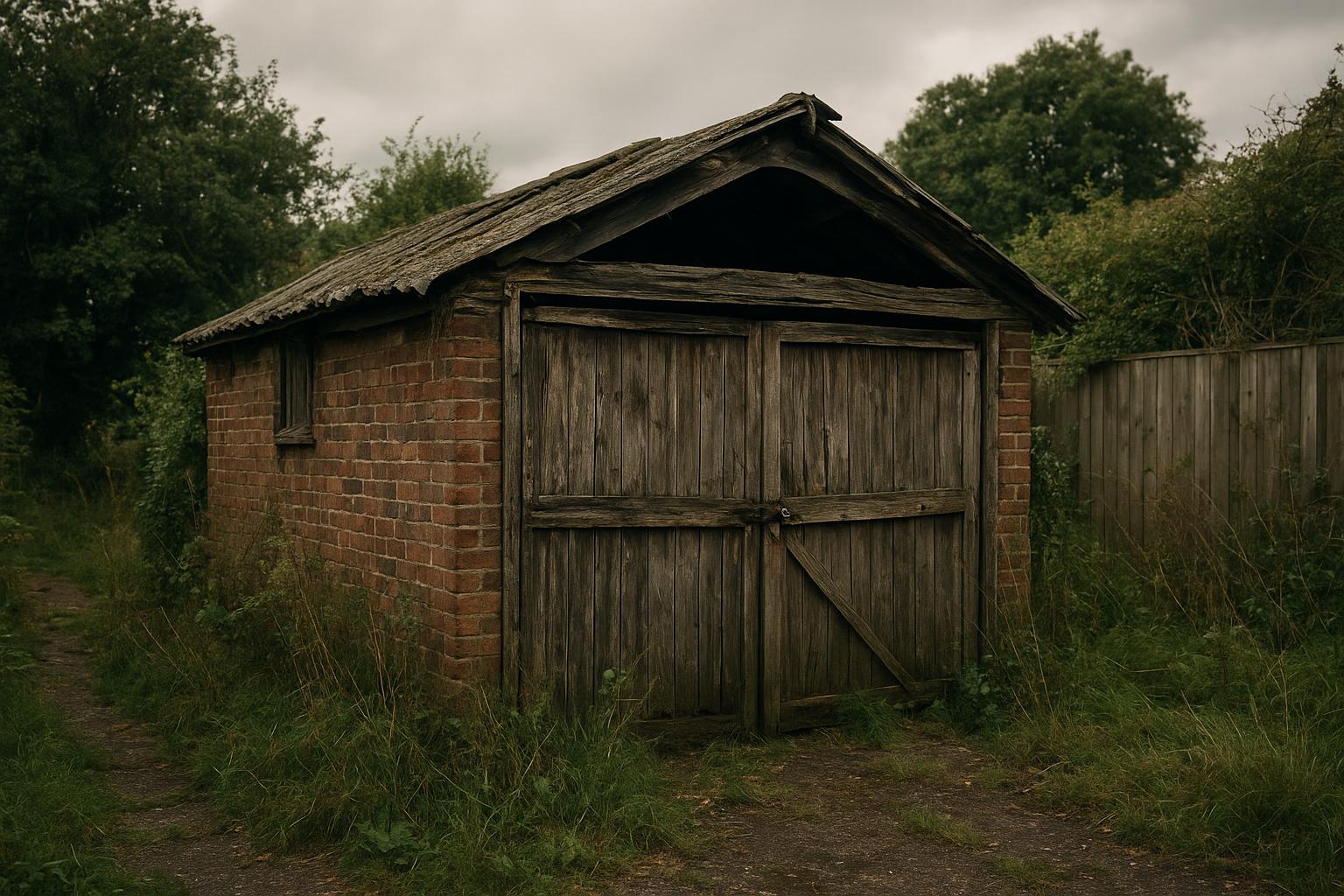
Surveys are different for different purposes. A management survey looks at materials that may be disturbed in normal use, and a refurbishment or demolition survey is more intrusive and is needed before major work. If you plan to demolish an outbuilding, a demolition survey is appropriate, so ask the surveyor to explain what is needed.
Keep the report. It will tell you what the material is, where it is and what condition it is in, and any contractor, carrier or council will want to see it.
Who can test and survey
Look for accreditation.
Surveyors and analysts in the UK can be accredited by the United Kingdom Accreditation Service. Ask whether the laboratory is accredited for asbestos identification, and whether the surveyor has relevant qualifications. Do not rely on a free test from someone selling removal, because that creates a conflict of interest.
A simple identification of a few samples is often inexpensive compared with the cost of a wrong decision. A full demolition survey costs more, but is usually required before bigger works.
Ask what the surveyor will do to limit disturbance and how they will make good the sample point. Request the results in writing.
Leaving it, encapsulating it or removing it
The right answer depends on condition.
Undamaged asbestos cement in good condition is often safest left alone, with a plan to monitor it. In some cases, a competent contractor may recommend encapsulation, such as applying a suitable sealant, though this needs the right method and should not be improvised.
If the sheets are cracked, crumbling, heavily weathered or in the way of a planned demolition, removal is more likely to be needed. Removal is regulated work. The HSE sets out which types of asbestos work need a licence and which do not, and for some non-licensed work there are notification and training requirements.
Asbestos insulation board and lagging are generally higher risk and need a licensed contractor. Cement products are typically lower risk and may be non-licensed, but they still need competent, trained people using proper methods. Check the current HSE guidance for the category that applies to your job.
Judging the condition of the material
What the surveyor looks at.
A surveyor will consider how damaged the sheets are, how weathered the surface is, whether there are cracks or missing pieces, how much of the material is exposed and whether anyone is likely to disturb it. They may use a scoring system to rate risk.
Material in good condition and out of reach may be left alone with periodic inspection. Heavily weathered or damaged material, especially in an area that will be worked on or where people will be nearby, is more likely to be recommended for removal.
The recommendation also depends on your plans. If you want to demolish, extend or reroof, the material will probably have to be dealt with first.
Householders and contractors
Rules differ.
Householders have some freedom to do work in their own homes, but that does not make it safe, and asbestos waste still has to be handled properly. Many people choose to use an asbestos removal specialist for roofs because of the fall risk, the quantity of material and the disposal requirements.
If a business, landlord or contractor is involved, the Control of Asbestos Regulations 2012 apply to them. They have duties to assess, plan, train staff and control exposure. A contractor who offers to take an asbestos roof off cheaply for cash and without paperwork is a warning sign.
Ask for proof of training, insurance and, where relevant, a licence. Ask how the sheets will be removed, wrapped and disposed of, and request the waste consignment note afterwards. Our guide on the risks of hiring an unlicensed man and van explains why informal offers can leave you liable.
Questions for an asbestos contractor
Checklist.
Before you hire someone, ask the following.
- Are you trained and insured for asbestos work, and can I see proof?
- Do you hold a licence if the work needs one?
- How will you protect me, my neighbours and the soil?
- How will the waste be packed, transported and disposed of?
- Will you provide a consignment note and a written method statement?
A reputable specialist will answer clearly. If you get vague answers, find someone else.
Disposing of asbestos waste
Hazardous waste rules apply.
Asbestos is hazardous waste. It must be double wrapped in strong polythene or sealed in suitable containers, labelled and taken to a site that is permitted to accept it. Wet wrapping and careful handling reduce fibre release. Do not mix it with other waste.
Many council recycling centres do not accept asbestos, or accept only small amounts of household asbestos cement under conditions, so check with your council first. Some local authorities offer a bagged collection or a drop-off service for householders, sometimes for a fee. A specialist will arrange the transfer and give you paperwork.
For commercial carriers, movements of hazardous waste need documentation, often a consignment note. Our guide on hazardous waste classification explains why house clearance crews generally refuse suspected asbestos, and our guide on waste transfer notes covers general paperwork.
Illegal dumping is a serious offence. See our guide to fly-tipping penalties.
Small amounts from a home
Check your council.
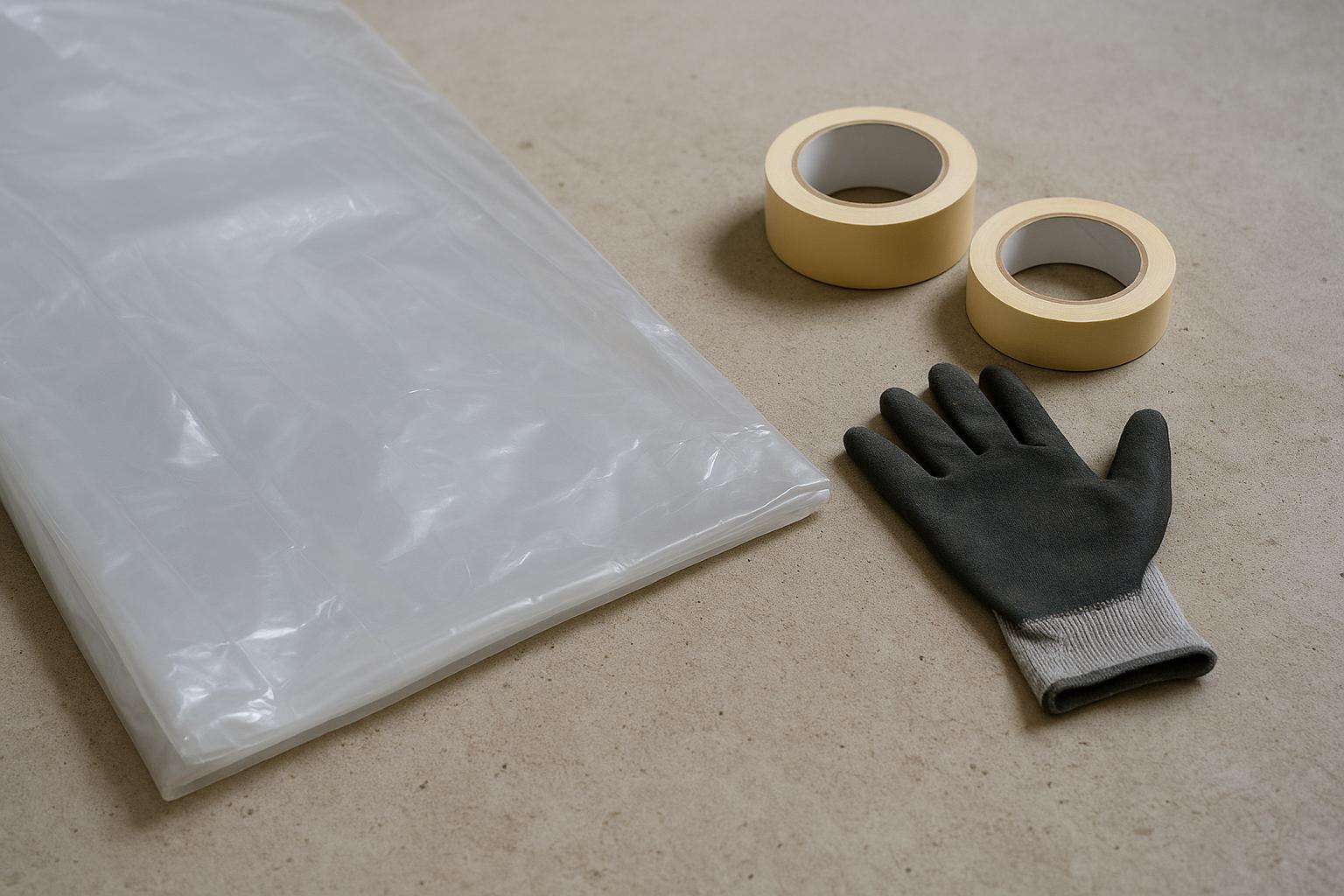
Where councils do accept small amounts of asbestos cement from households, they usually require the material to be double wrapped, labelled and sometimes booked in advance. Quantity limits are common. Some will not accept sheets over a certain size.
Ask the council what its rules are before you prepare anything, since requirements differ, and do not transport asbestos in an open vehicle. If you are unsure, use a specialist and keep the paperwork.
Remember that the person who produces waste has legal responsibilities. Our guide to householder duty of care explains what that means in practice.
Demolishing a dilapidated outbuilding
Look at the whole building.
Even without asbestos, an old outbuilding can be dangerous. Rotten timber, rusted fixings, loose bricks, broken glass, unstable roofs and hidden services can all cause injury. Before starting, check what is attached to the building, including electrical cables, water pipes, gas and drainage.
Demolition normally starts with removing contents, then fittings, roofing, walls and finally the base. Work from the top down and keep a clear exclusion zone. Wear gloves, boots, eye protection and a hard hat where there is a risk of falling debris. Do not work alone.
If the building is attached to your house, shares a wall with a neighbour or is made of masonry, take professional advice, because demolition can affect structure and neighbours. See our guide on shed clearance preparation for the contents stage, and our shed clearance cost guide for typical factors in pricing.
Services and hidden hazards
Disconnect first.
Outbuildings often have electrical supplies, sometimes poorly installed. Have a qualified electrician isolate and remove cables before demolition. Check for water pipes and gas supplies and for drains running under the base. If you are not sure, ask the utility company.
Look for chemical stores, fuel tanks, paint, pesticides, car batteries and gas cylinders and deal with them separately. See our guide on disposing of household chemicals.
Wasps, bats, birds and rodents often use old outbuildings. Bats and nesting birds are protected, so check before you start, as explained in our guide on overgrown garden clearance.
A simple demolition sequence
For a small, sound shed.
For a small timber shed without asbestos, the sequence is usually as follows.
- Empty the building and remove hazardous items.
- Disconnect and remove services.
- Take off roofing felt or sheets, working from the top down.
- Remove cladding and windows.
- Dismantle the frame carefully.
- Break up and remove the base or leave it as a platform if suitable.
For masonry, asbestos or attached buildings, hand the job to a competent contractor.
Notices, permission and neighbours
Check before you start.
Demolition of a building generally requires notice to the local authority under the Building Act 1984, though there are exemptions for some small buildings. Rules can vary, so ask your council’s building control team before you start. Listed buildings, conservation areas and some London boroughs have extra requirements, and demolition can affect planning conditions.
If the outbuilding is on a boundary, tell your neighbour and check who owns it. A shared wall may be a party structure, and different rules can apply. If you are a tenant, ask your landlord, and if you are a leaseholder, check the lease.
If you are demolishing to build something new, ask the council whether permitted development rights apply or whether planning permission is needed. Do not assume that a building that falls apart can be rebuilt without permission.
Boundaries, party walls and neighbours
Talk early.
If the outbuilding is against a neighbour’s wall or fence, demolition can expose or damage their property. The Party Wall etc. Act 1996 may apply to work to shared walls, and notices may be required. A surveyor or solicitor can advise.
Even where no notice is needed, tell neighbours when noisy or dusty work will happen and agree access if you need to work from their side.
Take photographs of the boundary before and after. If the building is a shared structure, get written agreement before removing it.
Clearing the debris
Sort and separate.
After demolition, separate materials. Bricks, concrete and hardcore can often be recycled. Timber should be sorted into untreated and treated. Metal can be scrapped. Glass and mixed waste need a different route. Asbestos must be kept separate and handled only by competent people.
Skips are a common choice, but do not put suspect asbestos into a general skip. See our guides to building waste disposal and bricks and rubble for what goes where, and our skip hire cost guide for sizes and prices.
Use a registered waste carrier and get a waste transfer note. If you want quotes for clearing debris and contents from independent carriers, you can request them through houseclearance.co, and you should say clearly if any material might be asbestos. Carriers set their own terms and may decline it.
After the demolition
Leave the site safe.
Check for nails, glass and sharp debris, fill holes and make the ground level. If a concrete base remains, think about whether to keep it as a patio, break it up for disposal or cover it. Hire a breaker only if you are confident, since concrete dust is harmful.
If asbestos was removed, keep the survey, clearance certificate and consignment notes with your property papers. They will matter if you sell.
Our house clearance checklist and the prices page can help with planning, but because indicative figures vary widely with access and waste type, ask carriers for quotes based on your actual site.
Frequently asked questions
Common questions about asbestos roofs and outbuilding demolition.
How can I tell if my shed roof is asbestos?
You cannot be certain by eye. Corrugated sheets from before 2000 may be asbestos cement. Have a sample identified by an accredited laboratory via a qualified surveyor.
Is asbestos cement dangerous if left alone?
Undamaged asbestos cement in good condition is generally considered low risk, but it should not be disturbed, and its condition should be monitored.
Can I remove an asbestos roof myself?
Householders can be allowed to do some work themselves, but it is risky, there is a fall hazard and waste rules apply. Most people use a specialist. Check HSE guidance.
Can I put asbestos in a skip?
No. It must not go in a general skip. It needs special packaging and a site permitted to take it. Check with your council or a specialist.
Will the council take asbestos from my home?
Some councils offer a service or drop-off for small amounts, often with conditions or a fee. Many recycling centres do not accept it, so check first.
Will a house clearance company take asbestos sheets?
Most will refuse, because it is hazardous waste needing special handling and paperwork. Always tell a carrier if there might be asbestos.
Do I need permission to demolish a shed?
Possibly, depending on size and location. Demolition notice rules and planning conditions can apply. Ask your council building control team and check for listed building or conservation area rules.
What if I have already broken a sheet?
Stop, keep people and pets away, do not sweep or vacuum and seek advice from an asbestos professional or your council. Do not put it in household waste.
