Direct answer
Leftover paint, varnish, solvents, pesticides, antifreeze and strong cleaning products should not go in the bin, down the sink or into a street drain. Keep them in their original, sealed containers, never mix them, and take them to your council recycling centre or use a council hazardous waste service. Small amounts of water-based paint may be reusable through paint reuse schemes or can sometimes be dried out and disposed of with general waste, but rules differ by borough. Clearance crews often refuse these items because they are hazardous, so deal with them before the day or agree a plan with your carrier in advance.
Contents
- Why these products need special handling
- What the law expects of householders
- Paint and varnish: your options
- Giving usable paint a second life
- Drying out small amounts of paint safely
- Solvents, thinners and white spirit
- Cleaning products and household chemicals
- Empty containers
- Garden and car chemicals
- Safe storage until disposal
- What to do if something spills or leaks
- Why clearance crews often refuse chemicals
- A walk-round checklist before the crew arrives
- Where to take leftover chemicals in London
- Preparing for a trip to the recycling centre
- Commercial quantities and tradespeople
- Frequently asked questions
Why these products need special handling
They can harm people, drains and the environment.
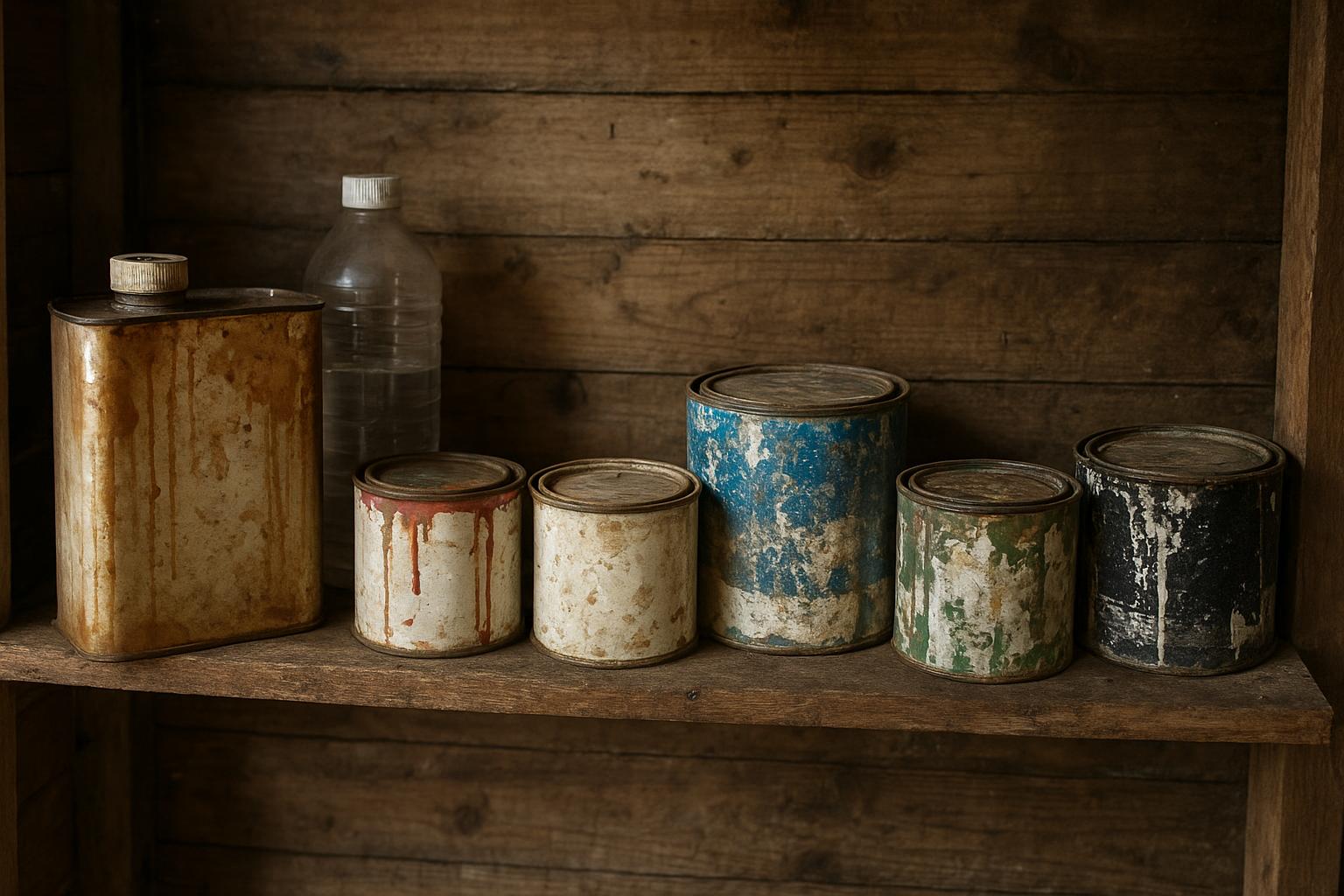
Paints, varnishes, solvents and many cleaning products contain chemicals that can burn skin, give off harmful fumes, catch fire or poison water. When poured down a sink, the chemicals can pass through the sewage system into rivers. When poured into a street drain, which usually leads straight to a watercourse, the damage can be immediate. When thrown into the general rubbish, they can leak, damage the waste vehicle, cause fires and expose workers to fumes.
For these reasons, many products are classed as hazardous household waste. The details are explained in our guide to hazardous waste classification and why firms refuse it. This article focuses on paints, varnishes and the chemicals most likely to be found in garages, sheds and under kitchen sinks.
Look for hazard symbols on the label, such as flames, a skull, a corrosive symbol or an environmental warning. If a container has one of these, treat the contents with care and follow the label instructions.
What the law expects of householders
Duty of care applies to chemicals too.
The duty of care that applies to all household waste applies with extra force to hazardous items. As a householder you are expected to keep waste safely, pass it only to an authorised person and avoid causing pollution. Pouring chemicals down a drain or onto land can amount to a pollution offence in serious cases, and in any case it is a harm to the local environment.
Councils are not required to collect every hazardous item from your door, but they must provide a way to dispose of household waste. That is why recycling centres and special collection services exist. Using them is the simplest way to stay within the rules.
For the legal framework in plain language, see our guide to the householder duty of care. If chemicals are dumped and traced to your address, the consequences are covered in our guide to fly-tipping penalties and liabilities.
Paint and varnish: your options
Reuse first, then disposal.
Water-based household paint, usually described as emulsion, is the most common leftover. Oil-based paints, gloss, wood stains, varnishes and lacquers are more hazardous because they contain solvents. They are flammable and more harmful to the environment.
The best option for usable paint is reuse. Community paint reuse schemes accept leftover paint in good condition and pass it on to people who need it. Some councils, housing associations and community groups run these schemes, and some recycling centres have a reuse shop. Keep the lid tight, and keep the paint in its original tin with the label intact.
If paint cannot be reused, take it to a household waste recycling centre that accepts it. Some councils say small amounts of water-based paint can be dried out until fully solid and then put in the general waste bin. This is allowed in some places but not in others, so check your council's advice. Never pour paint down a drain, and never pour it onto the ground or into a garden.
Giving usable paint a second life
Better than any disposal route.
Paint that is still liquid, well sealed and in its original tin can often be reused. If the colour is unusual or you have only a small quantity left, offer it to a neighbour, a community centre, a school art room or a local theatre group. Paint reuse schemes accept good-quality leftovers and pass them on at low cost or free of charge to people and projects that need them.
Before you hand paint over, check that it has not been frozen, has not separated and does not smell sour. Stir it thoroughly and test a small amount on a board. If it dries unevenly, forms lumps or smells off, it is better to dispose of it properly than to pass on a poor product.
Keep a note of the colour name, brand and room where it was used. A short label on the lid helps the next user, and a record helps you if you need to touch up the walls in future. Leftover tins that you decide to keep should be sealed by pressing the lid down firmly and storing the tin upside down, which forms a seal.
Drying out small amounts of paint safely
Only where your council allows it.
Some councils say that a very small amount of water-based paint can be left to dry in the tin with the lid off, in a well-ventilated place away from children and pets, until it is completely solid. A layer of cat litter, sawdust or a commercial hardener can speed up the process. Once the paint is fully solid, the tin can go in the general waste or, in some areas, in the metal recycling.
This does not apply to oil-based paint, varnish, stains or solvent-based products, and it does not apply to large quantities. Check your council's guidance before relying on this approach, because rules differ, and never leave liquid paint in a bin for the collection crew.
Solvents, thinners and white spirit
Flammable and harmful.
White spirit, turpentine, paint thinner, brush cleaner and similar solvents are flammable and give off harmful vapours. They should always be stored in a closed, labelled container away from heat, and never poured down a drain or onto soil. If a small amount of solvent is left on brushes and rags, let it evaporate outdoors in a safe place, because oily rags can heat up and catch fire if bundled together.
Take unwanted solvents to a recycling centre that accepts them, in their original containers or in a container that is clearly marked with the contents. Some centres limit the quantity you can bring, so check before you go. For larger amounts from a renovation or a business, you may need a specialist hazardous waste collection.
Cleaning products and household chemicals
Common but dangerous together.
Bleach, oven cleaner, drain unblocker, limescale remover and similar products contain strong acids or alkalis. Mixing them can release toxic gases. For example, mixing bleach with an acid-based cleaner creates chlorine gas, which is dangerous in a closed space. Keep products in their own containers, never decant them into drink bottles and never combine leftovers to save space.
Small amounts of diluted household cleaners are typically washed away in normal use. Concentrated or unwanted products should be disposed of via the council hazardous waste route. If the container is empty, rinse it where the label allows, and put it in recycling if your council accepts it.
Empty containers
Can they be recycled?
Empty cleaning bottles, aerosol cans and paint tins can often be recycled once they are completely empty and, where the label allows, rinsed. Plastic bottles for cleaning products are usually accepted in kerbside recycling, and empty metal paint tins can usually be taken to a recycling centre or put in the metal collection.
A container is considered empty when it can no longer be poured or sprayed. Aerosols that still contain product or propellant are treated as hazardous and should not go in the normal bin. Check the label and your council's guidance before putting any chemical container in the recycling.
Garden and car chemicals
Pesticides, weedkillers, fuel and antifreeze.
Garden chemicals include weedkillers, pesticides, slug pellets and fertilisers. Some are toxic to wildlife, pets and aquatic life, and several older products have been withdrawn from sale. Do not use or dispose of withdrawn products yourself. Contact your council or a recycling centre, because some products need specialist handling.
Car and DIY chemicals include antifreeze, brake fluid, engine oil, petrol, diesel and screen wash. Engine oil can often be taken to a recycling centre with an oil bank. Petrol and diesel should be kept in approved containers and taken to a site that accepts fuel, rather than being poured away. Antifreeze is toxic and should be sealed and taken to a hazardous waste point.
Gas cylinders, fire extinguishers and aerosols follow different rules again. Our hazardous waste guide covers them, and our guide to WEEE and electrical recycling deals with batteries and electricals that are often stored in the same cupboard.
Safe storage until disposal
A few habits prevent accidents.
Keep chemicals in their original, labelled containers. If a label is damaged, add a clear note of the contents. Close lids tightly, wipe off drips and store tins upright in a cool, dry place away from heat, sunlight and children.
- Do not mix products, even if they look similar.
- Keep flammables away from boilers, heaters and electrical sockets.
- Do not store chemicals in drink bottles or food containers.
- Put a leaking container inside a larger sealed container or tray.
- Wear gloves and avoid breathing fumes when moving damaged containers.
If you find a container with no label and no idea what is inside, do not open it. Seal it in a larger container and contact the council for advice. Unknown liquids are a common reason for crews to stop a job.
What to do if something spills or leaks
Act calmly and keep people away.
If a container leaks, open windows, keep children and pets out of the room and avoid breathing fumes. Put on gloves and, if necessary, eye protection. Absorb small liquid spills with sand, cat litter or a commercial absorbent, sweep the used material into a sealed bag or container and label it. Do not wash the spill into a drain.
For a larger spill, a strong smell, a hissing container or a spill of an unknown product, leave the area and call the fire service on 999 if there is any risk of fire or serious fumes. For skin or eye contact, follow the first-aid instructions on the label and seek medical advice. Keep the container or take a photo of the label so the doctor knows what the product was.
Afterwards, treat the absorbent material as hazardous waste. Take it to the recycling centre with the other chemicals and tell staff what it contains.
Why clearance crews often refuse chemicals
And what to do about it.
Registered waste carriers can carry many household items, but hazardous chemicals are often outside their licence or their normal service. They may need special containers and vehicle controls, and a crew cannot load an unknown liquid safely. In addition, chemicals mixed into a general load can contaminate the whole lot and create a fire risk.
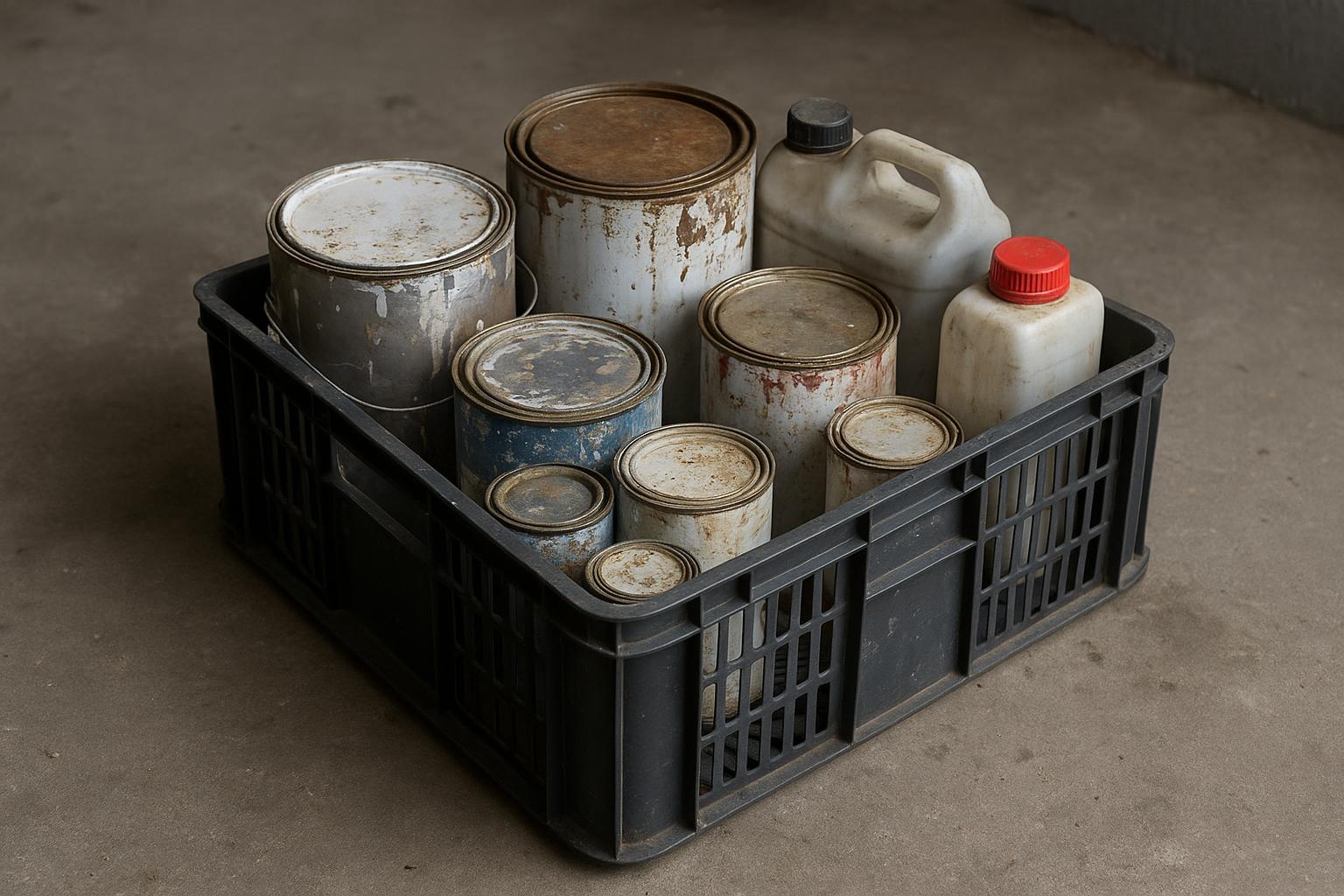
If you have a large number of tins, bottles and containers, sort them before the day. Put them in a crate, keep them upright and tell the carrier what you have. Some carriers can arrange a separate hazardous waste collection for an extra charge. Others will ask you to take them to a recycling centre yourself.
Our guides to the householder duty of care and waste transfer notes explain how to keep a record if a carrier does remove hazardous items.
A walk-round checklist before the crew arrives
Find them all in advance.
Chemicals are often stored in places that nobody visits for years. Use this checklist to find them before the day.
- Shed and garage: paint, varnish, white spirit, pesticides, weedkiller, fuel, oil, antifreeze, adhesives and sealants.
- Under the kitchen sink: bleach, oven cleaner, drain cleaner, descaler and polishes.
- Bathroom: toilet cleaners, nail varnish remover, hair dye, aerosols and old medicines, which should go to a pharmacy.
- Utility room and loft: fabric cleaners, stain removers, pool chemicals and old fire extinguishers.
- Hobby rooms: artists' paints, resins, solvents, glue and photographic chemicals.
If you are clearing the home of someone who has died, you may find chemicals that were bought decades ago, sometimes in unlabelled or unusual containers. Treat these with care, do not open or mix them, and ask your council for advice before moving them. Older products may contain substances that are no longer sold.
Where to take leftover chemicals in London
Check before you travel.
Most London boroughs run household waste recycling centres that accept paint, oil and some chemicals, although the exact list differs. Some have separate bays for paint and for oils, and some need you to book a slot. A few boroughs offer a doorstep collection of small amounts of household hazardous waste, usually by appointment.
Our local guides, such as Brent recycling centre, Harrow recycling centres and Hounslow recycling centres, show how a typical site works. Look at your own council's website for the current rules on what is accepted, how much you can bring and what proof of address is required.
If you are clearing a property for a relative, bring a note of the address and any authority you have to act for them. Some sites ask where the waste came from, and a clear answer avoids delays.
Preparing for a trip to the recycling centre
Small steps save a wasted journey.
Before you leave, check the council website to confirm that the site takes the items you have, whether you need to book a slot and what the limits are. Put containers upright in a sturdy crate or box lined with newspaper, with lids tightly closed. Place the crate in the boot, not in the passenger area, and keep windows open if there is any smell.
Take proof of address if the site asks for it, and bring any permit or booking confirmation. On arrival, follow the staff instructions, and do not leave anything outside the site. Leaving chemicals at a closed gate is fly-tipping and may lead to enforcement action.
If you cannot make the trip yourself, ask whether a friend or relative can do it, or whether a licensed carrier can do it as part of a wider job. Our guide to preparing bulky items for collection has more advice on getting items ready.
Commercial quantities and tradespeople
Different rules apply.
If the chemicals come from a business, such as a decorator's van, a workshop or a landlord's maintenance store, they are commercial waste, not household waste. Businesses have a duty of care and must use a registered carrier or a hazardous waste carrier where required. Quantities above household levels generally cannot go to a council household recycling centre.
Our guide to commercial waste versus household waste laws explains how the line is drawn. If you are an executor clearing a deceased person's workshop, take advice on whether the quantities are household or commercial before you start moving them.
In all cases keep the paperwork, take photographs of what was removed and make sure the person taking the waste is authorised, which you can check with our carrier licence check.
Frequently asked questions
Common questions about disposing of paint, varnish and household chemicals.
Can I pour leftover paint down the sink?
No. Paint can pollute water and block pipes. Reuse it, take it to a recycling centre, or follow your council's advice on drying out small amounts of water-based paint.
Can I put dried paint in the bin?
Some councils allow fully dried water-based paint in general waste, others do not. Check your council's advice first, and never put liquid paint in the bin.
Where can I take old white spirit and thinners?
Take them in sealed containers to a household waste recycling centre that accepts solvents. Do not pour them down a drain or onto soil.
Why did the clearance firm refuse my paint tins?
Hazardous items are often outside a carrier's normal service and can be dangerous to load. Take them to a recycling centre or agree a separate collection in advance.
Can I mix leftover cleaning products to save space?
No. Mixing products can release toxic gases or cause reactions. Keep each product in its own labelled container.
What should I do with an unlabelled bottle of liquid?
Do not open it. Seal it in a larger container and ask your council for advice on safe disposal.
Is it different for a business?
Yes. Chemicals from a business are commercial waste and need a registered carrier and the right paperwork. Council household sites usually do not accept commercial quantities.