
Direct answer
To estimate a van load, think in cubic metres or cubic yards, count your items room by room, and compare the total with the capacity of the van. A small panel van holds only a few cubic metres, a long wheelbase van more, and a Luton box van considerably more, but real capacity depends on how awkward the items are and how well they are packed. Loose, bulky furniture wastes space, while broken-down and bagged items use it efficiently. Treat any estimate as a range, send clear photos to carriers, and let them confirm the volume, because they know their own vehicles and how loads settle in practice.
Contents
- Why volume matters for a clearance
- What happens if you get it wrong
- Understanding the units
- Comparing with skip sizes
- Typical van sizes and capacity
- Space for people and equipment
- Loose, packed and broken-down loads
- Compressible and non-compressible items
- Counting room by room
- Marking what stays
- Rough sizes of common items
- Measuring one item to calibrate
- Measuring a pile or a room
- Allowing for gaps
- Turning volume into van loads
- Trips, distance and time
- Garages, lofts and gardens
- Access in lofts and sheds
- Taking photos for an accurate quote
- A short walkthrough video
- Common estimating mistakes
- Reviewing your estimate
- When weight matters more than volume
- Disposal site rules
- Using your estimate when requesting quotes
- Confirming the volume in the quote
- Frequently asked questions
Why volume matters for a clearance
It drives time, vehicles and cost.
Most clearance quotes are based on how much needs to be removed. Volume affects how many vans or trips are needed, how many people, how long the job takes and what is paid at the disposal site. If you can describe your volume well, quotes are likely to be more accurate and there are fewer surprises on the day.
Weight matters too, particularly for heavy waste such as soil, rubble, tiles or wet items, but for ordinary household contents volume is the main factor. Our guide on house clearance pricing by volume explains how carriers use it.
You do not need to be exact. The goal is to get close enough to ask sensible questions and to spot a quote that seems far too low or too high for what you have.
What happens if you get it wrong
Both directions cost something.
If you underestimate, the crew may arrive with too small a vehicle, need more trips or ask to change the price. If you overestimate, you may pay for more capacity than needed or choose a larger, more expensive option. Neither is a disaster, but both are avoidable with a bit of care.
The best protection is accurate photos and an honest description, together with a clear written statement of how the price changes if the volume differs.
Understanding the units
Cubic metres and cubic yards.
Volume is measured in cubic units. In the UK, you will see cubic metres and cubic yards. One cubic metre is roughly 1.3 cubic yards. A cubic metre is a space one metre wide, one metre long and one metre high, about the size of a washing machine on its side, slightly larger.
Skip sizes are commonly described in cubic yards, such as 4 yard or 8 yard skips, whereas some carriers talk about van loads or fractions of a load. Having a rough feel for both helps when you compare quotes from different sources.
To picture it, imagine a cube one metre on each side. How many of those would fill the pile of things you want removed? Even a rough guess is more useful than none.
Comparing with skip sizes
A useful reference.
Skip sizes give another way to picture volume. A small skip, often called a mini skip, holds around a couple of cubic yards, while larger skips hold many more. If you are comparing a skip with a van, remember that you load a skip yourself and cannot overfill it above the sides.
Our guides on mini skips and maxi skips explain typical sizes and what they hold.
Typical van sizes and capacity
Approximate figures only.
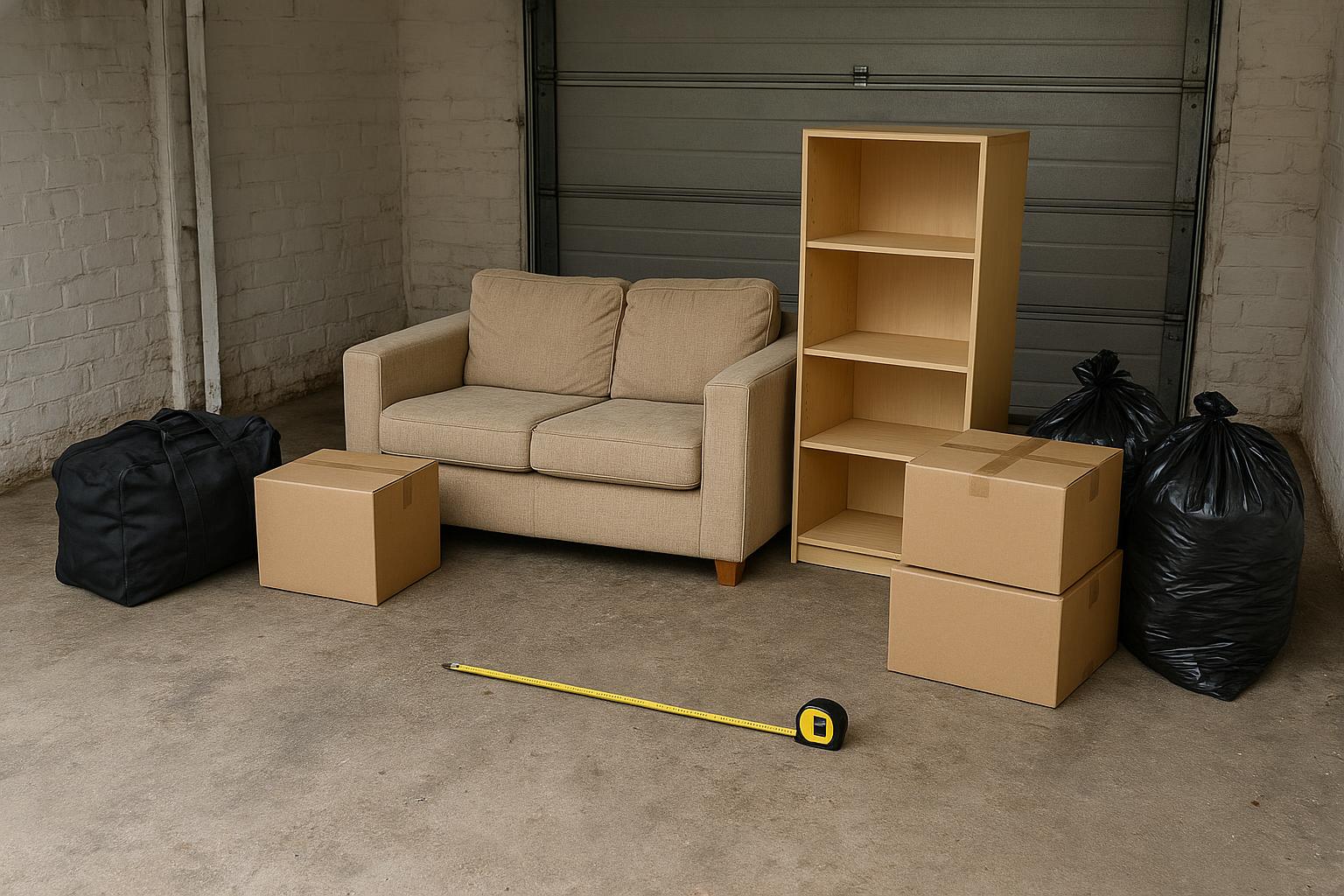
Vans come in many sizes, and the exact capacity depends on the model and body type. As a general guide, a small van carries a few cubic metres, a medium or short wheelbase van somewhat more, a long wheelbase high roof van more again, and a Luton box van several times as much as a small van. Ask the carrier for the specific vehicle’s capacity.
Capacity on paper and capacity in practice differ. Items do not pack like liquid, so a van that is rated for a certain volume may carry less if the items are awkward. Load height, doors, weight limits and the need to leave space for the crew also matter.
Our guide to van sizes, SWB, LWB and Luton compares the main types in more detail.
Space for people and equipment
Not all of the van is load space.
Crews need room for themselves, equipment such as trolleys and straps, and the ability to load safely. They also have to keep weight within legal limits for the vehicle. This is why professional estimates often assume less than the maximum capacity.
When a carrier says a job will need two loads, that is based on experience of how loads actually work, not just on a calculation.
Loose, packed and broken-down loads
Packing changes everything.
How you present the waste affects the space it takes. A wardrobe stands as a large, mostly empty box, a flat-packed wardrobe takes a fraction of that, and a bag of clothes squashes down further. Crews often dismantle furniture to make better use of space.
This is why two people with the same number of items can need different vehicles. Bulky, hollow items such as cabinets, shelving units, sofas and mattresses take a lot of space for their weight. Heavy compact items such as books, tools and stone fill less space but may reach a weight limit.
If you can dismantle simple items yourself, it may help, but only if it is safe and quick to do. Do not take risks with heavy or awkward pieces, and leave anything complicated to the crew.
Compressible and non-compressible items
Not everything squashes.
Soft items, such as clothes, bedding and cushions, compress when bagged and loaded, so they take less space than they look. Rigid items, such as cabinets, tables and appliances, keep their size. Mattresses are bulky and only partly compressible.
Think about the proportion of your pile that is soft and the proportion that is rigid. A pile of mostly soft items will often take less van space than a pile of the same visual size made of furniture.
Counting room by room
The simplest method.
Walk through the property with a notepad or your phone and list what is to go, room by room. Count large items individually and group small items into boxes or bags. This gives you an inventory you can adapt as you go.
Then estimate how many boxes, bags and large items you have in each room. A rough tally is enough, for example “two sofas, six boxes, five bags, one wardrobe, one chest of drawers”. You can then compare it with typical examples or send it to carriers with your photos.
Our room by room clearance plan shows how to work through a property in a systematic way, and the house clearance checklist helps with the order.
Marking what stays
Avoid mistakes.
As you count, mark what is staying so it is not included in the quote or taken by mistake. Use sticky notes, tape or a separate room for keepsakes and valuables. Photograph the marked items so that you and the crew agree on what is going.
This also protects you if there is a dispute later. Our guide on hidden family valuables and documents reminds you to check cupboards, pockets and boxes before anything leaves.
Rough sizes of common items
Use as a visual guide.
It helps to have a sense of how big typical items are. The following are approximate and vary widely by model.
- Two-seater sofa. Roughly one and a half to two cubic metres of space with legs and arms.
- Three-seater sofa. Often around two to three cubic metres.
- Double mattress. A bulky flat slab, often around a third to half a cubic metre.
- Single wardrobe. About one cubic metre or more standing, less when flat-packed.
- Chest of drawers. Often half a cubic metre or a bit more.
- Washing machine or fridge. Roughly half to one cubic metre each.
- Dining table with chairs. Perhaps two cubic metres in total.
- Bin bag of clothes. Roughly a tenth of a cubic metre or less.
Treat these as a rough guide only. Measure large items if it matters, and let the carrier confirm.
Measuring one item to calibrate
A quick trick.
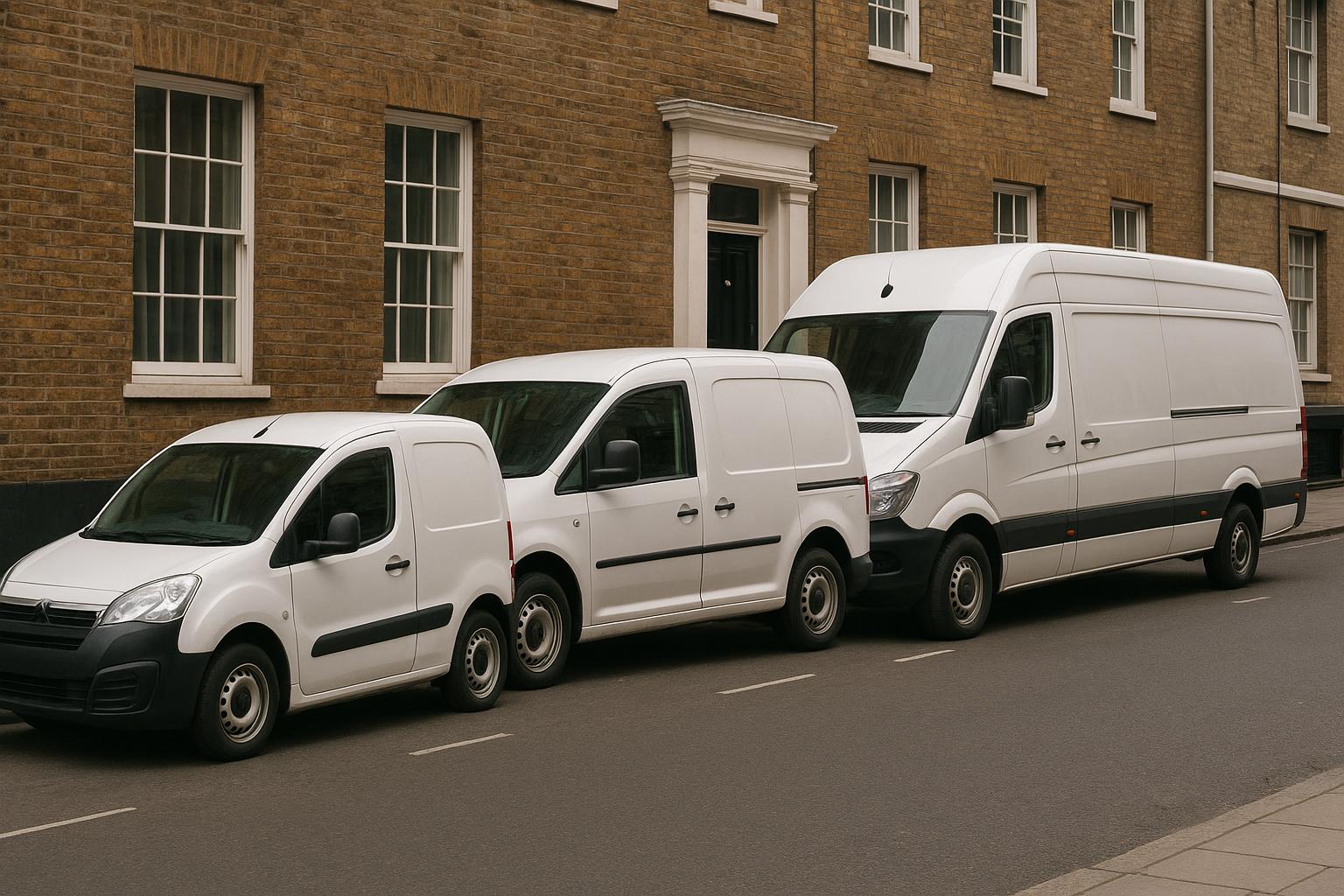
Measure one or two typical items with a tape and calculate their volume, such as a wardrobe or a box. This gives you a feel for the scale, and you can then compare other items to it.
If you have a few of the same item, multiply. Ten similar boxes of known size are easier to estimate than ten different items.
Measuring a pile or a room
A tape measure helps.
If everything is already piled up in one place, you can measure the pile. Note the approximate length, width and average height in metres, and multiply the three. For example, a pile 2 metres long, 1.5 metres wide and 1 metre high is about 3 cubic metres, although the gaps between items mean the real packed volume could be less.
For a whole room, you can estimate what fraction of its floor and height is filled with items to go. A room that is half full of items to the height of a bed is much less than a room packed to the ceiling.
Be honest about gaps. Piles contain a lot of air, particularly with furniture, so a measured pile is an upper estimate for what will fit in the van after loading and compacting.
Allowing for gaps
Air takes up space.
A measured pile always includes gaps. Furniture legs, open drawers, hollow cabinets and irregular shapes leave air. When the crew loads, they may be able to fill some gaps with smaller items, but a lot of space still goes unused.
As a rule, treat your measured volume as a ceiling and expect the real load to be somewhat less, but do not rely on this when planning the vehicle. Let the carrier decide.
Turning volume into van loads
A simple rule of thumb.
Once you have a rough total, divide it by the usable capacity of the van to get an approximate number of loads. A cautious approach is to assume the van will not be completely full in practice, since awkward items waste space, and to allow a margin.
For example, if you estimate eight cubic metres and the van carries about four to five in practice, you are looking at two loads. Whether that is two trips or two vehicles depends on the carrier and the distance to the disposal site.
Each trip takes time, so more loads mean a longer job. Ask the carrier how many trips it expects and whether the quote assumes a single visit or several.
Trips, distance and time
More loads, more time.
The distance to the disposal site affects how long each trip takes. In London, traffic and site queues can add a lot. A job with several loads may take most of a day or more.
Ask the carrier how it plans to organise the trips, and whether a second vehicle would be quicker. This can affect the price and the date you need to book.
Garages, lofts and gardens
Different kinds of volume.
Garages, lofts, sheds and gardens often hold bulky, awkward or heavy items. Garden waste such as branches and soil can be heavy, and soil and rubble have their own disposal rules. Lofts can hold a lot of loosely packed boxes and old furniture that is hard to access.
For these areas, take photos and note any access issues, such as a narrow loft hatch or a steep path. Our guides on garage clearance cost, loft clearance cost and shed clearance cost explain how these spaces are priced.
If heavy materials are involved, such as rubble or soil, mention them specifically because they can change the vehicle and disposal route. See our guides on bricks and rubble and topsoil disposal.
Access in lofts and sheds
Slow carrying costs time.
Narrow hatches, steep ladders, long paths and low ceilings all make loading slower, even if the volume is small. A carrier will usually want to know about these before quoting.
If you can, bring items down or to a central point before the crew arrives, but only if it is safe. Do not carry heavy items down a loft ladder alone.
Taking photos for an accurate quote
Show scale.
Good photos are the easiest way to help a carrier estimate volume. Take wide photos of each room from the doorway, include a recognisable item for scale, such as a door or a chair, and photograph piles from two angles.
Include the route out of the property, stairs, narrow doors and the parking position. Add any large, heavy or unusual items separately. Short notes can say how many boxes or bags are in each room.
If you can, take a short video walking through the property and describing what is going and what is staying. Make clear what is excluded, so the carrier does not price items you are keeping.

A short walkthrough video
Better than a stack of photos.
A video can show scale, access and condition in a way that photos sometimes cannot. Walk slowly, narrate what is going, and show any doors, stairs and parking. Keep it short and clear.
Do not include personal documents, valuables or anything private in the shot. If you share the video, send it only to carriers you intend to quote.
Common estimating mistakes
Learn from others.
A few errors come up repeatedly when people estimate volume.
- Forgetting to include the loft, garage, shed or outbuildings.
- Underestimating how much space furniture takes when assembled.
- Overestimating the capacity of a van, ignoring awkward shapes.
- Forgetting that heavy items can reach the weight limit before the space is full.
- Counting items you later decide to keep.
- Not mentioning access problems that slow loading.
Being honest about uncertainty and giving a range is better than a precise but wrong number.
Reviewing your estimate
A second look.
Before you send your estimate, review it. Check that every room, outbuilding and storage area is included and that items you are keeping are excluded. Ask someone else to look at your list if you can.
A short second check can catch the most common errors and gives the carriers a clearer picture.
When weight matters more than volume
Heavy waste is different.
Some materials are dense. Soil, rubble, bricks, tiles, plasterboard and wet waste can reach the weight limit of a vehicle while using a small amount of space. Disposal sites also often charge by weight for these materials.
If you have heavy waste, tell the carrier what it is and roughly how much. Some jobs need a different vehicle or a skip, and some materials must be separated. Check the rules with the carrier, and with the council if unsure.
Hazardous items such as asbestos, chemicals and some batteries are not ordinary waste at all and must be handled specially. Our guide on hazardous waste classification explains why they may be refused.
Disposal site rules
Different sites, different limits.
Disposal sites have their own rules about what they accept and how they charge. Some separate materials, some limit the size or type of vehicle, and some weigh loads. Your carrier will know which site suits your waste, so mention anything unusual.
Our guide on tip runs in London explains how local sites work if you are taking a load yourself.
Using your estimate when requesting quotes
Share the range.
When you contact carriers, share your tally, photos and a rough volume range. Say how confident you are, mention what could change and ask the carrier to confirm the number of vehicles and trips.
On a marketplace such as houseclearance.co, each independent carrier will make its own assessment, so you may see different volume estimates. If they differ a lot, ask why. Our guide on how to compare carrier quotes beyond price explains how to read the differences.
If the job is large, a visit or video call can be worth arranging before you accept a price.
Confirming the volume in the quote
Get it in writing.
Ask each carrier to state in the quote what volume or number of loads it has assumed and what happens if it turns out larger or smaller. This turns an estimate into an agreement.
If the volume changes on the day, ask the crew to explain, show you and confirm the revised price before loading. If it is smaller than expected, ask whether the price will go down.
Frequently asked questions
Common questions about estimating a van load.
How much waste fits in a van?
It depends on the van and the items. Small vans carry a few cubic metres, long wheelbase vans more and Luton vans considerably more, but awkward items reduce usable space. Ask the carrier for the vehicle’s capacity.
What is a cubic yard?
A unit of volume used in the UK, especially for skips. One cubic metre is roughly 1.3 cubic yards.
How many van loads is a one-bedroom flat?
It varies widely depending on how full the flat is and what is being removed. Count your items and send photos, and carriers can tell you how many loads they expect.
Does weight matter as well as volume?
For ordinary household items volume is the main factor, but heavy materials such as rubble, soil and tiles can reach weight limits quickly and may be priced differently.
Should I dismantle furniture before the crew arrives?
Only if it is safe and simple to do. Crews often dismantle furniture to save space and can do it faster, so leave anything complicated to them.
How accurate does my estimate need to be?
A rough range is enough. The aim is to describe the job clearly so carriers can quote, and the carrier will confirm the volume.
What photos should I send?
Wide photos of each room, close-ups of large items, the route out of the property, stairs and the parking position, plus a note of what is staying.
Why do two carriers estimate different volumes?
They may use different vehicles, packing methods or assumptions about access. Ask each to explain what its quote covers.
