
Direct answer
In England, waste from a private home is household waste, while waste from a shop, office, workshop, landlord business or other commercial activity is commercial or business waste. Businesses must keep a duty of care record, use a registered waste carrier, and usually keep waste transfer notes for two years. In a mixed-use property, waste is classed by where and how it was produced, not by who owns the building, so a flat above a shop produces household waste, and the shop produces commercial waste. Keep them separate, check which your council will collect, and use a registered carrier with the right paperwork for the commercial part.
Contents
- How the law defines household and commercial waste
- Worked examples: which category is it?
- Why the distinction matters in practice
- What businesses must do with their waste
- What good record-keeping looks like
- Separation of recyclables for businesses
- Mixed-use properties: how the split works
- Shared bin stores, yards and access
- Bulky household items from a mixed-use building
- Working from home and home businesses
- Landlords, lets and end-of-tenancy waste
- Who can collect each type of waste
- How to check a carrier before you hire
- Commercial clearances: offices, shops and units
- Hazardous items in mixed-use clearances
- What to do if you are not sure which category applies
- A practical checklist for a mixed-use clearance
- Frequently asked questions
How the law defines household and commercial waste
The source of the waste decides its category.
Under the Controlled Waste Regulations, waste is divided into household, industrial and commercial categories. Household waste is waste from a domestic property such as a house, flat, caravan, houseboat or residential home, and from certain buildings used for other purposes such as a school or a charity premises. Commercial waste is waste from premises used wholly or mainly for trade, business, sport, recreation or entertainment. Industrial waste comes from factories and industrial processes.
This means the same material, for example a table or a cardboard box, can be household waste in one place and commercial waste in another. What counts is the activity that produced it. A table thrown out of a family kitchen is household waste; the same table from a hairdresser's salon is commercial waste.
The rules are set in legislation including the Environmental Protection Act 1990 and the Waste (England and Wales) Regulations 2011, and the details differ slightly across the UK nations. GOV.UK and your local council are the best reference points.
Worked examples: which category is it?
Short scenarios make the rule easier to apply.
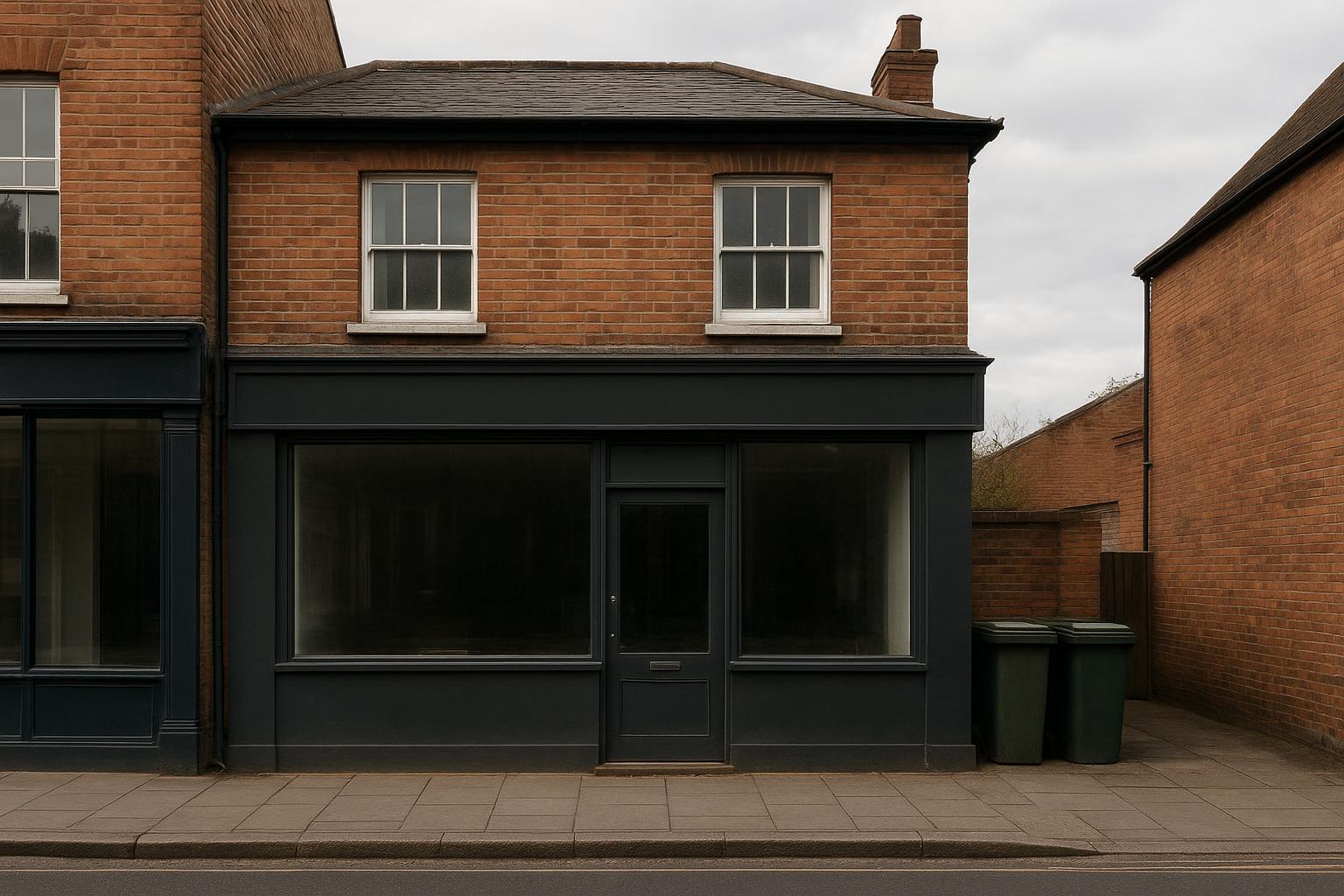
A flat above a barber's shop. The tenant of the flat produces household waste. The barber produces commercial waste, including hair clippings, product packaging and old equipment. Each should use its own route.
A terraced house where one room is a registered child-minding setting. Everyday home waste is household waste. Waste specific to the business, such as large volumes of craft or catering waste, may be commercial, and the owner should check with the council how it should be handled.
A pub with a manager's flat. Bottles, kitchen waste, cellar waste and fixtures are commercial. Waste from the flat is household. Shared yards and bin stores make labelling especially important.
A landlord clearing a house after a tenant leaves. The waste is residential in origin, but the landlord's lettings activity may mean it is treated as business waste. A registered carrier and a transfer note protect both sides.
A deceased person's home that included a small workshop. The domestic contents are household waste, while stock, machinery, chemicals and trade materials in the workshop are likely to be commercial. See our guide to probate house clearance timing for how the estate side works.
Why the distinction matters in practice
It affects cost, paperwork, where waste can go and who is liable.
For the person paying, the key practical differences are these. Commercial waste is chargeable and is not covered by the council tax-funded household services. Commercial waste needs transfer notes and a registered carrier at every stage. Disposal sites charge differently for household and commercial loads, and some will refuse a commercial load presented as household. Insurance and enforcement also treat the two differently, and a business that misdescribes its waste can face penalties.
For landlords and building owners, the distinction also matters for liability. If waste from one occupier is dumped in a shared area and a council or the Environment Agency investigates, being able to show the paperwork for the waste you did handle, and a clear agreement about shared areas, makes the difference between a quick resolution and a long dispute.
What businesses must do with their waste
The duty of care is stricter than for households.
Every business that produces waste has a legal duty of care. In practice that means storing waste safely, passing it only to an authorised person such as a registered waste carrier, and keeping a written description of the waste and a transfer note for each handover, normally for at least two years. Hazardous commercial waste needs consignment notes. Businesses must also take reasonable steps to apply the waste hierarchy, which puts prevention and reuse ahead of recycling and disposal, and to separate recyclable materials such as paper, card, metal, plastic and glass.
Our guides on householder duty of care and waste transfer notes explain the same system from the householder side. The difference is the level of paperwork and the fact that businesses cannot use council household recycling centres for their own trade waste in the way residents can.
Failure to comply can lead to fixed penalties or prosecution, and a business that hands waste to an unregistered collector can be liable if the waste is fly-tipped. See fly-tipping penalties and liabilities.
What good record-keeping looks like
Simple, consistent and kept in one place.
A waste transfer note should describe the waste, state the quantity and type of container or load, give the date and time of transfer, and identify both parties, including the carrier's registration number and the premises the waste came from. For regular collections a season ticket or annual transfer note can cover repeat pickups. Keep copies, and check them against the actual collections. If the paperwork does not match what was removed, ask the carrier to correct it.
Keep a folder or digital file for each property or site. Include the carrier's registration details, a screenshot of the Environment Agency register check with the date, copies of notes and invoices, and photographs of the waste before collection. This evidence is useful if anyone later claims that waste from your premises ended up somewhere it should not have.
Separation of recyclables for businesses
A legal expectation, not just good practice.
In England, businesses are required to present paper, card, glass, metal, plastic and food waste for separate collection where this is technically and economically practicable, and the rules on food waste for businesses have been tightening. Mixed-use buildings need to make this workable for the commercial occupier without blocking the residents' access to their own bins. Where there is not enough space for separate containers, the business and the building owner should agree a sensible arrangement and keep a note of it.
Mixed-use properties: how the split works
One building, two waste streams.
A mixed-use property is a building used partly for residential and partly for commercial purposes. In London the common examples are a flat above a shop, a pub with a manager's flat, a workshop with a home attached, and a converted house with a ground-floor surgery or studio. The rule of thumb is that each use is treated separately. The residential occupiers produce household waste, and the commercial occupier produces commercial waste, even though they share a front door, a yard or a bin store.
This has practical consequences. Commercial waste should not be put into household bins or street collection, and household waste should not go into the business's contract bins without the business's agreement. Shared bin stores need clear labelling and a clear agreement about who pays for what. If you own the building, you may be responsible for managing the arrangement between the occupiers, and councils can take action over waste left in the wrong place.
If you are unsure how your property is classified, your council's waste or business rates team can usually tell you, and the council tax and business rates records often show how the premises are treated.
Bulky household items from a mixed-use building
Sofas and mattresses still follow the household route.
A resident of a flat above a shop who has a sofa or mattress to throw away can normally use the council's bulky waste collection or a registered private carrier, just like any other household. They should not put it in the shop's bins or leave it in a shared yard. Our guide on what the council charges to remove a sofa explains the cost, and the same principle applies to other furniture.
Working from home and home businesses
Occasional work does not change the category, but trade does.
Someone who works from a laptop at the kitchen table does not turn their home into commercial premises, and ordinary household waste stays household waste. The position changes when the home is used for a trade that produces its own waste stream, such as a child-minder's craft supplies, a tradesperson's offcuts, a market trader's stock, or a hairdresser or beautician working from a room at home. Waste from the business activity is commercial waste, even if the building is a house.
Council household recycling centres commonly ask visitors whether the waste is from a home or a business, and some restrict vans, trailers or large loads. If you are clearing a property that was used for a small business, treat the stock, equipment and work materials as commercial waste unless the council confirms otherwise, and use a registered carrier who can give you proper paperwork.
Landlords, lets and end-of-tenancy waste
A grey area that catches many owners.
If a tenant leaves a residential property, waste left behind is generally treated as household waste, but a landlord who clears it as part of running a lettings business may be treated as producing commercial waste, particularly if they handle multiple properties. The safest approach is to treat the clearance as a business activity, use a registered waste carrier, keep the transfer note, and not use the council household service in a way that disguises the source.
Waste from a commercial tenant, such as a shop, restaurant or office, is the tenant's commercial waste while they occupy the premises, and any rubbish left after they go may become the landlord's problem. Check the lease on who must clear the unit at the end. Our guides to end-of-tenancy clearance costs and office clearance costs explain how those jobs are normally scoped and priced.
Who can collect each type of waste
Registration, not just a van and a willingness to drive it away.
Anyone who transports waste as a business must be registered as a waste carrier, dealer or broker with the Environment Agency in England. Upper-tier registration covers carrying other people's waste as a business, while lower-tier is for carrying your own waste in limited circumstances. You can check any carrier on the public register before you hire them, and a legitimate firm will give you its registration number readily. See how to choose a licensed house clearance company.
For household waste, your council offers collection services, often with a charge for bulky items, and you can also use a registered private carrier. For commercial waste, councils may offer a paid trade waste service, but you are free to choose a private contractor. Either way, keep a record. Beware of unregistered collectors who offer to take everything cheaply, because the risks are explained in our guide to hiring unlicensed man and van services.
How to check a carrier before you hire
Four checks that take five minutes.
- Ask for their registration number and look it up on the Environment Agency public register.
- Check the business name and address match the details on the register.
- Ask where they will take the waste and whether you will receive a transfer note.
- Ask whether they have public liability insurance and for how much.
If any answer is vague, move on. A cheaper quote is not a saving if you are liable for waste that was later dumped. If you are comparing several firms, a platform that matches you with verified carriers, such as the one you can reach by choosing to request clearance quotes, can speed up the comparison, but you should still keep your own records of the checks.
Commercial clearances: offices, shops and units
Bulk, time pressure and fixtures.
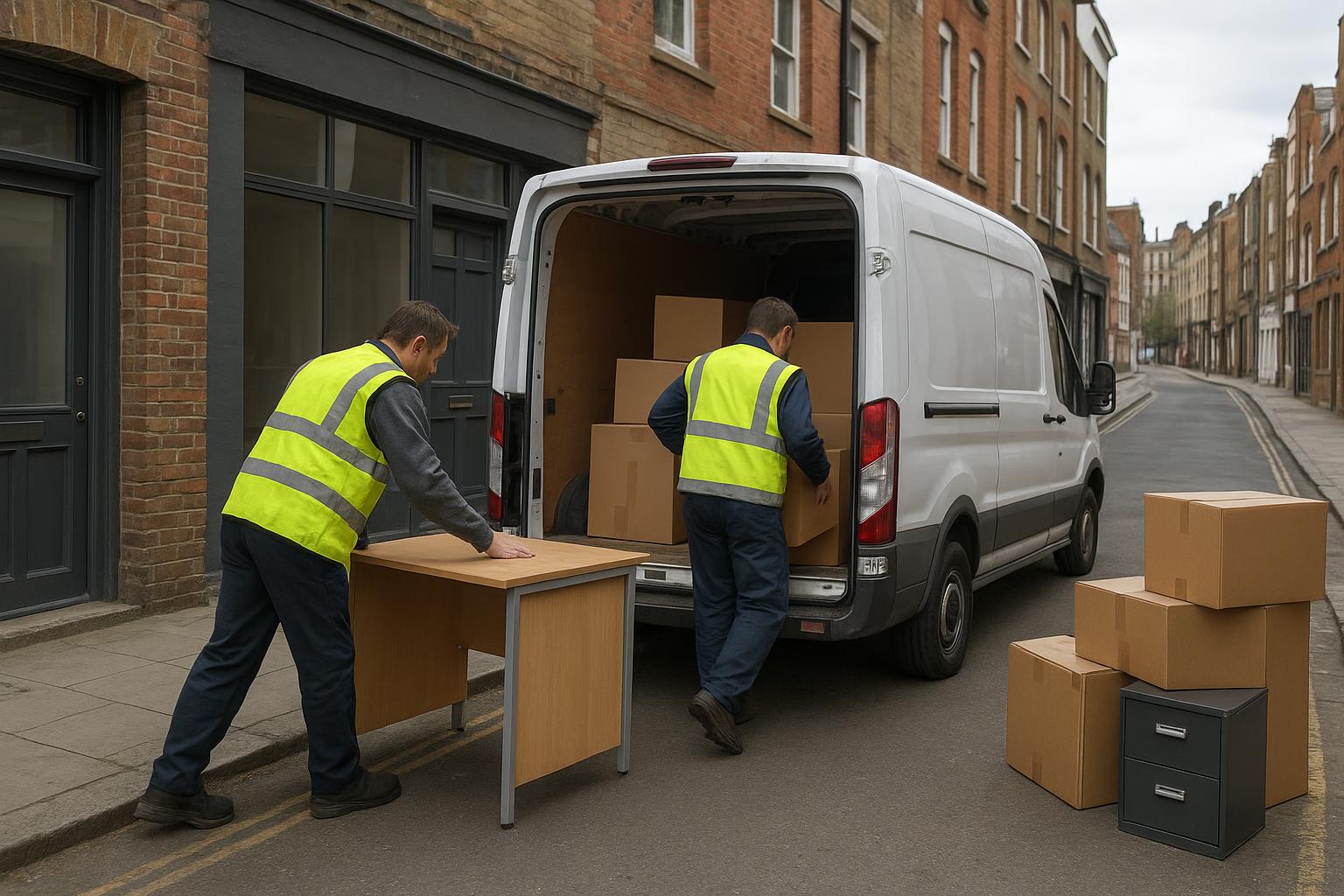
When a business vacates premises, the waste usually includes furniture, fittings, stock, IT equipment, documents and sometimes fixed items such as shelving or partitions. Electrical items fall under separate recycling rules, and confidential documents need secure destruction. Check the lease first to see what the tenant must remove, then agree the scope with the carrier in writing. Our guides to commercial and retail clearance cost in London and office removals in London explain how these jobs are normally planned.
Hazardous items in mixed-use clearances
Workshops, salons and studios hold more of them.
Commercial premises are more likely to contain solvents, chemicals, cleaning products, electrical equipment, batteries, oils or sharps than a typical home. For businesses, hazardous waste usually requires a consignment note and a carrier authorised for it. Our guide to what is classified as hazardous waste and why clearance firms may refuse it sets out the common categories and how to dispose of them. If you are clearing a mixed-use building, sort household and commercial items separately and treat the hazardous items from the business side as commercial hazardous waste.
What to do if you are not sure which category applies
Ask early, and keep the answer.
If you cannot tell whether waste is household or commercial, ask your council's waste team, describe the building and the activities, and ask for the answer by email. Councils deal with mixed-use questions regularly, and a written reply is useful evidence later if anyone questions how you handled the waste. For larger or more complicated cases, such as a building with several tenants or a long-vacant commercial unit, it is reasonable to ask the carrier to visit before quoting, so that the price and the paperwork reflect the real mix of waste. Being cautious costs little, while misclassifying waste can lead to refused loads, extra charges or enforcement action, particularly where hazardous items are involved.
Also keep in mind that rules and local arrangements can change, so check the current GOV.UK and council guidance rather than relying on an old answer. When circumstances change, for example a tenant changes the use of a ground-floor unit, review the arrangements for waste at the same time.
A practical checklist for a mixed-use clearance
Work through it before you book anyone.
- Decide which parts of the property are residential and which are commercial, and write it down.
- Separate the waste into household and commercial piles, and keep the hazardous items apart.
- Check whether your council will collect the household part, and whether any charges apply.
- Use a registered upper-tier waste carrier for the commercial part, and check the number on the Environment Agency register.
- Ask for a waste transfer note describing the waste, the quantity and the carrier, and keep it for at least two years.
- Describe the whole job honestly when you request clearance quotes so that the price covers what is really there.
- Check the lease or tenancy for who must clear the premises at the end.
Frequently asked questions
Common questions about household and commercial waste law.
Is waste from a flat above a shop household or commercial?
The flat produces household waste, and the shop produces commercial waste. Each is classed by the use of its own part of the building, so they should be kept and collected separately.
Do I need a waste carrier licence to clear my own home?
Householders clearing their own waste generally do not need to register to carry it. Anyone who carries other people's waste as a business must be a registered waste carrier.
How long must businesses keep waste transfer notes?
Normally at least two years. Hazardous waste consignment notes must be kept longer, so check current guidance.
Can a business use the council recycling centre?
Usually not for trade waste. Council household sites are for residents' own household waste, and many sites ask about the source of the waste.
If I run a business from home, is my waste commercial?
Waste from the business activity is commercial waste even if it is produced at home. Ordinary household waste from the home itself remains household waste.
Is waste left by a tenant household or commercial?
It depends on the property and who clears it. If a landlord clears it as part of a lettings business it may be treated as commercial, so use a registered carrier and keep the paperwork.
