Direct answer
The most common mistakes when bagging household waste are overfilling bags until they split, using thin bags for heavy or sharp items, mixing hazardous items such as batteries, paint or aerosols into general waste, binning items that should have been checked first (documents, jewellery, keepsakes), tying bags too tight to lift, leaving loose items on top of the pile, blocking access, mixing recyclables with rubbish when the collector separates them, ignoring council or carrier rules about bag type, and not sorting before you start. Use sturdy bags, fill them to about half to two-thirds, keep hazardous items separate and check the rules for your collection.
Contents
- Why bagging mistakes matter
- Mistake 1: overfilling bags until they split
- What to do when a bag splits anyway
- Mistake 2: using the wrong type of bag
- Mistake 3: mixing hazardous items with general waste
- Mistake 4: throwing away things that should have been checked
- Mistake 5: tying bags too tight or leaving them open
- Mistake 6: leaving loose items on top of or beside bags
- Mistake 7: mixing recyclables, donations and rubbish
- Mistake 8: ignoring council and carrier rules
- Special cases: sharp tools, glass and mixed garage waste
- Mistake 9: blocking access and ignoring safety
- Mistake 10: not sorting or planning before you start
- A quick bagging checklist
- Frequently asked questions
Why bagging mistakes matter
Small habits decide whether a clearance runs smoothly.
Bagging up rubbish looks like the easy part of a clearance. You put things in a bag, tie it and move on. In reality the way bags are filled affects safety, speed, cost and what ends up in the wrong place. A split bag on a staircase slows a crew down and can injure someone. A bag of mixed rubbish that includes a battery or a can of paint may be refused or may put workers at risk. A bag that contained your mother's jewellery or a bundle of cash is gone for good once it has been thrown into a van.
The mistakes below come up again and again in house, flat and garage clearances across London, and almost all of them are avoidable with a little preparation. None of them need special equipment, only a bit of thought about what is going into each bag, how heavy it will be and where it will be left for collection.
This guide is general information. The rules on what you can put out, which bags are acceptable and how waste must be handled depend on your council, the carrier and the type of waste, so always check the instructions that apply to you. If you are arranging a full clearance through houseclearance.co, remember that the quote-matching service connects you with independent carriers, so each carrier will have its own preferences, and it is worth asking.
Mistake 1: overfilling bags until they split
The single most common problem.
It is tempting to squeeze as much as possible into each bag to reduce the number you need. The result is a bag that is stretched at the seams, impossible to tie properly and likely to split the moment someone picks it up. Rubbish then spills across the floor, the stairs or the pavement, and the person who has to pick it up is working in a mess.
A good rule is to fill ordinary bin bags no more than half to two-thirds full, so the neck can be twisted and tied, and so the contents can shift when carried. Heavier materials such as books, tins, clothes in bulk and broken crockery should go into smaller quantities per bag, or into sturdier containers, because weight is the main cause of split bags and back injuries.
If you are not sure whether a bag is too heavy, try lifting it with one hand by the neck. If it feels like it could tear, it is too full or too heavy. Two lighter bags are always better than one that breaks. A rough guide for safe manual handling in the UK is that bags should be light enough for one person to carry comfortably without strain, and for items that are heavier, use boxes with handles or ask for help.
What to do when a bag splits anyway
Stop, make it safe, then repack.
Even careful packers have a bag split now and then. If it happens, stop moving it and check the area for sharp items or spilled liquids before anyone steps in. Put on gloves, pick out anything sharp first and place it in a box or wrap it in cardboard. Then transfer the contents into a fresh bag, using a second bag around the first if the original is badly torn.
Do not try to carry a split bag by holding the damaged part together, because it will often rip further. If it split on the stairs, clear the stairs before continuing, since spilled items are a common cause of falls. Wipe up any wet spills so that the floor is not slippery and dispose of the cloth with the rubbish.
Use the experience as a signal. If one bag has split, others are probably overfilled or are the wrong type for the job. Re-check the next few and swap to sturdier bags if needed, which is quicker than dealing with a series of spills.
Mistake 2: using the wrong type of bag
Thin bags suit light rubbish and nothing else.
Standard supermarket carrier bags and thin kitchen bags are not designed for bulky or sharp waste. They tear on corners, puncture on glass and split under the weight of books. For clearances, choose heavy-duty rubble sacks or builder's bags for dense, rough or sharp items, and strong refuse sacks for general waste. Check whether your council or carrier asks for a particular colour or type, because some schemes only accept official or clear bags.
Large "skip bags" and bulk bags are another option for big volumes of bulky waste, but they must be placed carefully and should be used only according to the supplier's instructions and weight limits. The guide to skip bags explains what they are and where they work well.
Double-bagging is useful for items that are likely to cut through a single layer, such as broken ceramics or old picture frames. Wrapping sharp or broken items in newspaper or cardboard before putting them in the bag protects both the bag and the person handling it. Label the bag or tape a note on the outside, such as "sharp", so the crew knows to be careful.
Mistake 3: mixing hazardous items with general waste
What looks like small rubbish can cause serious harm.
Batteries, aerosols, paint, solvents, bleach, gas canisters, fluorescent tubes, fire extinguishers and old electricals do not belong in a general rubbish bag. In a waste vehicle or at a transfer station, a crushed aerosol, a lithium battery or a leaking container can cause a fire, release fumes or injure workers. Some of these items are also covered by specific rules, and carriers and councils may refuse a load that includes them.
Keep these items together in a separate box, away from the bags, and check where they can be taken. Most London boroughs have household waste and recycling centres that accept many of them from residents, often free, and some supermarkets take small batteries. Details vary, so check with your council.
The guides on disposing of household chemicals and paint and hazardous waste classification explain what to look for. Electrical items fall under separate rules, covered in the WEEE regulations guide. If you are not sure whether something is hazardous, check the label, and err on the side of keeping it out of the bag.
Mistake 4: throwing away things that should have been checked
Once it is in the van, it is gone.
In a hurry, it is easy to bag up papers, small boxes, old handbags and coat pockets without checking them. This is how passports, birth certificates, wills, share certificates, cash, medals, jewellery, photographs and house keys end up in the wrong place. In an estate or a relative's home, the risk is higher because you may not know what the person kept and where.
Before bagging anything, go through drawers, pockets, books, envelopes and the lining of bags. Keep a "to check" box and put anything uncertain in it, rather than in a bin bag. Shred documents that contain personal information rather than putting them whole into the rubbish, and keep anything that may be needed for probate, tax or insurance.
The guide on hidden family valuables and documents goes into more detail on where things are typically found. A few extra minutes per room is a small price compared with the stress of looking for a missing document later.
Mistake 5: tying bags too tight or leaving them open
Both extremes cause problems.
Bags that are knotted tightly around bulky contents can be hard to lift and impossible to open if something has to be removed. Bags left open are worse: they spill, attract pests and allow loose items to fall out during carrying. The ideal is a neck that is twisted and tied in a simple knot or a tie, with enough slack to hold but not so tight that it will tear when the bag is picked up.
Never tie bags by pulling hard on the handles of the bag itself, because the plastic can tear. Use a proper cable tie, a twist tie or tape for heavier bags. Do not use a bag as a carrying sling by gripping the plastic neck for long distances. Support the base with one hand or use a handle or a box instead.
If a bag contains anything that is wet, such as food waste or garden waste, double-bag it and keep it separate from dry rubbish. Wet bags are heavier, leak and may attract flies in warm weather.
Mistake 6: leaving loose items on top of or beside bags
Loose items scatter, get stolen or get left behind.
A pile of bags with loose items on top, such as a broken lamp, a few pictures and a set of curtain poles, is hard to move. The loose items fall off, get missed or are taken by someone else. It also looks like fly-tipping if it is placed outside, which can have legal consequences for the householder.
Group loose items into boxes, bundle long items such as poles and planks with tape or rope, and label anything that is not meant for collection. If you are putting bags outside for a council or carrier collection, check where and when they should be placed, and do not leave them out earlier than allowed.
The responsibility does not stop at the pavement. If waste placed outside your property is taken by someone who is not authorised, you may be held responsible. The guide to the householder duty of care explains why this matters and how to check that whoever takes your waste is allowed to do so.
Mistake 7: mixing recyclables, donations and rubbish
Sorting later is slower and costs more.
Throwing everything into black bags looks quick but removes any chance of reuse or recycling. Clean clothes, working electricals, books and furniture that could be donated end up in landfill or incineration, and charities and recyclers may refuse items that are damp, damaged or mixed with rubbish. A bag of good clothes soaked by a leaking bag of kitchen waste is not donatable.
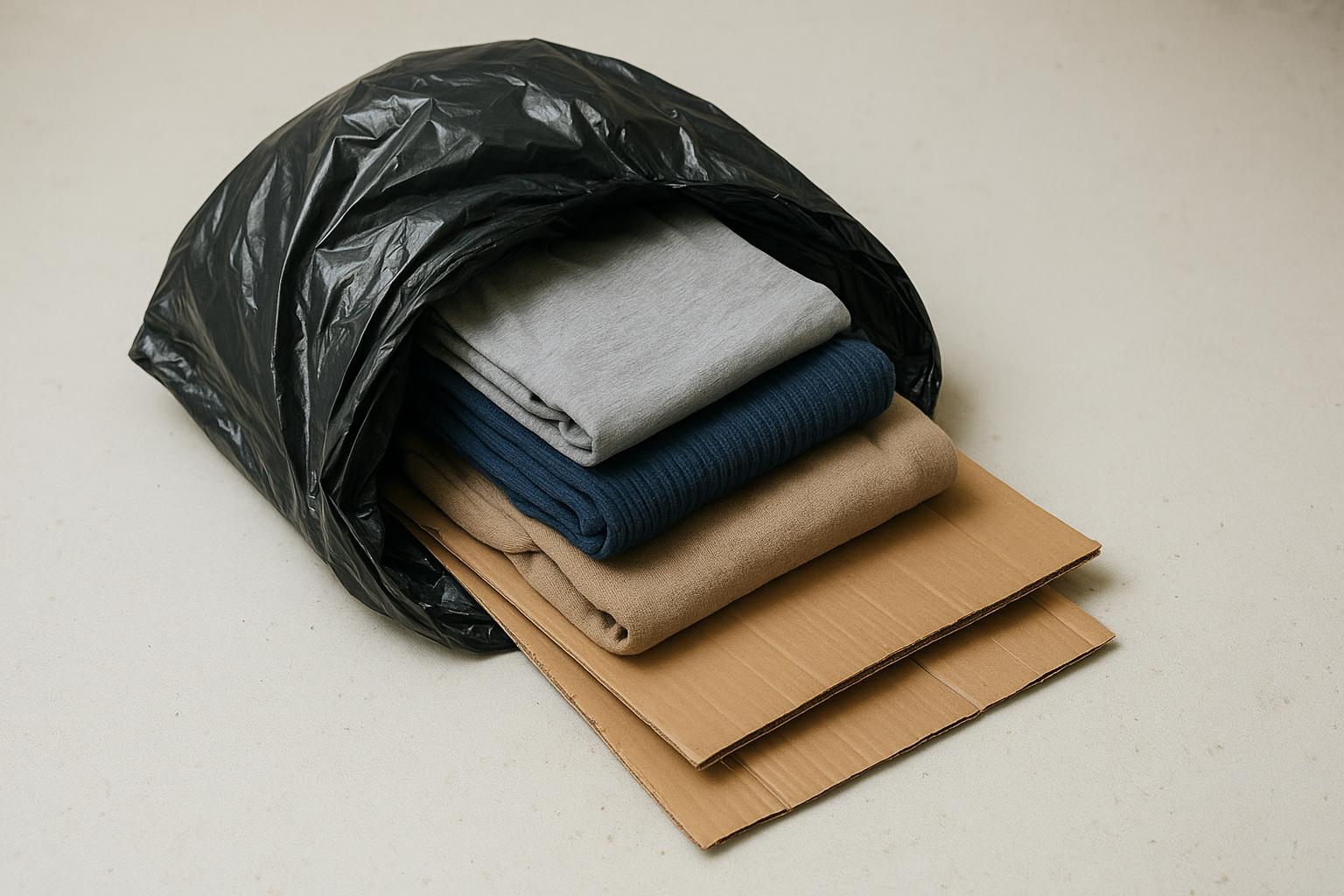
Sort into at least four groups before you bag: keep, donate or sell, recycle and rubbish. Put clothes and textiles in clean, clear or labelled bags, and keep them dry. Cardboard and paper should be flattened and kept apart. The guide on recycling old clothes and textiles explains what is typically accepted.
Some councils and carriers ask for recycling to be separated in certain bags or containers, and some will not take mixed bags at all. Check the instructions before you start, so that you do not have to repack later.
Mistake 8: ignoring council and carrier rules
There is no single national standard for bags.
Every council has its own rules about what can be put out for collection, how many bags are allowed, what type of bag is acceptable, and whether bulky items or garden waste need a booking. Carriers and clearance crews also have their own preferences, such as bags that can be carried by one person, items separated by type or hazardous waste kept apart.
Read your council's website or booking confirmation, and read the carrier's instructions if you have a quote. If there is any doubt, ask. A short question before the day avoids a refused collection, an extra charge or a repeat visit. Keep any written instructions with your records.
Trade and business waste is subject to different rules from household waste. If the property is a shop, an office or a rented flat used by a business, check the position before you bag, because a household collection will not normally take commercial waste.
Special cases: sharp tools, glass and mixed garage waste
Garages and sheds produce the trickiest bags.
Garages, sheds and workshops hold a mix of rusty tools, broken glass, offcuts, screws, old paint and damaged tyres. These should not be thrown into a single bag. Wrap blades and glass in cardboard and tape them, put nails and screws in a sealed tin or tub, and keep paint and oils separate. Tyres, car batteries and some other items have their own disposal routes and are often not accepted with ordinary household waste, as explained in the guide to garage clearouts.
Never leave sharp items loose in a bag that someone else will have to lift. A sharp edge pushing through the plastic is one of the most frequent causes of hand injuries during clearances. Taking the extra minute to wrap and label is the simplest safety step you can take.
Mistake 9: blocking access and ignoring safety
A messy route is a dangerous route.
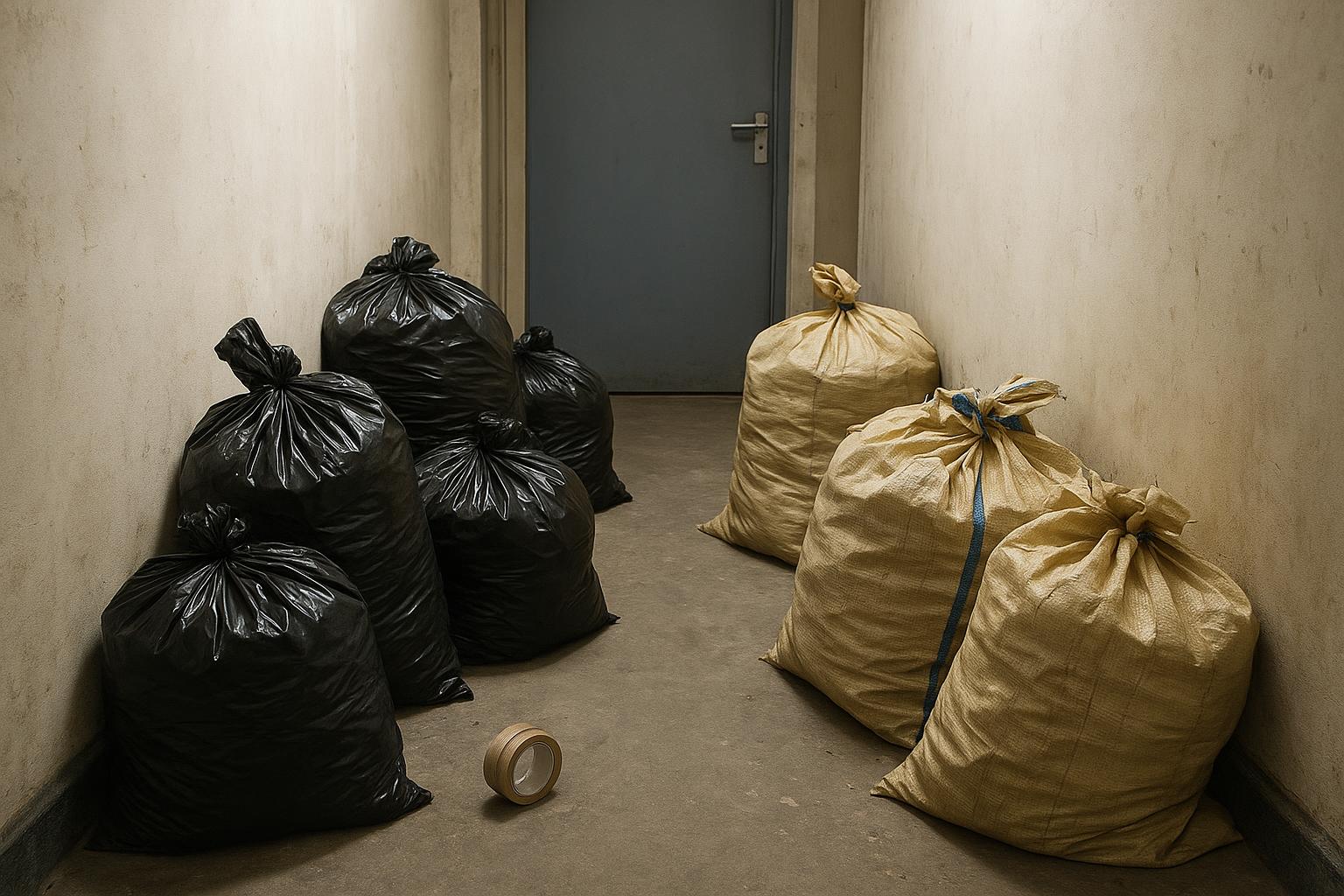
Bags piled in hallways, on stairs or in front of doors create trip hazards and slow every task. In flats, they may block fire escape routes or communal areas, which can breach building rules and fire safety requirements. Outside, bags left on the pavement can obstruct pedestrians, prams and wheelchairs.
Stage bags in one place, keep routes clear and put the heavier bags at the bottom or beside the exit, not at the top of stairs. Wear gloves and sturdy shoes, take care with sharp objects and glass, and wash your hands after handling rubbish. For jobs with a lot of dust, mould or unknown contents, read the guide to PPE for heavy-duty clearances.
Do not carry heavy bags down steep stairs alone, and do not drag them if the contents are sharp. Plan your route in advance, and ask for help if the load is heavy.
Mistake 10: not sorting or planning before you start
Starting with bags in hand is the root of most other mistakes.
People often grab a roll of bags and start working through the nearest cupboard. Without a plan, valuable items get thrown, hazardous waste gets mixed, and the work has no order. A simple plan helps. Decide what areas you will do first, what categories you are sorting into, and where each category will go.
Estimate how much waste you have, so you know how many bags you need and whether a bag-based approach is realistic at all. For large volumes, bags are inefficient and bulky items will not fit. The guide to estimating waste volume and the house clearance checklist help you decide when it is time to book a carrier rather than carry on alone.
Set a realistic timetable, take breaks and avoid doing the whole house in one day. Tired people make mistakes, and the later part of a long day is when valuables get thrown away. Having a second person to check what is going into bags is a useful safeguard.
A quick bagging checklist
Keep this in the room where you are working.
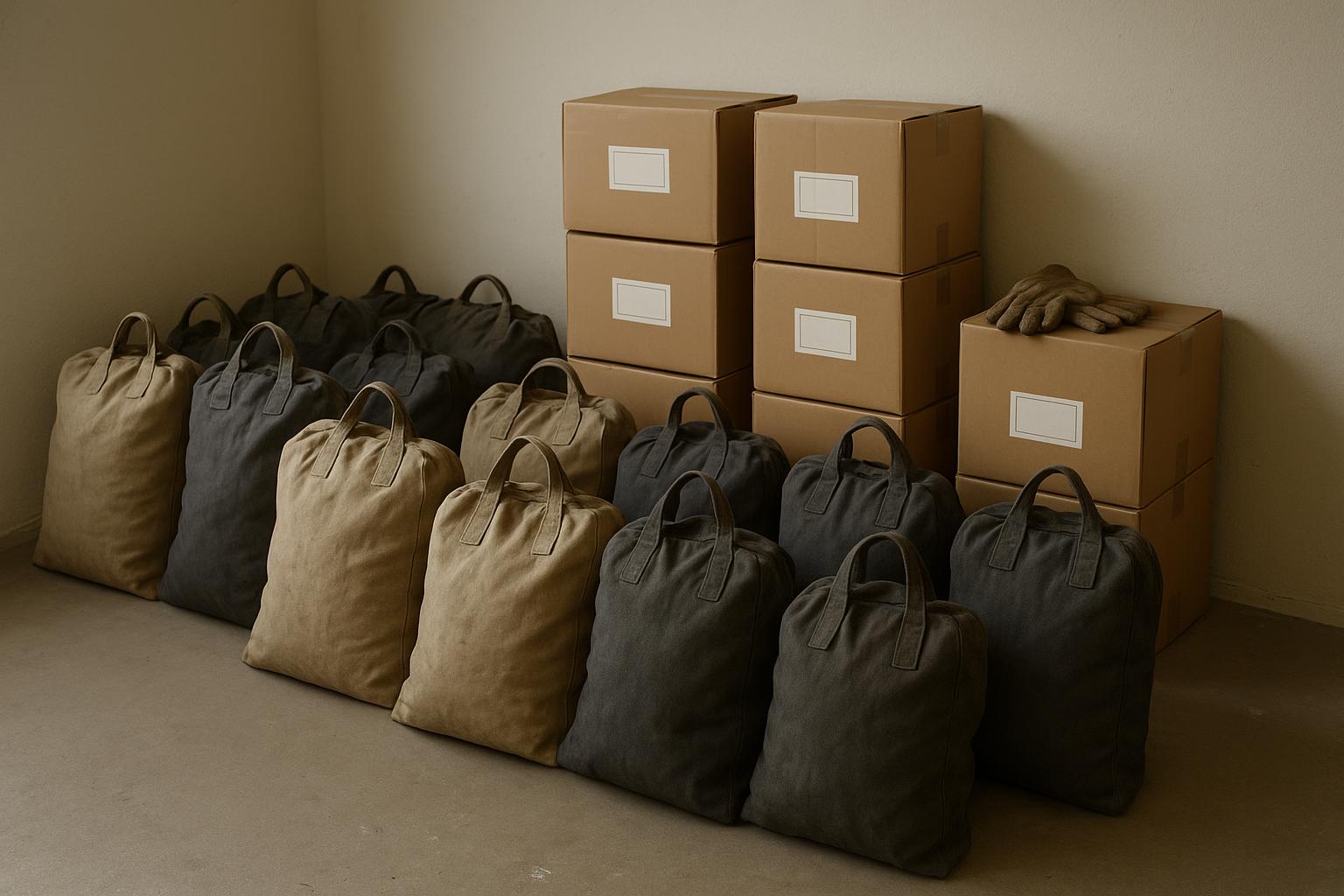
Run through these points before sealing each bag:
- Is the bag sturdy enough for what is inside, and no more than about two-thirds full?
- Are there any sharp edges, and have they been wrapped?
- Have you checked pockets, drawers, envelopes and boxes for valuables and documents?
- Is any hazardous item (battery, aerosol, paint, chemical, electrical) in the bag? If so, take it out.
- Is the contents dry, or has wet waste been double-bagged separately?
- Is the neck tied securely and the weight manageable for one person?
- Is the bag labelled if it contains donations, recycling or anything that needs separating?
- Does the placement follow the council or carrier instructions, and is the route clear?
Followed consistently, this small routine removes most of the problems described above and makes the later stages of the clearance smoother and safer.
Frequently asked questions
Common questions about bagging up household waste.
How full should I fill a bin bag?
Fill it to roughly half or two-thirds so the neck can be tied and the bag can be lifted without tearing. Heavy items such as books or crockery should go in smaller quantities or in boxes.
What type of bag is best for a house clearance?
Heavy-duty rubble sacks or strong refuse sacks are better than thin kitchen bags, especially for sharp or heavy items. Check whether your council or carrier asks for a specific type or colour of bag.
Can I put batteries, aerosols or paint in the general rubbish?
No. These items can cause fires or injuries and are often treated as hazardous or specially regulated waste. Keep them separate and take them to a household waste and recycling centre or other proper drop-off point. Check with your council for details.
How do I avoid throwing away valuable items by mistake?
Check pockets, drawers, books, envelopes and the lining of bags before they go in a bag, and keep a box for anything you are unsure about. Go through rooms slowly, ideally with a second person.
Should I double-bag rubbish?
Double-bagging is sensible for sharp, wet or heavy items. Wrapping sharp or broken objects in cardboard first protects both the bag and the person handling it.
Is it legal to leave bags on the pavement for collection?
It depends on your council's rules and your arrangement with a collector. Bags left out without permission can be treated as fly-tipping, and householders can be held responsible. Check the rules and the time slots for your collection.
Do I need to separate recycling from rubbish in a clearance?
It is better to, because items that are mixed with wet or dirty waste often cannot be recycled or donated. Some councils and carriers also require it. Check the specific instructions that apply to you.
How many bags will a house clearance need?
There is no reliable number, because it depends on the size of the property and the amount of belongings. For larger volumes, bags are often impractical and booking a carrier is easier. See the guide to estimating waste volume.
Will houseclearance.co bag my rubbish for me?
houseclearance.co is a quote-matching service that connects you with independent carriers. What each carrier will do, including whether they pack or bag waste, depends on the carrier and the quote, so ask when you request quotes.