
Direct answer
Textile waste is a growing problem because most clothes and household linens are made from mixed fibres that are hard to recycle. The best approach in a clear-out is to sort items into wearable, resaleable, and worn-out. Clean wearable clothes can be donated, sold or swapped. Worn but clean textiles can go to textile recycling banks or specialist collectors, where they may be reused abroad, turned into wipes or padding, or recycled into fibre. Wet, mouldy or contaminated items usually cannot be recycled and go for energy recovery. Ask where donated clothing goes, keep items dry and bagged, and avoid unlicensed collectors who leave bags in the street.
Contents
- Why textiles are a waste problem
- What a typical household holds
- How to sort textiles in a clear-out
- Practical sorting rules
- Bagging and labelling
- Donating and selling clothes
- Who takes what
- Textile recycling banks and collectors
- The journey of a donated bag
- Bedding, towels and household linens
- What cannot be recycled
- Moths, pests and stored textiles
- Textiles in a whole-house clearance
- Clothes of a deceased relative
- Doorstep collectors and bag schemes
- Cutting textile waste in future
- Making clothes last longer
- Frequently asked questions
Why textiles are a waste problem
Cheap clothes, mixed fibres.
The UK buys a very large amount of clothing and household textiles each year, and a significant share is thrown away. Fast fashion, low prices and changing trends mean many garments are worn only a few times. When they are discarded, most of them go into household rubbish and end up in energy recovery or landfill.
Recycling textiles is difficult because many items are made from blends, such as cotton mixed with polyester, which are hard to separate. Zips, buttons, labels and finishes add further complexity. Recycling technology is improving, but most textile recycling today still downcycles fibre into lower-value products such as cleaning cloths, insulation or padding.
This is why reuse is so important. A garment that is worn by a second owner avoids the need to produce a new one and keeps the item out of the waste stream for longer.
What a typical household holds
More than you would guess.
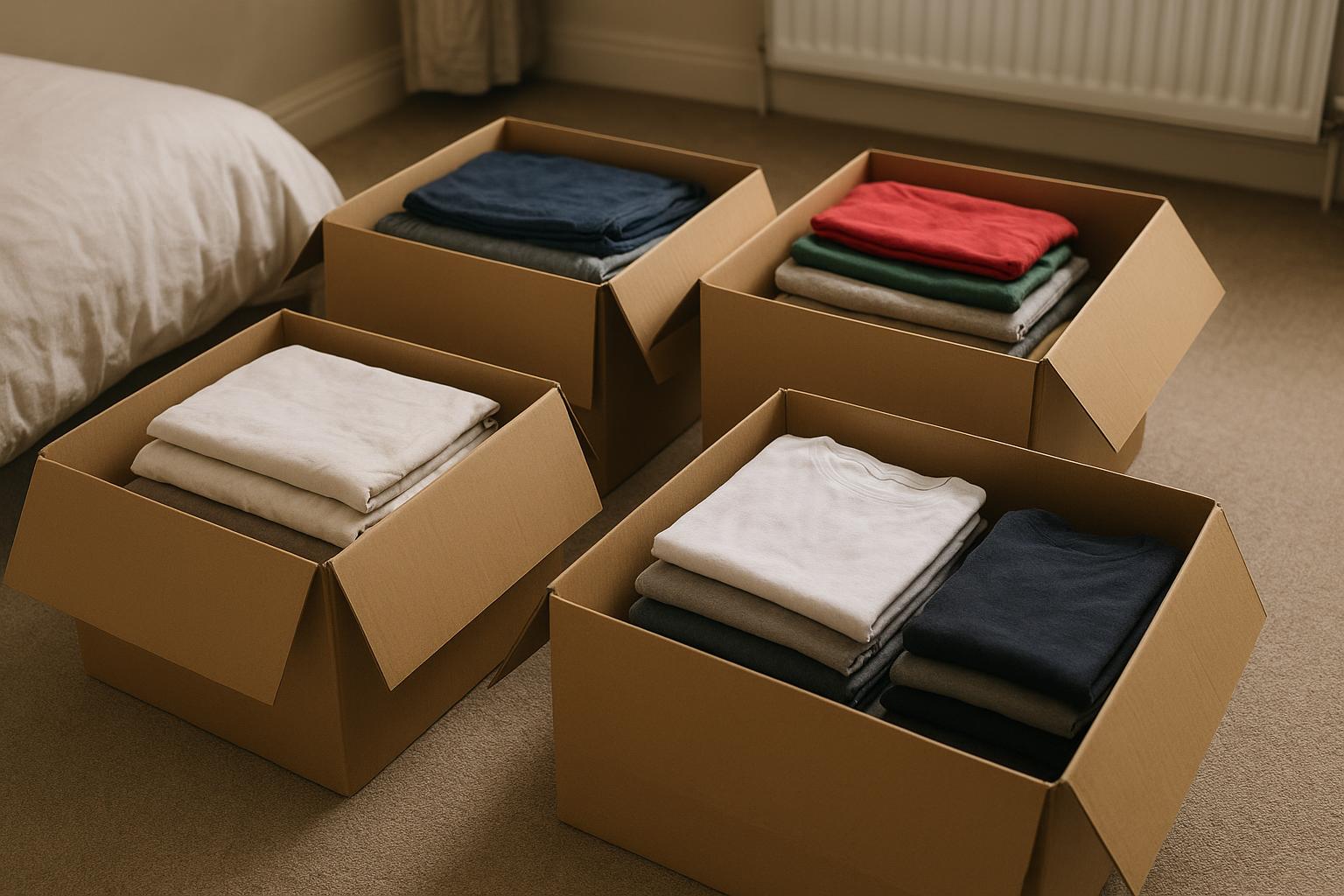
Most households hold textiles in many places. Wardrobes and drawers are the obvious ones, but there are also loft boxes of old clothes, a cupboard of towels and bedding, curtains in every room, shoes by the door, bags and belts, soft toys in children's rooms and cushions and throws in the living room. Garages often hold old work clothes, and sheds may hold sheets used as dust covers.
In a house that has been lived in for decades, the total volume can be surprising. A clear-out of a single family home can fill dozens of bags. The volume matters because sorting takes time, and because bags that are not sorted early often end up in the general waste.
Taking stock before you begin helps. Walk through the property with a notebook or phone, count the rooms that hold textiles and estimate the number of bags. This will help you plan your time, book collections and brief your carrier.
How to sort textiles in a clear-out
Three piles make it simple.
A clear-out can involve hundreds of items. A simple three-pile system keeps the work manageable.
- Wearable and clean: clothes, shoes, bags and linens in good condition with no holes, stains or strong smells. These can be sold, swapped or donated.
- Worn but clean and dry: items with small damage, fading or stretching that are no longer fit to wear. These can usually go to textile recycling.
- Wet, mouldy, oily or heavily soiled: items that cannot be reused or recycled and should be treated as general waste or sent for energy recovery.
Check pockets, remove personal items and make sure that nothing sharp is hidden in the folds. If you are clearing the home of a relative, look through jackets, coat pockets and handbags for documents and valuables, as explained in our guide to hidden family valuables and documents.
Practical sorting rules
Make fast, consistent decisions.
Sorting is easier if you apply a few simple rules. If you have not worn it for a year, it probably goes. If it has a visible stain, hole or strong smell, it goes in the worn pile or the waste pile. If it holds a memory, keep a small number of items and photograph the rest.
Look at the fabric label to learn the fibre content. Pure cotton, wool and linen are easier to reuse or recycle than blends with elastane or polyester. Do not spend time on items that clearly cannot be used. Put them straight in the worn or waste pile.
If you are working with family members, agree a time limit for choosing keepsakes, and a list of the charities or groups that will receive donations. This prevents bags from sitting in a spare room for months. Our guide to anxiety over discarding items may help if the clear-out is emotionally difficult.
Bagging and labelling
Small steps that save time later.
Use sturdy bags that you can lift and close. Do not overfill them, because a bag that splits in a van or on a doorstep is hard to rescue. Label each bag clearly with a marker, for example wearable, worn clean or waste, and keep the bags in a dry room until they are collected or dropped off.
If a collector or charity asks for a particular type of bag, follow their instructions. Some textile recyclers prefer clear bags so that staff can see the contents, and some charities ask you to keep shoes in a separate bag.
Donating and selling clothes
Wearable items first.
Charity shops, community groups, school uniform banks and refugee support organisations often welcome clean, good-quality clothes. Check what each one accepts, because they may refuse items such as underwear, worn shoes, damaged items and large quantities.
Selling is another option for good-quality or branded items. Online marketplaces, vintage shops and clothing swap events can all work, but selling takes time. Be realistic about the effort and the price. If you are clearing a property to a tight deadline, donation is often the practical choice.
Our guide on furniture donation in London includes advice on working with charities, including how to check what they accept and how to arrange collections. The same principles apply to clothes: call ahead, ask what they need and do not drop off bags outside a closed shop.
Who takes what
A quick comparison.
Different organisations accept different items, so match what you have to the right outlet.
- Charity shops: clean, wearable clothes, shoes in good condition, bags, belts and household linens. Many refuse underwear, damaged items and large quantities.
- School uniform banks and parent groups: school uniform in good condition, including PE kit and coats.
- Clothing swaps and community groups: fashionable or specialist items, such as formal wear and workwear.
- Animal shelters: clean towels, blankets and sheets, but check what they need.
- Textile recyclers and banks: worn but clean and dry items that are not fit for sale.
- Theatres and drama groups: costumes, fabric and accessories, particularly vintage or unusual items.
Call before you go. Many organisations change what they accept depending on stock, season and storage, and a quick call prevents a wasted trip.
Textile recycling banks and collectors
What happens after the drop.
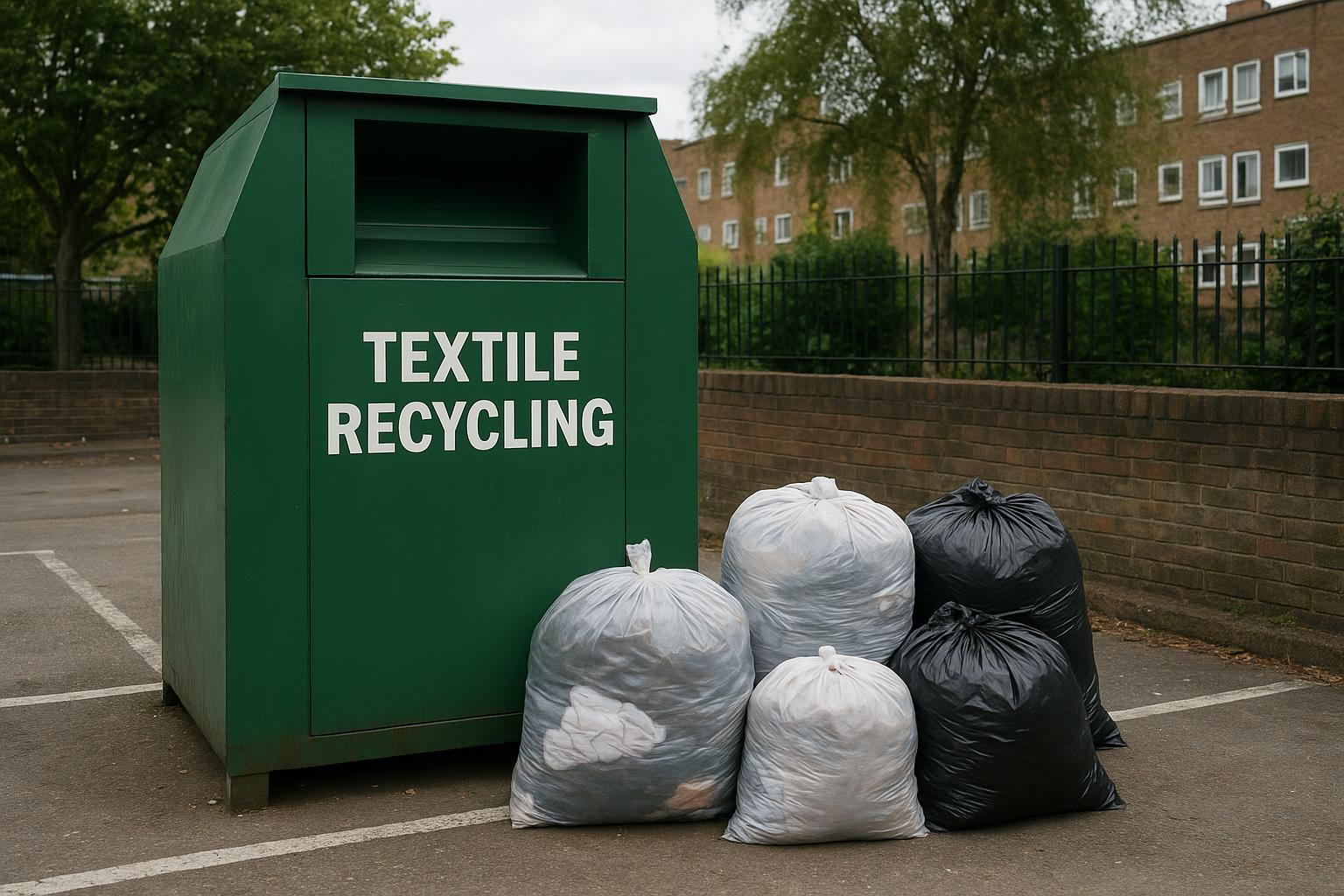
Textile banks in car parks and recycling centres collect clothes and household textiles from the public. The material is sorted by specialists. Wearable items are often baled and sold, many for reuse abroad. Worn items are sorted by fibre type and condition, then turned into wipes, rags, insulation, mattress filling or recycled yarn.
Not every bank is run by a charity. Some are run by commercial operators who pay a fee to the site owner and sell the collected textiles. Check the label on the bank, which should show who runs it and whether a charity benefits. Our guide to donating in London gives tips on identifying genuine charity collections.
Keep textiles dry and bag them securely. Wet items can spoil a whole bag and reduce the value of everything around them. Shoes should be tied or bagged in pairs. Linens and soft toys are usually accepted if clean, but check the bank or collector's instructions.
The journey of a donated bag
From bank to buyer.
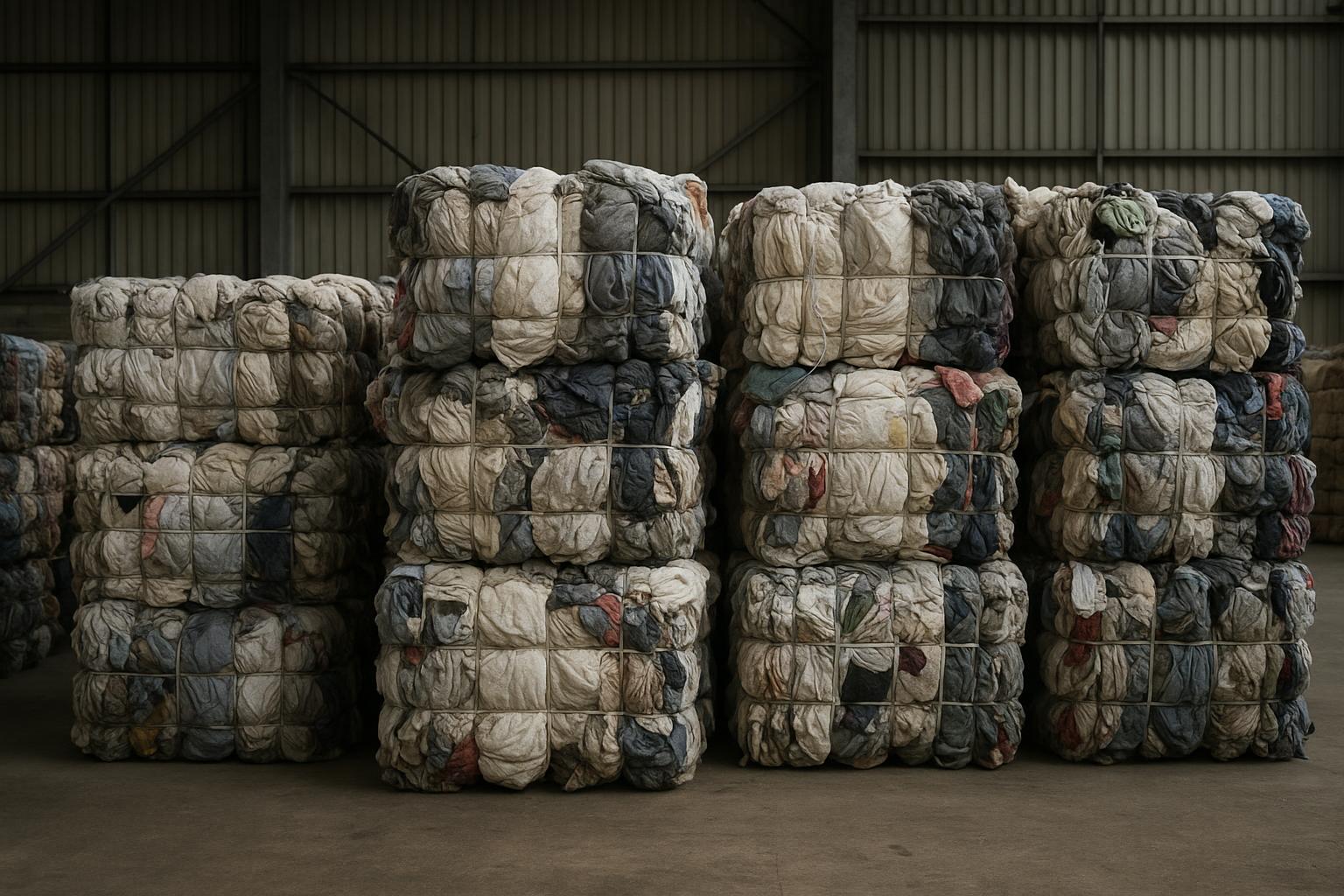
Once a textile bank is emptied, the bags are taken to a sorting warehouse. Workers sort by item type, quality and fibre. A large share of wearable clothing is graded and baled for export to markets in other countries, where it is sold in shops and markets. Items that cannot be sold are sorted into wipers, padding and recycled fibre.
This global trade has benefits, because it keeps clothes in use, but it also has problems. Some destination countries receive more low-quality clothing than they can sell, and the surplus can become waste there. For that reason, the best option for good-quality clothes is often local reuse through charity shops, swaps and direct sales.
If this matters to you, ask the operator of the bank where the clothes go. Responsible operators can usually describe their sorting and sales routes, and some publish reports.
Bedding, towels and household linens
The forgotten textile pile.
Duvets, pillows, sheets, towels, curtains and tablecloths are often overlooked. Clean sheets and towels in decent condition can be given to animal shelters, which use them as bedding, and to some charities that support people in need. Worn linens can go in textile banks if the bank accepts household textiles, and many do.
Duvets and pillows are harder. Many charities do not accept them for hygiene reasons, and recycling options for feather and synthetic fillings are limited. Check with your council and local recycling centre. Some will take them for recovery, and some retailers collect old bedding when you buy a replacement. See our guide to disposing of mattresses for a related item that has similar hygiene constraints.
Curtains are another category. Good quality curtains can be sold or donated, while faded or sun-rotted ones can go for textile recycling if they are clean and dry.
What cannot be recycled
Know the limits.
Wet, mouldy, oily or chemical-soiled textiles are almost always rejected. This includes clothes used for painting, items stained with fuel or oil, and anything contaminated by a leak or flood. These are typically treated as general waste or sent for energy recovery, as explained in our guide to energy from waste.
Foam-backed carpets, rubber-backed mats and heavily blended technical fabrics are also hard to recycle in most local systems. Carpets and underlay have their own recycling and recovery routes and should not be put in textile banks.
If a property has had pest problems, such as moths, bed bugs or rodents, seal the affected items in strong bags and tell the collector. Pest-affected textiles should not go into banks and may need special disposal.
Moths, pests and stored textiles
A hidden risk in old wardrobes.
Clothes, rugs and blankets stored for many years can be damaged by clothes moths, carpet beetles and silverfish. Look for small holes, webbing, cocoons or tiny cast skins. Pest-damaged items should not be placed in textile banks or donated, because they can spread the pests.
To deal with an infestation, seal the affected items in strong bags and freeze them for at least a few days if you can, or wash them at a high temperature if the fabric allows. Items that cannot be treated should be disposed of as general waste in sealed bags. Tell your carrier so they can take precautions.
Do not forget to check the wardrobe, drawers and surrounding carpet. Vacuum thoroughly and wipe surfaces. If the infestation is serious, a professional pest controller can advise on treatment before you move items out of the property.
Textiles in a whole-house clearance
Plan ahead for the volume.
A whole-house clearance can include dozens of bags of clothes, linens and soft furnishings. Sorting them takes longer than people expect, so start early and give yourself a deadline. Bag wearable items separately from worn ones, label the bags and keep them off the floor if there is any damp.
Tell your carrier how many bags there are and whether any are wet. A good crew will keep textiles dry in the vehicle and take them to an appropriate outlet, rather than throwing them in with general waste. Ask whether they can take reusable items to a charity partner and what happens to worn textiles.
Our guide to the circular economy and house clearance explains why sorting at the property matters, and our guide to zero waste to landfill and recycling rates shows how to judge a firm's claims about recycling.
Clothes of a deceased relative
Handle with care.
Clearing the clothes of someone who has died is often the hardest part of a house clearance. There is no right pace. Some families do it quickly, and others take months. If you can, keep a small number of items that hold meaning, such as a coat, a scarf or a piece of jewellery, and donate the rest to causes the person supported.
Check pockets, handbags and wallets before anything leaves the house. People often keep receipts, keys, cash, letters and small valuables in clothes. If you are an executor, keep a note of anything you find, because some items may have to be listed in the estate.
Our guides on coping emotionally when clearing a parent's home and dividing family belongings without disputes give more advice on making these choices as a family.
Doorstep collectors and bag schemes
Check before you put a bag out.
Leaflets and paper bags often appear through letterboxes asking for clothes. Some come from genuine charities, but others are run by commercial collectors or by people who are not registered. A genuine charity collection should show a registered charity number and the name of the organisation, and the bag should say who collects it and how to contact them.
If the bag shows no details, or if the collector asks you to leave it on the street, be cautious. Bags left on pavements are often stolen or become litter. If you are not sure, take the clothes to a charity shop or a textile bank yourself, where you can see the operator.
Our guide to the risks of hiring an unlicensed man and van covers the wider problem of unregulated collectors. The same checks apply to anyone who offers to take your textiles.
Cutting textile waste in future
Buy less, keep longer.
The most effective way to reduce textile waste is to buy fewer new items and keep them longer. Choose quality over quantity, repair items instead of replacing them, and pass on things you no longer need rather than throwing them away. Look at the fibre content when buying, and choose single-fibre garments where possible, because they are easier to recycle.
Borrowing, renting and swapping can all reduce the number of items that you buy. Community repair cafes can fix zips, seams and buttons for little or nothing. These habits take time to build, but they save money as well as resources.
If you have just finished a clear-out, take a few minutes to decide what you really need. A smaller, better wardrobe is easier to manage and easier to clear when the time comes.
Making clothes last longer
Small habits with a large effect.
Washing less often, at lower temperatures and with a gentle cycle, extends the life of most garments. Air drying instead of tumble drying reduces wear and saves energy. Mending small tears and replacing buttons early prevents bigger problems, and using a fabric shaver on bobbled knitwear can make an old jumper look new.
Store clothes clean, dry and aired, ideally in breathable bags or boxes rather than sealed plastic, which can trap moisture. Use cedar blocks or lavender sachets to discourage moths, and check stored items twice a year.
When an item is finally past use, you will have a clean, dry piece of worn textile that a recycler can accept, rather than a damp, damaged one that has to go for recovery. Good care therefore helps at both ends of the life cycle.
Frequently asked questions
Common questions about recycling clothes and household textiles in the UK.
Can I recycle worn-out clothes?
Often yes. Clean, dry worn textiles can go to textile recycling banks, where they may be turned into wipes, padding or recycled fibre. Wet or mouldy items usually cannot be recycled.
Do charity shops take torn clothes?
Most do not. Charity shops prefer clean, wearable items. Some work with textile recyclers, so ask whether they take worn clothing.
Where do clothing banks send my clothes?
Items are sorted by specialists. Wearable clothes are often baled and sold for reuse, while worn items are turned into wipes, insulation or recycled fibre. Operators and destinations vary.
Can I donate pillows and duvets?
Many charities refuse them for hygiene reasons. Check with local animal shelters, your council and retailers that take old bedding.
What should I do with clothes that smell of damp?
Do not put them in a textile bank. Wet or mouldy clothes spoil other items. Treat them as general waste unless your council advises otherwise.
Is it safe to use doorstep clothing collections?
Only if the bag shows a registered charity number and clear contact details. If in doubt, take the clothes to a charity shop or textile bank yourself.
How should I prepare textiles for collection?
Keep them clean, dry and bagged. Tie shoes in pairs, remove personal items from pockets and label bags if you have separated wearable and worn items.
