
Direct answer
In a garage clearout, car batteries, engine oil, coolant, brake fluid and many motor parts are classed as hazardous or need special handling, and used tyres are controlled waste that cannot simply go in a skip or bin. Keep batteries upright and out of the rain, never pour oil or coolant down a drain, and take each type to the right place: retailers and many recycling centres accept old car batteries, council sites accept some oils and sometimes limited numbers of tyres, tyre fitters may take tyres for a fee, and scrap metal dealers take metal parts. If you hire a carrier, tell them what is in the garage, check their waste carrier registration, and keep a receipt, because you remain responsible for the waste until it reaches an authorised site.
Contents
- Why garage waste needs more care than other rooms
- Fire and safety first
- Surveying the garage before you start
- A simple sorting plan
- Car batteries: handle with care
- Transporting a battery
- Other batteries and electrical parts
- E-bike and tool batteries
- Used tyres: why you cannot just dump them
- Tyres on rims and large tyres
- Handling and storing tyres while you clear
- Reuse before disposal
- Engine oil, coolant, brake fluid and fuel
- Dealing with spills
- Motor parts, scrap metal and what can be sold
- Tools, shelving and equipment worth keeping
- Records for sellers and executors
- Hidden hazards: asbestos, gas and old chemicals
- What to do if you suspect asbestos
- Using a carrier for a garage clearance
- Getting comparable quotes
- Preparing for the crew
- Skips and bulk loads: what not to put in
- Alternatives to a skip
- Frequently asked questions
Why garage waste needs more care than other rooms
Garages hold chemicals, metals and heavy objects together.
Most rooms in a house produce furniture, clothes and general rubbish. A garage is different. Over years it collects batteries, tyres, containers of oil, paint, antifreeze, brake fluid, solvents, cleaning products, old spark plugs, filters, exhausts and bits of engines. Many of these items are harmful if they leak, burn or end up in landfill or watercourses.
The rules treat them differently from ordinary household rubbish. Some are classed as hazardous waste, some need to go through specific take-back schemes and some are controlled waste that you cannot put in a normal bin. This is why a garage clearance often takes longer and costs more than the same volume of ordinary furniture.
This guide is general information for householders in England. Rules and council policies vary, and they can change, so check the council and GOV.UK for the current position. For an overview of the cost side, see our garage clearance cost guide.
Fire and safety first
Garages can be dangerous places.
Mixed fuels, oily rags, batteries and gas cylinders in a closed space can be a fire hazard. Before you start, remove ignition sources, switch off power to damaged equipment, and keep a fire extinguisher or water source nearby. If you smell fuel or see signs of leakage, ventilate the garage and take extra care.
Never work alone if you are moving heavy items such as engines or stacks of tyres. Tell someone where you are and keep a phone with you.
Surveying the garage before you start
Know what you have before you lift anything.
Take everything out into an open space in daylight if you can, and group it by type. Look at labels on containers, check for leaks and corrosion and note anything unlabelled. Keep unknown liquids separate, and do not mix them or pour them together.
Make a list as you go: number of tyres, number of batteries, approximate volume of liquids, type of metal parts, any gas cylinders, paint, chemicals and anything that might contain asbestos, such as old roof sheets or brake linings in very old items. A written list makes it easier to get quotes and to explain what you need.
Wear gloves, sturdy shoes and eye protection. Keep the garage well ventilated, avoid naked flames and do not smoke, since fuels and solvents can give off flammable vapour. Our garage clearance preparation guide covers the general steps.
A simple sorting plan
Use labelled areas.
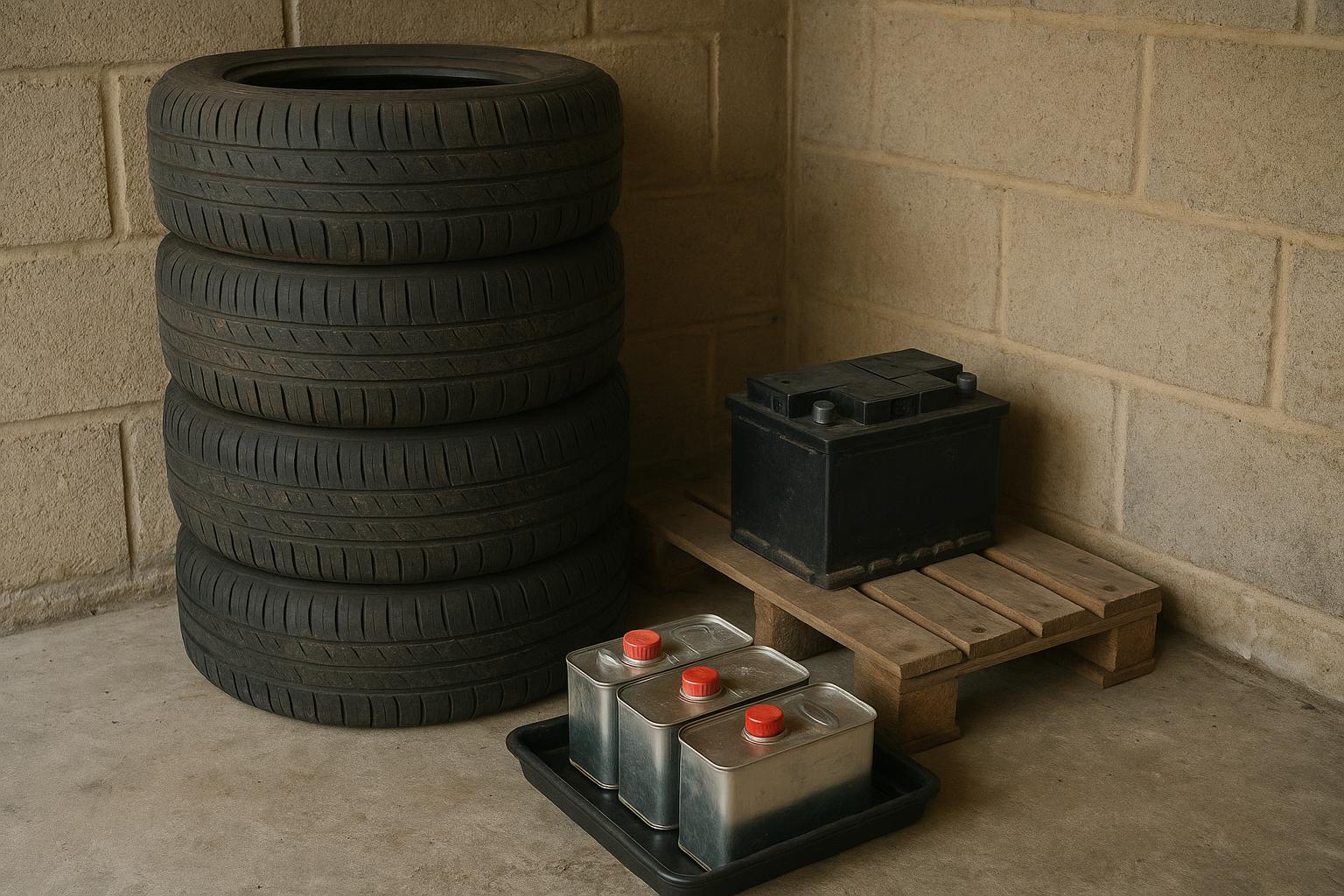
Set up zones with labels, such as batteries, tyres, liquids, scrap metal, reusable tools, general rubbish and unknown items.
- Batteries: upright, in a tray, away from metal
- Tyres: stacked and dry
- Liquids: sealed and upright, never mixed
- Metal parts: drained and grouped
- Reusable items: tools, tool boxes, shelving, ladders
- General rubbish: boxes, packaging, broken plastic
- Unknown items: separate and untouched
This helps you to see what needs a special route and what can go in a normal load.
Car batteries: handle with care
Lead-acid batteries are hazardous waste.
Most car batteries are lead-acid. They contain lead and sulphuric acid, and they are classed as hazardous waste. They should never be put in household bins or skips, burned or buried. The acid can burn skin, damage clothing and cause environmental harm if it leaks.
Handle a battery upright, carry it with both hands or a strap, and keep it away from metal tools, which can short the terminals. If it is cracked or leaking, wear gloves and eye protection, put it in a leak-proof plastic container or tray and keep it away from children and pets. Do not tip it or attempt to drain it.
Old car batteries can usually be returned to a retailer that sells them, to a council recycling centre or to a scrap metal dealer or specialist recycler. Under UK battery regulations, shops that sell automotive batteries are generally expected to take back used ones, but check with the shop first. The rules are set out on GOV.UK.
Transporting a battery
Keep it upright.
Place the battery in a sturdy box or tray in the boot or van, wedged so that it cannot tip, and away from loose metal items. Do not carry it in the passenger area. Take it to the shop or site as soon as possible and do not leave it in the car for days.
Check what the destination accepts. Some sites accept only household quantities, and a trader with many batteries may need a different route.
Other batteries and electrical parts
Not all are lead-acid.
A garage may also hold lithium-ion batteries from tools, e-bikes and mobility scooters, and small batteries from torches and remote controls. These need separate handling, because damaged lithium batteries can overheat and cause fires. Never put them in general rubbish or bulk loads.
Take them to a council recycling centre or a retailer with a battery collection point, and tape the terminals of loose batteries to prevent short circuits. If a lithium battery is swollen, hot or damaged, keep it outside on a non-flammable surface and ask the council or fire service for advice.
Old car chargers, alternators, starter motors and electrical items fall under electrical waste rules in many cases. See our guide to WEEE regulations for more.
E-bike and tool batteries
A growing fire concern.
Lithium-ion packs from e-bikes, scooters and power tools have been linked to serious fires, particularly when damaged or charged badly. If you find one in the garage, check for swelling and damage, store it away from combustibles and take it to an appropriate collection point. London Fire Brigade publishes safety advice on lithium-ion batteries.
Used tyres: why you cannot just dump them
They are controlled waste with specific routes.
Used tyres are bulky, do not compact, and release harmful substances if burned or left to degrade. They are subject to tight controls on landfill and storage. Householders cannot put them in the general waste bin, and fly-tipped tyres are a common and costly problem for councils and landowners.
Options for disposing of tyres include taking them back to a tyre fitter, often for a small fee per tyre, taking them to a council recycling centre that accepts them, or using an authorised waste carrier. Some councils accept only a few tyres per visit or only from households, and some charge, so check the council website. Tyres from a business or trade activity are treated differently from household tyres, and carriers should not accept them as household waste.
Our guide to fly-tipping penalties and liabilities explains why handing tyres to an unregistered collector is risky: if they are dumped, you may be traced as the source.
Tyres on rims and large tyres
Different rules apply.
Some sites accept only tyres without rims. Alloy wheels may have scrap value, so a tyre fitter or scrap dealer may remove the tyre and take the wheel. Tractor, lorry and large tyres are usually not accepted as household waste and need a specialist. Ask before you travel.
Handling and storing tyres while you clear
Keep them dry and out of the way.
Stack tyres neatly, away from heat sources, and keep them dry. Standing water in tyres can breed mosquitoes, and a stack of tyres is a fire risk if lit. Keep tyres on rims separate from tyres without rims, as some sites treat them differently.
Check whether the sites you plan to use accept tyres with rims. Many accept only loose tyres. Remove stones and debris, and do not cut or burn them. If you have a large number, it is cheaper and easier to use a carrier or a tyre fitter than to make many trips.
If you are clearing a garage for someone else, such as a relative or a probate property, count the tyres and note them on the clearance list.
Reuse before disposal
Some tyres have a second life.
Part-worn tyres in good condition may be sold by a fitter, subject to safety rules, but you should not sell tyres that are damaged, perished or unsafe. Used tyres have also been reused in play areas and garden projects, though this depends on the item and the setting. Do not give away unsafe tyres.
Engine oil, coolant, brake fluid and fuel
Never pour them down a drain.
Used engine oil is hazardous. One litre can contaminate a very large volume of water, and pouring it down a drain, into soil or into a watercourse is illegal and harmful. Many council recycling centres have an oil bank for householders, usually with limits on quantity and a ban on mixing different fluids.
Antifreeze or coolant, brake fluid, power steering fluid and screen wash should be kept in original or clearly labelled sealed containers. Many recycling centres accept them under their chemical or waste oil streams, but practice varies. Our guide to disposing of household chemicals and paint covers what to do with them.
Old petrol and diesel are a fire and environmental hazard. Do not store them in unsuitable containers, pour them away or mix them. Ask the council or the fire service for advice on disposal, and never take them in a vehicle in large quantities without checking the rules.
Dealing with spills
Contain and absorb.
If oil or fluid has spilled, soak it up with sand, cat litter or absorbent pads, sweep it into a bag and take it to a site that accepts oily waste. Do not wash it into a drain. Keep rags and absorbent materials separate from general rubbish, and ask the council how to dispose of them.
Motor parts, scrap metal and what can be sold
Some parts have value, others need care.
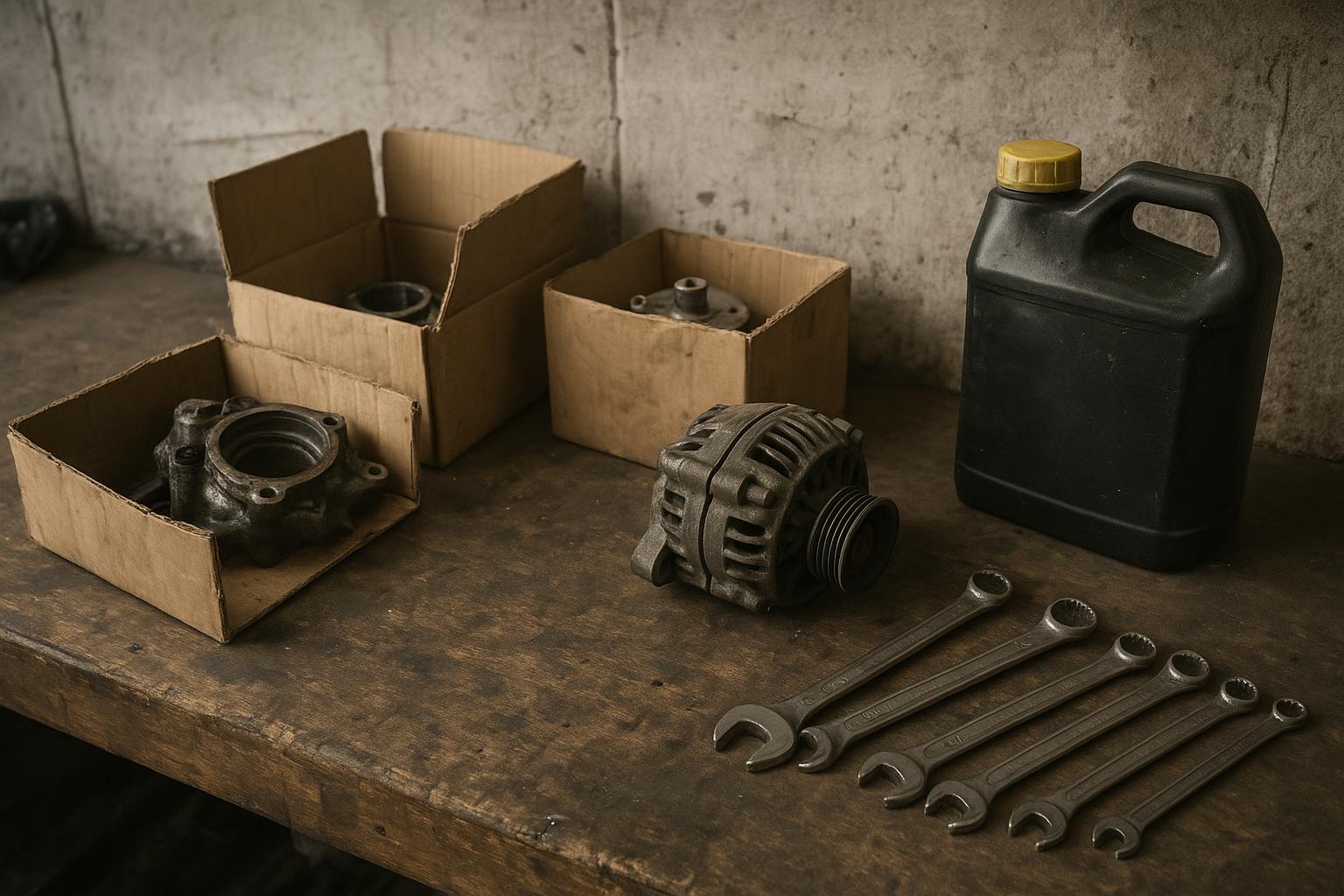
Engine blocks, exhausts, wheels, brake discs, alloys and similar metal parts can usually be taken to a scrap metal dealer. Dealers must be registered with their local authority under the Scrap Metal Dealers Act 2013, and they cannot pay cash for scrap metal, so expect to be asked for identification. Our scrap metal collection guide explains how it works.
Catalytic converters are targeted by thieves and are subject to extra scrutiny. If you have one, be ready to show where it came from. Do not sell parts to anyone who offers cash and has no registration. If you want to sell good second-hand parts, specialist dealers or online marketplaces may take them.
Drain fluids from parts before moving them. Oily rags and filters should be bagged and taken to a site that accepts them, not put in household waste, because they may be contaminated.
Tools, shelving and equipment worth keeping
Not everything is waste.
Garages often hold usable tools, ladders, shelving, workbenches and tool chests. Sort these before disposal: good tools can be sold, donated to community workshops or kept. Check electrical tools are safe before passing them on, and do not give away items that are damaged or unsafe. A short list with photographs makes selling or donating quicker.
Records for sellers and executors
Keep a note.
If you sell parts, keep a note of what was sold, to whom and for how much. If you are an executor, record items taken from the garage as part of the estate inventory. See our executor responsibilities guide for what to keep.
Hidden hazards: asbestos, gas and old chemicals
Look in the corners.
Older garages may have asbestos cement roof sheets, and some old brake and clutch parts contain asbestos. Do not break, cut or drill suspect material. If you are unsure, have it checked by a competent person. Our guide to hazardous waste classification explains why clearance firms often refuse such items.
Gas cylinders, aerosols, solvents and pesticides are also common. Never put a pressurised cylinder in a skip or load. Return gas cylinders to the supplier or ask the council about disposal. Keep any old chemicals in their containers.
If you find something you cannot identify, do not open it. Keep it separate and ask the council or an expert how to dispose of it.
What to do if you suspect asbestos
Stop and get advice.
Do not sweep, drill or break the material. Keep people and pets away, and contact a competent person or your council for advice. Small amounts of low-risk material may be handled under specific rules, but this is not a job to improvise. Check the Health and Safety Executive guidance.
Using a carrier for a garage clearance
Tell them everything.
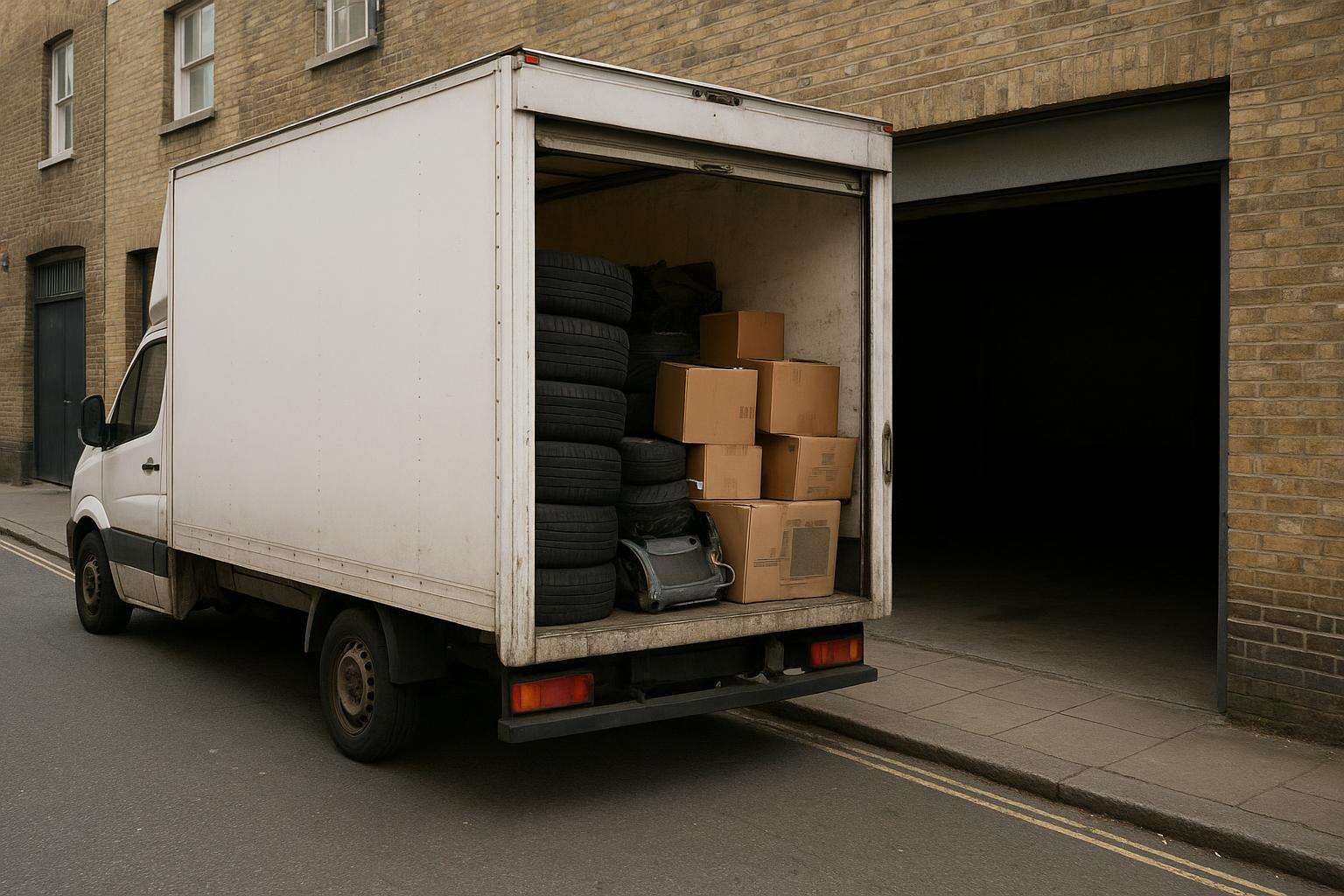
If you hire a clearance firm or man and van, tell them in advance that the garage holds batteries, tyres, oil and motor parts. Some carriers will not take these, and others will for an extra charge. On houseclearance.co you can post a job and receive quotes from independent carriers, who set their own prices and terms, so compare what each includes.
Ask for the carrier's waste carrier registration number and check it on the public register. Ask where the waste will go and whether they will give you a receipt or waste transfer note. See our guide to waste transfer notes and householder duty of care.
If a quote seems very low for a garage full of tyres and oil, ask how the carrier will dispose of them. An unrealistic price may mean the load will be dumped.
Getting comparable quotes
Describe the load honestly.
Give each carrier the same list: number of tyres and batteries, approximate litres of liquids, the metal and bulky items, and anything you cannot identify. Photographs of the garage and the shelving help. Ask whether the price includes disposal fees for tyres and hazardous items, or whether those are charged separately, so that quotes can be compared like for like.
Be cautious if a carrier agrees to everything without asking a single question. A competent crew will ask about oil, batteries, asbestos and access, because those answers decide how the job is done and where the waste goes.
Preparing for the crew
Make access easy.
Clear a path to the garage door, make sure there is room to park and show the crew the separated hazardous items first. Agree what will be taken and what will stay. Take photographs before and after.
Skips and bulk loads: what not to put in
Check the rules with the supplier.
Skip companies generally prohibit batteries, tyres, liquids, gas cylinders, asbestos and electrical items. Putting them in a skip can lead to extra charges or refusal to collect. Read the skip hire terms and ask if you are not sure. Our guide to house clearance versus skip hire covers the differences.
If you need to clear a garage by skip, keep a separate area for prohibited items and arrange their disposal separately.
Alternatives to a skip
Match the route to the item.
For a mixed garage, a combination often works best: tyre fitter for tyres, retailer for batteries, recycling centre for oils and chemicals, scrap dealer for metal, and a carrier or skip for general rubbish. Our tip runs guide explains how recycling centre visits work in London.
Frequently asked questions
Common questions about garage clearouts and motor waste.
Can I put a car battery in the household bin?
No. Lead-acid car batteries are hazardous waste. Return them to a retailer, a council recycling centre or a scrap or recycling business.
Can I take old tyres to the tip?
Some council recycling centres accept a limited number from households, sometimes for a charge. Check your council first. Tyre fitters may also take them for a fee.
How do I get rid of old engine oil?
Take it in a sealed container to an oil bank at a council recycling centre if available. Never pour it down a drain or onto the ground.
Can a clearance firm take everything in my garage?
Not always. Some will not take batteries, tyres, oil or chemicals, or will charge extra. Tell them what is in the garage and ask what is included.
Will scrap dealers pay cash for car parts?
No. Under the Scrap Metal Dealers Act 2013, dealers cannot pay cash for scrap metal, and they will ask for identification.
What do I do with a swollen lithium battery?
Do not put it in general waste. Keep it outside on a non-flammable surface and ask your council or the fire service for advice.
Can I put old tyres in a skip?
Usually not. Most skip companies ban tyres. Check the terms and use a tyre fitter or recycling centre.
What if I find something I cannot identify?
Do not open or mix it. Keep it separate in a safe place and ask your council or a specialist how to dispose of it.
