Direct answer
Before any clearance is booked, go through the property room by room looking specifically for documents, cash, jewellery and photographs - the categories most often found in drawers, wardrobes, books and coat pockets, and the ones that can't be recovered once a general clearance has taken everything else away. Set anything in these categories aside in its own labelled box, deal with cash and valuables promptly rather than leaving them in an empty house, and only book a carrier once this step is finished. If the estate is going through probate, our probate chattel valuation guide covers when a formal valuation is actually required, and our guide to when a probate house clearance can legally begin covers the broader timing question around the Grant of Probate itself.
Contents
- Why this step matters more than it seems
- Where things are most often found, room by room
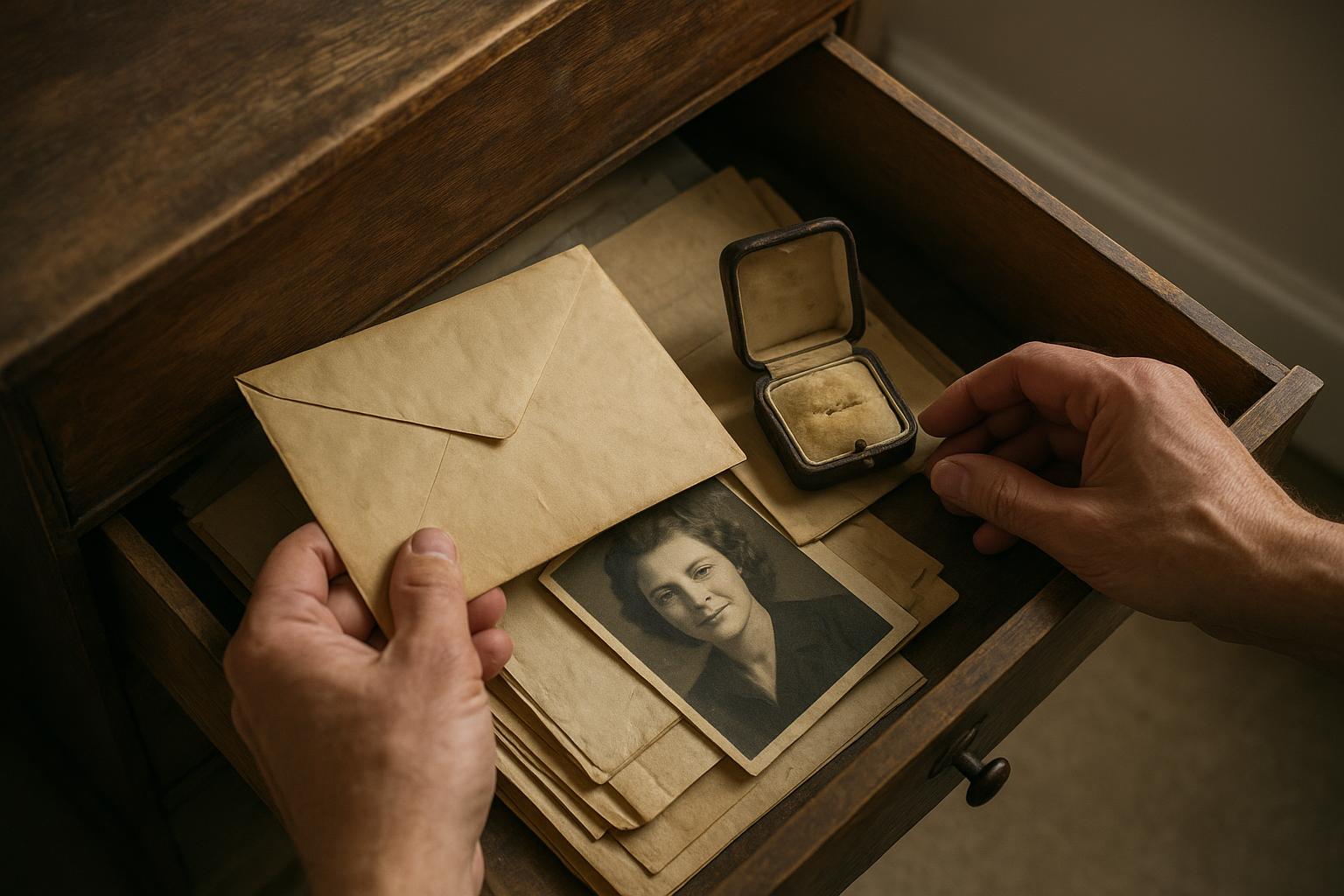
- Documents worth actively searching for
- If you find cash
- Jewellery, antiques and anything that might be valuable
- The rare case: old coins or precious-metal finds
- Photographs and letters
- Digital valuables: photos, accounts and logins
- How long to keep documents afterwards
- A simple labelled-box system
- If family members disagree about an item
- When to book the clearance
- Frequently asked questions
Why this step matters more than it seems
A general clearance is quick and thorough - which is exactly why this check has to happen first.
A licensed clearance crew works efficiently and treats a property's contents as a single job to clear, not as a collection of individually significant items. That's the right approach for general furniture, household waste and bulky items - but it means nothing is checked for hidden value or sentimental importance before it goes. Once a room has been cleared, there's typically no practical way to get an item back, whether that's a sum of cash in an old biscuit tin, a will tucked inside a book, or a shoebox of photographs at the back of a wardrobe.
This isn't a reason to be anxious about booking a clearance - it's simply a reason to do one specific thing first: a careful, unhurried look through the property for the handful of categories covered in this guide, before any general sorting or disposal starts. For most homes this takes a few hours spread across one or two visits, not days, and it only needs to happen once.
Where things are most often found, room by room
The same handful of spots account for most of what families find.
There's no need to search a property exhaustively - most significant finds turn up in a predictable set of places. Going through these specifically, room by room, covers the large majority of what's worth finding:
- Wardrobes and chests of drawers - inside shoe boxes, folded into clothing, in the pockets of coats and jackets, and in the backs of drawers behind where clothing normally sits.
- Bedside tables and under the mattress - a surprisingly common spot for cash, a watch, or a small amount of jewellery kept close at hand.
- Books and bookshelves - documents, cash, and photographs are often tucked between pages or inside dust jackets; it's worth a quick fan-through of books before boxing them up.
- Writing desks, bureaus and old furniture with drawers - these sometimes have a genuine hidden compartment, such as a false bottom or a small locked drawer, particularly in older pieces.
- Kitchen cupboards, biscuit tins and noticeboards - cash and important letters turn up here more often than people expect, alongside everyday paperwork like bills and appointment letters.
- Handbags, wallets and coat pockets throughout the house - easy to overlook if a coat or bag is treated as a single item to be cleared rather than checked first.
- Lofts, garages and sheds - less likely to hold documents, but a common place for older collections, tools of real resale value, or boxes that haven't been opened in years.
A single careful pass through these spots, room by room, catches the large majority of what's worth finding before a clearance.
Documents worth actively searching for
Some of these affect the estate directly and need to be found before anything else proceeds.
A specific list is more useful than a general instruction to "check for paperwork". These are the documents most worth setting time aside to find:
- The will - if one exists, it should be located as early as possible, since it affects who has authority over the estate and its contents.
- Property deeds and mortgage paperwork - relevant if the property is going to be sold or transferred.
- Bank, building society and pension paperwork - including passbooks, statements, and premium bond or savings certificates, which aren't always listed anywhere else.
- Insurance policies - home, life, and funeral plan documents in particular.
- Identity documents - passports, driving licences, birth, marriage and death certificates.
- Keys and access items - for the property itself, a car, or a safe or deposit box that might otherwise be missed entirely if its key is cleared along with general contents.
- Share certificates and investment paperwork - older share certificates in particular are easy to mistake for general paperwork if they're not recognised.
None of this needs to be sorted or actioned immediately - the goal at this stage is simply to find it and set it aside somewhere secure, so it isn't accidentally cleared with general paperwork and junk mail.
If you find cash
Treat it as an estate asset from the moment it's found, not as something to deal with later.
Cash found in the property belongs to the estate, not to whichever family member happens to find it. The main practical risk isn't legal complexity - it's theft. Once a property is going to be left unoccupied, and especially once tradespeople, viewers or a clearance crew have access to it, cash left in drawers or tins is genuinely at risk of going missing, and there's rarely any way to prove how much was there in the first place.
The safest approach is straightforward: whoever is acting as executor, or as the family's main point of contact, should bank any cash found promptly rather than leaving it in the house, and keep a simple note of roughly where and when it was found. If the amount is significant, or if there's any uncertainty or disagreement about it, that's a reasonable point to get advice from a solicitor rather than deciding informally within the family.
Jewellery, antiques and anything that might be valuable
When in doubt, set it aside and ask - it costs little and can't be undone once it's gone.
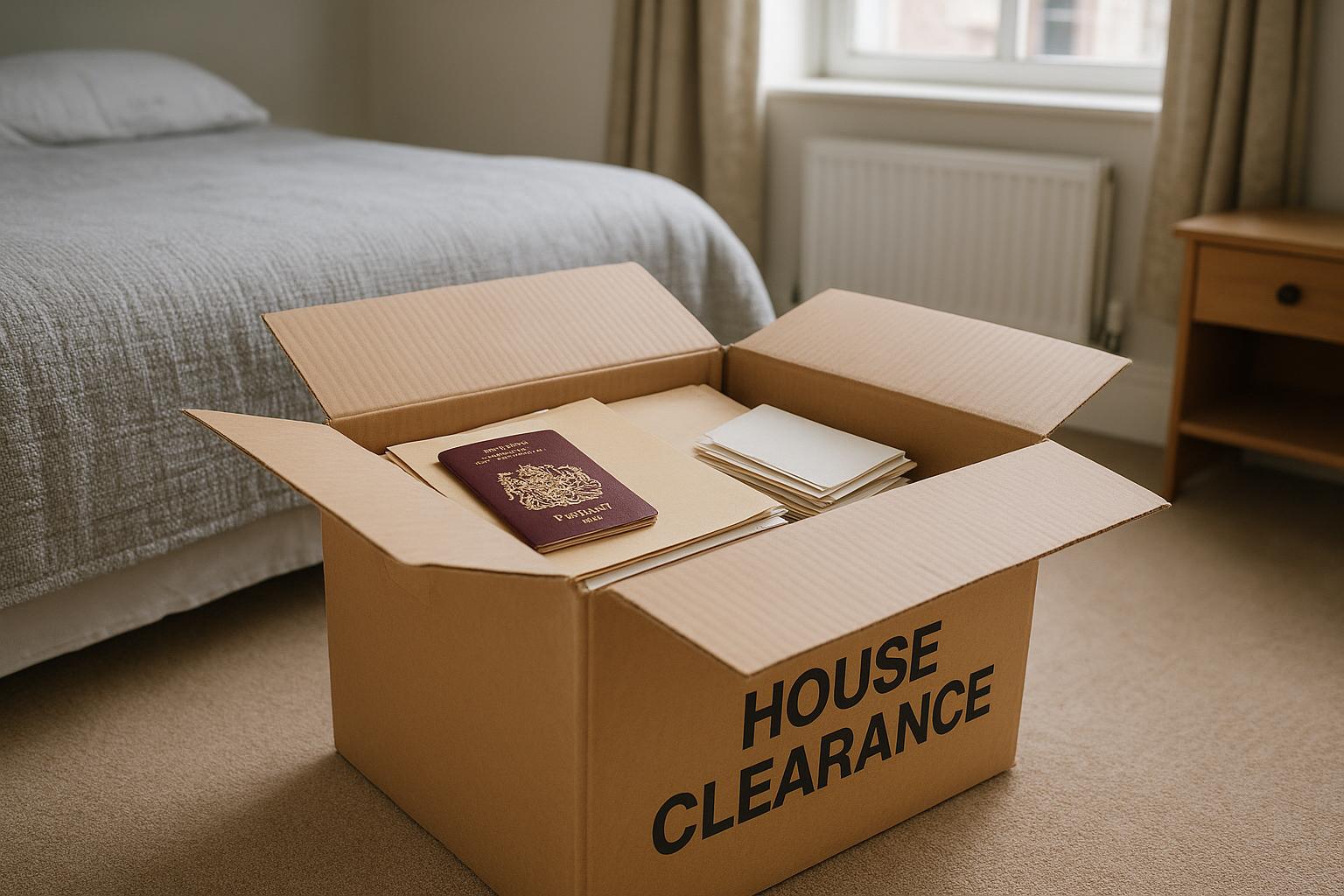
Jewellery, watches, antiques, art and collections (coins, stamps, militaria and similar) are the categories most likely to have real resale value that isn't obvious at a glance. houseclearance.co doesn't provide valuations, and the licensed carriers booked through the platform aren't valuers either - their job is removing agreed items efficiently, not assessing what's worth money.
Anything that looks like it could fall into this category is worth setting aside and getting an independent opinion on - a local jeweller, auction house or specialist dealer can usually give a quick initial view, often without charge, on whether something warrants a fuller valuation. For estates going through probate, certain items may also need a formal valuation for inheritance tax purposes specifically - our probate chattel valuation guide covers when that applies and how it differs from a general resale valuation.
It's also worth checking older furniture itself, not just what's inside it - see the note on hidden compartments below.
The rare case: old coins or precious-metal finds
Uncommon in an ordinary house clearance, but worth knowing about.
It's rare, but worth a brief mention: under the Treasure Act 1996, anyone in England, Wales or Northern Ireland who finds an object that may qualify as legally defined "treasure" has a duty to report it. Broadly, this covers objects other than coins that are at least 300 years old and contain at least 10% gold or silver, and groups of two or more coins of that age meeting the same precious-metal threshold (or ten or more coins regardless of metal content). A find has to be reported to the local coroner within 14 days of realising it might qualify, and failing to do so is a criminal offence.
This is very unlikely to apply to an ordinary house clearance - it exists mainly for archaeological and metal-detecting finds - but if something turns up that looks genuinely old, made of precious metal, and clearly isn't costume jewellery or a modern collectable, it's worth pausing rather than assuming it's covered by the general valuables advice above. A local museum or the Portable Antiquities Scheme can advise on next steps if there's genuine doubt.
Photographs and letters
Rarely worth money, but usually the most regretted loss if cleared by mistake.
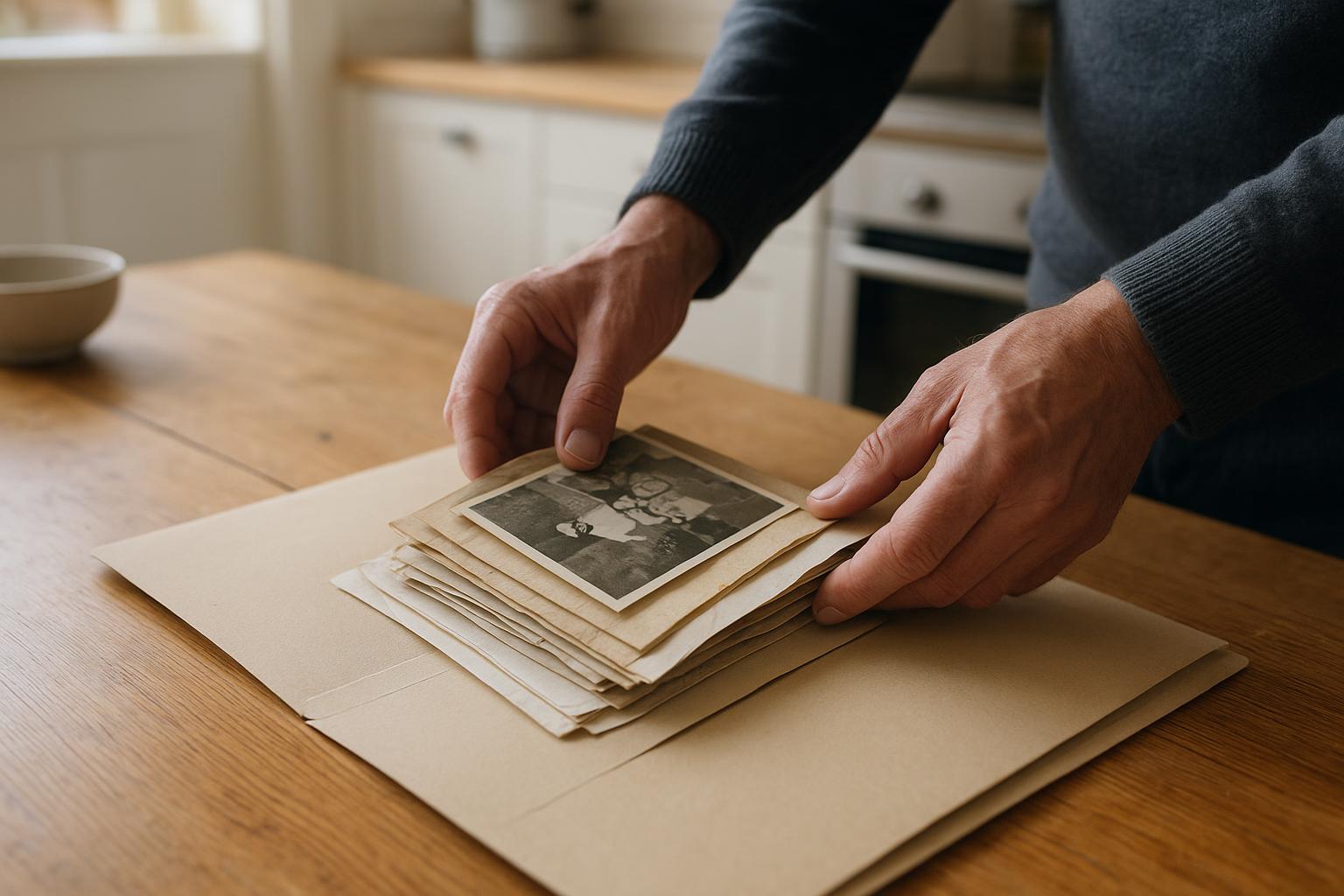
Photographs, cards and personal letters are almost never valuable in financial terms, but they're consistently the category families say they wish they'd been more careful with. The practical problem is volume: a full shoebox or album collection takes far longer to go through properly than most people expect, and trying to sort it during the main clearance - rather than before it - tends to mean it either gets rushed or left until it's too late.
The simplest approach is to set the whole category aside as one group, without sorting it in detail at this stage. Many families then photograph or scan the images and letters that matter most using a phone scanning app, keep a small number of physical originals that feel worth keeping as objects, and go through the rest properly later, away from the time pressure of an upcoming clearance date. None of this needs to be finished before the clearance of the rest of the property goes ahead.
Digital valuables: photos, accounts and logins
Easy to overlook entirely, since there's nothing physical to find in a drawer.
Not everything worth safeguarding is in the house itself. Many families now keep the bulk of their photographs in a phone or cloud account rather than in albums, and losing access to that account can mean losing the photos permanently, not just misplacing a physical copy.
Apple and Google both offer a way to pass on access, but it has to have been set up in advance by the account holder, not arranged afterwards by the family. Apple's Legacy Contact feature lets a chosen person access the account's iCloud content - including photos - once they provide the access key generated at setup and a copy of the death certificate. Google's equivalent, Inactive Account Manager, only works if it was configured while the account was active; if it wasn't, there's no separate process a family can invoke afterwards with a death certificate to gain full access. Where it was set up, Google's version is more limited than Apple's - it releases a download of selected data to the named contact rather than ongoing access to the account itself, and neither service hands over saved passwords or payment details through this route.
In practice, this means two things worth checking early: whether the person had a Legacy Contact or Inactive Account Manager already set up (sometimes noted alongside other paperwork, or known to a close family member), and whether there's a password manager or written list of logins anywhere in the documents set aside earlier in this guide. Without either of these, recovering a locked account's photos can be slow, and in some cases isn't possible at all - which is a reasonable thing to flag to a solicitor if the account held anything of financial as well as sentimental value.
How long to keep documents afterwards
A general guideline, not a fixed rule - the right answer can depend on the specific estate.
Once documents have been found and sorted, a reasonable question is how long to actually keep them. There's no single fixed period that applies to every document and every estate, but as a general approach, anything connected to the estate's value, its tax position, or its legal administration is worth keeping for several years rather than being discarded quickly - questions can resurface well after a clearance and an estate's affairs are formally finished. Day-to-day paperwork with no lasting relevance (expired subscriptions, old appointment letters) can usually be recycled once it's clearly served its purpose.
Where there's genuine uncertainty - particularly for larger estates, or ones that paid inheritance tax - a solicitor or accountant involved in the estate can confirm exactly how long specific records should be retained, rather than relying on a general rule of thumb.
A simple labelled-box system
One practical method that works for most families, without needing to be complicated.
Rather than deciding category by category as things are found, most families find it easier to work with a small, fixed set of labelled boxes from the start:
- Documents and valuables - the will, financial paperwork, identity documents, jewellery and anything else covered above.
- Photographs and letters - kept as one group, to be gone through properly later.
- Specific items for specific people - anything a named family member has said they'd like to keep, labelled with their name to avoid confusion later.
- Disputed or uncertain items - its own box, kept separate so it doesn't stall the rest of the sorting (see below).
Everything else - furniture, general household items, anything being donated or cleared - can stay in place until the clearance itself, since none of it needs the same level of individual attention. Labelling each box by room and date as you go, rather than relying on memory, makes it much easier to settle any questions that come up afterwards about where something was found or who agreed to what.
If family members disagree about an item
Common, and easier to manage if it's expected rather than treated as a crisis.
It's common for more than one person to believe they were promised the same item, or to disagree about what should happen to something with no formal paperwork attached to it. The practical answer is the same labelled-box approach already covered: put the disputed item in its own box, separate from anything already agreed, and leave it there until it's resolved - whether that's with reference to the will, a letter, or simply a family conversation. This avoids the item being cleared, sold or given away before the disagreement is settled, without holding up sorting the rest of the property.
Our house clearance after a bereavement guide covers the wider process of agreeing roles and pacing a clearance across a family in more detail, if this is one part of a bigger set of decisions still to work through.
When to book the clearance
Only once this step is genuinely finished - there's no deadline forcing it.
Once documents, cash, valuables, photographs and anything disputed have been found and set aside, the property is ready for a general clearance. Pricing is based on property size and volume rather than anything specific to this situation - see our house clearance cost guide for the full price table, or bereavement house clearance cost guide if the clearance follows a death in the family. Checking that a carrier is properly licensed matters here too - our waste carrier licence check tool covers what to look for before booking.
Frequently asked questions
The questions that come up most often about this part of a clearance.
Where do families most often find money or valuables they didn't know about?
Bedrooms and studies account for most finds - inside wardrobes, bedside tables, the backs of drawers, and between or inside books. Cash is also regularly found in coat pockets, handbags, biscuit tins and envelopes tucked inside kitchen cupboards. None of this is unusual; it simply means a careful first pass of these areas is worth the time before anything is cleared.
What should we do if we find a large amount of cash in the house?
Cash found in the property belongs to the estate, not to whoever happens to find it. It shouldn't be left in a house that's going to sit empty - that's a theft risk once multiple people (family, tradespeople, a clearance crew) have access. The safest approach is for the executor, or whoever is acting as the main point of contact, to bank it promptly and keep a simple note of where and when it was found.
Do we need to get jewellery or antiques valued before a clearance?
If something looks like it could have real resale or sentimental value, it's worth setting aside and getting an independent opinion before a clearance date is booked - houseclearance.co doesn't provide valuations, and the carriers booked through the platform aren't valuers either. For estates going through probate, our probate chattel valuation guide covers when a formal valuation is actually required for inheritance tax purposes.
Is there a legal obligation to report old coins or metal objects we find?
In rare cases, yes. Under the Treasure Act 1996, anyone in England, Wales or Northern Ireland who finds an item that may qualify as "treasure" - broadly, gold or silver objects over 300 years old, or a group of ten or more coins over 300 years old - has a legal duty to report it to the local coroner within 14 days. This is uncommon in an ordinary house clearance, but worth knowing if something found looks genuinely old and precious metal rather than costume jewellery.
What's the best way to deal with boxes of old photographs and letters?
Set them aside as a single category rather than sorting them during the main clearance - it takes far longer than people expect and doesn't need to hold up the rest of the job. Many families photograph or scan the ones that matter most using a phone scanning app, keep a small number of physical originals, and deal with the rest at their own pace afterwards, away from the pressure of a clearance date.
What about photos stored only in a phone or cloud account?
This only works smoothly if the person set up Apple's Legacy Contact or Google's Inactive Account Manager in advance - both require advance setup, not something a family can arrange after the fact. Apple's version can release iCloud photos to a named contact with a death certificate and the access key; Google's is more limited and only provides a download of selected data if it was already configured. If neither was set up, recovering locked photos can be slow or impossible, so it's worth checking early rather than leaving it until the end of the process.
How long should we keep financial documents and paperwork after a clearance?
There's no single fixed answer, but as a general rule it's worth keeping anything related to the estate's value, tax position or legal administration for several years rather than days or weeks, since questions can resurface well after a clearance is finished. For anything specific to a particular estate's tax position, a solicitor or accountant can confirm exactly how long to retain it.
What if two family members both believe they were promised the same item?
Set the disputed item aside in its own clearly labelled box, separate from anything already agreed, rather than letting it hold up the rest of the sorting. This buys time for the family to resolve it - sometimes with reference to a will or letter, sometimes just by agreement - without the pressure of a clearance date forcing a quick decision.
Can a house clearance company help us find hidden valuables?
No - this is deliberately a family task, done before a carrier is booked. Licensed carriers are there to remove agreed items efficiently, not to search a property for valuables on the family's behalf, and it isn't realistic to expect a clearance crew to recognise what matters sentimentally or financially to a specific family. Everything in this guide should happen before the clearance date, not during it.
What's a practical system for sorting as we go, room by room?
A simple labelled-box method works for most families: one box for documents and valuables, one for photographs and letters, one for items a specific person wants to keep, and everything else left in place until a clearance is booked. Labelling boxes by room and date, rather than trying to remember verbally who agreed to what, avoids most disputes later.
Should we check furniture itself, not just drawers and cupboards?
Yes - older furniture occasionally has a genuine hidden compartment (a false bottom in a writing desk or jewellery box, for instance), and items are sometimes taped to the underside of drawers or the backs of picture frames. It's not common, but a quick check of older or unusual pieces before they're cleared or donated costs little time.
When should we actually book the clearance?
Only once documents, valuables, photographs and anything disputed have been set aside and dealt with. There's no deadline forcing this - our house clearance after a bereavement guide covers pacing the wider process, and pricing follows the same property-size ranges as any house clearance once you're ready to book.
Ready to see your price?
Post the job once everything that matters has been found and set aside - there's no obligation to book, and no pressure to do it today.