
Direct answer
Before clearing a damp or flooded cellar, make sure it is safe to enter. Do not go in if water is near electrical sockets, the consumer unit or gas appliances unless the power has been isolated by a qualified person, and never use petrol or diesel equipment in an enclosed space because of carbon monoxide. Treat floodwater as contaminated, especially if it may contain sewage, and wear waterproof gloves, boots and eye protection. Photograph everything for your insurer before moving it, pump water out gradually, remove soaked porous items, then clean, disinfect and dry the space fully before storing anything again. If there is sewage, structural damage or a risk of confined-space hazards, use qualified professionals.
Contents
- Why below-ground spaces are different
- Cellars, basements and lower-ground floors
- Safety checks before you go in
- Confined space and air quality
- Basic protective kit
- Understanding what is in the water
- Health risks to be aware of
- Find and stop the source
- Who is responsible for what
- Insurance, photographs and records
- Making a claim sensibly
- Pumping out and drying
- Hiring equipment
- What to keep and what to throw away
- Salvaging what you can
- Disposing of waste from a flooded cellar
- Hazardous items in a cellar
- Cleaning, disinfecting and drying
- Mould and damp afterwards
- Preventing it happening again
- Bringing things back
- Frequently asked questions
Why below-ground spaces are different
Water, air and access.
Cellars, basements and lower-ground rooms are common in older London houses. They often sit below the water table or below the level of the surrounding drains, which makes them vulnerable to damp, rising water, burst pipes and flooding during heavy rain.
Clearing one is different from clearing a bedroom or a garage. Light and ventilation are poor, access may be by steep or slippery steps, and there may be pipes, meters and electrics at low level. Floodwater can also carry bacteria and chemicals, and wet items become heavy and unstable.
The right approach is to treat a wet cellar as a hazardous environment until you have checked it. That means looking first, making the space safe, and only then starting to remove things.
Cellars, basements and lower-ground floors
Not all below-ground spaces are the same.
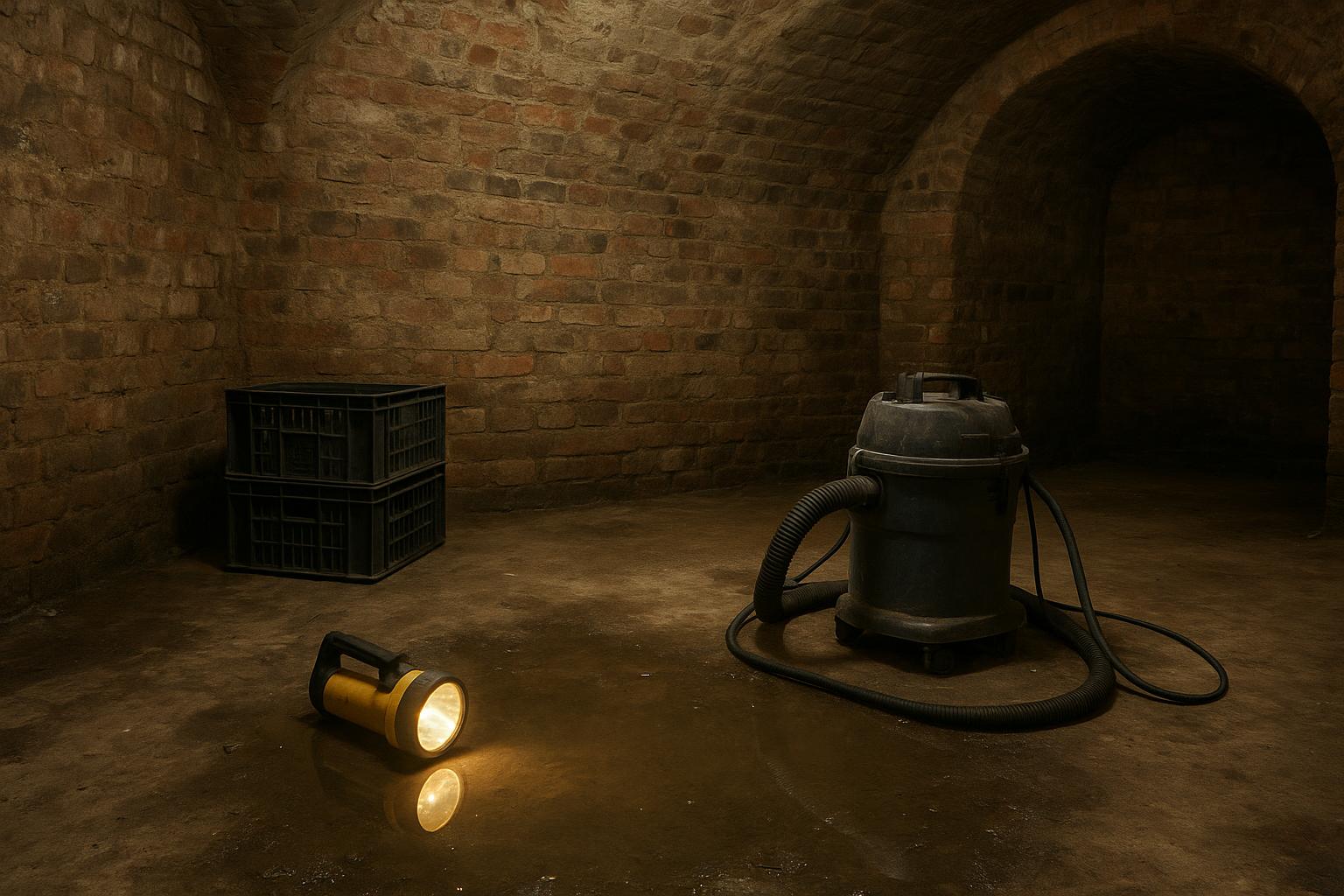
A traditional cellar in an older house is often a brick or stone vault with a floor that may be earth, brick or concrete. A basement is usually a more recent habitable or semi-habitable space, sometimes with waterproofing. A lower-ground floor is partly below ground and may have windows or an area at the front.
The type matters. A tanked or waterproofed basement may have a drainage system and sump built in. An old coal cellar may have a coal hole, a pavement vault or a damp stone floor. Knowing what you have helps you judge how water gets in and how to clear it.
If you rent, check who is responsible for the space and for damp and drainage. Landlord and tenant duties differ, and your agreement or the council can advise.
Safety checks before you go in
Do not rush down the stairs.
Start from the top of the stairs. Look for standing water, the depth of it, any floating items and whether the light switches or sockets are submerged or near the water. If you can see water around the electrics, do not enter. Ask a qualified electrician to isolate the supply, and if you cannot reach the consumer unit safely, contact your electricity distributor.
If you smell gas, leave the property and call the National Gas Emergency Service on 0800 111 999. Do not use a naked flame or operate switches.
Be aware of poor air. Cellars can have low oxygen, carbon monoxide from nearby boilers or vehicles, and in some areas radon. Make sure the space is ventilated. Never work alone, and tell someone where you are.
- Check the electrics are off or isolated by a competent person.
- Ventilate by opening doors and any air bricks.
- Use a torch rather than a naked flame.
- Wear rubber boots with grip.
- Do not enter if the water is deep or moving.
Confined space and air quality
Do not take chances.
A cellar can behave like a confined space. Air may not move, and gases can build up. Carbon monoxide from a faulty boiler or flue, fumes from solvents, rotting material and low oxygen can all be present. If you feel dizzy, sleepy, nauseous or have a headache, leave at once and get fresh air.
Fit a carbon monoxide alarm if you have fuel-burning appliances nearby, and test it regularly. Do not rely on smell, because carbon monoxide has none.
If the cellar is deep, has a narrow stair, has been closed for a long time or has standing water, treat it as higher risk and consider having it assessed by a professional before entering.
Basic protective kit
Keep it simple but proper.
For a cellar with dirty water you will need waterproof gloves, rubber boots, eye protection, a long-sleeved top and a suitable dust or fume mask for mould spores. Waders can help in deeper water, though deep water is a sign to stop and reassess.
Keep a first aid kit and a phone with you. If you cut yourself, clean the wound, cover it and watch for signs of infection. If you have not had a tetanus booster for many years or are unsure, ask your GP or pharmacist.
Our guide to protective equipment for heavy-duty clearances covers what professionals wear.
Understanding what is in the water
Clean water, grey water or sewage.
Where the water came from decides how careful you need to be. Clean water from a burst supply pipe is the least hazardous. Rainwater or groundwater is dirtier. Water that has come up through a drain or from a sewer is contaminated, and may carry bacteria, viruses and parasites.
If you think sewage is involved, treat the area as a biohazard. Avoid skin contact, do not eat, drink or smoke while working, cover any cuts with waterproof dressings and wash your hands thoroughly afterward. If you feel unwell afterwards, contact your GP and mention the exposure.
Contaminated water is one of the clearest reasons to bring in professionals. Our guide to professional deep cleaning and disinfection explains what proper decontamination involves, and our guide on biohazard clearance covers when a space needs specialist treatment.
Health risks to be aware of
Mostly avoidable.
Dirty floodwater can carry germs that cause stomach upsets and skin infections. Where rats are present, there is also a risk of leptospirosis, sometimes known as Weil’s disease, spread through contact between contaminated water and broken skin or the eyes and mouth. It is not common, but it is a reason to cover cuts and wear gloves.
Wash hands thoroughly with soap and clean water before eating or smoking and after removing gloves. Do not touch your face while working. Keep children and pets out of the area until it has been cleaned.
If you develop flu-like symptoms, a fever or skin problems after clearing a contaminated space, see a doctor and tell them what you were doing.
Find and stop the source
Do not pump into the same problem.
There is little point in clearing a cellar that will flood again tomorrow. Try to find out where the water is coming from. Common sources include a burst or leaking pipe, a blocked drain or gully, a failed damp-proof course, a leaking roof or gutter that sends water down a wall, groundwater and sewer backflow.
If a pipe has burst, turn off the water at the stopcock. If a drain is backing up, contact your landlord, managing agent or the water company, as responsibility for sewers and drains depends on the pipe. If groundwater is rising, you may need a drainage specialist or a sump pump system.
Take notes and photographs, because they will help your insurer and any contractor.
Who is responsible for what
Check before you pay.
If water has come from a public sewer, the water company may be responsible for the repair, although private drains and some shared pipes are the property owner’s responsibility. The rules have changed over time, so ask your water company or the council which part of the system is whose.
For a rented property, report problems to the landlord or agent promptly and in writing. A landlord generally has duties to keep the structure and installations in repair, but the detail depends on the tenancy.
If you are not sure, take advice from the council’s environmental health team or a body such as Citizens Advice. Do not pay for repairs to a shared drain without understanding who should cover the cost.
Insurance, photographs and records
Document before you move anything.
If you have buildings or contents insurance, contact your insurer as early as possible. Many policies cover flood damage, escape of water and sewer backflow, though terms and exclusions vary. Ask what you need to do to protect your claim.
Take clear photographs and video of the cellar before you remove anything, showing the water level, damaged items, tide marks and the likely source. Make a list of the items affected, with a rough value. Keep any items your insurer may want to inspect until they say you can dispose of them.
Keep receipts for hire, cleaning and drying. If you are a tenant, tell your landlord or agent in writing and keep a copy.
Making a claim sensibly
Small steps help.
Ask your insurer what they need before you start clearing. Some will send a loss adjuster, and some will accept photographs and receipts. Keep a log of calls, names and dates.
Do not throw away damaged items until the insurer has agreed, unless they are a health risk. If you must remove items quickly, keep photographs and a sample or a description. Keep the invoices for any emergency work, because many policies cover reasonable emergency costs.
If you are unhappy with the response, the insurer should have a complaints process, and the Financial Ombudsman Service can look at unresolved complaints. Check their website for how it works.
Pumping out and drying
Slowly, not all at once.
If the cellar has standing water, you will usually need a pump or a wet vacuum. Electric submersible pumps are common and available to hire, but make sure that the electrical supply and any extension lead are safe to use in wet conditions. A residual current device adds protection, and it is best to have a qualified electrician advise.
Never use a petrol or diesel pump inside a cellar. The exhaust contains carbon monoxide, which can kill. If you must use one, keep it outside and run the hose in.
Where the surrounding ground is saturated, experts often advise pumping out gradually rather than emptying the cellar quickly, because the pressure of water in the ground can stress or damage basement walls and floors if the inside is emptied too fast. If the walls look cracked or bowed, stop and ask a structural engineer or surveyor.
Hiring equipment
Choose carefully.
Pumps, wet vacuums, dehumidifiers and fans can be hired from equipment hire shops. Ask for advice on the right size for your cellar and the amount of water. Check that cables are in good condition, and plug into a residual current device.
Position the pump at the lowest point, run the discharge hose to a suitable drain or outdoors away from the building, and do not discharge into a neighbour’s property. Check for blockages and keep the intake clear of silt.
Ask the hire shop how to clean and disinfect the equipment before you return it, particularly if the water was contaminated, and tell them if sewage was involved.
What to keep and what to throw away
Porous items rarely survive.
As a general rule, items that have been soaked in dirty water and are porous cannot be cleaned reliably. This includes carpets, mattresses, upholstered furniture, cardboard boxes, books, paper, soft toys and clothing that cannot be washed hot. If sewage was involved, throw these away rather than trying to save them.
Hard, non-porous items such as glass, metal, plastic and glazed ceramics can usually be cleaned and disinfected. Solid wood furniture may be salvageable if it dries properly, but chipboard and MDF often swell and fall apart. Electrical appliances that have been in water should not be switched on until checked by a qualified person, and many will need to be disposed of.
Keep photographs, documents and sentimental items aside for careful drying and cleaning. Our guide on hidden family valuables and documents may help you decide what to look for in sodden boxes.
Salvaging what you can
Dry, clean, check.
Some things are worth saving. Photographs and documents can sometimes be rescued by carefully separating them and air drying, or by freezing them until you can deal with them. Valuable books and artwork may need a conservator. If they were in dirty water, the risk of contamination is higher, so handle them with gloves.
Wash hard goods in hot soapy water, rinse and dry. Metal tools should be dried and oiled to stop rust. Glass and ceramics are usually safe after cleaning.
For items of real value, whether financial or sentimental, take photos and ask your insurer or a specialist before you throw them away.
Disposing of waste from a flooded cellar
Know where each item goes.
Waste from a flooded cellar can include soaked furniture, carpet, boxes and appliances. Some of it is bulky household waste, some is electrical waste and some is hazardous, such as paint, chemicals and batteries.
Your council may collect bulky items for a charge, or you can take them to a recycling centre where permitted. Fridges, freezers and other electrical items need special handling, see our guide to recycling old electronics. Do not leave waste outside your property or on the street, because it can lead to fixed penalty notices. Our guide on fly-tipping penalties explains your liability.
If you use a clearance carrier, ask about their waste carrier registration and how they will dispose of the waste. See our guide to householder duty of care. Carriers set their own terms and may refuse items that are contaminated or hazardous, so tell them what you have.
Hazardous items in a cellar
Check the shelves.
Cellars often store old paint, white spirit, garden chemicals, car products, batteries and gas cylinders. Floodwater can float or leak these, and water can make containers unstable. Do not mix liquids or pour them down the drain.
Leave unknown liquids alone if you are not sure what they are. Our guide on disposing of household chemicals explains the routes available, and our guide to hazardous waste classification explains why a clearance crew may leave them behind.
Old boilers or fuel tanks in a cellar should be handled by a registered professional. See our guide on boiler removal and disposal.
Cleaning, disinfecting and drying
Do it in the right order.
Once the water is out and the waste is gone, remove silt and debris with shovels and brushes, then wash surfaces with hot water and detergent. After that, apply a suitable disinfectant, following the manufacturer’s instructions. Do not mix cleaning products, particularly those containing bleach, because they can release toxic gases.
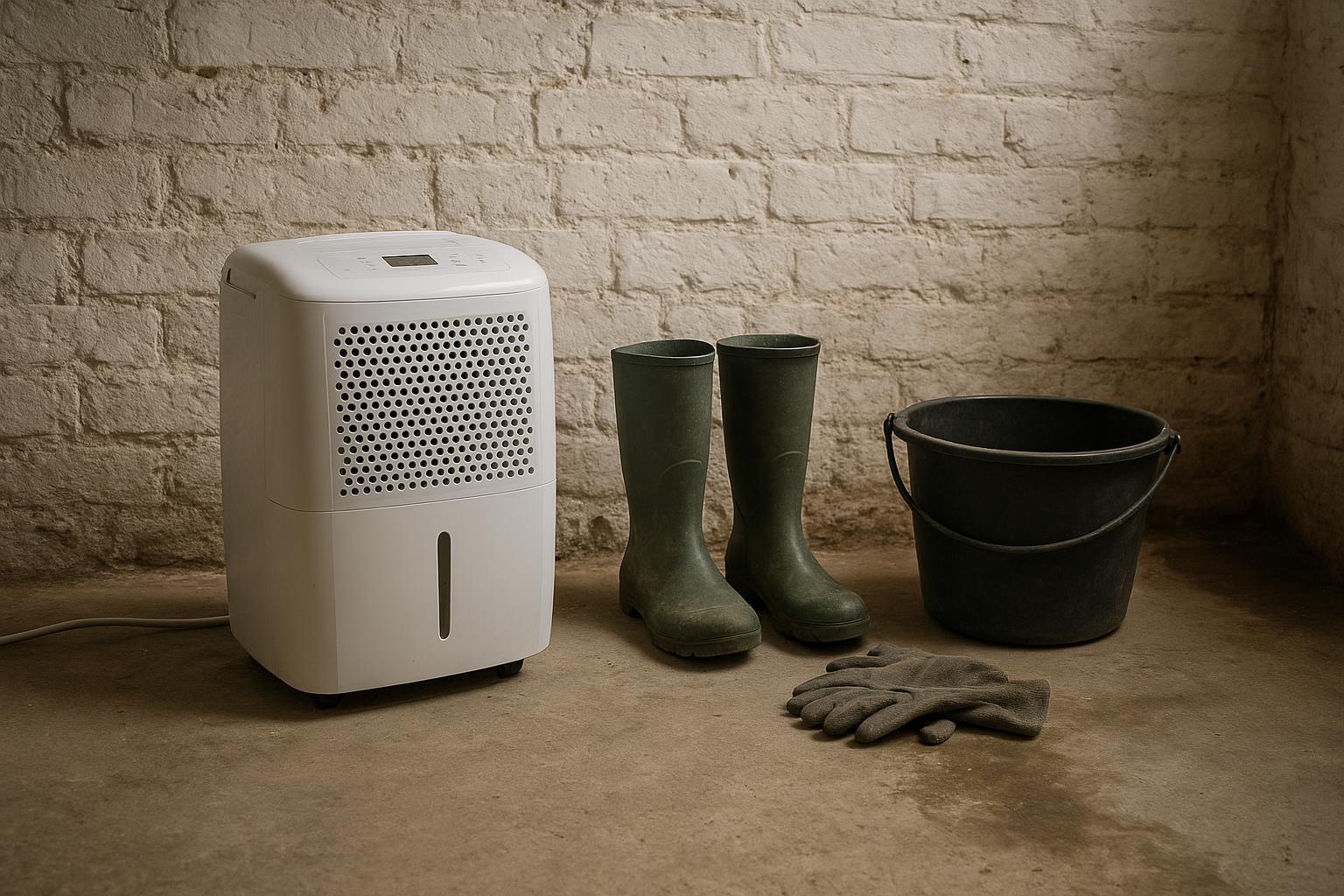
Drying is as important as cleaning. Open vents and doors, use a dehumidifier and fans if the electrics are safe, and give the space time. Walls can take weeks or months to dry fully, and the rate depends on the construction and the season. Keep an eye on humidity.
Mould appears quickly in damp spaces. Small patches can be cleaned with detergent, but large or recurring mould suggests an underlying damp problem. If anyone in the household has asthma or a weakened immune system, take extra care and consider professional help.
Mould and damp afterwards
Treat the cause.
Mould grows where moisture and organic material are present. After a flood, it can start within a day or two. Wear a mask and gloves, wipe small areas with detergent and water and dry thoroughly. Avoid dry brushing, which spreads spores.
If mould returns, the problem is probably moisture, not just a surface issue. Check for leaks, condensation, poor ventilation and rising or penetrating damp. A damp surveyor can find the cause. Be wary of anyone who proposes expensive treatment without a clear diagnosis.
Do not paint over damp or mouldy walls without fixing the cause, because the problem will return and paint may peel.
Preventing it happening again
Think about the long term.
After a flood, think about how to reduce the risk. Options include clearing gutters and drains, fixing leaks, installing a sump pump or a non-return valve on drains, using waterproof coatings or membranes and improving ventilation. A damp or drainage specialist can advise on what suits your building.
Store items off the floor on plastic shelves or in sealed plastic crates rather than cardboard. Keep important papers upstairs. Avoid storing mattresses, upholstered furniture or electrical goods in a cellar that has had water in it.
If you are clearing a cellar as part of selling or letting a property, keep a record of the cause and the work done, because buyers and surveyors may ask.
Bringing things back
Not too soon.
Wait until the walls and floor are dry and any repairs are complete before storing items again. Put new items on shelving off the floor, in sealed plastic boxes, and leave space around the walls so air can move.
Check the cellar regularly in wet weather. A simple humidity meter helps you notice problems early. Keep records of any further leaks or flooding.
If you are clearing a cellar and do not intend to use it again, a professional clearance followed by a damp assessment is a sensible approach. You can ask independent carriers for quotes through houseclearance.co, and our guide to house clearance checklist helps you prepare.
Frequently asked questions
Common questions about clearing damp and flooded cellars.
Is it safe to enter a flooded cellar?
Not if water is near electrics, gas appliances or if the water is deep or moving. Make the supply safe first, ventilate the space and never work alone.
Can I use a petrol pump in a cellar?
No. Petrol and diesel engines produce carbon monoxide, which is deadly in enclosed spaces. Keep engines outside or use a suitable electric pump.
How do I know if the water is contaminated with sewage?
Look for a foul smell, grey or black water and a source such as a blocked drain or sewer. If in doubt, treat it as contaminated and consider a specialist cleaner.
Should I pump out a flooded cellar quickly?
Often not. If the ground is saturated, experts advise gradual pumping to avoid stressing the walls. Ask a professional if the structure looks unsafe.
What should I throw away after a flood?
Soaked porous items such as carpets, mattresses, cardboard, books and upholstery, especially if sewage was involved. Check non-porous items before reuse.
Will insurance cover a flooded cellar?
It depends on the policy and the cause. Contact your insurer early, photograph everything and keep receipts. Terms and exclusions vary.
How long does a cellar take to dry?
It can take weeks or months depending on the construction, ventilation and season. Use dehumidifiers and monitor humidity before storing items again.
Will a clearance company clear a contaminated cellar?
Some carriers will, and some will not. Tell them about the water source and any hazardous items. Terms and prices vary, so ask for confirmation of what is included.
