
Direct answer
A professional post-clearance deep clean works in a fixed order: assess the property and any hazards first, wear the right protective equipment, remove loose dust and debris before using any liquid, clean every surface with detergent and water, and only then disinfect the surfaces that need it, following the product label for dilution and contact time. Work from top to bottom and from the cleanest area to the dirtiest, ventilate throughout, and never mix products. Pests, mould, sewage, bodily fluids, sharps and suspected asbestos are not routine cleaning jobs and need specialist handling. Finish with a documented visual check, flush the water system if the property has been empty, and dispose of cleaning waste through a registered carrier or a council route. houseclearance.co is a marketplace: carriers you meet through it handle the clearance, and you should agree separately who is responsible for cleaning.
Contents
- Why a cleared property still is not a clean one
- Cleaning, disinfecting, sanitising and decontaminating: what the words mean
- Where cleaning sits in the clearance timeline
- Step 1: Assess the property before anyone starts cleaning
- Step 2: COSHH, risk assessment and the duty to protect cleaners
- Step 3: Protective equipment that matches the task
- Step 4: The general method, from dry removal to final wipe
- The kitchen: grease, appliances and food residue
- Bathrooms and toilets: where disinfection really counts
- Pests, droppings, mould and odours
- Water systems and air quality in an empty property
- Cleaning waste: what to do with it
- Step 5: Inspection, sign-off and records
- Choosing and briefing a professional cleaner
- Where houseclearance.co fits in
- Frequently asked questions
Why a cleared property still is not a clean one
Emptying a house and cleaning it are two separate jobs.
A house clearance removes belongings. It does not, by itself, remove dust, grease, bodily residue, food spoilage, pest evidence, smoke staining or years of accumulated dirt that sat underneath and behind those belongings. Once the furniture and boxes are gone, that hidden layer becomes visible: marked flooring, grime behind the cooker, stained mattress outlines, droppings in a loft, a bathroom that has not been properly cleaned for years. Many people expect the clearance team to leave a property clean. Usually they do not, because a standard clearance is a removal job, and the carrier's scope is the removal of items and waste.
Because houseclearance.co is a marketplace, not a cleaning or clearance company, we do not perform or price either job. Independent, licensed local carriers may contact you with clearance quotes. If you also want cleaning, say so when you describe the job, and agree in writing who is doing what. Our guide to end of tenancy clearance in London covers the tenancy handover, and our guide on how to choose a licensed house clearance company explains what to ask any carrier before you accept a quote.
Cleaning, disinfecting, sanitising and decontaminating: what the words mean
Four words that are often used as if they were the same.
Cleaning physically removes dirt, grease and organic matter using detergent, water and effort. It does not necessarily kill germs, but it removes most of what germs live on, and it is the step on which everything else depends. Disinfecting uses a chemical product, applied for a stated contact time, to reduce the number of microorganisms on a surface that has already been cleaned. Sanitising is a looser term, usually meaning reducing germs to a level considered acceptable, often in food-handling contexts. Decontamination is the removal or neutralisation of a specific hazardous contamination, such as blood, sewage, mould spores or a spilled chemical, and in a professional setting it usually involves a written method.
The key practical point is the order. A disinfectant applied over visible dirt is largely wasted, because the product is used up reacting with the soil and cannot reach the surface underneath. This is why every credible set of instructions says clean first, then disinfect. It is also why a cleaner who sprays a fragrant product around a room and calls it disinfection has not done the job. Disinfection is a targeted step, applied where it matters, such as toilets, sinks, door handles, kitchen worktops and any surface that has been contaminated, and it follows the product label exactly.
Where cleaning sits in the clearance timeline
Deep cleaning comes after removal, but planning starts before it.
The correct order is: sort and remove contents, then carry out any specialist remediation, then clean, then disinfect where required, then inspect, and only then decorate, repair or hand back. Cleaning before the property is empty wastes effort, because every item that is moved or carried out disturbs dust and spreads dirt. Equally, leaving cleaning until the very end of a tight handover can leave no time to put right what the cleaner finds.
The earlier stages matter for the cleaning plan. A clearance sequenced room by room, as in our room-by-room clearance plan for extreme clutter, tells you which rooms were emptied first and which hid the worst conditions. Photographs taken at the start of the clearance are valuable evidence for a cleaner, because they show what was under and behind the contents before anything was moved. If you are managing a bereavement or an estate, the timing guidance in our probate house clearance timing guide will help you decide when the property realistically needs to be clean by.
Step 1: Assess the property before anyone starts cleaning
A short, written assessment decides what kind of job this is.
Before any bucket is filled, walk the property with a notebook or phone and record what you can see, smell and touch. A competent cleaning contractor does this as a matter of routine and will often ask for photographs first. Record the condition of floors, walls, ceilings, kitchen, bathroom and toilets, any evidence of damp or mould, signs of pests, stains that could be bodily fluids, strong or unusual odours, smoke or nicotine deposits, sharps or medication, and the state of the electrics and plumbing. Note whether the water and gas are connected, whether the property has been empty and for how long, and whether the loft, basement, shed or garage are included.
If the property fits the third category, read our guide to biohazard clearance and extreme squalor, which explains how specialist teams approach it. Where the property was a hoarded home, the guides to hoarding disorder house clearance and the line between collecting and compulsive hoarding cover the background, and the cleaning that follows is almost always at the higher end of effort.
Step 2: COSHH, risk assessment and the duty to protect cleaners
Cleaning products are hazardous substances, and the law treats them that way.
In Great Britain, employers must control exposure to hazardous substances under the Control of Substances Hazardous to Health Regulations 2002, usually called COSHH. Many cleaning chemicals, particularly disinfectants, descaler, oven cleaner and drain products, fall within that framework. In practice, a professional cleaning company should be able to show that it has assessed the substances it uses, chosen the least hazardous product that does the job, provided suitable protective equipment, trained its staff, and kept the safety data sheets available. The Health and Safety Executive explains the framework in plain terms on its COSHH guidance pages, and these are worth reading if you manage cleaners or employ anyone to clean a property.
The vital rule, and the one most often broken by amateurs, is never to mix cleaning products. Bleach-based products must not be combined with ammonia-based products or with acids such as some descalers and toilet cleaners, because the mixture can release toxic gas. Even when two products are used one after the other, rinse the surface and ventilate in between. If a label says to keep a product away from another product, follow it. If someone becomes unwell with coughing, burning eyes or breathlessness while cleaning, leave the area, get fresh air and seek medical advice.
The risk assessment also covers the work, not just the chemicals. Cleaning at height, lifting heavy items, working in confined loft or basement spaces, slippery floors and electrics near water are all identifiable hazards that a professional will address. Our guide to mandatory PPE and health guidelines for heavy-duty house clearances sets out the protective-equipment thinking that carries over directly into the cleaning phase.
Step 3: Protective equipment that matches the task
PPE should be chosen for the hazard, not worn for show.
Protective equipment depends on what is being cleaned and with what. For general deep cleaning, a sensible baseline is waterproof gloves that suit the chemicals in use, sturdy closed footwear with a good grip, and eye protection when spraying or working overhead. Disposable aprons or coveralls keep contaminated dirt off clothing. When disinfectants are being used in confined rooms, a bathroom with a closed window being the common example, the ventilation matters as much as the gloves.
Dust is the second concern. A property that has been closed up for years carries fine, dry dust that includes skin particles, fibres, mould spores and sometimes rodent contamination. Sweeping it dry throws it into the air. Professional cleaners use a vacuum fitted with a suitable filter, damp cloths and damp mops, and work in a way that suppresses dust rather than raising it. Where respiratory protection is needed, the type of mask must match the hazard, and a simple paper dust mask is not suitable for everything. If you suspect asbestos, stop work. Asbestos-containing materials were widely used in UK buildings before they were banned, and the Health and Safety Executive's asbestos guidance is clear that suspect material should not be broken, drilled, sanded or dry-swept. Ordinary cleaning methods, including ordinary household vacuum cleaners, are not appropriate for asbestos debris.
Step 4: The general method, from dry removal to final wipe
The same logical sequence applies in every room.
A professional deep clean follows a consistent order inside each room. The details change, but the logic does not.
Ventilate. Open windows where it is safe and secure to do so, before work starts and while it continues. In rooms without a window, use doors and any extraction available.
Remove loose debris. Pick up fragments, packaging, broken glass, cobwebs and leftover bits of waste. Bag them at once. Use a litter picker or gloved hands as appropriate.
Dust from top to bottom. Start at the ceiling, light fittings, picture rails, tops of doors and window frames, then walls, shelves and fixed furniture, then skirting boards, radiators and finally the floor. Gravity moves dirt down, so working in this order avoids cleaning the same surface twice. Use microfibre cloths or a vacuum with an appropriate filter, not a dry brush that flicks dust back into the air.
Wash surfaces with detergent and warm water. This is the step that removes most of the contamination. Change the water regularly, because a bucket of grey water just redistributes dirt. Use separate cloths for different areas, so that the cloth used on a toilet is never used on a worktop. Colour-coded cloths are a common professional practice for exactly this reason.
Disinfect selected surfaces. Apply a product suitable for the surface, at the label's dilution, and leave it wet for the contact time on the label. A disinfectant that dries in ten seconds has not been given the time it needs. Where the label calls for a final rinse, particularly on worktops, do it.
The kitchen: grease, appliances and food residue
Usually the most demanding room in the house.
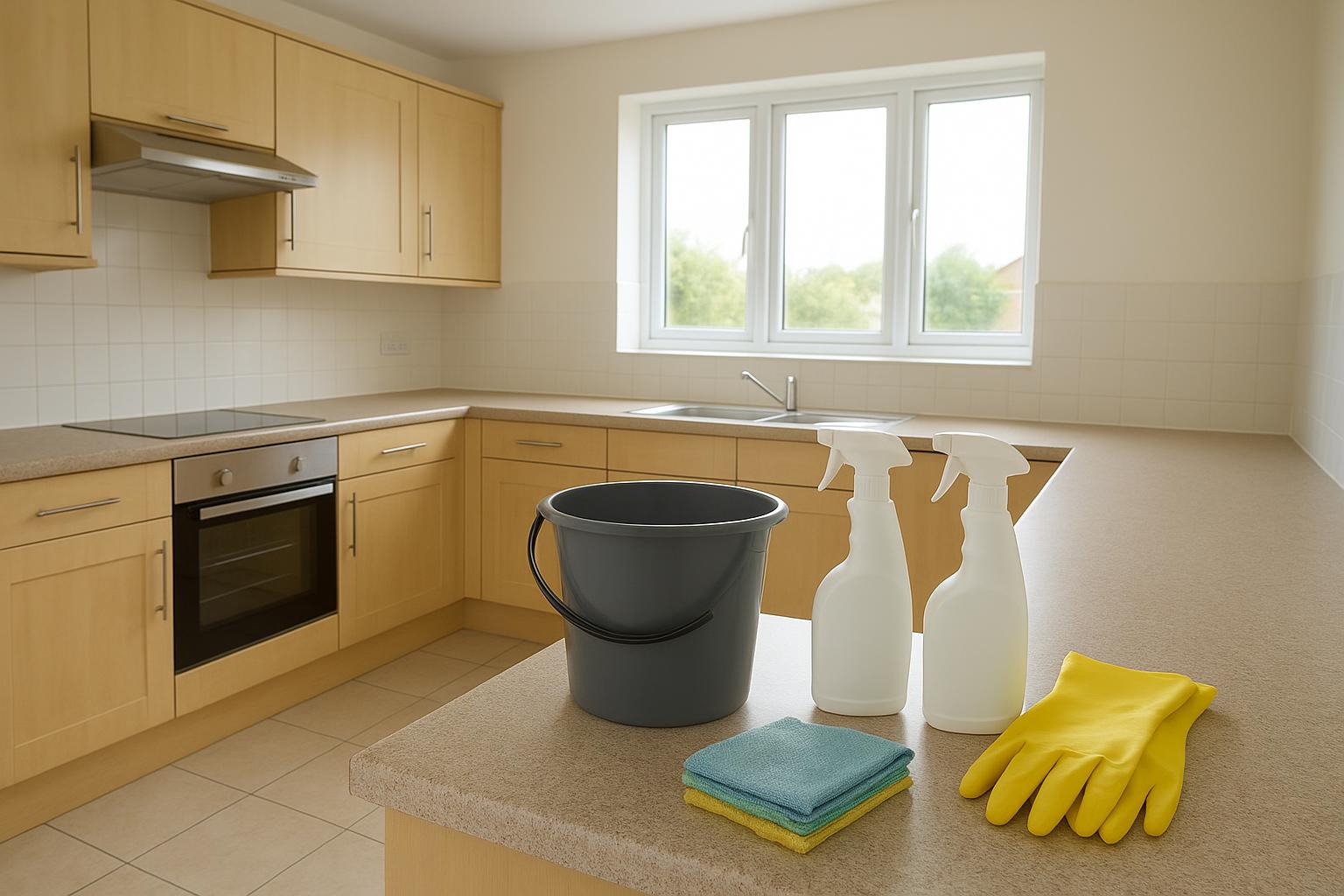
A kitchen that has been left uncleaned collects grease, burnt-on residue and food debris, and every one of them can harbour bacteria. The extraction fan or cooker hood often carries a layer of sticky grease. Cupboards, drawers, the fridge, freezer and oven may have been left with food inside, and an unplugged freezer that has defrosted can produce a very unpleasant mess and smell. Wear gloves, open the appliance carefully, bag the contents, and treat the leaked fluid as contaminated.
The professional sequence for a kitchen is to deal with the appliances first, then cupboards inside and out, then worktops, then the sink, taps and splashbacks, then the floor. Degreasers loosen fat; they should be given time to work, then wiped away with fresh water. Ovens may need a specialist cleaner or a proper soak. Because worktops and chopping surfaces are food-contact areas, the final step is a wipe with clean water or a food-safe sanitiser, according to the product label, not a heavy coat of a strong chemical.
Bathrooms and toilets: where disinfection really counts
Low-risk surfaces become high-risk when they are neglected.
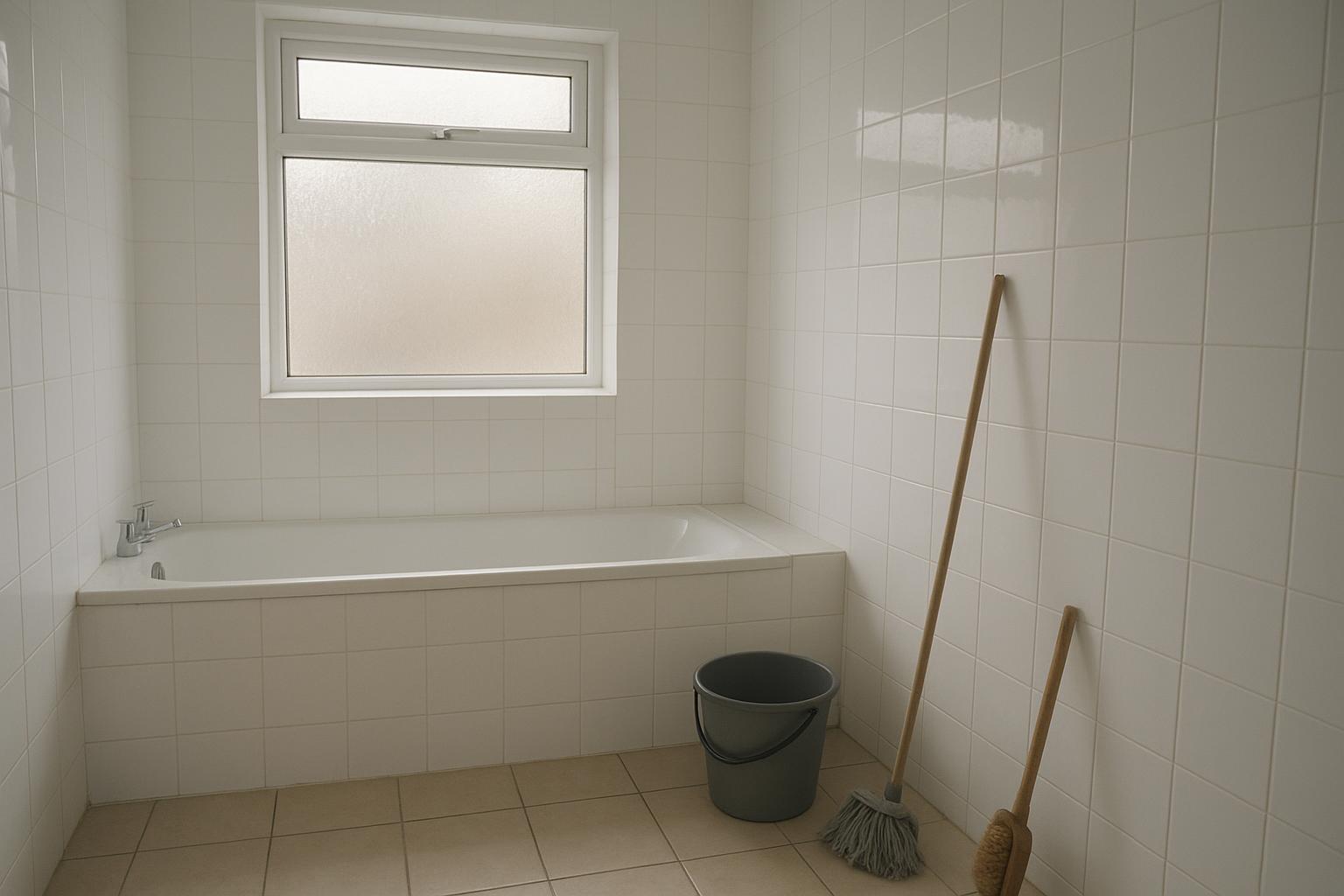
Bathrooms and toilets are the places where a properly applied disinfectant earns its keep. Limescale, soap scum and mould build on tiles and grout, and toilets, sinks and taps are touched surfaces. The professional sequence is to apply descaler or toilet cleaner as directed, give it time, then scrub, rinse and flush. Next, wash tiles, bath, shower tray, sink, taps and handles with detergent, rinse, and then disinfect, again observing the contact time. The floor comes last and is washed with a clean mop head. Keep cloths and mop heads for the bathroom separate from those used elsewhere in the property.
Illness is a particular concern if the previous occupant, or someone in the property, had a vomiting or diarrhoea illness before it was vacated. The NHS describes how norovirus spreads and how to reduce spread on its norovirus page, including careful handwashing with soap and water, because alcohol hand gel is not reliable against it. Surfaces that have been contaminated with vomit or faeces should be cleaned and then disinfected with a product that is suitable for the purpose, following its label, while wearing disposable gloves and an apron.
Pests, droppings, mould and odours
These are the problems that routine cleaning does not solve on its own.
Pests. Rodent droppings, urine marks, gnawed material, nests, insect infestations and bird debris in lofts are common findings in long-empty properties. The cleaning rule is to treat them as contamination: do not sweep or vacuum them dry, wear gloves and suitable respiratory protection, dampen the material, and clean and disinfect once it has been removed. Pest control is a separate trade, and an active infestation needs treating first, otherwise the clean will be undone. Your local council's environmental health team can advise on pest problems in the area and, in some cases, on landlord obligations.
Mould. Mould grows where there is persistent damp. A professional will clean affected surfaces and treat them with an appropriate product, but the lasting solution is to find and fix the moisture source, whether that is a leak, a failed seal, rising damp, condensation or poor ventilation. Painting over mould without cleaning and curing the cause usually results in it returning. Large areas of mould, or mould in a property where someone with asthma or a weakened immune system will live, should be assessed by a specialist.
Odours. Smells come from sources, and the effective way to remove them is to remove the source: spoilt food, soiled carpet, a contaminated mattress, a dead animal under floorboards, a dry drain trap. Fragrance products and fogging machines only mask or temporarily change the smell. Ventilation, thorough cleaning, removal of contaminated materials and, where appropriate, professional deodorisation using methods the contractor can explain are the honest route. Smoke and nicotine staining often need the walls and ceilings to be washed, then sealed with a suitable primer before being repainted.
Water systems and air quality in an empty property
Hidden hazards that a visual clean does not reveal.
A property that has stood empty with the water connected can have stagnant water in its pipes, tanks, taps and showers. Stagnant, warm water is the setting in which Legionella bacteria can multiply, and the Health and Safety Executive publishes guidance on controlling the risk, including for landlords, on its legionnaires' disease pages. In practice, a cleaner or landlord returning to an empty property should flush the system by running taps and showers, with the windows open and avoiding creating a spray in a closed room, check that water heating works as intended, and clean and disinfect shower heads and hoses. If the property has a water storage tank or a more complex system, ask a competent person to assess it rather than assuming it is fine.
Cleaning waste: what to do with it
Cloths, bags, debris and chemicals have to go somewhere lawful.
A deep clean produces its own waste: used cloths, sponges, mop heads, disposable PPE, debris, sludge, old chemicals and bags of material that was too dirty to keep. In England, anyone who produces or handles household or business waste has a legal duty of care to make sure it is passed to someone authorised to take it, and to keep the right paperwork. The government sets out the framework in its waste duty of care code of practice, and our guides on waste transfer notes and our waste carrier licence check page explain how that works in a house clearance context.
Ordinary dirty cloths and debris from an ordinary house are usually dealt with as general waste, but it is sensible to double-bag anything heavily soiled, keep sharps separate and rigid, and keep chemicals in their original labelled containers. Hazardous household items such as solvents, certain cleaning products, pesticides and some paints should not be tipped down drains or put in general bins; your local council's recycling centre can advise on what it accepts. Waste from a business premises or a landlord's rental property is commercial waste and has stricter requirements; the gov.uk page on disposing of business or commercial waste outlines the position.
Step 5: Inspection, sign-off and records
A clean is only complete when someone has checked it against an agreed standard.
A deep clean should end with an inspection, ideally by the person who commissioned it and, for tenancy work, the letting agent or landlord. Walk the property in daylight with the contractor, room by room, using the same checklist you used at the start. Check kitchens and bathrooms in detail: inside cupboards, under sinks, behind toilets, around taps, inside appliances and extractor fans. Look at skirting boards, window frames, light fittings and the tops of doors. Smell the property with the windows closed for a few minutes. Take dated photographs of each room.
Keep the records: the scope, the invoice, any certificates for specialist work, waste paperwork, and the before-and-after photographs. In a probate or estate context, keep them with the estate papers; our guide to house clearance after bereavement describes how executors typically document the work. For tenancy work, the same records protect both landlord and tenant if there is a deposit dispute. Our house clearance checklist can be extended with a cleaning section so the same document tracks both jobs.
Choosing and briefing a professional cleaner
Questions that separate a credible contractor from a vague one.
There is no single licence that every UK cleaner must hold to clean a house, so a buyer has to judge on evidence. Reasonable questions include: can they provide a written scope and a method statement for the job, not just a price? Can they show public liability insurance that covers the work? Do they carry out a risk assessment and explain their COSHH approach? Which products do they use, and will they share the product names and safety data sheets? How do they handle pests, mould, sharps and bodily fluids, and do they sub-contract specialist work? What do they do with the waste? Will they provide before-and-after photographs? Are they members of a recognised trade body, and can you verify that membership directly with the body, rather than relying on a logo?
Where houseclearance.co fits in
A marketplace for clearance quotes, not a cleaning service.
houseclearance.co is a marketplace. You describe the clearance job, and independent, licensed local waste carriers may contact you with quotes. We do not carry out clearances or cleaning ourselves, we do not promise that a particular carrier will take a job or offer cleaning, and this page does not quote prices. Some carriers offer clearance and cleaning together, some offer clearance only, and some will recommend a separate cleaner. The only reliable way to find out is to ask in your request and confirm it in writing.
When you request clearance quotes, say whether you also need a post-clearance clean, whether the property is expected to be left broom-clean or deep-cleaned, and any hazards you have found. If the property is a landlord's or an abandoned tenancy, our landlord and abandoned property clearance and end of tenancy clearance pages explain the type of work carriers in those categories handle.
Ready to see your price?
When you are ready to move forward, describe the job and we will pass it to vetted, licensed local carriers, who may contact you with quotes.
Frequently asked questions
The questions that come up most often about cleaning after a clearance.
What is the difference between cleaning and disinfecting after a house clearance?
Cleaning removes dirt, grease and organic matter using detergent and water. Disinfecting uses a suitable product, left wet for the contact time on its label, to reduce microorganisms on a surface that has already been cleaned. Disinfectant applied over dirt does not work properly, so clean first and disinfect second.
Does a house clearance company clean the property afterwards?
Not necessarily. A standard clearance is a removal job. Some carriers offer a sweep, a broom-clean or a separate cleaning service, others do not. Ask before you accept a quote and agree the standard in writing. houseclearance.co is a marketplace, so what is offered depends on the independent carrier.
Do all surfaces in an empty house need disinfecting?
No. Most surfaces need a thorough dust removal and a detergent clean. Disinfection is aimed at kitchens, bathrooms, toilets, touched surfaces and any area that has been contaminated, and it follows the product label exactly.
Can I mix cleaning products to get a stronger result?
No. Never mix bleach-based products with ammonia or acids, because toxic gas can be released. Use one product at a time, rinse between products, and ventilate the room. If anyone becomes unwell, leave the area and seek medical advice.
What PPE should I wear for deep cleaning an empty property?
A sensible baseline is chemical-suitable waterproof gloves, sturdy closed footwear and eye protection when spraying or working overhead, with a disposable apron or coverall where dirt is heavy. Where there is heavy dust, droppings or mould, respiratory protection matched to the hazard is needed. Check the product label and any safety data sheet.
How should I deal with rodent droppings or a loft infestation?
Do not sweep or vacuum droppings dry. Wear gloves and suitable respiratory protection, dampen and remove the material, then clean and disinfect. An active infestation needs pest control first, otherwise cleaning will be undone. Your local council's environmental health team can advise.
Is mould just a cleaning problem?
Not usually. Cleaning removes visible mould, but it will return unless the moisture source is found and fixed, such as a leak, a failed seal or poor ventilation. Large areas of mould, or mould in a home for someone vulnerable, should be assessed by a specialist.
Do I need to flush the water system in a property that has been empty?
It is sensible. Stagnant water can allow Legionella bacteria to grow. Run taps and showers, avoid creating spray in a closed room, check heating and clean shower heads. For tanks or complex systems, ask a competent person. The HSE publishes guidance for landlords and others responsible for premises.
How do I dispose of waste from the cleaning itself?
Treat it under the same duty of care as any waste in England: pass it only to an authorised person, such as a registered waste carrier or an authorised council site, and keep the paperwork. Double-bag heavily soiled items, keep sharps separate, and ask your council about household hazardous products.
Does houseclearance.co do the deep cleaning?
No. houseclearance.co is a marketplace. You describe the job, and independent, licensed local carriers may contact you with quotes. We do not clear or clean properties ourselves and we do not promise that any carrier will offer cleaning. Say what you need in your request and confirm it in writing.
