Direct answer
Safe warehouse clearance starts with a site survey and a written plan covering who does what, which equipment is needed and how stock is categorised. Palletised goods can be sold, returned, donated, recycled or disposed of, while pallet racking is dismantled in a controlled order and is often resold or recycled as steel. Forklifts, lifting equipment and racking removal carry real risks, so use trained, competent people and follow HSE guidance. Hazardous goods need separate handling, and waste must go with a registered carrier with transfer paperwork. Lease terms vary, so check yours.
Contents
- What a warehouse clearance involves
- Different kinds of warehouse job
- Survey, scope and a written plan
- What to photograph and count
- Safety and legal duties on site
- Separating people and vehicles
- Palletised goods: sell, return, donate, recycle or dispose
- Selling stock in bulk
- Hazardous and regulated goods
- Batteries, lithium and fire risk
- Pallets and packaging
- Stacking and storing pallets safely
- Pallet racking and industrial shelving
- Inspecting before removal
- Mezzanines, partitions and fit-out
- Disconnecting services
- Access, vehicles and loading
- Using loading docks well
- Waste duty of care and paperwork
- Hazardous waste paperwork
- Getting and comparing quotes
- Site visits
- Common mistakes
- The final walk-through
- Frequently asked questions
What a warehouse clearance involves
Scale, weight and structure.
A warehouse clearance is the removal of stock, racking, equipment and waste from an industrial or storage unit, whether because a business is closing, moving, downsizing or handing back a lease. It differs from an office or house clearance in scale, weight and the equipment involved.
Typical items include palletised stock, loose goods, pallets themselves, pallet racking and shelving, mezzanine floors, forklifts and pallet trucks, packing materials, office furniture, mess rooms and plant. Some of these have real resale or scrap value, while others cost money to dispose of.
The job often has a hard deadline, such as the end of a lease, and a mix of unknowns: forgotten stock, unlabelled drums, damaged goods and structural quirks. A careful survey at the start prevents most of the nasty surprises.
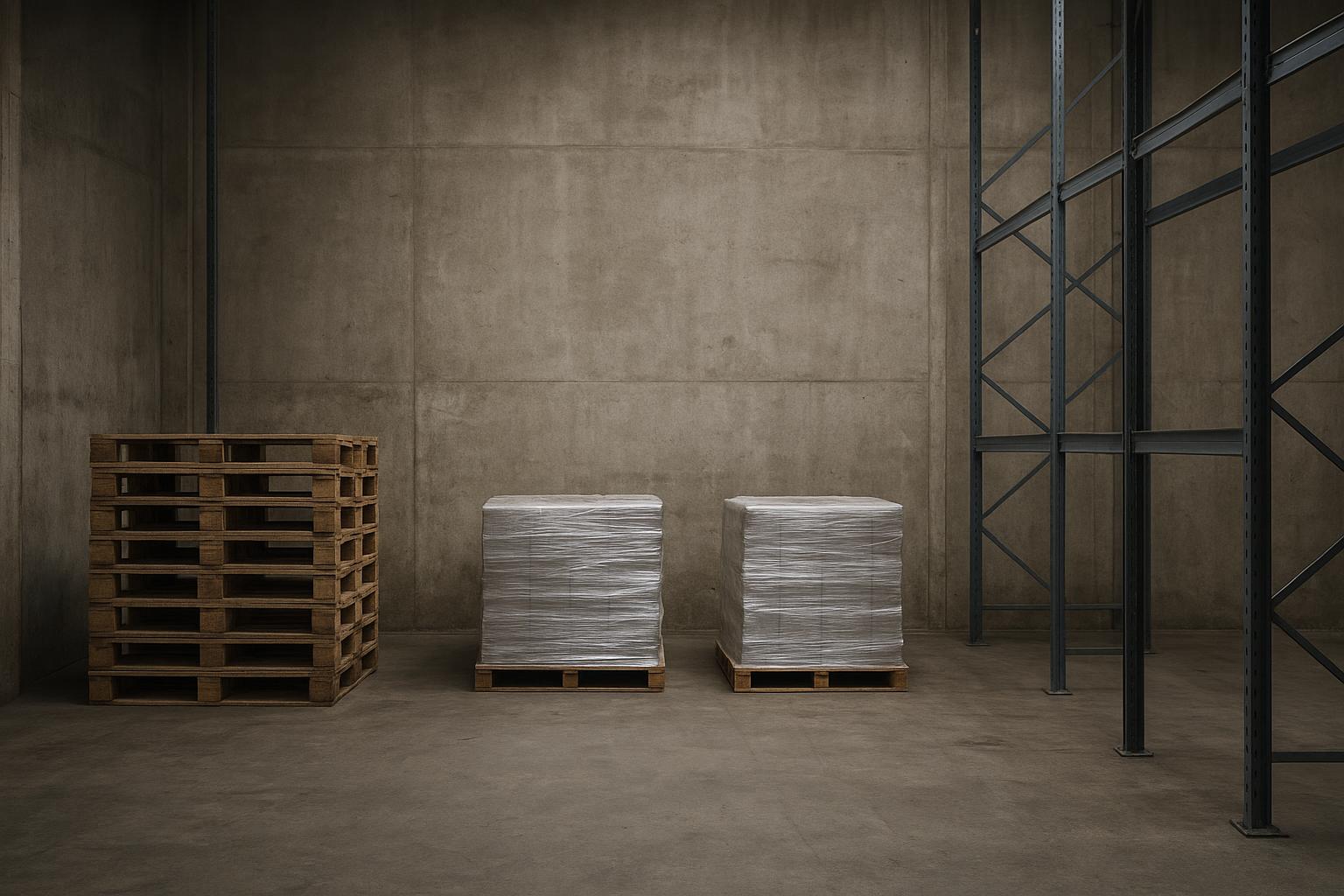
Different kinds of warehouse job
Not all clearances look alike.
A distribution centre clearance is usually about large volumes of palletised stock and heavy racking. A storage unit used by a small trader might involve a few dozen pallets and loose goods. A manufacturing unit may involve machinery, tooling and process waste.
Each type changes the equipment and expertise needed. Machinery may need specialist disconnection and handling, and process waste may be regulated.
Be clear about what your unit contains when you ask for help. A vague description produces vague quotes.
Survey, scope and a written plan
Measure the job before you price it.
Walk the whole site, including mezzanines, yards, loading docks, mess rooms and any outbuildings. Count pallet positions, estimate the weight and type of goods, note the racking system and height, and photograph anything unusual. Record access routes, door heights, dock levellers and ground conditions.
Write a short plan covering what is being removed, in what order, who is responsible, what equipment is needed and the target dates. Share it with anyone quoting for the work so that quotes are comparable. Photographs and a pallet count make a big difference to accuracy.
Check your lease for what must be removed and in what condition the unit should be left. Some landlords expect racking and mezzanines to be removed, floors to be cleaned and marks made good. Terms vary, so get advice if unsure.
What to photograph and count
Make it easy to quote.
Photograph each aisle from both ends, the dock doors, any mezzanine, the mess room, the yard and any outbuildings. Photograph labels on drums and pallets, and any damage.
Count pallet positions by bay and level, and note which are full. Note the dimensions of the unit, door widths and heights, and the types of lifting equipment on site.
List what you want to keep, such as items moving to a new unit, and mark them clearly. This avoids carriers removing items that were never meant to go.
Safety and legal duties on site
This is not a job for improvisation.
Warehouse environments carry well-known risks, including vehicles and forklifts, falling loads, collapsing racking, working at height, manual handling, dust and noise. The Health and Safety Executive (HSE) publishes guidance on workplace transport, storage and racking safety. Read it, and take advice from a competent person on your specific site.
Anyone who operates a forklift or other lifting equipment should be trained and competent, and equipment should be inspected and suitable for the load. Our guide to PPE and health guidelines for heavy-duty clearances covers the protective equipment crews commonly use.
A risk assessment and method statement are standard for work of this kind. Ask any contractor to share theirs and to show that they hold appropriate insurance. See our guide on public liability insurance for clearance crews for what to ask.
Separating people and vehicles
The basics of site traffic.
Mark pedestrian routes and keep them clear of forklift paths. Use barriers, cones or banksmen where needed. Make sure that drivers can see and that pedestrians are visible.
Brief everyone on site before work begins, including visitors and contractors. A short induction covering emergency exits, assembly points, speed limits and where hazards are is good practice.
Keep fire exits, extinguishers and alarm points accessible throughout. Dust, offcuts and packaging build up quickly during clearance, so tidy as you go.
Palletised goods: sell, return, donate, recycle or dispose
Decide by category.
Group the stock into categories: saleable, returnable, donatable, recyclable and waste. Saleable stock may be sold to wholesalers, liquidators, trade buyers or online marketplaces. Returnable stock may go back to suppliers if terms allow. Some stock may suit donation, if the recipient can take it.
Check the condition and date of goods. Food, medicines, cosmetics, electrical goods and children’s products are subject to specific rules, and expired or damaged items may not be resold or donated. If you are unsure, check with trading standards or the relevant regulator, and keep a record of what you decided and why.
Where stock is mixed, unlabelled or of unknown origin, treat it carefully. Identify it before removal. A drum of unknown liquid or a pallet of unlabelled boxes may be hazardous or restricted, and can change the cost and route of disposal.
Selling stock in bulk
What buyers want to know.
Buyers will want to know what the stock is, how much there is, its condition and how it will be collected. Provide a clear list with quantities, photos and any supporting documents. Be honest about condition.
Agree terms in writing, covering price, payment timing, collection dates and who loads. Be careful with buyers who want to collect without paperwork or pay in unusual ways.
If the stock belongs to a customer or is held on consignment, check who owns it before selling. If the business is insolvent, take advice from the insolvency practitioner before selling or removing anything.
Hazardous and regulated goods
Identify before you move.
Warehouses often hold chemicals, aerosols, batteries, paints, solvents, adhesives, fuels, gas cylinders, fire extinguishers, oils and cleaning products. Some are hazardous waste and need specialist collection. Our guide to hazardous waste classification explains how these items are treated.
Check labels, safety data sheets and storage records. Do not mix incompatible products or decant them without advice. Leaking, corroded or unlabelled containers should be left to specialists to assess.
Asbestos is a particular concern in older industrial buildings, for example in roofing, cladding or insulation. Clearance work should not disturb it. If you suspect asbestos, stop work in that area and get a competent assessment. Our guide on building waste disposal gives context on construction materials.
Batteries, lithium and fire risk
Treat with caution.
Batteries, particularly lithium types, can overheat or ignite if damaged or short-circuited. Store them separately, keep terminals protected and do not crush or compact them. Many carriers will not take them in general loads.
Ask your carrier or a specialist recycler how they should be packaged and collected. Our guide to disposing of household chemicals and paint covers related products on a smaller scale.
If any items are damaged, swollen or hot, keep people away and call the emergency services where there is a risk of fire.
Pallets and packaging
Reuse before disposal.
Wooden and plastic pallets are often reusable. Pallet dealers and recyclers may buy or collect good-condition pallets in quantity, particularly standard sizes. Damaged pallets can be repaired, chipped or recycled.
Sort pallets by size, type and condition, and stack them safely. Poorly stacked pallets can collapse, so keep stacks to a safe height and on level ground.
Cardboard, stretch wrap, strapping and other packing materials are usually recyclable if clean and separated. Mixed, contaminated or wet packaging is harder to recycle and may cost more to remove.
Stacking and storing pallets safely
Small things that cause injuries.
Stack pallets in neat columns on a flat surface, with a stable base. Do not climb stacks, and do not stack above the height recommended by your safety adviser. Keep stacks away from fire exits and electrical panels.
Wooden pallets are a fire load, so avoid storing large stacks close to ignition sources or inside buildings longer than necessary.
Check for nails, splinters and broken boards, and use gloves and appropriate footwear when handling.
Pallet racking and industrial shelving
Dismantle in the right order.
Pallet racking is structural. Removing it incorrectly can cause collapse. Racking should only be dismantled by competent people, in a sensible sequence: load removed first, then beams, then bracing, and uprights last, and with attention to the condition of anchors and floors. The HSE and racking industry bodies publish guidance on safe racking use and inspection.
Standard racking systems from known manufacturers are easier to resell than bespoke or damaged items. Photograph the system, note the manufacturer, beam lengths, upright heights and condition, and offer it to dealers and to local businesses. Dealers may offer to dismantle and collect.
Racking that cannot be sold goes for scrap, and our guide to scrap metal collection in London explains the process. Light-duty shelving, bolted steel shelving and steel lockers follow the same route.
Inspecting before removal
Look before you unbolt.
Check for damaged uprights, bent beams, missing safety clips and loose floor fixings. Damaged racking is more dangerous to dismantle. Note any damage, and let the person doing the work know.
Remove load from the racking before dismantling. Do not climb racking. Use suitable access equipment for upper levels.
Sort components into stacks by type and size so that buyers or scrap dealers can see what they are getting. Keep small parts such as clips, pins and base plates in boxes.
Mezzanines, partitions and fit-out
Check the structure and the lease.
Mezzanine floors, internal offices, partitions and platforms are often part of a tenant’s fit-out. Whether you must remove them depends on the lease and any agreement with the landlord. Removal can involve structural work and may require professional input.
Do not remove structural elements without advice. Where a mezzanine was installed under building regulations, or has sprinklers, lighting and fire alarms attached to it, there may be wider implications. Speak to your landlord and, if needed, a building professional.
Services such as lighting, power and compressed air should be made safe by competent people before anything is dismantled. Keep paperwork for any certificates or sign-offs.
Disconnecting services
Safe isolation first.
Before dismantling any structure, make sure power, lighting, data, sprinklers, compressed air and any gas supplies are isolated by competent people. Do not assume that a circuit is dead.
Check for asbestos in older buildings, in particular in ceiling tiles, pipe lagging and cladding. If you suspect it, do not disturb it, and seek advice.
Keep copies of isolation records and certificates, because landlords or insurers may ask for them later.
Access, vehicles and loading
Plan the traffic.
Warehouse clearances can generate a lot of vehicle movements. Plan where lorries and vans will park, how forklifts and pedestrians are separated, and what time slots are allowed by neighbours and local rules. In London, check borough restrictions on loading and noise.
Ensure loading bays, ramps and levellers work, and that ground surfaces can take heavy vehicles. If you need a parking bay suspended or road space, see our guide on council parking suspensions.
Where goods are going on lorries, make sure loads are secured and weight limits observed. Good carriers will plan this, but you should confirm who is responsible for loading and securing.
Using loading docks well
Time is money at the dock.
Book dock slots if the site is shared, and make sure each vehicle is loaded in an order that keeps weight balanced. Wrapped pallets travel better than loose ones.
Check that the dock leveller, ramps and lifting equipment are working before the first lorry arrives. A breakdown can stop everything.
Keep a count of pallets loaded on each vehicle, and ask the driver to sign a delivery note that records it.
Waste duty of care and paperwork
Keep the trail.
As the producer of commercial waste, you have a duty of care in England to make sure it is handled and disposed of properly. That generally means using a registered waste carrier, describing the waste accurately, and keeping waste transfer notes, with extra requirements for hazardous waste. Check GOV.UK for current rules.
Our guides on waste transfer notes and commercial versus household waste explain the paperwork and the distinction in more detail.
Check any carrier’s registration on GOV.UK before they take waste. Ask what happens to the waste after collection, and what documentation you will receive. A cheap quote that comes with no paperwork can become an expensive problem later.
Hazardous waste paperwork
Extra rules apply.
Hazardous waste has additional rules in England, including consignment notes and, in some cases, premises registration. The rules are detailed and change, so check GOV.UK and ask your carrier what they require.
Do not describe waste as general when it is hazardous. Wrong descriptions can cause legal problems for you as the producer and for those who handle it later.
Keep consignment notes and transfer notes in a safe place, because you may be asked for them years after the job.
Getting and comparing quotes
Compare scope, not just price.
Give each carrier the same information: photos, pallet counts, racking details, hazardous items, access, timing and the condition in which the unit must be left. Ask what is included, such as labour, equipment, dismantling, disposal, tipping fees, paperwork and cleaning.
houseclearance.co is a marketplace where independent carriers can quote for jobs, so you can compare responses. Ask each carrier to confirm in writing what they will remove, what they will leave and how they will handle any items that turn out to be hazardous.
Our guide to reading waste collection quotes explains what to look for. Be clear about who owns anything of value: if a carrier is to keep racking or scrap, the quote should reflect that.
Site visits
Worth the effort.
Where the job is large or complex, invite carriers to visit, or offer a video walk-through. A visit helps them identify access problems, hazardous items and equipment needs.
Ask for a written scope after the visit, covering what is and is not included, and any assumptions made. Compare the scopes carefully, because a lower figure may exclude things that another includes.
Note any questions that carriers ask. They often show what each has noticed about the job, and can reveal items you had not considered.
Common mistakes
Avoid the expensive ones.
- Pricing from a phone call without a survey or photographs.
- Removing stock before identifying hazardous or regulated goods.
- Dismantling racking without a safe sequence or competent people.
- Using untrained operators for forklifts or lifting equipment.
- Overlooking lease conditions on mezzanines, racking and floor repairs.
- Using an unregistered carrier and having no waste paperwork.
- Leaving the final clean and walk-through to the last day.
- Forgetting that stock may have been sold or pledged to someone else.
The final walk-through
Finish properly.
Walk the empty unit with your carrier or the landlord. Check mezzanines, ceiling voids, drains, mess rooms, yards and any outbuildings. Look for items hidden at the back of aisles or behind doors.
Take dated photographs, record meter readings, return keys and obtain confirmation of hand-back where possible.
Keep your records, including quotes, waste paperwork, certificates and photographs, for as long as your advisers recommend. Our guide to invoices and records explains what to keep.
Frequently asked questions
Common questions about warehouse clearances.
How do I price a warehouse clearance?
Quotes depend on pallet numbers, weights, types of goods, racking, access, hazardous items and timing. A survey or good photographs make quotes more accurate. Treat any figure as specific to your job.
Can I sell pallet racking?
Often yes, particularly standard systems in good condition. Dealers may buy and dismantle it. Damaged or unusual racking may only have scrap value.
Who should remove pallet racking?
Competent people with appropriate training and equipment. Racking is structural and can collapse if dismantled incorrectly, so follow HSE guidance and use a sensible sequence.
What do I do with unknown chemicals in a warehouse?
Do not move or mix them. Identify them from labels and safety data sheets, and use specialist collection for hazardous items. Ask your carrier what they accept.
Do I need waste transfer notes for a warehouse clearance?
Businesses generally need to keep documentation for waste passed on, such as waste transfer notes, with additional rules for hazardous waste. Check GOV.UK for current requirements.
Do I have to remove a mezzanine floor when I leave?
It depends on your lease and any agreement with the landlord. Removal can be structural work, so check the lease and take professional advice first.
What happens to old pallets?
Good pallets are often reused or sold to dealers. Damaged ones can be repaired or recycled. Ask your carrier what they do with them.
Can houseclearance.co help with a warehouse clearance?
You can post a job and independent carriers can quote. Give them photos and counts, and compare what each includes, such as dismantling, disposal and paperwork.