Direct answer
Energy from waste (EfW) is the process of burning non-recyclable rubbish under controlled conditions to produce heat and electricity. In the UK it is used for the residual waste left after reuse and recycling, such as damaged mixed items, soiled soft furnishings and general rubbish from a house clearance. It ranks below recycling and above landfill in the waste hierarchy. Plants operate under Environment Agency permits with emission limits, and the leftover ash is treated, with some of it used in construction. EfW is not a reason to throw away items that could be reused or recycled, and it is not suitable for hazardous items such as gas bottles, batteries or asbestos.
Contents
- What energy from waste actually is
- Other waste-to-energy technologies
- Where EfW sits in the waste hierarchy
- Why landfill is the last resort
- What a house clearance sends to EfW
- Examples from a typical clearance
- From the kerb to the grid
- How London handles its residual waste
- What happens to the ash
- How EfW plants are regulated
- How to find out about a plant near you
- The arguments for and against
- Where EfW is heading
- What this means for you as a householder
- Common myths about EfW
- Questions to ask your carrier about residual waste
- Frequently asked questions
What energy from waste actually is
Controlled burning with energy capture.
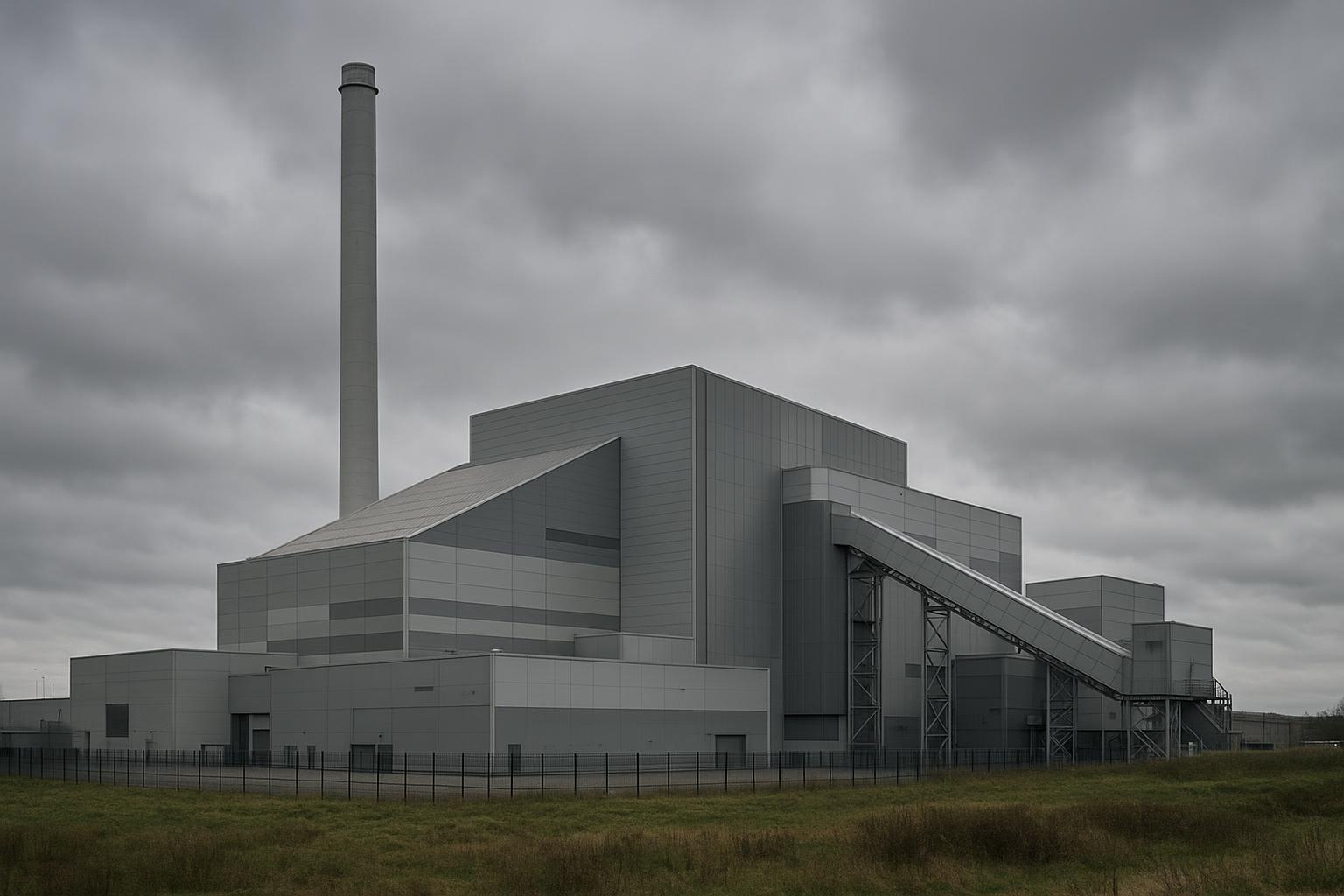
Energy from waste, often shortened to EfW, covers several technologies, but in the UK the most common is the moving grate incinerator. Mixed residual waste is delivered to a tipping hall, mixed by a crane, and fed into a furnace where it burns at high temperature. The heat boils water to make steam, and the steam drives a turbine to generate electricity. Some plants also supply heat to nearby buildings through a district heating network, which uses more of the energy.
The word residual matters. EfW is meant for what is left over when reuse and recycling have been tried. It is not meant to replace sorting, and a well-run clearance should remove reusable and recyclable material before anything is sent for recovery.
In London, large EfW plants such as those at Edmonton, Belvedere and Lewisham are part of the way the city handles the waste that is not recycled. Your own borough's waste authority will say which plant takes its household waste.
Other waste-to-energy technologies
Not every plant works the same way.
Most UK residual waste goes to conventional moving grate plants, but other technologies exist. Gasification heats waste with limited oxygen to produce a gas that can be burned or used as a fuel. Pyrolysis heats waste without oxygen and produces oil, gas and char. Anaerobic digestion is a different process again, used for food and garden waste, where bacteria break down organic material to produce biogas and a soil improver.
Some waste is also made into refuse-derived fuel, a processed mixture of paper, plastic and textiles that is burned in dedicated plants or in industrial processes such as cement kilns, and some is exported for treatment abroad. These routes are all counted as recovery rather than recycling.
For a household clearance, the practical point is that the carrier or the waste authority chooses the route. As the householder you are not expected to know which technology is used, but you can ask where the residual waste goes and get a clear answer.
Where EfW sits in the waste hierarchy
Better than landfill, lower than recycling.
The waste hierarchy ranks options from most to least preferred: prevention, preparing for reuse, recycling, other recovery including energy, and disposal. EfW falls in the recovery tier. It is considered better than landfill because the energy is captured and the volume of waste is cut sharply, but it is ranked below recycling because the material itself is lost.
This is why a clearance firm that sends everything to EfW should not describe the result as recycling. Our guide to zero waste to landfill and recycling rates explains how to read these claims, and how to tell the difference between reuse, recycling and recovery.
For a householder the sensible approach is to try to reuse first, recycle second and treat EfW as the destination for whatever cannot go anywhere better.
Why landfill is the last resort
The problem EfW is meant to reduce.
Landfill buries waste in engineered sites. Organic material decomposes without oxygen and produces methane, a powerful greenhouse gas, and a liquid called leachate that has to be collected and treated. Sites need long-term monitoring, take up land and are running short of capacity in many parts of the country.
The UK has used policy to make landfill less attractive, including a landfill tax that rises over time and restrictions on what can be buried. These measures push waste up the hierarchy towards reuse, recycling and recovery. They also explain why many clearance companies now offer zero waste to landfill as a feature.
Still, a small share of waste can only go to landfill, for example certain types of non-hazardous residue, and some construction waste. This is rare in a typical house clearance but not impossible. A responsible carrier will tell you if that applies to part of your job.
What a house clearance sends to EfW
The mixed and unusable remainder.
Typical items that end up in EfW include damaged and mixed-material furniture, stained mattresses and soft furnishings, worn carpet and underlay, polystyrene and film packaging, broken plastic items, old bedding that cannot be reused, and general household sweepings. These are materials that are difficult to separate or recycle with the facilities that are available.
Not every item is suitable. Hazardous waste, gas cylinders, batteries, fire extinguishers, asbestos, solvents and many chemicals should not go into the general stream. They can damage the plant, create safety risks or release harmful emissions. Our guide to hazardous waste and why firms refuse it sets out what needs separate handling.
Electricals must go through a specialist route as well. See our WEEE guide. Older foam-filled sofas that may contain flame retardants also follow special rules, covered in our guide to POPs in old sofas.
Examples from a typical clearance
What goes where.
To make this concrete, here is how an imagined clearance of a three-bedroom house might break down. This is a general illustration, not a measured result.
- Reuse or donation: a dining table and chairs in good condition, a working washing machine if safe, books, kitchenware and clean clothes.
- Recycling: metal bed frames, a cooker, pots and pans, cardboard boxes, paper, a garden mower via the right route, and electricals through the WEEE system.
- Energy recovery: a stained mattress, worn carpet and underlay, a damaged sofa, polystyrene packaging, broken plastic toys and general sweepings.
- Specialist routes: old paint and chemicals, gas bottles, batteries, fluorescent tubes and any items that may contain asbestos.
Each stream needs a different container or load, so a clearance that sorts carefully takes slightly longer than one that throws everything into a skip. The reward is a lower share of mixed waste and a clearer paper trail.
From the kerb to the grid
The path of a load of residual waste.
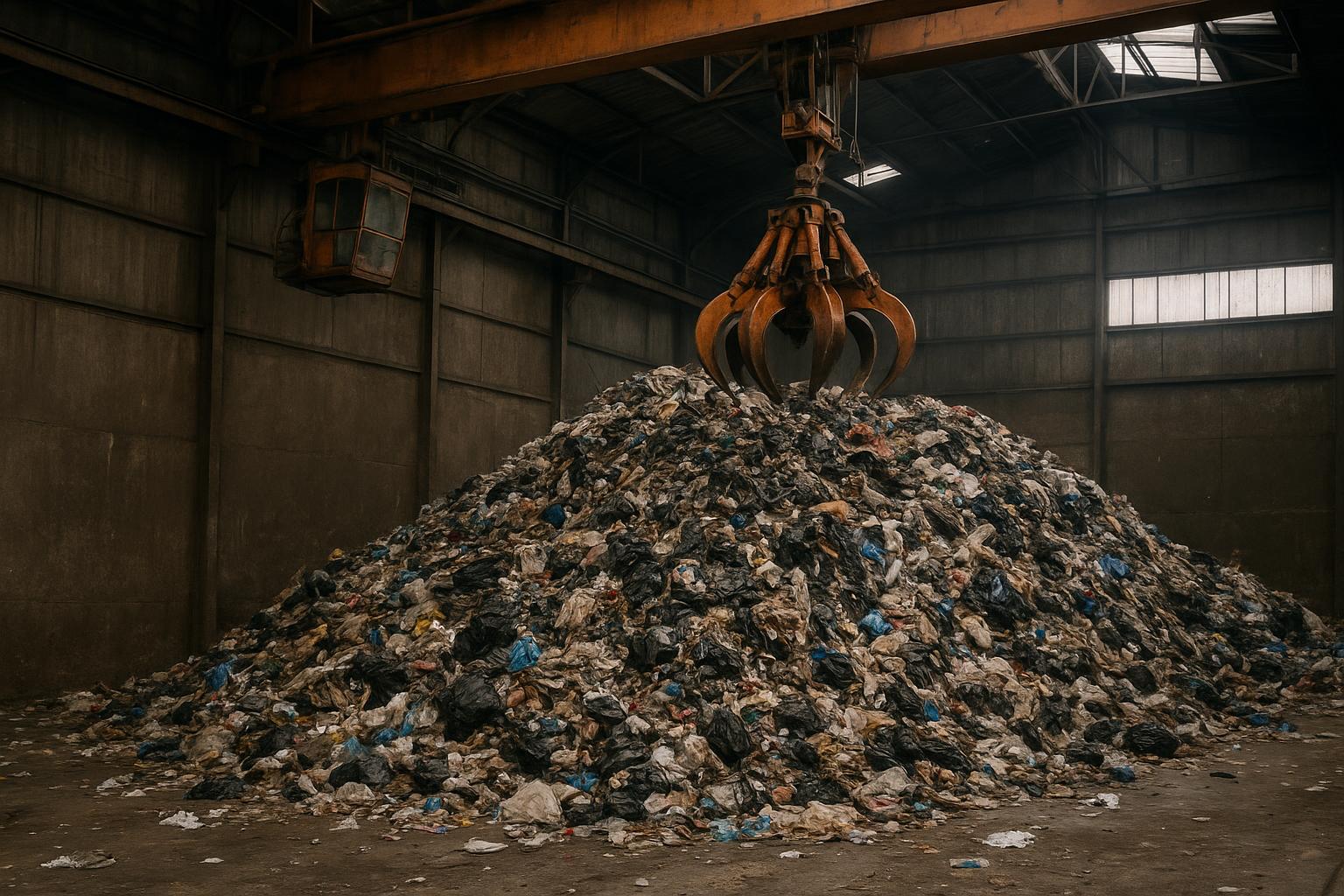
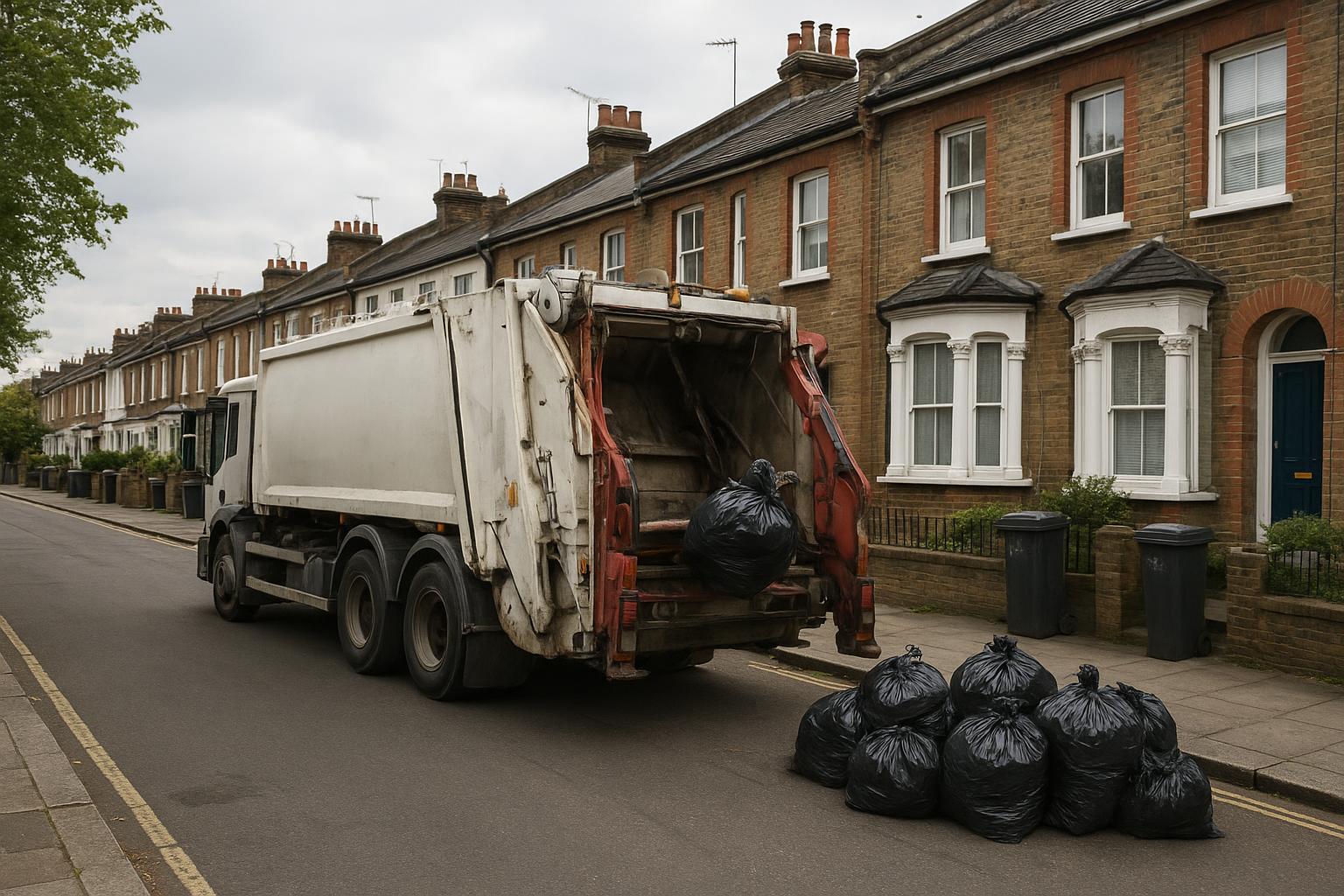
A typical journey starts with collection by a registered carrier, who delivers the load to a transfer station or directly to the plant. At the plant it is weighed, recorded and tipped into a bunker. A crane grab mixes the material and lifts it into a hopper that feeds the furnace.
- Combustion: the waste burns at high temperature, typically above the minimum required by the permit, with controlled air supply.
- Energy recovery: hot gases heat boilers, producing steam for a turbine and generator.
- Flue gas cleaning: the exhaust passes through filters and scrubbers that remove particles, acid gases and other pollutants before release through the chimney.
- Residues: bottom ash drops from the furnace and is collected, while fly ash and other air pollution control residues are captured separately.
- Export: electricity is fed into the grid, and some plants also send heat to local networks.
Every load is recorded on a waste transfer note, as explained in our guide to waste transfer notes, so the chain from your property to the plant can be traced.
How London handles its residual waste
A regional picture.
London has several large EfW plants and a network of transfer stations that collect household and commercial waste from across the boroughs. Waste authorities, which group boroughs together, sign long contracts with the plants, and the collected waste travels by road, and in some cases by river or rail, to reach them.
Because capacity is shared, the fate of your rubbish depends partly on where you live and which authority covers your borough. A private carrier collecting from your home will take the waste to a transfer station or recycling facility of its own choice, and from there it may go to an EfW plant or to another recovery route.
If you are interested in what happens locally, your council's waste pages usually explain which facility takes household waste and how much is recycled, composted, recovered or buried. Our guide to council bulky waste versus private clearance compares the two options for large items.
What happens to the ash
Not everything disappears.
Burning reduces the volume of waste a great deal, but it does not make it vanish. A residue of ash remains. Bottom ash is usually processed to remove metals, which can be recycled, and the remainder can be used as an aggregate in construction, for example in road building, subject to quality checks.
Air pollution control residues are different. They concentrate pollutants captured from the exhaust and are classed as hazardous, so they are handled and disposed of under stricter rules at specialist sites. This is one of the points that critics of incineration raise, and it is part of the picture rather than something to hide.
In short, EfW cuts the amount of material that reaches landfill substantially, but it creates its own residues that need careful management.
How EfW plants are regulated
Permits, limits and monitoring.
EfW plants in England operate under environmental permits issued by the Environment Agency. These set limits on emissions to air, require continuous monitoring of key pollutants, and require operators to publish performance data. Plants must meet standards for how hot the gases get and how long they stay hot, so that harmful compounds are destroyed.
Planning approval and local consultation are also part of the process, and plants are frequently the subject of public debate. If you want to understand how a particular plant performs, the operator and the regulator publish monitoring results, and local authorities often publish information about the plants that handle their waste.
For the detail of the rules, rely on GOV.UK and Environment Agency pages, because permit conditions and standards change over time.
How to find out about a plant near you
Public information is available.
If you want to look beyond the marketing, there are several places to check. The Environment Agency maintains a public register of permits, which shows the conditions each plant must meet, and operators publish regular emissions data on their websites. Local authorities that send waste to a plant often publish annual reports that describe tonnages, recycling rates and the destination of residues.
Planning documents are another source, because new or expanded plants must submit environmental assessments that describe expected emissions, traffic and the effect on local air quality. These documents are long but they usually contain a plain-language summary.
You do not need to be an expert to ask sensible questions. Ask whether the plant recovers heat as well as electricity, whether it has a record of breaches, and what happens to its residues. If you are a landlord, executor or business owner dealing with large volumes of waste, this kind of information can also help you describe your own environmental practice accurately in reports or to clients.
Remember, too, that the clearance firm you hire is only one link in the chain. It collects and sorts, but the final treatment is carried out by facilities with their own permits, and a good firm can tell you who they are.
The arguments for and against
Reasonable people disagree.
Supporters argue that EfW is far better than landfill. It avoids methane emissions from buried organic waste, produces useful electricity and heat, and handles waste that cannot realistically be recycled. They also point out that metals can be recovered from the ash and that modern plants are tightly regulated.
Critics argue that burning waste releases carbon dioxide, that plastics in the waste make the emissions fossil-based, and that capacity could discourage recycling and reuse if plants need a steady supply of waste to operate. Others raise local air-quality concerns and note that EfW still creates hazardous residues. Carbon capture is sometimes proposed as a future improvement, but that is not yet standard.
Both sides agree that preventing waste and increasing reuse and recycling is better than treating waste after the fact. For a householder, the practical implication is the same: sort carefully so that only the genuinely unusable remainder is left for recovery.
Where EfW is heading
Policy is still moving.
Government and industry are discussing how EfW should fit into a net-zero future. Proposals include bringing waste incineration into the UK emissions trading scheme, which would put a price on its carbon emissions, and encouraging carbon capture at large plants. Others focus on reducing the amount of plastic in residual waste, since plastic is the main source of fossil carbon in the exhaust.
The direction of travel is towards less residual waste, not more. Better product design, deposit return systems, extended producer responsibility and stronger reuse networks all aim to cut the amount that reaches a plant in the first place. For households, that means the habits that matter most are the simple ones: buy less, repair and reuse, and sort what is left.
Because policy changes, treat any figure or rule you read in an article, including this one, as a starting point and check GOV.UK for the current position before making a decision that depends on it.
What this means for you as a householder
Practical steps before a clearance.
Separate items that can be donated, sold or recycled. Keep cardboard dry and flat, take out batteries where it is safe to do so, and keep hazardous items apart. Ask your carrier how they sort and where the residual waste goes, and ask for the waste transfer note, as set out in our guide to the householder duty of care.
If you want to cut the amount of residual waste, our guide to furniture donation in London and the advice on preparing bulky items for collection are good places to start. The less mixed waste there is, the lower the volume, and often the cost.
Finally, check that the person collecting your waste is licensed. Our carrier licence check takes a few minutes and protects you if something goes wrong.
Common myths about EfW
What people often get wrong.
One myth is that anything can be put in the bin because it will be burned anyway. In fact the plants accept only suitable waste, and loading in batteries, gas canisters or chemicals can cause fires and explosions. Another myth is that EfW makes recycling unnecessary. The opposite is true, because recycling saves more resources and, in most cases, more carbon.
A third myth is that burning waste leaves nothing behind. In reality there are ash residues that need to be managed. A fourth is that all incinerators are the same. Older plants, some of which were closed, did not meet today's standards, while modern plants must meet strict limits on emissions and are monitored continuously.
The more accurate picture is that EfW is a useful but limited tool. It is better than landfill for waste that cannot be reused or recycled, but it should not be the first choice for anything that has another use.
Questions to ask your carrier about residual waste
Four short questions.
When you request a quote, ask these questions and note the answers.
- Where does residual waste go, and is it energy recovery or landfill?
- How do you separate reusable and recyclable items first?
- Can you name the facility, and will it appear on the waste transfer note?
- Do you refuse any items, and what should I do with them instead?
Frequently asked questions
Common questions about energy from waste and where non-recyclable rubbish goes.
What is energy from waste?
It is the controlled burning of non-recyclable waste to produce heat and electricity. In the UK it is used for the residual waste left after reuse and recycling.
Is energy from waste the same as recycling?
No. Recycling turns material into new products, while EfW recovers energy and loses the material. EfW ranks below recycling in the waste hierarchy.
Is EfW better than landfill?
Generally yes. It cuts the volume of waste, avoids methane from buried waste and recovers energy, although it releases carbon dioxide and creates ash residues that need management.
What happens to the ash from EfW?
Bottom ash is processed to recover metals and may be used as construction aggregate. Air pollution control residues are hazardous and are disposed of under stricter rules.
Can I put anything in a skip that goes to EfW?
No. Hazardous items, batteries, gas bottles, asbestos and electricals need separate routes. Tell your carrier about anything that is not ordinary household rubbish.
Are EfW plants regulated?
Yes. In England they operate under Environment Agency permits with emission limits and monitoring, and operators publish performance data.
Does EfW discourage recycling?
Some critics say it can if plants need a steady supply of waste. Supporters say it only handles what cannot realistically be recycled. Both agree that reuse and recycling come first.