
Direct answer
There is no single percentage for how much of a house clearance is recycled, because it depends on the contents of the property, how carefully items are sorted, and which facilities the carrier uses. Furniture, metals, electricals, textiles and paper can often be reused or recycled, while mixed, contaminated or damaged items are harder. Zero waste to landfill usually means that residual waste is sent for energy recovery rather than buried, which is not the same as zero waste or full recycling. A trustworthy firm can explain how it sorts, name its destinations and show the paperwork, rather than quoting a round percentage with no evidence.
Contents
- What a zero waste to landfill claim usually means
- Terms you will see on quotes and websites
- The waste hierarchy in a clearance
- Why there is no single recycling percentage
- How the type of property changes the result
- How a recycling rate can be measured honestly
- What can be reused or recycled, by category
- Reuse comes before recycling
- What happens to the residual waste
- Distance, vehicles and the carbon picture
- Spotting vague or misleading claims
- How you can raise the recycling rate yourself
- A simple timeline for a low-waste clearance
- Questions to ask about recycling claims
- Frequently asked questions
What a zero waste to landfill claim usually means
Read the wording carefully.
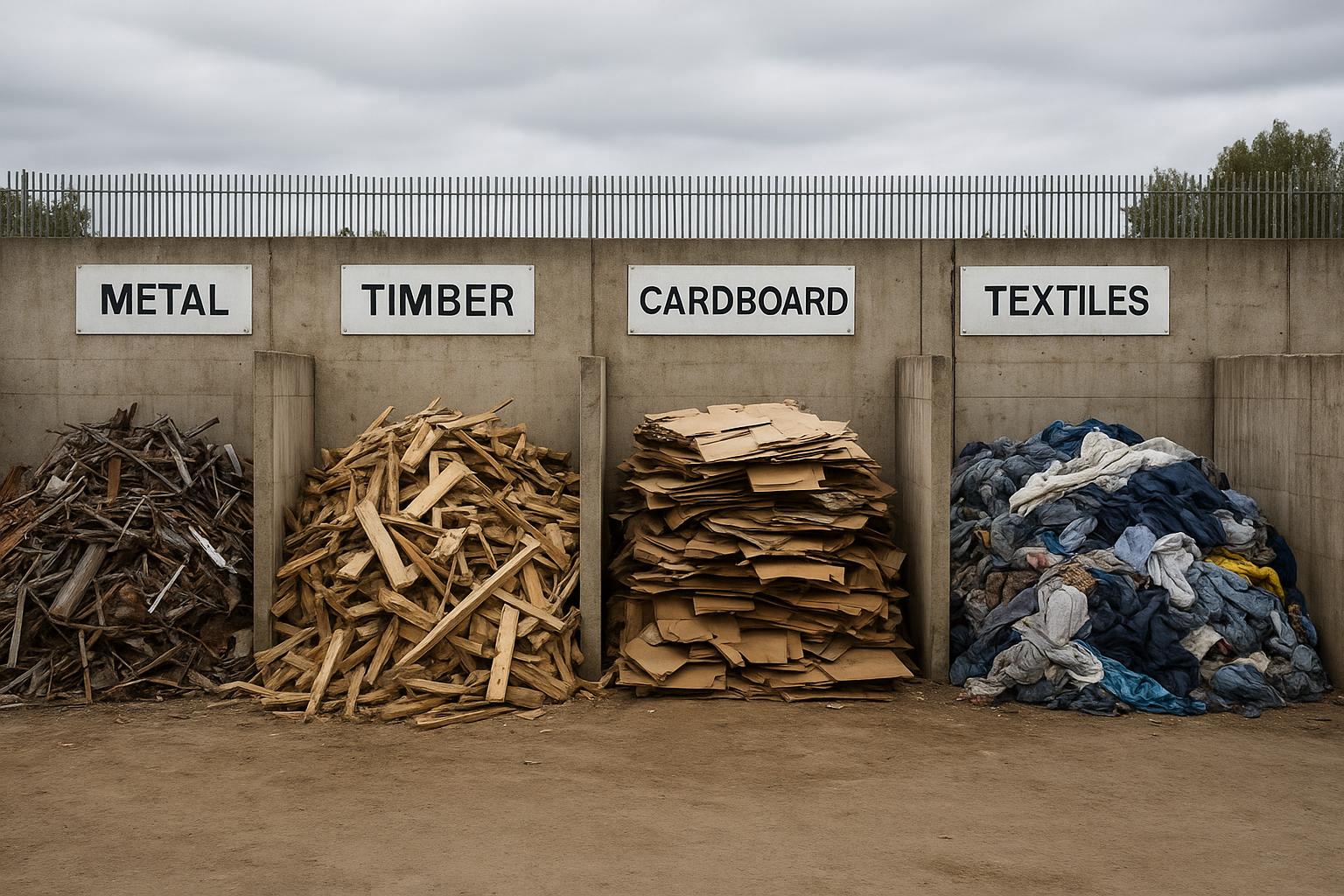
Zero waste to landfill is a common marketing phrase in waste management, and it can be perfectly honest, but it does not mean what many customers assume. In most cases it means that none of the collected material is buried in a landfill site. Instead, anything that cannot be reused or recycled is sent for energy recovery, where it is burned to generate heat or electricity. That is better than landfill, but it is not the same as recycling.
It is also worth separating three terms that are often blurred together. Reuse means the item continues in its current form, for example a sofa that is donated. Recycling means the material is processed into a new product, for example scrap metal that is melted down. Recovery means the energy is captured, for example when residual waste is burned. All three keep waste out of landfill, but they sit at different levels of the waste hierarchy, and a claim that mixes them can look better than it is.
When a firm says it recycles a high proportion of what it collects, ask which of these categories the figure refers to, and whether the number covers all jobs or a particular period.
Terms you will see on quotes and websites
A short glossary.
Clearance firms use several terms that sound similar but mean different things. Knowing them makes it easier to compare quotes fairly.
- Diversion rate: the share of waste kept out of landfill. It may include energy recovery, so it is not the same as a recycling rate.
- Recycling rate: the share turned into new material. This is the stricter measure and is usually lower than the diversion rate.
- Reuse rate: the share of items that continue in use, for example donated furniture or resold goods.
- Residual waste: what is left after reuse and recycling, usually sent for energy recovery or disposal.
- Contamination: material that has been spoiled by food, liquids, chemicals or mixing, which can make recycling impossible.
If a quote or website uses one of these terms without defining it, ask what the number covers. A good firm will be glad to explain because it shows they measure their results.
The waste hierarchy in a clearance
Prevention first, disposal last.
UK waste policy follows the waste hierarchy: prevent, prepare for reuse, recycle, recover other value such as energy, and dispose of to landfill as a last resort. In a house clearance that translates into a sensible order of action. First, decide what still has value for family, friends or sale. Next, pass reusable items to charities or reuse schemes. Then separate what can be recycled. What remains goes to the best available recovery route, and only the genuinely unusable remainder should ever be buried.
Our guide to furniture donation in London and the guide on what happens to your items after a house clearance show how this works in practice. The journey of the waste matters because each stage is a chance to divert material from disposal.
This is also why early decisions matter. A household that sorts valuables and donations before the clearance crew arrives usually lowers the volume of waste, and a crew that is not rushed has time to separate materials on site.
Why there is no single recycling percentage
The mix of items drives the result.
A flat that is mostly furniture, books and clothing produces a very different waste profile from a house with a garage full of builder's rubble, damp carpets and mixed plastics. Metal items such as appliances, bed frames and tools are among the easiest to recycle. Timber furniture can often be reused, chipped for panel board or used as fuel. Cardboard and paper are routinely recycled if they are kept dry and clean.
Other items are harder. Heavily soiled soft furnishings, mixed-material objects, broken glass, damp or mouldy items and contaminated waste often cannot be recycled. Hoarded properties are a particular challenge because much of the material is mixed, damaged or contaminated, as our guide to biohazard and extreme squalor clearance explains.
Because of this variability, any firm that quotes a fixed percentage for all jobs, such as ninety-eight per cent recycled, should be able to show how it was calculated. Ask whether the figure is by weight or by number of items, and whether items sent for energy recovery are counted as recycled.
How the type of property changes the result
Four typical clearances compared.
A one-bedroom flat with modest contents often produces mostly furniture, clothing, kitchenware and a few appliances. A large share of this can be reused or recycled if the furniture is in decent condition and the textiles are clean.
A family house after many years of occupation is likely to contain a wider mix, including garage and garden items, old paint, boxes of paperwork and possibly bulky items such as wardrobes and beds. The recycling share depends heavily on how much is sorted before it is loaded.
A property that has been empty and damp may have mould, water-damaged furniture and rotting carpets. Much of that material cannot be recycled and will be treated as residual waste. A hoarded home is the most difficult case because items are packed together, damaged by pests or moisture and often mixed with food waste.
Finally, a commercial unit or office produces its own pattern, including IT equipment, desks, filing cabinets and paperwork that may need confidential destruction. These items have their own rules, as described in our guide to commercial and household waste laws.
How a recycling rate can be measured honestly
Weight, records and a named destination.
The most reliable measure is by weight, using weighbridge tickets from the facilities that accept the material. A firm that sorts into separate streams, such as scrap metal, timber, cardboard, WEEE, textiles and residual waste, and receives a ticket for each load can calculate what share went where. That figure can change from job to job, so an honest average is based on a sample of real jobs rather than a guess.
Without records, a percentage is only an estimate. Some firms use a mixed skip that is then sorted at a materials recovery facility, in which case the recycling rate depends on that facility's performance rather than on the clearance crew. This is not necessarily bad, but it is a different model from sorting at source, and a customer who cares should know which one is being used.
Our guide to waste transfer notes explains the paperwork that supports these claims. The note should describe the waste and name the carrier, and some firms can also provide a recycling certificate or a summary report on request.
What can be reused or recycled, by category
A practical overview.
The following is a general guide, not a promise. Actual outcomes depend on condition, local facilities and the carrier's routes.
- Furniture: solid wood and good-condition items are often suitable for reuse. Damaged or mixed-material items may be recycled for timber or sent for recovery. Older upholstered seating needs special consideration, as explained in our guide to POPs in old sofas.
- Metals: appliances, frames, tools, pots and pans are highly recyclable and often have scrap value.
- Electricals: must go through a specialist route, as set out in our WEEE guide.
- Textiles: wearable clothes and clean linens can be reused, and worn textiles may be recycled into other products if they are dry and clean.
- Paper and cardboard: recyclable if dry and not heavily contaminated.
- Glass and ceramics: bottles and jars can be recycled, while mirrors, window glass, crockery and ceramics usually cannot go in the same stream.
- Hazardous items: paints, chemicals, gas bottles and similar items follow separate rules, covered in our guide to hazardous waste classification.
Reuse comes before recycling
Often the biggest environmental gain.
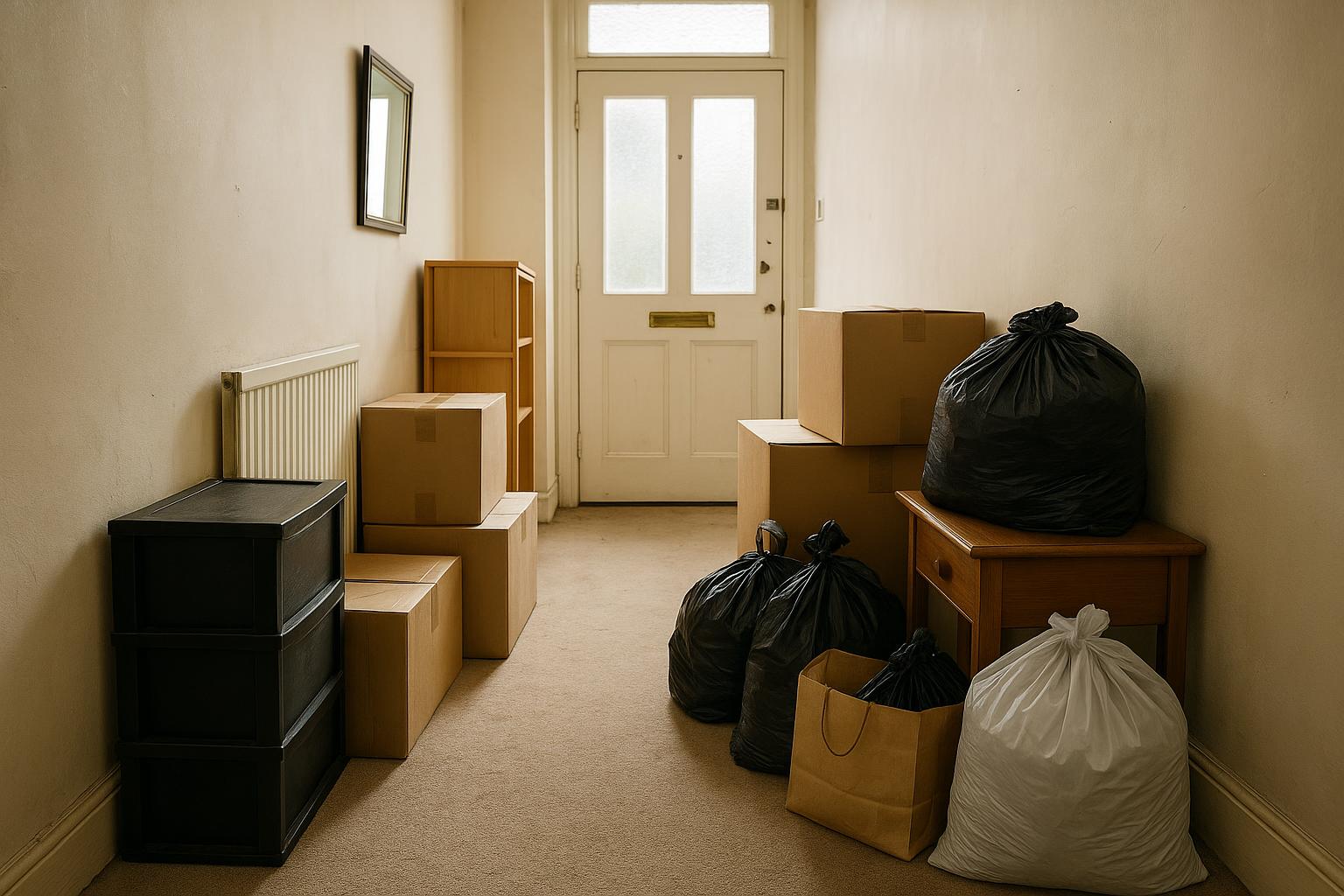
Reusing an item avoids the energy and materials needed to make a replacement and saves the processing needed for recycling. A sofa, table or wardrobe in good condition is worth far more as a working product than as raw material, and the same goes for working appliances, books, toys and household goods.
The challenge is time and condition. Charities and reuse organisations are selective, which is understandable given storage costs and safety rules. If you want a high reuse rate, start early, photograph items, contact organisations well before the clearance date and be prepared to accept that some items will be refused. Our guide to furniture donation in London covers the practical steps.
A good carrier will also keep an eye out for items that can be resold or donated and will discuss these with you rather than discarding them. This is another reason to walk the property with the carrier before the job starts.
What happens to the residual waste
Energy recovery or, rarely, landfill.
After reuse and recycling, there is almost always some residual waste, such as damaged mixed items, stained soft furnishings and general rubbish. Under a zero waste to landfill approach this goes to an energy-from-waste facility, where it is burned under controlled conditions to produce electricity or heat. A smaller share may go to landfill if there is no suitable alternative, or if the waste is not suitable for incineration.
It is fair for a firm to say that it sends no waste to landfill if that is true for its routes, but it should not describe the residual as recycled. If you care about the distinction, ask directly how the leftover waste is treated and which facility takes it.
The environmental picture is also affected by transport, packing and the mix of materials. A firm that drives a long distance to a particular recycler may achieve a better recycling rate but a higher carbon footprint. There is no perfect answer, and a clear explanation is more reassuring than a bold slogan.
Distance, vehicles and the carbon picture
Recycling is not the only measure.
The environmental effect of a clearance depends on more than the destination of the waste. Fuel used by vehicles, the number of trips, the size of the loads and the distance to each facility all contribute. A single well-planned journey with a full vehicle can be better than several half-empty trips to different sites.
A firm that sorts at source may use more than one vehicle or a larger container to keep materials apart, which can increase journeys but improves the quality of recycling. A firm that mixes everything and relies on a sorting plant may have fewer trips but a lower quality of sorting. Neither approach is automatically better, and each has trade-offs.
If this matters to you, ask the firm how it plans the job, whether it combines collections in the same area, and what type of vehicle it uses. You are not likely to get a precise carbon figure, but you should get a sensible and honest answer.
Spotting vague or misleading claims
Evidence beats slogans.
Be cautious of claims such as eco-friendly, green clearance or one hundred per cent recycled when no detail is given. Warning signs include a round percentage with no explanation, an absence of a waste carrier licence number on the website, and no mention of what happens to residual waste. Another sign is a very low price combined with an environmental claim, since proper sorting and recycling take time and money.
Real evidence looks different. It includes a named carrier registration, examples of the destinations used, the ability to share a waste transfer note, and a willingness to explain what cannot be recycled. A firm that admits some waste goes for energy recovery is usually more honest than one that claims perfection.
You can verify the licence in a couple of minutes using our carrier licence check, and our guide on the householder duty of care explains why the responsibility for checking sits with you.
How you can raise the recycling rate yourself
Preparation changes the outcome.
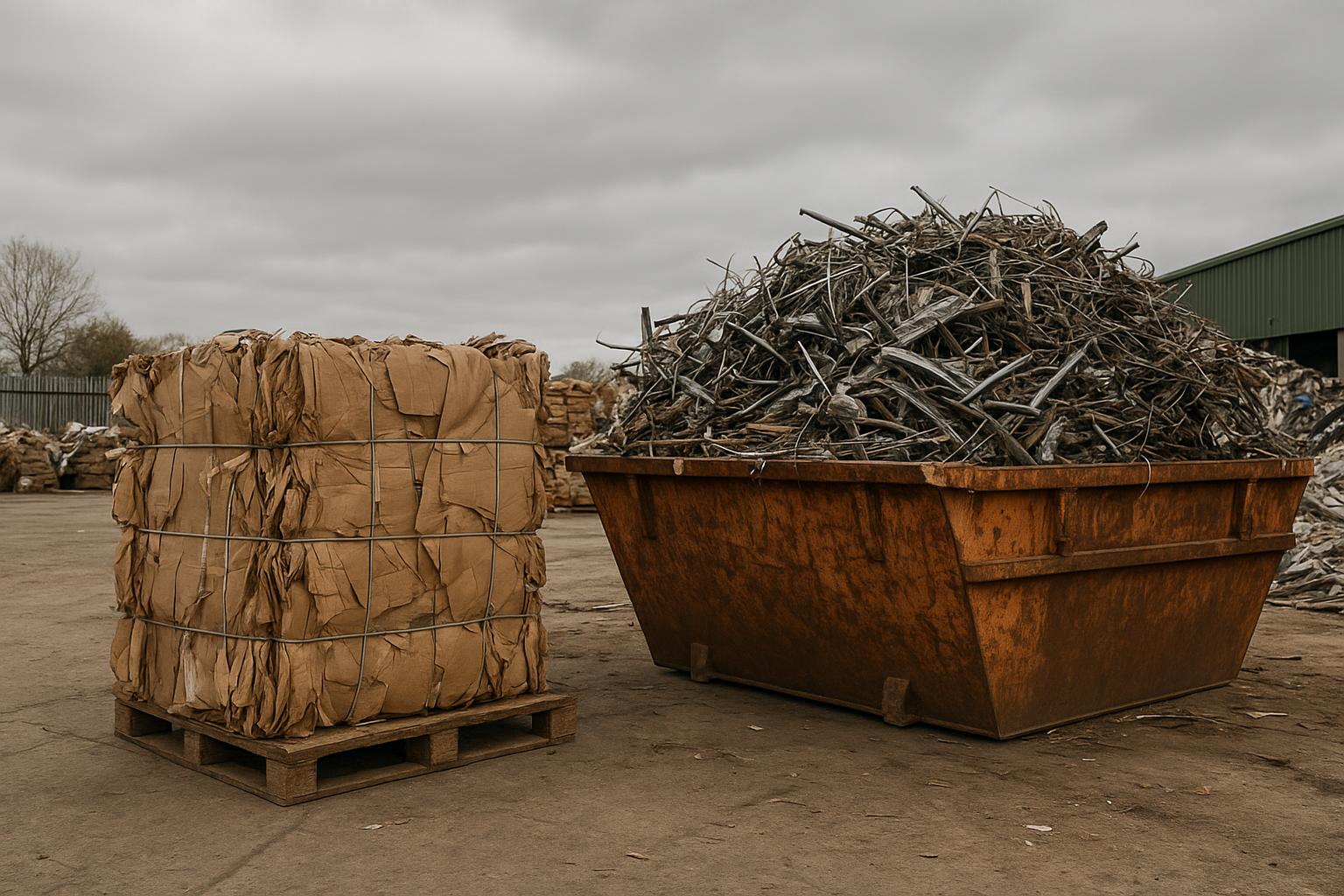
You can make a big difference before the crew arrives. Separate valuables, family heirlooms and items for donation, and try to donate or sell working items. Keep cardboard and paper dry and flat. Do not mix food waste, liquids or hazardous items with general rubbish. Remove batteries from electricals where it is safe to do so, and keep clothes and linens in clean bags if they could be reused.
Our guide to preparing bulky items for collection explains what to do with large items, and the guide to pricing by volume shows why reducing the amount of mixed waste can lower the quote as well. A small amount of preparation helps both the environment and your wallet.
If you are clearing a property for someone else, such as a parent or a client, agree with them in advance what should be kept, what should be donated and what is genuinely waste, so that decisions do not have to be made quickly on the day.
A simple timeline for a low-waste clearance
Start two or three weeks ahead if you can.
Good results come from a plan. These steps are a general guide, and the timing can be adjusted to suit the property.
- Three weeks before: walk through the property, set aside family keepsakes and valuables, and identify items to sell or donate.
- Two weeks before: contact charities and reuse organisations, arrange collection of donated items, and book your clearance firm with a clear description of what remains.
- One week before: separate paperwork, remove personal data from devices, empty fridges and wardrobes and bag clean textiles.
- On the day: show the crew where items are grouped, point out anything fragile, valuable or hazardous and confirm who will receive the waste transfer note.
- After the job: check the property, keep the paperwork and ask for a summary of how items were handled.
This sequence suits an executor or relative clearing a home at a calm pace. If you are working to a tighter deadline, such as the end of a tenancy, prioritise the steps that remove the most waste from the stream, such as donations and metal items.
Questions to ask about recycling claims
Five questions that test the claim.
Before booking, ask the firm these questions and note the answers.
- Are you a registered waste carrier, and what is your licence number?
- Is your recycling figure by weight, and what period does it cover?
- Do you sort at the property or send mixed waste to a sorting facility?
- What happens to the waste that cannot be recycled?
- Can you provide a waste transfer note, and a recycling summary if I ask?
Frequently asked questions
Common questions about recycling, zero waste to landfill and house clearances.
What does zero waste to landfill mean?
It normally means that none of the collected waste is buried in landfill. Items that cannot be reused or recycled are usually sent for energy recovery, which is better than landfill but not the same as recycling.
What percentage of a house clearance is recycled?
There is no single figure. It depends on what is in the house, how it is sorted and which facilities the carrier uses. Ask a firm how it measures its own rate.
Is energy from waste counted as recycling?
No. Energy recovery sits below recycling in the waste hierarchy. A claim that counts it as recycled can overstate the result.
How can I check a recycling claim?
Ask for the carrier licence number, the destinations used, how the rate is measured and a waste transfer note. A firm with real evidence will explain the answers clearly.
Can all furniture be recycled?
Not all of it. Solid wood and good condition items are often reused, while damaged or mixed-material items may only be suitable for recovery. Older upholstered seating needs special handling.
Does sorting items myself make a difference?
Yes. Separating donations, keeping cardboard dry and removing hazardous items can raise the share that is reused or recycled and can reduce the cost of the clearance.
Why are some eco-friendly claims misleading?
Slogans such as one hundred per cent recycled can be hard to prove. Without weight records, named facilities and paperwork, the claim may be an estimate or marketing rather than a measured result.
