Direct answer
A garage sale or car boot sale can raise money and reduce what a clearance firm must remove, but it takes planning. Sort items early, price them simply, bring change and a table, and expect to sell small, useful and nostalgic goods rather than bulky furniture. Check the pitch rules and fees for car boot sales, and avoid setting up on the public pavement. Selling your own unwanted possessions is generally not treated as trading, but buying goods to resell can be, so check the current HMRC guidance if in doubt. Do not sell unsafe, counterfeit or restricted items, and book your clearance or charity pick-up for the unsold items before the sale, not after.
Contents
- Why hold a sale before a clearance
- Set a goal for the sale
- Garage sale or car boot sale?
- Online alternatives
- What sells and what does not
- Presenting items to sell
- Pricing simply
- Haggling and negotiation
- Rules, pitch fees and permission
- Weather and practical logistics
- Tax and trading basics
- Selling safely
- Cash handling and scams
- What to do with unsold items
- Lining up donations for the day
- Fitting a sale into a clearance timeline
- Final checklist for sale day
- Frequently asked questions
Why hold a sale before a clearance
Less to remove, some money back.
A sale before a clearance has two benefits. It can bring in money, which is useful if you are paying for the clearance or settling costs. It also reduces the volume that a firm has to remove, which can lower the price, since many quotes are based on volume.
It is also a way to find homes for items that are too good to throw away but not valuable enough for an auction. People enjoy buying useful goods at low prices, and a sale lets them take away items they will use. It is a form of reuse, and it fits the waste hierarchy.
A sale takes time and effort, though. If you are clearing under a tight deadline, it may not be worth it. Be realistic about what you can sell and how much time you have.
Set a goal for the sale
Money, space or both.
Before you start, decide what you want from the sale. If the aim is to raise money, focus on the items with the best chance of fetching a decent price and spend time on photographs and presentation. If the aim is to clear space quickly, price everything low and accept that you will earn little.
Be realistic about the money. A typical household clear-out sale brings in a modest sum, often enough to cover a few small costs but not a large bill. If the family is relying on the money, it may be better to use online marketplaces or an auction house for the higher-value items and a sale for the rest.
It also helps to agree the goal with others in the household or the family. People differ on what is worth keeping or selling, and a short conversation in advance avoids arguments on the day. Our guide to dividing family belongings without disputes offers a framework.
Garage sale or car boot sale?
Two different formats.
A garage sale or yard sale takes place at your property, usually in a garage, driveway or garden. It is free to run, convenient and lets you control the timing. In London, many homes have no garage or driveway, so a sale may have to be held inside the home or in a shared space, which has security and access issues.
A car boot sale takes place at a field, car park or other venue, where you pay a pitch fee, bring your goods in a vehicle and sell from the boot or a table. It attracts regular buyers and does not bring strangers to your home. Pitch fees and opening times vary, so check the organiser's details.
Whichever format you choose, remember that you are responsible for safety and for clearing up afterwards. Never set up on the public pavement or the road without permission, because that can obstruct the highway and may breach council rules.
Online alternatives
Sell without leaving the house.
If a physical sale is not practical, online marketplaces and local community groups let you sell items from home. You list items with photographs, answer messages and arrange collection. Larger items such as furniture often sell better online than at a car boot sale, because buyers can see them in advance and arrange transport.
Online selling takes more time per item and involves strangers collecting from your home, so the safety advice for free-to-collect platforms applies here as well. Our guide to giving away items through Freecycle, Olio and Trash Nothing explains how to handle collections safely.
A mixed approach often works well: sell the best items online, take small goods to a car boot sale and give the rest to charity.
What sells and what does not
Be realistic.
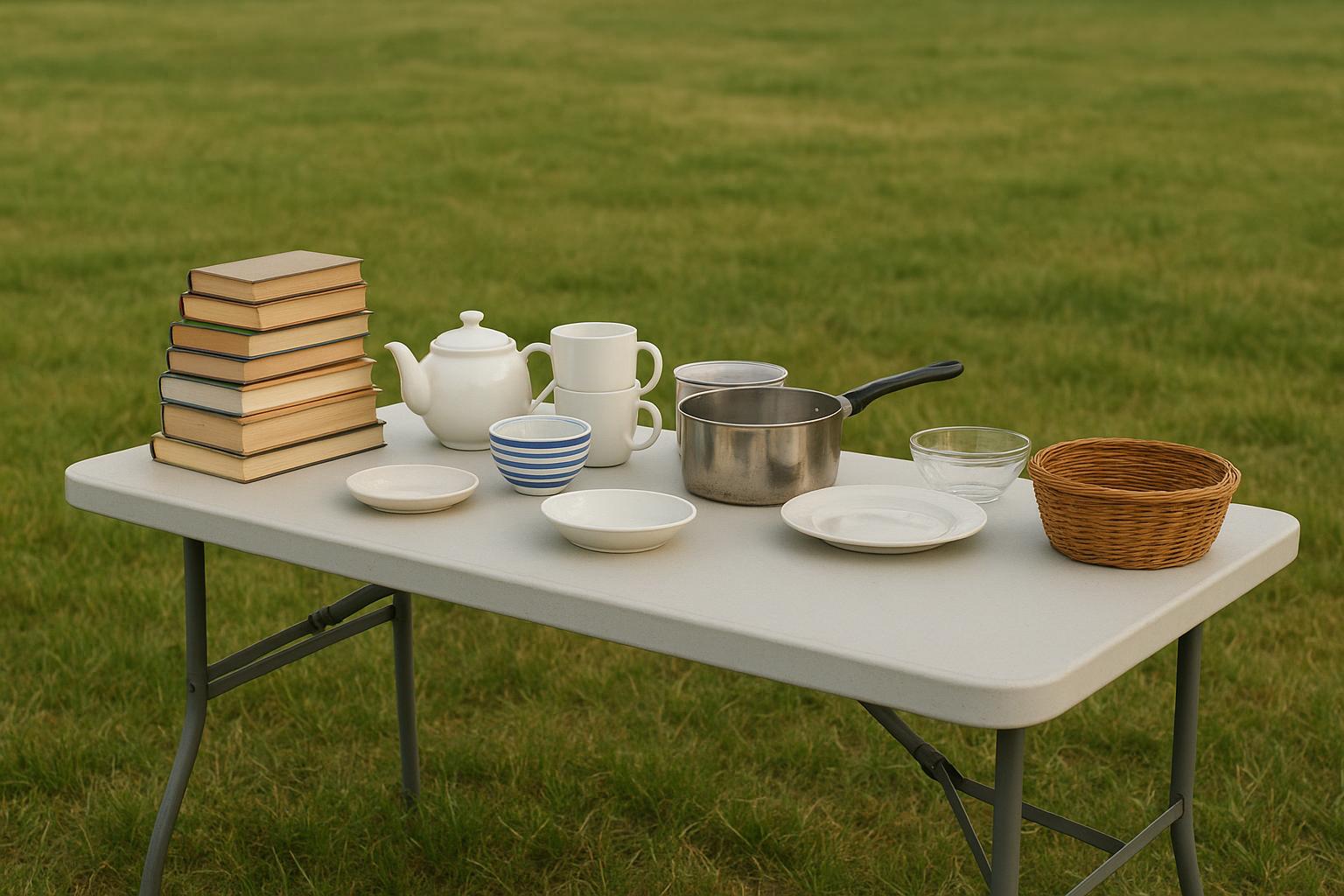
Small, useful and nostalgic items sell best. Kitchenware, tools, books, DVDs, toys, garden items, records, jewellery and decorative pieces attract regular buyers. Clean, branded clothes sell reasonably well, but most clothing sells for very little.
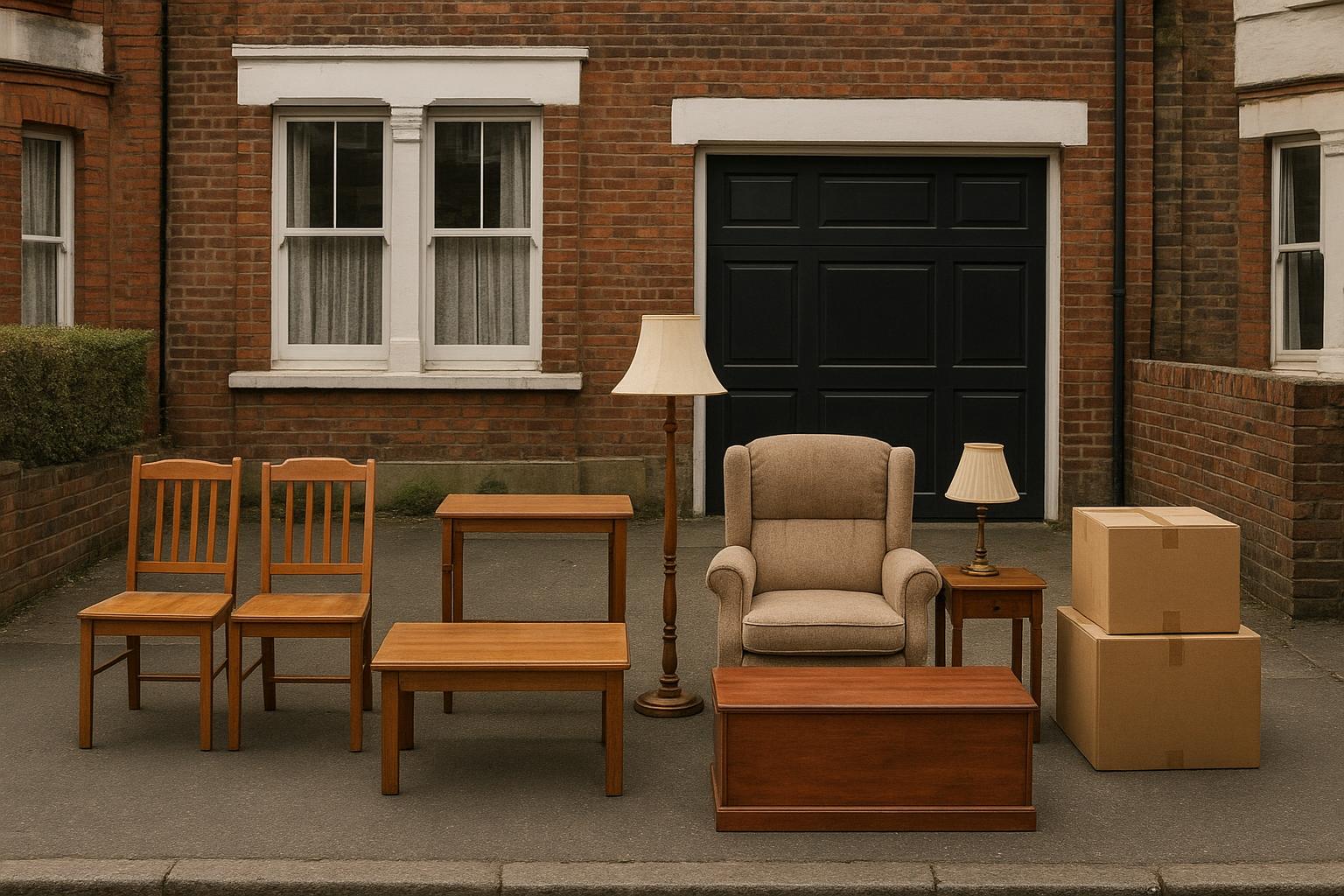
Large furniture is harder, because buyers need a vehicle and cannot easily take it home. Photographs on a noticeboard or a listing before the sale can help. Electronics and appliances can sell if they are tested and working, but buyers will want to see them work and should be told about faults.
Items that rarely sell include old textbooks, encyclopedias, odd crockery, damaged goods, soft furnishings in poor condition and anything with a strong smell. Our guide to donating old books and why charity shops refuse items may help you plan what to do with them.
Presenting items to sell
First impressions matter.
Clean items before you display them. A wiped table, a polished lamp and a washed set of glasses look much more appealing than dusty ones. Group similar items together, such as books in one place and tools in another, so that buyers can browse.
Use tables or crates at waist height so that people do not have to stoop. Put higher-priced items near the front and cheaper items nearby to tempt people. Hang clothes on a rail if you can, and fold other items neatly in boxes.
Keep a few bags handy for buyers, and a roll of newspaper to wrap fragile items. These small touches make the experience pleasant and encourage people to buy more.
Pricing simply
Make it easy to buy.
Price items clearly and keep prices low. Buyers at a sale expect bargains, and a haggle is part of the experience. Use sticky labels or a few price bands, such as small items at a pound or two and larger items at a fixed price.
Research a few items online if you think they may have value, particularly branded goods, vintage items and collectables. Our guide to discovering valuable antiques during a clearance explains how to check. Do not sell something valuable cheaply because you did not look.
Decide in advance how low you will go. Towards the end of the day, you may want to reduce prices or offer a bag of items for a set price, since anything unsold has to be cleared. Be flexible, but remember the aim is to leave with fewer items than you came with.
Haggling and negotiation
Part of the fun.
Most buyers at a sale expect to negotiate. Decide in advance how much room you have on each item and what your lowest price is. Be polite and relaxed, and do not take a low offer personally. A fair deal that clears the item is better than holding out for a high price and carrying it home.
Offer bundles, such as three books for a pound or a box of kitchenware for a set price. This is a good way to move many small items quickly. Towards the end of the day, be willing to accept offers you would have declined in the morning.
If a buyer asks for a discount on a valuable item, you can decline politely or suggest a small reduction. If you are unsure of the value, say that you will think about it and ask them to come back. Never pressure someone into a purchase.
Rules, pitch fees and permission
Check before you book.
For a car boot sale, check the organiser's rules. These typically cover opening times, pitch fees, the type of goods you can sell and any restrictions on food, animals or large items. Some sales require advance booking, while others allow drive-up pitches.
For a garage or yard sale at home, you generally do not need a permit if you stay on your own property, but check tenancy agreements, leasehold rules and any council or landlord restrictions. Keep noise and traffic to a reasonable level, and avoid blocking neighbours' driveways or access.
Never sell counterfeit goods, items covered by safety recalls or anything illegal. If you are selling electrical items, be honest about whether they have been tested. Trading Standards and GOV.UK provide guidance on what you can and cannot sell second-hand.
Weather and practical logistics
The details that decide the day.
Check the forecast a few days ahead. Rain makes a sale miserable and ruins cardboard and soft goods. If rain is likely, bring a gazebo or tarpaulins, or choose a different date. Bring tables, chairs, boxes, bags, tape, a marker, a notebook and a power bank for your phone.
Arrive early, because regular buyers come as soon as the gates open. Set up quickly and be ready to sell as people arrive. Eat and drink during the day and take breaks with a friend. A long day is tiring, especially if you are also dealing with emotions about the items you are selling.
Clear up carefully at the end. Take all your rubbish and unsold items with you, and leave the pitch clean. Many organisers ban people who leave rubbish behind.
Tax and trading basics
Usually not an issue for clear-outs.
Selling your own unwanted possessions for less than you paid is generally not treated as trading, and any profit is usually not taxable income, although capital gains rules may apply to high-value items. However, buying goods in order to resell them at a profit can be treated as trading, and there are allowances and rules that apply.
If you do this regularly or on a large scale, check the current HMRC guidance on the trading allowance and on selling online or at markets. If you are acting as an executor, the proceeds from selling estate items belong to the estate and should be recorded.
For most people clearing a home, the sale is a one-off, and keeping a simple record of what was sold and for how much is enough. If in doubt, take advice from an accountant or the HMRC helpline.
Selling safely
Money, strangers and stock.
Carry a small float of coins and notes and keep cash on you rather than in an open box. Use a bum bag or an apron with pockets. Be wary of anyone who offers a large note for a small purchase, or who asks to go into the house. Do not leave goods unattended, and keep valuable items out of sight.
If you hold a sale at home, keep the house locked and use a table at the edge of the driveway or garden. Do not let strangers use the toilet or wander through rooms. Have a friend or relative with you if possible.
Be careful with electric items. If a buyer wants to test something, bring an extension lead and keep the area dry. Do not claim that something is safe unless you know it is, and do not sell items with damaged cables or plugs.
Cash handling and scams
Keep it simple.
Accept cash for small sales, and be careful with notes. Check large notes against the light if you are unsure, and do not give change until you are satisfied. For larger items, be wary of cheques and unusual payment methods. Bank transfers and payment apps can be reversed or faked, so confirm that money has arrived before you hand over an item.
Never accept an overpayment with a request to send back the difference. This is a well-known scam. If a buyer asks you to hold an item and pay later, agree a short deadline and a deposit, or decline. Keep a record of who bought what, particularly for higher-value items.
What to do with unsold items
Plan before the day.
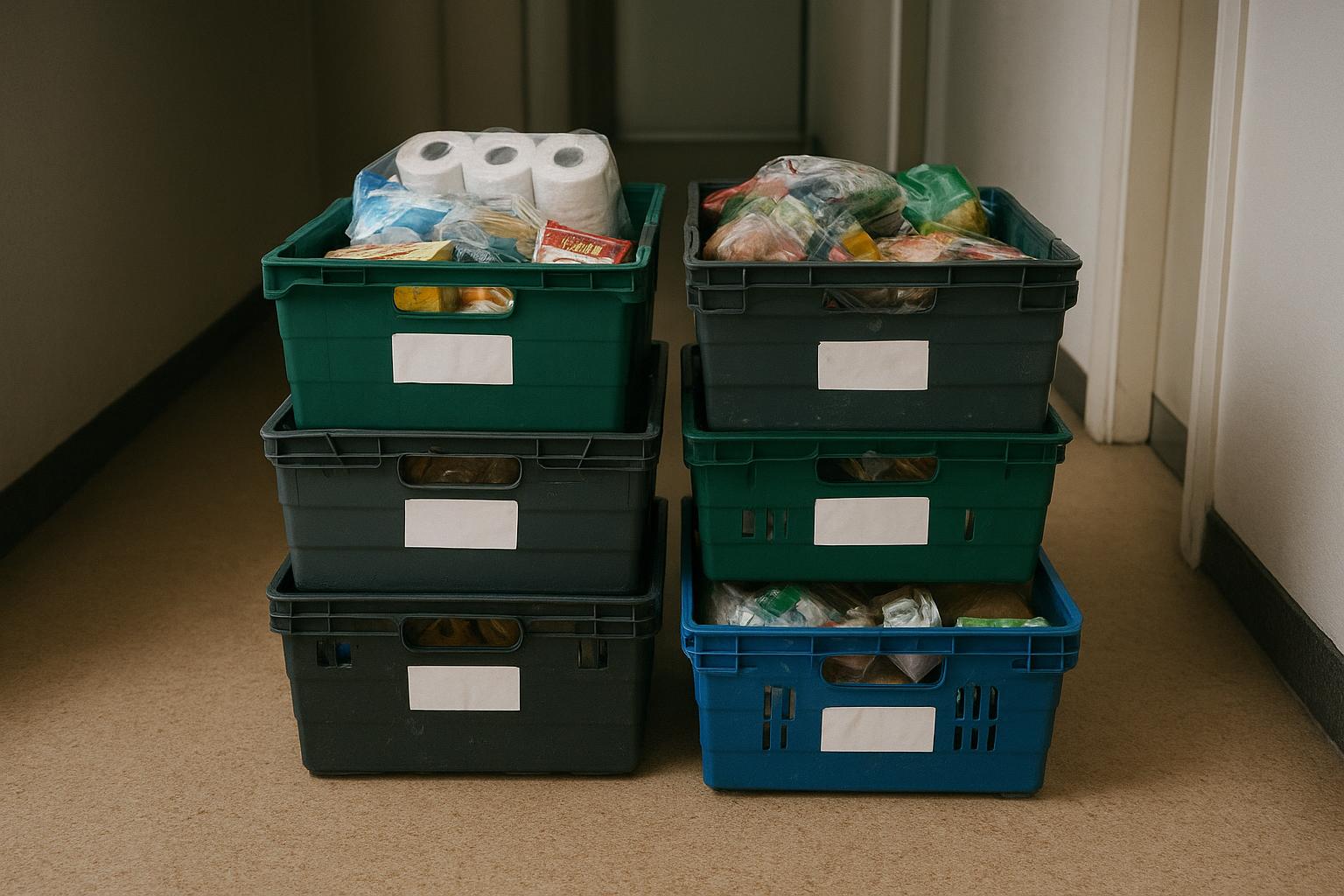
Unsold items are the biggest problem after a sale. Decide in advance what will happen to them, and arrange it for the same day or the next. Have boxes ready for charity donations, and arrange a charity pick-up or drop-off. Keep a separate pile of items for recycling and one for waste.
If you are using a clearance firm, tell them the date of the sale and ask them to schedule the clearance for the day after or a few days later. That way, anything unsold can be removed without a delay. Our guide to pricing by volume shows how reducing the amount to remove lowers the cost.
Do not leave unsold items outside the venue or on the pavement. That is fly-tipping. Our guide to fly-tipping penalties and liabilities explains the consequences.
Lining up donations for the day
Have the van booked.
Contact a charity or reuse project a couple of weeks before the sale and tell them the date. Ask whether they can collect unsold items on the afternoon of the sale or the day after. If they cannot, plan to drop items off yourself. Keep clean items in boxes, grouped by type, so that they are ready to hand over.
Having the donation booked also gives you a reason to price items lower at the end of the day. Anything that goes to a buyer is one less thing to carry. Our guides to charity furniture collections in London and furniture donation explain how this works.
Fitting a sale into a clearance timeline
A sample plan.
Three to four weeks before the clearance, sort items and decide which to sell. Two weeks before, book a pitch or choose a date, make a list, price items and advertise. The week before, gather boxes, tables and change, and confirm your clearance booking. On the day, set up early, sell, and pack the unsold items for donation or clearance.
Leave a day or two between the sale and the clearance for any final tasks. If the weather is bad, have a fallback plan such as holding the sale indoors or postponing it by a week. If the clearance date cannot move, decide whether the sale is worth the risk.
If you are clearing a deceased relative's home, consider whether a sale is appropriate. Some families prefer to donate everything quietly, and others find a sale a positive way to share belongings. Our guide to coping emotionally when clearing a parent's home offers advice.
Final checklist for sale day
Tick these off the evening before.
The night before, check this list.
- Tables, chairs, boxes and bags are packed and in the car or garage.
- Items are clean, priced and grouped.
- You have a float of coins and small notes, a marker and a notebook.
- The weather forecast is checked and a backup is ready.
- A charity pick-up or clearance is booked for the unsold items.
- A friend or relative is available to help, and your phone is charged.
Frequently asked questions
Common questions about garage sales and car boot sales before a house clearance.
Do I need a permit for a garage sale in London?
Usually not if you stay on your own property, but check your tenancy, lease and any council rules. Do not set up on the public pavement or road without permission.
What sells best at a car boot sale?
Small, useful items such as kitchenware, tools, toys, books, records and jewellery. Large furniture and old textbooks sell poorly.
Is it taxable to sell my old things?
Selling your own unwanted possessions is generally not trading, but buying goods to resell can be. Check the current HMRC guidance if you sell regularly or on a large scale.
How should I price items?
Keep prices low and simple, research anything that may be valuable and be ready to reduce prices towards the end of the day.
What do I do with items that do not sell?
Arrange a charity pick-up, recycling or a clearance before the sale, and do not leave them outside. Leaving items on the street is fly-tipping.
Can I sell electrical items?
Yes if they are safe and you are honest about their condition. Do not sell items with damaged cables or plugs, and do not claim they are tested if they are not.
Should I hold a sale if I am clearing a loved one's home?
It depends on the family. Some find it helpful, others prefer to donate. Take time to decide and agree it with relatives.