Direct answer
If you find something during a deceased estate clearance that might be a genuine antique or otherwise valuable item, stop and do nothing irreversible: don't sell it, give it away, clean it, repair it, or send it for clearance along with everything else. Photograph it, note where it was found, set it aside somewhere secure, and tell the executor so it can be added to the estate's record. The next step is a second opinion from someone qualified - typically a RICS-registered valuer, a recognised auction house, or a dealer accredited by a trade body such as BADA (The British Antique Dealers' Association) or LAPADA (The Association of Art & Antiques Dealers) - rather than guessing at value yourself or assuming a general online marketplace will find the right buyer. This guide walks through how to tell "probably worth checking" from "definitely valuable," which route actually suits which kind of item, what to do about insurance while it's being sorted out, and how this connects to the executor's wider legal duty and the estate's inheritance tax position - both covered in full in our executor legal responsibilities guide and our chattel valuation and probate clearance guide.
Contents
- The first ten minutes: what to do the moment you suspect something is valuable
- Signs something might genuinely be a valuable antique
- "Probably valuable" vs actually valuable - why the gap matters
- What not to do with a suspected valuable item
- When - and why - to call an independent, accredited valuer
- Auction house, antiques dealer, or online marketplace: which route fits which item
- Insurance while the item is being identified, valued or stored
- How this connects to the executor's legal duty
- Inheritance tax and reporting a previously unaccounted-for valuable
- What's safe to deal with immediately vs what should wait
- Related guides on this site
- Frequently asked questions
The first ten minutes: what to do the moment you suspect something is valuable
Nothing about this needs to happen quickly - the clearance can wait a few days.
Finding something unexpected during a house clearance - a painting behind a wardrobe, a canteen of silver cutlery in the back of a sideboard, a small collection of watches in a drawer - tends to trigger one of two reactions: excitement, or the urge to just get on with the clearance and deal with it later. Both reactions can cause problems. The safer habit, before anything else happens, is a short, deliberate pause:
- Stop handling the item more than necessary. Don't attempt to clean it, test how it works, or see if a mechanism still functions.
- Photograph it from several angles, including any maker's marks, labels, signatures or hallmarks you can see without disassembling anything.
- Note where exactly it was found - which room, which piece of furniture, whether it was wrapped, boxed, or displayed - since this context sometimes matters to a valuer.
- Move it somewhere secure and dry, away from the main flow of the clearance, so it can't accidentally end up in a van load or a charity donation bag.
- Tell the executor straight away if that isn't you, so it can be added to the estate's written record before any decision is made about it.
None of this requires any expertise - it's simply about buying time and preserving options. A genuinely valuable item that's handled carelessly in the first hour can lose value through damage, and an item that's disposed of before anyone has looked at it properly can't be un-sold. Pausing costs nothing; acting too fast can cost the estate real money either way.
Signs something might genuinely be a valuable antique
You don't need expert knowledge to spot the signs worth a second look - you just need to know what to look for.
Nobody expects a family member clearing a relative's home to be able to authenticate an antique on sight. What's realistic, and genuinely useful, is learning to spot the handful of signs that mean "this is worth a professional's time," without trying to guess the actual value yourself. Common signs include:
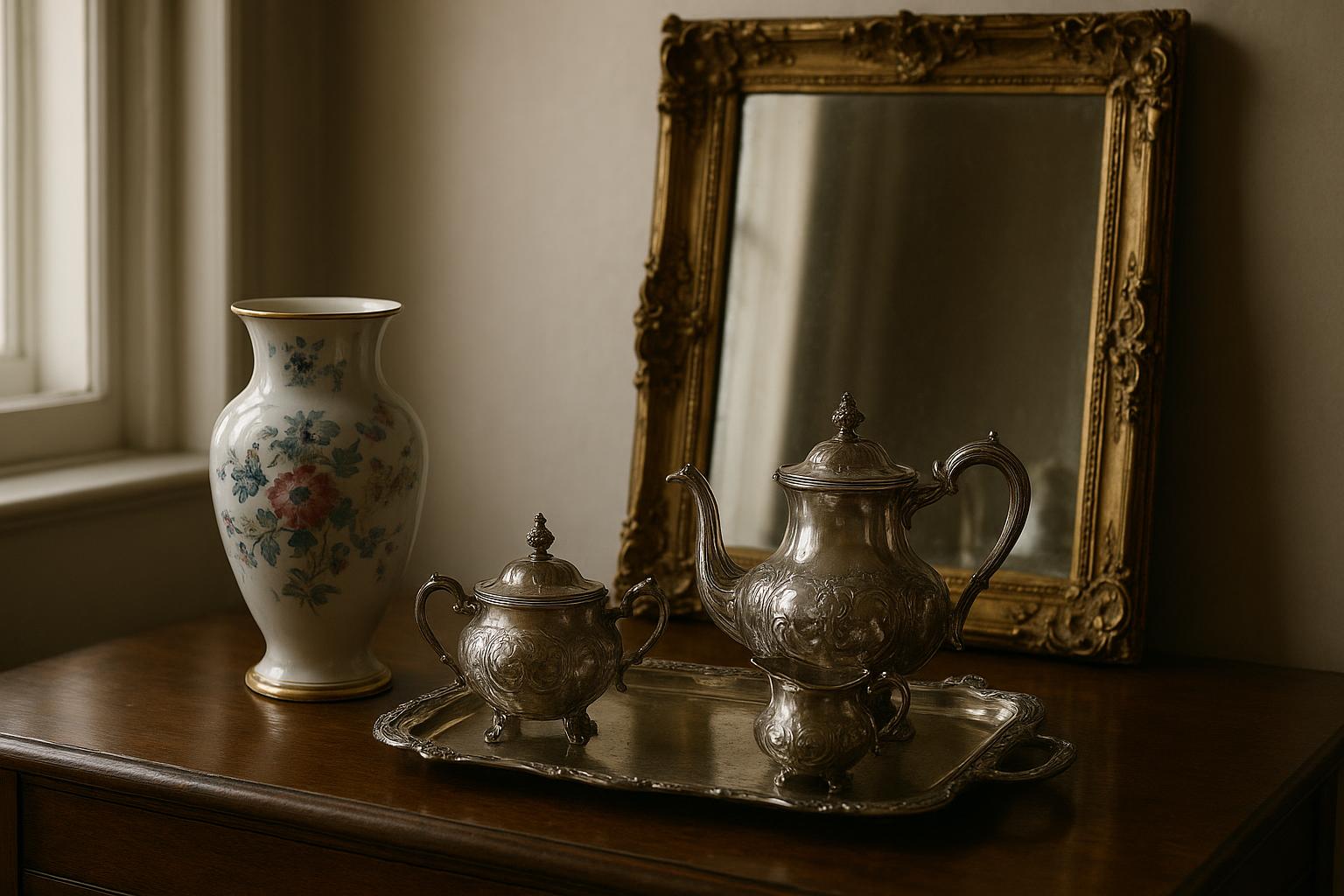
- Maker's marks, hallmarks or signatures. Silverware, porcelain, furniture and clocks are often marked underneath, on the base, or on the reverse - a maker's name, a hallmark set of symbols, or a signature can turn an "ordinary-looking" piece into something with real, checkable provenance.
- Unusual materials or weight. Solid silver feels and weighs differently from silver-plate; bronze feels different from spelter or painted resin; certain hardwoods and inlays are distinctive once you know to check for them. If something feels "too heavy" or "too solid" for what it looks like, that's worth noting.
- Hand-finished irregularity rather than machine uniformity. Hand-cut joinery, slightly uneven glazing on ceramics, and hand-painted rather than printed decoration are often signs of an older or more individually made piece, in contrast to the perfect regularity of mass production.
- Accompanying paperwork. Receipts, insurance valuations, auction catalogue entries, certificates of authenticity, or even old letters referencing a purchase can matter enormously to a valuer, so anything found with an item should be kept together with it, not filed away separately.
- Known categories that regularly hold value. Antique clocks and watches, silver and silver-plate (which look similar but are very different in value), fine art and prints, jewellery, militaria, coins and stamps, certain furniture periods (Georgian, Victorian, Arts and Crafts, mid-century), and Asian art and ceramics are categories where genuinely valuable pieces turn up in ordinary family homes more often than people expect.
- Family stories about an item's origin. A piece that's "always been in the family," came from a relative who travelled or collected, or has a story attached to how it was acquired is worth mentioning to a valuer even if the story can't be verified - provenance, even partial, can affect both authenticity assessment and value.
None of these signs are proof of value on their own, and the absence of any of them doesn't mean something is worthless either. What they're useful for is deciding which items justify the time and, in some cases, small cost of a professional opinion, rather than treating every single item in a property as equally uncertain.
"Probably valuable" vs actually valuable - why the gap matters
Confident guesses in both directions cause the most expensive mistakes.
One of the most consistent patterns in house clearances involving older family homes is a mismatch between what people assume is valuable and what actually is. An ornate-looking piece of reproduction furniture, a "silver-coloured" tea set that turns out to be plate rather than solid silver, or a painting that looks old but is a later print or copy can generate real excitement and real disappointment when a professional eventually looks at it. The opposite happens just as often: a plain, unremarkable-looking item - a small drawing, an unassuming piece of furniture, a modest-looking watch - turns out to have genuine value that nobody in the family suspected, precisely because visual impressiveness and market value aren't the same thing.
This gap is exactly why guessing in either direction is risky. Assuming something is valuable and holding up the whole clearance for weeks waiting on a valuation, when a two-minute professional look would have confirmed it's a modern reproduction, wastes time and can strain family patience unnecessarily. Assuming something is "just old junk" and sending it to a general clearance load, without anyone qualified having glanced at it, is how families occasionally find out - sometimes years later, sometimes never - that something genuinely valuable left the property for nothing. The practical answer to both problems is the same: get a quick, low-cost professional opinion on anything that shows the signs covered above, rather than relying on how confident anyone in the family feels about it either way.
What not to do with a suspected valuable item
A short list of common, well-intentioned mistakes that reduce value or create legal risk.
- Don't clean, polish or attempt to repair it. Cleaning products, polish, and amateur repairs can strip original finish, patina or surface detail that specialists rely on to judge age and authenticity - and in many categories of antique, this measurably reduces value rather than improving appearance. Leave this entirely to a conservator working to a valuer's instructions, if it's needed at all.
- Don't sell it quickly to the first interested buyer. A family friend, a neighbour, or a quick cash offer from someone who "knows a bit about antiques" is rarely the way to realise a fair price, and once sold, a mistaken valuation can't usually be corrected.
- Don't list it on a general online marketplace before getting an opinion. Platforms aimed at a broad general audience rarely reach the specialist collectors who pay the real price for a genuine antique, and a listing written without expert knowledge of the piece routinely undersells it.
- Don't assume a single opinion is final, especially for anything unusual or high-value. A second opinion costs little relative to the value at stake for anything that looks genuinely significant, and valuers can and do disagree, particularly on attribution and authenticity.
- Don't let it go into a general house clearance load "to deal with later." Once bulky clearance work is underway, a small valuable item is easy to lose track of among boxes, bags and furniture being moved out - deal with it separately from day one.
- Don't make a unilateral decision if you're not the executor. Even with the best intentions, only the executor has the legal authority to decide what happens to an estate's contents - see the executor's duty section below.
When - and why - to call an independent, accredited valuer
Independence matters as much as expertise - you want an opinion with nothing to gain from the answer.
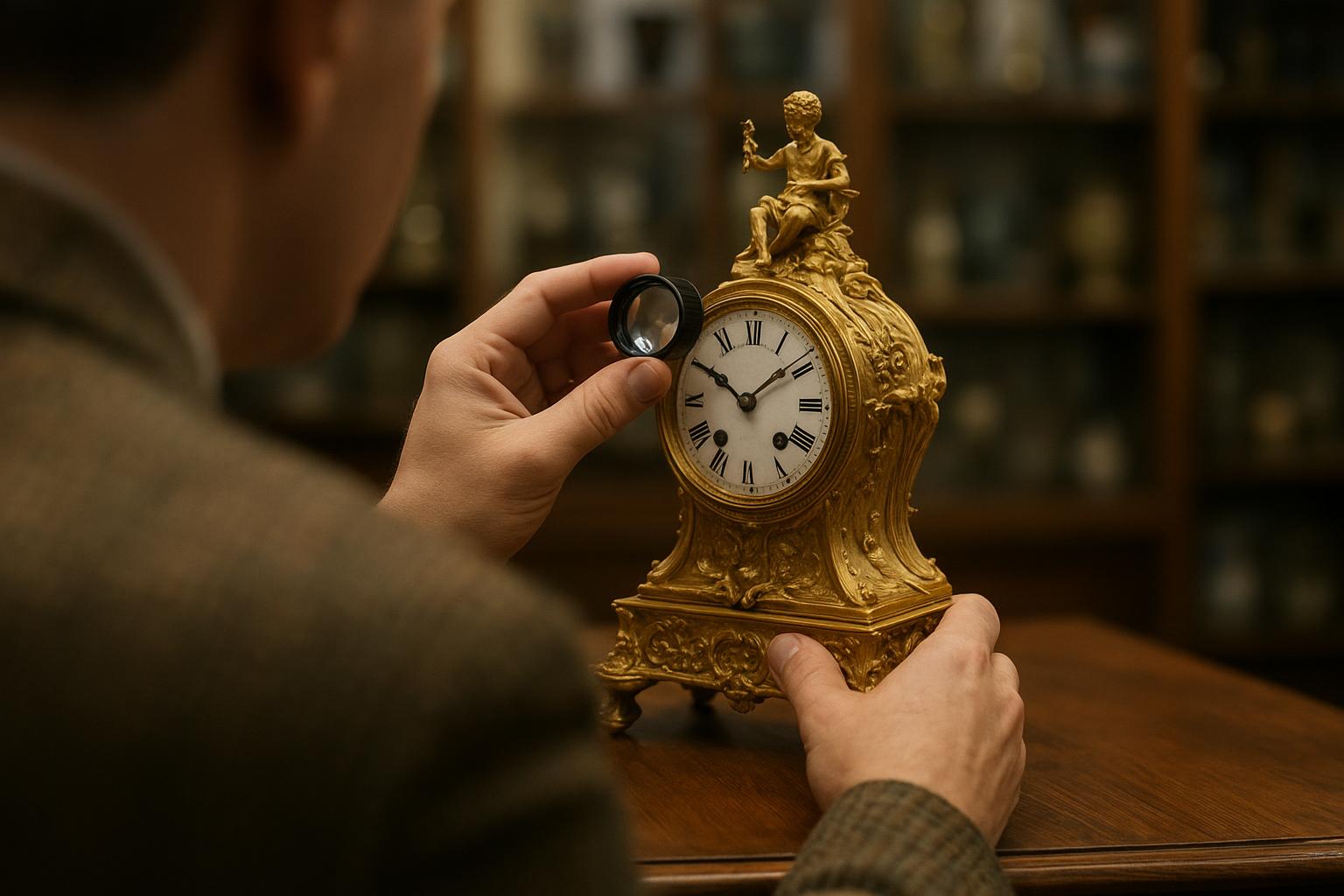
Once something has shown one or more of the signs covered earlier, the next step is a professional opinion from someone with relevant, independent expertise - not a general second-hand dealer, not a clearance company, and ideally not a buyer who would personally profit from telling you an item is worth less than it is. In practice, this usually means one of the following:
- A RICS-registered valuer or surveyor with relevant specialist experience, particularly where a formal valuation is needed for probate or HMRC's inheritance tax account. RICS (the Royal Institution of Chartered Surveyors) sets professional standards for its members, and a formal valuation from a RICS-registered valuer carries weight that an informal opinion doesn't.
- A recognised auction house with a specialist department in the relevant category. Most major UK auction houses, and many regional ones, offer free or low-cost valuation days or by-appointment assessments, and their specialists see enough material in a given category to recognise genuine value quickly.
- A dealer accredited by a recognised trade body, such as BADA (The British Antique Dealers' Association) or LAPADA (The Association of Art & Antiques Dealers). Both organisations vet their members for expertise and professional conduct, which is a reasonable way to find a specialist dealer rather than a general buyer, though membership isn't the only mark of a reputable specialist - a strong track record in the specific category matters too.
For anything that might need to stand up to scrutiny later - particularly a formal valuation for probate or inheritance tax purposes - it's worth getting the valuation in writing, with the valuer's name, qualifications and the date, rather than relying on a verbal opinion given on the day. Our chattel valuation and probate clearance guide covers how this fits into the wider probate process, including who typically instructs the valuer and what HMRC expects to see.
A genuinely independent valuer has no financial interest in telling you an item is worth more or less than it is - which is exactly why it's worth being cautious about accepting a valuation from someone who is also offering to buy the item from you at that same valuation. That doesn't necessarily mean the figure is wrong, but a second, independent opinion is a reasonable and inexpensive check before accepting an offer of that kind.
Auction house, antiques dealer, or online marketplace: which route fits which item
There's no single best option - the right route depends on the item and what the family wants.
| Route | Best suited to | Trade-offs to weigh up |
|---|---|---|
| Specialist auction house | Genuinely good pieces in a well-defined category (clocks, silver, Asian art, fine art, jewellery) where a dedicated sale reaches motivated collector buyers. | Commission (often paid by the seller, sometimes shared with the buyer), a realistic chance an item doesn't reach its reserve and goes unsold, and a timeline measured in weeks or months rather than days. |
| Accredited antiques dealer (BADA/LAPADA or similarly vetted) | Families who want a quicker, more certain sale and are comfortable accepting a dealer's margin in exchange for speed and certainty. | Usually a lower net figure than a successful auction result, since the dealer needs to resell at a profit - but no risk of an item failing to sell, and payment is typically immediate. |
| Specialist online auction platforms aimed at collectors | Items in categories with an active, identifiable online collector community (certain coins, stamps, militaria, watches) where sellers understand how to present and describe the piece correctly. | Still requires accurate, well-informed listing and photography to reach the right buyers - not a shortcut around getting a professional opinion first. |
| General online marketplace (eBay, Facebook Marketplace, and similar) | Items confirmed, after a professional look, to have modest or no specialist value - not a safe first route for anything that might be genuinely valuable. | Reaches a broad general audience rather than specialist collector buyers, and a listing written without expert knowledge of the item routinely undersells genuine antiques. |
Whichever route a family chooses, the decision should come after a professional opinion has confirmed roughly what's involved - not before. An auction house or dealer can also usually advise on which route suits a particular item best as part of the valuation conversation, since they see this decision made every week and have no reason to push every item towards the same outcome.
Insurance while the item is being identified, valued or stored
Standard household policies often cap single-item cover far below what an antique might be worth.
A valuable item that's been identified and set aside still needs to be protected while the family works through valuation and sale decisions, and this is an area where standard household insurance can quietly fall short. Most ordinary contents policies cap the amount payable for any single item - sometimes a few hundred pounds - regardless of the total contents cover on the policy, which means a piece that might genuinely be worth several thousand pounds could be significantly underinsured without anyone realising until it's too late.
It's worth checking the existing policy's single-item limit as soon as a potentially valuable item is identified, and asking the insurer or broker about specified-item or antiques cover for that piece specifically if the limit looks too low. This matters doubly where the property itself is sitting empty during the clearance process, since many standard policies also restrict or withdraw cover once a property has been unoccupied beyond a set period - a point covered in more detail in our executor legal responsibilities guide. In practice, moving a genuinely valuable item to a secure location - with a family member, in a bank safe deposit facility, or with the valuer or auction house handling it - combined with confirming it's adequately covered while there, is a sensible precaution once an item's potential value has been flagged.
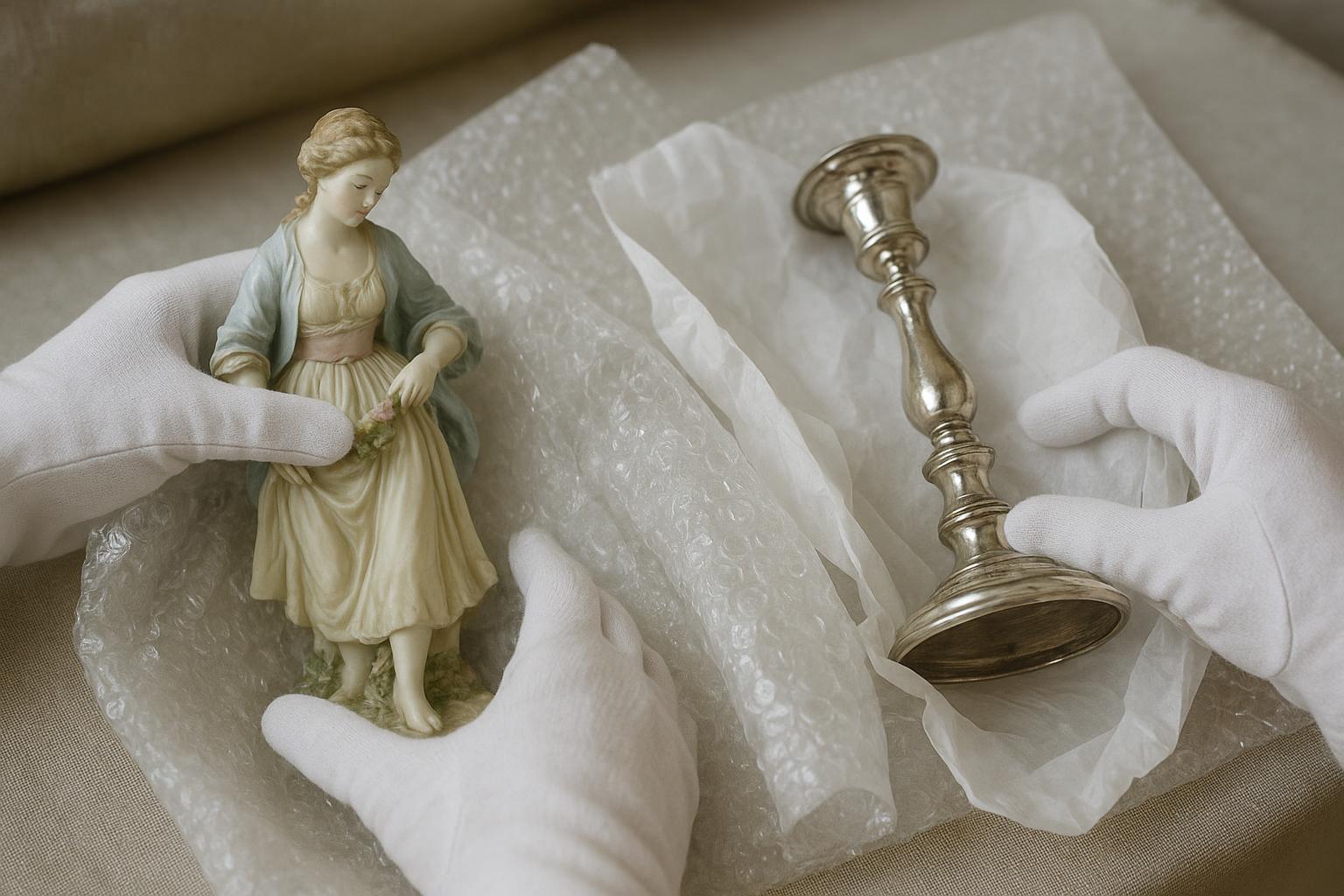
If an item is being transported to a valuer or auction house, it's also worth asking in advance how it will be packed and whether the transport itself is insured, particularly for anything fragile like ceramics, glass or framed artwork - most reputable auction houses and specialist couriers handle this routinely, but it's a reasonable question to ask rather than assume.
How this connects to the executor's legal duty
Finding a valuable item doesn't change who has the authority to decide what happens to it.
Only the executor named in the will - or the administrator appointed where there isn't a will - has the legal authority to decide what happens to an estate's contents, including instructing a valuer, accepting an offer, or agreeing to a sale. This matters in practice because it's often not the executor who's physically doing the clearance work and finds the item in question - it might be a sibling, an adult child, or a friend helping out on the day. Whoever finds something that might be valuable should flag it to the executor immediately, rather than making a decision about it on the spot, however sensible that decision might seem at the time.
This sits squarely within the executor's wider duty of care towards the estate's property and chattels: to act as a reasonably prudent person would with their own belongings, to keep a clear written record of what happened to everything, and to avoid disposing of anything that might be needed to settle the estate's debts before beneficiaries' interests are considered. A valuable antique discovered mid-clearance is exactly the kind of item this duty is designed to protect - selling it too quickly, underselling it through the wrong channel, or disposing of it without proper records can all, in principle, be treated as a failure of that duty if a beneficiary later raises a concern. Our guide to the legal responsibilities of an executor covers this duty of care in full, including what counts as an adequate written record and what happens if executors disagree about how to handle a specific item.
Inheritance tax and reporting a previously unaccounted-for valuable
A genuine find can affect the estate's tax position - this is where a solicitor or accountant takes over.
Antiques, art, jewellery and other valuable chattels form part of the deceased's estate for inheritance tax purposes in the same way as money in a bank account or the property itself. If a professional valuation confirms that an item found during the clearance has genuine, previously unaccounted-for value, it may need to be reported as part of HMRC's IHT400 inheritance tax account, generally using the supplementary IHT407 form that covers household and personal goods, with the valuer's assessment as supporting evidence.
Exactly how this affects a specific estate - whether it changes the amount of inheritance tax due, whether it needs reporting at all given the estate's overall value, and how to handle it if probate has already been granted before the item was found - is a question for the executor's solicitor or accountant, not something to work out independently. houseclearance.co and its carrier network don't advise on tax matters or provide valuations; our chattel valuation and probate clearance guide covers the valuation and reporting process in more detail, including who typically instructs the valuer and when a formal valuation is needed in the first place.
What's safe to deal with immediately vs what should wait
Most of a typical house clearance isn't affected by this at all - it's a small, specific category that needs care.
It's worth being clear that the vast majority of items in a typical house clearance - everyday furniture, kitchenware, worn soft furnishings, clothing, and general household contents with no maker's marks or unusual materials - don't need this level of caution and can proceed through the normal clearance process without holding anything up. The guidance in this guide applies to a specific, usually small, category of items:
- Safe to clear immediately: mass-produced furniture with no unusual marks or materials, everyday kitchenware and appliances, worn textiles and soft furnishings, and anything the family can confidently identify as ordinary, replaceable household contents.
- Should wait for a professional opinion: anything showing the signs covered earlier in this guide (maker's marks, unusual weight or materials, hand-finished detail, accompanying paperwork), anything from a category known for holding value (silver, clocks and watches, fine art, jewellery, militaria, coins, stamps, certain furniture periods, Asian art), and anything the family genuinely isn't sure about.
- When in doubt, hold it back. The cost of unnecessarily delaying a handful of items while they're checked is small and easily recovered; the cost of a genuinely valuable item going into a general clearance load by mistake usually isn't.
Once anything in the second category has been identified, valued, and either sold, kept, or formally confirmed as not needing further action, the remaining general clearance can proceed in the usual way - see our probate house clearance cost guide for how pricing typically works once you're at that stage.
Ready to see your price?
Once anything potentially valuable has been identified, valued and accounted for, describe the remaining clearance and we'll match it with a vetted, licensed carrier covering your part of London.
Frequently asked questions
The questions that come up most often about finding valuable antiques during an estate clearance.
I've found something in a deceased relative's house that might be valuable - what's the very first thing I should do?
Stop, and don't do anything irreversible. Don't sell it, give it away, throw it out, or even clean or repair it. Photograph it from several angles, note where in the property it was found, and set it aside somewhere secure. Tell the executor (if that's not you) so the item can be added to the estate's record before anything else happens to it. Getting a second opinion from a professional valuer comes next - acting on your own guess about value, good or bad, is the main way families lose money at this stage.
How can I tell if something is actually a valuable antique or just old?
Age alone doesn't make something valuable - condition, maker, rarity, materials and current collector demand matter far more than how old a piece looks. Basic signs worth noting include maker's marks, hallmarks, signatures, labels or stamps on the underside or reverse of an item, unusual weight or materials (solid silver, bronze, ivory, certain hardwoods), fine hand-finished detail rather than mass-produced regularity, and any paperwork that came with the piece. None of these checks tell you the actual value - they just tell you whether it's worth getting a professional opinion rather than assuming either way.
Do I need a RICS valuer, or can any antiques dealer tell me what something is worth?
It depends what the valuation is for. If the estate needs a formal valuation for probate or HMRC's inheritance tax account, that generally needs to come from a professional valuer with relevant expertise - often someone RICS-registered or a recognised auction house specialist - because HMRC can query a valuation that doesn't stand up to scrutiny. If you just want an informal opinion on whether something is worth pursuing further, a reputable antiques dealer or a free auction house valuation day can be a reasonable first step, but get that view in writing and treat it as a starting point, not a final figure, especially for anything that looks genuinely unusual or high-value.
What's the difference between BADA and LAPADA, and does it matter which one a dealer belongs to?
BADA (The British Antique Dealers' Association) and LAPADA (The Association of Art & Antiques Dealers) are the two main UK trade bodies for vetted antiques and fine art dealers. Both require members to meet standards of expertise and conduct, and both are a reasonable way to find a dealer with genuine specialist knowledge rather than a general second-hand buyer. Membership of either is a useful credential to check for, but it isn't the only mark of a reputable specialist - a dealer or auction house with a strong track record in the specific category you're dealing with (clocks, silver, Asian art, and so on) matters more than which single body they belong to.
Should I get an item cleaned or restored before having it valued?
No - leave it exactly as it is until a professional has seen it. Cleaning, polishing or attempting a repair on an antique can strip original finish, patina or surface detail that specialists use to judge age and authenticity, and in many categories this measurably reduces value rather than improving it. Even well-intentioned household cleaning products can cause damage that can't be undone. If an item needs conservation, that's a job for a specialist conservator working to the valuer or auction house's instructions, not a general cleaning product from under the sink.
Is it safe to sell something myself on eBay or Facebook Marketplace if I think it might be valuable?
Not before it's been looked at by someone qualified. Online marketplaces reach a broad general audience but rarely reach the specialist collectors who pay the real price for genuine antiques, and a listing written without expert knowledge of the item routinely undersells it - sometimes dramatically. There's also an executor's duty consideration: disposing of an estate asset for less than it's reasonably worth, without first getting it properly assessed, can be treated as a failure of the executor's duty of care to the estate's beneficiaries, not just a missed opportunity.
What should I do about insurance while a valuable item is still in the property or being stored?
Check the existing household insurance policy's single-item and total-contents limits as soon as you suspect something of real value is involved, since standard policies often cap the amount payable for any one item far below what an antique might actually be worth, and cover can also be affected once a property is unoccupied. If a formal valuation confirms significant value, it's worth asking the insurer or broker about specified-item or antiques cover for that piece specifically, ideally before it's moved, stored elsewhere, or left in a property that's sitting empty.
Does finding a valuable antique affect the estate's inheritance tax position?
It can. Antiques, art and other valuable chattels form part of the deceased's estate for inheritance tax purposes, and a genuinely valuable find that wasn't previously accounted for may need to be added to HMRC's IHT400 account (using the supplementary IHT407 form for household and personal goods) with supporting evidence of its value. This is a question for the executor's solicitor or accountant once a professional valuation is in hand - our guide to chattel valuation for inheritance tax purposes covers the valuation and reporting side of this in more detail.
What's safe to sell or dispose of straight away during a clearance, versus what should wait?
Ordinary, unremarkable household contents - mass-produced furniture, everyday kitchenware, worn soft furnishings, items with no maker's marks or unusual materials - can generally go through the normal clearance process without a second look. Anything that shows signs worth checking (see the signs covered in this guide), anything from a category known for holding value (silver, clocks, fine art, jewellery, militaria, certain furniture periods, coins and stamps), and anything the family simply isn't sure about should be set aside and held back from clearance until it's been assessed. When in doubt, the safer and cheaper mistake is holding something back unnecessarily, not sending something valuable to a general clearance load by accident.
Who has the authority to decide what happens to a valuable item found during the clearance?
The executor named in the will (or the administrator, where there isn't a will) is the person with legal authority to decide what happens to an estate's contents, including instructing a valuer or agreeing a sale. Family members helping with the physical clearance - even close relatives - don't have that authority on their own, which is exactly why anything that might be valuable should be flagged to the executor immediately rather than dealt with on the spot. Our guide to an executor's legal responsibilities for property and chattels covers this duty in full.
Auction house, antiques dealer, or online marketplace - which route actually gets the best price?
It depends on the item. A specialist auction house with a dedicated sale in the right category (silver, clocks, Asian art, and so on) often reaches the most motivated collector buyers and can achieve strong prices for genuinely good pieces, though commission and the chance of an item not reaching its reserve are real factors. A reputable dealer can offer a quicker, more certain cash sale, usually at a lower net figure than a successful auction result, which suits families who want certainty over maximum return. General online marketplaces are rarely the right first route for anything that might be a genuine antique, precisely because they reach buyers who aren't specialists and won't recognise - or pay for - what makes a piece valuable.
Does houseclearance.co value or buy antiques found during a clearance?
No. houseclearance.co is a quote-matching platform that connects customers with independent, licensed waste-carrier businesses for the clearance itself - it does not provide valuations, does not buy items, and carriers found through the platform are not antiques specialists. Where this helps in practice is at the clearance end: once a professional valuer, dealer or auction house has assessed and removed anything of note, the remaining ordinary household contents can be described in a job post for licensed carriers to quote on.