
Direct answer
Most good-condition books can be donated in Greater London to charity shops, community libraries, schools, hospitals, prisons education projects and book charities, but each takes different types and quantities. Modern paperbacks, children's books and popular fiction are widely accepted. Old textbooks, encyclopedia sets, damaged books and large quantities are often refused. Sort books into keep, sell, donate and recycle piles, check for first editions or signed copies before donating, call ahead for large collections, and recycle unusable books as paper where your council allows. Never leave boxes outside a closed shop or bin.
Contents
- Start by sorting the books
- A practical method for large collections
- Check for valuable books first
- Selling books that have value
- Charity shops and second-hand shops
- What to ask when you call
- Libraries, schools and community projects
- Prisons, hospitals and care homes
- Book sales, fairs and swaps
- Old textbooks and educational books
- Textbooks that still have a market
- Encyclopedias and reference sets
- Creative uses for old reference books
- Condition and what not to donate
- Storing books while you decide
- Recycling books properly
- Books with personal information
- Books in a house clearance
- What it costs to move books
- Frequently asked questions
Start by sorting the books
Four piles save time.
A large collection of books is easier to handle if you sort before you phone anyone. Use four piles: keep, sell, donate and recycle. Work shelf by shelf, and put sentimental or personal books straight into the keep pile.
In the sell pile, put anything that may have value, such as first editions, signed copies, illustrated books, antiquarian volumes, maps and unusual or specialist titles. In the donate pile, put clean, modern, readable books in good condition. In the recycle pile, put books that are damp, mouldy, badly torn or have missing pages.
If you are clearing the home of someone who has died, open books before you move them. Letters, photographs, bank notes and documents are often tucked inside. Our guide to hidden family valuables and documents explains what to look for.
A practical method for large collections
Shelf by shelf, box by box.
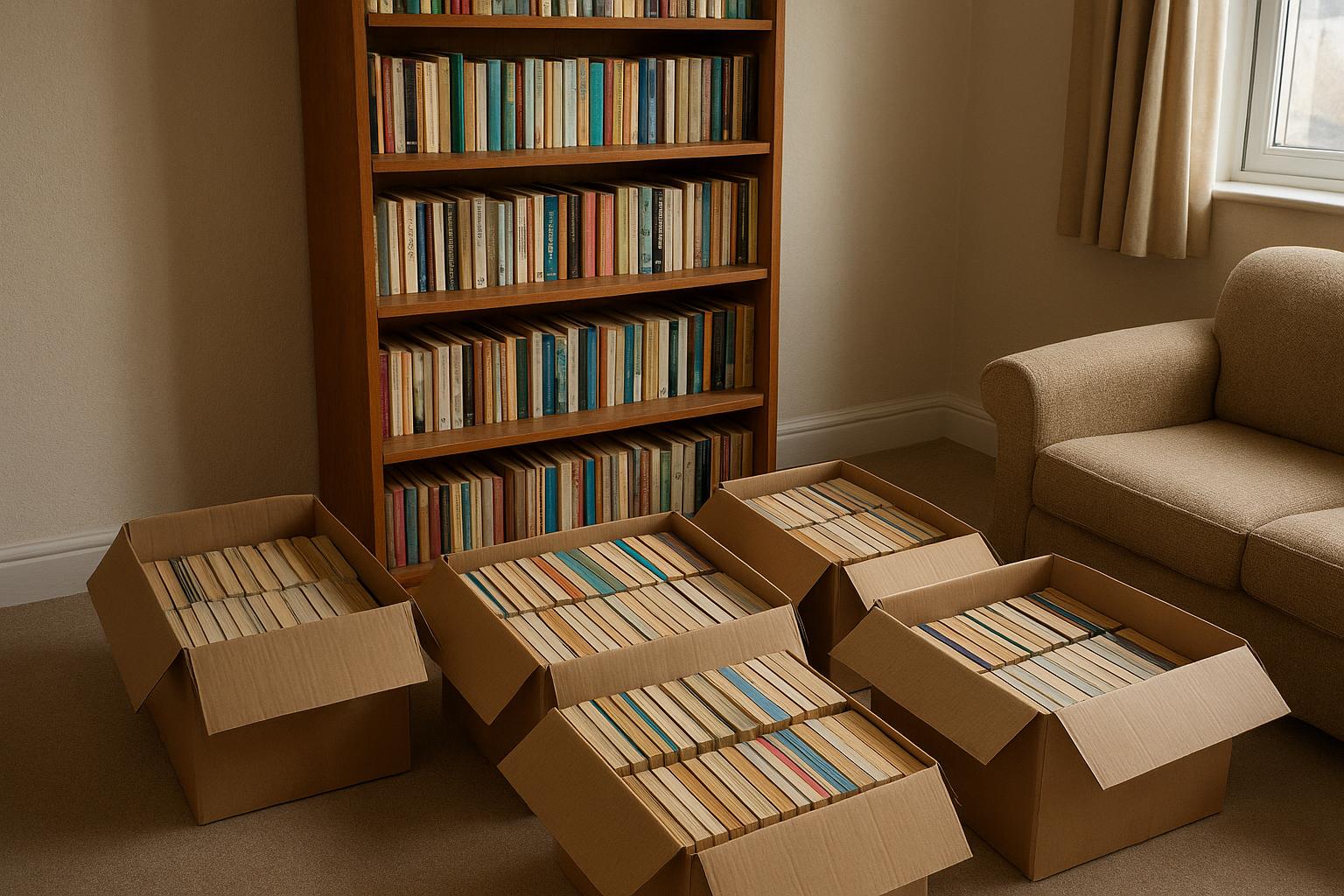
If you have a whole library to deal with, start with the easiest decisions. Remove any books that are clearly damaged or damp, because they only slow you down. Next, take out sets that should stay together, such as multi-volume works and series. Then go through the rest by subject.
Use small boxes, since large ones become too heavy. Fill a box about two-thirds full and tape it. Write the category and a number on the side. A simple list with the box number and a short description helps you to answer questions from a charity or buyer without opening everything again.
Work in short sessions. Sorting thousands of books is tiring, and decisions become poor when you are tired. Take breaks, and set a deadline for each room. If the project is part of a larger clearance, schedule the books early, because they are heavy and take time to move.
Check for valuable books first
A quick look can save a mistake.
Most books are worth little, but some are worth a lot. First editions of well-known authors, signed copies, early printings, leather-bound sets, antiquarian books, maps, atlases and rare children's titles can be valuable. Condition, completeness and the presence of the dust jacket affect the price a great deal.
To check, look at the title page and the back of it for the edition and date, look for signatures or inscriptions and search for similar copies on specialist book sites. If you think you have something unusual, ask a local antiquarian bookseller or an auction house for an opinion before donating.
Our guide to discovering valuable antiques during a clearance gives general advice on valuation, and the same principles apply to books. Never discard a book with an inscription from someone famous or a family history without checking.
Selling books that have value
Options for sellers.
If you find books that may have value, there are several ways to sell them. Specialist dealers buy rare and collectable books, auction houses take higher-value lots and online marketplaces let you list individual titles. Each route has fees and takes time, so choose according to the likely value.
Photograph the cover, spine, title page and any marks. Describe the condition honestly, including foxing, tears, loose pages or missing jackets. Mention any inscriptions, since signed copies can be worth far more than clean ones.
For a mixed collection of ordinary books, selling individually is rarely worth the effort. A local dealer may offer a flat price for the lot, or you can donate the books and claim Gift Aid if you are eligible, which we cover in a later guide in this series.
Charity shops and second-hand shops
The easiest option for popular titles.
Charity shops are the most common outlet for good-condition paperbacks and hardbacks. They prefer modern fiction, popular non-fiction, cookery, children's books and recent best-sellers. Many limit the number of books per visit or per day, and some stop taking books when their shelves are full.
Call ahead if you have more than one or two boxes. Ask whether the shop can arrange a collection or a convenient time. Some larger shops have a dedicated book room and take bigger donations.
Independent second-hand bookshops may buy good books rather than accept donations, particularly for specialist subjects. Offer a short list or send photographs before you carry boxes, and accept that they will probably take only a few.
What to ask when you call
A short script.
When you phone a shop, say how many books you have, roughly what types they are and whether any are hardbacks. Ask whether they accept books at the moment, whether there is a limit per visit and whether they can collect. Ask if they prefer boxes or bags and whether there is a good time to bring them.
If the shop says it has no space, ask when to try again, and ask whether they know of another outlet nearby. Staff often know which charities and community groups are short of books, and a friendly question can lead to a better home for your collection.
Keep a note of the name of the person you spoke to and the date. If you are bringing a large donation, confirm the day before.
Libraries, schools and community projects
Where donated books often do the most good.
Libraries have strict collection policies and rarely take general donations, but community libraries, friends of libraries groups and local book swaps may. School libraries, nurseries, children's centres and hospital play departments often welcome children's books in good condition, but check what the school needs.
Some book charities send books to schools, hospitals and prison education programmes in the UK and overseas, and they often have clear lists of what they want and what they cannot accept. Look for organisations that publish a policy and a point of contact.
Little free libraries and book swap boxes on the street are also popular. They can take a few books at a time, but do not leave boxes of unwanted books there. Overfilled boxes can become litter, and the volunteers who look after them often have to clear the surplus.
Prisons, hospitals and care homes
Specific needs.
Some organisations supply books to prison libraries, hospital wards and care homes. They usually have clear lists of what they can take, such as large-print books, popular fiction, puzzle books and easy-read titles, and they often cannot take items with violent or explicit content or those with writing in them.
Care homes and hospices may welcome large-print books, books about local history and picture books that prompt memories. Always contact the organisation first and follow their guidance on quantity and subjects. They have limited shelf space and a duty to keep their libraries suitable for their users.
Book sales, fairs and swaps
Other ways to find a home for books.
Many communities hold book sales, school fairs, church fetes and swap events where donated books are sold to raise money. Local Facebook groups, noticeboards and community centres often announce them. These events can take larger quantities than a single shop and have the advantage of putting your books in front of people who enjoy browsing.
Contact the organiser well ahead, because many events collect books weeks before the date and have limited storage. Ask what they want and what they cannot take. Be ready to help by sorting boxes and carrying them to the venue.
Old textbooks and educational books
Often out of date.
School and university textbooks are frequently refused by charity shops because the content goes out of date quickly and demand is low. Revision guides, exam papers and workbooks that have been written in are rarely accepted. Books on law, medicine, computing and science date particularly fast.
That does not mean they are all worthless. Some subjects, such as history, classic literature, art, languages and maths at lower levels, hold their value better. Language dictionaries and grammar books are often useful. Some schools, community education groups and language learners will take them if they match the curriculum.
If textbooks are out of date, recycling is usually the best option. Check whether your council accepts books in paper recycling, and take off any hard covers if required.
Textbooks that still have a market
Some are worth keeping.
A few categories hold value. Language learning books, popular science, history, art and craft books and practical manuals such as cookery and gardening are often wanted. Classic literature in good editions can find buyers. Specialist academic books sometimes sell to students and researchers via online marketplaces.
Check whether the book is the current edition by looking at the date and the edition number. If a newer edition exists, the old one is less likely to be wanted, but students on a tight budget sometimes buy the previous edition because it is much cheaper.
If you are unsure, list the book at a low price and see whether anyone responds. If not, recycle it. Do not hold on to books for years in the hope that they will become valuable.
Encyclopedias and reference sets
Heavy, bulky and hard to place.
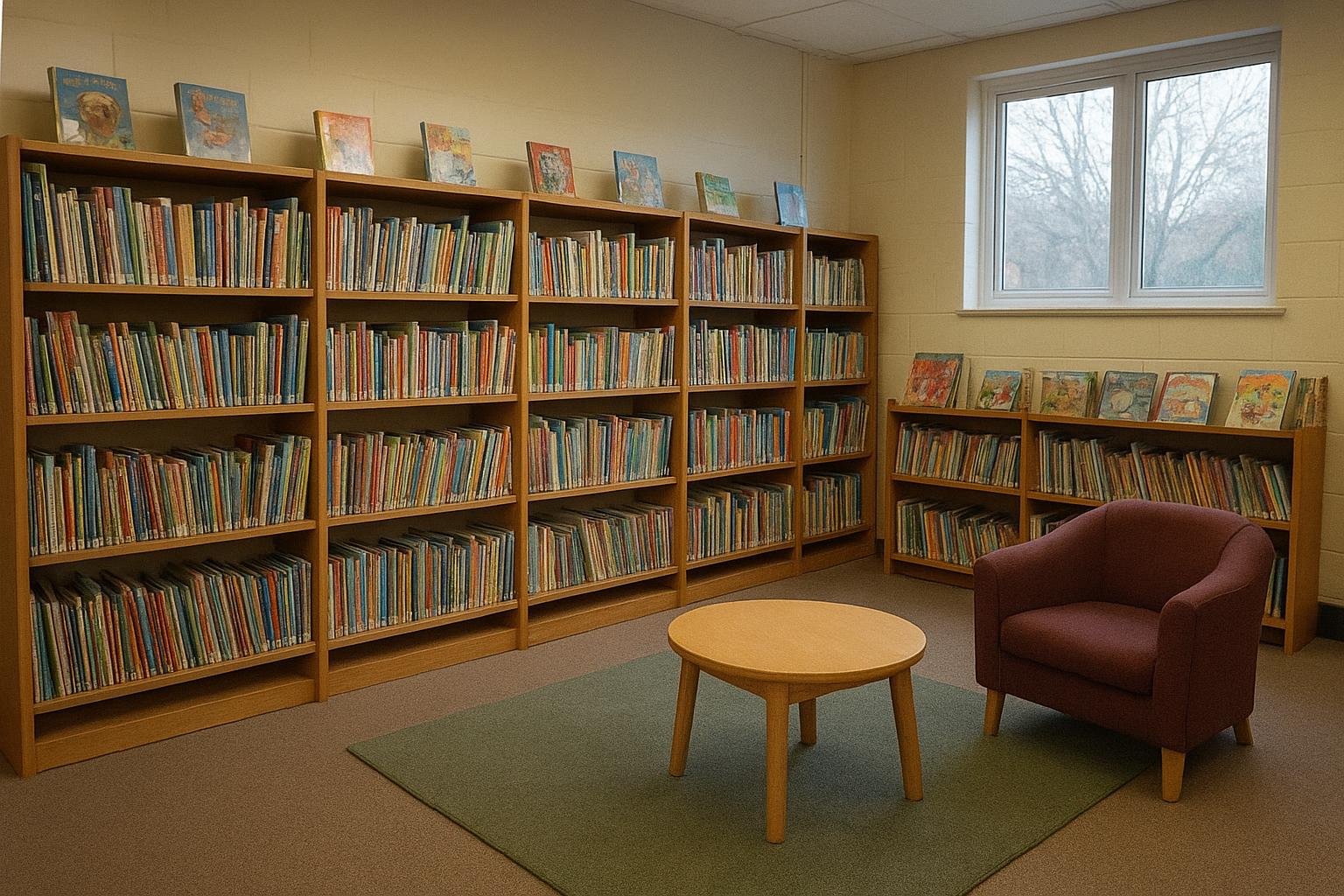
Complete sets of encyclopedias were once a common household purchase, but they are now rarely wanted. They are heavy, they take up a lot of shelf space and the information is outdated. Most charity shops refuse them for these reasons.
A few exceptions exist. A well-bound set from a known publisher may appeal to a decorator or a film props company, and some antique encyclopedias have collector interest. Otherwise, a school or a community group may take individual volumes for craft projects.
If no one wants them, recycle the pages as paper. Remove hardback covers if your recycling service asks, and be prepared for the weight. If you are using a clearance firm, mention them in advance so that the crew can plan the lift.
Creative uses for old reference books
If nobody wants them.
Old encyclopedias and dictionaries can be reused in craft projects. Artists and set designers use them for collage, book sculpture and shelf dressing, and some schools use the pages for art lessons. Online groups for crafters often accept boxes of unwanted books for free.
Make sure that the volumes are dry and free of mould before offering them. Be clear that they are for craft use, and do not promise anyone that the books have value. If you have a complete decorative set in matching bindings, a local interior stylist or prop hire company may be interested.
Condition and what not to donate
Some books are better recycled.
Damp, mouldy, insect-damaged or smelly books should not be donated, because they can spread mould and spoil other books. Books with missing pages, loose bindings or heavy highlighting are rarely sold. Books with torn covers may be accepted by some shops, but most prefer neat copies.
Publications that are out of date in a way that could mislead, such as old medical guides, legal handbooks and outdated tax guides, are better recycled. Magazines and old newspapers are generally not accepted by charity shops, but they can go in paper recycling. Remove plastic wrappers and non-paper inserts first.
Our guide to why charity shops refuse certain donations explains how this fits with other items.
Storing books while you decide
Keep them dry and flat.
If you cannot place the books immediately, store them somewhere dry and cool. Damp cellars, garages and lofts are bad for paper and encourage mould. Stack books flat in small boxes, lift them from the base and keep boxes off the floor on pallets or shelves.
Add silica gel sachets if the space is slightly damp. Check boxes every few weeks, and remove any books that show signs of mould before they spread it to the rest. If you find a musty smell, deal with it quickly, because the problem gets worse with time.
Recycling books properly
Paper recycling and its limits.
Most councils accept books in paper recycling, but rules differ. Some ask for hardback covers to be removed because of the board and glue. Others accept whole books. Glossy magazines are usually fine, but books with plastic covers, spiral bindings or heavy lamination may not be.
Keep paper dry. Wet books spoil a recycling load and reduce the value of the material. If you have a very large number of books, ask your council whether you can take them to a household recycling centre rather than put them in a kerbside box.
If you are using a clearance firm, ask whether it separates paper and what it does with books it cannot rehome. Our guide to zero waste to landfill and recycling rates explains how to check such claims.
Books with personal information
Handle with care.
Some books contain personal information, such as address books, diaries, medical records, school reports and photograph albums. These should not go into general paper recycling in a way that allows strangers to read them. Shred or tear out sensitive pages first, or use a confidential waste service.
Check the inside covers for names and addresses, and check any loose papers between the pages. If you are clearing a relative's home, you may find financial and legal papers tucked into books. Keep these safe and pass them to the executor or solicitor.
Our guide to executor legal responsibilities explains what to do with documents found during a clearance.
Books in a house clearance
Plan the lift and the outlet.
Books are heavy. A single standard box can weigh more than most people can safely carry, so use small boxes and fill them only partly. Label each box with its contents and its destination, such as donate, sell or recycle. Keep boxes off damp floors and protect them from rain during loading.
Tell the clearance firm roughly how many shelves or boxes there are. A firm that knows the volume in advance can bring the right vehicle and helpers. If some books are earmarked for a charity or a buyer, tell them so they are not mixed with recycling.
If you are an executor, keep a note of anything of value, and keep receipts for books sold or donated. This helps with probate and demonstrates that you handled the estate properly.
What it costs to move books
Weight changes the price.
Clearance firms often charge by volume, but books are dense and heavy. A van full of books can reach weight limits long before it is full, so a firm may ask about the number of boxes. Tell them in advance, and ask whether it affects the price.
If you can, take donations to a charity yourself or arrange a collection by a book charity. That reduces the load for the clearance crew and often keeps books in use. Our guide to pricing by volume explains how quotes are calculated.
Frequently asked questions
Common questions about donating books in Greater London.
Where can I donate old books in London?
Charity shops, community libraries, schools, children's centres and book charities may take them. Check what each accepts and phone ahead for large amounts.
Will charity shops take old textbooks?
Often not, because the content goes out of date. Some schools and community groups may take them. Otherwise recycle them as paper.
Does anyone want old encyclopedias?
Rarely. Most charity shops refuse them. Some decorators and prop hire companies may take well-bound sets, and the rest are best recycled.
How do I know if a book is valuable?
Check the edition, the date, signatures and condition, and search similar copies online. Ask an antiquarian bookseller or auction house if you suspect something is rare.
Can I recycle books with the kerbside paper?
Often yes, but some councils ask you to remove hard covers or exclude laminated books. Check your council's guidance.
Can I leave boxes of books outside a charity shop?
No. Leaving items outside is fly-tipping and creates a cost for the shop. Donate during opening hours.
Should I check inside books before donating?
Yes. People often keep letters, photographs, cash and documents inside books. Flick through them first.
