Direct answer
Skip hire is usually cheaper on paper when you have a lot of bulky, mixed waste, somewhere legal to put the skip and the time and strength to load it yourself. A house clearance service is usually easier because the crew does the lifting, sorting and removal in one visit, and it can be the better value once you add skip permit costs, your own time, extra trips and items a skip cannot take. In London, access, parking and permits often decide the answer. The sensible approach is to price both against your actual property and compare like with like. This guide explains the factors, and our shorter house clearance vs skip hire comparison covers the basics.
Contents
- The real question behind the comparison
- What a skip quote usually includes, and what it does not
- Choosing the right skip size
- Extras that can appear later
- What a clearance quote usually includes
- What moves a clearance price up or down
- How photos help you get a comparable price
- Permits, parking and where the skip can go
- Flats, estates and managed blocks
- Controlled parking zones and loading
- The labour you take on with a skip
- Stairs and carrying distances
- What you cannot put in a skip
- Where banned items go instead
- Duty of care and who is responsible for the waste
- Keeping the right records
- When a skip is usually the better choice
- Using both for large or mixed jobs
- When a house clearance is usually the better choice
- Sensitive and time-critical situations
- Reuse, donation and recycling
- A practical checklist for comparing quotes
- A worked example in words
- Common mistakes to avoid
- Frequently asked questions
The real question behind the comparison
Cheaper and easier are not the same thing.
People usually ask which is cheaper, but the better question is what the whole job costs you in money, time and effort. A skip hire quote covers a container delivered, left for an agreed period and collected. It does not cover who fills it, how long that takes or what happens to items the skip cannot accept. A house clearance quote covers the people, the lifting, the vehicle and the disposal. The two are different services, and treating them as direct equivalents is what makes skip hire look so much cheaper at first glance.
This guide is aimed at householders, landlords, executors and family members in London who are weighing the two options for a particular property. We do not give fixed prices, because they vary by borough, access, quantity and the independent provider. Instead, we show where the cost and the work sit, so that you can put your own quotes side by side.
If you only need the short version, our existing comparison sets out the differences in a table. This article goes further into the London-specific practicalities that tend to decide the matter.
What a skip quote usually includes, and what it does not
Read the small print before comparing.
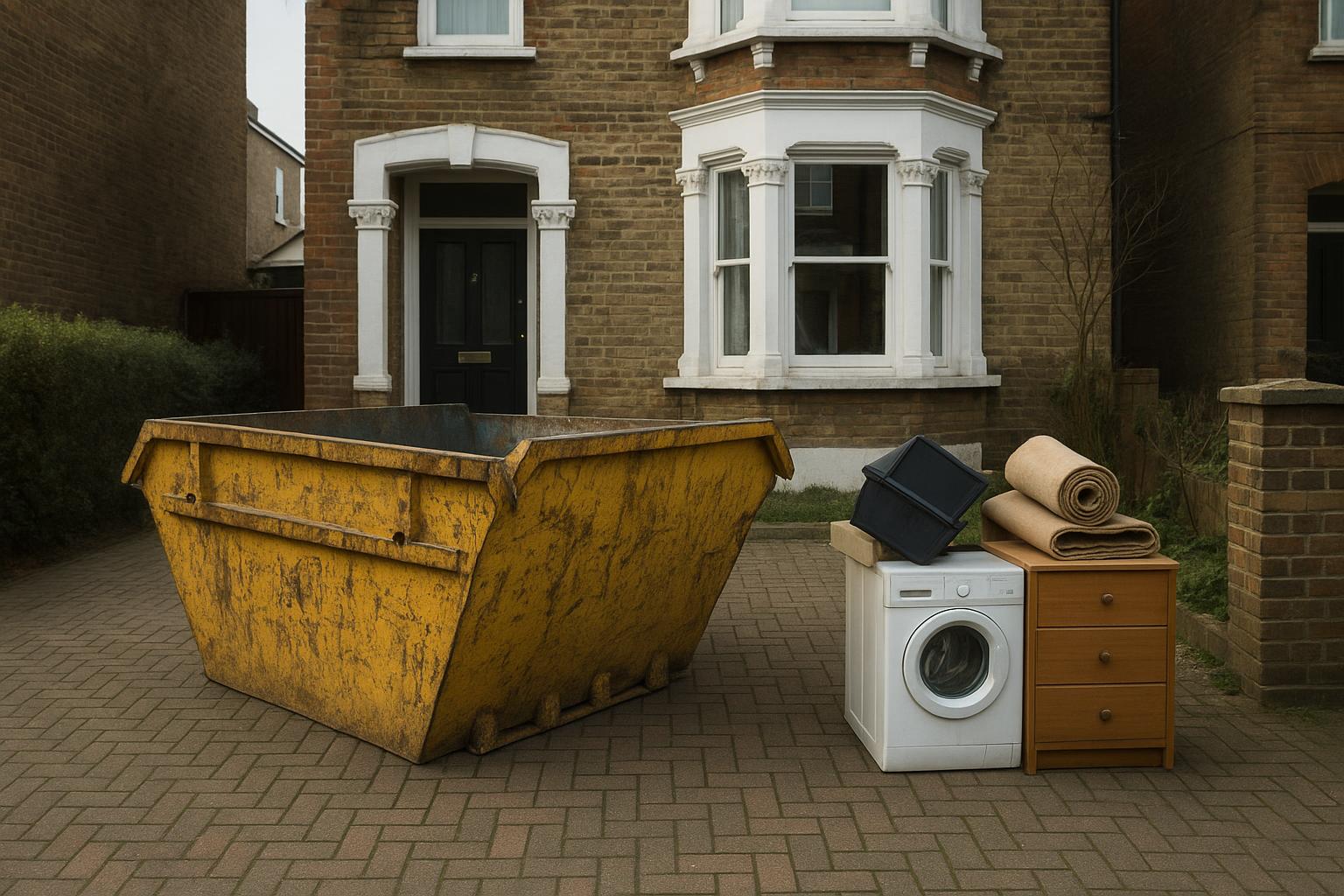
A skip quote typically covers delivery, a hire period, collection and disposal of a load that stays within the stated size and weight limits. Many providers also arrange the council permit if the skip has to go on the road, and they usually charge for it separately. Some quotes are all-inclusive, while others add the permit, extra days, overweight charges or fees for certain materials.
What a skip quote does not include is the labour of loading it, carrying furniture down stairs, dismantling wardrobes or sorting waste into what can and cannot go in. It also does not cover your time, the cost of parking a vehicle near the property, or a second skip if the first one fills up.
When you compare, ask each skip company what is included, what the permit costs, how long you can keep the skip, what the weight limit is and what happens if you exceed it. Our guide to skip hire costs in London goes through the typical line items.
Choosing the right skip size
Too small costs more than too big.
Skips are described in cubic yards, and sizes range from small ones that suit a bathroom refit to large ones that suit a full-house clear-out. A common mistake is to choose a skip that is too small to save money, then need a second one. Another is to pick one so large that it cannot be placed on the drive or road.
As a rough guide, bulky household furniture takes up far more space than people expect, and loose items leave gaps. Ask the skip company to help you estimate, and describe what you have honestly. Our guide to skip bags explains a flexible option for smaller jobs where a full skip would not fit.
If you are unsure, a larger skip is often cheaper than two small ones, but only if you can place it legally and safely.
Extras that can appear later
Watch for charges beyond the headline figure.
Skip hire charges can rise if you keep the skip beyond the hire period, overfill it, include banned items or exceed a weight limit. Some providers charge extra for heavy materials such as soil, rubble or plasterboard, or require them to go in a separate skip. Others charge for a wasted visit if the skip cannot be collected because of a blocked road.
None of this is unusual, but it is easier to deal with when you know about it at the start. Ask for the terms in writing and check how the provider handles each situation.
Our guide to hidden fees in man and van quotes shows similar patterns in another service, and the same questions apply.
What a clearance quote usually includes
The service is the labour and the logistics.
A house clearance quote is normally based on the volume and type of items, the access to the property, the number of floors and the time the crew expects to need. It usually includes loading, carrying, transport and disposal at an authorised site. Because the crew does the work, the quote is for a finished result, not just a container.
On houseclearance.co, quotes come from independent carriers who respond to your request, so the amount and the inclusions depend on the carrier. When you receive quotes, check what is included, whether stairs, parking and disposal charges are covered and whether the price is fixed once the carrier has seen the photos or visited. Our guide to what affects house clearance cost explains the main drivers.
Do not compare the headline figures alone. A clearance quote that includes labour and disposal is a different product from a skip hire quote that includes only the container.
What moves a clearance price up or down
The main drivers.
The main drivers are the volume of items, whether there are heavy or awkward pieces, the number of floors, the distance from the vehicle to the door, whether parking is easy and how much sorting is needed. The kind of waste matters too, because some items cost more to dispose of than others.
Timing also plays a role. A same-day or short-notice job may cost more than one booked in advance, and a weekend slot can be busier than a weekday one. These are patterns rather than rules, and they vary by carrier.
For a deeper look at how quantity affects quotes, see our guide to pricing by volume, and for borough-level context, see the house clearance cost in London guide.
How photos help you get a comparable price
Show what is there.
Photos help carriers see what is in each room, how much there is and what the access is like. Clear photos of each room, the stairs, the hallway and the parking situation usually give the most accurate quotes and reduce the chance of changes on the day.
Be honest about awkward items such as pianos, heavy safes, fitted wardrobes and anything in a loft or garage. Hiding them risks a revised price later. If you are not sure whether something counts as hazardous, mention it.
You can use the same photos to describe the job to a skip company, which makes the comparison fairer.
Permits, parking and where the skip can go
London access can make or break the skip option.
If a skip goes on private land, such as a driveway or a forecourt, you usually do not need a council permit, although you should check any lease or property management rules. If it has to sit on the public highway, including a residential road with a parking bay, the skip operator generally needs a permit from the local council, and there are rules about positioning, lighting at night and marking. Councils differ in cost, processing times and conditions, so check with your borough.
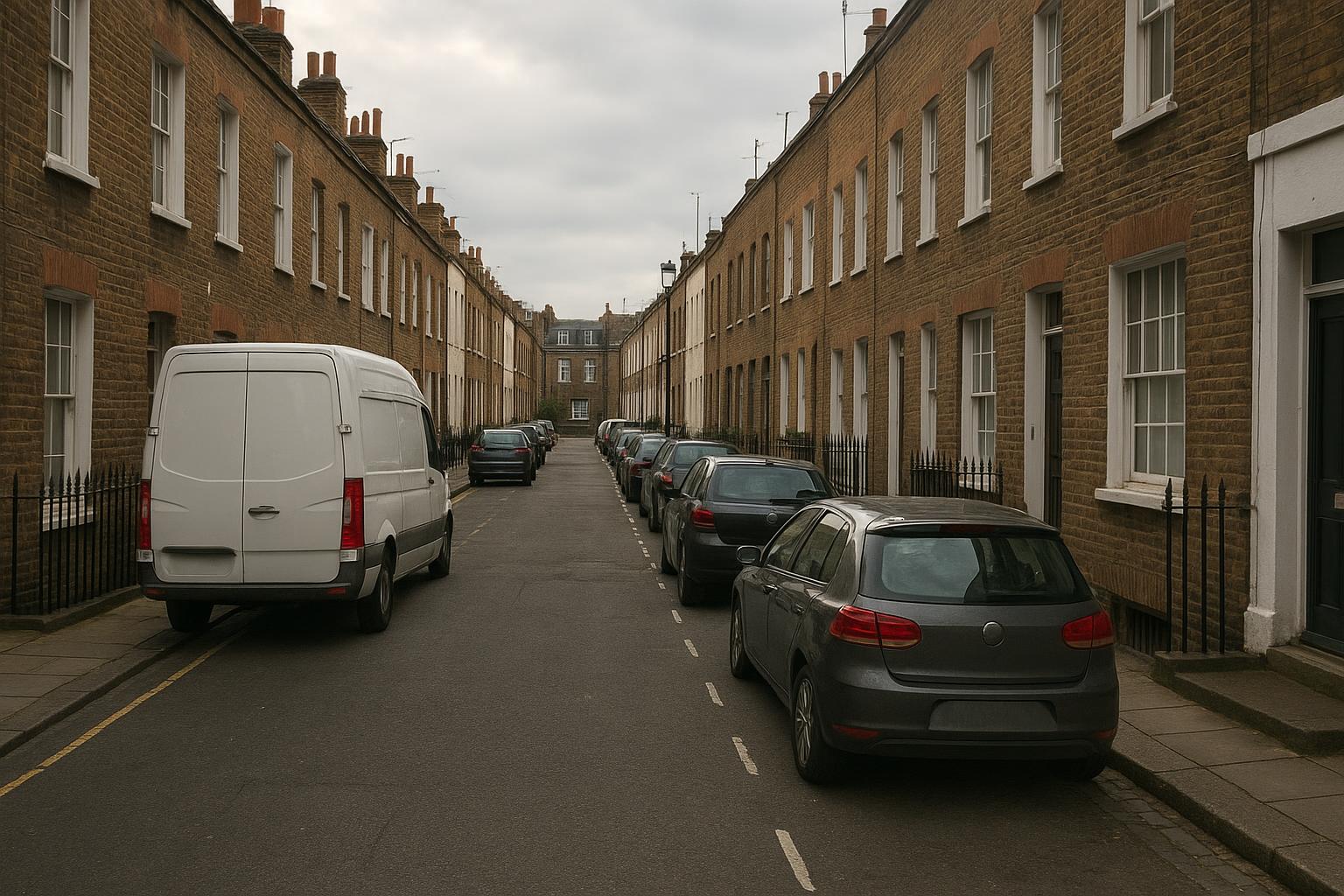
In a terraced street or a block of flats, there may be nowhere sensible to put a skip. Controlled parking zones can mean that bays must be suspended, and that can take time. Our guides to skip permit cost and to parking suspension for a house clearance explain the process and what to ask your council.
A clearance vehicle also needs parking, but it can stay for a shorter time. For properties with poor access, that difference can matter more than the headline price.
Flats, estates and managed blocks
Extra layers of permission.
In a block of flats or a managed estate, there may be rules on where skips and vehicles can stand, when work can happen and who can authorise it. A managing agent or landlord may need to agree in advance, and some blocks restrict deliveries to certain hours or require lift protection.
This applies to clearance crews as well as skips, so tell any provider about the access rules. If a lift is available, say so, and check whether it can be booked. A small amount of preparation can prevent a wasted visit.
If you are a tenant, check your tenancy agreement and tell the landlord or agent what you plan to do.
Controlled parking zones and loading
Parking affects both options.
Much of inner London is covered by controlled parking zones, where parking is restricted at certain times. A skip on the road needs the right permission, and a clearance van needs somewhere to stop while loading. Rules on loading and parking differ across boroughs, so check locally.
Our guide to parking a clearance truck in controlled parking zones explains the main options, including suspending bays.
A parking ticket or a delay can be a cost that neither quote shows. Ask each provider how it handles parking and who pays for any suspension.
The labour you take on with a skip
The unpriced part of the job.
With a skip, you or your helpers do the lifting. That means carrying wardrobes, beds, sofas and boxes from upstairs rooms to the street, often through narrow hallways and past neighbours. Heavy items are a genuine injury risk, and a bad lift can cost far more than the price of a clearance. If you are unsure, our guide to moving heavy furniture safely sets out the basics.
Filling a skip is also a skill. Loading it well, with flat items at the bottom and awkward ones laid so that they do not leave voids, can let you fit far more in. Loading it badly can mean paying for a second skip. You cannot go above the fill line, and an overfilled skip can be refused or charged extra.
Time is part of the cost too. A full-house clearance that a crew might do in a day can take a family several weekends. If you are working around a job, a tenancy end date or a property sale, that delay has a price.
Stairs and carrying distances
Where the work really is.
Most of the effort in a clearance is not the driving or the disposal. It is carrying items from rooms to the vehicle. Stairs, narrow doorways, long paths and awkward corners all slow the work and increase the risk of damage and injury.
A skip on the drive means a short carry. A skip on the road or a van parked far from the door means a longer one. In a top-floor flat without a lift, each item may take several minutes.
This is why access features so strongly in clearance quotes, and why it deserves the same weight in your own estimate of the skip option.
What you cannot put in a skip
Some items will leave you needing a second solution.
Skip companies typically refuse hazardous waste such as asbestos, solvent-based paint, chemicals, gas bottles and some batteries. Many have rules about fridges and freezers, TVs and monitors, mattresses and tyres, because these have separate disposal or recycling routes. Plasterboard is often handled separately, too. Each provider has its own list, so always ask.
This matters in a house clearance because a typical property includes at least a few of these items. If you hire a skip, you will need a separate route for them, such as a council recycling centre, a retailer take-back scheme or a specialist collection. Our guide to hazardous waste classification explains the main categories.
A clearance crew may also refuse hazardous items, but they can usually tell you in advance which categories they handle, and many can take fridges and mattresses as part of a normal load. Check this in writing before booking.
Where banned items go instead
Plan this before the skip arrives.
Fridges and freezers, TVs and electrical items can often go to a council recycling centre or be taken back by a retailer under the producer responsibility rules. Paint and chemicals usually go to a household waste recycling centre that accepts them, subject to local rules. Mattresses may be collected by the council or taken to a recycling centre.
Rules vary by borough, and many centres limit the types and amounts they accept, so check the council website before you travel. Some require proof of address or a booking.
Our guides on tip runs in London and disposing of household chemicals explain the main routes.
Duty of care and who is responsible for the waste
The law applies whichever route you choose.
Under the waste duty of care in England, a householder is responsible for taking reasonable steps to make sure the waste they produce is passed to someone authorised to take it. That applies if you hire a skip company or a clearance carrier. It is a good idea to ask for the company's waste carrier details and check them on the Environment Agency public register.
With a skip, you also take on responsibility for what goes in and how it is used while it is on site. Neighbours can and do put their own rubbish into skips, which can create problems with prohibited items. Some householders cover skips or lock them where possible to prevent this.
Our guides on the householder duty of care and waste transfer notes explain what paperwork to keep. Whichever route you choose, keep it.
Keeping the right records
Protect yourself later.
Keep the quote, the booking confirmation, any permit details and any waste transfer note or receipt the provider gives you. If the waste is later found fly-tipped, those records help show that you passed it on properly.
Take a few photos of the property before and after, and note the date and the vehicle registration if the provider gives it. These steps take a few minutes and can save a lot of trouble.
For the legal background to fly-tipping liability, see our guide to fly-tipping penalties in London.
When a skip is usually the better choice
Space, time and mostly bulky waste.
A skip tends to make sense when you have a driveway or private land, plenty of bulky and non-hazardous waste, such as builders' rubble, garden waste or broken furniture, and someone who can spend time loading it over several days. It can also suit projects like a garden overhaul or a renovation, where waste builds up gradually. In those cases, a skip may well be both cheaper and convenient. Our guides to mini skips and maxi skips explain the sizes.
It can also work well if the items are not worth much and need no sorting, and if you have strong helpers and good access to the property.
In short, the more the job looks like a project and the less it looks like a one-day removal, the more a skip is likely to suit.
Using both for large or mixed jobs
A hybrid can work.
Some jobs naturally split in two. A renovation might produce rubble and offcuts that suit a skip, while the furniture and household items suit a clearance crew. Using both can reduce cost, as long as each provider knows what the other is taking.
For builders' waste specifically, see our guide to builders and renovation waste clearance costs, which covers how that type of waste is priced.
If you use both, plan the order of work so that the crew is not blocked by the skip and the skip is not filled with items that could have been donated.
When a house clearance is usually the better choice
Access, time pressure and sensitivity.
A clearance tends to be the better option when you have no safe place to put a skip, when the property is a flat or has stairs, when time is tight, or when you cannot lift the items yourself. It also suits situations where belongings need sorting, such as a bereavement, a probate property, or a tenant leaving. A crew can separate items for donation, recycling and disposal in one visit.
It is also often easier for landlords and executors who live elsewhere and need the property cleared to a deadline. For those cases, our guides on clearance after bereavement and the house clearance checklist may help.
The price may look higher than a skip, but once you add the permit, your time and the extra routes for non-skip items, the gap often narrows, and sometimes it reverses.
Sensitive and time-critical situations
When the human side matters.
Clearing a home after a death, a move into care or a tenancy ending is rarely only about rubbish. There may be documents, valuables and sentimental items mixed in. A crew can often work at a pace that allows you to sort and set aside what you want to keep.
If you are an executor, check what you are allowed to dispose of and when. Our guide to executor responsibilities for chattels sets out the principles, and a solicitor can advise on specifics.
Time-critical clears, such as before completion on a sale or before a tenant handover, also tend to favour a crew that can finish in a day.
Reuse, donation and recycling
What happens to the items.
A clearance carrier may be able to separate items that can be reused or recycled, depending on its practices. Ask what it does with furniture and appliances. Our guide to what happens to your items after a clearance explains the typical journey.
With a skip, everything goes to the waste stream, although the operator may sort it afterwards. If reuse matters to you, set aside items for donation or sale before the skip arrives.
Be careful of any provider that makes strong environmental claims without explanation. Ask for specifics.
A practical checklist for comparing quotes
Make the two quotes comparable.
Before you decide, write down the answers to these questions for each option, so you are comparing the same things.
- Where will the skip go, and is a permit needed?
- Who loads it, and how long will that take?
- Which items cannot go in the skip, and where will they go instead?
- What is the weight limit, and what happens if it is exceeded?
- Does the clearance quote include stairs, parking and disposal?
- Is the clearance price fixed after photos or a visit?
- What waste carrier details can the provider show?
- What happens if the job takes longer than planned?
If both options still look similar, choose the one that carries less risk of surprise costs. Our guide to house clearance pricing by volume shows how carriers think about the amount of waste.
A worked example in words
Illustrative, not a quote.
Imagine a two-bedroom first-floor flat with a street that has resident parking and no space for a skip. The skip option needs a permit and a bay suspension, plus several hours of carrying down a flight of stairs, and fridges and a mattress need a separate route. The clearance option needs one visit and one crew.
Now imagine a house with a driveway, a garage full of old timber and a garden shed. A skip on the drive, filled over a long weekend, may cost less and suit the material better than a crew.
These are only illustrations. The right answer depends on your property and the quotes you receive, which is why comparing them is so useful.
Common mistakes to avoid
Learn from other people's problems.
The most common mistakes are choosing a skip that is too small, leaving it on a road without a permit, putting banned items in it, underestimating the lifting, and comparing a skip price to a full-service clearance price as if they were the same.
Another is failing to ask for details in writing. Terms such as weight limits, hire periods and inclusions should be clear before you book.
A last one is leaving it too late. If you need a permit or a bay suspension, allow time, because councils do not always work to short deadlines.
Frequently asked questions
Common questions about skip hire versus a house clearance in London.
Is skip hire cheaper than a house clearance in London?
Often the skip itself costs less, but once you add the permit, your own labour, extra trips for banned items and the time it takes to fill, the total can be closer than it first looks. Compare like with like.
Do I need a permit for a skip in London?
If the skip goes on the public highway, the skip company generally needs a council permit. On private land you usually do not, but check any lease or property rules. Ask your borough for details.
What cannot go in a skip?
Providers typically refuse hazardous waste such as asbestos, chemicals and gas bottles, and many restrict fridges, TVs, mattresses and tyres. Each company has its own list, so ask before you book.
Which is easier for a flat?
A clearance is usually easier for a flat because there is often nowhere to put a skip and the items must be carried down stairs. Always check access with the carrier.
Can I mix a skip with a clearance?
Yes. Some people have a clearance crew remove furniture and a skip for builders' waste or garden material. Make sure each provider knows what the other is taking.
Who is responsible for the waste?
You have a duty of care to pass waste to an authorised carrier, whichever option you choose. Ask for carrier details, check them with the Environment Agency, and keep paperwork.
Are clearance prices fixed?
That depends on the independent carrier. Ask whether the quote is fixed after photos or a visit and what could change it, such as extra items or difficult access.
How do I compare quotes fairly?
List what each includes: labour, permit, parking, disposal, weight limits and banned items. Then compare the total effort and cost, not just the headline figure.