
Direct answer
Most of inner and much of outer London is covered by controlled parking zones, where parking is restricted at set times and often limited to permit holders or pay-and-display bays. A clearance vehicle can sometimes load briefly where waiting is restricted, but never where signs or markings ban loading, and never on a red route with a no-stopping order. Rules are set by each borough and by Transport for London, so read the signs outside your property. If the vehicle needs a reserved space for a long clearance, you may need a bay suspension from the council.
Contents
- What a controlled parking zone is
- How London zones differ from borough to borough
- Types of bay you might find outside your property
- Yellow lines, kerb marks and loading
- What counts as loading and unloading
- Vehicle size, weight limits and narrow streets
- Red routes and other no-stopping roads
- Obstruction and blocking the road
- Special cases: estates, mews, shared forecourts and private roads
- Penalty charge notices
- If a penalty charge notice is issued
- Why parking affects the price of a clearance
- Planning access before clearance day
- Choosing the best day and time
- A one-page parking checklist for clearance day
- Working with neighbours and the street
- Frequently asked questions
What a controlled parking zone is
Time-limited restrictions run by the borough.
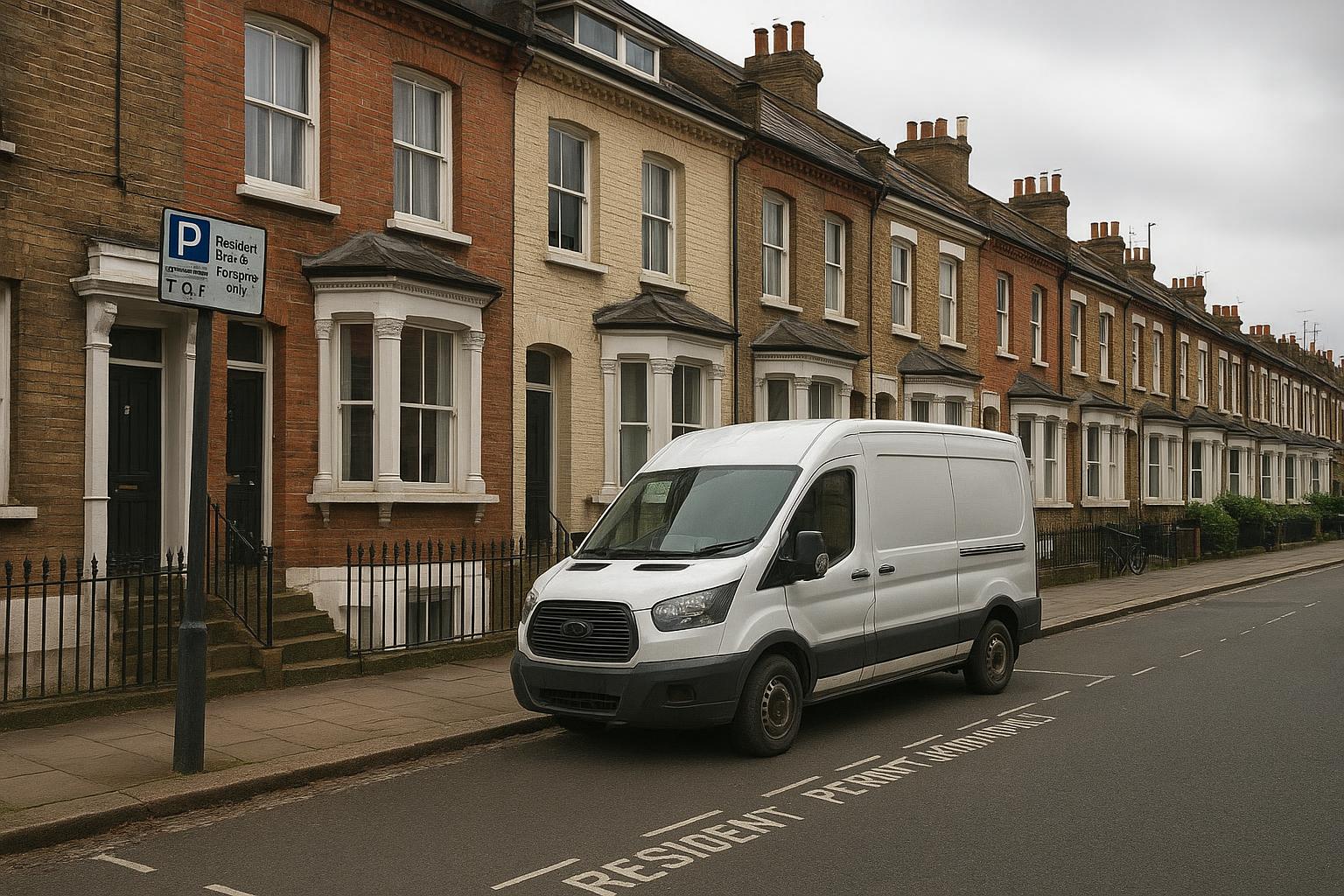
A controlled parking zone, usually shortened to CPZ, is an area where the local council restricts parking during specified hours to manage demand. Bays may be for residents with permits, for pay-and-display users, for businesses, or for a mix. The hours differ from one zone to the next: some run on weekdays only, others include evenings and weekends. The zone entry signs and the signs on the poles within it show the rules for that street.
The key point for a clearance is that a van or truck is a vehicle like any other. Without an exemption, it needs to follow the same bay rules as everyone else, and a long clearance can take hours, not minutes. Our guide to applying for a council parking suspension covers what to do when you need space held.
How London zones differ from borough to borough
There is no single rule across the capital.
London has thirty-two boroughs plus the City of London, and each runs its own parking policy within a framework set by law. In practice that means the same vehicle can be fine on one street and ticketed two streets away across a borough boundary. Hours of control vary, permit systems differ, and some boroughs run extensive zones while others restrict only town centres and station areas.
Three practical consequences follow for a clearance. First, never assume the rule you saw on a different street applies outside your door. Second, the carrier may be working across several boroughs in a week and is unlikely to know your street's rules in advance. Third, rules can change: bay types are redesignated, hours are extended, and temporary restrictions appear for roadworks or events. Check the signs on the day as well as in advance.
Some areas also have special arrangements, such as school streets that restrict motor traffic at drop-off and pick-up times. Where such a restriction applies, a large vehicle may not be able to enter the street at all during those hours, and a clearance timetable needs to avoid them.
Types of bay you might find outside your property
The sign on the pole decides what is allowed.
- Resident permit bays: reserved for permit holders during the hours shown. A visiting commercial vehicle without a permit or dispensation can be penalised.
- Pay-and-display or pay-by-phone bays: anyone can park for the paid period up to the maximum stay. A clearance may run longer than the maximum stay, which can be an issue even when the fee has been paid.
- Shared-use bays: combine residents and paying visitors.
- Business bays: for permit-holding businesses.
- Loading bays: marked for goods vehicles to load and unload, usually with time limits.
- Disabled bays: for blue badge holders; never block them.
- Doctor, car-club and electric-vehicle charging bays: restricted to specific users.
The practical rule is the same in every case: stop in a bay only if the sign says your vehicle may, for as long as it says.
Yellow lines, kerb marks and loading
Loading is treated differently from parking, but only where it is allowed.
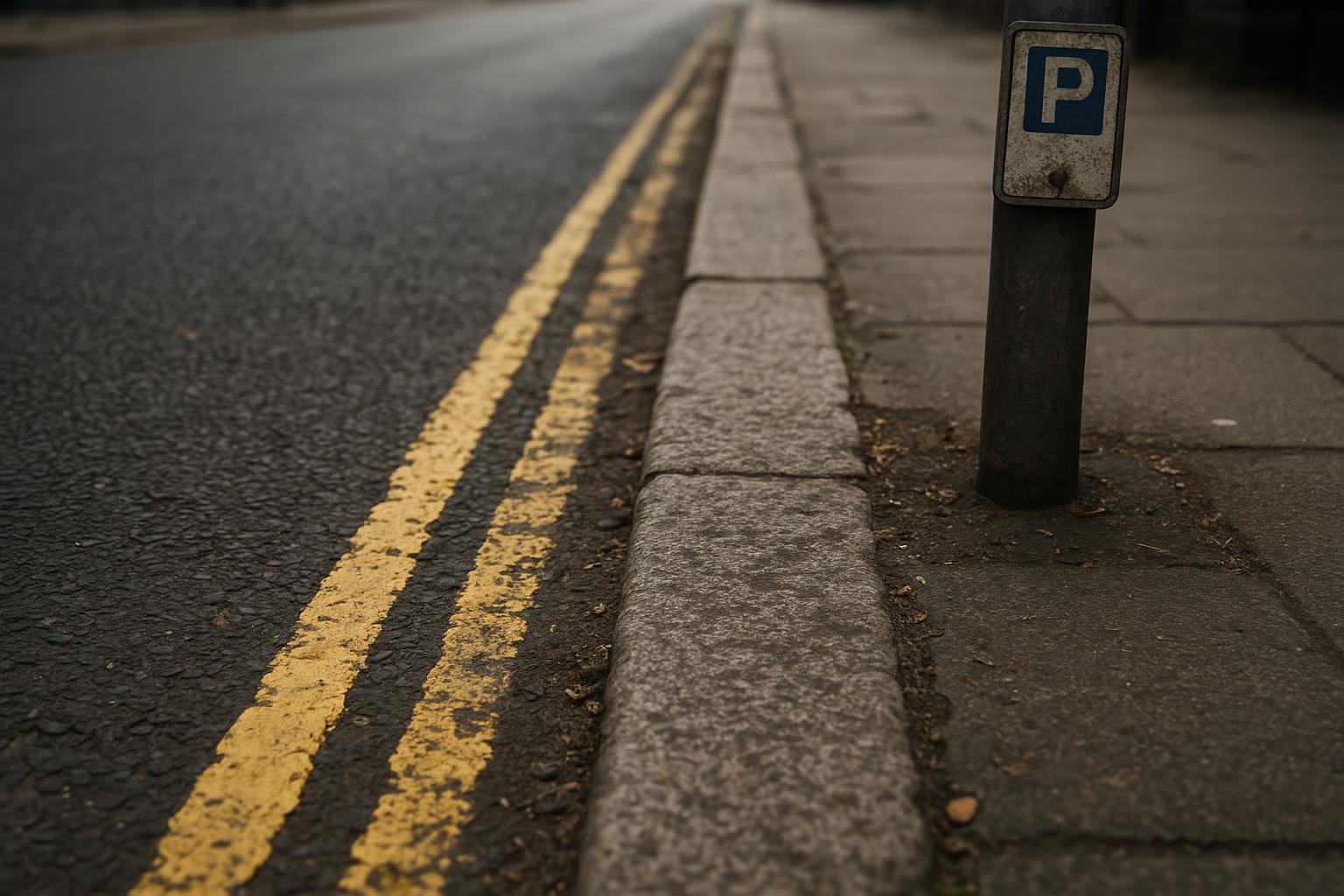
Yellow lines on the road show that waiting is restricted at some or all times; the signs nearby give the days and hours. In many places, loading and unloading is allowed on yellow lines unless there are additional markings. Small yellow marks across the kerb, often called blips, indicate a loading restriction, and the plates beside them give the details. Where loading is banned, a vehicle should not stop to load at all.
Genuine loading and unloading means actively moving goods; it is not the same as leaving a vehicle while a crew works for hours, and enforcement officers look at what is actually happening. For the exact rule on your street, check the sign and the council website, because it varies by location.
What counts as loading and unloading
The test enforcement officers apply.
Loading and unloading is allowed in many places where waiting is otherwise restricted, but it has a particular meaning. It generally means the active movement of goods between a vehicle and a building, carried out without unnecessary delay. A vehicle left unattended while its crew is inside for an extended period is more likely to be treated as parked. A civil enforcement officer who sees a vehicle with nobody around may issue a notice before anyone returns.
For a clearance this matters because the job is a continuous sequence of carrying items out, which tends to satisfy the activity test, while a clearance with a long gap in the middle, perhaps waiting for a second crew member or for a skip lorry, can look like parking. If you expect gaps, plan for a bay suspension rather than relying on the loading exemption. The practical steps are in our guide to applying for a parking suspension.
Where there are loading restrictions marked at the kerb, the plates beside them tell you when loading is banned. Treat a ban as absolute. Hazard lights and the intention to be quick are not defences.
Vehicle size, weight limits and narrow streets
Access is not only about parking.
Larger clearance vehicles raise issues beyond bays. Some London streets have width restrictions, weight limits, low bridges, one-way systems, traffic-calming features, or turning circles that a large truck cannot manage. A van that fits is a different proposition from a seven-and-a-half-tonne lorry. Tell the carrier about anything that could affect access: a narrow terrace street lined with parked cars, a steep mews entrance, a gated estate, a courtyard with a low arch, or a cul-de-sac with no turning space.
Where a big vehicle cannot reach the door, the carrier may use a smaller vehicle with more trips, which adds labour time and cost, or carry items further on foot. Mention long carries, stairs, lifts and shared entrances at the quote stage so the price reflects the real job; our pricing by volume guide explains what drives the price.
Red routes and other no-stopping roads
These are managed by Transport for London, not the borough.
Red routes are major roads where red lines show that stopping is restricted. Some stretches ban stopping at all times, some allow loading in marked bays for a limited time, and the details are shown on signs. If your property is on or near a red route, ask your carrier to plan where the vehicle can legitimately stop, for instance a side road or a marked loading bay, rather than assuming they can pull up outside.
Separate from parking, there are also bus lanes, school keep clear markings and pedestrian crossing zig-zags, where stopping is generally not permitted. Greater London emissions schemes such as the ULEZ are a matter for the vehicle operator and are not covered here.
Obstruction and blocking the road
Parking rules are not the only rules.
Even in a bay or on a street without restrictions, a vehicle must not cause an unnecessary obstruction. Blocking a driveway, a dropped kerb, a junction, a bus stop, or a fire hydrant can lead to enforcement action and annoy neighbours. A van parked halfway across a narrow street so that emergency vehicles cannot pass is a safety issue, not just a parking one.
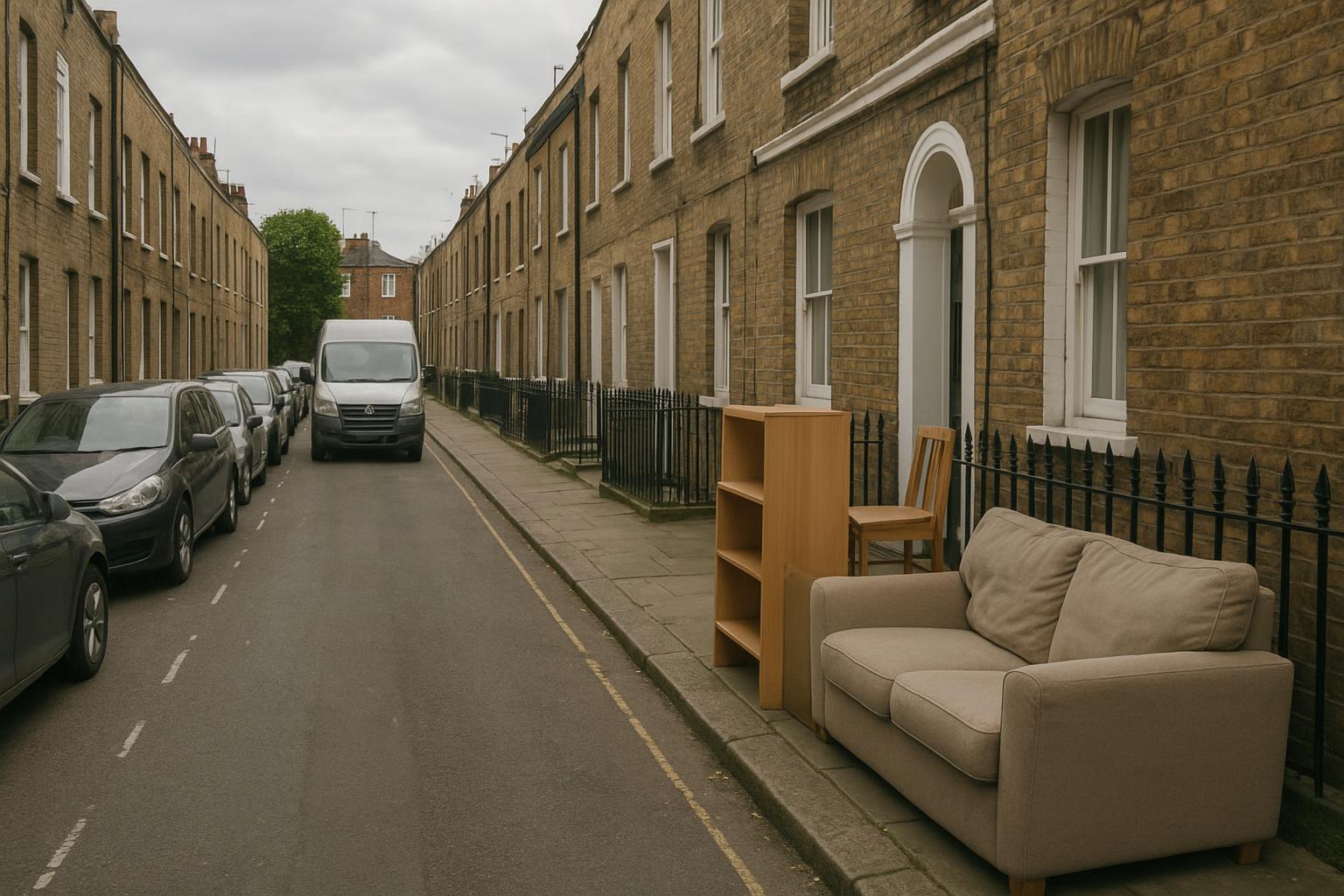
Stacking items on the pavement while they wait to be loaded needs care too. The footway is for pedestrians, including wheelchair users and people with prams, and leaving furniture across it can be treated as an obstruction. A careful crew keeps items against the property boundary, loads in a sequence that avoids long waits and does not leave items out overnight.
Courtesy matters here. A short note to neighbours before clearance day, saying roughly when a van will be outside and for how long, prevents most disputes before they start.
Special cases: estates, mews, shared forecourts and private roads
When the council is not the one in charge.
Not every London street is controlled by the council. Private estates, housing association land, gated developments, mews courts, shared forecourts and some private roads set their own rules, often managed by a managing agent or a private parking company. On such land the council cannot issue a penalty charge notice, but a private operator can issue its own parking charge, and a barrier or concierge may refuse access altogether. Ask the managing agent or landlord for the access rules, and request any permit or visitor pass that is needed.
Many blocks require that clearances and removals are booked in advance, sometimes with a deposit, restricted hours and a requirement to use a particular lift. Failing to book can mean the job is turned away. If the property is a leasehold flat, check the lease or building rules, and tell your carrier what you find. The same applies to retail parades, where deliveries may be restricted to certain hours.
Penalty charge notices
The driver or vehicle keeper gets the notice, but the cost can land on you.
Councils and TfL issue penalty charge notices, usually shortened to PCNs, to vehicles parked in breach of the rules. The amount depends on the type of contravention and is set under London-wide arrangements, so check the figure on the council website rather than relying on a number you have read elsewhere. A PCN is addressed to the vehicle's registered keeper, which will be the carrier, not you. However, if a carrier's price depends on keeping the vehicle close and they are fined because of a restriction you did not mention, expect that to be a point of discussion.
The simplest protection is to tell the carrier about the restrictions in advance, in writing. When you request clearance quotes, mention parking and access in the job description: for example, resident bays only, a red route, a steep road or a narrow street. Our guide on choosing a licensed house clearance company includes questions to ask about access and equipment.
If a penalty charge notice is issued
Appeal rights exist, but evidence decides.
A penalty charge notice sets out the alleged contravention and gives a period to pay a reduced amount or to make a challenge. If the carrier believes the notice was unfair, the usual route is an informal challenge to the council, followed by a formal representation and then an appeal to the independent tribunal if necessary. Good evidence includes dated photographs of the signs and markings, time-stamped pictures showing active loading, the job booking and, where relevant, a copy of any suspension or dispensation.
Evidence is why you should photograph the signs outside your property before clearance day and share them with your carrier. If you are the customer and the notice was caused by a restriction you did not mention, agree with the carrier whose responsibility it is; the safest way to settle that is in writing before the job. We do not provide legal advice, and you should read the official guidance on the notice itself.
Why parking affects the price of a clearance
Time and distance cost money.
Every extra minute on a clearance is paid for in labour, fuel and vehicle time. If a vehicle must park a long way from the door, every item travels further and the job takes longer. If a vehicle cannot stay long and must keep moving, trips multiply. If the carrier knows in advance that parking is difficult, they can plan: bring more people so the loading is quick, use a smaller vehicle, or schedule the job outside controlled hours.
Being open about parking at the quote stage is therefore not just courteous but economical. A carrier who quotes without knowing about a red route or a resident-only street may have to change the price on the day, which is a common source of disputes. See our guide to man and van hidden fees for other items that can alter a quote.
Planning access before clearance day
A few minutes of checking avoids a lot of trouble.
- Read the signs outside your property and note the days, hours and permit rules.
- Check whether the road is a red route or has loading restrictions.
- Ask neighbours or the managing agent if there are dedicated loading bays nearby.
- Photograph the signs and send them to your carrier.
- If a long, bulky job needs space held, apply to the council for a suspension in good time.
- Do not reserve space with cones, bins or chairs: leaving objects on the public highway is generally not allowed and councils can remove them.
For the wider picture of how clearance jobs are priced and what drives the cost, see our prices page.
Choosing the best day and time
Scheduling can solve a lot of parking problems.
If your street is controlled on weekdays only, a weekend clearance can bypass the restriction, though some zones operate seven days. Early mornings and late evenings may sit outside controlled hours, but check the hours shown on the signs and remember that noise and neighbour considerations also apply. School-run times can make narrow streets very busy, and bin collection days can reduce the available space. A short call to your council or a look at the street on the same day of the week a few days earlier tells you more than guesswork.
For large jobs, an honest assessment of the number of hours and the vehicle size is the starting point. If the loading will take more than a short spell, plan for a suspension. If the property is part of a block of flats with a managing agent, ask whether there is a loading area, a service entrance, a goods lift, or a booking system, as many blocks require advance notice for deliveries and clearances.
A one-page parking checklist for clearance day
Print it, tick it, send it to your carrier.
- Zone type and controlled hours noted from the signs.
- Bay type outside the property: resident, pay-and-display, loading, other.
- Yellow lines or kerb marks and the plate details.
- Red route or other no-stopping road nearby.
- Suspension or dispensation applied for, with reference number if needed.
- Vehicle size and registration shared with the council and the carrier.
- Photos of signs sent to the carrier.
- Neighbours or managing agent informed.
- Plan B if the vehicle cannot stop: where the nearest legal stopping place is.
With these answers to hand, nearly every parking problem on clearance day can be avoided.
Working with neighbours and the street
A short, practical courtesy.
Clearances are noisy, take space and bring strangers to the street. Neighbours who are told in advance rarely complain; those who find a truck blocking their drive without warning often do, and a complaint can trigger a council visit. A short note through nearby letterboxes, giving the date, the approximate hours and a contact number, is enough. Ask whether any neighbour needs access at particular times, for instance for a school run, a carer visit or a medical appointment, and plan around it. Keep noise down early and late, avoid leaving doors or tailgates blocking the path, and clean up any dust or debris at the end. Good manners cost nothing and protect the relationship long after the van has gone.
Frequently asked questions
The questions people ask most about parking a clearance vehicle in London.
Can a clearance van park on a single yellow line to load?
Often loading and unloading is allowed on a single yellow line, but not where there are loading restriction markings or signs, and the vehicle must actually be loading rather than parked. Check the signs on your street.
Do clearance trucks need a permit for resident bays?
Without a permit or a council suspension or dispensation, a vehicle parking in a resident bay during controlled hours risks a penalty charge notice. Ask your council what they offer for working vehicles.
Who pays a penalty charge notice on clearance day?
The notice goes to the vehicle keeper, normally the carrier. Tell the carrier about any restrictions beforehand so the issue does not arise and so that responsibility is clear.
What is the difference between a CPZ and a red route?
A CPZ is a borough-managed zone with time-limited parking rules. A red route is a main road managed by Transport for London where stopping is restricted by red lines and signs.
Should I tell my carrier about parking restrictions?
Yes. Mention them in the job description when you request quotes, and send photos of the signs if you can.
