
Direct answer
After a house clearance, items are normally split into three streams: things that can be reused or donated, things that can be recycled, and genuine waste. Mixed waste usually goes to a licensed waste transfer station, where it is sorted and sent on to recycling facilities, energy recovery or, as a last resort, landfill. The legal framework behind this is the waste hierarchy, which puts prevention and reuse ahead of recycling, recovery and disposal. How much of your clearance is diverted depends on the carrier, the condition of the items and the sites they use, so ask them rather than assuming.
Contents
- The waste hierarchy: the order things should happen in
- The rules the carrier works under
- Step one: sorting at the property
- A typical clearance day, from door to destination
- Reuse, donation and resale
- What usually happens to each type of item
- Transfer stations, recycling and what is left
- How this works in London specifically
- Personal papers, photographs and confidential items
- Energy recovery and landfill
- Common myths about where clearance waste goes
- How you can improve the outcome before clearance day
- The paperwork that proves the journey
- Questions to ask your carrier before booking
- What happens to the paperwork and the data after the job
- Frequently asked questions
The waste hierarchy: the order things should happen in
England follows a priority order for dealing with waste.
The starting point for how waste is handled in England is the waste hierarchy, set out in the Waste (England and Wales) Regulations 2011 and explained in gov.uk guidance on applying the waste hierarchy. In order of preference it runs: prevention, preparing for reuse, recycling, other recovery (including energy recovery), and finally disposal, which mostly means landfill.
For a house clearance, that translates into a simple practical idea: anything that still works or has value should be offered for reuse before it is treated as waste, material that cannot be reused should be recycled where a recycling route exists, and only what is left should be burned for energy or buried. In practice, a carrier's ability to follow this order depends on time, access, and how the items have been stored, but it is the standard a responsible carrier works to. Our guide to responsible disposal explains what we ask carriers on our network to do.
The rules the carrier works under
Registration, permitted sites and records.
Three pieces of regulation shape the journey. First, anyone carrying waste for others as part of a business must be a registered waste carrier. Second, the waste must be taken to a site that holds the right environmental permit or a valid exemption; tipping at an unpermitted site is an offence, and that is what fly-tipping is. Third, the transfer should be documented: a waste transfer note records the description of the waste, the quantity, the parties and the date. The carrier keeps a copy and so should you.
These rules apply to waste, not to goods you have sold or gifted. If an item is passed on for reuse, it stops being waste for practical purposes, which is why reuse routes are usually quicker and cheaper than disposal. If you are unsure whether something counts as waste when you hand it over, ask the carrier and get the answer in writing. Our duty of care guide explains how the rules apply to you as the householder.
Step one: sorting at the property
Most of the sorting decisions are made before anything is loaded.
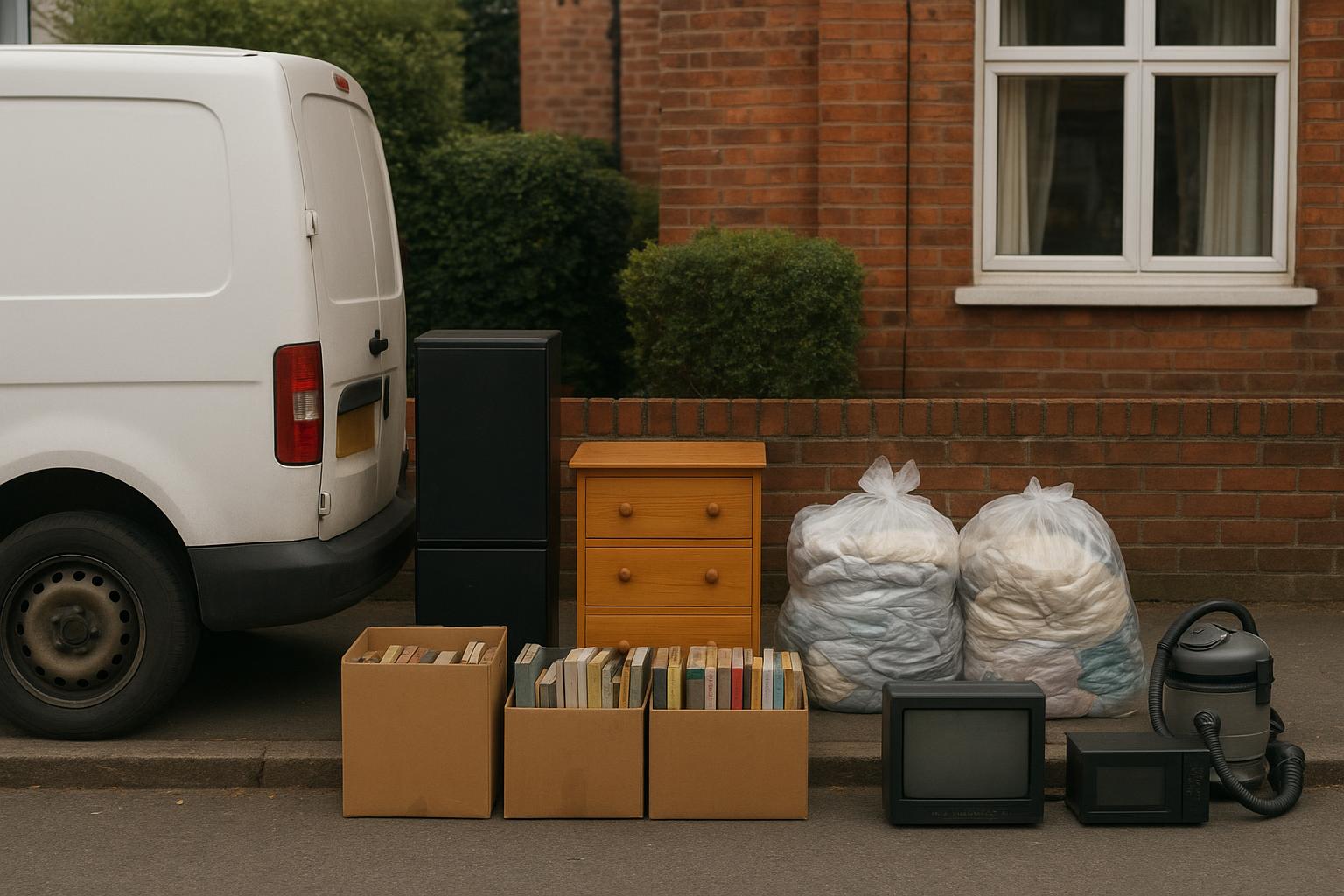
Good clearance crews sort as they go. Typically that means separating items into reusable furniture and household goods, books and textiles, electrical items, metal, wood, hazardous or restricted items, and mixed rubbish. Items of obvious value or sentimental significance should be set aside with the family before the crew arrives; our guides on hidden family valuables and documents and valuable antiques in a deceased estate explain how to do that.
Some things cannot go in the general load at all. Gas bottles, paint, solvents, asbestos-containing materials and some chemicals need separate handling, and a carrier may decline them. If you are unsure, tell the carrier before the day so they can plan for it.
A typical clearance day, from door to destination
What the sequence normally looks like.
- Walkthrough and agreement. The crew confirms what is going, what is staying and anything restricted.
- Sorting and loading. Items are separated by type as they are carried out, with reusable goods loaded so they are not crushed under rubbish.
- Weighing or estimating. At the destination site the load may be weighed, which is how many sites charge for tipping.
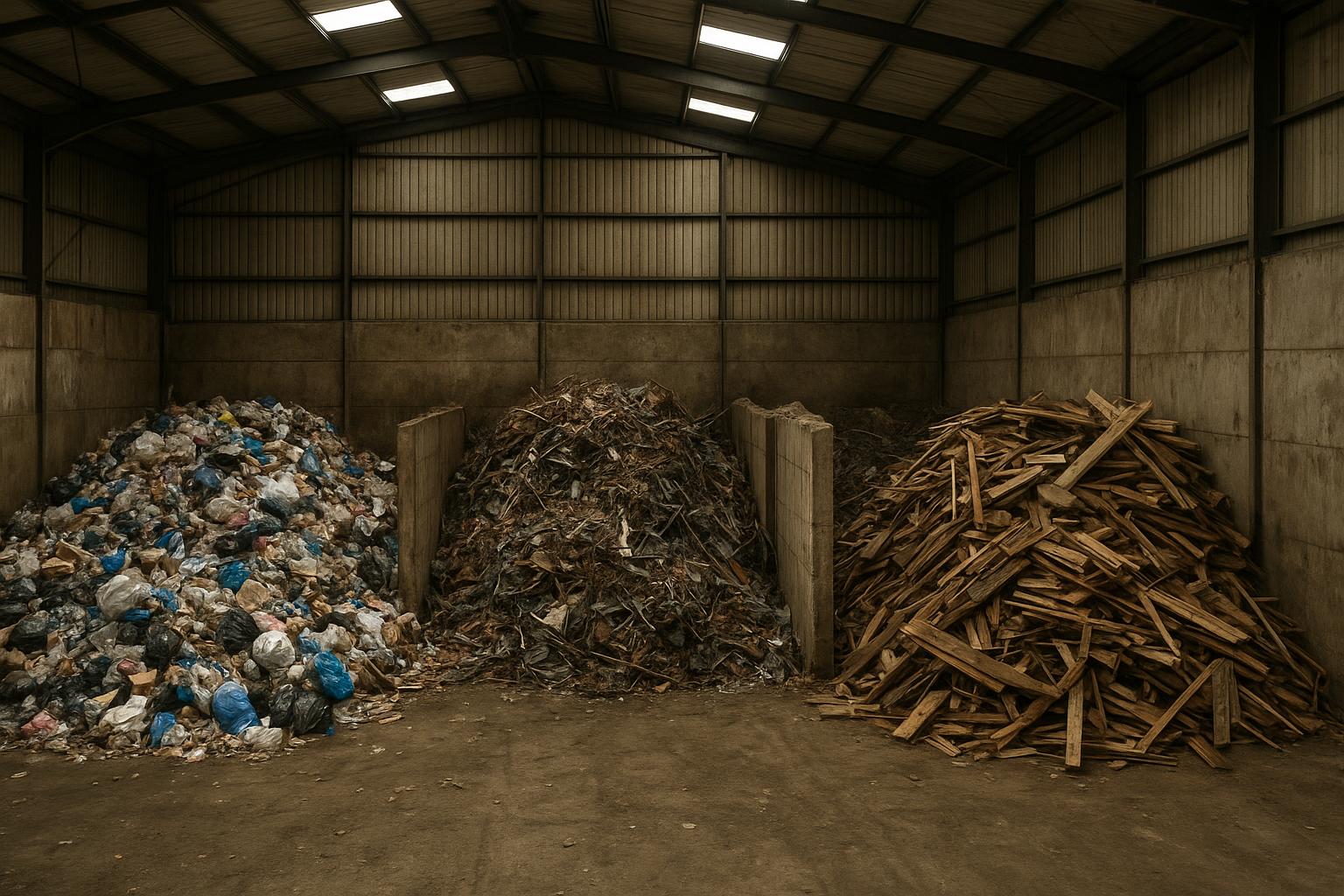
- Tipping and checking. Mixed waste is tipped in a designated area at a transfer station, where staff and machinery pick out recyclables.
- Onward transport. Sorted materials are bulked into larger loads and sent to processors, energy recovery or landfill.
- Paperwork. The carrier issues the waste transfer note or invoice, and you keep it.
Time is the limiting factor. A crew with several hours can sort carefully; a crew racing a short booking window will load fast and rely on the transfer station to do the sorting. If reuse matters to you, say so early and allow time for it.
Reuse, donation and resale
Items with a second life are the first to leave the waste stream.
Furniture in good condition, working appliances, tools, books and clothing can often be passed to charity shops, furniture reuse projects or resale channels rather than being thrown away. Whether this happens on your job depends on the carrier: some arrange it routinely, others only on request, and some charities will not accept certain items, such as upholstered furniture without fire safety labels or electrical goods without safety testing.
If reuse matters to you, say so when you request quotes and ask the carrier what they do with reusable items. If you would rather donate items yourself first, see our guide on responsible disposal and consider a charity collection before the clearance day.
What usually happens to each type of item
Different materials follow different routes.
It helps to think in item types rather than in "a house clearance" as one lump. The route depends on what the item is made of, whether it is safe to reuse, and what the receiving site will accept.
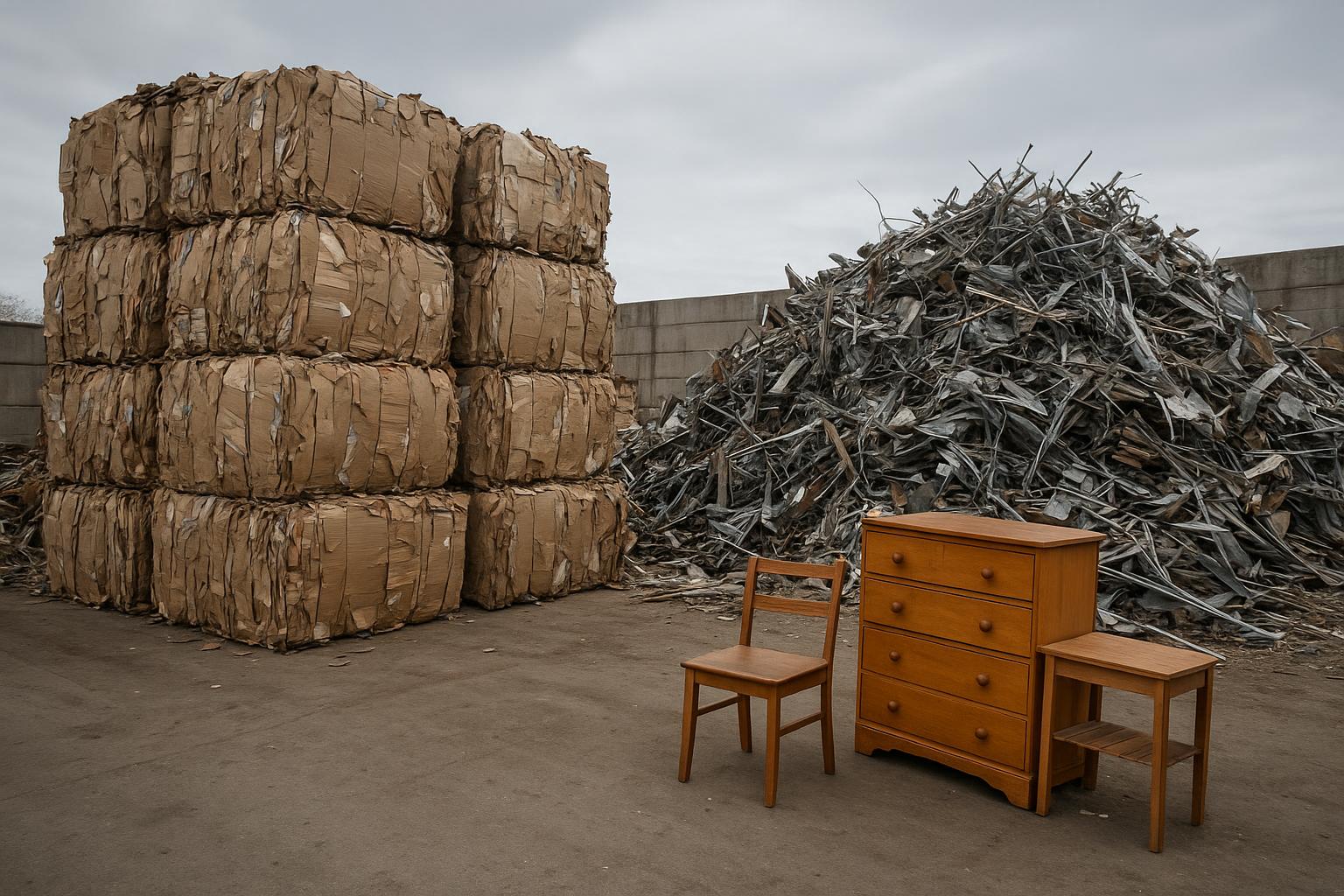
- Solid furniture (wardrobes, tables, chairs, sideboards): the best candidates for reuse. Clean, undamaged pieces can go to furniture reuse projects, charity shops or resale. Damaged wood is usually chipped or shredded for recycling or biomass.
- Sofas, armchairs and mattresses: upholstered items are harder. Furniture sold or donated for reuse must meet UK fire-safety labelling rules, so older pieces without a permanent label are often not accepted for reuse. Many councils and carriers treat them as bulky waste for treatment. Sofas made before the early 2000s can also raise questions about chemical content, which is a separate topic from ordinary disposal.
- Electrical items: anything with a plug or battery falls under the waste electrical and electronic equipment (WEEE) rules and should go to an approved treatment route rather than the general skip. Working items may be tested and reused; the rest are dismantled for metals, plastics and circuit boards.
- Fridges and freezers: these contain refrigerant gases and insulation foam that need specialist handling, so they are normally kept apart from general waste.
- Books, paper and cardboard: books can be donated or resold, the rest is baled and recycled. Confidential papers should be shredded rather than put out whole.
- Textiles and clothing: wearable items go to charity or textile recyclers; badly worn textiles may be recycled into wipes or fibre, or end up as residual waste.
- Metal: bed frames, shelving, tools and appliances casings are readily recycled because scrap metal has a ready market.
- Garden waste and timber: usually composted or chipped; treated timber and painted wood follow a different route.
- Glass and ceramics: crockery in good condition can be reused; broken glass and ceramics are normally treated as general or inert waste.
- Paint, solvents, oils and chemicals: hazardous or restricted, never put in a general load, and a reason a carrier may ask what is in the garage or shed.
This is a general picture, not a promise: the exact destination of any single item is decided by the carrier and the sites they use.
Transfer stations, recycling and what is left
Mixed waste rarely goes straight to its final destination.
Mixed household waste from a clearance usually goes first to a licensed waste transfer station. This is a permitted site where loads from many vehicles are tipped, checked, sorted and bulked up into larger loads. From there, materials are sent on: metals to scrap processors, wood and cardboard to recyclers, electrical items to approved WEEE treatment, and residual waste to energy recovery or landfill. Waste that is not suitable for the general stream, for example hazardous items, goes to sites permitted to take it.
Because waste moves through several sites, the paperwork matters. A waste transfer note records what was transferred, who transferred it and which carrier took it, and it is how you show that your waste left your hands lawfully. We explain this in our waste transfer note guide.
London boroughs also operate household waste and recycling centres for residents. These are generally free to residents for household waste in normal domestic quantities, but rules differ by borough on vans, trailers, permits and what types of waste are accepted, so check your council before turning up.
How this works in London specifically
Dense housing, limited space and borough-by-borough rules.
London is a dense city with limited space for waste handling, so a lot of the process happens at transfer stations and then at facilities outside the immediate area. Each borough, or a joint waste authority, runs household waste and recycling centres for residents and its own bulky waste collection service. Rules differ: some centres restrict van access, some ask for proof of address, and some limit how much you can bring in one visit. Always check the council's page before planning a trip.
Commercial carriers collecting from your home do not use the free resident service in the same way. A registered carrier taking waste from a property is moving waste that the law treats as controlled waste, and they generally take it to sites that accept commercial vehicles and charge for tipping. That tipping charge, plus landfill tax where waste is landfilled, is one of the real costs that sit behind a clearance price. For how those costs feed into a quote, see our pricing by volume guide and the prices page.
If you are clearing a home in a specific borough, our coverage map shows where carriers on our network operate, and the borough pages explain local arrangements.
Personal papers, photographs and confidential items
These deserve their own route.
A clearance usually turns up bank statements, letters, medical papers and old photographs. Do not assume the crew will treat these as ordinary waste. Before the clearance, go through paperwork and set aside anything with personal details, financial information or sentimental value. Our guides on hidden family valuables and documents and probate house clearance timing explain why executors in particular should not discard papers until the estate is settled.
For confidential material that needs destroying, a shredding service issues a certificate of destruction and recycles the shredded paper. If you need this, ask when you request quotes; some carriers offer it and others do not. The confidential waste and document clearance page describes the service.
Energy recovery and landfill
The last stages of the hierarchy, for what cannot be reused or recycled.
Material that cannot be reused or recycled, such as heavily contaminated, mixed or damaged items, may be sent to energy-from-waste facilities, where it is burned to generate heat or electricity, or to landfill. The mix varies by region and by carrier. We do not publish a single company-wide recycling percentage, because the figure depends on what is in your particular clearance and which sites the carrier uses; be cautious of any firm quoting a precise figure without being able to explain how it is measured.
Common myths about where clearance waste goes
A few things people often assume.
- "Everything gets recycled." Not everything can be. Mixed, damaged or contaminated items often cannot be, and a responsible carrier will say so instead of making a blanket claim.
- "Everything goes to landfill." Also untrue. Waste regulation pushes carriers toward reuse, recycling and recovery, and landfill carries a tax that makes it the expensive end of the process.
- "A cheap quote means the same journey." A very low price can mean sorting is skipped and the load is tipped mixed. It can also mean the waste is not going to a licensed site at all, which is why the registration check matters. Read our guide on the risks of hiring an unlicensed man and van.
- "Once it leaves my house it is not my problem." Your duty of care continues until the waste is transferred to an authorised person with proper records.
- "Donating is always better." Reuse sits above recycling in the hierarchy, but only for items that are safe and in saleable condition. Donating a broken item shifts the cost of disposal onto a charity.
How you can improve the outcome before clearance day
Small steps that increase reuse and cut cost.
You do not have to do the carrier's job, but a little preparation changes what happens to your belongings:
- Separate items you want to keep, sell or give to family from items to clear. Clear labelling prevents mistakes.
- Offer good furniture and appliances to charities, neighbours or local reuse groups before the clearance date. Many charities need notice.
- Check for restricted items such as paint, chemicals, gas bottles and anything that might contain asbestos, and tell the carrier in advance.
- Bag textiles and books separately so they can be sent to reuse or recycling rather than into a mixed load.
- Remove batteries and personal data from devices, and keep valuables and documents with you.
If the property is a deceased estate, take extra care and talk to the executor first; see our executor responsibilities guide and the overview of organising a house clearance after bereavement.
The paperwork that proves the journey
You are entitled to evidence, and you should keep it.
As a householder you have a legal duty of care for the waste you produce under section 34 of the Environmental Protection Act 1990: you must take reasonable steps to make sure it is passed only to an authorised person. In practice that means checking the carrier is registered with the Environment Agency, using the gov.uk waste carrier check, and keeping a waste transfer note or invoice describing the waste. Our guide to the householder duty of care goes into the detail, and the penalties guide explains what can happen if waste is dumped and traced back to you.
Questions to ask your carrier before booking
Five questions that tell you most of what you need to know.
- Are you registered as a waste carrier, and what is your registration number?
- Where will the waste be taken, and which licensed sites do you use?
- What happens to reusable furniture and electrical items?
- Will I receive a waste transfer note or itemised paperwork?
- Are there items you cannot or will not take?
houseclearance.co is a platform that matches you with registered carriers who quote for your job; each carrier operates its own vehicles and its own disposal arrangements, so the answers come from the carrier you choose. Read how to choose a licensed house clearance company before you accept a quote, and see the waste carrier licence page for how registration works.
What happens to the paperwork and the data after the job
Records and privacy.
Once the clearance is complete, keep the carrier's paperwork for a sensible period. Councils and the Environment Agency can ask about waste years after it was moved, and a record in a drawer is far better than a recollection. A waste transfer note or invoice should name the carrier, give their registration number, describe the waste and carry the date. Store a photo of it with your other property documents.
For deceased estates, the executor should keep clearance records with the estate papers, since they can be relevant to accounts and to any dispute among beneficiaries about what happened to particular items. If the property is going on the market, buyers' solicitors sometimes ask whether the property has been cleared and whether anything was left in lofts, sheds or outbuildings, so a record of the clearance can help the sale run smoothly.
Finally, remember personal data. Before a clearance, remove or wipe anything that holds information about you or the previous occupant: laptops, phones, tablets, hard drives, memory cards, and printed documents. Items that are reused or recycled can pass through several hands, and data left on a device can follow it.
Frequently asked questions
The questions people ask most about where clearance waste ends up.
Does everything from a house clearance go to landfill?
No. Under the waste hierarchy, reuse and recycling come before landfill, and a responsible carrier sorts items so that reusable goods, metal, wood, cardboard and electricals are diverted where possible. What proportion is diverted depends on the carrier, the condition of the items and the sites used.
What is a waste transfer station?
A waste transfer station is a permitted site where waste from many collections is tipped, sorted and bulked up before being sent on to recycling, energy recovery or landfill. Most mixed clearance waste passes through one.
Can I find out where my waste was taken?
You can ask your carrier which licensed sites they use, and a waste transfer note or itemised invoice should describe the waste and the carrier. Keep these records in case anyone queries the waste later.
Are my donated items guaranteed to be reused?
No. Charities and reuse projects can refuse items that are damaged, unsafe or do not meet safety rules, and those items then enter the recycling or waste stream.
Do I have any legal responsibility once the waste has left my property?
Yes. Your householder duty of care means you must take reasonable steps to pass waste only to an authorised person, such as a registered waste carrier, and keep proof. If waste is dumped and traced back to you, you can face a penalty.
