
Direct answer
The best outcome for commercial furniture is reuse: resale, donation, internal redeployment or refurbishment. What cannot be reused can often be partly recycled, because desks contain timber-based panels and metal, and chairs contain steel, aluminium, plastics, foam and fabric. Mixed-material office chairs are the hardest to recycle because they must be dismantled by hand, so a lot ends up as general waste or energy recovery. A business is responsible for its waste under the duty of care, so it should use a registered waste carrier, keep waste transfer notes and ask what actually happens to the furniture. Rules and facilities vary, so check GOV.UK and your local council or waste contractor.
Contents
- Why office furniture is a waste problem
- Lease ends, refits and relocations
- The waste hierarchy applied to furniture
- Why it matters to the business
- Audit what you have before you call anyone
- Estimating volume and weight
- Reuse routes for chairs and desks
- Selling through resellers and auctions
- Community and charity reuse
- Offering furniture to staff and neighbours
- Why office chairs are hard to recycle
- Foam, fabric and fire safety
- Refurbishment and parts
- Desks, tables and storage
- Scrap metal and waste wood
- Security, data and sensitive contents
- Staff belongings and lost property
- Legal responsibilities for a business
- Records to keep
- Briefing a clearance carrier
- Common mistakes
- Frequently asked questions
Why office furniture is a waste problem
Bulky, durable and mixed.
Office furniture is built to last, which is good for reuse and awkward for disposal. A single desk can contain chipboard or MDF with a melamine or laminate surface, steel legs, plastic edging and cable trays. A task chair can contain steel, aluminium, nylon, polyurethane foam, fabric and a gas-lift cylinder.
When an office closes, relocates or refits, a lot of furniture is replaced at once. That produces large volumes in a short time, usually under pressure from a lease end date. Pressure is when poor decisions happen, such as sending everything to a skip because it is the quickest option.
A little planning changes the outcome. Knowing what you have, what condition it is in and where it could go lets you separate the reusable pieces from the genuine waste before the clearance day.
Lease ends, refits and relocations
Timing drives decisions.
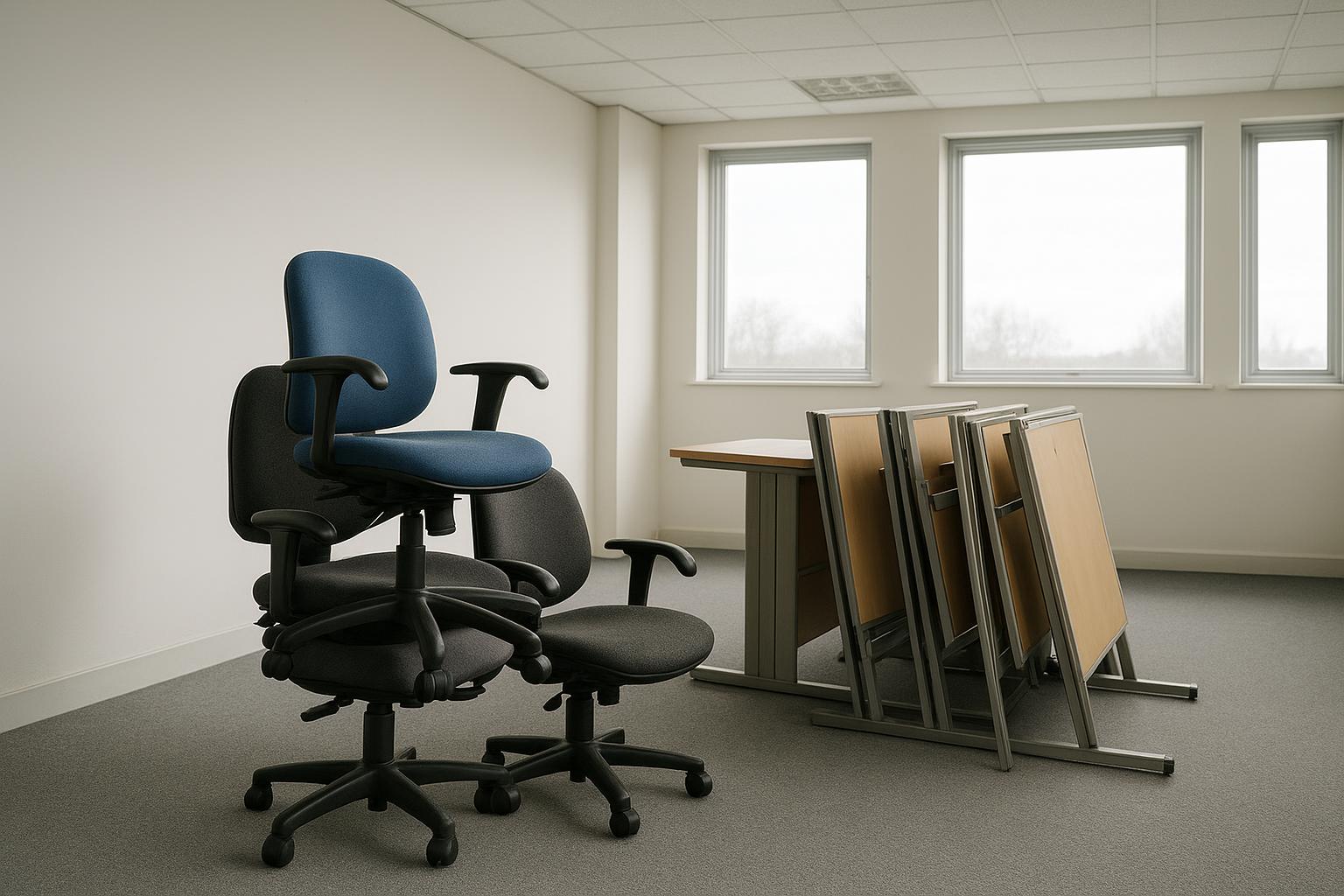
Most commercial furniture clearances are driven by a date. A lease break, a landlord handback condition, a building refurbishment or a move to hybrid working sets a deadline, and everything must be out by then. A common reinstatement requirement is to return space empty and clean.
Check the lease or handover paperwork early so you know what you must remove and by when. Items left behind can lead to charges, and a rushed disposal is rarely the greenest or the cheapest.
If you have several weeks, you can run a reuse programme alongside the clearance. If you have a few days, focus on getting a reliable carrier and good paperwork.
The waste hierarchy applied to furniture
Prevent, reuse, recycle, recover, dispose.
The waste hierarchy is the order of preference set out in UK waste policy: prevent waste, prepare for reuse, recycle, recover (for example energy from waste) and, last, dispose to landfill. Businesses that produce waste are expected to apply it, and your waste contractor may ask how you have done so.
For furniture, prevention means keeping items longer, repairing them and buying durable, repairable designs. Preparing for reuse means cleaning, checking and passing items to a new user. Recycling means breaking the item into materials that become new products. Recovery usually means burning what is left to generate energy.
In practice a single clearance often uses several levels at once: good chairs resold, desks partly recycled, damaged items sent for recovery. Our guide to energy from waste explains what happens at the recovery step.
Why it matters to the business
More than good intentions.
For many companies, the way furniture is handled now appears in sustainability reporting, tender questions and client due diligence. Showing that you applied the waste hierarchy, with records, is more credible than a general statement that you recycle.
Procurement teams, landlords and customers increasingly ask for evidence. Even a short summary with quantities reused, recycled and disposed of is useful, as long as it is based on records from your carriers and recipients.
Do not claim a recycling percentage that you cannot support. If a carrier gives you a figure, ask how it was calculated and whether it covers your load or is a company average.
Audit what you have before you call anyone
A simple inventory.
A short inventory makes every later step easier. Walk the floor and record desks, chairs, pedestals, storage units, screens, meeting tables, soft seating and anything unusual. Note rough quantities, the condition of each group and whether items are branded or from a known manufacturer, because those details affect resale and reuse interest.
Group items into three piles in your notes: clearly reusable, repairable or doubtful, and waste. Do not decide too early. A chair with a worn seat may still be refurbished, while a desk with water damage probably is not worth moving.
Take photographs and keep the list. Whoever collects the furniture, whether a refurbisher, a charity or a clearance carrier, can quote more accurately from clear information, and you will have a record if a disagreement arises later.
Estimating volume and weight
Helps with quotes.
A rough count of items is usually enough for a first quote. A carrier may also ask how many are large, such as boardroom tables, and whether items are fixed to walls or floors. Fitted items often need dismantling and take longer.
Weight matters on upper floors and for lifts. Tell the carrier about lift sizes, stairs, loading bay access and any parking restrictions. Our guide on estimating waste volume is aimed at homes, but the thinking is the same.
If you are unsure, say so and send photos. A quote based on a clear brief is more reliable than a vague one.
Reuse routes for chairs and desks
Often the best option.
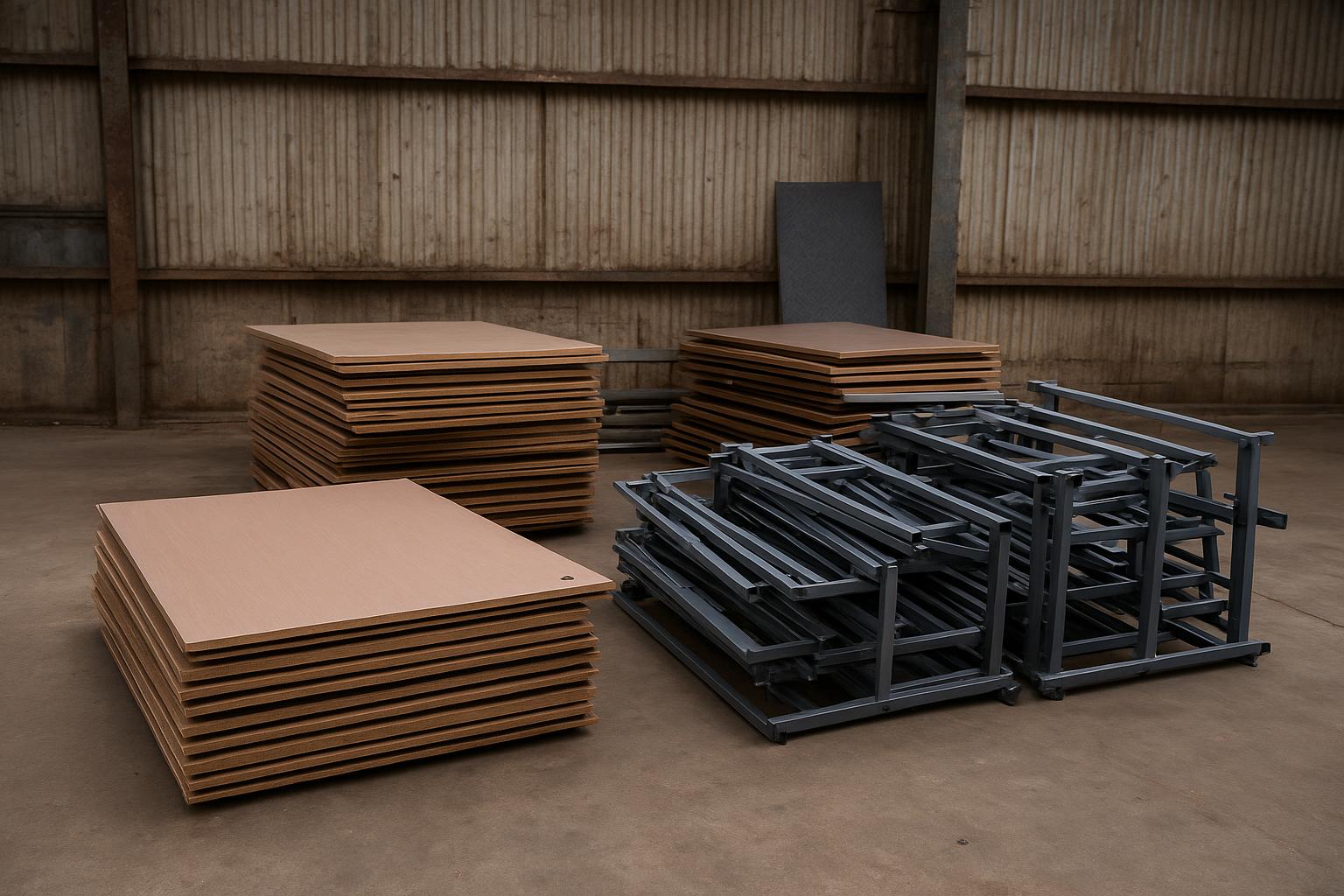
Several routes can work for furniture in decent condition. You can redeploy items to another office or home-working staff, sell them to staff, sell through a commercial office furniture reseller or auction house, or donate to a charity or community project that accepts commercial furniture. Each has trade-offs of speed, effort and return.
Resellers and refurbishers often prefer branded, recent, complete sets and may decline mismatched pieces. Charities often need furniture to meet safety rules and may only take certain items. Schools, community groups and start-ups can be good recipients when you contact them directly and agree collection terms.
Ask each recipient what they will accept, who collects and when, and whether they need a list in advance. Do not assume that a free offer will be collected quickly, so build in time before your deadline.
Selling through resellers and auctions
What to expect.
Commercial furniture resellers and auction houses may buy, take on commission or collect for free, depending on the stock. Branded ergonomic chairs and clean, complete desk sets tend to attract interest, while old, damaged or mismatched items often do not.
Ask whether the buyer collects, whether they remove everything or only selected lots, and whether they provide a receipt. Take care that "free collection" does not mean you are left with the leftovers.
Return expectations should be modest. Used office furniture rarely achieves high prices, and the main benefit is often avoiding disposal cost and keeping items in use.
Community and charity reuse
Check the fit first.
Community projects, start-ups, schools and some charities can use desks, chairs and storage. They often have limited space and volunteers, so offer clear photos, dimensions and a collection window.
Some charities cannot accept upholstered furniture without fire safety labels, and commercial chairs may not always qualify. Our guide to furniture fire safety labels explains the issue.
You can also read about charity furniture collections in London for ideas on how groups collect.
Offering furniture to staff and neighbours
Quick and local.
Employees often welcome the chance to buy or take chairs and desks for home working. A simple internal notice with a clear deadline, collection window and rules on payment can clear a lot of stock cheaply. Keep a record of who took what.
Neighbouring businesses, co-working spaces and community groups can also be good recipients. They can often collect quickly and may not need furniture to be perfect.
Be clear about condition, and do not promise anything you cannot supply. Make sure items taken by individuals are taken at their own risk and removed on time.
Why office chairs are hard to recycle
Many materials in one product.
A typical office chair is an assembly of different materials that are bonded, bolted or moulded together. Foam is attached to a plywood or plastic shell, covered in fabric, mounted on a metal mechanism and base, with a gas-lift cylinder and plastic castors. Separating them takes labour and time.
Metal parts can be recycled if they are removed, and some plastics can be recycled if they are identifiable and clean. Foam and mixed fabric are much harder. Recyclers vary in what they accept, so some chairs are dismantled by hand while others are shredded or sent for energy recovery.
Because of this, reuse or refurbishment is usually a better option for chairs than recycling. If a chair is only worn, new covers or parts may extend its life considerably.
Foam, fabric and fire safety
Why labels matter.
Upholstered furniture sold in the UK must meet fire safety rules, and most chairs carry labels showing this. Foam and covers can be hard to separate and are often treated as general waste or sent for energy recovery.
Some older foam can contain flame retardants that need careful handling at end of life. If you have a large volume of older upholstered seating, ask your carrier or waste contractor how they classify it. See our guide on flame retardants in upholstered furniture.
Keep labels on chairs you want to reuse, since they help the next user and the reseller.
Refurbishment and parts
Extending a chair's life.
Specialist refurbishers can replace gas lifts, castors, arms and seat pads, and re-cover fabric. For good-quality chairs that are structurally sound, this can be better than replacement. Ask whether the refurbisher collects, and whether they prefer a minimum quantity.
If you have a mix of brands and conditions, some chairs may be taken for parts. That still keeps material in use, and is better than shredding a whole chair.
Ask what happens to anything the refurbisher cannot use, because that is the point where waste leaves their control and becomes your concern again.
Desks, tables and storage
Timber panels and steel.
Desks and storage units are usually easier to handle than chairs. Many are made from timber-based panels with a laminate finish, mounted on metal frames. The metal can be separated and recycled as scrap. The panels can sometimes be processed as waste wood, depending on the finish and the facility.
Solid timber furniture is more valuable for reuse and recycling than veneered or laminated board. Height-adjustable desks have motors and electronics, which may fall under electrical waste rules and should not be thrown in with general waste. Ask the carrier how they handle these.
Filing cabinets, lockers and metal shelving are generally good candidates for scrap metal collection, and often for resale. Remove contents, keys and any paperwork before collection.
Scrap metal and waste wood
Separating materials.
Metal frames, filing cabinets and shelving are usually accepted by scrap metal dealers, who must be registered in the UK. Our guide to scrap metal collection in London explains what to ask.
Waste wood from furniture is usually graded by contamination. Painted or laminated board is treated differently from clean timber. A carrier or waste contractor can tell you which route your material will take.
Remove as much non-wood material as is practical, but do not take apart items unsafely. If dismantling is slow, ask the carrier to do it as part of the job.
Security, data and sensitive contents
Empty everything first.
Desks and storage units can hold more than people expect: confidential papers, USB sticks, personal items, keys and lockers full of staff belongings. Check every drawer and cabinet before collection, and agree who is responsible for the clear-out.
If any paperwork contains personal or commercial confidential data, it should be removed and disposed of properly, not left for a furniture collector. Our guide to hidden valuables and documents in a clearance is written for homes but the checking habit applies to offices as well.
Computers and phones should be wiped through a proper IT disposal process. Furniture collectors are not responsible for your data and should not be handed devices.
Staff belongings and lost property
A neat handover.
Lockers and desks often contain personal items, from shoes to medication. Give staff a deadline to clear their belongings and a way to collect anything left. After that date, decide how unclaimed items will be handled and record what you did.
Do not assume that everything left behind is waste. Valuable or sensitive items should be returned or stored. Keep a note of what was found and where it went.
A short checklist for each floor helps to confirm that every cabinet and drawer has been checked before the carrier arrives.
Legal responsibilities for a business
Duty of care applies.
Businesses in England have a legal duty of care for the waste they produce. In broad terms, you must keep waste safe, pass it only to someone authorised to take it, and keep a written description and transfer record. That means using a registered waste carrier and keeping the paperwork.
Commercial waste is different from household waste. A business cannot normally take its office furniture to a household recycling centre, and may need a trade waste route instead. Local rules vary, so check with your council or a licensed waste contractor.
Our guides to commercial versus household waste and waste transfer notes cover the basics, and GOV.UK explains the current duty of care for businesses.
Records to keep
Simple and consistent.
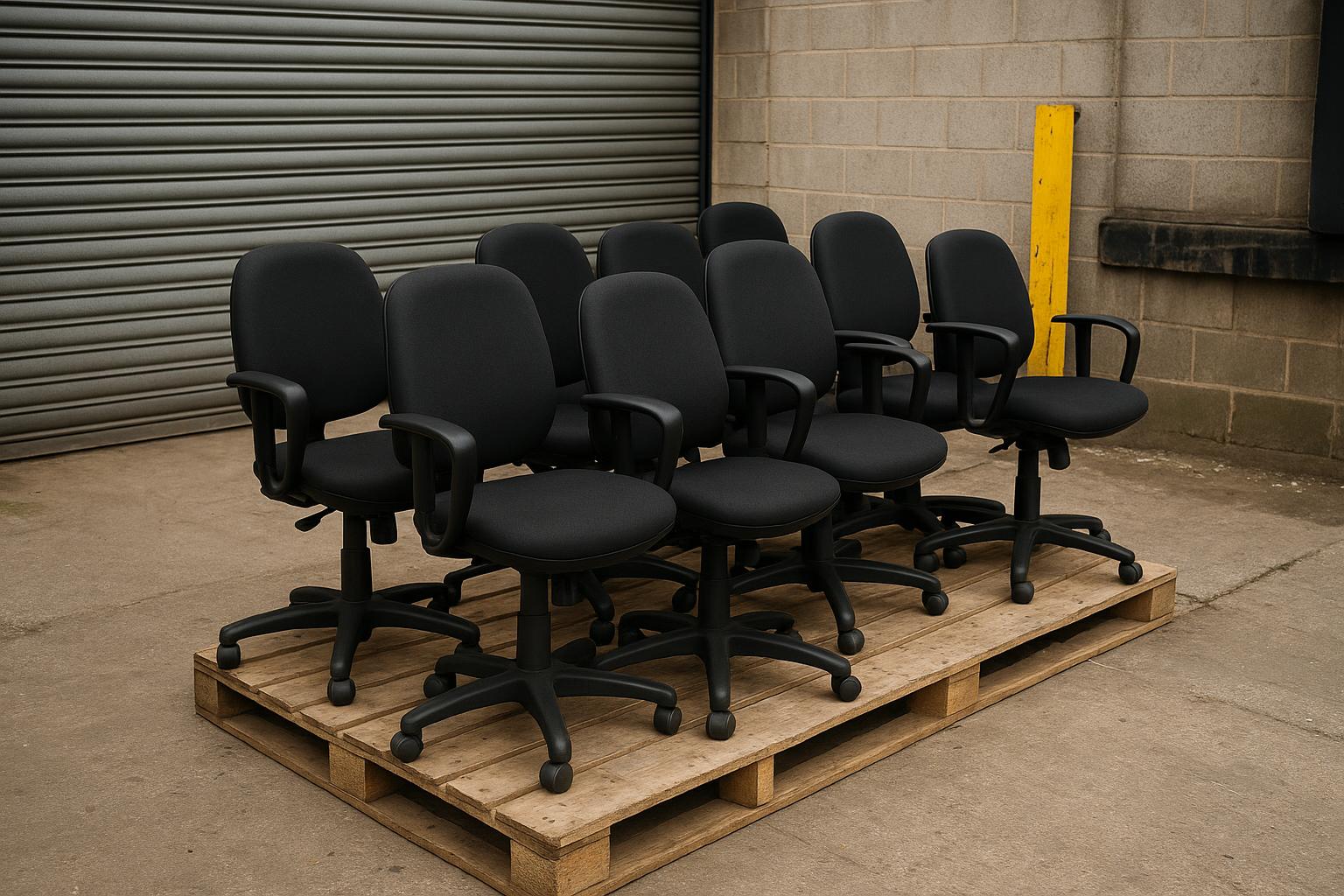
Keep the waste transfer note, the carrier's registration details, the date of collection, a description of the waste and the quantity. For reuse, keep a short note of the recipient and what they took.
Records are usually needed for at least the period set out in the rules, so check GOV.UK for the current requirement. Store them somewhere that other people in the business can find, not only in one person's inbox.
You can check a carrier's registration on the Environment Agency public register, and our guide to choosing a licensed company explains the steps.
Briefing a clearance carrier
Ask the right questions.
If you use a carrier, describe the furniture clearly: quantities, floors, lift access, loading restrictions and whether items are to be reused or disposed of. Mention any building rules such as booking windows, insurance requirements or restricted hours.
Ask whether they will take items for reuse or only for disposal, where the waste goes afterwards, and whether you will receive a waste transfer note. A carrier who cannot say where the furniture goes is a warning sign, because you remain responsible for the waste.
houseclearance.co is a marketplace that connects customers with independent carriers who quote for jobs. Compare quotes on scope and paperwork as well as price, and read our guide on comparing quotes beyond price.
Common mistakes
Avoid these.
- Sending everything to a skip without checking what could be reused.
- Not asking where the furniture goes after collection.
- Accepting a quote without a waste transfer note or written scope.
- Leaving data, keys or personal items in cabinets.
- Forgetting building access rules, lift bookings and insurance requirements.
- Claiming recycling figures that cannot be supported by records.
A short pre-collection checklist and a named person on site on the day prevent most of these problems.
Frequently asked questions
Common questions about recycling commercial furniture.
Can office chairs be recycled?
Partly. Metal and some plastic parts can be recycled if they are separated, but foam, fabric and bonded parts are difficult. Reuse or refurbishment is usually better, and what is recycled depends on the facility.
What is the most eco-friendly way to get rid of office furniture?
Reuse comes first: redeploy, resell, refurbish or donate it. Recycling is next, and disposal is the last choice.
Can a business use a household recycling centre?
Usually not. Commercial waste normally needs a trade waste route, but local rules differ, so ask your council or waste contractor.
Do I need a waste transfer note for office furniture?
Businesses generally need to keep a written record of waste transferred, and a waste transfer note is the usual way to do so. Check the current rules on GOV.UK.
Are old desks hazardous waste?
Ordinary desks are not usually hazardous, but items with electronics, batteries or contaminated materials may need special handling. Ask your carrier.
Will charities take used office furniture?
Some will, but many have limits on condition, safety and quantity. Contact them first and agree collection details.
What should I do with confidential papers in desks?
Remove them before collection and destroy them through a proper confidential waste process, not through furniture removal.
Does houseclearance.co do the collection itself?
No. It is a quote-matching marketplace where independent carriers provide quotes, so confirm recycling and paperwork details with the carrier you choose.
