Direct answer
In the UK, upholstered domestic furniture supplied in the course of business, including second-hand items sold by charities and shops, is generally expected to meet fire resistance requirements under the Furniture and Furnishings (Fire) (Safety) Regulations and to carry a permanent label that shows it has been tested. Without a label, a charity cannot show that a sofa or armchair is compliant, so it usually has to refuse it. Furniture made before 1950 is generally exempt, and some items are outside the rules, but the details are technical and can change. Check under the cushions and along seams, photograph the label, and if it is missing, ask the charity about its policy or consider other routes such as sale to a private buyer or disposal by a licensed carrier.
Contents
- What the fire safety label is
- A short history of the rules
- The law in plain English
- Who enforces the rules
- Why charities cannot take the risk
- Reuse projects with trained staff
- How to find and read the label
- Photographing labels and documents
- If the label is missing or unreadable
- Selling or giving away privately
- Items outside the rules
- Sofa beds, recliners and combined items
- Labels and house clearance
- How it affects your quote
- If you are buying second-hand furniture
- Fire safety at home, whatever the label says
- Frequently asked questions
What the fire safety label is
A permanent record of compliance.
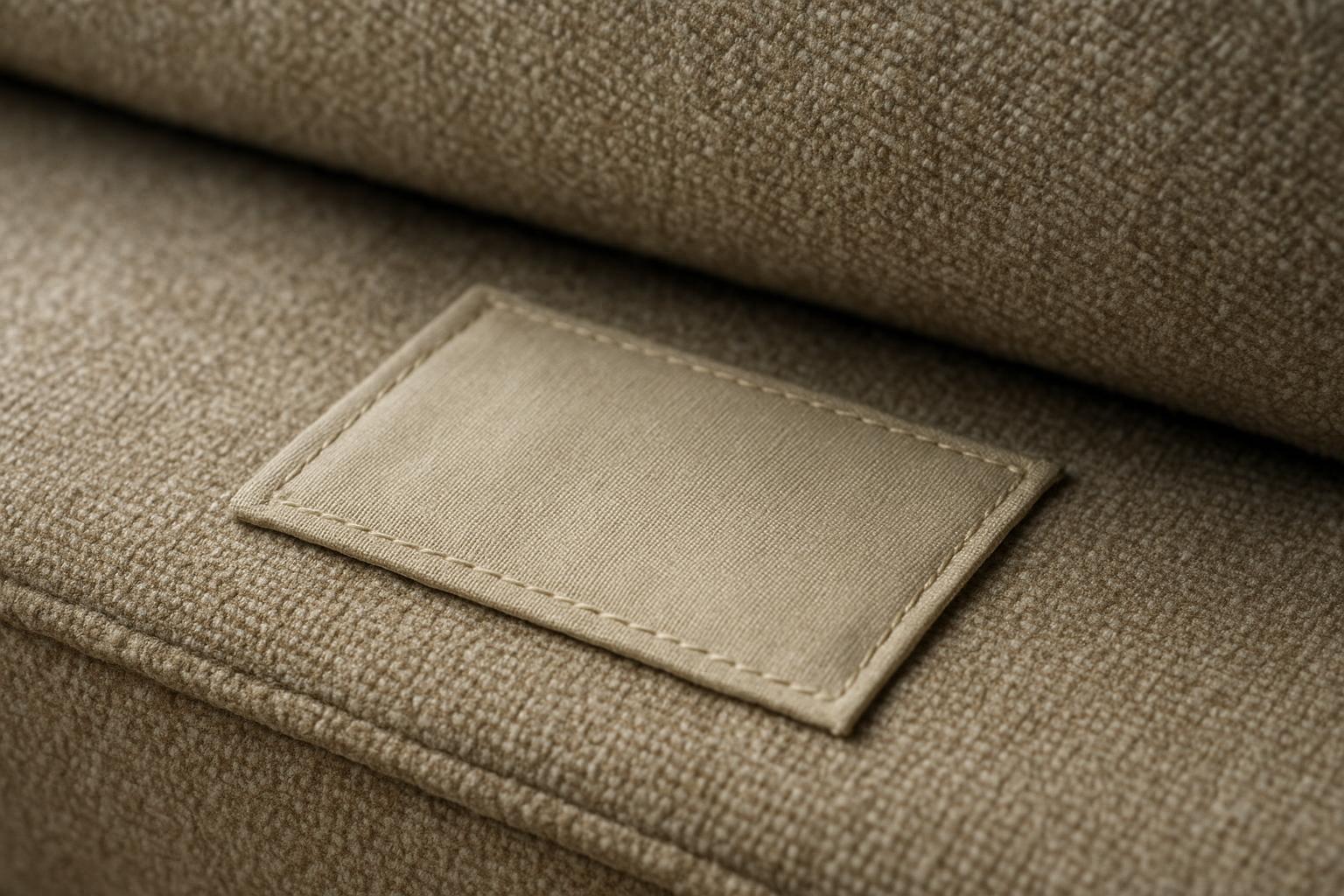
Most upholstered furniture sold in the UK carries a permanent label, usually stitched to a seam or under a cushion. The label confirms that the item and its filling have passed the fire resistance tests required for domestic furniture. The details vary by date and manufacturer, but it typically states that the product meets the relevant standard and gives some information about the filling and cover.
The label exists because upholstered furniture and the foam inside it can burn quickly and give off toxic smoke. Fire safety rules require manufacturers to use materials and constructions that resist ignition from a cigarette or a match, and to mark the product so that buyers, sellers and enforcement officers can tell that it complies.
It is not a decorative or optional extra. For a shop or charity, the label is the main way to show that an item is legal to supply.
A short history of the rules
Why older furniture is different.
Fire safety rules for upholstered furniture were introduced in the late 1980s after a series of serious household fires in which foam-filled furniture burned rapidly and produced toxic smoke. The 1988 regulations, later amended, required manufacturers to use fire-resistant fillings and covers and to label products so that compliance could be checked.
Before these rules, there was no general requirement, and many sofas and chairs made in the 1960s and 1970s used materials that ignite easily. This is why the date on a label matters. A sofa made before the late 1980s may not meet the standard, and a charity that sells it could be in breach of the law.
Rules have continued to develop since then, and the choice of flame retardants has changed over the years. That is one reason why disposal of older furniture has become more complex, as discussed in our guide to POPs in old sofas.
The law in plain English
Rules for suppliers, not householders.
The Furniture and Furnishings (Fire) (Safety) Regulations 1988, as amended, set fire safety requirements for upholstered furniture supplied in the UK. They apply to people who supply furniture in the course of a business, which includes retailers, auction houses, second-hand dealers and charity shops. They do not stop a private individual from using or giving away their own furniture, but they affect what shops can legally sell.
The rules cover items such as sofas, armchairs, footstools, bed headboards, futons, sofa beds, cushions and pillows used on furniture, and loose or stretch covers. Some items, such as bedding, carpets and curtains, are outside the scope. Furniture made before 1950 is generally exempt, and sleeping bags and some other items are not covered.
The regulations are technical, and official guidance on GOV.UK and from Trading Standards is the best source. If you run a business or you are unsure, check the current guidance before you rely on this article.
Who enforces the rules
Trading Standards and penalties.
The regulations are enforced by local Trading Standards services. They can inspect shops, markets, online sellers and charities, request evidence of compliance and take action where items are sold without proper labels or do not meet the standard. Penalties can include fines, and in serious cases prosecution.
For charities, the risk is not only legal. An incident involving a donated sofa that catches fire would harm trust and could affect donations. This is why even small shops often apply the rule strictly, and why a refusal should not be taken personally.
If you run a small business that sells second-hand furniture, Trading Standards or the Business Companion service can advise on your duties. For householders, the key point is that the rules are about supply, and a label is evidence that a seller has followed them.
Why charities cannot take the risk
Legal duty and public safety.
A charity that sells a non-compliant sofa could be committing an offence, and in the worst case could be responsible for a fire that injures a buyer. Even if the risk seems small, the consequences are severe, and charities need to protect their beneficiaries, volunteers and reputation.
This is why many shops apply a simple rule: no label, no sale. They cannot test the foam or fabric themselves, and they cannot rely on a donor's recollection of when it was bought. Some furniture reuse projects have trained staff who can assess older items, but most high-street shops do not.
The rule applies to many charities in the same way, so a refusal from one shop does not mean another will accept the same sofa. Always ask about the policy, as set out in our guide to why charity shops refuse certain donations.
Reuse projects with trained staff
Some organisations can assess older items.
A few furniture reuse projects have staff who are trained to check labels, assess the age and condition of items and decide whether they are suitable for resale or for supply to a household in need. They may accept older furniture that a high-street shop would refuse, within the limits of the law.
These projects may also be able to treat or refurbish items, for example by replacing covers or foam so that the item meets current standards, though this is not always economical. Some work with local authorities and housing providers to supply furniture to people setting up a new home.
If your sofa has no label but is in good condition, it is worth asking a reuse project whether they can assess it. Be honest about its age and history, and accept their decision.
How to find and read the label
A two-minute check.
Remove the cushions and look at the base of the seat, along the back and underneath the frame. The label may be sewn into a seam or attached to the frame. It is often white or cream and may have a printed symbol and text. Take a clear photograph with good light so that the text is readable.
- Check each cushion, because loose cushions sometimes carry a separate label.
- Look for a manufacturer name, a year of manufacture or a batch number.
- Note whether the label mentions fire resistance, filling materials or a standard.
- Photograph the label and keep the picture with the receipt or order record if you have one.
- If there is a label, make sure it is firmly attached and not damaged or illegible.
Never cut a label off. A label that has been removed or damaged is unlikely to satisfy a charity, and removing it can make the item harder to sell later.
Photographing labels and documents
A record that helps everyone.
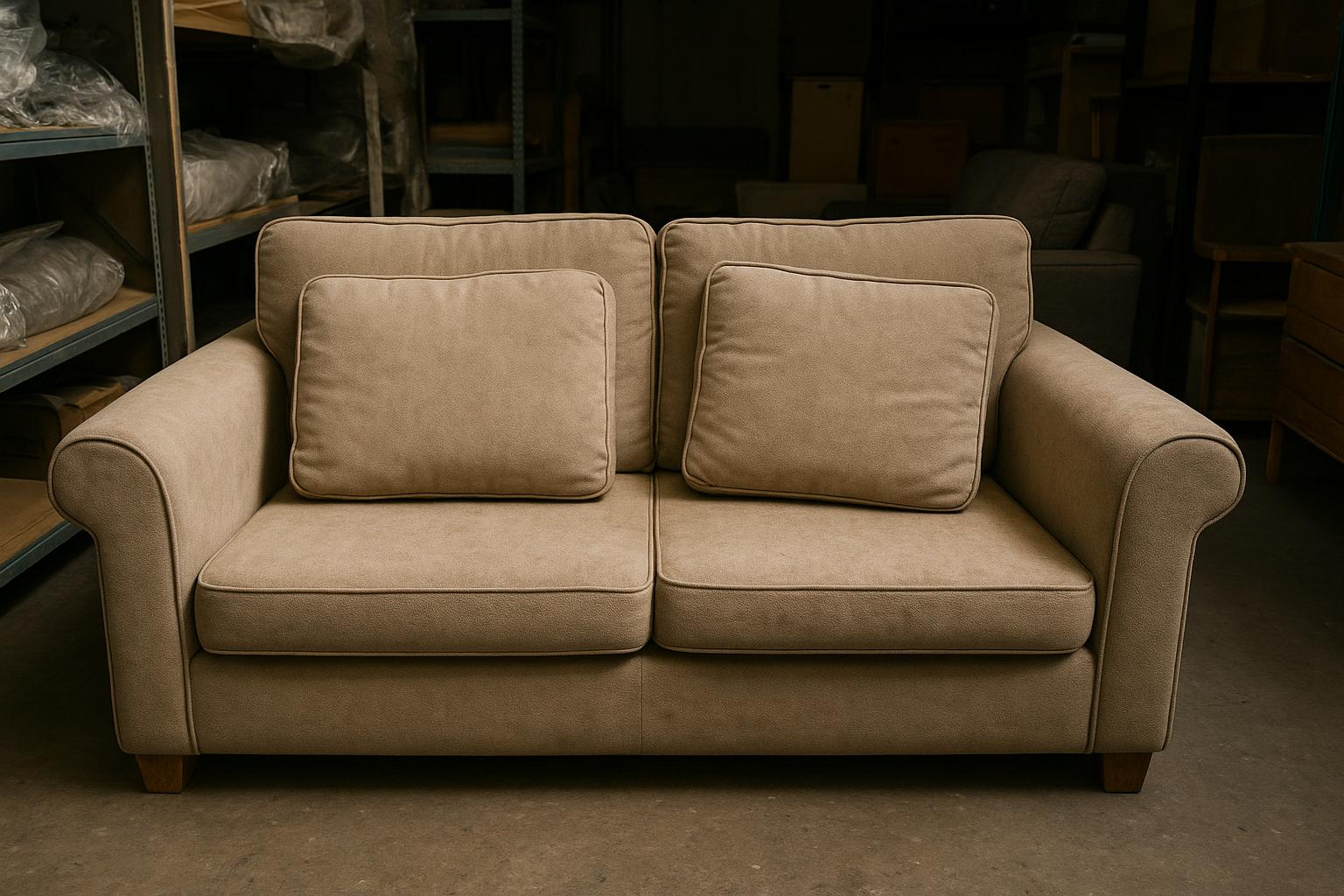
When you photograph the label, include the whole label in the frame and take a second picture that shows where it was attached. Add a picture of the whole item so that the charity can match the label to the furniture. Save the images in a folder with the date and a short note of the item.
If you have the original receipt, delivery note or warranty card, photograph that as well. These documents often give the date of purchase, the manufacturer and the product name, which can help a charity to decide even if the label is faded.
This record also helps if you are clearing a property for an estate, because it shows how each item was assessed and what happened to it. See our guide to probate house clearance timing for related advice.
If the label is missing or unreadable
Options to consider.
If you cannot find a label, first check whether the item is likely to be exempt, for example because it was made before 1950, and whether you have any paperwork that proves its age or compliance. If you have a receipt or an order confirmation, it may show the date and the brand, which a charity can use to decide.
If there is no label and no paperwork, most charities will refuse the item. At that point you can offer it to a private buyer, who is not bound by the supply regulations, though you should be honest about the lack of a label. You can also offer it to a friend or relative, give it away privately or dispose of it through a licensed carrier or council service.
Older sofas may also raise questions about the materials in the foam, as discussed in our guide to POPs in old sofas. A responsible carrier will take this into account when handling the item.
Selling or giving away privately
What is allowed and what to watch.
The supply regulations apply to business supply, so a private sale or gift between individuals is generally outside them. That said, it is wise to be open about what you know. State whether the sofa has a label, how old it is and any marks or damage. A buyer can then decide whether to accept the risk.
Avoid making claims you cannot support, such as saying that the sofa is fire-safe if there is no label. If you regularly sell furniture or sell it as part of a business activity, the rules may apply to you, and you should check the guidance.
If nobody wants an unlabelled sofa, it may be better to dispose of it properly than to pass the problem on. Our guide to how to get rid of a sofa for free explains the options.
Items outside the rules
Not everything needs a label.
Some furniture is not covered, so charities can accept it without a fire safety label. Examples include solid wood tables and chairs with no upholstery, wardrobes, bookcases, chests of drawers, bed frames and shelving. Pillows, duvets and mattresses are subject to different rules, and mattresses are covered by separate regulations that charities usually treat very strictly.
Antique furniture made before 1950 is generally exempt from the supply regulations, though a charity may still refuse it if it is damaged or hard to sell. Garden furniture is largely outside the scope unless it is intended for indoor use.
The line between covered and exempt items can be hard to judge, so a charity may ask for photographs and details. If you are not sure, ask rather than guess. Our guide to furniture donation in London has more on what is commonly accepted.
Sofa beds, recliners and combined items
Extra complexity.
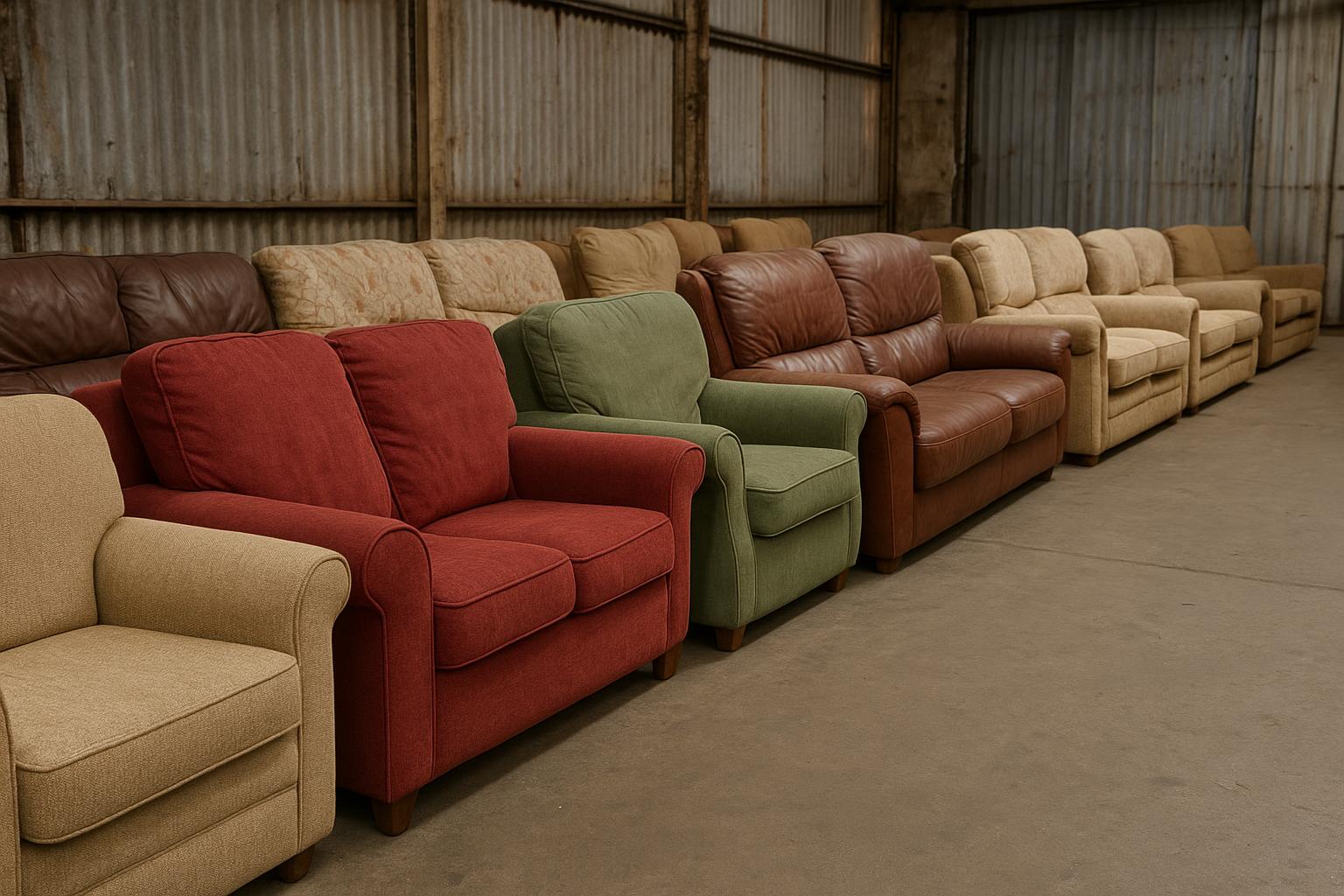
Sofa beds, recliners, chaise longues and corner sofas combine upholstery with metal mechanisms, electric motors or multiple modules. They are still covered by the fire safety rules for the upholstered parts, and they may need extra checks for the mechanism and electrics. A charity may refuse them because they are heavy, hard to store and hard to check.
If you have a sofa bed, photograph the label on both the sofa and the mattress, because the mattress may carry its own label and follow different rules. Check that the mechanism opens and closes smoothly, and note any broken springs or sagging.
Tell the charity what type of item it is before booking a collection, so they can send a suitable crew.
Labels and house clearance
Why your crew will ask.
When a clearance firm assesses a property, it may ask whether the sofas and armchairs have labels, how old they are and whether you want them to go to a charity or reuse partner. The answer affects the route. A labelled, clean item in good condition may be passed to reuse, while an unlabelled or damaged one will go for recycling or recovery.
Photograph the labels before the crew arrives, and tell them about any items with unusual construction, such as sofa beds, recliners or sofas with built-in electrics. Our guide to sofa bed removal and disposal covers the extra complexity of combined furniture.
If you are clearing for an estate, record what you find. A simple list with photographs of labels helps to show that you took reasonable care in deciding what to donate, sell or dispose of.
How it affects your quote
Items without labels may cost more to handle.
A clearance crew may charge more for items that cannot go to reuse. A labelled, clean sofa can be donated and may cost little to remove, while an unlabelled one may need to go for recycling or recovery, which has a gate fee. This is a normal part of how quotes are built.
Tell the firm in advance how many upholstered items there are and whether they have labels. Photographs help a lot. A firm that knows about the items can plan the route, and you will avoid a surprise charge on the day.
Our guide to pricing by volume shows what goes into a clearance quote and where the extra costs come from.
If you are buying second-hand furniture
Check before you pay.
Buyers of second-hand upholstered furniture should look for a label too. A seller who is a business must comply with the supply rules, so it is reasonable to ask. If you are buying from a private seller, there is no legal requirement for a label, but the safety issue is the same.
Keep in mind that an item without a label may not meet current fire resistance standards, and older foam can burn faster and release more smoke. If you have children, elderly relatives or anyone who smokes in the home, the risk is worth taking seriously.
Smoke alarms, safe habits and avoiding smoking on upholstered furniture are good safeguards whatever the age of the furniture. The fire and rescue service offers free home fire safety advice in many areas.
Fire safety at home, whatever the label says
Simple habits matter.
A label is only part of the story. Fit working smoke alarms on every floor, test them monthly and make a plan for how to get out. Avoid smoking on or near upholstered furniture and take extra care with candles, heaters and chargers.
London Fire Brigade and other fire and rescue services offer free home fire safety visits for people who are at higher risk, including older people and those with limited mobility. If you are clearing a relative's home, check their smoke alarms and ask whether they have had a visit.
These steps are cheap and effective, and they protect people whether the furniture is new, second-hand or inherited.
Frequently asked questions
Common questions about furniture fire safety labels and charity donations.
What is the furniture fire safety label?
It is a permanent label on upholstered furniture that shows the item meets UK fire resistance requirements. It is usually stitched to a seam or under a cushion.
Why do charities refuse sofas without a label?
Selling non-compliant upholstered furniture can break fire safety regulations and put buyers at risk. Without a label, the charity cannot show that the item is compliant.
Are all old sofas exempt?
No. Furniture made before 1950 is generally exempt, but items made after that may need to meet the standard. Check current guidance if you are unsure.
Do I need a label to give a sofa to a friend?
The supply regulations apply to business supply, not private giving. Even so, a label is a useful indicator of safety, and you should be honest about its condition.
Does a pillow or duvet need a fire safety label?
Pillows and duvets are treated differently from upholstered furniture, and many charities refuse them for hygiene reasons. Check with the charity.
What if the label has faded?
If the text is unreadable, a charity may refuse the item. Photograph it anyway and ask. A receipt showing the brand and date may help.
Can I remove the label to make the sofa look nicer?
No. Removing the label makes the item harder to sell or donate, and may make it illegal for a business to supply it.