
Direct answer
On a clearance or heavy-lifting day, the safest plan is to keep pets away from the work entirely: board them, leave them with a trusted friend or relative, or confine them in a closed, quiet room with water, bedding and a clear note on the door. Doors will be open for long periods, heavy items will be moving through narrow spaces and strangers will be in the home, which can frighten animals and create trip, crush and escape risks. Check that dogs wear a collar with an ID tag and that microchip details are up to date, tell the crew about any animals before they arrive, and never rely on a pet staying where it usually sleeps.
Contents
- Why clearance day is risky for pets
- Signs that a pet is stressed
- Your main options: board, relocate or confine
- Choosing boarding or a sitter
- Doors, gates and escape routes
- A quick pre-work security walk-through
- Dogs: calm, controlled and out of the way
- Leads, harnesses and handover
- Cats: quiet, dark and contained
- Indoor cats and outdoor cats
- Small animals, birds and reptiles
- Transporting small animals safely
- Hazards on the day
- Garages, sheds and lofts
- What to tell the crew and your carrier
- Agreeing a plan if a pet gets out
- ID, microchip and records
- If a pet goes missing
- Why heavy-lifting jobs need extra care
- Keeping routes and rooms clear
- After the work: settling pets back in
- Rebuilding the routine
- If you are moving house with pets
- Frequently asked questions
Why clearance day is risky for pets
Different from an ordinary day at home.
Pets rely on routine. A clearance, removal or heavy-lifting day removes almost everything familiar at once: strangers arrive, doors stay open, furniture moves, floors are covered, loud noises echo through empty rooms and the layout of the home changes. Many animals respond by hiding, bolting or becoming anxious.
There are physical risks as well. A cat or small dog underfoot can trip someone carrying a heavy item, and the crew cannot always see low movement behind a bulky load. A pet can slip through a door that is held open while a wardrobe is carried out, and end up in a road or a neighbour's garden.
The aim is to remove those risks in advance, so that nobody, human or animal, has to make a split-second decision on the day.
Signs that a pet is stressed
Watch for early warnings.
Animals show stress in different ways. Dogs may pant, pace, whine, bark, drool, tremble or hide. Cats may flatten their ears, hide, hiss, stop eating or toilet in the wrong place. Rabbits and small mammals may freeze, thump or try to burrow.
If you see these signs before the day, practise leaving the pet in its chosen room for short periods. If you see them on the day, move the animal to a quieter place and reduce noise as much as you can.
If your pet is elderly, unwell or has a medical condition, speak to your vet before the day. They can suggest how to keep the animal comfortable.
Your main options: board, relocate or confine
Choose one before the day.
The safest option for most animals is to take them out of the home for the day. A trusted friend or relative, a boarding kennel or cattery, a dog daycare or a pet sitter can all work, provided the animal knows or can safely meet the person. Arrange it well ahead, since boarding places can fill up.
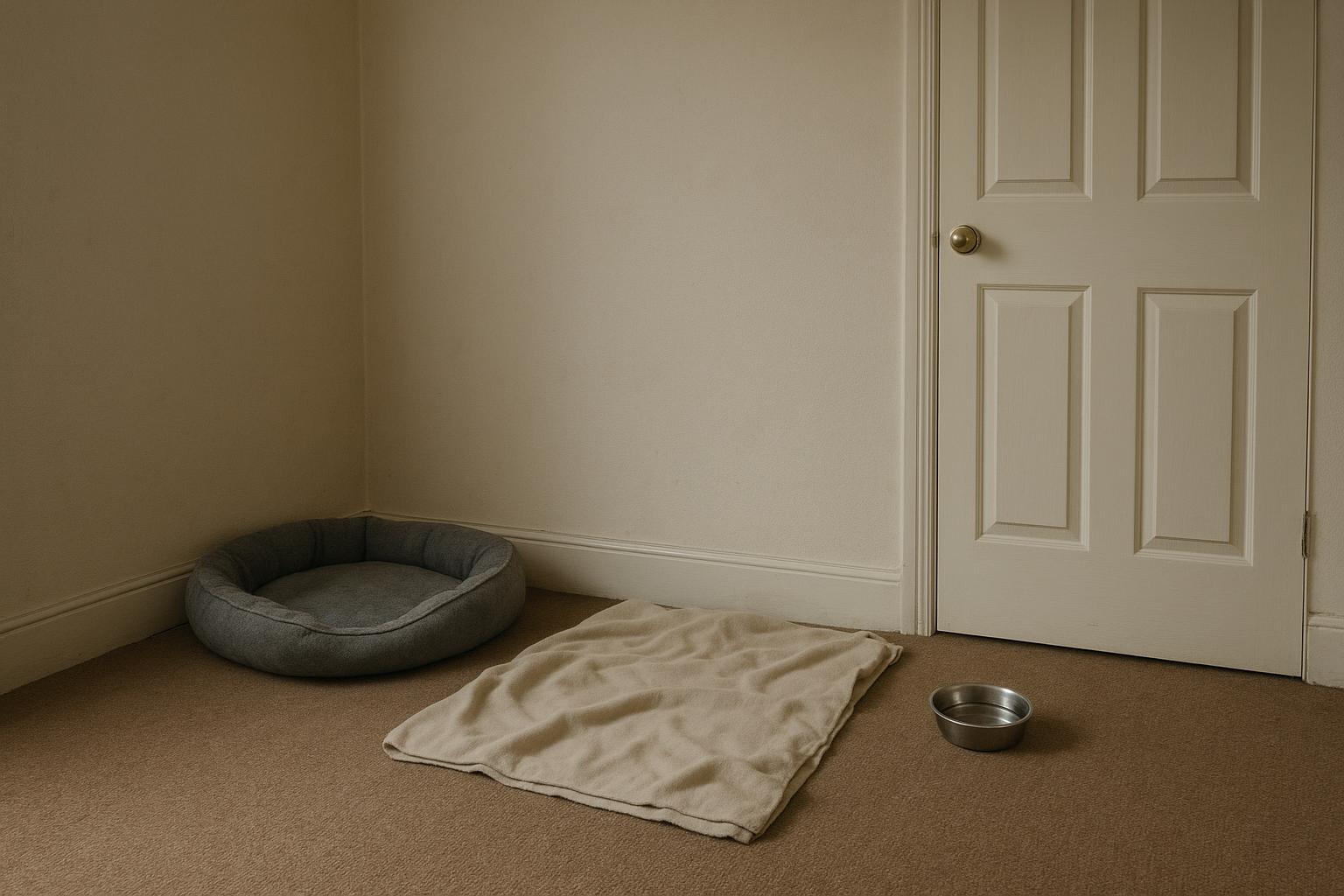
If you cannot move the pet, the next best choice is a closed, quiet room that is not on the route of the work, such as a bedroom or bathroom that is cleared last. Put in bedding, water, a litter tray for cats, familiar toys and something with your scent. Close the door and fix a clear notice to the outside.
A third option is a secure crate or carrier in a room that is out of the way. This suits some dogs and most cats, but only if the animal is used to it. Do not use a crate for an animal that panics inside one.
Choosing boarding or a sitter
Plan early and check the basics.
If you use a kennel, cattery or sitter, check that they are licensed or insured where relevant, that vaccinations are up to date and that they have your contact details. Visit in advance if the animal has not stayed there before.
Provide familiar items, such as a blanket, a toy and the usual food. Share any health information, medication or behaviour issues. Make sure the carer knows how to contact you and your vet.
If you use a friend or relative, check that their home is secure and that they are comfortable with the animal. A familiar place with a trusted person is often the least stressful option.
Doors, gates and escape routes
The most common way pets get lost.
A front door that stays open for hours is the single greatest escape risk. Even a pet that never normally leaves the house can bolt when frightened. Make the exits secure before the work starts, and keep them secure until it ends.
If you can, use a closed door or a pet gate between the pet and the exit route. Check the back door, patio doors, windows and the garden gate too. A latch that you rely on every day may not hold against a panicked animal.
Walk the route that the crew will take, and think about where a pet could squeeze past. Tell everyone working on site that there is an animal in the house, and which doors must stay closed. If the pet does get out, someone must know whom to tell straight away.
A quick pre-work security walk-through
Ten minutes that prevent a lost pet.
Before the crew arrive, walk around the whole property and check each potential exit. Look at doors, windows, cat flaps, garden gates and fences. Close and latch what you can.
- Block cat flaps while the pet is indoors.
- Check that fences and gates have no gaps.
- Close internal doors between the pet and the work areas.
- Put signs on any door that must stay shut.
- Keep keys to the pet's room with you, not with the crew.
Repeat the walk-through at the end of the day, before pets are allowed out.
Dogs: calm, controlled and out of the way
Know your dog.
Most dogs are friendly, but a strange crew in the house, a large moving object and a stressed owner can change that. A dog that guards the home may become protective, or one that is nervous may snap. You are responsible for your dog's behaviour, and in the UK the law holds owners liable if a dog is dangerously out of control, so plan for the worst case.
Walk your dog before the crew arrives, to burn off energy, then settle it in a secure place. Do not tie a dog up in the garden where it can escape, bark at neighbours or become entangled. Do not leave a dog in a car, even for a short time, particularly in warm weather.
If your dog is anxious, speak to your vet beforehand about calming options. Do not give any medication without veterinary advice.
Leads, harnesses and handover
Be ready in case you need to move a dog.
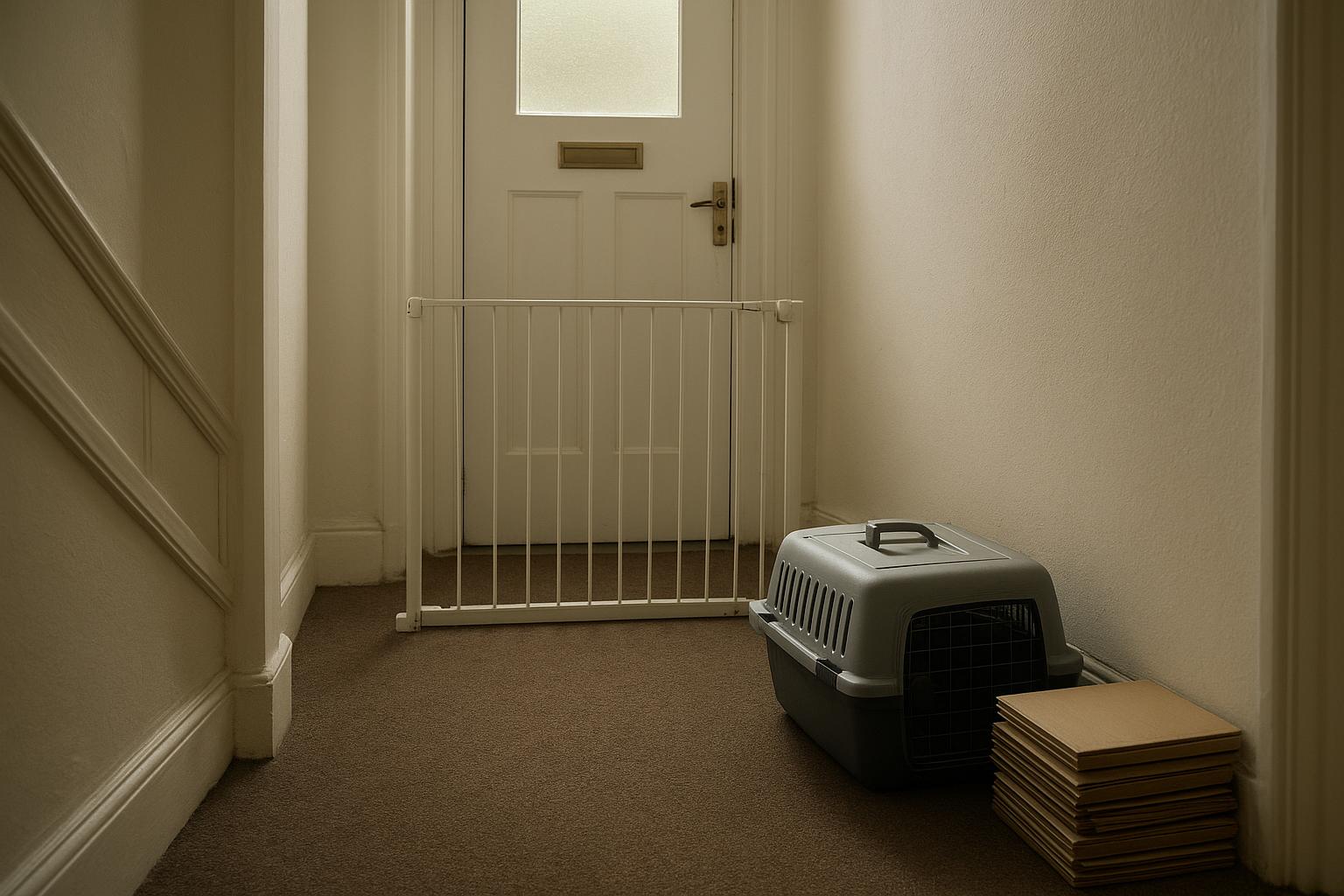
Keep a lead and a well-fitted harness or collar close to the front door. If the dog needs to be moved, you can do it quickly and safely.
If someone else is looking after the dog, make sure they know how it behaves with strangers and in new places. Tell them the dog's routine, any commands it knows and the contact details of your vet.
Do not ask a member of the crew to hold a dog or walk it. They are there to work, and may not know how the animal will respond.
Cats: quiet, dark and contained
Cats hide, and hiding spots disappear.
Cats tend to hide when stressed, and a clearance removes the hiding places they normally use, such as under beds, in wardrobes and behind furniture. A cat that has been shut out of its usual spot may find a worse one, such as inside an appliance or a box that is about to be moved.
Confine your cat in a single room with its bed, litter tray, food and water. Put a sign on the door. Check that the room has no gaps, such as a loose window or an open fireplace, that the cat can squeeze into. Before anything leaves the house, ask the crew to look inside cupboards, appliances and boxes that the cat could have entered.
Keep a cat carrier ready. If you need to transport the cat to a friend or a cattery, use a secure carrier and do not open it until you are in a closed room.
Indoor cats and outdoor cats
Different risks.
Indoor cats may panic if the door opens, since they are not used to the outside. Outdoor cats may leave the home for a long period and then find their usual routes disrupted. For both, confining the cat during the work is best.
If your cat is used to going out, keep it in until the house is quiet again. Check that its collar, tag or microchip details are up to date, and tell neighbours if you are worried that it might wander.
If a cat does escape, search the immediate area calmly, check hiding places and contact your vet and local rescue groups. Stay close to the home, since many cats stay within a short distance.
Small animals, birds and reptiles
Temperature, noise and draughts.
Rabbits, guinea pigs, birds, reptiles and fish are all vulnerable to sudden changes. Noise and vibration can frighten small mammals and birds, a draught can chill reptiles and fish tanks are heavy and easily damaged.
Move them to a quiet, warm room, or take them out of the house if you can. Cover cages lightly so that the animal can see out but is not exposed to every movement. Keep the room at a steady temperature.
Fish tanks, terrariums and aviaries need specialist handling. Do not ask a clearance crew to move them without agreeing how it will be done. Ask a specialist retailer or your vet for advice on transporting animals safely.
Transporting small animals safely
Keep them warm and secure.
Use a proper carrier with ventilation, bedding and secure fastenings. Keep it out of direct sunlight and away from heating vents. Cover it lightly to reduce stress.
Place the carrier on the floor of the car, or secure it with a seat belt so that it does not slide. Never leave animals in a parked car.
For reptiles and tropical fish, temperature control is critical. Ask a specialist retailer how to keep them within a safe range during transport.
Hazards on the day
What can hurt an animal during a clearance.
Clearances can expose pets to things that are normally out of reach. Cupboards are emptied and the contents left on the floor. Chemicals, medicines, cleaning products, paints, batteries, screws and nails can all be swallowed or stepped on. Some common substances, such as antifreeze and certain rodent poisons, are toxic to animals.
Boxes, bags and loose items can also be hazardous. A cat can get trapped in a box, and a dog can chew through cables. Items stacked in a hallway can topple onto a pet that tries to squeeze past.
Keep hazardous items out of reach until they are removed, and sweep the floor of small sharp items once the work is done. Our guides on household chemicals and paint and hazardous waste classification explain which items to handle with extra care.
Garages, sheds and lofts
Places pets should not go.
Garages, sheds and lofts often contain chemicals, tools, sharp objects and dust. If the clearance includes these areas, keep pets out of them until the work is finished and the area has been swept.
Spilled antifreeze, which can taste sweet to animals, is particularly dangerous. If you find a spill, clean it up thoroughly and keep the animal away. Contact a vet immediately if you think an animal has swallowed something harmful.
Our guides on garage clearance preparation and loft clearance explain what you may find in these spaces.
What to tell the crew and your carrier
Say it clearly and early.
When you request quotes through houseclearance.co or arrange any removal, mention that there are animals in the home and say what species they are. When you confirm a booking, repeat it, and again when the crew arrive.
- Tell them which room the animal is in, and ask them not to open that door.
- Say which doors and gates must stay closed.
- Mention any animal that may be aggressive or fearful of strangers.
- Give a contact number for yourself, or a trusted person, who can be reached during the work.
- Agree who checks the property for animals before the doors are finally left open or locked.
If the job involves access to a loft, shed or garage where animals such as cats or wildlife could be hiding, say so. Our guide to PPE and health guidelines for heavy-duty clearances explains the safety side of working in difficult spaces.
Agreeing a plan if a pet gets out
Have a protocol.
Before the work starts, agree what happens if an animal escapes. The crew should tell you immediately, and know not to chase the animal, which can make it run further.
Give the crew a phone number to call. If you will not be on site, nominate someone who will. Keep a photograph of the pet ready to share, and know where the nearest vet is.
A calm, agreed response is more effective than a rushed one. The aim is to find the animal quickly and safely, and to prevent a second incident.
ID, microchip and records
Prepare for the worst case.
Check that your pet is identifiable in case it does get out. In England, dogs must be microchipped, with the owner's details registered on a database. Check that the details are current, since many lost animals cannot be reunited with their owners because of old phone numbers and addresses.
Dogs in public must wear a collar with an ID tag, and a tag with your phone number is a good idea for cats, too. Keep a recent photograph of each pet on your phone, which can help if you need to put up a notice or tell neighbours.
If you are moving home, update the microchip database with your new address as soon as you can. Keep the vet details and any medication information with you on the day.
If a pet goes missing
Act quickly.
Search the immediate area, check hiding spots and ask neighbours to check sheds and garages. Contact your local vet, the microchip database, local rescue groups and the council's dog warden service, where relevant.
Post a photograph and description on local community groups, and put up notices near the property. Keep your phone on and tell the crew to call you if the animal is seen.
Do not give up after the first day. Many animals are found some time after going missing, particularly if they are microchipped and the details are correct.
Why heavy-lifting jobs need extra care
Weight, stairs and tight spaces.
Heavy items such as wardrobes, appliances and pianos are carried through narrow spaces, up and down stairs, and sometimes tilted on edge. A crew member who is carrying a heavy load cannot easily stop or step around a pet. A fall with a heavy item can injure both the person and the animal.
This is why it is not enough to ask a pet to keep out of the way. Remove the possibility entirely by keeping the pet away from the working areas. Our guides on moving heavy furniture safely and heavy-lifting logistics explain what crews need in terms of space and clear routes.
If a pet is in the home, ask crew members to take care when they turn corners, and keep a clear route at floor level.
Keeping routes and rooms clear
Less risk for everyone.
Before the crew arrive, clear a path from the working areas to the exit. Remove small items, rugs and anything that might trip a person carrying a load. Move pet beds, bowls and toys out of the route.
If you have a pet gate, keep it closed across stairs and doorways that the pet should not enter. A gate is not a substitute for a closed door, but it helps for a few minutes.
Our guide to public liability insurance and damage to property explains how insurance generally treats damage on site, and why taking sensible precautions matters.
After the work: settling pets back in
Go gently.
When the job is finished, check each room before you let the animal out. Look for dropped screws, packing materials, spilled products and anything else that might harm a pet. Make sure windows and doors are secure.
Pets often find the changed home strange, especially if furniture is gone or has moved. Let them explore at their own pace. Put food, water, bedding and litter in familiar places, and spend time with them. Some animals take days to settle.
If a pet seems unwell, is not eating or is behaving oddly, contact your vet. Stress can affect animals in ways that are not always obvious.
Rebuilding the routine
Regular feeding and walks help.
Return to the normal feeding and walking times as soon as you can. Routine helps animals feel safe. Keep the first few days calm, with fewer visitors and less noise.
If the home looks very different, introduce new areas gradually. A cat may need a few days to explore. A dog may need extra walks.
If you notice any change in appetite, behaviour or toileting that continues, take advice from your vet.
If you are moving house with pets
A few extra steps.
If the clearance is part of a house move, the same principles apply, with a few additions. Plan how the pet will travel, using a carrier or a secure harness in the car. Keep the pet away from the removal van, and move it last or first, depending on what suits.
Set up a room at the new home with the pet's belongings before you let it explore. Keep cats indoors for a period, following your vet's advice, so that they learn the new location. Our guides on preparing for moving day and the London moving checklist include more general planning tips.
Register with a vet near the new home, and update the microchip database, your insurance and any pet-related subscriptions.
Frequently asked questions
Common questions about pets and clearance days.
Should my pet be at home during a clearance?
Where possible, no. Boarding the animal, leaving it with a trusted friend or confining it in a closed, quiet room away from the work is safest for the pet and the crew.
How do I stop my cat from escaping?
Confine the cat in a single closed room with food, water and a litter tray, put a sign on the door and ask the crew not to open it. Keep a carrier ready.
What if my dog is nervous around strangers?
Keep it away from the working areas, in a secure room or boarding. Do not rely on supervision during a busy job, and ask your vet about options if your dog is very anxious.
Do I need to tell the clearance company about my pets?
Yes. Mention any animals when you request quotes and again when you confirm, and tell the crew on arrival which doors must stay closed.
Are there legal requirements for dogs?
In England, dogs must be microchipped and wear a collar with an ID tag in public. Owners are legally responsible for a dog that is dangerously out of control, so check your obligations.
Is it safe to leave a pet in the garden?
Only if the garden is fully secure and the animal is not left unattended. Noise, gates opening and strangers can lead to escapes or distress, so a secure indoor room is usually safer.
Can the crew move my fish tank or reptile enclosure?
Do not assume so. Tanks and enclosures need specialist handling, so agree in advance how they will be moved, or take advice from a specialist retailer or your vet.
What should I check afterwards?
Walk through each room for sharp items, packing materials and spilled substances, check doors and windows, and let your pet settle at its own pace.
