
Direct answer
Pianos, safes and cast-iron baths are among the most dangerous things to move from a house because they are very heavy, awkward and often in places with poor access. Do not rely on strength alone. Establish the item, its approximate weight, the route out (doors, stairs, turns, floor surfaces) and any fixings, then decide whether it needs a specialist. Tell any carrier exactly what the item is, where it sits and how it will have to travel, and ask what equipment and how many people they will bring. Never try to carry a piano, safe or bath down stairs without proper equipment and training. If an item cannot be moved safely, leave it, break it up on site where that is appropriate, or use a specialist, and check that whoever does the work has suitable insurance.
Contents
- Why these three items are different
- How injuries happen
- The legal and safety background
- Insurance questions
- Assessing the item and the route
- A measuring checklist
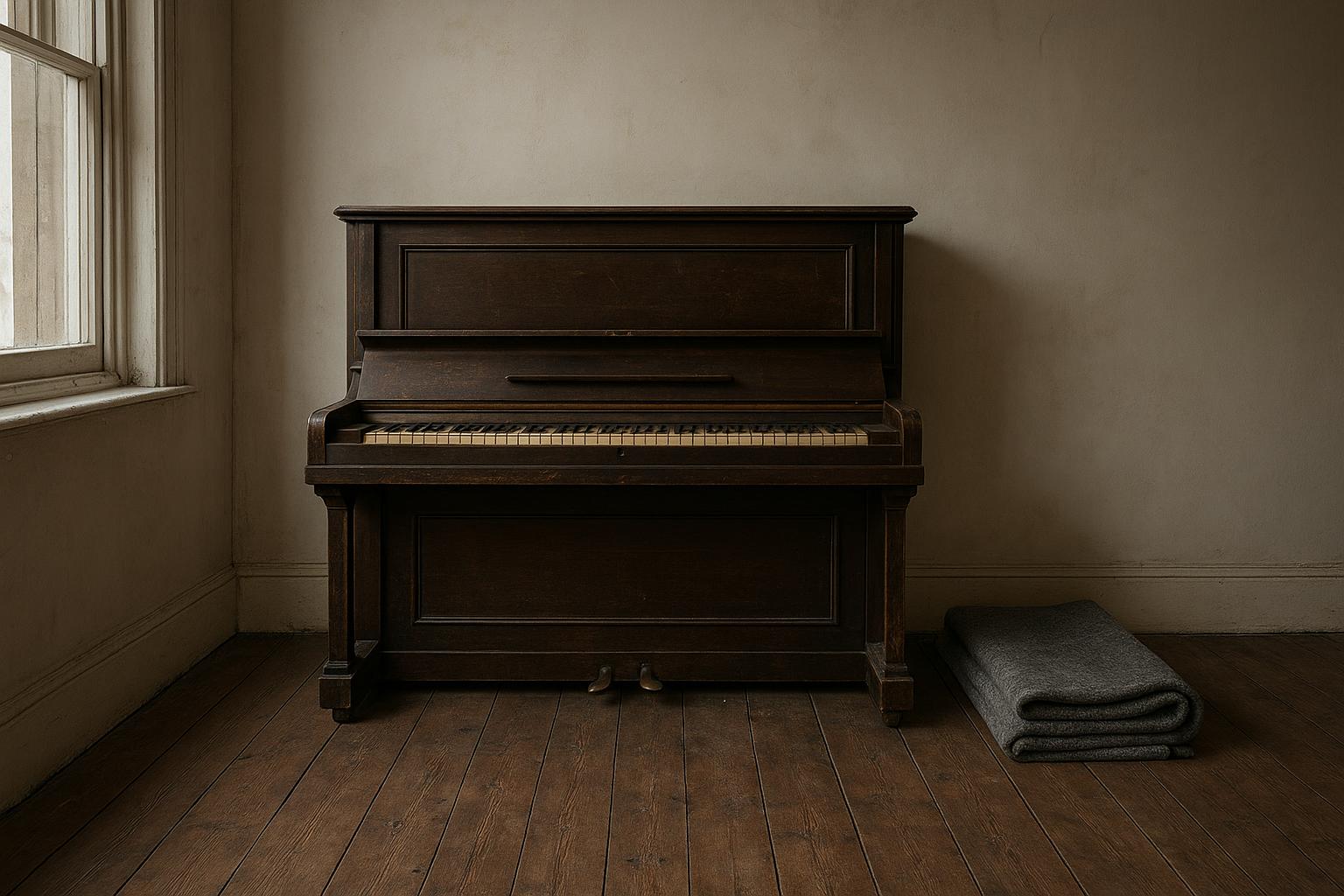
- Pianos: weight, fragility and why not to tip them
- Different types of piano
- Planning a piano move
- Dismantling an old piano
- Safes: weight, fixings and what is inside
- Types of safe
- Planning a safe removal
- Record and secure the contents
- Cast-iron baths: heavy, brittle and easy to damage
- Types of old bath
- Removing a bath safely
- Protecting floors and stairs
- Who to hire and how to compare quotes
- Comparing quotes
- When not to attempt it
- Alternatives to moving
- Frequently asked questions
Why these three items are different
Weight, shape and the age of the building combine.
Most household furniture can be carried by two people who know what they are doing. Pianos, safes and cast-iron baths are in a different category. Each is dense, awkward to grip and capable of causing serious injury or damage if it slips. A piano can weigh hundreds of kilograms, a safe from a few dozen kilograms to well over a tonne, and many old cast-iron baths weigh well over a hundred kilograms, though exact weights vary a great deal by model and age.
The setting makes it worse. Older homes often have narrow hallways, tight stairs with turns, steep or uneven steps, lath-and-plaster walls, old floorboards that may not take concentrated loads and doorways that were not designed with modern furniture in mind. A route that looks straightforward may have a turn that will not allow a piano to pass.
The aim of this guide is to help you plan, not to encourage you to do these jobs yourself. It is general information. If in doubt, consult a specialist mover or the building's structural adviser, and rely on current HSE guidance on manual handling.
How injuries happen
Know the typical failure points.
Typical injuries include crushed fingers and feet, back strains, hernias and fractures. They usually happen when a person tries to take the whole weight alone, when a grip slips, when someone walks backwards on stairs or when a turn catches the item. The risk grows when people are tired or hurrying.
Damage to the building is also common: gouged stair treads, cracked banisters, holes in plasterboard and floorboards that crack under a heavy point load. Good planning, protective coverings and the right equipment prevent most of these problems.
The legal and safety background
You and the people you hire both have duties.
Under the Manual Handling Operations Regulations 1992, employers must avoid hazardous manual handling where reasonably practicable, assess the risk where it cannot be avoided and reduce it. HSE guidance explains how to think about the load, the task, the environment and the individual. These regulations apply to employers and the self-employed in a work setting, but the principles are useful for anyone.
For a private householder, the key practical points are that you can be injured, that you can damage the building or neighbouring property, and that you can be responsible for what happens if you invite others to help. Carriers who do this work should carry suitable insurance. Our guide to man and van insurance explains what to ask.
Personal protective equipment such as gloves, safety footwear and eye protection is standard on heavy clearances. See our guide to mandatory PPE for heavy house clearances for what a competent crew typically wears.
Insurance questions
Ask before the day.
Ask any carrier what cover they hold for injury to their own staff, damage to your property and damage to the item moved. Ask whether the policy covers heavy or high-value items and whether there are any exclusions. Be cautious if the answer is vague. If you own a valuable piano or antique, check your own home policy too.
Assessing the item and the route
Do the survey before you quote or lift.
Start by identifying the item. For a piano, note whether it is upright, grand, baby grand or digital, and look for a maker's name and serial number on the frame or inside the lid. For a safe, note its size, whether it is freestanding, built into a wall or bolted to the floor, and whether it has a key, combination or electronic lock. For a bath, note the type, whether it is freestanding or built in, and whether it has been panelled, tiled around or plumbed in.
Then walk the route from the item to the exit. Measure doorways, hallways and stair widths and note turns, landings, thresholds, steps, low ceilings, banisters and floor surfaces. Check whether the van or skip can be positioned near the door, and how far items must be carried. Take photographs and measurements to share with any carrier.
This survey is the single most useful step, because the answer to most heavy-item questions is in the route rather than in the weight alone.
A measuring checklist
Take notes and photographs.
Record the following and share it with anyone quoting:
- Item type, approximate weight and dimensions
- Width of the narrowest doorway and hallway on the route
- Stair width, number of steps, turns and landings
- Floor type and condition
- Distance from the item to the van or skip
- Any steps or thresholds outside the front door
- Parking and loading access
A measuring tape and a phone are all you need. The thirty minutes you spend can save an aborted job later.
Pianos: weight, fragility and why not to tip them
Handle them upright and on a level surface.
An upright piano is usually a few hundred kilograms and has a heavy cast-iron frame, a tall case with a thin front and legs or castors designed for a smooth surface, not stairs. A grand piano is heavier still and is normally lifted on its side with the legs removed, requiring a board and several people. Pianos are not designed to be tipped forward, and doing so can crack the frame or injure the people holding it.
Moving a piano by yourself, or with friends, is where most injuries occur. Professional piano movers use skids, straps, special trolleys and stair-climbing equipment, and they cover the instrument with blankets to protect the finish and the strings. If the piano has any value, a specialist will also protect its tuning as far as possible, though most pianos need retuning after a move.
Our existing guide to piano disposal explains the options for getting rid of an unwanted piano, including donation, sale and scrapping. This section is about moving it safely, which is a separate question from where it goes.
Different types of piano
Treat each differently.
Upright pianos are the most common in homes. They are tall, relatively narrow and heavy at the back, where the frame sits. Grand pianos and baby grands are longer and are moved on their side. Digital pianos are much lighter but still need careful handling. Older pianos may have woodworm, loose parts or fragile finishes, and some have ivory keys, which are subject to rules on trading in ivory, so check the current GOV.UK guidance if you plan to sell.
If the piano is old and in poor condition, its market value may be low, but it can still be heavy to move. Free-to-collect listings online are common, but the person collecting must also be able to move it safely.
Planning a piano move
Ask the right questions.
Before booking, confirm whether the piano is worth keeping or selling, since the cost of moving a heavy piano can exceed its value. If it is to be disposed of, ask whether the mover can dismantle it, which is sometimes done on site for old uprights, and where the parts will go. Piano frames are heavy and may need to go to a recycling centre or a specialist.
Tell the carrier the type of piano, the floor, the number of steps, the route and anything unusual, such as a curved staircase or a flat on an upper floor. Ask how many people will attend and whether they have stair equipment. Ask about insurance cover for damage to the instrument and the property.
Do not accept a quote from someone who has not asked about access. A piano move quoted purely over the phone with no questions is a warning sign.
Dismantling an old piano
Sometimes the only practical option.
If an old upright piano is beyond repair and cannot be moved whole, a specialist may dismantle it on site. The case, keys and action are removed in pieces, and the heavy iron frame is the last part to go. This is hard, dusty work and not suitable for most householders. The frame can be scrapped, and wood can be recycled or disposed of.
Safes: weight, fixings and what is inside
Not every safe is meant to move.
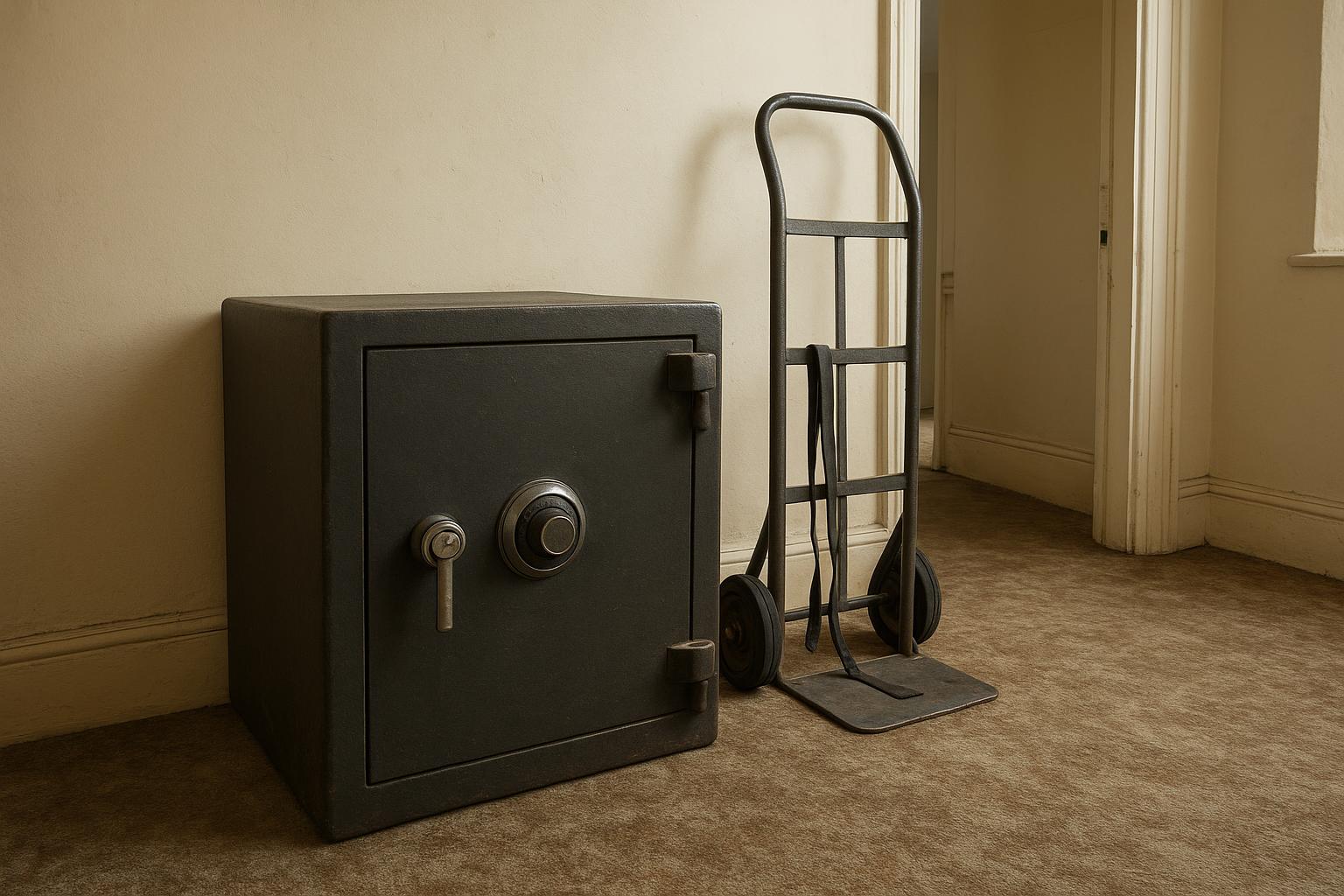
Safes are designed to resist removal. A small household safe may be bolted to a floor or wall, built into masonry or set into concrete. Larger safes can be extremely heavy, and the weight is concentrated in a small footprint that can damage floors and stairs. Moving one without a proper trolley, skates or hoist is dangerous.
Before anything else, find out whether the safe is locked and who can open it. Many safes in old houses have lost keys or forgotten combinations. A specialist locksmith or safe engineer can open or replace a lock, and they can advise on whether the safe is worth keeping. Do not attempt to force a safe open with power tools, which can injure you and damage the contents.
Safes may hold documents, cash, jewellery, firearms certificates or other items of value. If the safe belongs to an estate, the contents are part of the estate, and an executor should arrange for it to be opened and recorded. See our guide to hidden family valuables and documents.
Types of safe
Not all are equal.
Safes range from small fire-resistant document boxes to large fire-resistant or burglary-resistant models. Wall safes are set into brickwork, floor safes into concrete and freestanding safes may be bolted down. Some are fire-resistant and contain a filling that adds to the weight. The type affects how it can be released and moved.
Planning a safe removal
Weight and fixings first.
Find out the weight from the maker's label or a specialist. Check how the safe is fixed and what it will take to release it, which may involve bolts, anchors or masonry. If it is built into a wall or floor, a builder may be needed to cut it out and make good, and it may be better to leave it for the next owner if that is agreed.
Tell the carrier clearly that it is a safe and give an estimate of weight and size. Ask whether the carrier has experience with safes and the equipment, such as heavy-duty skates, a safe trolley or a hoist. Check that floors on the route can bear the weight, particularly in older upper-floor rooms.
Where the contents are valuable, agree a plan for security while the safe is being moved, and keep the key and combination information separate from the safe.
Record and secure the contents
Be methodical.
When a safe is opened, two people should be present and a list should be made of the contents. Photograph them and store valuables and documents securely. Do not dispose of anything in a safe without checking whether it is needed for probate, tax or insurance purposes.
Cast-iron baths: heavy, brittle and easy to damage
Often too heavy for two people on stairs.
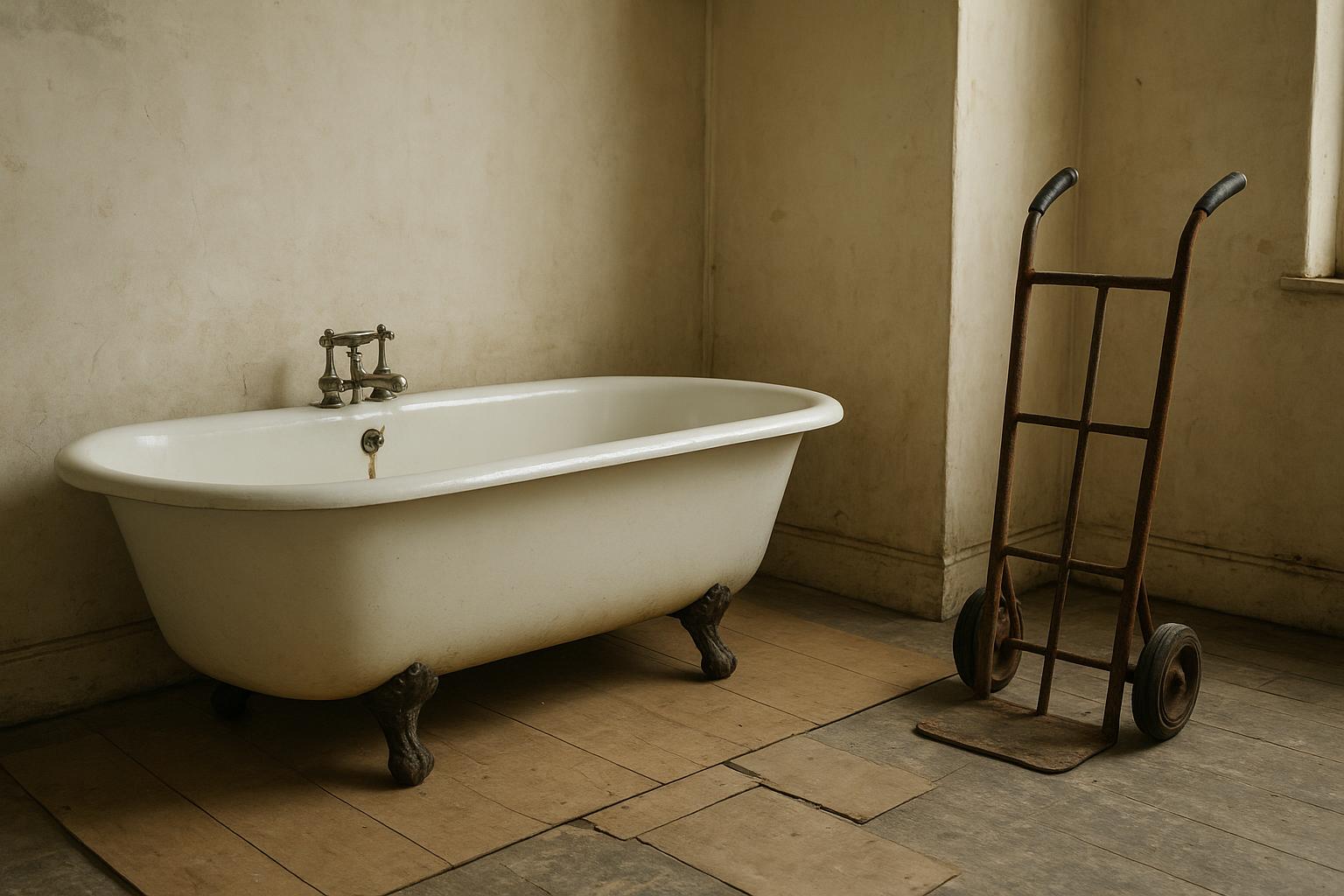
Old cast-iron baths are solid and heavy, usually enamelled inside and sometimes outside, and they are brittle despite their weight. A knock or drop can crack the iron or chip the enamel, and a falling bath can cause serious injury. Many have been in place for decades and are fixed to waste pipes, sealed to walls and tiled around.
Before moving, make sure water and waste are properly disconnected by someone competent. A plumber should do this, since old pipework may be fragile or contain asbestos-containing materials in some older buildings. Do not use a sledgehammer without understanding the risks: cast iron can shatter into sharp, heavy fragments, and enamel flakes are hard to clean up.
If the bath is to be reused, it needs careful handling and padding. If it is to be scrapped, it may be broken up in the room by a competent person with PPE, which is often safer than carrying a whole bath down narrow stairs. Cast iron has scrap value, as explained in our scrap metal collection guide.
Types of old bath
What you may find.
Older homes may have roll-top freestanding baths, built-in cast-iron baths with panels or baths set into tiled surrounds. Some are cast iron, others are pressed steel, which is lighter but still awkward. A magnet test can tell you whether a bath is iron or steel, though a plumber or scrap dealer can also tell you.
Roll-top baths in good condition can have value in the reclamation market. If you think the bath is worth keeping, ask a reclamation yard or specialist before breaking it up.
Removing a bath safely
Prepare the room and the route.
Protect the floor with boards, clear the room and the route, and make sure there is a clear space to rest the bath if needed. Remove taps, waste and fittings first. Lift only with enough people, using straps and a suitable trolley, and keep fingers away from the points where the bath rests on the floor.
If the bath is being broken up, put sheeting around it, wear eye protection, gloves, a mask and sturdy shoes, and make sure nobody is in the room except the person doing the work. Carry out the pieces in manageable loads, not as large heavy fragments.
Ask a carrier whether they will break up and remove a cast-iron bath, what they charge, and how they will dispose of the pieces. Check their waste carrier registration and see our guide to householder waste duty of care.
Protecting floors and stairs
Boards and blankets.
Lay plywood or hardboard sheets on the floor and on stair treads, and use blankets or foam to protect banisters and walls. A heavy bath dragged across bare floorboards will leave damage that is expensive to repair.
Who to hire and how to compare quotes
Specialists, general carriers and the difference.
A general man and van or clearance crew can handle many heavy items, but pianos, large safes and complex bath removals are often better handled by specialists. On houseclearance.co you can post a job and receive quotes from independent carriers, who set their own prices and terms. Describe the item and route honestly, and compare what is included.
Questions to ask include whether the carrier has handled this type of item before, how many people and what equipment they will bring, what insurance they hold, what happens if the item cannot be moved safely and how the waste or item will be disposed of. Ask for the answers in writing.
Be wary of low quotes with no questions about access. Our guide to how to move heavy furniture safely covers general technique and equipment.
Comparing quotes
Look beyond the price.
Compare the number of people, the equipment, insurance, what is included in the price and what happens if the job cannot be done as planned. Check each carrier's waste carrier registration if they will remove waste. Our guide to choosing a man and van service has a longer set of questions.
When not to attempt it
Recognise the limit.
Do not attempt to move a piano, safe or cast-iron bath yourself if the route involves stairs, if the item weighs more than you can control, if you lack the equipment or if there are fewer than the number of people required. The cost of a specialist is usually less than the cost of an injury, a damaged floor or a destroyed item.
If a floor or stair looks weak, stop. If an item starts to slip, let it go rather than trying to catch it. If you are not sure that the building can take the load, ask a surveyor or builder.
A flat on an upper floor with no lift adds to the difficulty, as described in our guide to high-rise flat clearances without a working lift.
Alternatives to moving
Not every item must go.
Alternatives include selling the item in place so that the buyer arranges collection, asking a reclamation dealer to collect, leaving a built-in item for the next occupier by agreement or breaking up a bath or piano on site. Choose the option that avoids the greatest risk.
Frequently asked questions
Common questions about moving very heavy items.
How heavy is a piano?
It depends on the type. Uprights are commonly a few hundred kilograms and grands are heavier. Check the model or ask a piano mover, since weights vary.
Can I move an upright piano myself?
It is not recommended. Pianos are heavy, top-heavy and easy to damage, and most injuries happen with improvised moves. A specialist with proper equipment is safer.
What if I cannot open an old safe?
Contact a locksmith or safe engineer. Do not use force or power tools. If the safe belongs to an estate, the executor should arrange for it to be opened and the contents recorded.
Can a safe be left in the house?
Sometimes, if it is built in or bolted down and the new owner agrees. Agree this in writing as part of a sale or tenancy.
Is it safe to smash up a cast-iron bath?
It can be done by a competent person with PPE and proper preparation, but cast iron can shatter into sharp fragments. Many people prefer to hire a professional.
Should a plumber disconnect the bath first?
Yes, in most cases. A competent plumber should disconnect water and waste before the bath is moved or broken up.
What should I tell a carrier about a heavy item?
The type, approximate weight, location, route, stairs, turns, fixings and any photographs. Ask what equipment and how many people they will bring.
How do I dispose of a cast-iron bath or piano frame?
Through an authorised waste carrier, a scrap metal collector or a council recycling centre that accepts the material. Check the carrier's registration and keep a receipt.
