
Direct answer
Clearing a loft is mainly an access and safety problem. Before moving anything, check the hatch size, get a stable ladder or loft ladder, make sure there is light, and only step on boarded areas or joists, never on the plasterboard between them. Treat unknown insulation and old textured materials with caution, because a small number of lofts contain vermiculite or asbestos-containing materials, which must not be disturbed. Work in stages, pass items down in small bags or boxes, and wear a mask, gloves and eye protection. If the hatch is very narrow, the floor is unboarded or you cannot reach safely, ask for a quote from a carrier who handles loft work rather than risking a fall.
Contents
- Why lofts are harder than other rooms
- What people typically find
- First, look before you lift
- Making a simple plan
- Hatches, ladders and getting up safely
- Fitted loft ladders and hatches
- Where you can safely stand
- Laying temporary boards
- Dealing with loft insulation
- Protective kit for insulation work
- Disposing of old insulation
- Asbestos and other hidden hazards
- Getting a suspect material tested
- Getting items down through a narrow hatch
- Lifting and posture
- Sorting as you go
- Keeping what matters
- When to get professional help
- What to tell a carrier when you ask for quotes
- Frequently asked questions
Why lofts are harder than other rooms
Awkward by design.
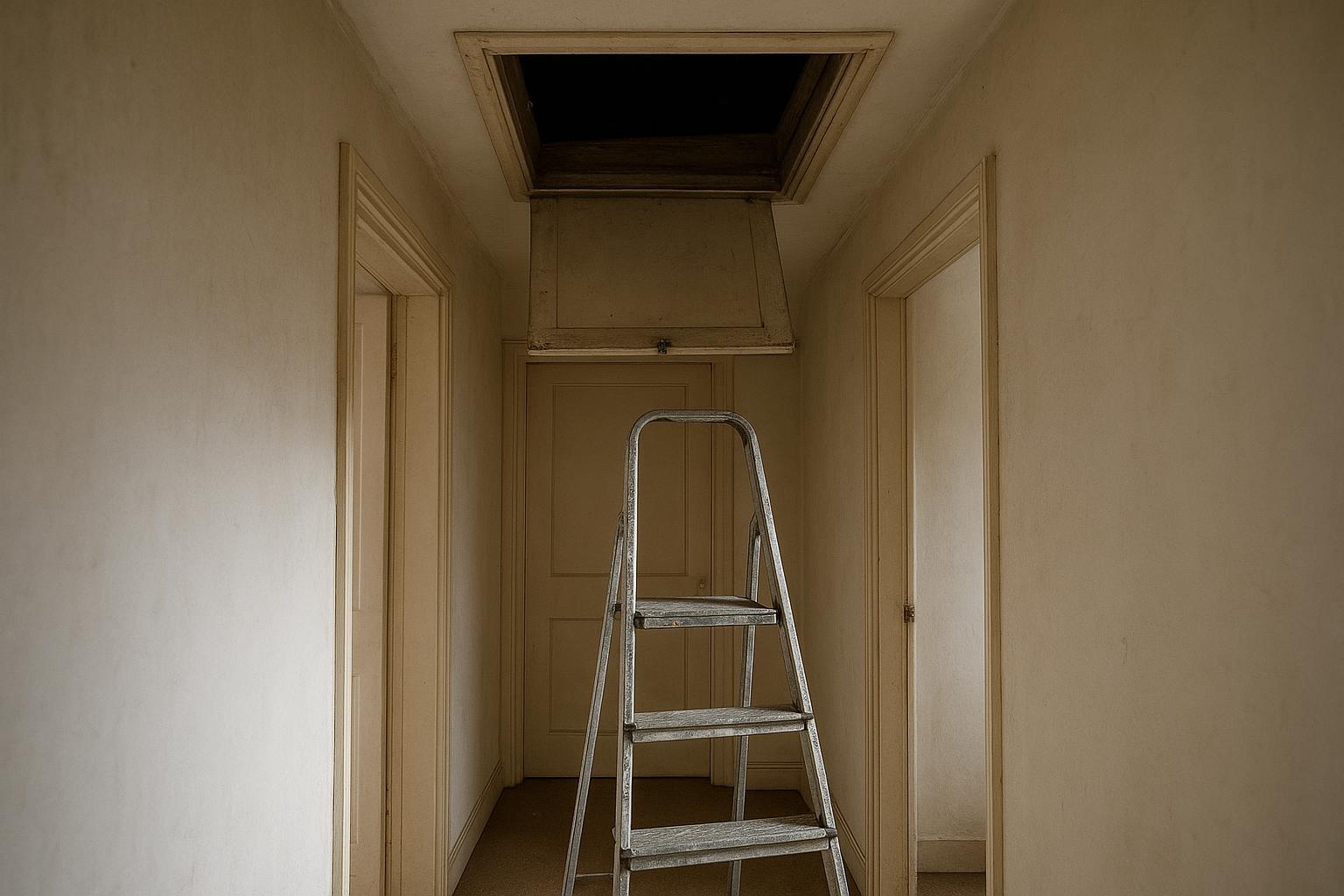
A loft is built to keep the roof up and the heat in, not to be a storage room. Access is usually through a single hatch in a landing ceiling, often around 500 to 600 millimetres square, and the space beyond may be low, dark, hot in summer and freezing in winter. Many London terraces and semis have loft spaces that were never meant to be walked in at all.
Over the years, people add boxes, old suitcases, toys, Christmas decorations and furniture that was too good to throw away but too awkward to keep downstairs. Because the loft is out of sight, it often gets forgotten until a sale, a probate or a conversion forces the issue.
The main risks are falls, strains from lifting awkwardly overhead, dust and fibres, and putting a foot through the ceiling. A little planning makes the job safer and much faster.
What people typically find
Expect the unexpected.
Lofts tend to hold a predictable mix. There are usually suitcases, boxes of children’s toys, old television sets and computer equipment, Christmas decorations, spare bedding and curtains, paint tins and bags of papers. In older houses there may also be broken furniture, old carpets and even items left by previous owners.
Some of this is straightforward to dispose of. Some is not. Paint, solvents and batteries are classed differently from ordinary rubbish, and old electrical equipment has its own recycling route. It helps to know in advance which categories you are likely to face so you can plan where each will go.
The sheer quantity is the usual surprise. A loft that looked half empty from the hatch can easily fill a van once everything is out, so allow time and space.
First, look before you lift
A short survey from the ladder.
Before moving anything, put a stable ladder under the hatch and look in with a good torch. Do not climb in yet. You want to know what is there, how much, and whether there is any floor.
Check whether the joists are boarded and, if so, how far the boarding extends. Look for a light, a power point or at least a place to hang a work lamp. Note where the water tank, pipework, electrical cables and any chimney breast are. Look for signs of damp, droppings, wasp or bird nests and any loose dusty material that could be insulation of an unknown type.
- Take photos from the hatch so you can plan the order of removal.
- Estimate the number of boxes, bags and bulky items.
- Note anything that looks too big to fit through the hatch.
- Check the hatch itself opens fully and that the ladder has a clear landing.
If you cannot see a safe place to stand, do not go in. That is the point to get help.
Making a simple plan
Order of work matters.
A short plan avoids a lot of wasted effort. Decide where items will be sorted, how many trips you will make and who will help. Work from the hatch outward so that the things nearest the opening come out first and you create floor space as you go.
Plan for the weather too. A loft in July can be uncomfortably hot, and working there for more than a short spell is a health risk. In winter it can be very cold and damp. Early morning or evening in summer and a dry day in winter are usually best.
Allow a realistic number of hours, take drinks with you and work with another person where possible, so that someone is always nearby in case of a problem.
Hatches, ladders and getting up safely
Most loft injuries start here.
A lot of lofts have no fixed ladder. A standard stepladder can be used, but it needs to be tall enough that you can climb through the hatch without stretching, and it must stand on firm level ground. Never place a ladder on a rug, a stair or an uneven landing. Ask someone to foot it where possible.
A purpose-made loft ladder, fixed to the hatch frame, is much safer for repeated trips. If you do not already have one, fitting one is a job for a competent installer, particularly because the ceiling joists around the hatch may need to be adapted. Check with a qualified professional before cutting or altering any structural timber.
The usual advice is to keep three points of contact on the ladder and never carry bulky items up or down while climbing. Pass things through the hatch to someone below or lower them on a rope in a bag. The Health and Safety Executive publishes guidance on using ladders safely, and it is worth reading before you start.
Fitted loft ladders and hatches
Worth considering for repeated use.
If you will use the loft regularly, a fitted loft ladder can be a good investment. It makes access safer and allows you to carry things up with two hands free once you are on the ladder, although you should still avoid carrying heavy loads while climbing.
Hatch size and position affect which ladder will fit. A competent installer will check the joists, the clearance above the opening and the swing of the hatch door. Do not cut joists unless a qualified person says it is safe, because the joists support the ceiling and sometimes the roof structure.
If you are a tenant or leaseholder, check your agreement before altering anything. Some leases make the loft part of the building structure, and changes may need the landlord’s or freeholder’s consent.
Where you can safely stand
Never on the plasterboard.
The ceiling below a loft is typically plasterboard or lath and plaster, and it is not designed to carry a person. Stepping on it can cause a foot or leg to go straight through, injuring you and damaging the room below. Always step only on joists or on boards that are properly fixed across them.
If the loft is partly boarded, put the work area on the boards and keep items within reach so you do not have to stretch. If it is unboarded, you can lay temporary boards or sheets of plywood across the joists, but make sure they are secure and span at least two joists. Do not use loose or flimsy boards, and do not stack heavy loads in the centre of a span.
Older houses may have thin or deteriorated joists, and some lofts have been converted in the past with inadequate support. If you have any doubt about the strength of the structure, or you notice cracks or sagging in the ceiling below, stop and ask a builder or surveyor to look.
Laying temporary boards
Spread the load.
If you need a working platform, lay plywood or chipboard sheets across the joists. Make sure each sheet rests on at least two joists and cannot slip. Secure it where you can, or at least wedge it so it does not move.
Avoid putting down boards in a way that crushes the insulation, because that reduces its effect. If you need a permanent floor, consider raised boarding systems that sit above the insulation. These are a separate project from a clearance.
Lay boards in advance of carrying anything, and test each by putting weight on it while you are still on the ladder or hatch edge. If a board flexes or shifts, fix it before you rely on it.
Dealing with loft insulation
Know what you are touching.
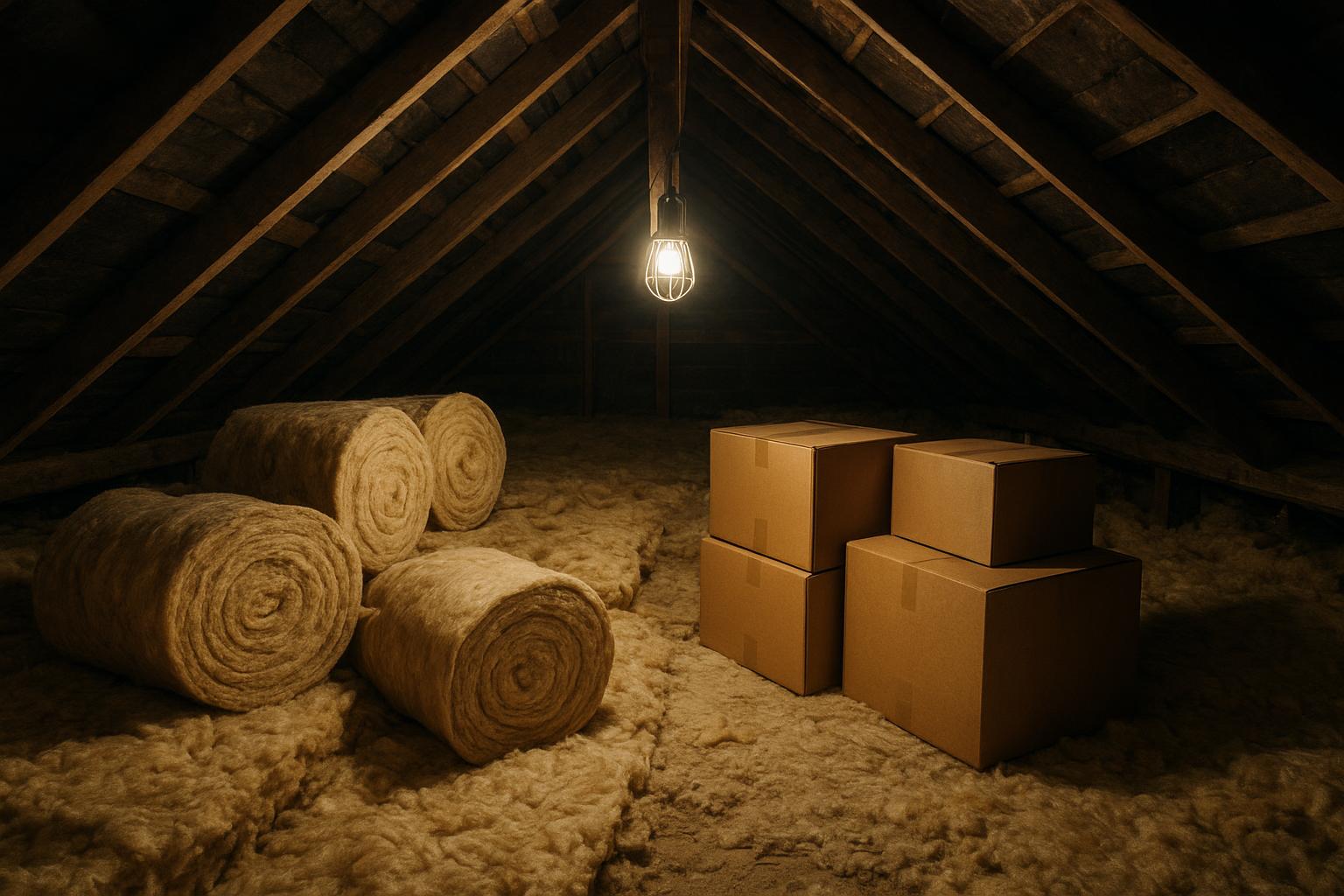
Most modern lofts use mineral wool or similar rolls laid between and over the joists. This is not hazardous in the way that asbestos is, but it can irritate skin, eyes and lungs, so wear gloves, long sleeves, eye protection and a suitable dust mask. Keep your face and hands covered and wash afterwards.
Avoid compressing insulation or pulling it up unnecessarily. If it is laid in two layers, you may need to move it aside to see the joists, but put it back so you do not leave cold spots. If it is damp, mouldy or full of droppings, bag it carefully and arrange safe disposal.
Some older lofts contain loose-fill insulation, such as granules or fibres poured between the joists. One type, vermiculite, has in some cases been found to contain asbestos, depending on where it was sourced. If you see loose granular material you cannot identify, do not sweep, vacuum or disturb it. Check the HSE and GOV.UK pages on asbestos and ask a qualified surveyor to advise.
Protective kit for insulation work
Simple but important.
A disposable coverall or long-sleeved top, gloves and eye protection stop fibres reaching your skin and eyes. A dust mask rated for fine particles, such as an FFP2 or FFP3 type, is a sensible choice for a dusty loft, although a mask does not make asbestos safe to disturb.
Take off your outer layer carefully when you come down, wash your hands and face and avoid shaking dust through the house. Bag disposable items before they leave the work area.
If you are clearing the loft as part of a bigger job, our guide to PPE for heavy-duty clearances sets out what is expected of a professional crew and is a useful benchmark.
Disposing of old insulation
Check with your council.
Old mineral wool insulation from a household loft is generally treated as waste that needs to be bagged and taken to a suitable site, but rules and charges vary between councils. Some recycling centres limit the quantities of DIY waste or charge for it. Check your local council website before you go.
Put the insulation into strong sacks, tie them and keep them dry. Do not burn it. If a skip is used, tell the supplier what you are putting in, and see our guide to skip hire in London for the general rules.
If there is any chance the material is asbestos-containing, do not bag it yourself. Seek advice first, because special disposal rules apply.
Asbestos and other hidden hazards
Rare, but not worth guessing.
Asbestos was widely used in UK buildings until it was banned in 1999. In a loft, it can turn up in old pipe lagging, insulation board around a tank or flue, textured coatings on the underside of a roof, or cement sheets. Houses built before 2000 may contain it somewhere, though many lofts do not.
If you suspect asbestos, do not touch, break, drill or sweep the material. Leave the area and ask a licensed surveyor or an accredited laboratory to confirm what it is. Disturbed fibres are the danger, and the effects of exposure can appear years later. Our guide to hazardous waste classification explains why clearance crews will normally refuse anything that could be asbestos.
Other hazards include old electrical wiring, live cables under boxes, rusty nails, wasp nests and rodent droppings. Take care not to move or cover cables, and do not touch anything you cannot identify.
Getting a suspect material tested
Do not take samples yourself.
If you want to know whether a material in your loft contains asbestos, the safest route is to ask an accredited surveyor to sample it. Taking a sample yourself can release fibres. Surveyors use a laboratory that is accredited for asbestos analysis, and the result will tell you what the material is.
If asbestos is confirmed, the surveyor or a licensed contractor can advise on whether it can be left where it is, encapsulated or removed. In many cases, leaving undamaged material in place is considered safer than disturbing it, but the right answer depends on its condition and type.
Until you have a result, treat any suspect material as if it were asbestos, keep children and pets out of the loft and do not clear that area.
Getting items down through a narrow hatch
Small loads, slow and steady.
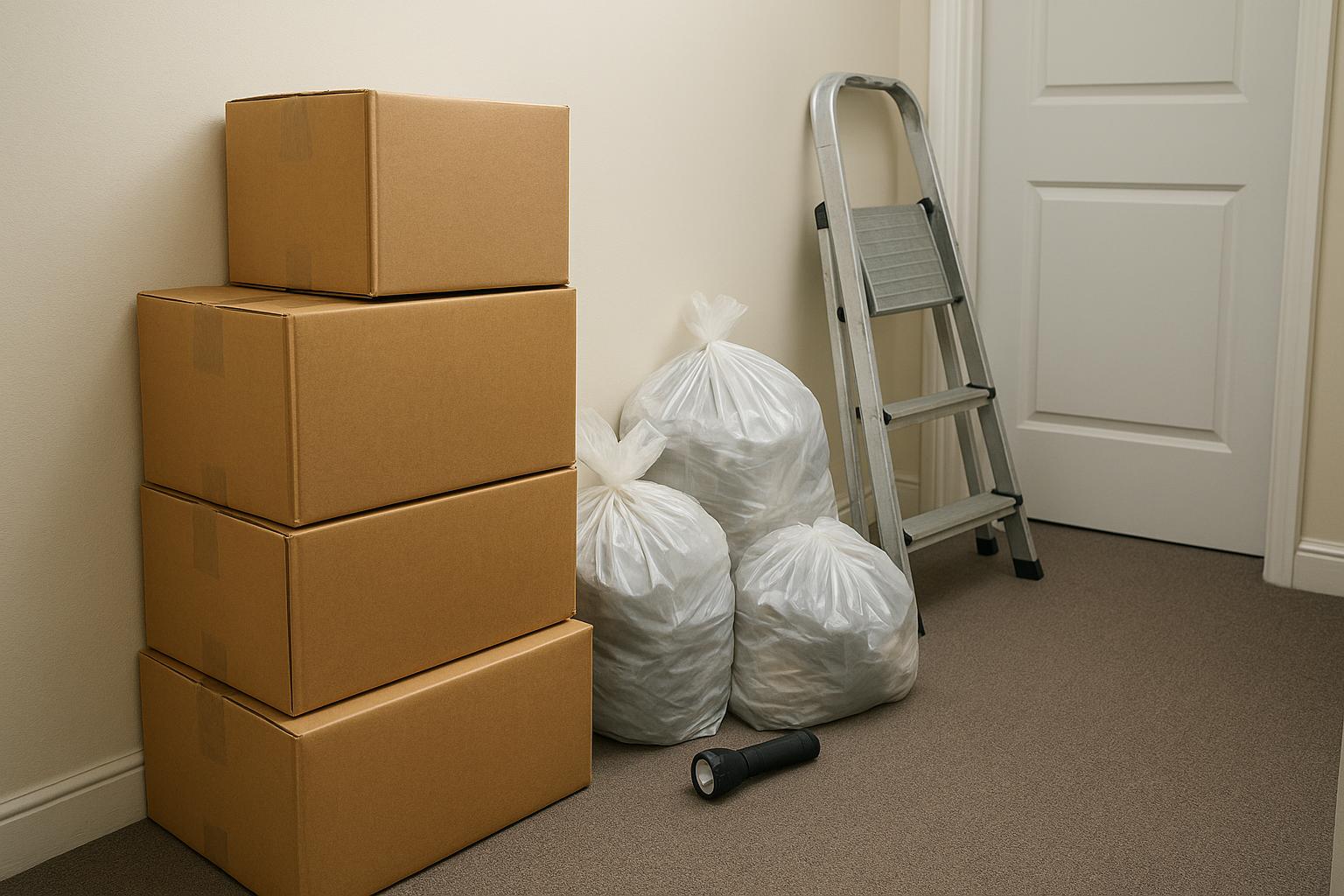
The best way to clear a loft through a narrow hatch is in small, manageable loads. Pack items into boxes or bags that are small enough to fit through the hatch with room to spare. Avoid bags that are too heavy to hold with one arm.
Set up a chain if possible. One person in the loft passes items to a second person on the ladder or landing, who lowers them to a third person on the floor. If you are working alone, use a strong rope and a bag or a bucket to lower items, but make sure no one is underneath. Never throw items down.
- Disassemble anything that can be taken apart before it goes near the hatch.
- Check each item for sharp edges or nails.
- Put heavy items in smaller containers.
- Keep the landing clear so no one trips.
- Take breaks, because overhead lifting tires you quickly.
For truly bulky items, such as a wardrobe or a large frame, check whether it can be cut or dismantled. If it cannot, you may be better to leave it for a professional team with the right equipment.
Lifting and posture
Protect your back.
Lifting from above your head or from an awkward crouch puts strain on your back and shoulders. Keep loads light, bring items close to your body and avoid twisting while holding a weight. If a box is too heavy, split it.
Use a stable stool or platform at the hatch edge if needed, but never stand on anything wobbly. Take short breaks every few minutes if you are doing repetitive handing down, and stop if you feel dizzy, hot or short of breath.
If you have a history of back, heart or breathing problems, a loft clearance is probably a job to hand to someone else.
Sorting as you go
Do not carry rubbish down twice.
Set up a small sorting area on the landing or in a nearby room. As each item comes down, decide whether it is to keep, donate, sell, recycle or throw away. This stops you moving the same box twice and gives a clear picture of how much waste you have.
Look inside boxes before you bin them. Lofts often hold photographs, certificates, letters and small valuables. Our guide to hidden family valuables and documents has a checklist of what to look for.
Items that are still in good condition may be worth donating or selling. Items that are damp or mouldy should be bagged and disposed of. Electrical items, batteries and chemicals should not go in the general waste, so see our guide on recycling old electronics.
Keeping what matters
Slow down on the boxes.
The risk in a fast loft clearance is throwing away something that matters. Photographs, school reports, old letters, certificates and sometimes savings books or share certificates end up in loft boxes. Go through each box before you decide.
Make a sealed box for things you are not sure about and review it at the end. If you are clearing for a relative or an estate, involve the family before anything goes, as described in our guide on dividing belongings without disputes.
This extra care takes time but protects you from regret later, and it is easier to do on the landing than up in the roof space.
When to get professional help
Know your limits.
There is no shame in handing a loft over to a team that has the kit and the training. Consider professional help if the hatch is very narrow, there is no floor, the space is full, you suspect asbestos, the access is steep or you have health problems that make climbing risky.
You can request quotes from independent carriers through houseclearance.co. Describe the hatch, the ladder situation and whether the joists are boarded so that the quotes reflect the real job. Our loft clearance cost guide explains what affects the price, and our guide on protective equipment for heavy clearances shows what a competent crew should be wearing.
Whoever you use, ask about their waste carrier registration and how they will dispose of the waste. Our guide to your duty of care as a householder explains why it matters.
What to tell a carrier when you ask for quotes
Detail gets better quotes.
Good quotes depend on good information. When you describe the job, say how big the hatch is, whether there is a fixed ladder, whether the joists are boarded, whether there is power or light, and roughly how many boxes and bulky items there are. Photos help.
Mention anything you suspect to be hazardous, such as old insulation, paint or chemicals, and say if there is any chance of asbestos. A reliable carrier will want to know, and may decline those items or advise on alternatives.
Carriers set their own terms, and prices vary with access, volume and disposal. Treat quotes as indicative until the carrier has confirmed what is included. See our house clearance checklist for what to confirm before agreeing.
Frequently asked questions
Common questions about clearing a loft.
How big is a typical loft hatch?
Many hatches are around 500 to 600 millimetres square, though sizes vary. Measure yours, because it decides what can go through.
Can I walk on the loft floor?
Only on boards fixed across the joists, or on the joists themselves. Never step on the plasterboard between them.
Is loft insulation hazardous?
Mineral wool can irritate skin, eyes and lungs, so wear protection. Some older loose-fill insulation, such as certain vermiculite, may contain asbestos, so do not disturb unidentified material.
What should I do if I suspect asbestos in the loft?
Leave it alone, keep people out of the area and ask a qualified surveyor or accredited laboratory to identify it. Check HSE and GOV.UK guidance.
Can I clear a loft with no ladder?
Do not climb in using an unstable or improvised ladder. Use a proper stepladder or a fitted loft ladder, or ask for professional help.
How do I get big items through a narrow hatch?
Dismantle them where possible. If they cannot be taken apart or cut safely, they may have to stay or be handled by a team with the right equipment.
Will a clearance company clear a loft?
Many independent carriers do, but tell them about the hatch, the floor and the quantity so quotes are realistic. Terms and prices vary between carriers.
What should I wear in a loft?
Gloves, long sleeves, eye protection and a suitable dust mask, plus sturdy shoes. Carry a torch or hang a work light.
