Direct answer
Talk to an elderly relative about an unsafe home by starting with their independence, not the clutter: pick a calm time, ask open questions, raise one small concrete risk and agree one change at a time. In England an adult with mental capacity may make choices others think unwise, so persuasion rather than removal is the route; if capacity is genuinely in doubt, the Mental Capacity Act 2005 best-interests approach applies. Help is available from their GP, the council's adult social care team, an occupational therapist, the fire service and charities such as Age UK. Small safety steps often remove most of the risk, and carriers found through houseclearance.co can quote for any physical clearance once you can describe it honestly.
Contents
- Why this conversation is so hard
- Recognising when a home has become a safety hazard
- Before you say anything: prepare yourself
- Choosing the time, the place and the voice
- What to say: opening lines that work
- What to avoid saying and doing
- When your relative says no
- Capacity, consent and who can decide
- Bringing in professional and community help
- Making the home safer in small steps
- When a clearance becomes the right next step
- Special situations: dementia, hospital discharge and living far away
- If the conversation turns to moving
- Where houseclearance.co fits
- Frequently asked questions
Why this conversation is so hard
For the relative and for you.
Few family conversations are harder than telling a parent, grandparent or aunt that their home is no longer safe. The house may be the last place that still feels fully theirs. When you say "the hallway is a hazard", they can hear "you can no longer manage your own life". Closing that gap between what you mean and what they hear is most of the work.
You may both be right. A blocked staircase or a frayed extension lead may be dangerous, and they may know exactly where everything is and feel perfectly safe. Older people often adapt to a slowly worsening home without noticing, while relatives who visit occasionally see the change all at once.
This guide is general information for families in England, not legal, medical or social-work advice. It does not assume hoarding disorder, because most unsafe homes belonging to older people are places where age, illness, grief, reduced mobility or money worries have outpaced the person's ability to keep up. If hoarding does seem to be involved, our step-by-step guide to a house clearance for someone with hoarding disorder goes deeper.
Recognising when a home has become a safety hazard
Look at risks, not at untidiness.
Untidiness is not danger. A cluttered home can be reasonably safe, and a spotless one can hide serious risks. Look for specific hazards rather than judging the general state of the place.
Falls and trip hazards
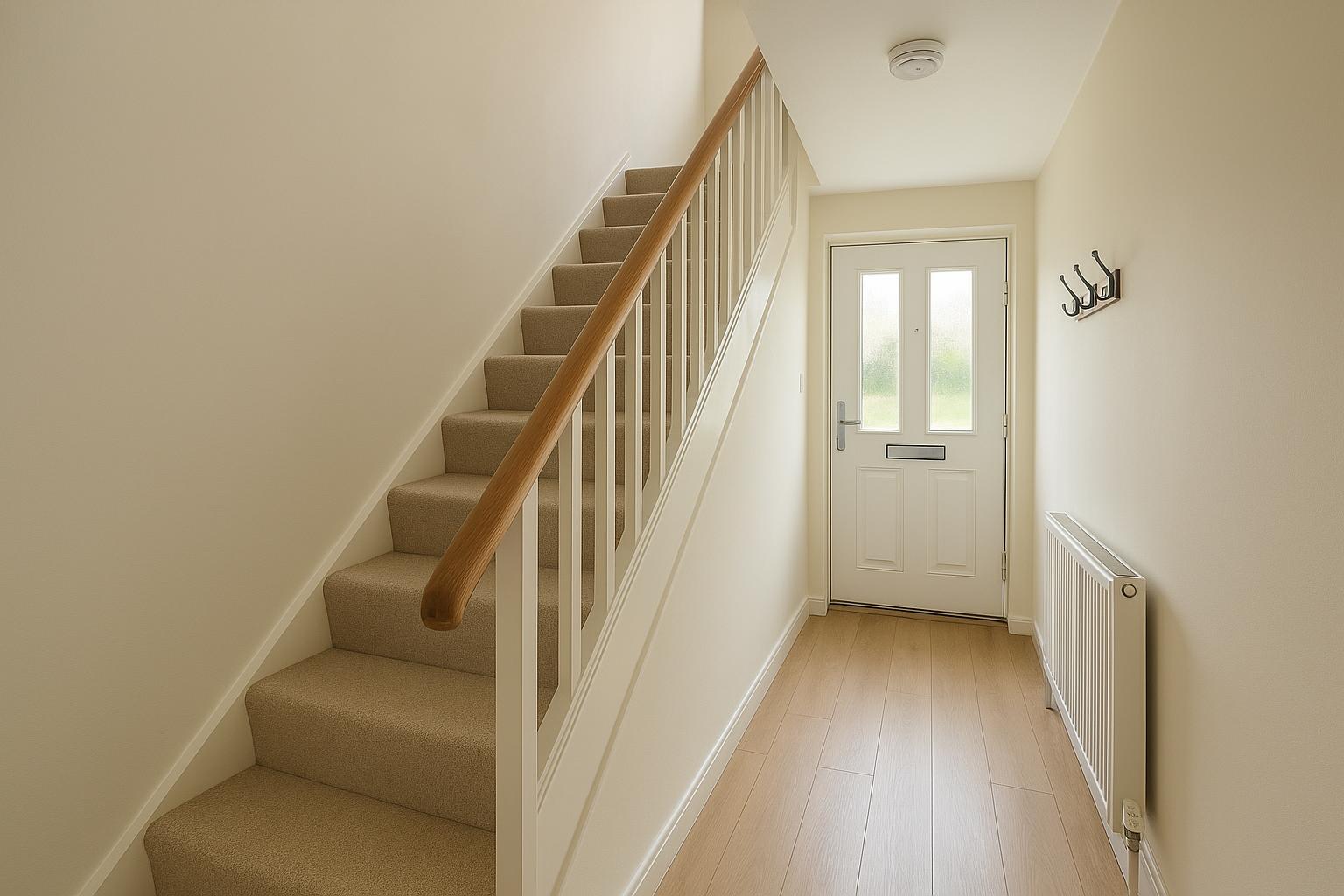
Falls are a common cause of serious injury for older people, and the NHS publishes guidance on falls and how to reduce the risk. Visible risk factors include loose rugs, items on the stairs, trailing cables, poor lighting, a chair or bed that is hard to get out of, and narrow paths that force someone to twist or step over things. A walking frame needs more floor width than most people expect.
Fire risks
Look for papers, clothing or boxes stacked near heaters or cookers, overloaded sockets, items blocking the front door, and missing or disabled smoke alarms. Clutter feeds a fire and slows both escape and rescue.
Hygiene, health and access
Spoiled food, a bathroom that cannot be used properly, damp, mould, pest evidence and piles of unopened post can signal that someone is struggling with daily tasks, often through illness, low mood or poor eyesight rather than choice. Ask whether the person can reach the toilet and bed safely at night, and whether a paramedic or carer could get in and out easily.
Write down what you see, with dates and, where the person allows it, photographs. Talking about "the cable by the bedroom door" is easier than "all this mess", and notes help if you later involve a GP or the council.
Before you say anything: prepare yourself
Preparation changes the outcome more than any script.
Know what you want. Do you want a smoke alarm fitted, a carer accepted, the hall cleared, or a move considered? Each is a different conversation. Pick one small, concrete goal first.
Check your motives. Families sometimes push because the house is embarrassing or because they fear the responsibility. Those feelings are yours, so anchor the conversation in their safety and wishes. Our guide on supporting someone with anxiety about discarding items covers helpful and unhelpful phrases in more depth.
Agree within the family first. Three siblings arriving with three agendas feels like an ambush. Decide who has the best relationship, who leads, and what each person can offer. Keep old money or inheritance tensions out of it; our guide to dividing family belongings without disputes can help with that separate issue.
Look for a trigger. A bereavement, fall, hospital stay, diagnosis, sight or hearing loss can explain a sudden decline in a home, and deserves attention first.
Choosing the time, the place and the voice
Practical choices that lower the temperature.
Choose a time when nobody is rushed or tired, not straight after a hospital appointment or in front of visitors. A weekday morning over tea at their own kitchen table usually beats a family gathering. Sit rather than stand, reduce background noise if they have hearing loss, and keep the first conversation short. A realistic aim is that they feel heard and you agree one small thing, or simply agree to talk again.
The best messenger is not always the closest relative. A friend, neighbour, faith leader or GP may be heard when a child is not. A GP surgery can listen to your concerns without your relative's consent but cannot usually share information back.
What to say: opening lines that work
Start with them, not with the clutter.
Begin with something true and kind about them: that you want them to stay in their home as long as they wish, and that you would like to help make that easier. Safety is far easier to discuss when it is framed as protecting independence rather than ending it.
- "I noticed the stairs were hard last time. What is that like at night?"
- "Can you show me how you manage in the kitchen? I would like to understand."
- "What worries you most about the house at the moment?"
- "You know this house better than anyone. What would you change first?"
- "Would you be happy if we tried one thing and saw how it feels?"
Open questions invite description; "Don't you think that rug is dangerous?" closes the conversation. Resist correcting the answer, because people often describe the problem unprompted if given room. "I worry about you falling when I cannot be here" is hard to argue with, while "you are going to fall" is easy to reject. Propose a specific, easy yes, such as a night light or testing the smoke alarm together, because small wins build trust for larger changes.
Acknowledge what the belongings mean. Saying "I can see these matter to you" costs nothing. For the deeper emotional picture, see our guide on how isolation, mental health and hoarding are linked.
What to avoid saying and doing
Common mistakes that close the door.
- Clearing without agreement. A "surprise" clear-out is the most reliable way to destroy trust, and disposing of someone's property without consent can create legal problems.
- Ultimatums. "Let us clear it or you are going into a home" ends the conversation and may make them hide problems from you.
- Talking about them as if they are not there, or using infantilising language.
- Showing disgust at a smell, a pile or a bathroom. They will remember it.
- Assuming dementia or any other diagnosis. Many causes lie behind a declining home.
- Rushing. Pressure is felt as loss of control, which most older people fear most.
If it goes badly, step back, apologise for the tension, reaffirm you are on their side and try another day.
When your relative says no
Understanding refusal before trying to overcome it.
Refusal does not always mean the person cannot see the problem. Often they fear that accepting help leads to care homes, judgement, loss of control over money, or loss of possessions that hold memories. Ask what they are afraid will happen if they say yes. Once named, a fear can sometimes be answered honestly: nothing leaves the house without their approval, or no one has proposed a care home, or we can look at what help would cost before anyone decides.
- Offer choices. "Shall we move the boxes from the stairs on Saturday or Tuesday?" beats "the stairs must be cleared".
- Make it a trial. "Let's try it for two weeks" is easier to accept than a permanent change.
- Link it to something they want, such as a grandchild staying over.
- Use a neutral voice. A professional visit can feel less personal than a family intervention.
- Wait for a window. A near-miss or hospital stay can open a door that was closed.
Some people will keep refusing. An adult with capacity is allowed to live in a way others consider risky. Your role then shifts from persuading to staying close, reducing the worst risks you can, and knowing who to call if things change.
Capacity, consent and who can decide
The legal framework in England, in plain terms.
The Mental Capacity Act 2005, which applies in England and Wales, sets out principles that shape what families and professionals can do. A person must be assumed to have capacity unless shown otherwise. They must be given all practical help to decide before anyone concludes they cannot. A decision is not evidence of lost capacity just because it seems unwise. And if someone genuinely lacks capacity for a particular decision, what is done for them must be in their best interests and the least restrictive option available.
Capacity is decision-specific and can change. Someone may decide about their own meals while struggling with complex finances. A family member cannot declare it; where it is in doubt, a GP, social worker or other professional carries out the assessment.
Lasting power of attorney
If your relative still has capacity, a separate but valuable conversation is whether they have made a lasting power of attorney, which lets them choose someone to decide for them if they later lose capacity. There are two types, for property and financial affairs and for health and welfare. It must be made while the person has capacity and registered before use; gov.uk/power-of-attorney explains the process and current fees. Without one, families may need the Court of Protection, which is slower and costlier.
An attorney still cannot clear a home at will; decisions about belongings must be in the person's best interests, taking their wishes into account. Take the same cautious, documented approach described in our guide to executor legal responsibilities.
Bringing in professional and community help
You do not have to do this alone.
"You do not have to deal with this alone, and neither do I" is a powerful thing to say, especially if you can offer something concrete.
Their GP
A GP can look for causes behind a decline, such as infection, medication effects, low mood, sight or hearing problems or early memory changes, and can refer onwards. Going along, or writing a short note beforehand, helps the GP see the whole picture.
Adult social care at the council
Under the Care Act 2014, councils in England must assess adults who appear to have needs for care and support, and carers in their own right. Find the right team through gov.uk's local council finder; the NHS has a plain-English overview of social care and support. Whether help is funded depends on needs and finances, so ask what applies. Care Act statutory guidance also recognises self-neglect as something safeguarding can apply to. If someone is at serious risk, raise it with the council; in an emergency call 999.
Occupational therapists and the fire service
An occupational therapist, usually reached through the council or NHS, assesses how a person functions at home and recommends changes from grab rails to rearranged furniture. London's fire service offers home fire safety advice and visits for those who qualify; see its home safety pages for current eligibility. A professional visit can be easier to accept than a family intervention.
Charities
Age UK and local branches offer information and, in some areas, practical services. Alzheimer's Society supports people with dementia and their carers, and Hoarding UK offers specialist information where clutter is the core issue. Services differ by borough, so check locally.
Making the home safer in small steps
Changes that do not require a full clearance.
Many unsafe homes do not need a clearance. A sequence of small changes, agreed with the person, can remove most immediate risk and build trust.
- Escape routes. Clear the front door and the route to it, with keys within reach.
- Stairs and hall. Remove items from the stairs and check handrails and lighting.
- Heat and electrics. Keep papers and fabrics away from heaters and cookers and reduce overloaded sockets. Leave repairs to a qualified electrician.
- Smoke alarms. Test them and replace batteries, or ask the fire service for advice.
- Bedroom and bathroom. Create a clear, lit path between bed and toilet.
- Kitchen and floors. With agreement, clear expired food, and secure rugs and cables.
Work alongside the person, not around them, and tell them where anything you remove has gone. Where paper is involved, check first; our guide on finding hidden valuables and documents explains why. For items you remove yourself, see council bulky waste versus private clearance in London.
When a clearance becomes the right next step
And how to keep it respectful.
Sometimes small steps are not enough: the route to the bed is blocked, the cooker is unusable, or someone is coming home from hospital to a home that cannot support them.
Keep it their decision. If they have capacity, they decide what goes. If they lack capacity for this decision, follow the best-interests approach, ideally with a social worker involved.
Sort before you remove. Set up "keep", "decide later" and "go" areas the person can see, and work room by room from the safety-critical spaces. Our room-by-room clearance plan sets out a sequence for heavily filled properties.
Match the help to the job. Decide whether you need sorting, removal or both, and say whether the person lives there. Our hoarding clearance London page covers heavy clutter and decluttering services covers lighter help.
Know when to stop. If you find bodily waste, serious pests, sharps or mould, read our guide to biohazard clearance and extreme squalor before going further. Where the council is already concerned, see council intervention in hoarded properties.
Plan the aftermath. A clear home can feel unfamiliar at first. Make sure there is a comfortable seat, a working kitchen and bathroom, and company, and follow up so the improvement lasts.
Special situations: dementia, hospital discharge and living far away
When the usual approach needs adjusting.
Memory problems. If you think dementia or another memory condition may be involved, encourage a GP appointment rather than offering your own diagnosis. In conversation, use short sentences, one point at a time, a calm tone and a familiar setting. Do not argue about facts; focus on how the person feels. Someone with memory problems may genuinely not remember agreeing to a change, so keep notes, and put reminders where they will see them. Alzheimer's Society and the council's adult social care team can advise on support for the person and for you.
Hospital discharge. A hospital stay is often the point where an unsafe home becomes impossible to ignore. Tell ward staff early about concerns about the home, because discharge planning can involve social workers and therapists who may want to know whether the person can get in, reach the bathroom and use the stairs. Use the stay to make the minimum safe changes, such as a clear route, a usable bed and bathroom, and working heating, but do this with the person's knowledge and wherever possible their consent.
Living far away. If you are not nearby, a trusted neighbour, friend or local voluntary organisation can be your eyes, and video calls can show you the home with the person's permission. Do not try to run a major clearance by phone. Our guide to remote house clearance from overseas or a long distance explains how to manage the practical side without being on site.
Rented or housing association homes. If your relative rents, tell them that landlords usually have inspection and repair responsibilities, and that a landlord or housing officer can sometimes help with repairs, safety checks or adaptations. Check the tenancy agreement and speak to the landlord before arranging any large removal.
If the conversation turns to moving
A different decision, with its own timetable.
A safety conversation can become one about whether to stay at all. Do not smuggle that in under the heading of a clearance. Options include adaptations, home care, sheltered or extra-care housing, moving in with family or residential care, each with its own rules. Ask the council's adult social care team and an independent source such as Age UK first. If a move follows, our downsizing and house clearance planning guide explains how to plan the work, and probate house clearance timing may matter later if the home becomes part of an estate.

Where houseclearance.co fits
A quote-matching marketplace, not a clearance company.
houseclearance.co is a marketplace. You describe the job, and independent, licensed local waste carriers may contact you with quotes. We do not carry out clearances ourselves, and we do not promise that a carrier will take any job. When you need removal, describe the person's situation, access, volume and hazards honestly, and check any carrier's waste carrier registration. See how to choose a licensed house clearance company, waste transfer notes for house clearances and house clearance London.
Ready to see your price?
When you are ready to move forward, describe the job and we will pass it to vetted, licensed local carriers, who may contact you with quotes.
Frequently asked questions
The questions families ask most often when an older relative's home is no longer safe.
How do I start a conversation with an elderly parent about an unsafe home?
Choose a calm time at their own kitchen table, begin with how much you care about their independence, and ask open questions about how they manage day to day. Raise one small, concrete issue rather than the whole house, and expect to talk more than once.
What if my elderly relative refuses any help?
An adult with mental capacity may make choices others consider risky. Find out what they fear, offer choices and trial periods, involve a trusted professional and stay close. Reduce the worst risks with their agreement and know who to contact if things change.
Can I clear my elderly relative's home without their permission?
Not if they have capacity. Removing someone's belongings without consent can cause serious distress and legal problems. If they lack capacity for the decision, action must follow the best-interests principles of the Mental Capacity Act 2005, ideally with professional involvement.
Who can assess whether my relative has capacity?
Capacity is assessed for a specific decision at a specific time, usually by a GP, social worker or other suitable professional, not by family. Everyone is assumed to have capacity unless shown otherwise, and an unwise decision is not proof of lack of capacity.
What is a lasting power of attorney and should we arrange one?
It lets someone appoint a trusted person to decide for them if they later lose capacity, with separate types for property and financial affairs and for health and welfare. It must be made while they have capacity and registered. See gov.uk for the current process.
Who can I contact if I am worried about an older person's safety at home?
Start with their GP and the adult social care team at their local council. The fire service can advise on fire safety and charities such as Age UK offer information. In an emergency call 999.
Is a cluttered home the same as hoarding?
No. Many older people live in cluttered homes because of mobility problems, illness or grief, not hoarding disorder. If you suspect hoarding, support from the GP and organisations such as Hoarding UK is worth exploring.
Do we need a full clearance, or are small changes enough?
Often small changes, such as clearing stairs, securing rugs and cables and testing smoke alarms, remove much of the immediate risk. A fuller clearance is for when access, hygiene or fire risk cannot be managed otherwise, and it should involve the person.
How should I brief a carrier when the person still lives there?
Say they live there and will be present, describe rooms, volume, stairs, parking and hazards, and state what must be kept. Ask for a visit or photo review before a final quote, and check the carrier's waste carrier registration.
Does houseclearance.co carry out the clearance?
No. houseclearance.co is a marketplace. You describe the job, and independent, licensed local carriers may contact you with quotes. We do not clear properties ourselves.