
Direct answer
Managing a UK house clearance from overseas or from a long distance away is realistic for almost every stage of the process - requesting and agreeing a quote, deciding what's kept and what's cleared, arranging payment - provided you have one trusted local person who can hold keys and be physically present when needed, and you choose a carrier willing to quote from photographs, a written inventory, or a live video walkthrough rather than insisting on an in-person visit. The one step that reliably resists being done remotely is the final on-site check before keys are handed back: confirming the property has actually been left as agreed, taking final meter readings, and making sure nothing was missed. Plan around that single pinch point and the rest of the coordination - time zones, payment, security of an empty property, and what to do with sentimental items - is manageable with ordinary tools: email, video calls, photographs and a bank transfer.
Contents
- When you need to organise a clearance from a distance
- Choosing a trusted local contact or keyholder
- What makes a clearance company genuinely "remote-friendly"
- Power of attorney, executor authority, and who can actually instruct the work
- Getting and approving a quote without being on site
- Securing an empty property while it's being cleared
- Time zones and keeping communication workable
- Sentimental and valuable items when you can't sort them yourself
- Paying a UK carrier from overseas
- What genuinely can't be done remotely
- Related guides on this site
- Frequently asked questions
When you need to organise a clearance from a distance
More common than it sounds - and it rarely involves a quick weekend trip.
Remote house clearance situations come up more often than people expect, and they're rarely as simple as "fly over for a weekend and sort it." The most common scenarios are a relative passing away while their children or executor live abroad or in a different part of the UK; an executor managing an estate as one part of a much wider set of responsibilities, with a job and family of their own hundreds or thousands of miles from the property; a landlord based overseas dealing with a tenancy that's ended and belongings left behind; or an expat who has moved permanently and needs a UK property cleared and sold without returning. In nearly all of these cases, the property sits empty for a period, decisions need to be made about its contents, and the person with the authority and the emotional stake in the outcome isn't able to simply walk through the rooms themselves.
The practical challenge isn't usually a lack of willing tradespeople - London has no shortage of licensed clearance carriers - it's coordinating decisions, inspections and security without being physically present for any of it. That's a solvable problem with the right structure, but it does need more deliberate planning than a clearance where you can simply turn up and point at what needs to go.
Choosing a trusted local contact or keyholder
The single most important decision in a remote clearance - everything else depends on it.
Every remote clearance ultimately needs at least one person who can physically be at the property: to let a clearance crew in, to check on the property between visits, to verify work has been completed as agreed, and to be the point of contact if something unexpected comes up on the day. Who that person is matters more than almost any other decision in the process.
- A family member or close friend living locally. The most common choice, and usually the best one if someone is available and willing - they already have context on the property and the family situation, and don't need to be paid.
- A neighbour you trust. Workable for short-term tasks (holding a spare key, keeping an eye on the property) but less suitable for anything requiring judgement calls about what's being cleared, unless they're closely involved in the family's decisions already.
- A solicitor or probate practitioner already involved in the estate. Where probate is involved, the solicitor handling the estate may already have a role that extends to coordinating practical matters, or can recommend a local professional who does.
- A paid key-holding or property-management service. Where no family member or friend is available locally, a professional key-holding service can fill the gap - this is a genuine category of service in the UK, distinct from the clearance itself, and worth researching separately if there's truly nobody suitable nearby.
Whoever you choose, agree their role explicitly and in writing before the clearance begins: are they simply holding a key and letting the crew in, or are they also expected to make judgement calls about ambiguous items, check the quality of the work, and report back with photographs? Being clear about this upfront avoids the awkward situation of a local contact having to guess what level of involvement you expected from them.
What makes a clearance company genuinely "remote-friendly"
Not every carrier is set up for this - ask before you commit.
Plenty of clearance companies are used to working with customers who can't be present, but the practical details of how they handle it vary considerably, so it's worth asking specific questions rather than assuming a company advertising "nationwide service" has a proper remote process. A genuinely remote-friendly carrier typically offers some combination of the following:
| Feature | Why it matters for a remote customer |
|---|---|
| Quotes from photographs or a written inventory | Means you don't need anyone physically present just to get an initial price, provided the photographs are thorough. |
| A live video call walkthrough option | Lets the carrier ask questions in real time about access, volume and anything unclear from static photographs, which usually produces a more accurate quote than photos alone. |
| Photographic record before and after the job | Gives you evidence of the property's condition before work started and confirmation of what was actually cleared, which matters when you can't verify it yourself in person. |
| A detailed written quote, not just a verbal figure | A written breakdown of what's included, what's excluded, and the total price is something you can review calmly by email, rather than relying on a phone conversation you can't fully verify later. |
| Willingness to coordinate with your local contact directly | Reduces the amount of relaying information through you, and means your local contact and the carrier can resolve small on-the-day questions without waiting for you to wake up in a different time zone. |
It's reasonable to ask a carrier directly, before booking, how many remote or overseas customers they've worked with and what their process looks like - a carrier with real experience of this will usually describe it clearly and confidently, while one that hasn't done it before may be vaguer about how they'd handle any of the points above.
Getting and approving a quote without being on site
Detail is what makes a remote quote reliable - vague descriptions produce vague prices.
The quality of a remote quote depends almost entirely on the quality of the information the carrier has to work from. A short phone call saying "it's a three-bedroom house, fairly full" will produce a rough estimate at best, and leaves plenty of room for the final price to shift once a crew actually arrives. A more detailed approach gets you a figure you can actually rely on:
- Photograph every room, including cupboards, the loft and any shed or garage. Ask your local contact to do this systematically, room by room, rather than a few general shots of the main living areas - clearance volume is often underestimated when storage spaces are skipped.
- Note anything unusually heavy, fragile, or awkward to access. A piano, a solid wardrobe that won't fit through a doorway assembled, or a loft with no proper ladder all affect labour time and should be flagged before a price is given, not discovered on the day.
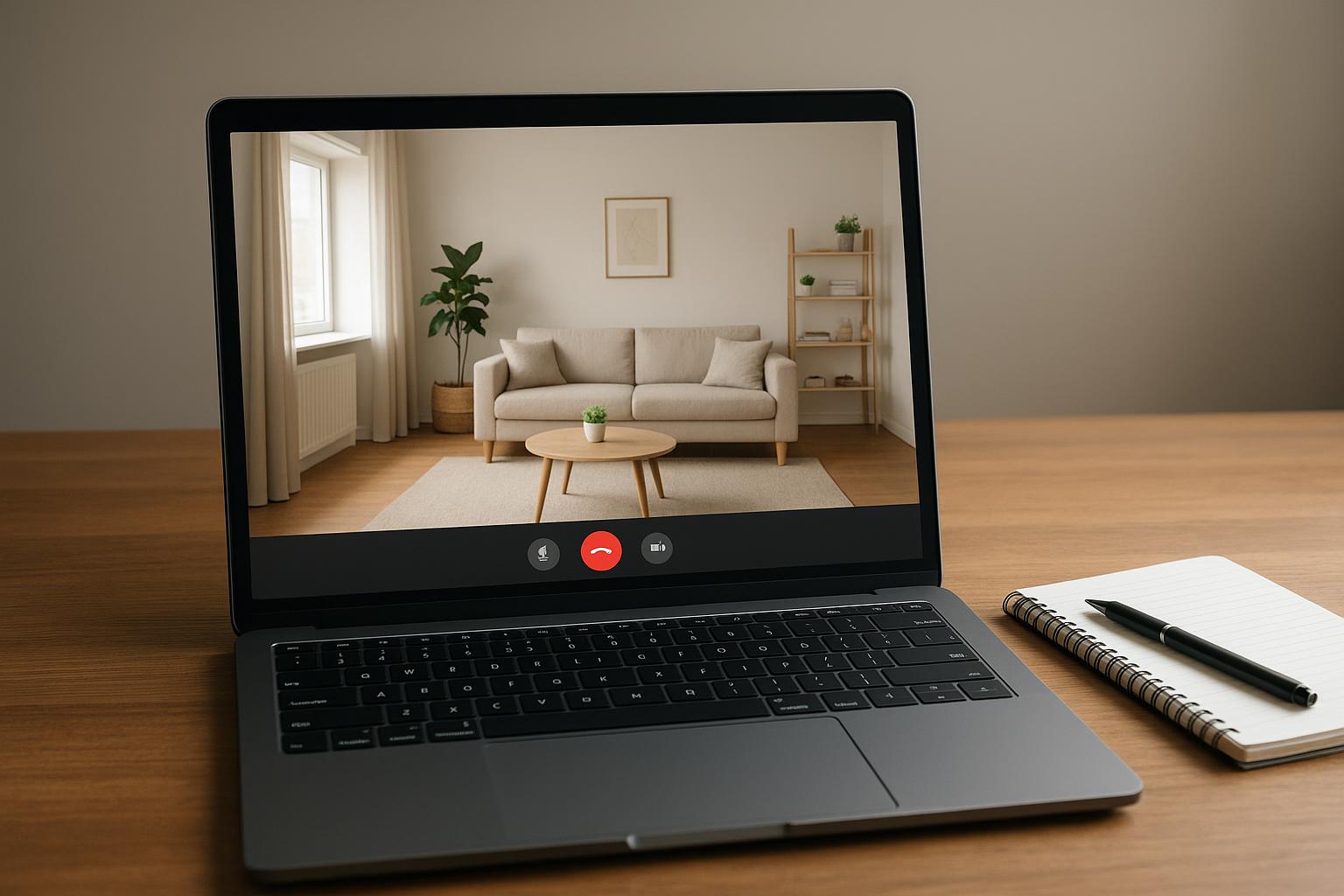
- Ask for a video call walkthrough if the carrier offers one. Even a ten-minute call, with your local contact holding a phone and walking through the property while you watch and the carrier asks questions, gives a much clearer picture than static photos and lets you address uncertainty immediately.
- Get the quote in writing, itemised where possible. A written quote that states what's included, what's excluded, and the total price gives you something to review properly and compare against other quotes, rather than relying on your memory of a phone conversation.
- Ask what would change the price. A good carrier will tell you upfront what could cause the final bill to differ from the quote - access restrictions discovered on the day, additional items not visible in photographs, or parking charges - so there are no surprises.
Once you've approved a quote, confirm the booking in writing (an email reply is usually sufficient) so there's a clear record of what was agreed, and share the confirmed date and carrier contact details with your local contact so they know exactly who to expect and when.
Securing an empty property while it's being cleared
An empty property is a different insurance and security risk category to an occupied one.
A property that's going to sit empty for any meaningful length of time - whether that's a few weeks while a clearance and sale are arranged, or longer if the market is slow - needs to be treated differently to a normal occupied home, for two separate reasons: physical security and insurance.
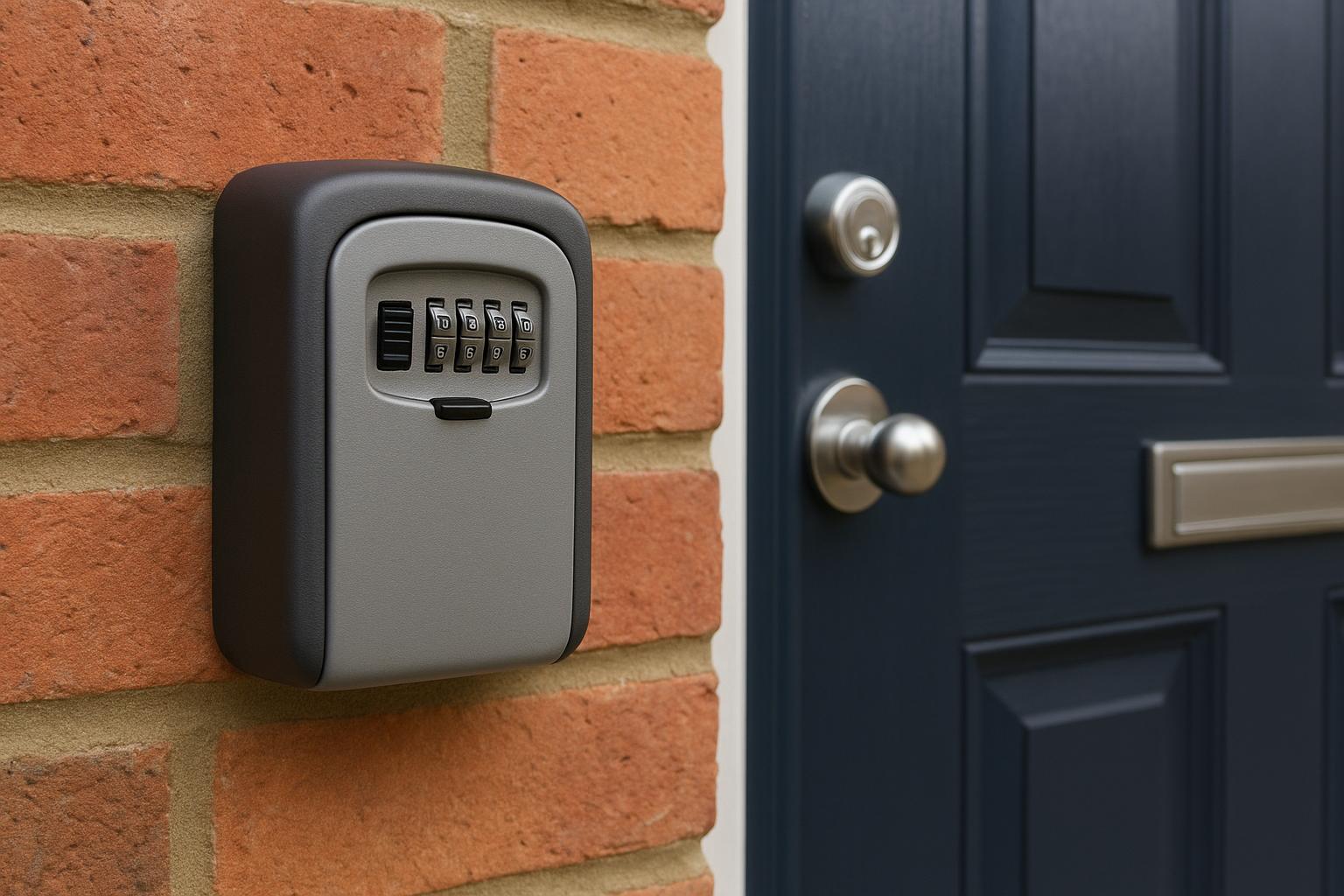
On security, a key safe fitted securely to an external wall or door frame is one of the most practical tools for a remote clearance: it lets a clearance crew, a cleaner, an estate agent, or a trusted neighbour access the property using a code you can share by phone or message, without a physical key needing to be couriered internationally or handed between multiple people. Combine this with a local contact who can do occasional visual checks - or, where nobody is available locally, a professional property-inspection or key-holding service - and basic steps like ensuring post doesn't visibly pile up at the letterbox and that curtains or blinds don't obviously signal an empty house.
On insurance, this is where remote clearances most often catch people out. Most standard UK home insurance policies restrict or exclude cover once a property has been left unoccupied beyond a set number of consecutive days - commonly somewhere in the region of 30 to 60 days, though the exact figure varies by insurer and policy. If a property is going to be empty for longer than that while it's cleared, sold, or let again, it's worth contacting your existing insurer early to ask what their unoccupancy limit actually is, and whether you need to move to a specialist unoccupied property insurance policy - a distinct category of cover designed specifically for vacant homes, generally with different conditions around minimum visit frequency, alarm requirements, and sometimes drained water systems in winter months. Doing this before the unoccupancy limit is breached matters, because a claim made after cover has technically lapsed due to vacancy can be refused even if the policy was otherwise valid.
Time zones and keeping communication workable
The practical fix is scheduling ahead, not trying to be reachable at all hours.
When an executor or property owner is in a significantly different time zone from London - Australia, parts of Asia, the west coast of the US or Canada - same-day phone conversations become genuinely difficult, since a reasonable calling hour for one person is the middle of the night for the other. Trying to stay reachable at all hours isn't sustainable, and usually isn't necessary if the coordination is structured properly.
A few practical habits make a large difference: tell your local contact and your chosen carrier your normal available hours converted into UK time, so they know roughly when a message is likely to get a same-day reply; use email or written messaging for anything that isn't urgent, rather than defaulting to a call; reserve video calls for the moments that genuinely benefit from real-time back-and-forth (a quote walkthrough, or resolving a specific disagreement) and book them a day or two in advance rather than trying to arrange one on the spot; and accept that some decisions will simply take an extra day to confirm because of the time difference, building that into your expectations rather than treating every delay as a problem with the carrier or your local contact.
Sentimental and valuable items when you can't sort them yourself
Photographs and a pause before clearance begins protect you here, not speed.
One of the hardest parts of a remote clearance is that you can't personally go through drawers, boxes and cupboards looking for documents, jewellery, cash, or things that matter for sentimental reasons rather than financial ones. The practical answer is to build this step in deliberately, rather than hoping your local contact or the clearance crew will flag anything important on their own initiative.
Ask your local contact to do a dedicated pass through the property specifically looking for documents, valuables and anything personal - before any clearance crew arrives, not during the clearance itself - and to photograph what they find so you can review it and decide what to do with each item remotely. Our guide to finding and safeguarding hidden family valuables, documents and photos during a clearance covers exactly where these items are most commonly found (the backs of drawers, inside books, under wardrobes, in coat pockets) so your local contact knows what to check beyond the obvious places.
Where more than one relative has an interest in sentimental items - common in exactly the bereavement situations that make remote clearance necessary in the first place - this can still be managed at a distance using a structured approach rather than informal claims made by whoever happens to see something first. Our guide to fairly dividing family belongings between relatives without disputes covers methods like a photographed shared inventory and sealed bidding that work well specifically because they don't require everyone to be in the same room, or even the same country, at the same time.

Paying a UK carrier from overseas
Build in a few extra days for international transfers to clear.
Most UK clearance carriers are set up to accept a standard bank transfer, and an international transfer from an overseas account to a UK account is routine and widely supported by banks, but a few practical details are worth checking before you need the payment to arrive urgently:
- Transfer times vary. A domestic UK transfer often clears same-day or next-day; an international transfer can take several working days depending on the sending bank, the receiving bank, and whether any intermediary banks are involved. Ask your bank for a realistic estimate rather than assuming it will be instant.
- Currency conversion costs money. If you're paying in a different currency, your bank or payment provider will apply an exchange rate and often a margin or fee on top of it - it's worth comparing what your regular bank charges against a dedicated currency transfer service if the amount is significant, since the difference on a sizeable clearance invoice can be worth a few minutes of comparison.
- Confirm the payment method before booking. Some carriers expect a deposit before work begins and the balance on completion; knowing this in advance lets you time an international transfer so funds are confirmed as received before the crew is due, rather than causing a delay on the day.
- Keep a record of the transfer reference. International transfers sometimes arrive with a different reference than what you sent, which can cause confusion when a carrier is trying to match a payment to your job - keeping your own copy of the transfer confirmation makes it quick to resolve if a payment query comes up.
Building a few extra days of buffer into your payment timeline, rather than sending funds at the last possible moment, removes most of the risk that a slow international transfer delays the actual clearance date.
What genuinely can't be done remotely
One step still needs a trusted person physically in the rooms.
It's worth being honest about the limits of remote coordination, rather than assuming video calls and photographs can substitute for absolutely everything. The one step that consistently needs a physically present, trusted person is the final on-site inspection before a job is signed off and keys change hands - whether that's keys going to a new tenant, an estate agent, a buyer's solicitor, or simply being returned to a landlord at the end of a tenancy.
That final check typically covers several things a video call can't fully replace: confirming the property has actually been left in the condition agreed with the carrier, with nothing missed in a loft, shed, or cupboard that was supposed to be cleared; taking final meter readings for gas, electricity and water, which need to be read accurately and on the correct date rather than estimated; checking that nothing has been damaged during the clearance that wasn't flagged; and physically taking possession of or handing over keys, which generally can't be done by courier at short notice without risk or delay.
A video call during this final stage can genuinely help - having your local contact walk you through the empty property on camera gives you visibility you wouldn't otherwise have - but it works best as a supplement to that person's own physical presence and judgement, not as a replacement for having someone there at all. Planning for this single pinch point from the start, rather than discovering partway through that nobody is available for the final handover, is the difference between a remote clearance that runs smoothly and one that stalls at the last step.
Ready to see your price?
Describe the job - including that you're coordinating it remotely - and we'll match it with a vetted, licensed carrier used to working from photographs, written inventories and video calls.
Frequently asked questions
The questions that come up most often about organising a clearance from overseas or long distance.
Can I arrange a full house clearance in the UK if I live abroad and can't visit the property?
Yes, in most cases, provided you have a trusted local contact who can hold keys and be present on the day, and you work with a carrier willing to quote from photographs, a written inventory, or a video walkthrough rather than an in-person visit. What can't usually be done entirely remotely is the final on-site check - confirming the property has been left as agreed and handing back keys - so most overseas clearances still need one local person involved at that final step, even if everything else is coordinated by phone, email and video call.
Do I need power of attorney to arrange a house clearance from overseas?
It depends on whose property it is. If you're clearing your own property while living abroad, no special authority is needed - you can simply instruct a carrier and a local contact as you would for any other service. If you're acting as an executor or attorney for someone else's estate or affairs, you need the legal authority that role already gives you - a Grant of Probate for an executor, or a registered power of attorney for an ongoing arrangement - before you commission work or dispose of belongings on their behalf. Our guide to an executor's legal responsibilities for property and chattels covers this in full.
How do I get an accurate clearance quote without being at the property in person?
The most reliable approach is to combine three things: a set of clear, well-lit photographs covering every room, cupboard and loft space; a simple written inventory noting anything bulky, fragile or potentially valuable; and, where a carrier offers it, a live video call walkthrough using your phone or a local contact's phone so the carrier can ask questions in real time. A quote based on this level of detail is far more reliable than one based on a vague description, and it gives you a written record to compare against the final invoice.
Is a video call walkthrough actually a reliable way to get a quote?
It's a reasonable substitute for an in-person visit when done properly, though it has limits. A video call lets a carrier see room layout, access points (stairs, doorways, parking) and general volume in a way photographs alone sometimes miss, and lets them ask follow-up questions on the spot. It's still not perfect - lighting, camera angle and a rushed walkthrough can all lead to a quote that shifts slightly once the crew arrives - so it's worth asking the carrier to confirm in writing that the quote is based on the video and photographs provided, and what might cause it to change.
What is unoccupied property insurance and do I need it while the property is being cleared?
Unoccupied property insurance is a specific category of buildings and contents cover designed for homes that are empty for an extended period, typically once a standard home insurance policy's unoccupancy limit - commonly around 30 to 60 consecutive days, though this varies by insurer - has been exceeded. Most standard home insurance policies restrict or void cover once a property has been empty beyond that limit, so if a UK property is going to sit vacant for weeks or months while being cleared and sold or let, it's worth checking with your existing insurer first and moving to a specialist unoccupied property policy if needed, rather than assuming your normal cover still applies.
How do I secure an empty UK property if I'm not there to check on it regularly?
A combination of a trusted local keyholder, a key safe fitted to the property (so a clearance crew, cleaner or trusted neighbour can access it without a physical key changing hands internationally), and regular visual checks - whether from a neighbour, a local contact, or a property-watching service - covers most of the practical risk. Many insurers offering unoccupied property cover also require evidence of regular inspections, so it's worth asking what visit frequency your policy expects before relying on an informal arrangement.
How do time zone differences affect coordinating a clearance from abroad?
The main practical effect is that same-day phone conversations become harder to arrange, so most overseas coordination works better over email, messaging or scheduled video calls booked a day or two in advance, rather than relying on being reachable at short notice. It's worth telling your local contact and your chosen carrier your usual available hours in UK time up front, and confirming which days have workable overlap, so nobody is waiting on a reply that can't realistically arrive until the next day.
What should I do about sentimental or valuable items if I can't be at the property to sort them myself?
Ask your local contact to photograph anything that looks personal, valuable or potentially important - documents, jewellery, photographs, anything in drawers or boxes rather than just visible around the house - before any clearance begins, and hold those items aside rather than including them in the general clearance. Our guide to finding and safeguarding hidden family valuables, documents and photos during a clearance covers where these are most often found, and our guide to dividing family belongings fairly covers how to agree who gets what when more than one relative has an interest, all of which can be coordinated over video call and photographs rather than requiring everyone to be in the same room.
Can I pay a UK clearance company from a bank account overseas?
Most UK carriers can accept a bank transfer from an overseas account, though it's worth confirming the payment method and any currency conversion costs before booking, since international transfers can take longer to clear than a domestic payment and some banks apply a conversion margin or a flat international transfer fee. Where timing matters - for example, a crew won't start work until a deposit clears - it's worth sending payment a few extra days ahead of when it's needed, and checking with your bank what the expected transfer time is for a payment to a UK account.
What absolutely can't be done remotely during a house clearance?
The final on-site inspection before keys are handed back or a tenancy formally ends is the step that most reliably needs a physically present, trusted person - confirming the property has actually been left in the agreed condition, taking final meter readings, checking nothing was missed in a loft or shed, and physically receiving or handing over keys. Everything earlier in the process - getting quotes, agreeing what's being cleared, dividing belongings, arranging payment - can usually be managed remotely, but this last verification step is the one point where a video call is a poor substitute for someone standing in the actual rooms.
Does houseclearance.co arrange remote or overseas clearances directly?
houseclearance.co is a quote-matching platform: you describe the job, including that you're coordinating it remotely, and we pass the details to independent, licensed local waste carriers who may then contact you with a quote based on photographs, a written inventory or a video call. We don't carry out clearances ourselves or manage the local logistics on your behalf, but many carriers on our network are used to working with overseas customers and can describe their own remote-friendly process when they quote.
