Direct answer
A probate house clearance is the clearance of a property that forms part of someone's estate, carried out under the authority of the executor named in the will (or the administrator, if there's no will). An executor's authority to deal with the estate technically starts from the moment of death, not from the Grant of Probate itself, but in practice the grant is the document that proves that authority to banks, land registries and anyone else who needs to rely on it. That gap matters: it means an executor can legally take protective steps - securing the property, arranging insurance, making an inventory - before the grant arrives, but should generally hold off on physically disposing of contents, and should never sell the property or distribute specific bequests, until the grant is through or every beneficiary has given clear written consent to proceed without it. Acting outside that - disposing of assets without authority - can make an executor personally liable to repay the estate. GOV.UK's applying for probate guidance is the authoritative source on eligibility and the process itself; this guide focuses specifically on the clearance decision sitting inside it. Our practical guide for executors covers the wider checklist - solicitors, leasehold issues, insurance, council tax - if you haven't started yet.
Contents
- What a "probate house clearance" actually is
- Executor authority vs the Grant of Probate: the gap that matters
- What's legally safe to do before the grant
- What carries personal liability risk if done before the grant
- When all beneficiaries' written consent changes the picture
- What happens if an executor disposes of assets without authority
- What not to do before the grant, under any circumstances
- Practical sequencing: when to call a clearance company
- Probate clearance vs an ordinary house clearance
- No will? The same principles apply to administrators
- Frequently asked questions
What a "probate house clearance" actually is
Same physical job as any house clearance - different legal context around who can authorise it, and when.
There's no separate category of furniture removal or skip hire for probate jobs. A probate house clearance is physically identical to any other house clearance: sorting contents, removing what isn't being kept, and disposing of it responsibly. What makes it a "probate" clearance is the legal situation surrounding it - the property and its contents belong to an estate, not to any living individual outright, and someone with a formal, fiduciary duty (the executor or administrator) is responsible for making sure the contents are dealt with correctly on behalf of whoever is ultimately entitled to them.
That distinction matters because it changes who can authorise the clearance, what records need to exist before and during it, and what timing constraints apply. A person clearing their own home before a house move can give away or bin anything they like, on their own schedule. An executor clearing a deceased relative's home is acting on behalf of an estate and its beneficiaries, and has to be able to account for what happened to the contents - which is the entire reason the timing question in this guide exists at all.
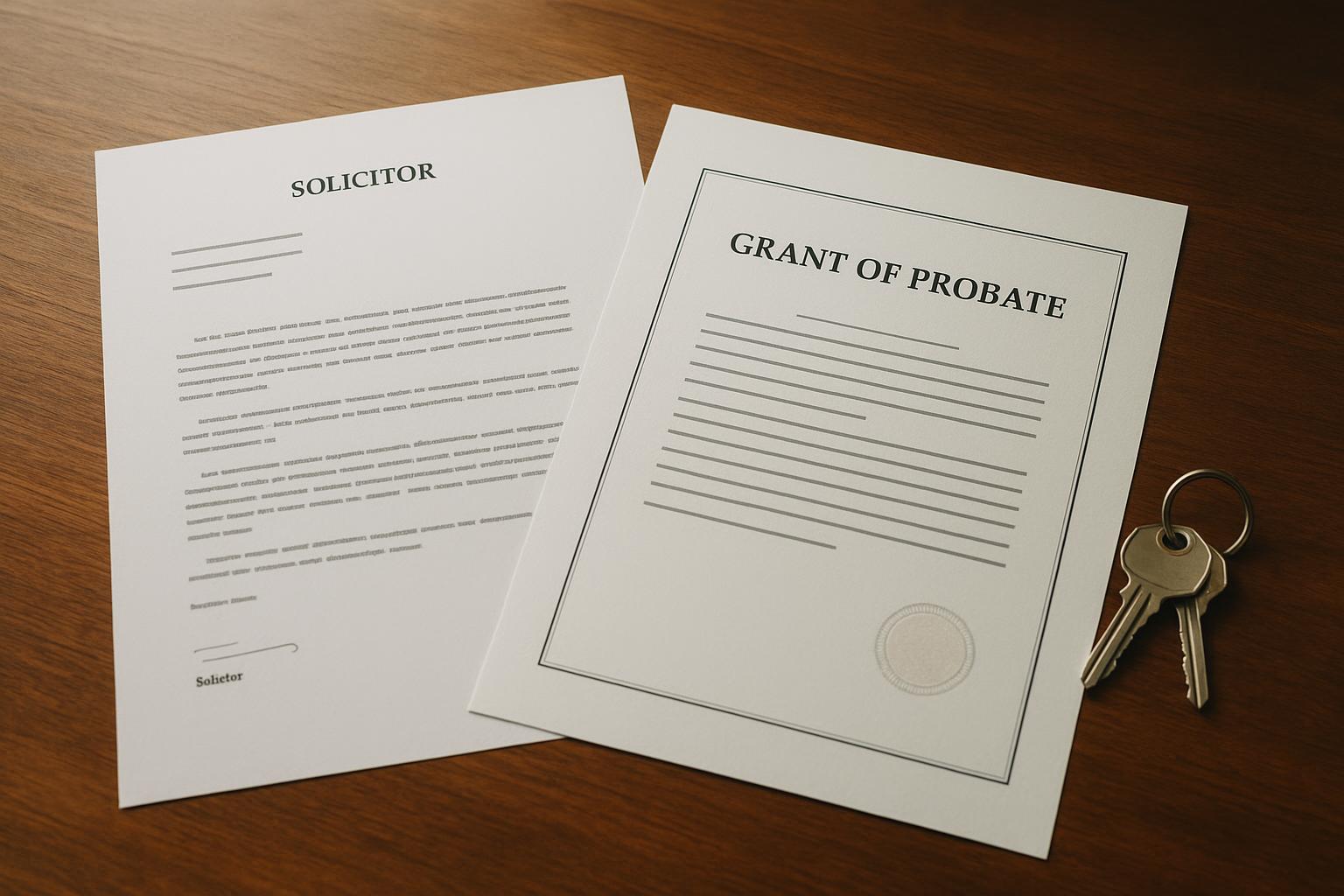
What's legally safe to do before the grant
Protective actions, not disposals, are the category that's generally fine to start immediately.
Before the Grant of Probate arrives, an executor can generally go ahead with actions that protect the estate's assets rather than permanently change or remove them:
- Securing the property. Changing or checking locks, confirming who holds keys, and making sure the property isn't left accessible to people who shouldn't have access.
- Arranging or adjusting insurance. Notifying the existing insurer that the property is now unoccupied, since most standard policies restrict cover after a set vacancy period.
- Redirecting post and notifying utilities. Administrative housekeeping that doesn't dispose of anything.
- Making a full, written inventory. Photographing and listing the contents of the property room by room, which also feeds into estimating the estate's value for the probate application itself.
- Identifying items that need a professional valuation. Flagging jewellery, art, antiques or collections for a valuer, without disposing of or distributing them yet.
- Getting written agreement from beneficiaries about what's being kept, sold, donated or cleared, ahead of time, so that decisions aren't rushed once contents are ready to move.
None of these actions remove or change who ultimately owns the estate's assets - they protect the assets and gather the information needed to deal with them correctly later. That's the practical test worth applying to any action you're unsure about: does it preserve the current position, or does it change it in a way that's hard to undo?

What carries personal liability risk if done before the grant
The risk concentrates specifically around anything that's hard to reverse.
The actions that create real risk for an executor are the ones that permanently change the estate's position before its value and the beneficiaries' entitlements are properly established:
- Disposing of or selling anything with financial value - jewellery, art, vehicles, collections - before it's been valued, since this can affect both the Inheritance Tax account and what's actually owed to beneficiaries.
- Giving away or distributing specific bequests named in the will before the estate's overall position is clear, particularly if the estate later turns out to have debts that need settling first.
- Letting any single beneficiary or family member remove items informally without a record, even with good intentions - this is one of the most common sources of later disputes and of executors being unable to account for missing items.
- Clearing and disposing of bulk household contents before beneficiaries have had a genuine opportunity to say what they want, since once items have gone to a tip or a charity shop, they generally can't be recovered.
- Agreeing to sell or exchange on the property itself before the grant - this goes well beyond contents clearance, but it's worth flagging here because the same "don't act before you have proven authority" principle applies even more strongly to the property than to its contents.
The common thread is irreversibility. Protective steps can be undone or adjusted later if something was wrong. Disposals usually can't be.
When all beneficiaries' written consent changes the picture
Consent from everyone with an interest is the clearest protection an executor has if clearance needs to start early.
There are situations where waiting for the full grant isn't practical - a landlord pressing for a tenancy to end, a freeholder charging service costs on an empty leasehold flat, or simply a family wanting to move forward. In these cases, the single most useful protection available to an executor is written, informed consent from every beneficiary with an interest in the estate's contents, confirming they agree to specific items being cleared, sold, donated or disposed of before the grant is finalised.
This doesn't need to be a formal legal document - an email thread where everyone explicitly agrees to what's being cleared, dated and kept on file, is normally enough to establish that nobody was acting without knowledge or agreement. What it needs to cover clearly is: what's being kept, what's being valued, what's being sold, and what's going to clearance - the same categories covered in our executor's guide to probate house clearance. The key limitation is that consent from beneficiaries doesn't override duties the executor has that go beyond the beneficiaries themselves - for example, correctly reporting the estate's value to HMRC for Inheritance Tax purposes still needs to happen regardless of what beneficiaries agree to among themselves.
What happens if an executor disposes of assets without authority
The legal term is "devastavit" - broadly, mismanaging or wasting estate assets - and the consequence is usually personal, not just professional.
Under general UK probate law, an executor who mismanages or wastes estate assets - including disposing of them without proper authority or before the estate's position is established - can be held personally liable to make good the loss to the estate. This isn't a theoretical risk specific to large or complicated estates: it applies in principle any time an executor's actions cause a beneficiary to receive less than they were entitled to, because something was given away, sold too cheaply, or discarded before it should have been.
Importantly, acting in good faith doesn't automatically remove this risk. An executor who genuinely believed they were doing the right thing - clearing a house quickly to be helpful, for instance - can still be asked to personally account for the value of anything wrongly disposed of if a beneficiary later challenges it. This is precisely why the protective-versus-disposal distinction earlier in this guide matters so much in practice: it's not about assuming bad intent, it's about structuring the timeline so that irreversible decisions only happen once authority and agreement are clearly in place. If you're ever unsure whether a specific item or decision crosses this line, that uncertainty is itself a reason to check with the solicitor handling the estate before anything leaves the property, rather than after.

What not to do before the grant, under any circumstances
A short list worth keeping separate from the general "be careful" guidance above.
Most of this guide is about judgement calls and degrees of risk. A small number of actions, though, are worth treating as firm rules rather than judgement calls, regardless of time pressure:
- Don't sell or exchange on the property itself before the grant is issued - GOV.UK is explicit that financial plans and putting the property on the market should wait.
- Don't distribute specific bequests named in the will until you're confident the estate can cover its debts and liabilities first - a bequest can't always be honoured in full if the estate turns out to owe more than expected.
- Don't dispose of anything that might need a formal valuation for Inheritance Tax purposes without that valuation happening first, even if nobody in the family wants to keep it.
- Don't let clearance happen without a written record of what existed in the property and what happened to it - a simple photographed inventory is enough, but skipping it removes your only evidence if a dispute arises later.
- Don't act on one beneficiary's instruction alone when there are multiple beneficiaries with an interest in the contents, even if that person is pushing for a quick decision.
Practical sequencing: when to call a clearance company
A rough order of operations that keeps the risky steps at the end, not the beginning.
A sensible sequence for most probate house clearances looks like this: secure the property and arrange insurance first, in the days immediately after death. Complete a full written inventory next, ideally before anything is touched or moved, since this both protects you and feeds into the probate application's valuation. Identify anything that needs a professional valuation and get that done, or at least underway, before deciding what happens to those specific items. Get written agreement from every beneficiary about what's being kept, sold, donated and cleared, in parallel with the probate application rather than waiting for it to finish. Only once those steps are genuinely complete - or you have clear written consent from everyone to proceed with a partial clearance earlier - is it time to describe the job and request quotes from a vetted, licensed carrier.
This doesn't mean every probate clearance takes months. Straightforward estates with a clear will, a small number of beneficiaries in agreement, and no complex assets can often move through this sequence within a few weeks. What determines the pace isn't a fixed legal waiting period - there isn't one - but how quickly the estate's value can be established and how quickly everyone with an interest can agree on what happens next. If the emotional side of this process is what's actually slowing things down rather than the legal side, our house clearance after a bereavement guide and our guide to coping with the emotional weight of clearing a parent's home cover that separately.
Probate clearance vs an ordinary house clearance
Same crew, same van, different accountability.
It's worth being clear about what doesn't change. A probate house clearance uses the same licensed carriers, the same kind of quote-and-visit process, and the same responsible disposal routes - donation, recycling, and waste - as any other house clearance in London. houseclearance.co's role is identical in both cases: matching a described job with an independent, vetted carrier who holds a valid waste carrier licence and appropriate insurance. See probate clearance in London for how that request process works specifically for estate jobs.
What changes is entirely on the customer side of the transaction: who's authorised to request the clearance, what records need to exist beforehand, and the timing constraints covered throughout this guide. If you're also dealing with items that may have real financial value, our chattel valuation and probate clearance guide covers how that process typically works alongside the clearance itself, and our guide to finding and safeguarding hidden valuables and documents is worth reading before any inventory work begins, since it's easy to miss paperwork and small valuables among general household items.
No will? The same principles apply to administrators
Intestacy changes who applies and when authority begins - not the underlying caution needed.
If someone dies without a valid will, there's no executor - instead, the closest living relative (determined by the rules of intestacy) can apply to become the administrator of the estate, and GOV.UK's applying for probate guidance covers who that is for a given family situation. The practical difference from an executor is that an administrator's authority to act generally depends on the grant of letters of administration being issued, rather than existing informally from the date of death - so if anything, the case for waiting for formal authority before any disposal is even stronger in an intestacy situation than when there's a named executor acting under a will.
Everything else in this guide - protective steps being fine early, disposals needing to wait, written consent from anyone with an interest in the estate, and the personal liability risk of acting without authority - applies in the same way to an administrator as to an executor. The terminology differs; the underlying caution doesn't.
Ready to see your price?
Once you're confident the timing is right, describe the job and we'll match it with a vetted, licensed carrier covering your part of London.
Frequently asked questions
The questions that come up most often about timing and legal authority for a probate house clearance.
What exactly is a probate house clearance?
It's the clearance of a property that forms part of a deceased person's estate, carried out by or on behalf of the executor (or administrator, if there's no will) as part of administering that estate. The term doesn't describe a different physical service to an ordinary house clearance - the furniture still has to be sorted and removed the same way - it describes the legal context around it: who has authority to decide what happens to the contents, and when they're allowed to use that authority.
Do I need the Grant of Probate before I can clear the house?
Not for every step. Securing the property, arranging insurance, redirecting post and making a full written inventory are protective actions you can generally take before the grant is issued. Physically disposing of contents - especially anything of financial or sentimental value, or anything named for a specific beneficiary - is the part that should generally wait until you have the grant, or until every beneficiary has given clear written consent to proceed without it.
Can an executor act before the Grant of Probate is issued?
To a limited extent, yes. An executor's authority technically derives from the will itself, not from the grant, which is why English law recognises a degree of interim authority to protect the estate before the grant arrives - but in practice, most third parties (banks, land registries, and often buyers) will not accept that authority without the grant as proof, and GOV.UK is clear that you should not make financial plans or put property on the market until probate is granted. Protective steps are generally fine; irreversible disposals are the risk.
What happens if an executor disposes of estate assets without authority?
The executor can be held personally liable for the loss, a legal position often referred to as devastavit - broadly, mismanaging or wasting the estate's assets. In a clearance context this usually means being required to personally repay the estate for the value of anything wrongly disposed of, sold under value, or given away before beneficiaries' entitlements were settled, regardless of whether the mistake was made in good faith.
Do all beneficiaries need to agree before a clearance happens?
There's no single rule that applies to every estate, but as a practical safeguard, get written agreement (even an email thread) from every beneficiary with an interest in the estate's contents before anything is cleared, especially if you intend to start before the grant is through. If even one beneficiary later disputes what happened to an item, having contemporaneous written consent from everyone is the clearest protection an executor has.
What should an executor never do before the Grant of Probate?
Avoid selling the property, distributing specific bequests, disposing of anything that might need a formal valuation for Inheritance Tax purposes, or letting any single family member remove items informally without a record. These actions are hard or impossible to reverse, and doing them before you have clear authority - and before the estate's value is understood - is where personal liability risk concentrates.
How is a probate house clearance different from an ordinary house clearance?
The physical job - sorting, removing and disposing of contents - is the same. The difference is procedural: a probate clearance has a legal owner-in-waiting (the estate), a person with fiduciary duties overseeing it (the executor or administrator), and a timing constraint tied to the grant of probate and the interests of beneficiaries. An ordinary clearance for someone moving house, for example, has none of those constraints.
Can I apply for probate before I know what's in the house?
You generally need a reasonably accurate estimate of the estate's overall value, including its contents, before you can apply - this feeds into whether Inheritance Tax is due and how much. That's one of the main practical reasons a full inventory needs to happen early, before any clearance, rather than being left until after the grant arrives.
Is there a fixed waiting period before I can start clearing after a death?
No. There's no fixed number of days or weeks you must wait. The right timing depends on how quickly the estate's value can be established, whether Inheritance Tax needs reporting first, how long the probate application itself takes, and whether beneficiaries are in agreement. Some estates can safely begin partial, careful sorting within days; others should wait weeks for the grant before anything beyond basic security and inventory work happens.
What if the property needs to be cleared urgently, for example for a landlord or to stop a tenancy liability?
External pressure from a landlord, freeholder or looming costs doesn't change the underlying legal position, but it does make it more important to move efficiently rather than skip steps. Get the inventory and any valuations done as quickly as possible, get written beneficiary agreement in parallel rather than afterwards, and talk to the solicitor handling probate about whether a partial clearance of clearly low-value items can proceed while higher-value decisions are still pending.
Does houseclearance.co handle the legal side of probate for me?
No. houseclearance.co is a marketplace that matches a described clearance job with an independent, licensed carrier once you're ready to proceed - it doesn't provide legal advice or administer the estate. For anything about your authority to act, Inheritance Tax, or beneficiaries' entitlements, a solicitor handling the probate application is the right person to ask.
Where can I check the official rules on applying for probate?
GOV.UK's applying for probate guidance is the authoritative source on eligibility, Inheritance Tax reporting, and the application process itself, and is worth reading directly rather than relying on summaries, since the detail can matter for a specific estate.