Direct answer
Children's toys and baby equipment can be donated to charity shops, baby banks, children's centres, nurseries and community groups, but safety rules are strict. Toys should be clean, complete and carry a UKCA or CE mark where relevant. Car seats, cots, cot mattresses, pushchairs and high chairs are often refused because their history, age or compliance cannot be checked. Remove batteries, check for small parts, broken pieces and magnets, wash soft items, and phone ahead to see what each organisation accepts. Never leave items outside a closed shop, and recycle or dispose of anything that is unsafe.
Contents
- Why donating children's items is different
- The risks that drive the rules
- Safety marks and what they mean
- Age grading and warnings
- Toys: what is usually accepted
- Toys that are usually more difficult
- Baby equipment: cots, car seats and pushchairs
- A closer look at car seats
- Baby and children's clothes
- Sorting by size and season
- Where to donate in London
- What to ask a baby bank
- Schools, nurseries and playgroups
- Cleaning and preparing items
- Keep a record
- Hazards to check for
- Button batteries in detail
- Children's items in a house clearance
- Keepsakes and nostalgia
- Frequently asked questions
Why donating children's items is different
Safety comes first.
Items for babies and children carry higher safety expectations than most household goods. Young children put things in their mouths, sleep in cots and travel in car seats. A faulty item can cause serious harm, so charities and baby banks have strict rules.
The law sets out safety requirements for toys and childcare products supplied by businesses, including second-hand sellers and charity shops. Items sold must be safe, and shops may need to be able to show that they comply. This is why many organisations refuse items that they cannot check.
As a donor, you can help by being honest about the age and condition of an item, checking for recalls and cleaning it before you hand it over. A good donation is one that the next family can use safely from day one.
The risks that drive the rules
What can go wrong.
The main hazards from children's products are choking on small parts, suffocation, strangulation by cords, burns and fires, falls from poorly built equipment, and injuries from swallowed batteries or magnets. Each of these has been the cause of serious incidents, and each is the reason behind a specific rule or label.
Second-hand items add other risks. Parts may be missing, a latch may have worn out, a cover may have been washed so often that a fire safety treatment is gone, or the product may have been recalled since it was sold. A seller or charity cannot always know the history of an item, which is why many have blanket rules against certain categories.
Understanding the reasons helps you to make better decisions and to accept refusals. A charity that turns down a cot is not being difficult, it is protecting a baby.
Safety marks and what they mean
Look for UKCA or CE.
New toys sold in Great Britain generally carry a UKCA mark, and many older ones carry a CE mark, which shows that the manufacturer says the toy meets the safety rules that applied when it was sold. The mark is usually printed on the toy, its packaging or a label. Marks and rules can change, so check current guidance on GOV.UK.
Look for age warnings, such as not suitable for children under three, which are there because of small parts or other risks. If a toy has lost its packaging or its label, it can be hard to check. A charity may refuse a toy that has no markings.
Some toys, for example fancy dress costumes and some soft toys, carry fire safety warnings as well. Keep the labels where they are, and do not cut them off.
Age grading and warnings
Read the small print.
Toys carry age guidance, such as suitable from three years. This reflects the safety features of the toy, such as small parts, and also the developmental stage of the child. A toy that is safe for a six-year-old can be dangerous for a baby.
When donating, keep the age label visible and, if you have the box, include it. If a toy does not have any age information, a charity may use its own judgment and refuse items that look unsuitable for babies. Do not remove warnings or labels.
If you pass on a toy that has lost its label, add a note with the age range and any special points, such as that it contains small parts. Honest information helps the next family to choose well.
Toys: what is usually accepted
Clean, complete and in working order.
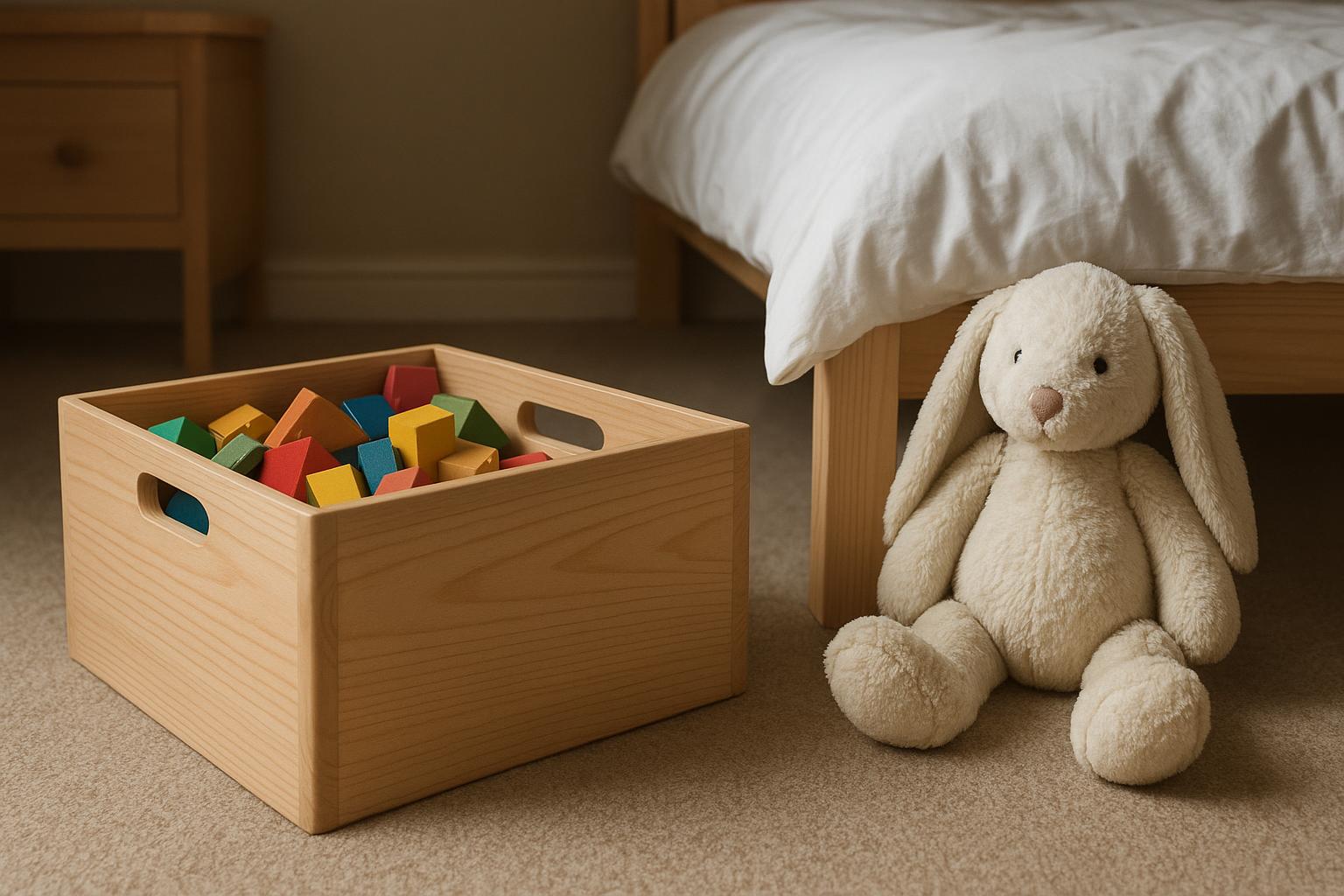
Charity shops and children's groups often accept toys that are clean, complete and in good working order. Popular items include building blocks, board games with all pieces, puzzles that have been checked, dolls, play sets and books. Soft toys are accepted if they are clean and carry their safety labels.
Remove batteries, particularly button cells, which are dangerous if swallowed. Check that toys do not have loose eyes, broken parts, sharp edges or exposed wires. Wooden toys should be smooth and free of splinters. Electronic toys should work and be free of damage.
Games and puzzles with missing pieces are often refused. Put a note on the box if you have checked the contents, or ask the organisation whether it accepts incomplete items for craft use.
Toys that are usually more difficult
Know the exceptions.
Some toys are harder to place. Electronic toys with sealed batteries or that no longer work are usually refused. Toys with magnets, such as magnetic building sets, may be refused if magnets are loose or missing. Craft kits and chemistry sets are usually refused once opened. Ride-on toys and scooters are accepted by some organisations but are bulky, so ask before bringing them.
Dolls and soft toys with stains, missing eyes or a musty smell are rarely accepted. Items with removable parts, such as dolls' clothes, should be bagged together. Fancy dress outfits are popular but should be clean and flame-retardant where labelled.
If a toy does not pass, think about other uses. Craft groups and schools may use parts for art projects, and recycling may be possible for hard plastic and electronics via WEEE.
Baby equipment: cots, car seats and pushchairs
Strict rules and frequent refusals.
Baby equipment is the most commonly refused category. Car seats are often declined because their history cannot be verified, and a seat that has been in an accident, even a minor one, may be unsafe. Safety standards for car seats have also changed over time, and old ones may no longer be legal to use.
Cots and cot mattresses are refused by many organisations, because a cot must meet safety standards and the mattress must fit properly. Drop-side cots and cots with missing parts are not suitable. High chairs, baby walkers and bouncers are accepted by some baby banks if they are complete and in good condition.
Pushchairs and prams are sometimes accepted, but the brakes, folding mechanism and harnesses must work. If you are unsure, ask the organisation first. A baby bank often has specific rules and a list of what it can take.
A closer look at car seats
Why history matters.
Child car seats are designed to absorb the force of a collision. After a crash, even a minor one, the seat may be damaged in ways that cannot be seen, and it may not protect a child in a second accident. Plastics also age, and straps and buckles wear. For these reasons, most guidance says not to use a second-hand car seat unless you know its full history.
Safety standards for car seats have changed over time, and older seats may no longer be legal to use for their original purpose. If you have a car seat that you no longer need, ask the retailer, a trade-in scheme or your council about the right way to dispose of it. Cut the straps and mark the seat as unsafe if it is being thrown away, so that no one picks it up and uses it.
Never leave a car seat outside a shop or on the street where someone may take it. If you cannot find a recycling route, take it to a recycling centre that accepts such items.
Baby and children's clothes
Welcome in most places.
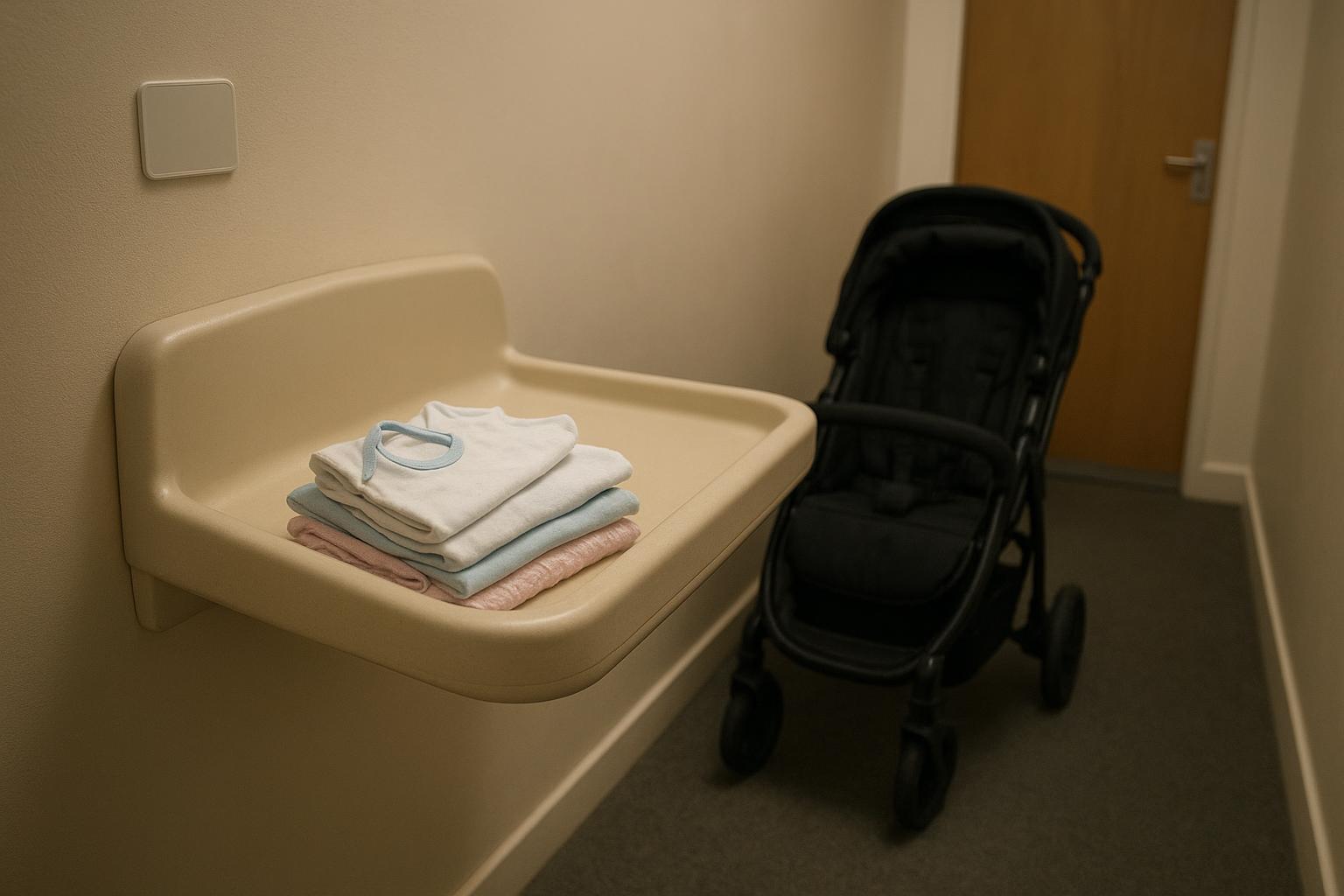
Baby and children's clothes are among the most useful donations because children grow quickly and families need a lot of them. Clean clothes with no stains, holes or missing buttons are the best. Wash and fold them, and sort by size if you can.
Avoid donating clothes with cords around the neck or waist in younger children's sizes, because they can be a strangulation risk. Check that fastenings are secure and that decorations such as beads and sequins are firmly attached.
Our guide to recycling old clothes and linens explains what to do with items that are too worn to donate, and our guide to clothing banks covers the textile route.
Sorting by size and season
Make it easy for the recipient.
Baby banks and charities appreciate clothes that are sorted by size and season. Use clear bags and label each one with the age range, such as newborn, 0 to 3 months or 3 to 6 months, and the season, such as winter or summer. A neat bag takes less time to process and is more likely to reach a family quickly.
Include sleepsuits, vests, hats, mittens and socks, which are always in demand. Check that there are no loose threads, missing poppers or tight elastic. Shoes should be in good condition, since poorly fitting shoes can harm growing feet.
If you have a large amount, phone before bringing it, because some organisations have limited storage and may ask you to spread donations over several weeks.
Where to donate in London
Types of organisation.
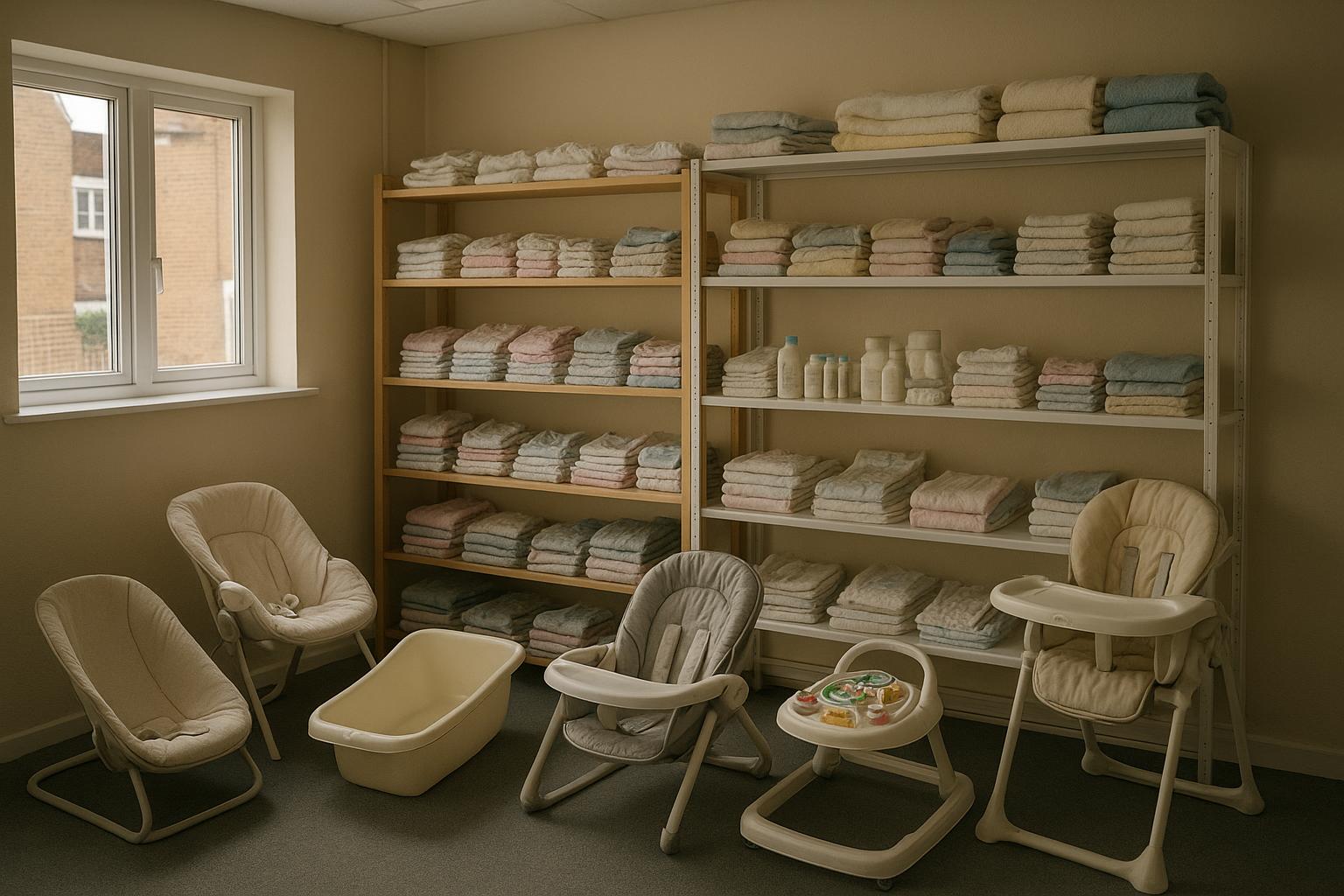
Several types of organisation accept children's items. Baby banks and family support charities collect baby clothes, toys and some equipment for families in need. Children's centres, nurseries and playgroups may accept toys and books. Charity shops accept clothes and some toys. Community groups and school PTAs sometimes run nearly-new sales or swap events.
Look for organisations in your borough, and check their websites or phone them to find out what they currently need. Many baby banks have short lists of urgent items and stop taking others when their shelves are full.
Our guides on charity furniture collections in London and furniture donation explain how to book collections for larger items.
What to ask a baby bank
A short list.
Before bringing items to a baby bank or support group, ask these questions.
- Which items do you most need at the moment, and which can you not accept?
- Do you accept cots, car seats, pushchairs or high chairs, and under what conditions?
- Do you need clothes by size, and is there a limit on quantity?
- Are items collected, or do I need to drop them off, and when?
- Can you provide a receipt for the donation if I need one?
A few minutes on the phone avoids a wasted trip and a car full of items that cannot be used.
Schools, nurseries and playgroups
Often glad of toys and books.
Schools, nurseries and playgroups often welcome clean toys, books, dressing-up clothes and craft materials, but they have their own safety policies and limited storage. Contact the school office or the group leader before you bring anything, and ask for a named person to speak to.
Parent-teacher associations also run nearly-new sales and uniform exchanges, which can be a good home for clothes and equipment. If you have school uniform in good condition, ask whether the school has a swap shop, because it can save families a significant amount each year.
Cleaning and preparing items
Hygiene matters.
Wash soft toys on a suitable cycle and let them dry fully. Wipe hard plastic toys with a mild disinfectant and rinse. Check inside battery compartments for corrosion and remove batteries. Put the pieces of a set in a bag, labelled with the name and number of pieces.
For baby equipment, clean all surfaces, wash removable covers and check that all parts are present. Keep manuals and fitting instructions. If you still have the original packaging, photograph the label with the model number and manufacture date.
Dry everything thoroughly. Damp toys can grow mould, and a mouldy toy will be thrown away. Pack items in boxes or bags and keep them away from pets and smoke.
Keep a record
Useful for you and for the charity.
If you are donating a significant amount, such as a bag of baby equipment or a large box of toys, keep a short list with the date, the organisation and the items. If the organisation provides a receipt, keep it. This helps if there is a later question about an item, and it is useful if you are clearing an estate.
For any item with a model number, photograph the label. If a recall is announced later, the charity or the family can check against the model. A short record may seem like extra work, but it reduces risk for everyone.
Hazards to check for
Small details that matter.
Check for button batteries and magnets. Both can cause serious internal injuries if swallowed, and the law has tightened rules on them in toys. Make sure battery compartments are secure and that no magnets are loose. If a toy has lost a screw or a cover, it may not be safe.
Check for recalls. Product recall pages on GOV.UK list baby and child products that have been withdrawn because of safety problems. Search the brand and model before you donate. If an item has been recalled, do not give it away. Follow the recall instructions instead.
Remove cords, strings and ribbons from items that will be used by babies. If you are not sure whether an item is safe, do not pass it on. A refusal or a recycling trip is better than a risk to a child.
Button batteries in detail
A serious hazard.
Button batteries, found in many toys, musical cards, remote controls and flashing items, can cause severe internal burns if a child swallows one. The risk is real, and the law now requires secure battery compartments in toys. When donating, check that the compartment is secured with a screw and that no battery is loose.
Remove batteries that you do not need to leave in place and dispose of them at a battery recycling point. If you suspect that a child has swallowed a button battery or magnet, seek emergency medical help immediately. Do not wait for symptoms.
Children's items in a house clearance
Sort early.
If you are clearing a home that has had children in it, sort toys and baby gear early. Items that are safe and clean can go to a baby bank or charity. Items that are broken, mouldy or recalled should be recycled or disposed of properly.
Tell the clearance firm if you have baby equipment, car seats or cots, because some are handled differently. Electrical toys and games consoles go through the WEEE route, as explained in our WEEE guide. Soft furnishings such as cot mattresses are discussed in our mattress recycling guide.
If you are clearing a relative's home, you may find items from decades ago, such as old toys and prams. Some may be collectable and worth keeping, but most will not meet today's safety rules and are better recycled.
Keepsakes and nostalgia
Not everything needs to go.
Children's items carry strong memories. A first teddy, a hand-knitted cardigan or a well-loved book may be worth keeping as a keepsake, even if it cannot be donated. Set aside a small memory box for each child, and take photographs of the rest before they go.
If you are clearing a grandparent's home, you may find toys and clothes from the family's own childhood. Ask relatives whether they want any, and agree who will keep what. Our guide to dividing family belongings without disputes explains how to do this fairly.
Frequently asked questions
Common questions about donating children's toys and baby equipment.
Can I donate children's toys to a charity shop?
Yes, if they are clean, complete and safe. Check for a UKCA or CE mark where relevant, remove batteries and ask the shop what it accepts.
Will charities take car seats?
Most do not, because the history of a seat cannot be verified and standards have changed. Check with a baby bank or a retailer trade-in scheme.
Can I donate a cot or cot mattress?
Some organisations accept them if they are complete and meet current safety standards, but many refuse. Ask first and be honest about age and condition.
Should I remove batteries from toys?
Yes. Remove batteries, especially button cells, and check that the compartment is secure. Mention if the toy needs new batteries.
What if a toy has missing pieces?
Many charities refuse games and puzzles with missing pieces. Ask whether they accept incomplete items for craft use or recycle them.
How do I check if an item has been recalled?
Search the brand and model on the official product recall pages and check any paperwork. Do not donate a recalled item.
Where can I take baby clothes?
Baby banks, children's centres, charity shops and community groups accept clean baby and children's clothes. Phone ahead to check current needs.