Direct answer
Clothing banks are collection points run by charities, councils and commercial companies. Once collected, textiles are taken to sorting warehouses where they are graded. The best items are resold in the UK, a large share of the rest is baled and exported for reuse in other countries, and worn items are recycled into wipes, padding, insulation or fibre. Items that are wet, mouldy or contaminated are usually discarded. Not every bank benefits a charity, so check the label for the operator and, if it is a charity, its registered number. Keep clothes clean, dry and bagged, avoid overfilling banks and never leave bags on the ground.
Contents
- How clothing banks work
- A short history of the clothing bank
- Finding a bank near you
- How donated clothing is sorted and graded
- Why quality matters so much
- Where reusable clothes go
- Keeping clothes local
- Where worn clothes go
- New technology for textile recycling
- Charity banks versus commercial banks
- Questions to ask about a bank
- What to put in and what to keep out
- Shoes, bags and accessories
- Doorstep collections and clothes for cash
- Clothes-for-cash services
- The environmental picture
- Habits that cut clothing waste
- Clothing banks and house clearance
- Tips for a large clothing clear-out
- Frequently asked questions
How clothing banks work
Simple on the outside.
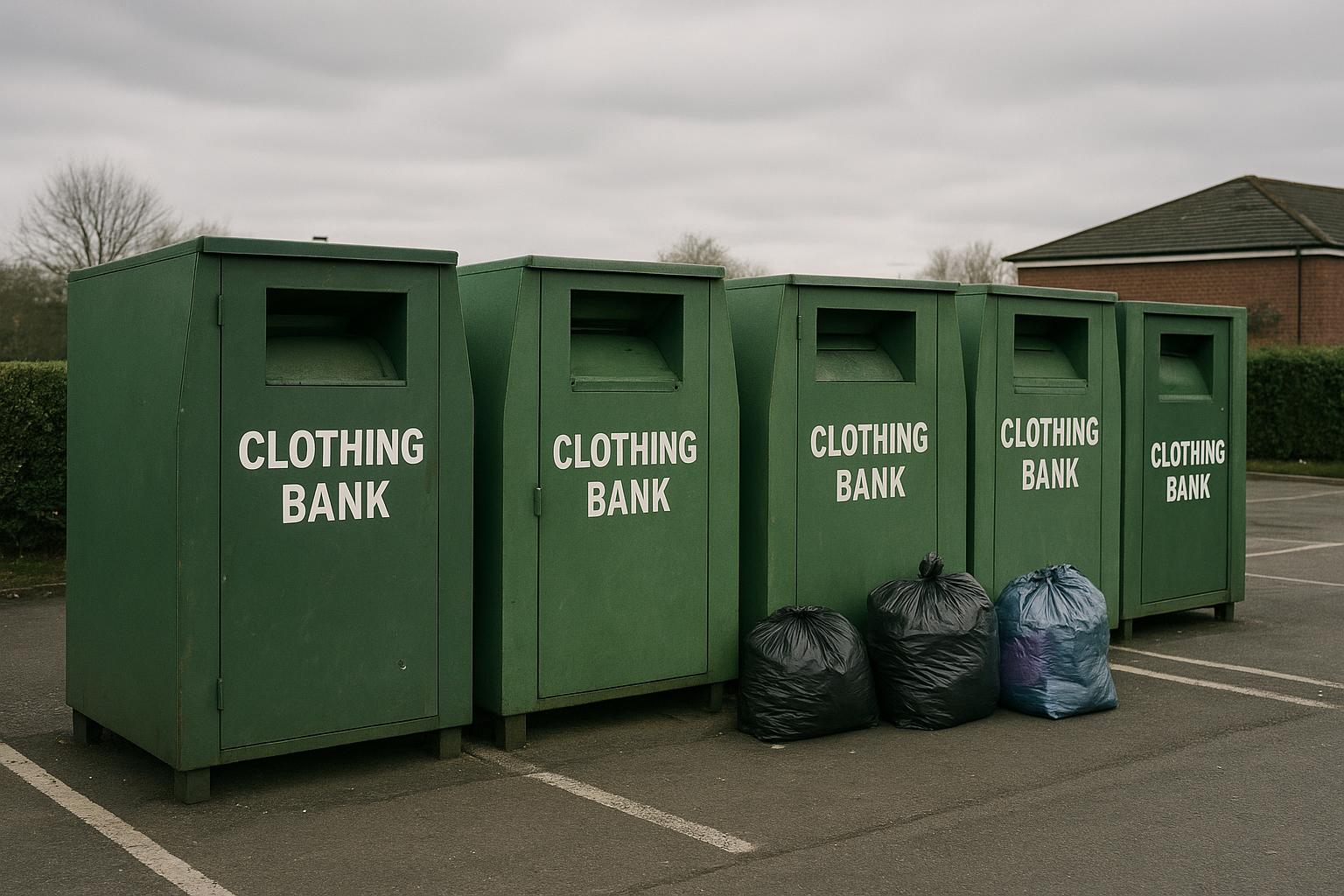
A clothing bank is a container, usually metal, placed in a car park, recycling centre, school or other public site. Members of the public put bagged clothes and sometimes shoes and household textiles through a chute. The operator empties the bank on a schedule and takes the contents to a sorting site.
Banks are run by different organisations. Some are operated by charities, which keep the proceeds from selling the textiles. Others are run by commercial firms that pay the landowner a fee and sell the textiles for profit. Some are run by councils or by partnerships between councils and charities.
The label on the bank should state who owns it, a contact number and, if it is a charity, the charity number. If the label is missing, damaged or vague, treat the bank with caution.
A short history of the clothing bank
From jumble sales to containers.
Charity collection of second-hand clothes is an old tradition, from church jumble sales and rag-and-bone men to the doorstep sack collections of the twentieth century. Clothing banks appeared in the 1980s and 1990s as a convenient way for the public to donate without visiting a shop.
Their growth coincided with a boom in cheap clothing, which meant that more clothes were being bought and discarded. Charities and councils saw the banks as a way to capture some of this flow for reuse and recycling, and commercial operators saw a business opportunity in selling the collected material.
Today the sector is a mix of charities, social enterprises, councils and commercial firms, with a global trade in used clothing at its centre. Understanding that history helps explain why banks look similar but are run in very different ways.
Finding a bank near you
Practical search tips.
Many councils list the clothing banks in their area on their recycling pages, and some publish a map. Supermarket car parks, council recycling centres and community centres commonly host them. Check the label for opening hours if the site has restricted access.
If the nearest bank is full, ask the operator whether another one is available, or take the bag to a different site. Do not leave the bag next to the bank. A few extra minutes of travel avoids a mess and keeps the clothes dry.
How donated clothing is sorted and graded
Hundreds of categories.
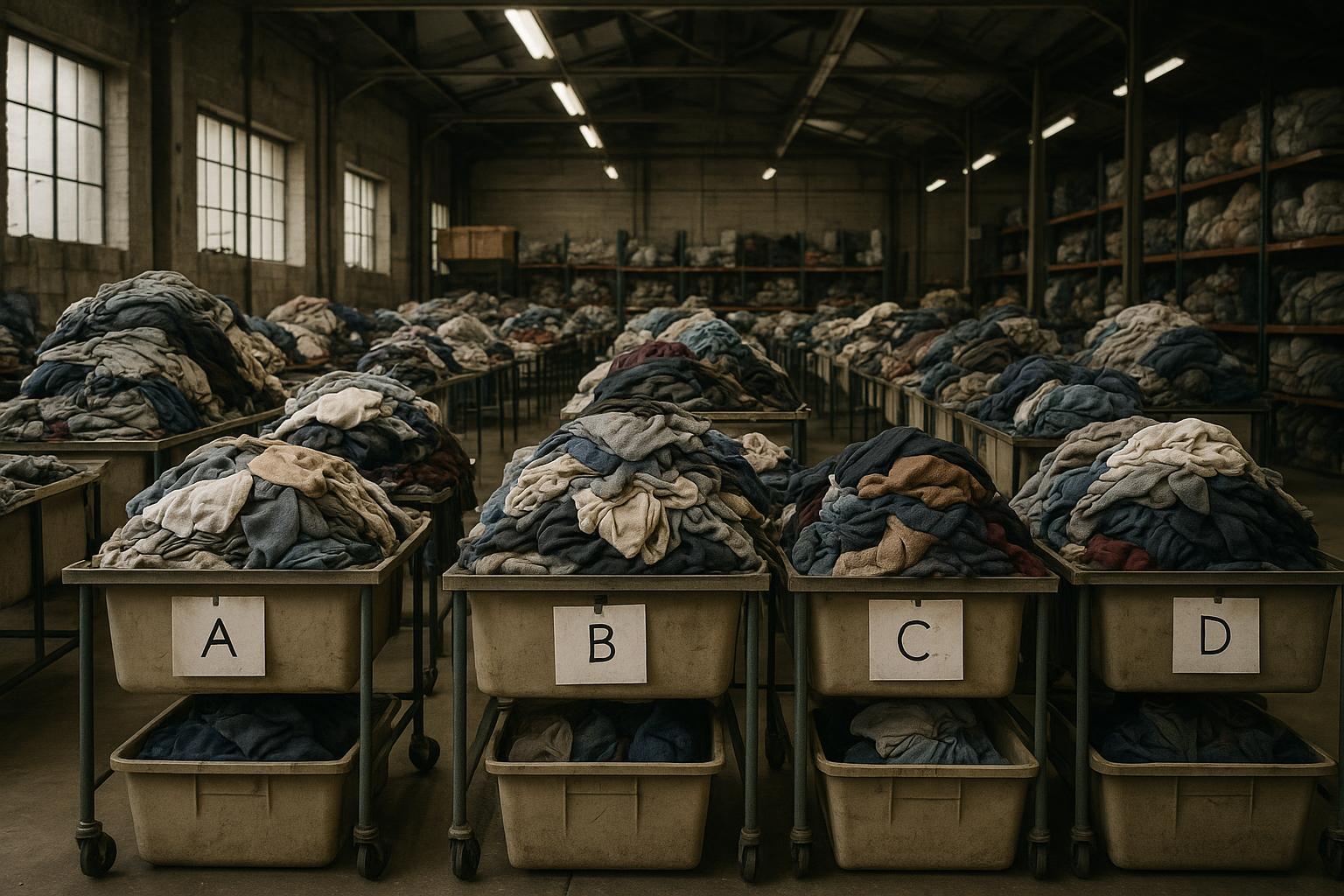
At the sorting warehouse, workers open each bag and sort the clothes by type, quality and condition. Large operations may have dozens of categories, such as men's shirts, women's coats, children's clothing, shoes, bags and household linens. Within each category, items are graded by quality.
The highest grade items, which are in the best condition and are fashionable, may be sold in the UK, either in shops or online. Mid-grade items are usually sold wholesale and exported. The lowest grades, which are worn but clean and dry, are sent for recycling.
This is skilled, repetitive work, and the margins are thin. The value of a tonne of mixed donated clothing varies with the market and with the quality of the donations, which is why clean, dry, wearable items help the whole system.
Why quality matters so much
Margins are thin.
A sorting warehouse handles huge volumes. Workers may sort hundreds of items an hour, and the value of each depends on its grade. If a bank is filled with clean, wearable clothes, the proportion of top grades is high, and the operator earns more per tonne. If it is filled with wet, soiled or low-quality items, the proportion of waste rises and the value falls.
This is why operators ask donors to keep clothes dry and bagged, and why one wet bag can damage the contents of an entire bank. Some operators reject whole loads that are too wet, because the damp spreads and spoils everything it touches.
You can help by choosing good bags, tying them securely and not overfilling the bank. A few small habits make a noticeable difference to the money raised and the amount of waste produced.
Where reusable clothes go
UK resale and export.
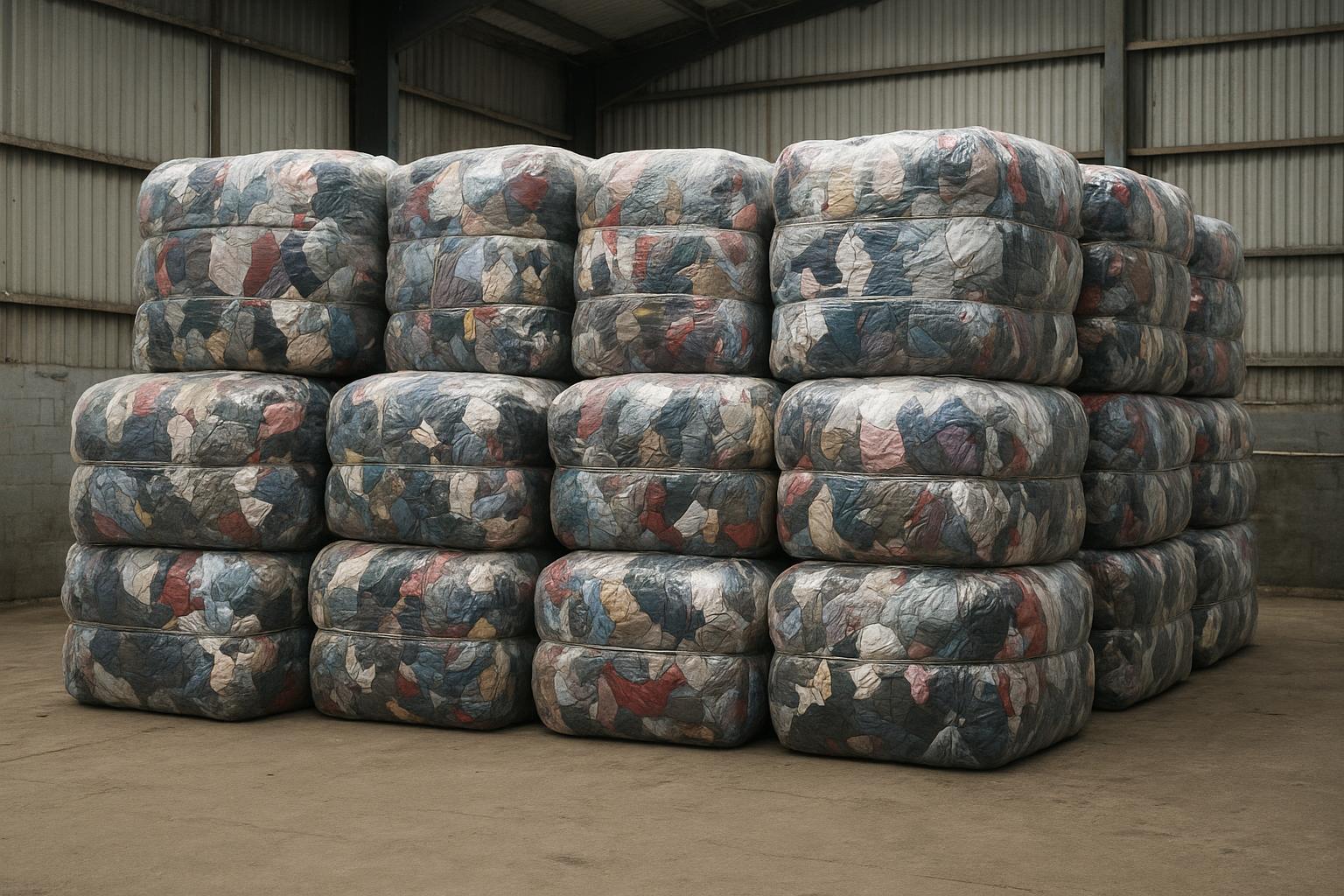
A share of donated clothing is sold in the UK through charity shops, vintage dealers and online platforms. The rest is baled and sold to buyers in other countries, where used clothing is sold in markets and shops. This trade has been important for many years and supports a large number of small businesses.
It also has downsides. Where a destination market receives more low-quality clothing than it can sell, the surplus can end up as waste there. For this reason, many organisations now stress the importance of donating only clothes that are in good condition, and some are working on more transparent supply chains.
If you want to be sure that your clothes stay close to home, donate directly to a charity shop, a swap event or a local support group rather than a bank.
Keeping clothes local
Options that stay close to home.
If you would prefer your clothes to be worn nearby, several routes keep them local. Charity shops sell directly to the community. School uniform exchanges give families low-cost uniforms. Community wardrobes, support groups for people returning to work and refugee support groups can provide clothing to those who need it.
Clothing swaps let people exchange items without money changing hands. They are popular in many London neighbourhoods and are often organised by community groups, schools and sustainability societies. Online marketplaces let you sell or give away clothes to someone nearby.
These routes take more time than dropping a bag in a bank, but they can feel more rewarding. They also tend to give a clearer picture of where your clothes end up, which some donors value.
Where worn clothes go
Wipers, padding and fibre.
Clothes that are too worn to wear can still have value as material. Cotton items can be cut into industrial wipers for cleaning. Wool and other fibres can be shredded and used for insulation, mattress filling or car sound-proofing. A small amount is recycled back into yarn, although this is still a developing technology and works best with single-fibre garments.
Mixed fibres, such as cotton and polyester blends, are harder to recycle because the fibres need to be separated. Many garments also contain zips, buttons and prints that complicate processing. As a result, most worn textiles are downcycled into lower-value products rather than turned back into clothes.
Our guide to recycling old clothes and linens shows how to sort wearable from worn items before you donate.
New technology for textile recycling
A developing field.
Researchers and companies are working on ways to recycle textiles back into new fibre. Mechanical recycling shreds fabric and spins the fibres into new yarn, which works best with cotton and wool but shortens the fibre length. Chemical recycling dissolves fibres and rebuilds them, which may cope better with blends but needs more energy and is still being scaled up.
Progress is real, but the technology is not yet widely used, and most donated textiles are still downcycled. Labels that show the exact fibre content help recyclers, which is one reason why labelling rules and design for recycling are under discussion in the UK and Europe.
For householders, the best response is not to wait for a technological fix. Buy durable clothes, repair them and pass them on, and use the recycling routes that exist now.
Charity banks versus commercial banks
Know who benefits.
A charity bank sends the proceeds from the sale of the textiles to a charity, which uses the money to support its work. A commercial bank is run for profit, although some pay a small amount to a charity or community group. Both can be legitimate, but the benefit to the cause is different.
To check a bank, look for the operator's name and contact details on the label. If it says it supports a charity, look for the registered charity number and search for it on the official register. If there is a website, check that it describes the arrangement clearly and says how much goes to the charity.
If you want to maximise the money raised for a cause, donate to a charity shop, where the charity sells the clothes itself. A bank is convenient, but the charity may receive only a share of the value.
Questions to ask about a bank
Quick checks.
A few questions will tell you whether a bank is run in a way you are comfortable with.
- Who operates the bank, and what is their contact information?
- Is it a registered charity, and what is the number?
- How much of the proceeds go to a cause?
- Where do the textiles go, and does the operator publish a report?
- How often is the bank emptied, and who do I contact if it is full or damaged?
You can usually find the answers on the label or website. If the operator will not or cannot say, use another outlet.
What to put in and what to keep out
Rules for banks.
Banks generally accept clean, dry clothes, shoes tied in pairs, belts, bags, hats and household textiles such as sheets and towels. Many also accept soft toys. Always read the sign on the bank, because rules vary.
Items that should not go in include wet or mouldy textiles, carpets and rugs, pillows and duvets (unless the bank says so), mattresses, rubbish and anything with chemicals, oil or paint. Putting the wrong items in can spoil the load and reduce the value of everything in the bank.
If a bank is full, do not leave bags on the ground. Overflowing banks attract fly-tippers and become litter. Take your bag home and try another bank, a charity shop or another time. Our guide to fly-tipping penalties and liabilities explains why this matters.
Shoes, bags and accessories
Easy to overlook.
Shoes are valuable to reuse and recycling markets, but only if they stay paired. Tie laces together, use an elastic band or put each pair in its own small bag. Shoes with worn soles, broken heels or damp insoles are lower grade, and they should still go in a bank only if the sign allows.
Handbags, belts, scarves and hats are welcome in most banks, as are backpacks and small leather goods in reasonable condition. Remove any contents, including coins, cards and papers, and zip or fasten bags so that nothing falls out. Large suitcases usually do not fit in the chute and should go to a charity shop instead.
Jewellery, watches and electronic accessories belong in a charity shop or a specialist recycling point rather than in a clothing bank.
Doorstep collections and clothes for cash
Check before you hand over.
Leaflets and bags that come through the letterbox ask you to put out clothes for collection. Genuine ones show a charity name and number and a contact address. Fake or misleading ones carry no details or a name that resembles a well-known charity. If you are unsure, do not leave a bag out.
Clothes-for-cash schemes pay a small amount per kilo for good-quality clothes. They are legitimate businesses, but the money goes to you rather than a charity. They may be a good fit if you have a large number of clothes in good condition and want to avoid the effort of selling them individually.
Be careful with anyone who asks for clothes at the door and cannot show identification or documents. Our guide to the risks of hiring an unlicensed man and van covers the wider issue.
Clothes-for-cash services
How they work.
Clothes-for-cash services collect or accept bags of good-quality clothes and pay a set rate by weight. They are not charities, but some donate part of their profit. The rate is usually low, and the service typically accepts only clean, wearable items.
Check the terms before you hand over a large amount. Some services pay only after sorting and may reject a share of what you send. Make sure that you know how and when you will be paid, and keep a record of the weight and the date. If you are donating to a particular cause, a charity shop is the better choice.
The environmental picture
Reuse beats recycling.
The environmental benefit of reusing clothes is large. Making a new garment uses water, energy and raw materials, so extending the life of an existing one saves a great deal. Recycling worn textiles recovers some value, but it rarely replaces the need for new materials.
The lesson is to buy less, wear items longer and pass on clothes while they still have life in them. Donation is a good outcome, but the best outcome is to wear a garment until it is genuinely worn out and then recycle it.
This echoes the waste hierarchy, which we explain in our guide to zero waste to landfill and recycling rates.
Habits that cut clothing waste
What you can do at home.
Before buying a new garment, ask whether you will wear it at least thirty times. Choose natural or single-fibre fabrics when you can, because they are easier to reuse and recycle. Wash at lower temperatures, air dry where possible and mend small tears early.
Rotate your wardrobe, borrow for one-off events and consider second-hand first. When a garment is finally worn out, use a textile bank or a recycling scheme rather than the bin.
These habits save money as well as resources, and they make the next clear-out far easier.
Clothing banks and house clearance
What a crew does with bagged clothes.
In a clearance, clothes are often the largest volume of soft goods. A good crew will keep wearable items separate from worn ones, protect them from wet and deliver them to a charity shop or a textile bank. Ask the firm what it does with them and whether it has a partner charity.
If you are clearing a relative's home, set aside items that you want to keep, then sort the rest into bags before the crew arrives. Check pockets, linings and handbags for documents and valuables, as explained in our guide to hidden family valuables and documents.
If the property is damp or has been neglected, the clothes may be unsuitable for donation. Tell the crew so they can handle them properly.
Tips for a large clothing clear-out
Make it manageable.
If you are facing a wardrobe full of clothes, work in short sessions of an hour or so. Use three bags: wearable, worn and waste. Try on items you are unsure about, and be honest about whether you will wear them. If you are clearing for someone else, use the same system and keep a small box of items with sentimental value.
Mark the bags clearly and keep them dry. When the bags are full, take them to a charity shop or bank straight away. Bags that sit in a hallway for weeks tend to be ignored or forgotten, and the clothes may get damp or damaged.
Frequently asked questions
Common questions about clothing banks and textile recycling.
Where does clothing from a clothing bank go?
It is taken to a sorting warehouse and graded. The best items are resold in the UK, many are baled and exported for reuse, and worn items are recycled into wipers, padding or fibre.
Do clothing banks benefit charities?
Some do and some do not. Charity banks pass the proceeds to a charity, while commercial banks are run for profit. Check the label for the operator and charity number.
Can I put worn-out clothes in a clothing bank?
Often yes, if they are clean and dry, but read the sign. Wet, mouldy or contaminated items should never go in.
Are clothes exported abroad?
Yes, a large share of donated clothing is exported for reuse. This keeps clothes in use but raises concerns where markets receive too much low-quality clothing.
How can I tell if a clothing bank is genuine?
Look for the operator's name, a contact number and, for a charity, the registered charity number. Check the number on the official register.
Should I leave bags next to a full bank?
No. Leaving bags on the ground is fly-tipping and creates litter. Take them home or use another bank or a charity shop.
Is it better to donate to a charity shop than to a bank?
Often yes, because the charity sells the clothes itself and keeps more of the value. A bank is more convenient for worn items.