
Direct answer
Before clearing a house ahead of major structural work, confirm your plans, permissions and builder’s start date, then clear in stages. Check with your builder what must be removed and what can stay, arrange surveys where needed, especially for asbestos in older properties, and protect anything you want to keep. Sort contents into keep, store, sell or donate, and dispose, then use a registered waste carrier or the household recycling centre for the rest. Ask your builder who is responsible for waste created by the works, because your own clearance and the builder’s waste are separate. Permissions, party wall notices and building regulations vary, so check with your council, architect or building control body and take professional advice.
Contents
- Why the order of work matters
- What counts as major structural work
- Agree the scope and programme first
- Questions to ask your builder
- Check permissions and notices
- Talking to neighbours
- Surveys and asbestos
- Where asbestos is commonly found
- Utilities and services
- Living in the house during work
- Tell your insurer
- Contents and stored items
- Sort your belongings into four groups
- A room-by-room approach
- Storage options
- Packing and labelling
- Salvage, reuse and sell
- Safe removal and reuse
- Disposing of what you will not keep
- Electricals, paint and chemicals
- Builder’s waste is a separate matter
- Checking a skip or waste carrier
- Protect what stays
- Floors, stairs and doors
- A practical timeline
- A final checklist
- Common mistakes
- Reviewing the plan with your builder
- Frequently asked questions
Why the order of work matters
Clear first, but not too soon.
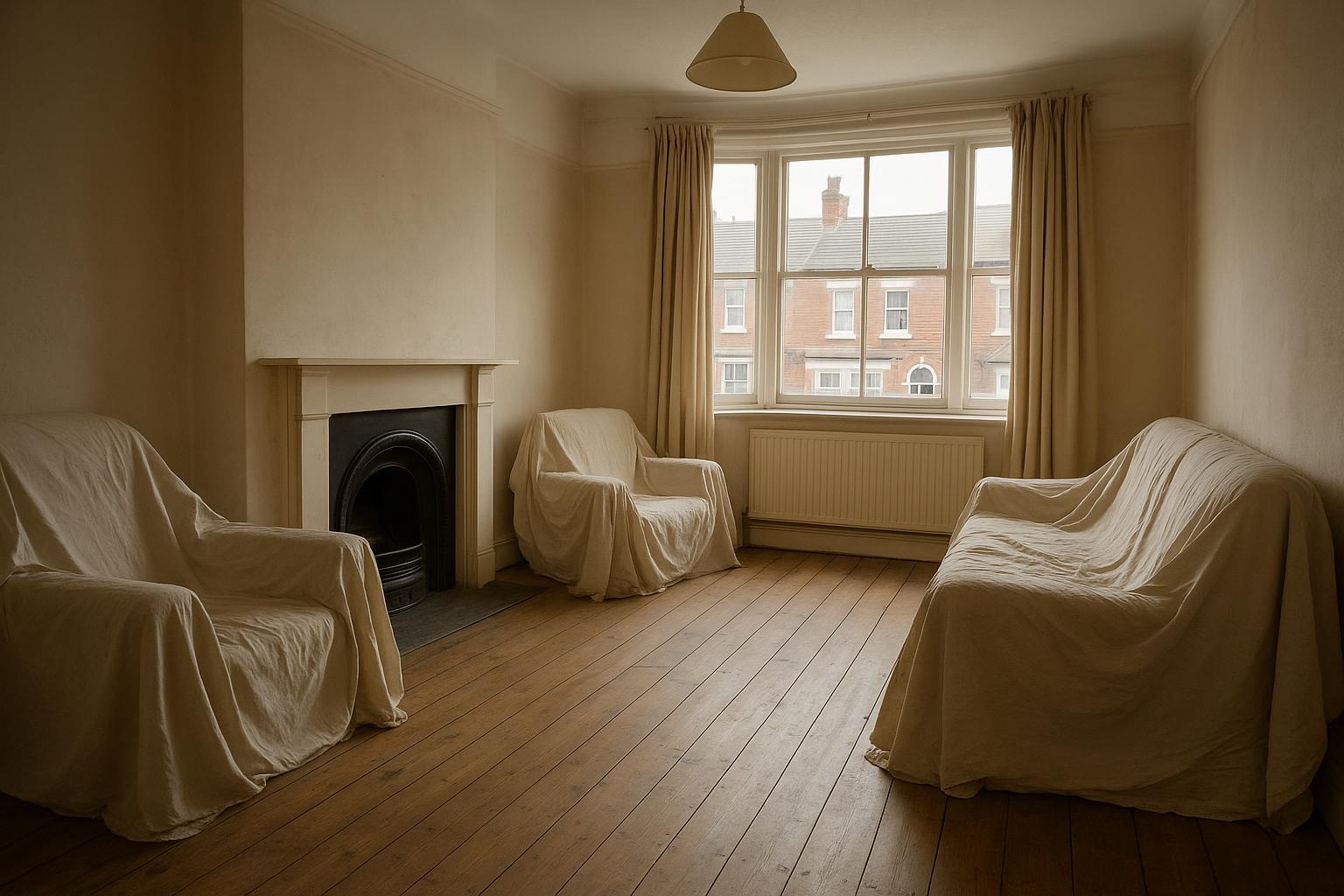
Major structural work, such as removing a load-bearing wall, adding an extension, converting a loft or rewiring a whole house, produces dust, vibration, noise and mess. Anything left in the property is at risk of damage, and anything in the way slows the builders and can raise costs.
Clearing the house too early can cost money in storage and disrupt living arrangements, while clearing it too late can leave the builders waiting. The aim is to match the clear-out to the programme of works.
This guide sets out an order of work for homeowners. It is general information, not professional advice, so check details with your architect, builder, council and building control body. For the waste produced by the works themselves, see our guide to builders’ renovation waste and clearance costs in London.
What counts as major structural work
A few examples.
Examples include removing or altering load-bearing walls, adding a rear or side extension, converting a loft or garage, underpinning, extending a basement and replacing a roof structure. Whole-house rewiring and replumbing can be equally disruptive even if they are not structural.
The bigger the job, the more important it is to plan the clear-out properly, because more of the house is likely to be affected for longer.
If you are not sure what your project involves, ask your architect or builder to list the rooms and areas affected week by week.
Agree the scope and programme first
Know what is happening and when.
Before you clear anything, get a written scope of works from your builder or architect and a programme with start and finish dates. This tells you which rooms will be affected, which parts of the house will stay usable and when each area needs to be empty.
Ask specifically what the builder expects you to remove. Some builders will move furniture within the house, while others expect rooms to be empty. Agree who is responsible for protecting floors, stairs and items that remain.
Get this in writing, and remember that programmes slip. Leave some slack before the start date for your clear-out.
Questions to ask your builder
Get answers in writing.
- Which rooms must be empty, and by when?
- Will you move furniture within the house, and is it insured while you do?
- Who arranges skips and waste carrier paperwork?
- Where will materials be stored and where will workers park?
- What happens if you find asbestos or unexpected structural problems?
Add the answers to your project file alongside the contract.
Check permissions and notices
Do not clear for work that may not go ahead.
Depending on the work, you may need planning permission, building regulations approval, a party wall agreement with neighbours or listed building or conservation area consent. Check with your council’s planning team, your architect and a building control body.
The Party Wall etc. Act 1996 can apply to work on or near a shared wall or boundary in England and Wales, and notice normally has to be served before work begins. GOV.UK has a guide to party wall matters.
If permissions are still pending, avoid doing irreversible things, such as disposing of items you might need, until you know the work is going ahead.
Talking to neighbours
Goodwill helps.
Tell neighbours about the work, the expected start date and how long it will last. Give them a contact number for problems such as noise, parking or dust.
Where party wall notices are needed, a friendly conversation beforehand usually makes the process easier, but the formal notices still matter.
Our guide to parking suspensions for clearance in London explains how to reserve space for vehicles and skips where this is possible.
Surveys and asbestos
A safety issue to deal with early.
Older homes, especially those built or refurbished before 2000, may contain asbestos in materials such as textured coatings, ceiling tiles, insulation board, pipe lagging or floor tiles. Asbestos is dangerous when disturbed, so it should not be drilled, broken or removed casually.
The Health and Safety Executive explains that a refurbishment or demolition survey is normally needed before major works to find asbestos that could be disturbed, and the builder or contractor will often ask for one. Ask your builder and architect how this is being handled, and check HSE guidance.
If you find suspect material while clearing, stop and take advice. Our guide to hazardous waste classification explains why asbestos is treated separately and why many clearance crews will not take it.
Where asbestos is commonly found
Why age matters.
In older homes, asbestos can be present in textured ceiling coatings, soffits, garage roofs, boiler flues, floor tiles and insulation boards. It does not usually pose a risk if undisturbed and in good condition, but breaking it can release fibres.
Do not assume that a material is safe because it looks ordinary. Only testing can confirm, and sampling should normally be done by a competent person.
The HSE and your local council have guidance on what to do, and licensed contractors are required for certain types of asbestos work.
Utilities and services
Plan for them.
Structural work often involves isolating gas, electricity and water, and sometimes drainage. Speak to your builder about what will be switched off, when and for how long, and whether you need to inform your utility providers.
Do not move or remove meters, boilers or consumer units yourself. If an appliance such as a boiler is being replaced, see our guide on boiler removal and disposal.
If you are living in the property during works, think about cooking, washing and heating, and whether a temporary kitchen or alternative accommodation is needed.
Living in the house during work
Practical choices.
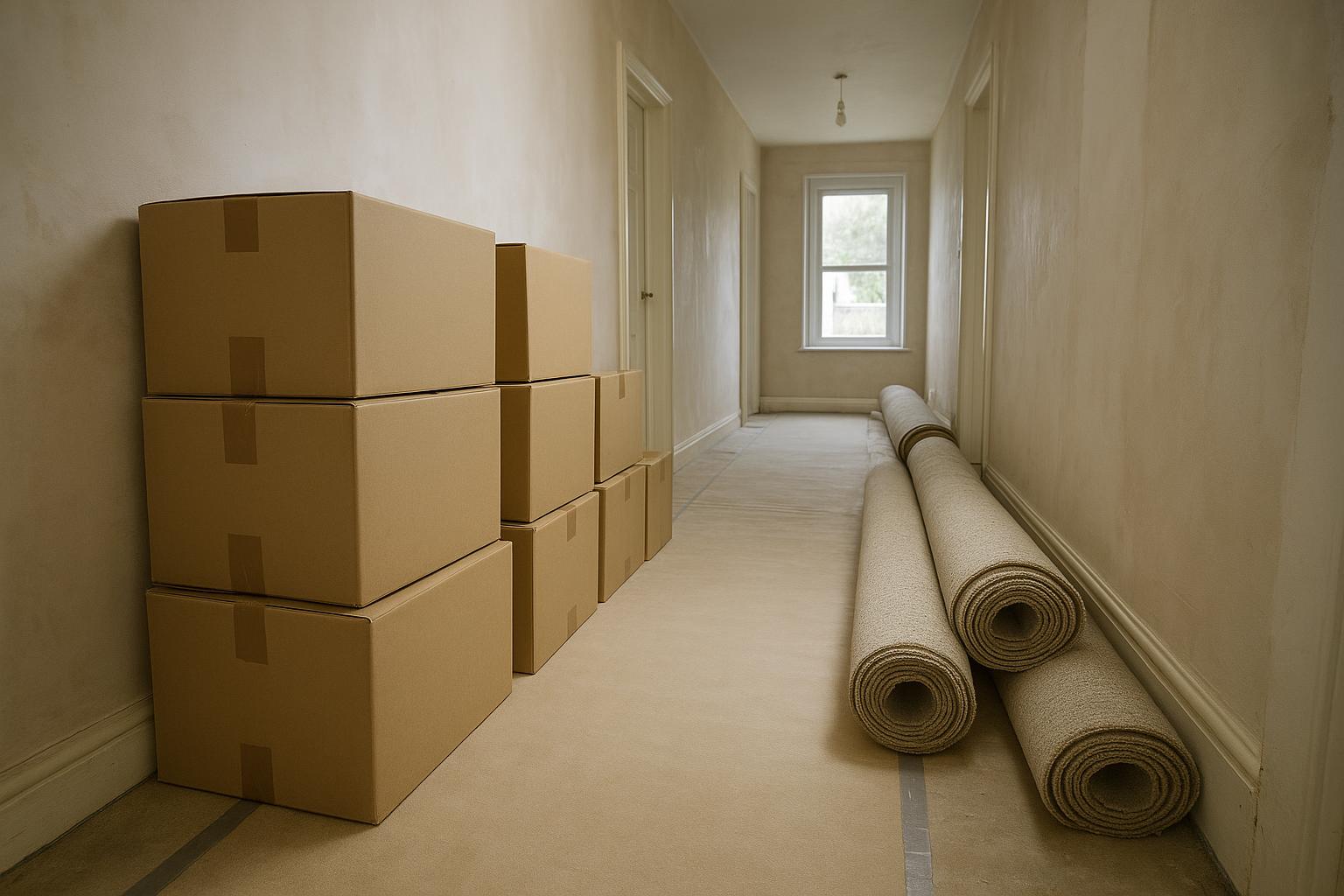
Decide early whether you will stay in the property. Living in a building site can be stressful, particularly if kitchen and bathroom access is limited. Some people stay with relatives or rent short-term accommodation for the noisiest phase.
If you stay, set aside a clean room, with a place to sleep, store belongings and keep key documents. Seal doors with dust barriers where possible.
Check that smoke and carbon monoxide alarms are working throughout the project.
Tell your insurer
A step that is easy to forget.
Contact your buildings and contents insurers before major work begins. Many policies have conditions about structural alterations, unoccupied properties and contractors, and failing to tell them can affect a claim.
Ask whether your contents are covered while stored off-site or while the house is empty, and check whether your builder holds public liability insurance and contract works cover.
Keep copies of insurer correspondence and your builder’s insurance certificates in your project file.
Contents and stored items
Check the small print.
Contents insurance may not cover items in a storage unit or a portable container, or may apply a lower limit. Ask your insurer and, if needed, take out a separate storage policy.
Keep an inventory with photographs and receipts for valuable items. This helps with any claim and with deciding what is worth storing.
If your builder is moving your furniture, ask whether their insurance covers breakage.
Sort your belongings into four groups
The core of the clear-out.
Go room by room and sort items into keep and move, keep and store, sell or donate, and dispose. Photograph valuable or fragile items, and make a simple list. Our house clearance checklist gives a method that works well for this.
Items you want to keep in the house must be moved to rooms that will not be affected, or stored. Be realistic about how much space you have, and do not simply pile things in the one clean room.
Pay particular attention to important documents, family keepsakes, electronics and anything that could be damaged by dust. These should be boxed, labelled and moved well away from the work.
A room-by-room approach
Keep momentum.
Begin with rooms that are not used daily, such as spare bedrooms, lofts and garages, then move to living areas. Leave kitchens and bathrooms until last because you need them to function.
Set a time limit for each room and have bags and boxes ready. Do not open new boxes until the previous room is done.
If you are tired or overwhelmed, take a break. Our guide to room-by-room clearance for large volumes has ideas for planning when there is a lot to do.
Storage options
Short-term or off-site.
For work lasting a few weeks, moving furniture into one room and covering it with dust sheets may be enough. For longer projects, consider a self-storage unit, a portable storage container on the drive or a friend’s space.
Compare costs, access times and insurance. A portable container on a public road may need a permit from your council. Our guide to storage units in London covers the practicalities, including what to do if you end up needing a clear-out when you finish.
Use sturdy boxes, label each by room and keep an inventory so that everything can be put back in the right place.
Packing and labelling
Make unpacking easier.
Use strong boxes of a manageable weight, wrap fragile items and keep heavy items low. Label each box with the room, a short description and a number matching your inventory.
Protect mattresses and upholstered furniture with covers. Keep furniture off the floor if the storage space might be damp.
Do not store anything flammable or hazardous in a shared or indoor unit, and check the facility’s rules.
Salvage, reuse and sell
Recover value before demolition.
Before walls and ceilings come down, consider what can be reused or sold: period doors, fireplaces, radiators, floorboards, bricks, kitchen units and bathroom fittings. Ask the builder whether any of it can be removed safely before work starts.
Local architectural salvage yards, online marketplaces and community reuse schemes can take good items. Our guides to radiator removal and fitted wardrobe removal explain how some of these are taken out.
Get the removal agreed in writing so that salvage does not delay the programme, and make sure it is safe to do. Some items may contain lead paint or asbestos.
Safe removal and reuse
Check first.
Some old fittings contain lead paint, asbestos or glass that can break. Ask your builder before removing anything, and wear gloves and eye protection.
Good items can be photographed and listed for sale. Ask buyers to collect them promptly so that they do not get in the way.
Keep a receipt or a note of what you sold or gave away, in case of questions later.
Disposing of what you will not keep
Use a lawful route.
For household belongings, use the household recycling centre, a council bulky waste collection or a registered waste carrier. If you book a clearance, ask for a written quote, check the carrier’s registration number and keep the receipt.
houseclearance.co is a marketplace that matches you with independent carriers, so what is included and the price are agreed directly with the carrier. Our guide to council bulky waste versus private clearance compares the options.
Under the householder’s duty of care, you remain responsible for checking that your waste goes to an authorised person. See our duty of care guide.
Electricals, paint and chemicals
Special routes.
Old electrical items should go through proper recycling routes, as explained in our WEEE regulations guide. Paint, solvents and chemicals need separate handling, covered in our guide to household chemicals.
Do not put these in a skip or mix them with general rubbish. Many clearance crews will not take them.
If in doubt, ask your council or the household recycling centre what they accept.
Builder’s waste is a separate matter
Know who is responsible.
Waste created by building work, such as rubble, plasterboard, timber and old fittings, is usually the builder’s responsibility if they are carrying out the work as part of their contract. Ask them to confirm in writing who arranges skips and how waste is disposed of.
If you hire a skip yourself, check whether you need a permit if it will be placed on the road. Our guides to skip permit costs, skip hire costs in London and building waste disposal explain what to expect.
Do not let anyone dump building waste on someone else’s land or leave it on the street. As the householder, you can face consequences if waste is fly-tipped from your property.
Checking a skip or waste carrier
Simple checks.
Ask for the carrier’s waste carrier registration number and check it on the Environment Agency’s public register. Ask where the waste will be taken and for a receipt or transfer note.
Our guide to waste transfer notes explains the paperwork.
Be wary of anyone who offers a cheap, cash-only service with no paperwork.
Protect what stays
Dust gets everywhere.
For furniture and fittings that remain, use dust sheets and tape. Protect floors and stairs with boards or sheeting along the routes the builders will use, and agree how doors and windows will be secured.
Cover or move electronics, books, soft furnishings and artwork. Keep valuables away from the site or off the premises, because building sites have more people coming and going than usual.
Take photographs of each room before work starts so that you can show its condition if damage occurs.
Floors, stairs and doors
Where damage happens.
Use hardboard or protective sheeting on floors in main routes, and wrap banisters and door frames. Rolled carpets or rugs should be moved or covered.
Remove pictures, mirrors and light shades from walls and ceilings in affected areas. Pack them carefully.
Agree with your builder how many times a day floors will be cleaned and how dust will be controlled.
A practical timeline
Work backwards from the start date.
Several months before: confirm scope, permissions, surveys and insurance, and start sorting storage. Four to six weeks before: begin the main sort, sell or donate what you can and book storage or collections. Two weeks before: pack, move and protect, and arrange any final clearance.
In the last week, empty the affected rooms, isolate utilities with your builder’s help and walk through the property together. Agree where materials will be stored and where workers will park.
Keep a copy of your inventory, the programme and contact numbers in an easily accessible folder.
A final checklist
Before the builders arrive.
- Scope, programme, permissions and insurance confirmed.
- Surveys complete and asbestos position known.
- Belongings sorted and listed, valuables protected.
- Storage booked and boxes labelled.
- Salvage items removed or agreed.
- Waste routes agreed and a registered carrier booked if needed.
- Floors and remaining furniture protected, utilities plan agreed.
Keep this list with your contract so that you can tick items off as they are completed.
Common mistakes
Avoid these.
Typical mistakes include clearing before permissions or a start date are confirmed, forgetting to ask about asbestos, using the cheapest unlicensed person to take away waste and failing to tell the insurer. Another is not agreeing who pays for waste and skips.
Other errors are leaving valuables on site, underestimating how long a sort will take and not planning where the family will live. A written plan reduces these risks.
If something unexpected appears, such as old pipes, unmarked materials or suspected asbestos, stop work in that area and take advice before continuing.
Reviewing the plan with your builder
One last conversation.
A few days before the start date, walk through the house with your builder and check that everything agreed is in place. Confirm access arrangements, working hours and contact numbers.
Take photographs of the property as it stands, and agree how and when you will review progress.
If anything has changed, update the written plan and share it with everyone involved.
Frequently asked questions
Common questions about clearing a property before major building work.
When should I clear the house before building work starts?
Ideally in stages in the weeks leading up to the start date, after the scope, programme and permissions are confirmed. Ask your builder which rooms must be empty and when.
Do I need an asbestos survey before renovating?
For older properties a refurbishment survey is commonly required before major work. Your builder or architect should advise, and the Health and Safety Executive publishes guidance.
Who is responsible for the waste from the building work?
This depends on your contract. Often the builder arranges skips and disposal for building waste, but you should agree this in writing and check who holds the waste carrier registration.
Can I leave furniture in the house during the work?
Sometimes, if it is in unaffected rooms and well protected. Ask your builder, and consider storage for valuable or fragile items.
Do I need a permit for a skip?
If a skip is placed on a public road, a permit from the council is normally needed. Check with your council and your skip provider.
What should I do if I find asbestos?
Stop and do not disturb it. Contact your builder and take specialist advice, as asbestos has special handling and disposal rules.
Should I tell my insurer about the works?
Yes. Major building work can affect your buildings and contents cover, so tell your insurer before it starts and ask about stored items.
Can I sell items from the house before work begins?
Yes. Reusable doors, fireplaces, fittings and furniture can often be sold or donated, but agree this with your builder so that it does not delay the programme.
