Direct answer
A 24-hour turnaround works when the jobs run in a fixed order: confirm vacant possession and the check-out, remove everything left behind, carry out minor repairs, deep clean from the top down, then inspect and photograph before the next tenant arrives. Clearance must come first because cleaners cannot work around bulky items and bags. The main causes of delay are unclear access, items that cannot be taken the same day, parking restrictions and a clean that starts before the clearance has finished. Book each trade for a defined slot, give them one point of contact and keep a buffer for the unexpected. Rules on tenant belongings and deposits are specific, so check GOV.UK or take advice if anything is left behind.
Contents
- Why a 24-hour turnaround is hard
- The real cost of a void
- Deciding whether 24 hours is realistic
- Warning signs that you need more time
- The correct order of work
- Fitting in repairs and touch-ups
- A sample 24-hour timeline
- Building in a buffer
- Keys, access and vacant possession
- Key safes and lock-outs
- Dealing with belongings left behind
- A sensible process for abandoned items
- Booking the clearance
- Questions to ask before you accept a quote
- Parking, loading and building rules
- Permits, suspensions and timing
- Deep cleaning after the clearance
- Who supplies equipment and products
- Inspection, photographs and the deposit
- Handing over to the new tenant
- Common mistakes and a handover checklist
- Reviewing the turnaround afterwards
- Frequently asked questions
Why a 24-hour turnaround is hard
Several trades, one property and one deadline.
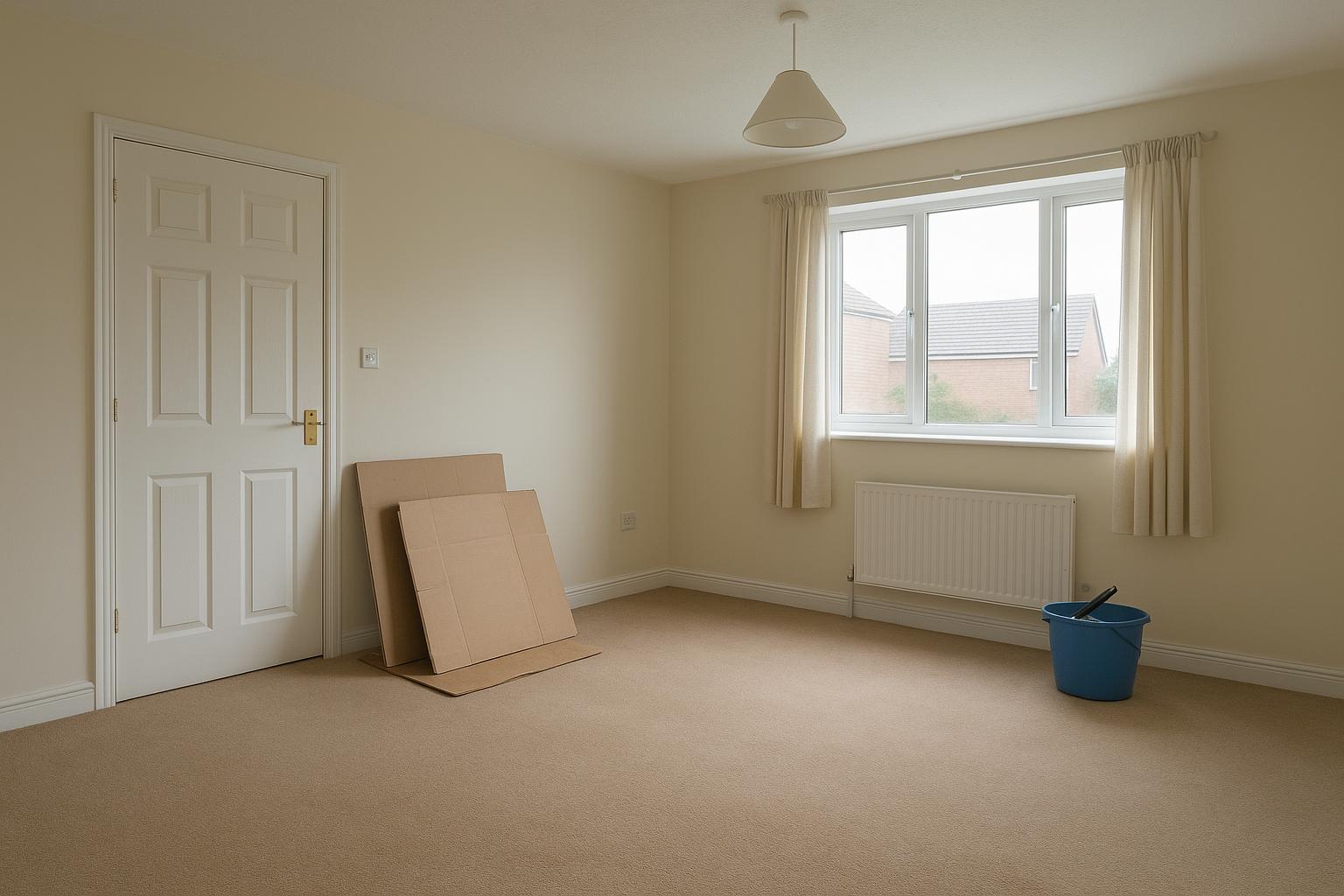
A tenancy turnaround looks simple from the outside. One tenant leaves, the property is cleared and cleaned, and the next tenant moves in. In practice it is a chain of dependent jobs, and each one waits for the one before. If the previous tenant leaves late, the clearance starts late. If the clearance runs over, the cleaners arrive to a room full of furniture. By the evening, the new tenant is at the door and nothing is finished.
Short gaps happen for ordinary reasons. A fixed-term tenancy ends on a Friday and the next one begins on the Saturday, or the agent has sold the idea of a seamless handover to an incoming tenant who has already given notice elsewhere. In London, where rental demand is high and void periods cost real money, the pressure to move fast is understandable.
The aim of this guide is not to promise that every property can be turned in a day. It is to help you decide whether a 24-hour window is realistic for the property in front of you, and to set up the order of work so that the window has the best chance of holding.
The real cost of a void
Why speed matters, and why rushing costs too.
Every day a property stands empty is a day without rent, and landlords and agents feel that quickly. That is the commercial reason for tight turnarounds. But the cost of a rushed job also shows up later, in complaints from the new tenant, a poor first impression, repeat visits by contractors and disputes about condition at the start of the tenancy.
It helps to think about the turnaround as part of the tenancy rather than a gap between tenancies. A property handed over clean, empty and in working order starts the new relationship well. One handed over half-finished, with a smell of bleach and a stray bin bag, does not.
The most useful way to save time is not to hurry on the day. It is to remove uncertainty beforehand, with a confirmed order of work, confirmed access and confirmed arrival times.
Deciding whether 24 hours is realistic
Look at the property before you promise the date.
The first decision is whether the window is achievable at all. A one-bedroom flat that the tenant has kept tidy and emptied is a very different job from a three-bedroom house with abandoned furniture, a full kitchen and a garden. The honest question is how much there is to remove, how dirty the property is and how much repair is needed.
Ask the outgoing tenant or the agent for photographs a few days before the end of the tenancy, or arrange a pre-visit if access allows. Note large items, anything that may need specialist disposal, heavy staining, damp or damage, and the state of the oven, bathroom and carpets. Those details decide how long each trade needs.
If the answer is that the work is likely to exceed a day, it is better to tell the incoming tenant or the landlord early than to promise a date that cannot be met. A realistic extra day costs less than a failed move-in.
Warning signs that you need more time
Spot them early.
Some signs suggest that a single day will not be enough. Large quantities of furniture, a cluttered garage or loft, a garden that needs clearing, signs of damp or mould, pest evidence, heavy nicotine staining and an oven that has not been cleaned for years are all examples.
Another warning sign is uncertainty about what belongs to whom. If the tenant says they will collect items later, or the inventory does not match the contents, expect delays, because you cannot clear what you are not entitled to dispose of.
If you see two or more of these signs, tell the incoming tenant that the move-in date is at risk, or build in a second day. A candid conversation is better than a last-minute apology.
The correct order of work
Clearance, repairs, cleaning, inspection.
The order matters more than the speed. Clearance comes first, because it removes the items that block every other task. Minor repairs and decorating touch-ups come second, because they create dust and marks. Deep cleaning comes third, because it should remove the dust left by the earlier work. Inspection and photographs come last, when the property is as the next tenant will see it.
The most common mistake is to start cleaning while the clearance is still under way, or to book the cleaners for a time that overlaps with a repair. Cleaners then work around furniture, and the finished rooms are marked by the clearance crew carrying items through them. The cleaned property then needs a second pass.
Within the property, the cleaning itself should run from the top down and from the back to the front: upper floors before lower, rooms furthest from the door before the hallway. That way, the last person to leave does not walk through a floor that has just been finished.
Fitting in repairs and touch-ups
The step people forget.
Between clearance and cleaning, there is usually a list of small jobs. Patching holes, touching up paint, replacing a bulb, fixing a loose handle or bleeding a radiator are typical. If they are left until after the clean, the cleaner's work is undone, and if they are left out altogether, the new tenant finds them within a day.
Ask the agent or inspector for a short list at the check-out, and book the repair for the gap between clearance and cleaning. Where paint is involved, allow for drying time, and avoid touching surfaces that the cleaners will need to wipe.
Larger repairs, such as a new carpet, a replaced kitchen unit or a redecoration, rarely fit into a 24-hour window. Plan them for a longer gap or schedule them after move-in with the tenant's agreement.
A sample 24-hour timeline
An illustration, not a promise.
The timings below show how the sequence might look for a modest flat. They are illustrative only, and a larger or more heavily used property would need longer.
- Early morning: tenant has left, keys returned, check-out inspection completed and photographed.
- Mid-morning: clearance crew arrive, remove items left behind and take them away.
- Midday: minor repairs, touch-up paint and any plumbing or electrical fixes.
- Afternoon: deep clean begins with the kitchen and bathroom, then the bedrooms and living areas.
- Evening: carpets and floors finished, windows cleaned, final inspection and photographs.
- Next morning: a short walk-through, check meters and keys, then handover.
The shape matters more than the exact times. Each trade has a clear start, a clear end and a handover to the next.
Building in a buffer
Plan for the thing that goes wrong.
A timeline with no spare time is a timeline that will fail. Trades overrun, vans are delayed in traffic, an item is heavier than expected, and a cleaner finds a problem behind the cooker. A buffer of a couple of hours at the end gives you room to absorb a delay without missing the handover.
If a buffer is not possible, agree in advance which tasks can be dropped or deferred. For example, a window clean can be completed the following day, but the kitchen and bathroom cannot. Knowing the priority list before the day starts avoids arguments on site.
Keep your phone available and share the contact details of each trade with the others, so that a delay in one place can be passed on quickly to the next.
Keys, access and vacant possession
Nothing starts until you can lawfully go in.
Everything depends on being able to enter. Make sure the tenancy has actually ended, that the tenant has handed back possession and that all keys and fobs have been returned. If the tenant is still in occupation, or has left belongings and says they will come back, you cannot simply start clearing.
Agree one point of contact for all trades. Provide the same access method, such as a key safe code or a person on site, to each team, and confirm it in writing the day before. A locked door at 8am is the cheapest way to lose half a day.
If the building has a concierge, a managing agent or restricted lift hours, tell them the times and the vehicles involved. Some blocks do not allow work on certain days or at certain hours, and some require a lift booking.
Key safes and lock-outs
Simple controls that save time.
If nobody is going to be on site, a key safe is a common solution. Use a unique code for the day, share it only with the trades who need it and change it afterwards. Confirm that the key inside works, because a copy cut for the last tenancy may not.
Check that alarms, entry systems and fobs are working. Smart locks and app-based entry can fail if the tenant's account was deleted, and a managing agent may take hours to respond.
Keep a record of who had keys and when. Where the property is handed over to a new tenant, change the locks if the agreement or your agent's policy requires it, and record the number of keys given out.
Dealing with belongings left behind
Handle with care, because they may belong to the tenant.
It is common to find items left in the property. Treat these carefully. In general, goods left by a tenant do not automatically become the landlord's property, and disposing of them without following the proper steps can lead to a claim. The process depends on the tenancy agreement and the law at the time, so check GOV.UK, your agent's procedures or a solicitor before disposing of anything of value.
Record what was left, photograph it and keep the record with the tenancy file. If the tenant agrees in writing that items can be disposed of, that is the cleanest route. If you cannot reach the tenant, a documented attempt to contact them, and a clear timetable, will help.
Papers, identity documents, medication, laptops and phones need particular care. Do not put these in a general clearance. Separate them, store them safely and follow the appropriate procedure. Our guide to hidden valuables and documents in a clearance explains how to avoid throwing away important items.
A sensible process for abandoned items
Document, wait, decide.
A clear process protects you if the tenant later disputes what happened. First, document the items with photographs and a list. Second, contact the tenant by the methods in the tenancy agreement and give a reasonable deadline. Third, decide what can be disposed of, what can be donated and what has to be stored.
High-value items, personal documents and anything that looks sensitive should be handled with extra care. If you are unsure about the legal position, take advice before disposal. The rules differ depending on whether the tenant has left voluntarily and whether the landlord has recovered possession lawfully.
Keep copies of your communications and the final record of what was done. If the tenant returns later, you will want to show what you did and why.
Booking the clearance
What to tell the carrier and what to expect.
When you request quotes, describe the property, the floor, whether there is a lift, the approximate volume of items, any bulky pieces and any items that need special handling. Say clearly that the job has a hard deadline, and ask each carrier whether they can attend in the slot you need. Photographs help carriers give a realistic quote.
houseclearance.co is a quote-matching service that puts you in contact with independent carriers. Each carrier sets its own availability and terms, so confirm timing, access, what is included and what happens if the job overruns before you accept. Our guide to same-day and urgent house clearance explains how urgency can affect the way jobs are quoted.
Make sure whoever you use is able to give you the paperwork for waste they take. The householder or landlord keeps a duty of care to pass waste to an authorised carrier, which is explained in our guide to waste duty of care and our guide to invoices and records.
Questions to ask before you accept a quote
Short, practical, specific.
A few questions help you to compare carriers fairly and avoid misunderstandings on the day.
- Can you attend within the exact time slot I need?
- What is included in the price, and what could add to it?
- Will you take everything, or are there items you will not remove?
- Will you leave the property swept and free of loose rubbish?
- Can you provide waste transfer paperwork for what you take?
- What happens if the job runs over or you are delayed?
Written answers are better than verbal ones. Our guide to waste transfer notes explains the paperwork you should expect.
Parking, loading and building rules
Small logistics, large delays.
A clearance van needs somewhere to stop close to the door. In much of London, parking is controlled, and a crew that spends an hour circling the block is an hour late. Check the restrictions outside the property and consider whether a parking suspension or a dispensation is needed. Our guides to council parking suspensions and parking a clearance truck in controlled zones explain the options.
Where a suspension is needed, it often has to be requested days in advance, which is a reason to plan the turnaround early. If the property is on a red route, in a congestion zone or on a narrow street, tell the carrier so that they can plan the vehicle size and the approach.
In flats, check whether lifts can be reserved, whether there are rules on noise and hours, and whether waste can be left in communal areas. The building rules apply to every trade you bring in.
Permits, suspensions and timing
Do this early.
Councils set their own procedures and timescales for parking suspensions and dispensations, and some require several working days' notice. Check your borough's website early and apply as soon as you know the date. If the notice period is longer than the time you have, ask the carrier whether they can load from a nearby legal space or use a smaller vehicle.
Never put cones out on the public road without the right permission. In many boroughs that can lead to a penalty, and it can cause problems for neighbours and for the next trade.
For private roads and managed estates, the managing agent or freeholder sets the rules. Ask them about vehicle access, weight limits and permitted hours.
Deep cleaning after the clearance
What a turnaround clean really covers.
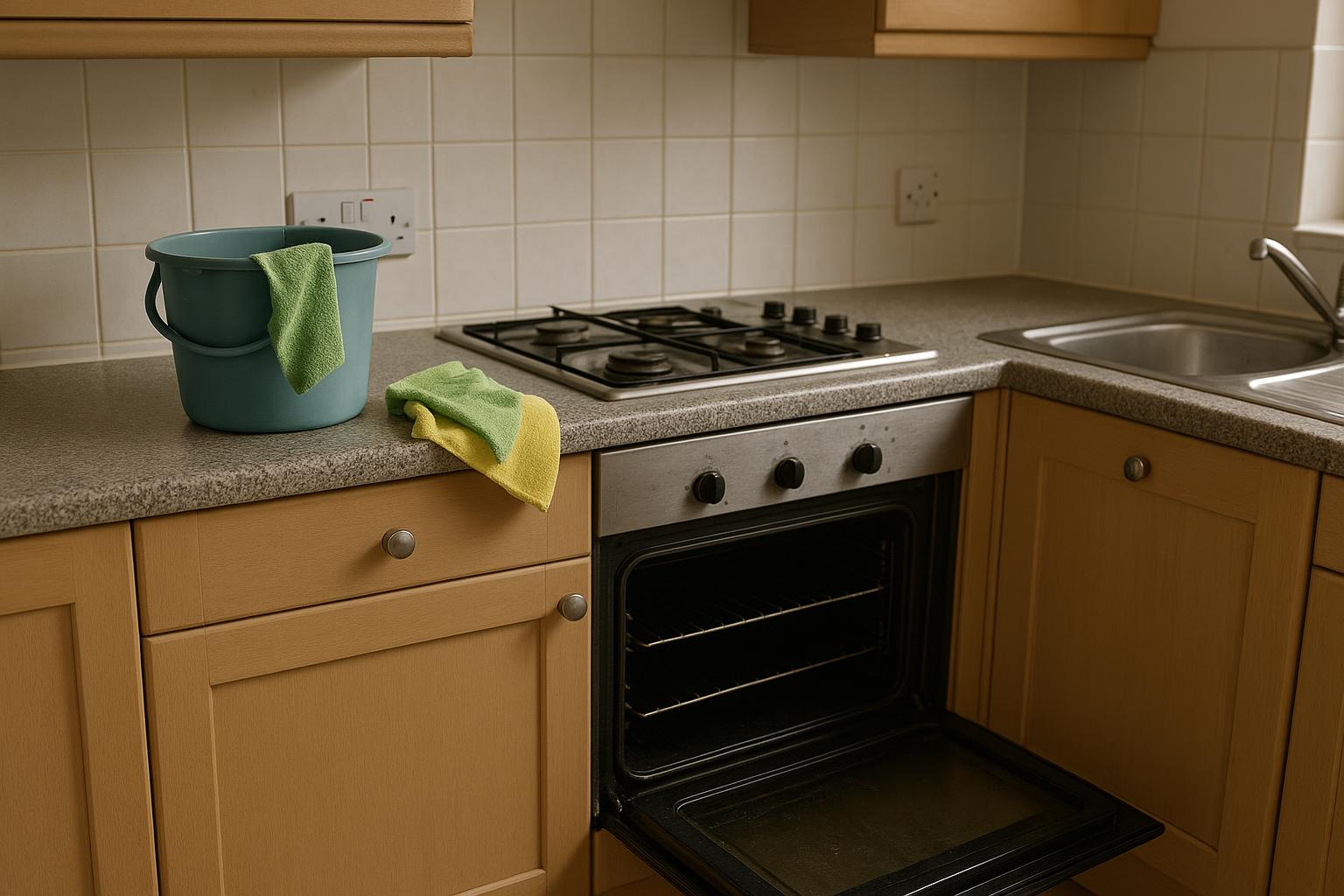
A turnaround deep clean is more thorough than a weekly tidy. It usually includes the oven and hob, the fridge and freezer, kitchen cupboards inside and out, the bathroom including limescale, windows, skirting boards, doors and light fittings, and carpets or hard floors. The exact scope is agreed between you and the cleaner.
Write the scope into the booking. Many disputes arise because the landlord assumed the oven was included and the cleaner assumed it was not. A one-page list of rooms and tasks, shared before the day, prevents this. Our guide to deep cleaning and disinfection after a clearance goes into more detail on what a thorough clean involves.
If the property has been left in a poor state, with mould, pests or heavy soiling, the clean may need specialist treatment and longer than a day. In that case, say so early.
Who supplies equipment and products
Agree it in advance.
Most professional cleaners bring their own equipment and products, but this is not universal. Check whether they bring a vacuum cleaner, steam cleaner, oven cleaning products and ladders, and whether any special products need to be supplied by you. Mention if the property has delicate surfaces, such as natural stone or unsealed wood.
If the water or power is turned off at the property, tell the cleaner. A deep clean without hot water is slow and less effective, and an unexpected restriction can cost you the afternoon.
Ask what the cleaner does with waste and used materials. Cleaning waste is usually small, but it should not be left in the property or dumped in a communal bin without permission.
Inspection, photographs and the deposit
Evidence protects everyone.
Photograph each room before the clearance, after the clearance and after the clean. Date-stamped images are useful if there is a dispute about the condition of the property or the deposit. Keep the check-out report, the inventory and the images together.
Deposit rules are strict. In England, a deposit for an assured shorthold tenancy must be protected in an approved scheme, and any deductions need to reflect genuine loss, not general wear and tear. The deposit schemes publish guidance, and the rules have been changing, so check the current position on GOV.UK or with your scheme.
Charges to tenants for cleaning and clearance are also limited by law in England. Check what you can and cannot charge, and keep invoices that show the actual cost, because they support any deduction you make.
Handing over to the new tenant
The last mile.
A good handover closes the loop. Give the new tenant the keys, the meter readings, the inventory and any instructions for appliances and bins. If you have photographs showing the state of the property on entry, share them with the inventory.
Make sure the safety documents the law requires are ready, such as the gas safety certificate, the electrical safety report, the energy performance certificate and smoke and carbon monoxide alarm checks. The requirements are set out on GOV.UK and are updated from time to time, so check the current list before the tenancy begins.
If a small problem is found on the day, record it and fix it promptly. A tenant who sees that issues are dealt with quickly tends to be a better tenant.
Common mistakes and a handover checklist
Learn from the usual failures.
The most frequent causes of a failed turnaround are easy to name. Cleaning that starts before clearance ends, keys that are not available, a vehicle that cannot park, items that turn out to belong to the tenant, a carrier booked without confirming the time, and no buffer for a problem. Most can be avoided with a plan on the day before.
Use a short checklist for the final walk-through.
- All items removed and no bags or boxes left.
- Rooms cleaned top down, including oven, fridge, bathroom and windows.
- Floors and carpets finished and free of marks.
- Lights, heating, hot water and appliances working.
- Meter readings recorded and keys counted.
- Photographs taken of every room and any damage.
- Waste documents and invoices filed with the tenancy record.
Reviewing the turnaround afterwards
Make the next one easier.
After each turnaround, take ten minutes to note what went well and what did not. Which trade was late? Which access problem recurred? What was missing from the list? Over several properties, those notes become a template that saves more time than any single tip.
Keep a short contact list of reliable trades who know your properties. Familiarity matters, because a cleaner who has done the flat before knows where the problem areas are and a crew who has used the lift before knows how long it takes.
Finally, keep your own standards realistic. A well-executed 36-hour turnaround is better than a poorly executed 24-hour one, and your tenants will notice the difference.
Frequently asked questions
Common questions about turnarounds between tenancies.
Can a property really be cleared and cleaned in 24 hours?
Often yes for a small, tidy property, but not always. A larger property, heavy soiling or lots of items left behind can take longer, so assess the job before promising a date.
Should the clearance or the deep clean come first?
Clearance first. Cleaners cannot work properly around furniture and bags, and removal crews can mark floors and walls that have just been cleaned.
What do I do with items the tenant left behind?
Do not assume you can dispose of them. Record and photograph them, try to contact the tenant and check the rules on GOV.UK or with a solicitor or your agent before disposing of anything of value.
Do I need to book the carrier in advance?
Yes where you can. Short-notice jobs depend on availability, and each independent carrier sets its own terms, so confirm the time slot, access and what is included.
Can I charge the tenant for clearance and cleaning?
Only within the limits of the law and the tenancy agreement. Charges and deductions need to reflect real loss, so keep invoices and check the current rules and your deposit scheme guidance.
Do I need a parking suspension?
It depends on the street. In controlled parking zones it may be needed so that the van can park near the door, and it can take days to arrange, so check early.
What is the main cause of delay?
Poor sequencing and access problems, such as cleaners starting before the clearance finishes, keys not being available or a vehicle that cannot park near the property.
What should I photograph?
Every room before the clearance, after the clearance and after the clean, plus any damage, meter readings and the keys. Keep the images with the check-out report.