
Direct answer
In England, a landlord or agent who takes a deposit on an assured shorthold tenancy must protect it in a government-approved scheme (DPS, MyDeposits or Tenancy Deposit Scheme) and give you the details. At the end of the tenancy the landlord can only claim for genuine losses such as unpaid rent, damage beyond fair wear and tear, missing items or cleaning needed to return the home to its check-in condition. Clearing all your belongings and rubbish, cleaning thoroughly and taking dated photos on the way out gives you the best evidence if there is a disagreement. If you cannot agree, the scheme offers a free dispute service. Rules differ in Scotland, Wales and Northern Ireland and can change, so check GOV.UK and your scheme for current guidance.
Contents
- Why clearance matters for your deposit
- How deposits are protected in England
- Custodial and insured schemes
- Start with the inventory and the tenancy agreement
- What to do if the inventory is poor
- Fair wear and tear versus damage
- Examples that help
- Clearing your own belongings
- The places people forget
- Landlord furniture and your own furniture
- Selling and donating before you go
- Dealing with rubbish and bulky waste
- Choosing between council and private collection
- Cleaning to the check-in standard
- Kitchen and bathroom checklist
- Evidence: photos, video and receipts
- How to take useful photos
- If the landlord proposes deductions
- Replying to a deduction notice
- Using the dispute resolution service
- What happens after a decision
- Common mistakes to avoid
- Frequently asked questions
Why clearance matters for your deposit
Rubbish and leftovers are a common deduction.
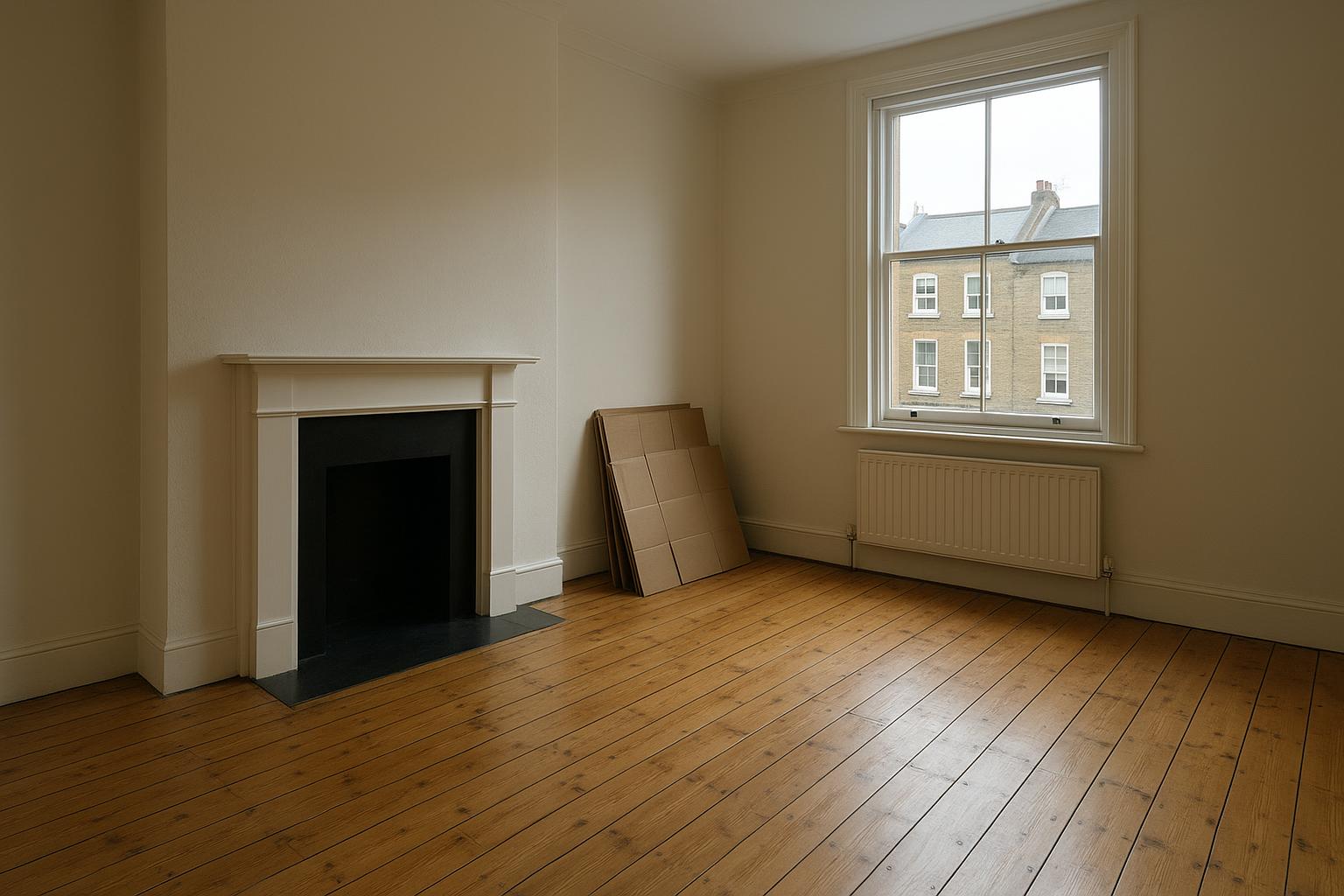
When a tenancy ends, the landlord or letting agent compares the property with the state it was in at the start. Items left behind, bags of rubbish, unwanted furniture and a dirty oven are among the most common reasons for a deduction from the deposit, because they cost the landlord time and money to deal with before the next tenant can move in.
Clearing the property properly is therefore one of the few parts of moving out that is entirely in your control. A home that is empty, clean and well photographed gives the landlord little to claim for and gives you good evidence if a claim is made anyway.
This guide covers tenancies in England, where most renters in London live. It is general information, not legal advice, and the rules can change, so check GOV.UK and the guidance from your deposit scheme before you act. For the cost side of clearing a flat, see our guide to end of tenancy clearance costs in London.
How deposits are protected in England
Three approved schemes.
If you rent on an assured shorthold tenancy in England and pay a deposit, your landlord or agent must put it in a government-approved tenancy deposit protection scheme. The three schemes are the Deposit Protection Service (DPS), MyDeposits and the Tenancy Deposit Scheme (TDS). Landlords must protect the deposit within 30 days of receiving it and give you prescribed information about where it is held and how to get it back.
Some schemes hold the money themselves, while others are insured schemes where the landlord or agent keeps it. In both cases the protection exists so that there is an independent process if you and the landlord disagree about what should be returned.
Under the Tenant Fees Act 2019, deposits for most new tenancies in England are capped, normally at five weeks’ rent where the annual rent is below a set threshold. If you think your deposit was not protected or the paperwork was never given to you, speak to Shelter, Citizens Advice or your local council, because there can be consequences for a landlord who did not follow the rules.
Custodial and insured schemes
Two ways of holding the money.
In a custodial scheme, the scheme holds the deposit for the whole tenancy and returns it according to what you and the landlord agree or what the adjudicator decides. In an insured scheme, the landlord or agent holds the money and pays a fee for insurance so that the deposit is protected if something goes wrong.
For tenants, the practical difference is usually in how the deposit is paid back, because the process for raising a dispute is similar. Your scheme’s website sets out the steps, and you can usually log in or contact them with the reference from your landlord.
If you have lost the details, ask your landlord or agent, or search the scheme databases using your name and address, as most schemes offer a way to check whether a deposit is protected.
Start with the inventory and the tenancy agreement
Your baseline.
Before you clear anything, find the inventory or check-in report you were given at the start of the tenancy. This lists the contents and condition of the property, often with photos. It is the standard against which the landlord should judge the condition at the end, so you want to know exactly what it says about marks, furniture and appliances.
Also re-read the tenancy agreement for clauses on cleaning, gardens, professional carpet cleaning and the return of keys. Some agreements ask for a professional clean, but a clause is not always enforceable in the way a landlord claims, and it is the cost of a genuine loss that matters, so ask your deposit scheme if you are unsure.
If you never received an inventory, say so in writing. Without a record of the starting condition, it is harder for a landlord to show that something has got worse, and the burden is generally on the landlord to prove any loss they are claiming.
What to do if the inventory is poor
Fill the gaps.
Some inventories are brief, with phrases such as good condition and no photos. If you did not challenge it at the start, you can still rely on any photos, emails and messages from move-in day, and on the landlord’s own listing photos if they show the condition clearly.
Look back through your phone for dated pictures and any early messages about marks or faults. These can be useful, particularly for pre-existing damage that you want to make sure you are not charged for.
Take notes while you still remember what was there at the start, because memories fade quickly once the tenancy ends.
Fair wear and tear versus damage
The line most disputes turn on.
Fair wear and tear is the gradual deterioration that happens through normal, reasonable use of a home. A landlord cannot normally charge you for it. Faded paint, slightly worn carpet in a corridor and light scuffs on a door frame after several years are typical examples.
Damage is different. Burns on a worktop, large stains, holes in walls from heavy fixings, broken furniture and pet damage are the sort of things a landlord can reasonably claim for. Even then, a fair claim reflects the age and condition of the item, not the cost of replacing it brand new.
The length of the tenancy also matters. A carpet that is ten years old has already lost most of its value, so a landlord should not expect a tenant to pay for a new one because of normal wear.
Examples that help
Typical situations.
Light marks on walls from furniture, small nail holes from pictures and minor carpet wear in busy areas are generally fair wear and tear. Heavy staining, burns, large tears, broken fixtures and unauthorised painting or alterations are more likely to be damage.
A grey area is how well the home was maintained. For example, mould can arise from the property, from lack of ventilation or from the tenant’s use, and the explanation affects who pays. Keep any record of repair requests you sent to the landlord during the tenancy.
If the landlord’s claim looks like a bid to get a refresh of the property at your expense, point to the age of the item and ask for the evidence.
Clearing your own belongings
Everything that is yours must go.
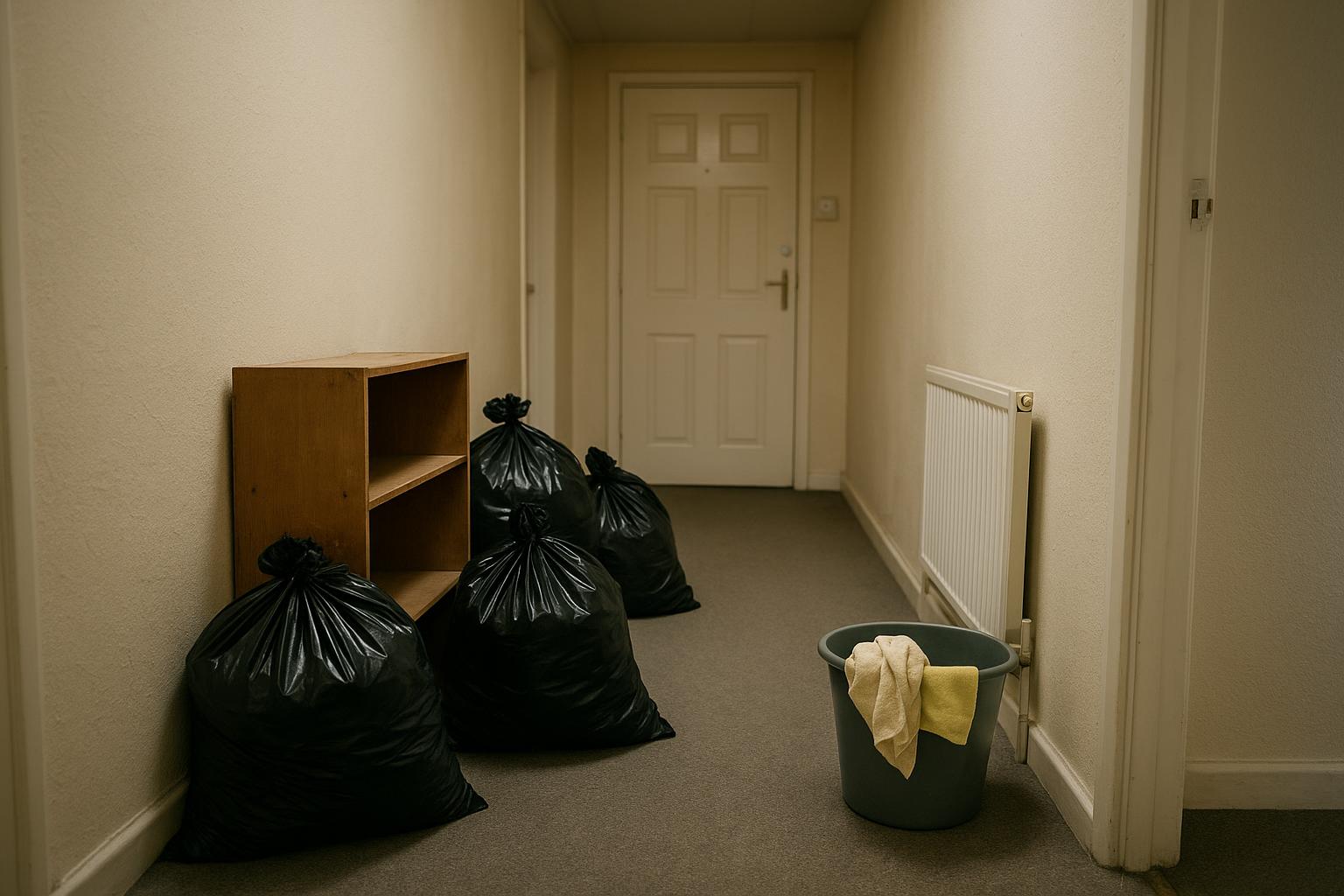
Before you hand back the keys, the property should be left empty of your possessions unless the agreement says certain items stay. That includes things in the loft, under the stairs, in the garden or shed, balconies and any communal storage you were using. A landlord who finds items left behind may treat them as rubbish and charge for removal.
Make a list of rooms and walk through each one with a bin bag and a box. Decide what is being moved, what is being donated, sold or recycled, and what is going for disposal. Our house clearance checklist and the guide to preparing bulky items for collection help you do this in an order that saves time.
Do not leave anything behind in the hope that the landlord will not notice. Leftover belongings are exactly the kind of thing that makes a clear-out claim look reasonable.
The places people forget
Look again.
Common places for forgotten items are the loft, airing cupboard, the back of wardrobes, under the bed, behind sheds and in bins outside. Check the garden, balcony, bike store and any parking spaces, because items left there can also form part of a claim.
Take out light bulbs you added only if the inventory indicates they should be taken, and leave the place with spare keys, remote controls, manuals and appliance parts that came with the property.
A second walk through the property after you think you have finished is a simple way to catch the things that cause the arguments.
Landlord furniture and your own furniture
Know which is which.
If the property was let furnished, the furniture on the inventory belongs to the landlord and should stay, in similar condition to the start. Do not dispose of landlord furniture, even if it is old, without agreement in writing, because you may be charged to replace it.
Furniture that you bought yourself needs to go with you or be disposed of. For bulky items, options include selling, giving away, a charity collection, a council bulky waste collection or a private clearance. Our guides to getting rid of a sofa for free and council bulky waste versus private clearance in London compare the main routes.
If you built flat-pack items into the property, such as fixed shelves, take care when you remove them so you do not leave holes or marks that the landlord can then claim for.
Selling and donating before you go
Reduce what has to be disposed of.
Items in good condition can often be sold online or donated, which cuts disposal costs. Our guides to furniture donation in London and giving items away free explain how to find takers.
Charities will normally only take items in good condition, and many cannot accept certain upholstered furniture. Check the donation rules before you arrange a collection, and book early because slots can be limited near month-end.
Keep any items that the landlord asks you to leave, such as curtains or shelves, and do not make a decision to throw them away without checking.
Dealing with rubbish and bulky waste
Get it removed lawfully.
Bags of rubbish should not be left outside the property or in communal areas. This can lead to fly-tipping complaints, council action against the landlord or fines for you. Use the household recycling centre, a booked council bulky waste collection or a registered waste carrier to take what you cannot dispose of yourself.
If you book a clearance service, ask for a receipt that shows the carrier’s waste carrier registration number, which you can check on the Environment Agency’s public register. Our guide to the householder’s waste duty of care explains why this matters, and fly-tipping penalties in London sets out the risk if rubbish is dumped.
houseclearance.co is a quote-matching service for independent carriers, so any price and what is included is agreed between you and the carrier. Compare quotes, confirm what is being removed and keep the paperwork with your move-out records.
Choosing between council and private collection
Cost against speed.
Councils run bulky waste collection services in many areas, normally booked in advance for a fee. These can be cost-effective for a few items, but slots can be a week or more away, and there are usually limits on the number and type of item.
A private carrier can often collect at short notice and take everything in one trip, though the price will depend on volume, access and what is included. The cheapest route is not always the right one if your tenancy ends on a fixed date.
Ask for a written quote, check what is being removed and confirm that the carrier is a registered waste carrier before you agree.
Cleaning to the check-in standard
Same condition, not showroom condition.
Most agreements require you to return the property in a similar standard of cleanliness to the start, allowing for fair wear and tear. In practice this means clean floors, surfaces, bathroom, kitchen and inside cupboards, with the oven, hob, fridge and extractor fan cleaned if they were clean at the start.
Do the cleaning after the clearance, not before, because moving furniture and bags makes a mess. Many tenants book professional cleaners and keep the receipt as evidence. This is not always required, but it can settle an argument about cleaning quickly, especially if the inventory said the home was professionally cleaned at the start.
Leave windows, window sills, skirting boards and light fittings dusted, and make sure bins are emptied and put out for collection on the correct day.
Kitchen and bathroom checklist
Where deductions often arise.
- Oven, grill, hob and extractor: remove grease and burnt-on food.
- Fridge and freezer: empty, defrost, wipe and leave doors ajar if switched off.
- Cupboards and drawers: wipe inside and remove crumbs and stickers.
- Bathroom: descale taps, clean the shower head, remove mould from sealant where possible.
- Floors: vacuum and mop, including behind and under furniture.
- Walls and doors: wipe marks that will come off without damaging paint.
Use the cleaning products that suit each surface, because harsh chemicals can damage the finish and lead to a claim.
Evidence: photos, video and receipts
This is what wins a dispute.
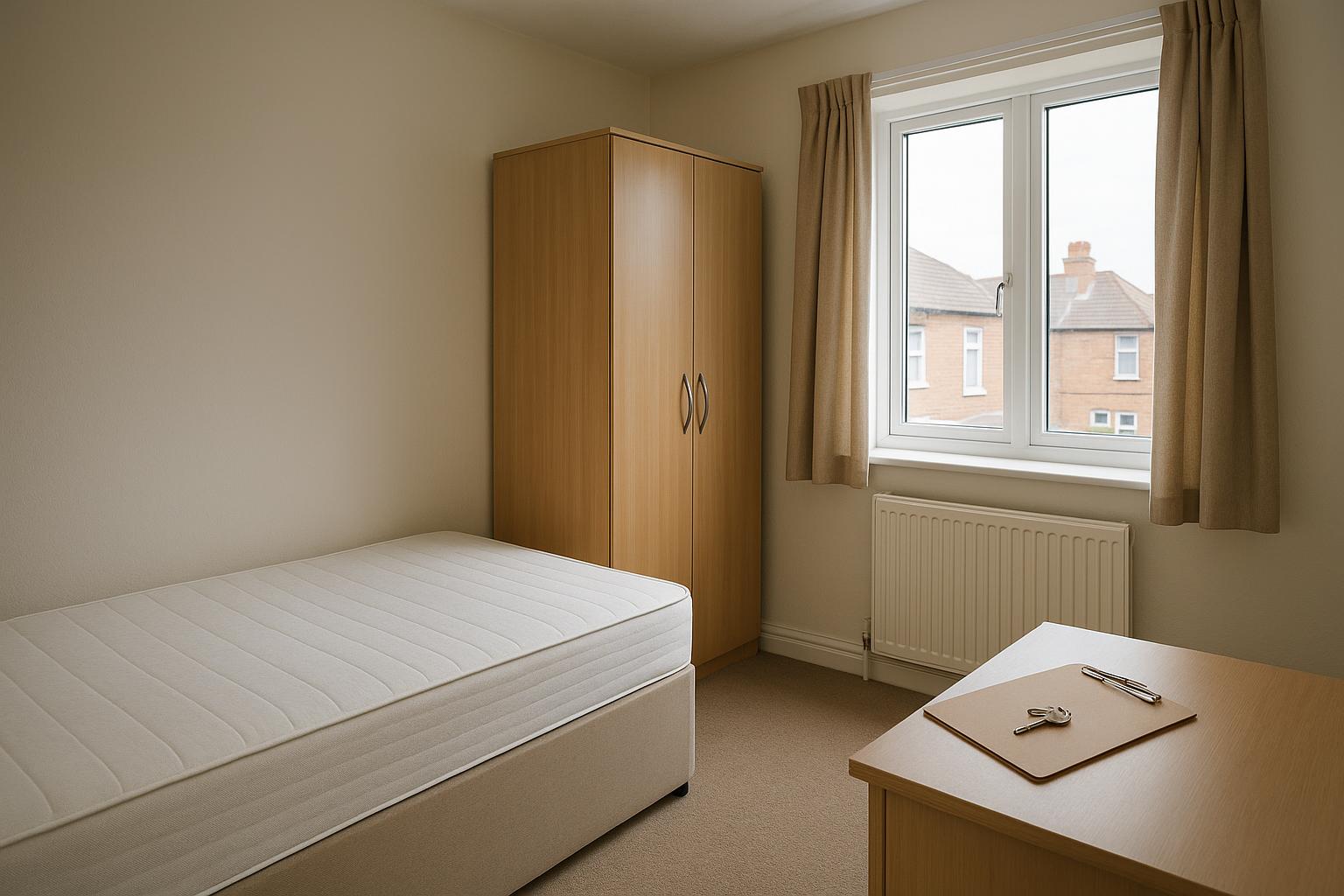
On the day you leave, photograph or film every room, including inside cupboards, the oven, the bath and the garden, in good light with the date visible if possible. Show the meter readings and the keys left behind, and keep the files somewhere safe, such as a cloud folder or an email to yourself.
Keep receipts for cleaning, clearance and any repairs you carried out, along with messages and emails with the landlord or agent about the condition of the property. If you can arrange a check-out inspection with the agent present, ask for a copy of the report and note any disagreements straight away.
In a dispute the adjudicator decides on the evidence, so clear photos and a dated record often matter more than what anyone says afterwards. Our guide to clearance invoices and records explains what paperwork to hold on to.
How to take useful photos
Quality and detail.
Take wide shots of each room, then close-ups of anything that could be raised, such as scratches, marks or worn spots. A short walk-through video, narrated with the date and your name, is a helpful backup to still images.
Make sure the lighting is good, and open curtains. Photograph the meter readings, the keys, and the bins and outside areas.
Back the pictures up on the day, and send a copy to the landlord or agent by email if you can, so there is a record of when they received it.
If the landlord proposes deductions
You do not have to accept them.
The landlord or agent should tell you what they propose to deduct and why, and should be able to back it up with evidence such as the inventory, photos and invoices. If you agree, the deposit is released accordingly. If you do not agree, say so in writing and explain which items you dispute and why.
Landlords generally have to return the undisputed part of the deposit promptly, usually within about ten days of an agreement being reached, and the money stays protected while the disagreement is unresolved. Check your scheme’s guidance for the current time limits and process.
Try to keep communication polite and factual. Many disputes settle once the landlord sees that the tenant has clear evidence and is prepared to use the free dispute service.
Replying to a deduction notice
Keep it factual.
Reply in writing within the time stated. List each item the landlord proposes to deduct and, for each, say whether you agree or disagree, with a short reason and a reference to your evidence.
If a deduction seems unreasonable, ask for the invoice, the photos used and an explanation of how the amount was calculated. A landlord who cannot supply evidence has a weaker case in a dispute.
Keep copies of everything you send and the date you sent it.
Using the dispute resolution service
Free and independent.
Each approved scheme offers a free alternative dispute resolution service. You and the landlord each submit evidence, and an independent adjudicator decides how the deposit should be shared. The decision is based on documents, not on a hearing, so your photos, inventory and receipts are the case.
The adjudicator will usually expect the landlord to show that a loss exists, that it is the tenant’s responsibility, and that the amount claimed is reasonable once age and condition are considered. Claims for general redecoration after a long tenancy often fail for this reason.
You can also seek advice from Shelter, Citizens Advice or a solicitor, and the courts are an option if the dispute is not settled through the scheme. Check the scheme’s time limits for raising a dispute, because they can apply.
What happens after a decision
Next steps.
When an adjudicator has made a decision, the scheme releases the money in line with it, usually within a short period. If you think the process was not followed correctly, you can ask the scheme about a review, but there are limited grounds.
If the landlord refuses to comply, or there is a question about whether the deposit was protected, you may need advice on court action. Citizens Advice, Shelter and a solicitor can explain the options and costs.
It helps to remember that the scheme adjudication is about the deposit only, and other claims may sit outside it.
Common mistakes to avoid
Learn from other tenants.
The most frequent mistakes are leaving rubbish behind, skipping photographs, assuming cleaning is not needed, disposing of landlord furniture without permission and failing to return all sets of keys. Another is leaving bulky waste on the street, which can lead to complaints and charges.
Others include waiting until the last day to start clearing, not checking the agreement for gardens or outbuildings and not asking for a check-out inspection. A few hours of planning a week before moving out can prevent most of these problems.
If your tenancy ends in a hurry, our guide to same-day urgent house clearance costs explains what to expect, though it is always better to leave time to compare quotes.
Frequently asked questions
Common questions about clearing a rented home and getting your deposit back.
Can a landlord keep my deposit for rubbish left behind?
They can claim a reasonable amount for the genuine cost of removing it, supported by evidence such as photos or an invoice. They cannot normally charge more than the loss they have actually suffered.
Which schemes protect deposits in England?
The Deposit Protection Service, MyDeposits and the Tenancy Deposit Scheme are the three government-approved schemes. A landlord must protect an assured shorthold tenancy deposit in one of them.
Is a professional clean compulsory?
Not always. Many agreements ask for the property to be returned in the same standard of cleanliness as the start. A professional clean can help as evidence, but check your agreement and ask the scheme if a clause seems unfair.
Can I be charged for fair wear and tear?
Normally no. Gradual deterioration through ordinary use is not damage. Claims should also take the age of the item into account rather than charging for a new one.
How long does the landlord have to return my deposit?
It depends on the scheme and whether there is a dispute. Where there is agreement, the money is usually returned within about ten days. Check your scheme’s current guidance.
What if my deposit was never protected?
Contact Shelter, Citizens Advice or your local council. There can be penalties for a landlord who failed to protect a deposit or give the prescribed information, so get advice on your situation.
Do these rules apply in Scotland and Wales?
Scotland, Wales and Northern Ireland have their own deposit schemes and rules. This guide is aimed at England, so check your own nation’s official guidance.
Should I leave my own furniture for the landlord?
Only if you have agreed that in writing. Otherwise the landlord can treat it as rubbish and charge for removal, so clear it or arrange disposal yourself.
