
Direct answer
Start an overgrown garden clearance by surveying it for hazards, wildlife and anything you do not recognise, then work in a sensible order: cut back, remove waste, take out structures, then deal with soil and surfaces. Check for nesting birds before cutting hedges or dense shrubs, because disturbing active nests can be an offence. Green waste can go to a council garden waste service, a recycling centre or a registered carrier, but burning it can cause nuisance and break local rules. Old sheds and broken fencing may contain asbestos cement, rotten timber and nails, so take care. Be alert for invasive plants such as Japanese knotweed, which have their own disposal rules. For large or hazardous jobs, ask independent carriers for quotes.
Contents
- Surveying an overgrown garden first
- What to note and photograph
- Wildlife, nesting birds and protected species
- Trees and preservation orders
- A sensible order of work
- Timing and weather
- Tools and protective equipment
- Hiring larger equipment
- Green waste: your options
- Composting and chipping
- What does not count as garden waste
- Bonfires: think carefully
- Alternatives to burning
- Skips, skip bags and carriers
- Questions to ask a carrier
- Old sheds and outbuildings
- Unstable sheds and lean-tos
- Broken fencing and boundaries
- Dealing with old fence timber
- Roots, stumps and soil
- After the clearance
- Frequently asked questions
Surveying an overgrown garden first
Know what you are dealing with.
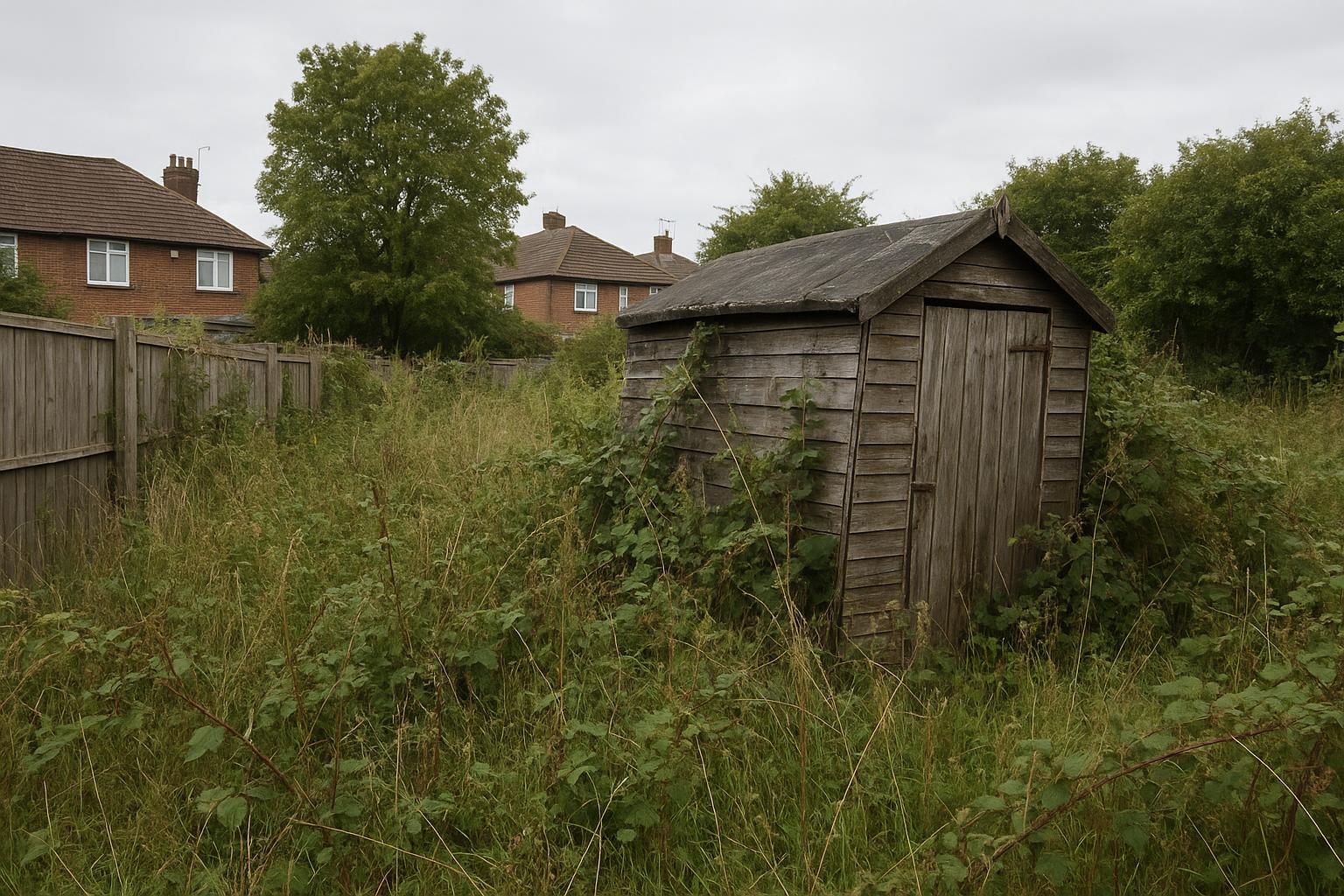
An overgrown garden can hide a lot. Before you cut anything, walk the boundary and look closely. Note the height and type of vegetation, whether there are trees close to the house, where the shed and fences are and how easy it is to get a wheelbarrow or a skip to the area.
Look for hazards such as broken glass, rusty metal, old wire, holes, drains and manhole covers hidden by weeds, and wasp or hornet nests. Be careful with brambles, nettles and any plant you cannot identify. Some, such as giant hogweed, can cause serious skin burns, and others, such as Japanese knotweed, have their own legal rules. Our guide on invasive plants and garden waste covers them.
Take photographs of the garden before you start. They are useful for planning, for quotes and for any dispute about boundaries or condition.
What to note and photograph
A record helps later.
Make simple notes as you survey. Mark the position of trees, structures, drains and utility covers. Note where the ground is soft or sunken, where water pools and where plants are especially dense. A rough sketch on paper is enough.
Photograph the garden from several angles and close up of anything that worries you, such as damaged sheds, leaning trees or unknown plants. If you are a landlord or tenant, these photos can protect you if there is a later dispute about the condition of the garden.
If you are clearing for a sale, a probate or an end of tenancy, ask for any inventory or condition report that applies. Our guide to end of tenancy clearance explains what is often expected.
Wildlife, nesting birds and protected species
Check before you cut.
Wild birds, their nests and eggs are protected in the UK, and it is an offence to intentionally damage or destroy an active nest. Nesting season runs broadly from early spring to late summer, though it varies. Before cutting hedges, dense shrubs or climbing plants, look carefully for nests and, if you find one, leave it alone until the young have left.
Overgrown gardens also shelter hedgehogs, which have declined, frogs, toads and sometimes bats in old outbuildings. Bats and their roosts are strongly protected, and disturbing them can be an offence even if you did not mean to. If you find bats, stop work and contact the Bat Conservation Trust helpline or your local authority for advice.
Rats and mice can be present in dense cover and old sheds. Wear gloves, avoid direct contact with droppings and check GOV.UK and your council for advice if there is a serious infestation.
Trees and preservation orders
Check before cutting trees.
Some trees are protected by tree preservation orders, and trees in conservation areas generally need notice to the local council before work. In London, a large proportion of boroughs include conservation areas. Cutting a protected tree without permission can lead to a fine.
Before lopping or felling anything larger than a small shrub, check with your council’s tree officer or planning department. Their websites usually have a map or a search tool. Allow a few weeks for a response.
If you are not sure about the safe way to cut a large branch, use a qualified tree surgeon with insurance. Falling branches are a common cause of garden injuries.
A sensible order of work
Top down, big to small.
Work in a logical order to avoid doing a job twice. First remove hazards and anything that blocks access. Then cut back large growth, starting with trees and hedges, followed by shrubs, brambles and long grass. Next deal with sheds, fences and other structures. Finally, clear the ground, dig out roots if needed and tackle the soil.
Decide in advance where the cut material will go. Create a pile or a skip bag area near the access route, because carrying armfuls of brambles around the garden is slow and painful.
Take breaks, drink water and wear suitable protective gear. For a very big garden, split the work into stages over several weekends.
- Survey and remove hazards.
- Check for nests and protected species.
- Cut back trees, hedges and shrubs.
- Clear brambles and weeds.
- Remove old structures.
- Deal with soil and surfaces.
Timing and weather
Work with the season.
Spring and summer bring fast growth but also nesting birds and hot weather. Autumn and winter are often easier for heavy cutting, because leaves are down and nesting is over, but the ground may be wet and the days are short.
Avoid working in strong wind, heavy rain or frost, particularly with ladders and power tools. Wet ground makes wheelbarrows hard to push and stumbling more likely.
If you are hiring a skip or a carrier, plan the booking around the cutting. A skip left on a drive for weeks is wasteful, while one that arrives too late holds up the job.
Tools and protective equipment
Right kit, fewer injuries.
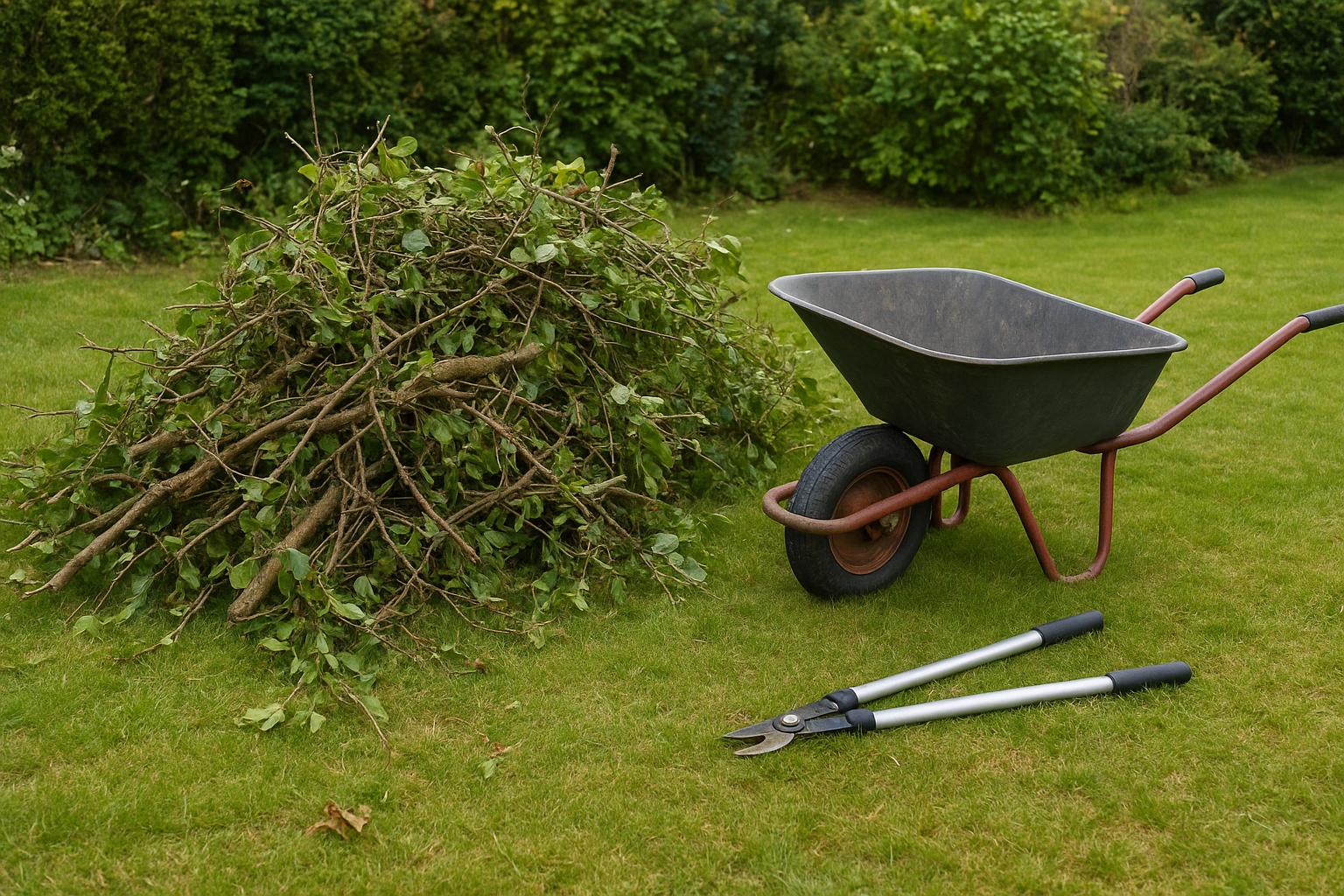
A pair of strong gloves, long sleeves and trousers, boots with protective toes, eye protection and ear defenders for power tools make the job safer. For brambles, thick gauntlets are worth having. Use a dust mask when working with dry debris or old timber.
Typical tools include loppers, a pruning saw, a hedge trimmer, a strimmer or brushcutter, a mattock, spade, rake and wheelbarrow. For tree work above head height or in awkward positions, consider a qualified arborist rather than climbing yourself.
Take care with power tools and read the manual. Keep children and pets away. Our guide to protective equipment for heavy-duty clearances explains what professional crews use.
Hiring larger equipment
Know what you are renting.
Hire shops offer heavy-duty strimmers, brushcutters, wood chippers, stump grinders and mini diggers. Ask for a demonstration, read the instructions and wear the recommended protective gear. Chippers and grinders are dangerous if used carelessly.
Check the weight and size of any machine you need to carry or tow. A big chipper may need a car with a towbar and a driver who is confident with a trailer. Work out whether you will save money compared with paying a professional.
If you have not used a machine before, ask about training or consider a contractor. Many accidents involve hands or feet and moving blades.
Green waste: your options
Compost, collect, take or hire.
Garden waste is generally classed as household waste when it comes from your own garden, and several routes are available. Many councils offer a garden waste collection service, often with a fee and limits on what can go in. Some recycling centres accept garden waste, sometimes restricting loads or requiring proof of address. A registered waste carrier can take it away, and a skip or skip bag can hold it temporarily.
Composting is a good option for soft material such as leaves, grass and small prunings, but it is slow for large volumes. Woody material can be chipped, and wood chip is useful for paths and mulch. Do not compost diseased plants, perennial weeds with deep roots or invasive species unless you know it is safe.
See our Hillingdon garden waste collection guide for an example of how a London borough service works, and check your own council website for local rules and charges.
Composting and chipping
Using what you cut.
Soft green material such as grass cuttings, leaves and hedge trimmings breaks down well in a compost heap, particularly if you mix it with brown materials such as shredded paper or cardboard. Turn it every few weeks and keep it moist but not soaking.
Woody prunings can be chipped, and the chips used as mulch or path material. Chips from diseased material or invasive plants should not be used. Do not use chips from treated wood in the garden.
If you do not have space or time, check whether a local community scheme accepts garden waste. Many boroughs also run composting promotions or bin discounts.
What does not count as garden waste
Keep the bin clean.
Garden waste services generally do not accept soil, turf, rubble, treated wood, plastic, plant pots, bags or pet waste. They may also refuse invasive weeds. Contaminated loads can be rejected.
Check the list on your council website. If your bin is not collected because of contamination, you may have to sort it and wait for the next round.
Items such as old fencing, shed panels and rubble need a different route, such as a skip or a recycling centre that accepts DIY waste, see our guide on building waste disposal.
Bonfires: think carefully
Legal, but not always wise.
Burning garden waste is not generally banned for householders in England, but it can cause a statutory nuisance if smoke or smell affects neighbours, and local rules such as smoke control areas can restrict it. Many London boroughs are covered by smoke control orders, and councils can take action over repeated nuisance. Burning treated timber, plastics, rubber or household waste is not appropriate and can release harmful fumes.
There are also safety and environmental concerns. A bonfire can spread, wildlife may shelter in the pile, and the smoke can affect people with breathing problems. The government and local authorities encourage composting, chipping or taking waste to collection services as better options.
If you are thinking of a bonfire, check your council guidance, speak to neighbours and choose a safe, windless day. For large clearances, a skip or a carrier is usually more practical in London.
Alternatives to burning
Often simpler.
If you want to avoid smoke and neighbour complaints, compost soft material and chip woody prunings. For bulky branches, tie them into bundles and use a collection service or take them to a recycling centre.
For a big job, a skip or a mini grab lorry can remove a large volume quickly. Our guide to grab hire and tippers explains when this suits a site with tight access or very heavy loads.
If you do decide to burn, keep the fire small, never leave it unattended, have water nearby and put it out fully before leaving.
Skips, skip bags and carriers
Choose by volume and access.
Skips are good for large volumes of mixed garden waste but need space and, if placed on a road, a permit from the council. Skip bags are cheaper and need less space but have a lower capacity and need collection. See our guides to skip permits, skip bags and mini skip hire for details.
A carrier who takes garden waste must be registered as a waste carrier in England, and householders have a duty of care to check. Our guide to householder duty of care explains what to ask for. Unregistered operators may fly-tip, and the householder can be fined if their waste is traced back to them.
You can request quotes from independent carriers through houseclearance.co. Describe the garden, access and the quantity so quotes are realistic. See our garden clearance cost guide for what affects pricing.
Questions to ask a carrier
Short list.
When you ask for quotes, a few questions help you compare like with like.
- Are you a registered waste carrier, and what is your registration number?
- What is included in the price, and what is excluded?
- How will the waste be disposed of?
- Will you provide a waste transfer note?
- Do you take soil, fencing or asbestos, or only green waste?
See our guide to waste transfer notes for what they should show. Carriers set their own terms, so compare more than price.
Old sheds and outbuildings
Check before you pull.
An old shed may be rotten, unstable or full of surprises. Before taking it down, empty it and look for wasp nests, rodents, glass, chemicals, paint, fuel and gas bottles. Our guide on shed clearance preparation has a checklist, and our shed clearance cost guide explains pricing.
Take care with the roof. Some old sheds and garages have corrugated roofing made of asbestos cement, and breaking or sawing it can release fibres. If you suspect asbestos, leave it, keep people away and get advice. Our guide on hazardous waste classification explains why carriers refuse it.
If the shed is sound, you may be able to dismantle it panel by panel. Wear gloves and eye protection, remove the roof felt, take out nails and screws and cut the timber into manageable lengths. Untreated timber may be chipped or recycled, and treated timber should be handled according to local rules.
Unstable sheds and lean-tos
Do not take risks.
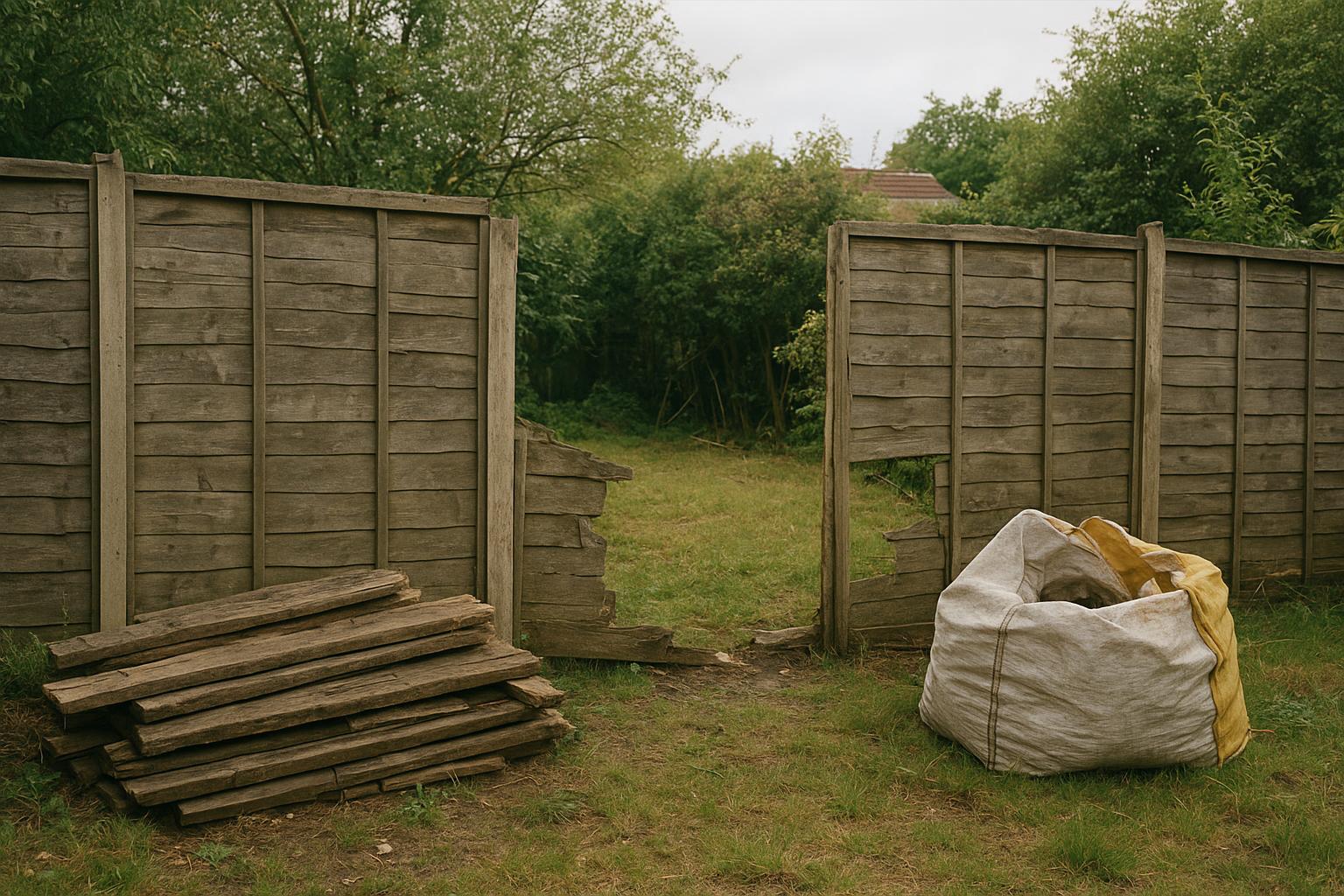
If a shed or lean-to is leaning, has a sagging roof or has rotten framing, it may collapse when disturbed. Do not stand underneath while cutting or pulling. Remove the roof first if you can do so safely from outside, then work from the top downwards.
For brick or block outbuildings, or anything attached to a house, take advice before demolishing because it may be structural or need building control approval. Our guide on asbestos roofs and dilapidated outbuildings goes into more detail.
If it is too risky or too big for you, ask for quotes from independent carriers who handle demolition and clearance.
Broken fencing and boundaries
Who owns what?
Before removing or replacing a fence, find out who owns it. Ownership is not always clear, and in many cases neither neighbour owns the whole boundary. Your title deeds, the Land Registry plan and conversations with neighbours may help, though plans are often general. Do not remove a fence that belongs to a neighbour without agreement.
Rotten posts and panels can be removed with a spade, a crowbar and a saw. Concrete post bases can be heavy, so plan how to dispose of them. Our guide on bricks and rubble disposal covers concrete and masonry.
If the fence is a boundary with a neighbour, give notice and agree timing. If a tree or hedge is involved, check for tree preservation orders or conservation area rules with your council before cutting.
Dealing with old fence timber
Check for treatment and nails.
Old fence panels and posts often contain nails, screws and staples. Remove them where possible and wear gloves. Treated timber should not be burned, and rules for disposal vary, so check with your council or recycling centre.
Some recycling centres take wood in a separate container, and some take only untreated wood. Arrive with the wood sorted and ask the staff where to put it.
Good panels can sometimes be reused, sold or offered free to neighbours. Our guide on giving items away free lists some options.
Roots, stumps and soil
Slow but important.
Once the surface growth is gone, you may need to deal with roots and stumps. Small roots can be dug out by hand. Larger stumps can be dug out, ground out with a hired grinder or left to rot. Be careful with chemical stump killers and follow instructions closely.
Soil from an overgrown garden may contain weed seeds, rubble, glass and sometimes contaminants. If you need to remove it, see our guide on topsoil disposal. If you spot unusual material such as ash, slag or old drums, stop and seek advice.
Think about what the garden will become. A cleared bed will quickly regrow, so consider mulch, membrane, turf or planting soon after you finish.
After the clearance
Keep it from going wild again.
Once the garden is clear, give yourself a break and then plan what comes next. Lay turf, sow seed, plant shrubs or cover bare soil with mulch to suppress weeds. Regular light maintenance is far easier than another major clearance.
Keep an eye on regrowth, particularly bramble and bindweed. Cut or dig out new shoots early. If something odd regrows from roots or small fragments, identify it before you cut it, because some invasive plants spread from pieces.
If you are clearing a garden as part of a house clearance, our house clearance checklist helps you keep the whole job on track.
Frequently asked questions
Common questions about clearing overgrown gardens.
Where should I start with an overgrown garden?
Survey for hazards, wildlife and unfamiliar plants, then work in order: remove hazards, cut back growth, clear structures, then tackle soil and surfaces.
Can I cut hedges in spring and summer?
Be careful. Active nests are protected, so check for nesting birds before cutting. If you find one, leave it until the young have left.
How do I dispose of garden waste?
Use a council garden waste service, a recycling centre, composting, a skip or bag, or a registered waste carrier. Check your council for rules and charges.
Can I have a bonfire?
Often you can, but smoke nuisance and smoke control areas can restrict it. Never burn treated wood or plastics. Check local guidance first.
Is it safe to dismantle an old shed?
Check for asbestos cement roofing, rotten timber, wasps and chemicals first. If asbestos is possible, do not break it and seek advice.
Who owns a garden fence?
It depends. Check your deeds and Land Registry information, and speak to neighbours. Do not remove a fence you do not own without agreement.
Do carriers need to be registered for garden waste?
Anyone carrying waste for others in England should normally be a registered waste carrier. Check the Environment Agency register before you hand it over.
What if there is Japanese knotweed?
Do not cut, strim or dig it up without advice. It has special disposal rules, so read our dedicated guide and consider a specialist.
