Direct answer
In England it is not an offence to have Japanese knotweed on your land, but it is an offence to plant it or cause it to spread in the wild, and waste containing it is classed as controlled waste. That means you should not put it in your garden waste bin, compost it, fly-tip it or take it to an ordinary recycling centre. Do not strim, dig or cut it without advice, because small fragments of stem or root can regrow. The usual routes are specialist treatment on site over several seasons, or careful removal by a registered waste carrier to a suitably authorised site, with paperwork. Check GOV.UK, the Environment Agency and your council for current guidance and use a specialist for anything beyond a small patch.
Contents
- What counts as an invasive plant
- Why these plants cause so much trouble
- Recognising Japanese knotweed
- A seasonal spotting guide
- What the law says
- Keeping a record
- Why it must not go in garden waste
- Tools, boots and vehicles
- Controlling it on site
- Questions for a treatment contractor
- Handling and disposing of the waste
- Burial and treatment on site
- Other invasive plants you may meet
- Himalayan balsam and rhododendron
- A note on giant hogweed
- Knotweed and buying, selling or mortgages
- Insurance and guarantees
- Choosing a specialist
- Getting useful quotes
- Frequently asked questions
What counts as an invasive plant
Non-native, fast and damaging.
Invasive non-native plants are species that were introduced to the UK and now spread aggressively, crowding out native plants and sometimes damaging buildings, drains and river banks. Several are listed in Schedule 9 of the Wildlife and Countryside Act 1981, which makes it an offence to plant them or cause them to grow in the wild.
Japanese knotweed is the best known. Others you may meet in gardens include giant hogweed, Himalayan balsam, rhododendron ponticum, giant rhubarb, Himalayan knotweed and floating pennywort in ponds. The rules differ between species, but the common thread is that careless clearance spreads them.
The government publishes guidance on invasive non-native plants on GOV.UK, and the list of species has changed over time. This article is a guide to the main principles, and you should check the current pages before you act.
Why these plants cause so much trouble
Growth and cost.
Invasive plants spread quickly because they have few natural enemies in the UK. Knotweed can send shoots through weak tarmac and cracks in walls and drains, and it can push up through gaps in concrete. In practice, most damage is to paving, driveways, outbuildings and garden walls, rather than to well-built house foundations, but it can be expensive to repair.
They also reduce the diversity of local wildlife by shading and crowding out native plants. River banks colonised by Himalayan balsam or knotweed can be less stable, with increased erosion in winter.
For homeowners, the practical effect is cost, delay and worry. Getting accurate advice early often saves money.
Recognising Japanese knotweed
Know it through the seasons.
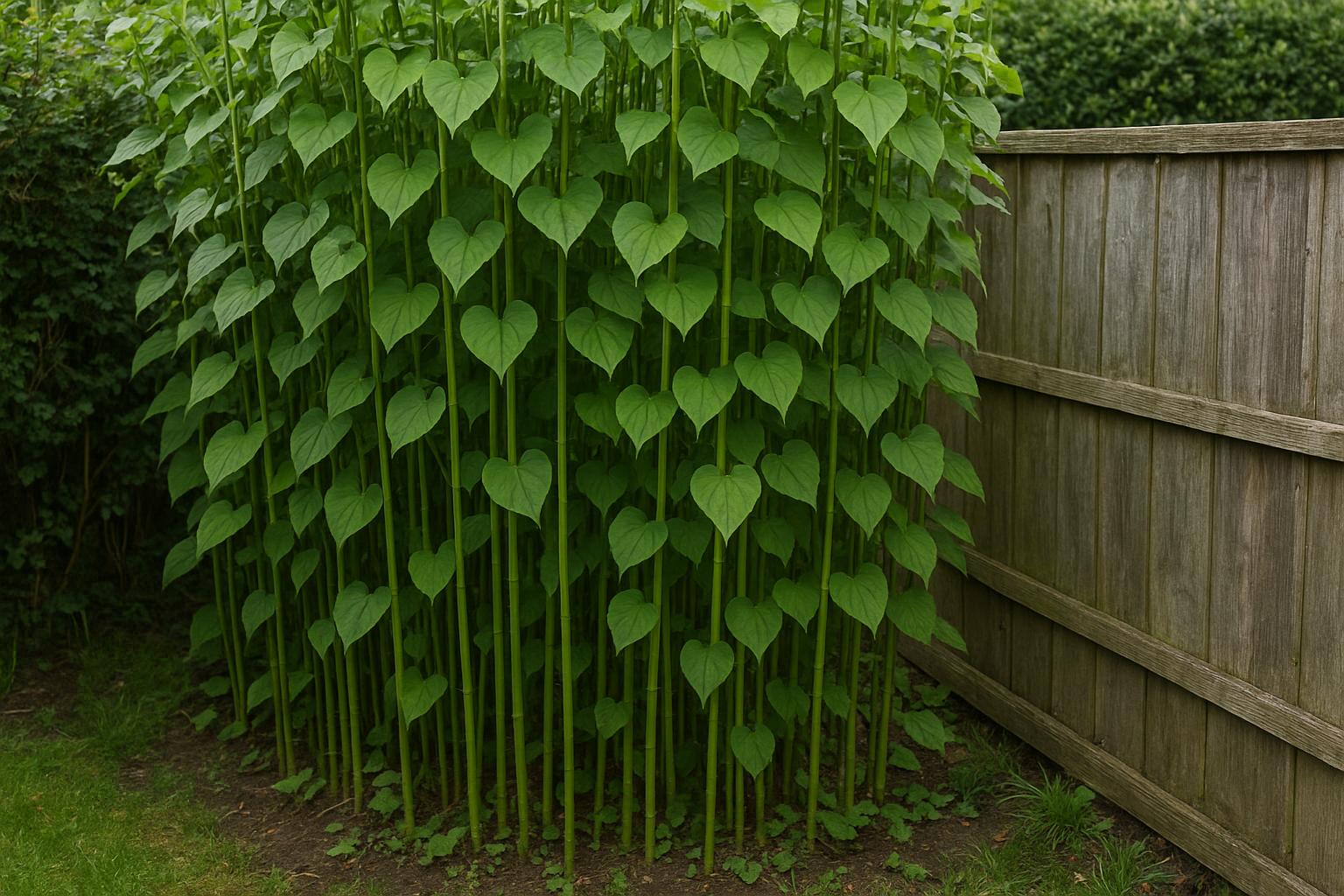
Japanese knotweed has bamboo-like hollow stems with purple speckles, shield or heart-shaped leaves arranged in a zigzag pattern and, in late summer, creamy white flower clusters. In spring, red-purple shoots push up quickly and can reach several metres in height by summer. In winter, the stems die back to brown canes, but the rhizomes stay alive underground.
It is easy to confuse with other plants, including Russian vine, bindweed, dogwood and Himalayan balsam. If you are not sure, take clear photographs of the stems, leaves and any flowers and ask a specialist, your council or a plant identification service. Many surveyors and removal firms offer an identification service, and some will do so from photos.
Do not collect samples by pulling or cutting the plant. Even a small piece, if handled badly, can be carried to another area and regrow.
A seasonal spotting guide
What to look for when.
In March and April, look for reddish asparagus-like shoots with rolled leaves. By May and June, the plants have leafy canes with zigzag stems. In July and August, they can form dense thickets. In September and October, they flower and then turn yellow. From November, the canes are brown and brittle.
The best time to identify knotweed is spring to autumn when leaves are present. A winter survey can be inconclusive, although dead canes and rhizomes can sometimes be spotted by an expert.
If you believe you have a plant, take photos at different times of year and keep them. This gives a specialist more information and helps a record of whether treatment is working.
What the law says
Having it is not an offence.
In England and Wales, it is not illegal to have Japanese knotweed growing on your land. It is an offence under the Wildlife and Countryside Act 1981 to plant it or cause it to grow in the wild. Waste containing it is controlled waste under the Environmental Protection Act 1990, so it must be handled, transported and disposed of in line with waste rules.
There is also a civil side. If knotweed spreads onto a neighbour’s land and causes damage or loss of enjoyment, the neighbour may have a claim in private nuisance. A 2018 Court of Appeal decision, widely known as Network Rail v Williams, confirmed that the presence of knotweed near a boundary can affect property value and give rise to such a claim. This is not legal advice, and you should ask a solicitor if a dispute arises.
Councils also have powers under anti-social behaviour legislation in some situations. If you are unsure about your obligations, speak to your council and check the GOV.UK pages on invasive plants.
Keeping a record
Useful if there is a dispute.
Make notes with dates of when you first saw the plant, the extent of the stand, what treatment was done, who did it and what invoices you paid. Keep copies of any waste transfer notes and consignment documents.
A clear record helps if you sell, if a neighbour raises a concern or if a mortgage lender or insurer asks questions. It also helps you judge whether treatment is working.
If a neighbour complains that your plant is spreading, respond promptly and politely, share your treatment plan and consider taking advice. Early communication often avoids a formal claim.
Why it must not go in garden waste
The fragments problem.
Knotweed spreads mainly through its rhizomes, the underground stems, and through pieces of stem that can root. Very small fragments can regrow, which is why cutting, strimming, mowing or digging without a plan can create new plants. Composting does not reliably kill it.
Garden waste collections are processed with other green material and spread as compost, so a contaminated load can seed knotweed elsewhere. For that reason, councils and the Environment Agency say that knotweed should not be put in the green bin, home compost or ordinary recycling centre skips.
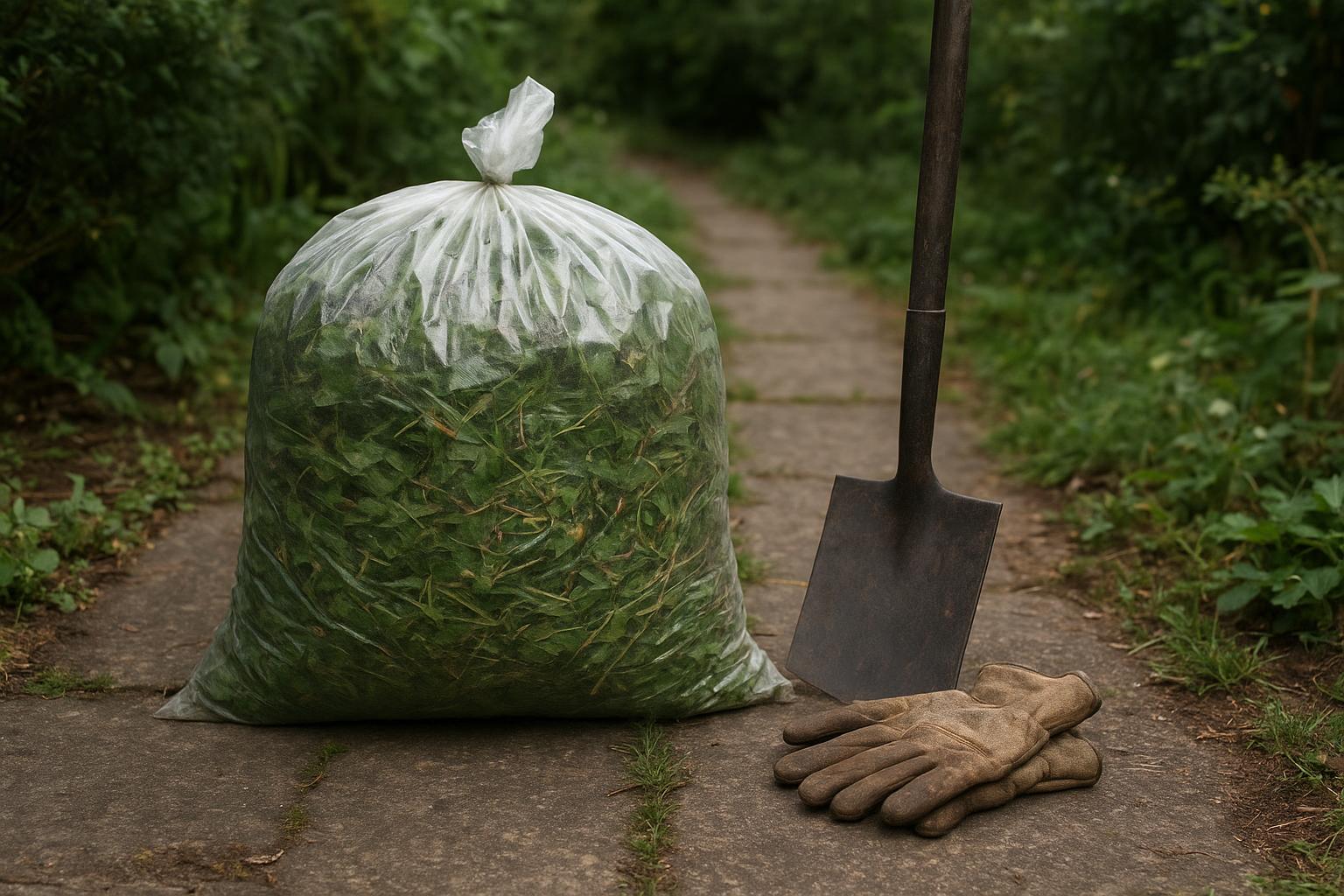
Treat any cut stems, leaves, soil with rhizomes and tools as contaminated. Do not shake them off in the open, do not drive over the stand and do not walk through it and then onto clean areas without cleaning your boots.
Tools, boots and vehicles
Do not carry it away on your boots.
Soil and plant fragments can cling to boots, tyres, tools and clothing. Clean them on the spot, over a sheet or plastic membrane, and bag the washings or debris as contaminated waste. Do not wash them down a drain or onto clean soil.
Avoid walking through the stand wherever possible. Mark the area with canes or tape and keep children and pets out. If you must work near it, use dedicated tools and clean them thoroughly afterwards.
If you have hired a skip or a van for other work, keep it away from the infested area so that fragments do not travel in it.
Controlling it on site
Often the safest route.
Many people deal with knotweed by treating it where it grows. The usual method is a programme of herbicide treatment by a trained and insured contractor, repeated over several growing seasons until the plant dies back and stays dead. Treatment usually takes years rather than months, and results vary.
Other methods include excavation and removal, burying on site in a controlled way, screening the soil and sometimes root barrier membranes. Each has its own cost, risk and legal requirements, and burial on site may need to follow Environment Agency guidance and be recorded. A specialist can explain which method fits your site.
Be wary of quick-fix claims. Ask for a written management plan, details of the herbicide used, who applies it, how often they will return and what happens if the plant comes back. Check what guarantee is offered and who stands behind it.
Questions for a treatment contractor
Plan before you pay.
A good contractor will welcome questions. Useful ones include the following.
- What survey will you carry out, and will I get a written management plan?
- Which herbicide will you use, and who applies it?
- How many visits are planned over what period?
- What guarantee do you offer, who backs it and what does it cover?
- How will waste be handled, and can you give me the paperwork?
Compare the answers, not only the price. A cheaper plan with fewer visits may not be successful.
Handling and disposing of the waste
Controlled waste rules apply.
If knotweed material has to be taken away, it should be packed securely so no fragments escape, transported by a registered waste carrier and delivered to a site that is authorised to accept it. The paperwork should describe the waste accurately. Our guide to waste transfer notes explains what a transfer note is, and our guide to householder duty of care explains why you should check the carrier.
Do not move it yourself in an open trailer, put it in a skip you hired for general use or leave it by the roadside. Mishandling can lead to fines or prosecution, and fly-tipping penalties can be severe, see our guide on fly-tipping penalties in London.
Rules and site availability change, and not every landfill or treatment site accepts invasive plant waste. Ask any contractor which site they use and how they will document it.
Burial and treatment on site
Possible, but regulated.
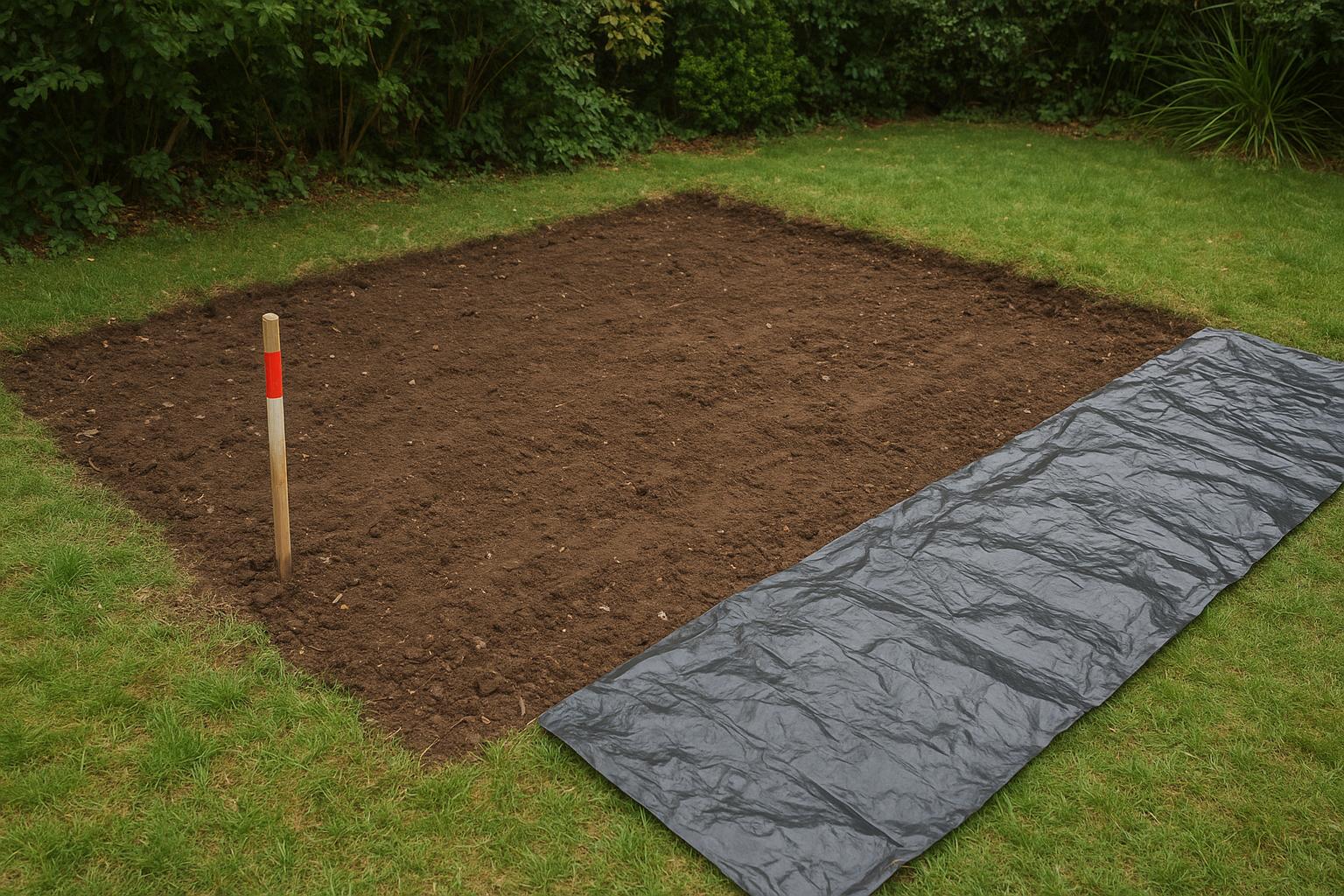
In some cases, a specialist may propose burying contaminated soil on site, using a root barrier membrane and a defined depth, or screening and treating the soil. These methods avoid transport but must follow guidance and be recorded. If you sell later, a buyer’s solicitor will want to see evidence.
Do not dig and bury material yourself without proper advice. Unrecorded burial can cause problems later, and it may still be an offence to spread the plant.
If you are in a flood zone, near a watercourse or in an area where the ground is shared with neighbours, take extra care. Ask the Environment Agency or your council for guidance.
Other invasive plants you may meet
Each one is a bit different.
Giant hogweed has huge white flower heads and sap that can cause severe skin burns in sunlight. Avoid touching it, wear protective clothing if you must work near it and seek advice before cutting. Himalayan balsam spreads by explosive seeds and is common on damp ground. Rhododendron ponticum spreads by seed and suckers and is hard to eradicate.
Some, such as buddleia and cherry laurel, are not listed in the same way but can be troublesome. Rules on disposal depend on the species and quantity, and councils may have specific advice. If you are not sure about what you have, ask your council or check GOV.UK.
Aquatic plants such as floating pennywort and water fern must not be put into ponds, streams or drains. Dispose of them in the way recommended by the Environment Agency or your local authority.
Himalayan balsam and rhododendron
Different tactics.
Himalayan balsam is an annual, so the key is to pull it before it sets seed, usually before the seed pods form in mid to late summer. Pulled plants should be left to wilt off the ground or bagged, and the shallow roots are easy to remove. Repeating the job for several years exhausts the seed bank.
Rhododendron ponticum is a large evergreen shrub that regrows from stumps and spreads by seed. Cutting and treating the stumps with a suitable herbicide, applied by someone trained, is a common approach, and the cut material should be disposed of carefully. Check with the Forestry Commission, the Environment Agency or your council for advice on larger stands.
In every case, avoid spreading seeds or fragments on boots, tools and vehicles, and do not put the waste in garden waste bins unless your council says it is acceptable.
A note on giant hogweed
Skin safety.
The sap of giant hogweed contains chemicals that make skin sensitive to sunlight and can cause painful blisters and lasting marks. Do not touch the plant, and if you get sap on your skin, wash the area immediately and keep it out of sunlight. If it gets in your eyes, seek medical help.
Do not strim hogweed, because the spray can reach your face and eyes. Specialist contractors wear full protective clothing. If the plant is on land you do not own, report it to the council.
It is easily confused with native plants such as cow parsley and angelica, so ask for identification help if you are unsure.
Knotweed and buying, selling or mortgages
Be open about it.
Knotweed on a property can affect mortgage lending, insurance and sale prices. Many mortgage lenders ask about it, and surveyors check for it. If you are selling and know there is knotweed, you should disclose it accurately on the property information forms, and a management plan with an insurance-backed guarantee can reassure buyers.
If you are buying, ask the seller about any known history and check the survey. If knotweed is near the boundary on a neighbour’s land, ask your surveyor and solicitor how it may affect you.
Independent advice from a solicitor or surveyor is sensible if you are in a transaction, because the effect on the deal depends on the amount, the location and the plan.
Insurance and guarantees
Read what is covered.
Some contractors offer an insurance-backed guarantee, which can help with mortgage lenders and buyers. Read the terms. A guarantee may depend on regular inspections, may exclude reinfestation from a neighbour’s land and may have a limited period.
Keep all paperwork safe, including the management plan, treatment records and the guarantee certificate. If the contractor goes out of business, check how the guarantee is protected.
If you are unsure how a guarantee works, ask your solicitor or surveyor to explain it before you rely on it.
Choosing a specialist
Ask for evidence.
Look for a company with experience of invasive plants, appropriate insurance and a clear method statement. Professional bodies in the field publish codes of practice, and you can ask whether a contractor follows them. Ask for references and examples of similar work.
Check that any carrier is registered with the Environment Agency, ask where the waste will go and ask for paperwork. Get at least two or three quotes if you can and compare the method, the number of visits and the guarantee, not only the price.
You can request quotes from independent carriers through houseclearance.co. Be clear that the plant may be knotweed so that carriers can say whether they handle it. Some will not. See our guide on choosing a house clearance company for general checks.
Getting useful quotes
Give accurate details.
A good quote starts with a good description. Say where the plant is, how big the area is, how close it is to buildings, drains and boundaries and whether neighbours are affected. Photographs from several angles help.
Be honest about what you know and what you do not. If you are not sure it is knotweed, say so. If you have already cut or strimmed it, tell the contractor, as this may affect the plan.
Our guide on overgrown garden clearance and our garden clearance cost guide may help you understand the wider job. Carriers set their own terms, and quotes for invasive plant work may differ greatly.
Frequently asked questions
Common questions about invasive plants and garden waste.
Is it illegal to have Japanese knotweed in my garden?
No. In England it is not an offence to have it on your land, but it is an offence to plant it or cause it to spread in the wild, and the waste is controlled waste.
Can I put knotweed in my green bin?
No. Councils advise against it, because garden waste is composted and spread, which can spread the plant. Check your council for specific guidance.
Can I burn Japanese knotweed?
Burning on site is sometimes mentioned in guidance, but rules and conditions apply and smoke nuisance laws still do. Ask the Environment Agency or a specialist before you try.
Should I cut or strim knotweed?
Not without advice. Small fragments of stem or rhizome can regrow, so cutting can spread it. Take a specialist view first.
Can I take knotweed to the tip?
Generally no. Ordinary recycling centres usually do not accept it. It needs to go to an authorised site by a registered carrier.
How long does treatment take?
Herbicide programmes often run over several growing seasons. Excavation can be quicker but has its own risks and costs. A specialist can give you a plan.
Does knotweed affect a house sale?
It can affect mortgages and insurance, and you should disclose it accurately. A management plan with a guarantee can help. Take advice from a solicitor or surveyor.
Will a clearance carrier remove knotweed?
Some may, if they are registered and able to dispose of controlled waste properly. Many will not. Ask before booking and ask for paperwork.