Direct answer
To prevent scratches and dents when large items are carried out, measure the item and the route, clear the path, then protect the surfaces that the item is most likely to touch: floors with hardboard, cardboard or carpet film, door frames and corners with foam or cardboard edging, and banisters and stairwell walls with blankets or sheeting. Photograph the route before work starts, keep the route clear of other people and pets, and lift rather than drag. If damage does occur, document it straight away and raise it with the carrier or your insurer rather than leaving it until later. See the separate guide on preparing bulky items for a broader overview.
Contents
- Why damage happens during extraction
- Measure and plan the route before anything moves
- Photograph the condition of the property first
- Protecting floors: hard floors, carpet and stairs
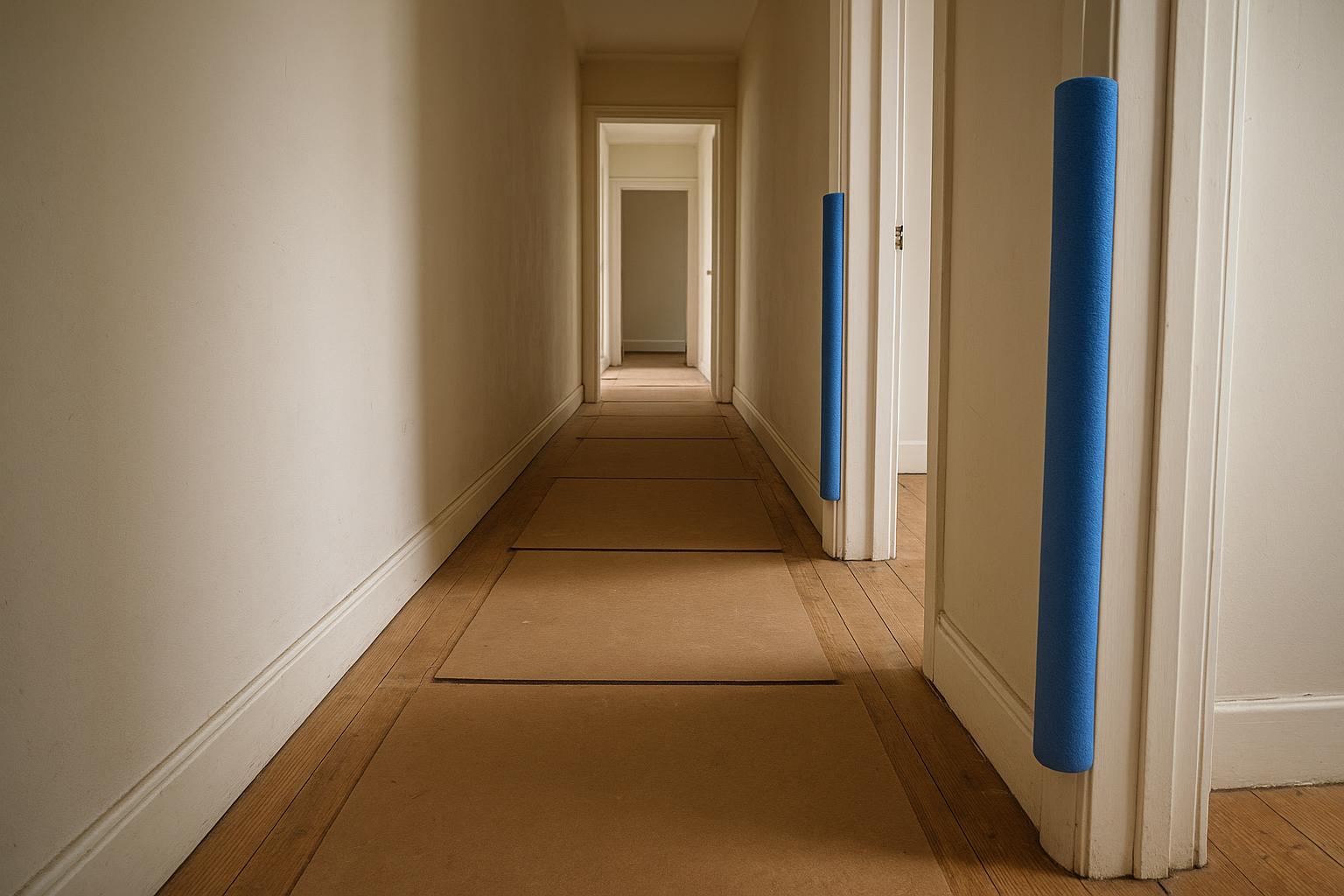
- Protecting walls, corners and door frames
- Protecting the item itself and what it carries
- Lift, do not drag: carrying technique and equipment
- Flats, shared buildings and communal areas
- Who is responsible if something is damaged?
- If damage happens: what to do next
- A practical protection checklist
- Frequently asked questions
Why damage happens during extraction
Large items rarely cause damage in the room they started in.
When people picture a scratched floor or a dented wall during a clearance, they often imagine something being dropped. In practice, most damage is slower and more ordinary. A wardrobe is slid a few centimetres across a laminate floor, grit under a leg leaves a line across the boards, a sofa corner clips a door frame while being turned, or a fridge freezer is tilted on a staircase and its top edge presses into plaster. None of it is dramatic, but all of it can be seen the next morning, particularly if the property is about to be sold, handed back to a landlord or inspected by a surveyor.
The areas where marks appear are predictable. Hallways are narrow and often have a turn near the front door. Stairwells force items to be tilted, pivoted and rested on banisters. Doorways are usually only a few centimetres wider than the item, so edges touch frames, hinges and door stops. In flats, communal corridors, lift interiors and entrance doors add more surfaces that are not yours to repair, which is why the responsibility question matters as much as the physical protection.
Weight and awkward shape are the underlying causes. Solid wood furniture, American-style fridge freezers, old cast-iron radiators and large mirrors are all heavy for their size and have hard corners. Add tired handles, loose drawers and rushed timing and the risk of contact with the building goes up. Understanding where and why damage tends to occur lets you protect the right places instead of covering everything equally.
Measure and plan the route before anything moves
Fifteen minutes of planning prevents most of the problems.
Start with the item, not the floor. Measure its height, width and depth, and note any parts that stick out, such as handles, feet, castors, mirrors and cornices. Then walk the exit route from the room to the vehicle and measure the narrowest points: the room door, the hallway, any turn, the stair width and headroom, and the front door. Remember that an item has to fit while being carried at an angle, so a measurement that looks tight on paper is often impossible in practice.
Write down every point where the item will need to be tilted, turned or lifted over something. These are your protection hotspots. If a point looks too tight, there are usually three options: take the item apart, remove a door from its hinges, or find a different route, such as a back door or a garden path. Taking doors off hinges is often the single most useful step, because it gains around two centimetres on each side without any risk to the item.
Decide in advance which people will carry, which will guide and which will watch the surfaces. A person who is only responsible for calling out contact points can prevent many knocks. Agree simple words for stop, lift and turn, so there is no confusion on the stairs. If the clearance is arranged through a carrier, share your measurements and photographs of the route when you request the quote, because that helps the crew bring the right protection and the right number of people.
The guide on how to move heavy furniture safely covers the lifting side in more detail, and dismantling furniture before collection explains which items are worth taking apart.
Photograph the condition of the property first
Evidence turns a disagreement into a short conversation.
Before anything is moved, take dated photographs or a short video of the floors, walls, door frames, banisters and any communal areas along the route. Include wide shots that show the whole hallway and close-ups of existing marks, because pre-existing damage is the most common source of dispute. Most phones store the date and time with the image, which is useful if a question is raised later.
Take the photographs again once the work is done. If everything is intact, you have a clean record, which is helpful if you are returning the property to a landlord or going through an end-of-tenancy check. If there is damage, you can show exactly what changed and when. Doing this for both the inside route and the exterior path, such as steps, paving or a front garden, is sensible, particularly for kerbside or shared driveways.
If you are a tenant, remember that your deposit scheme will look at photographs from the start and end of the tenancy, and an unreported mark from a clearance can become a deduction. The same applies in leasehold flats, where the managing agent may ask who is responsible for communal damage. A record made before and after work is a short job that costs nothing and can save a long correspondence.
Protecting floors: hard floors, carpet and stairs
Different surfaces need different materials.
The right material depends on what you are protecting and how heavy the item is. These are the most common options, with the point of each:
- Hardboard or thin plywood sheets. Laid along the route they spread the load of heavy items and stop wheels and feet cutting into timber, laminate, vinyl or tile. They are inexpensive, can be taped together at the edges and can usually be reused.
- Corrugated cardboard. Fine for light items and short distances. It tears and slips on polished floors under heavy loads, so tape it down and avoid relying on it for anything sold as very heavy.
- Carpet protection film. Self-adhesive plastic sheeting that keeps dirt and shoe marks off carpet on hallways and stairs. Choose a type intended to be removed cleanly and test a small area first, because some adhesives can mark delicate or old carpets.
- Old blankets, dust sheets and rugs. Useful for padding and for short sections. Loose sheets can slip, so they work better on carpet than on smooth floors, and a loose edge is a trip hazard.
- Furniture sliders and soft feet. For short moves on hard floors, sliders under the legs help an item glide without scraping, as long as the floor is clean first.
Sweep or vacuum the route before laying anything. A single stone or screw trapped under a board or wheel acts like a scribe on timber and tile. On stairs, protect both the treads and the noses of the steps, and make sure any sheet is fixed so it cannot slide under a foot. Never rely on a thin rug alone on a staircase, because it may move under the weight of a person carrying a heavy load.
Protecting walls, corners and door frames
Contact points are small, so protection can be targeted.
Walls are usually damaged at corners, at door frames and at points where an item is rested against plaster while being turned. Foam pipe insulation split lengthways and taped around door frames, cardboard corner protectors, folded blankets taped at head height and pre-cut sheets of corrugated plastic are all common ways to keep the building from being hit. A painted architrave can be dented or chipped by the corner of a wardrobe even when the carrier is being careful, so protecting it takes less than a minute.
Use a masking tape or low-tack decorators' tape that is designed to come off cleanly, and avoid putting tape directly on fresh paint, wallpaper or old plaster. If you cannot tape to the surface, hold the protective material with a free hand, or use removable clamps on the door frame rather than adhesive. Remove the tape slowly, at a low angle, so it does not lift paint.
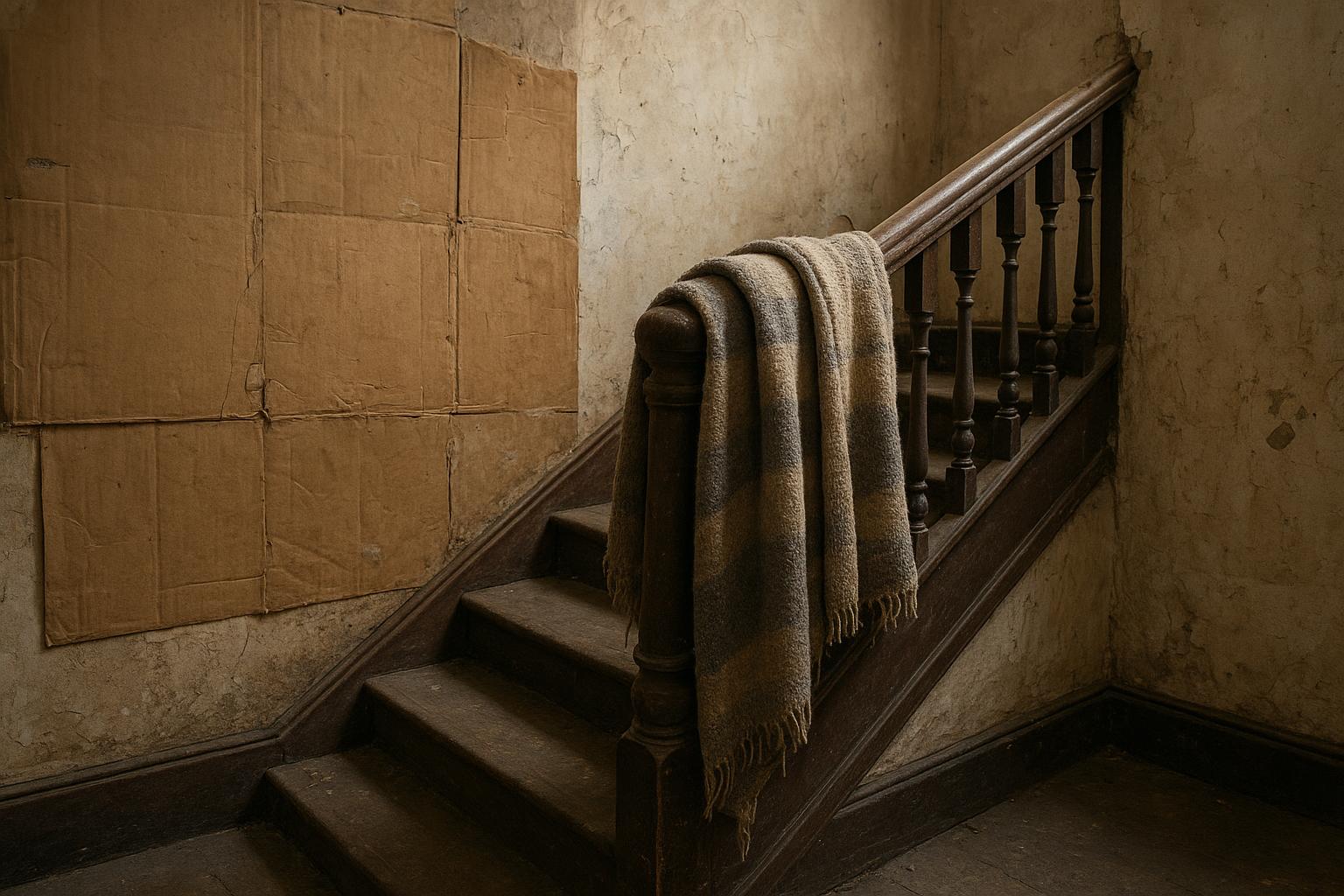
Banisters, newel posts and stair spindles need particular attention. They are fixed to the building, they are often loose in older houses, and an item resting its weight on them can crack a joint or pull a spindle out. Wrap the post, use a pad where the item is likely to rest, and plan so the weight is carried by people, not by the banister. Where handrails or posts are already loose, mention it in advance so that nobody leans on them.
If the route includes a low ceiling, a hanging light fitting, a smoke alarm or a boiler cupboard, note those too. They are less obvious than walls but just as easy to knock.
Protecting the item itself and what it carries
The most expensive damage can be to the thing you want to keep or sell.
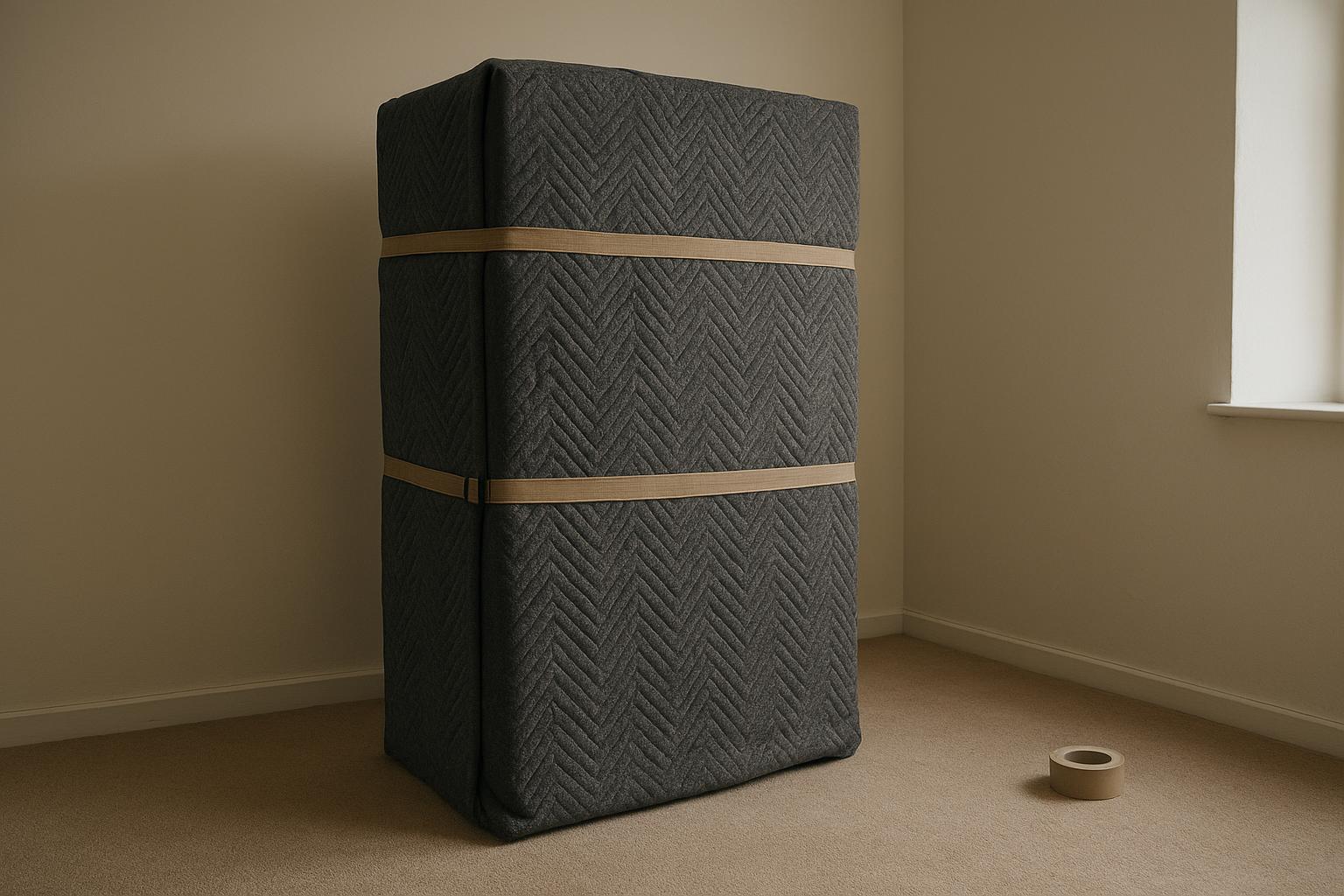
Protection works in both directions. An item being sold, donated or kept needs wrapping so it does not pick up marks from the building on its way out. Moving blankets, stretch wrap and bubble wrap all help. Stretch wrap holds doors and drawers closed, but do not wrap it directly onto painted, polished or waxed surfaces for a long period, because it can mark or pull finishes. A blanket under the wrap solves that.
Take off or tape down anything that can swing, slide or snap off. Remove shelves, loose glass, mirrors, removable legs and handles that could catch on a door frame. Tape drawers shut or take them out and carry them separately. Detachable parts can go in a labelled bag fixed to the item with tape, so nothing is lost.
With appliances such as fridge freezers, washing machines and cookers, secure the doors and power cables, empty and disconnect any water or gas supply properly, and check whether the appliance should be kept upright. The guide on heavy lifting logistics covers items such as pianos, safes and cast-iron baths where specialist equipment and more people are often needed.
Sharp edges of metal, broken glass and old nails can also tear your protection and hurt the people carrying. Cover these with cardboard and tape before anyone lifts the item.
Lift, do not drag: carrying technique and equipment
The method matters as much as the materials.
The main rule is simple: lift, do not drag. Dragging concentrates all the weight on a tiny contact area, which leaves scrapes and gouges even on sturdy floors. Lifting with the right number of people and, where needed, equipment keeps the item off the surface completely. If an item is too heavy to be carried comfortably by the people available, stop and get more help or equipment rather than improvising.
Common aids include furniture trolleys and four-wheel dollies for flat surfaces, stair-climbing sack trucks for appliances, lifting straps for heavy items, and carry handles for large, flat items such as mattresses or glass panels. Dollies with hard wheels can mark soft floors, so use them on hardboard sheets, not directly on the floor. Never use a trolley on a staircase unless it is designed for it.
Pivot items in open space, not in a doorway. Turn the item before you reach the door so it passes through straight, and keep the heaviest end low and facing downhill on stairs. A second person at the bottom end should be taking the weight, not just steering. Shouting directions in a hallway gets confusing, so have a single person direct each move.
Safety comes first. Wear gloves and closed, grippy footwear, and look at the PPE and health guidance for heavy-duty clearances. If you are unsure whether a job can be done safely by the people available, it is better to book a crew with the right numbers and kit than to risk both the building and an injury.
Flats, shared buildings and communal areas
The rules and the risks differ when the route is not just your own.
In a block of flats, the route often passes through communal corridors, lift lobbies, stairwells and entrance doors. These areas belong to the freeholder or building owner, are often covered by building insurance, and are managed by an agent or residents' company. Damage there can become a matter of accountability, so it makes sense to check the building's rules before the day.
Many blocks ask residents to book the lift for a set time, to use lift protection padding, to avoid moving large items at certain hours or to arrange a deposit. Others require notice for any large removal. Your lease, the building handbook or the managing agent will tell you what applies. If there is a concierge or porter, let them know the date and approximate time.
Protect the lift floor and walls with padding or cardboard, wedge the door to prevent it closing on the item, and check the weight limit shown inside the lift. Do not overload it, because a stuck lift is a bigger problem than any scratch. Where there is no working lift, stairs are the only option and the risks to both people and walls rise, as covered in the guide to clearing upper floors without a working lift.
Remember neighbours too. Warn those who might be disturbed or who share a landing, and keep communal routes clear, so that nobody is blocked or hurt.
Who is responsible if something is damaged?
Know the position before work starts, not after.
If you hire a carrier or a crew directly, the ordinary position is that they should take reasonable care, and many carry public liability insurance that covers accidental damage to property. The exact cover, the excess and what is excluded vary, so it is sensible to ask a carrier what their insurance covers, and to ask to see the details if the property or items are high value. The guide to public liability insurance for clearance crews explains what the cover usually looks for.
If you are doing the work yourself or with friends and family, your home contents or buildings insurance may respond to some kinds of accidental damage, but policies differ. Check your policy wording or call your insurer, and ask before you start, not after something breaks. Tenants should also check their tenancy agreement and any inventory, because damage to the landlord's property can be deducted from a deposit.
houseclearance.co is a quote-matching service that connects you with independent carriers, so each carrier's own terms, insurance and procedures apply to the work they do. When comparing quotes, it is reasonable to ask each one how they protect floors and walls, how many people will attend and what they do if damage happens. The answers tell you a lot about how careful they are.
None of this is legal advice. If a dispute is serious or the cost is large, a solicitor, your insurer or an organisation such as Citizens Advice can explain your options.
If damage happens: what to do next
Calm, documented and prompt is the best approach.
Even with good planning, accidents happen. If something is scratched, dented or broken, stop work and make the area safe if there is any risk of injury, for example from broken glass or a loose banister. Photograph the damage from several angles with something in the frame for scale, and note the time, location and what was being moved.
Tell the person responsible straight away. If a carrier or crew is on site, speak to the person in charge, ask how they handle damage claims and request their insurance and contact details in writing. Do not wait until the end of the day or the next week, because details fade and some policies require damage to be reported quickly. Keep copies of the quote, booking confirmation and any messages.
For smaller marks, repair can be simple: wax fillers and touch-up pens for timber, a filler and a small amount of paint for plaster, a gentle clean for scuffs. For bigger damage, get a quote from a local tradesperson before agreeing to any settlement, because the cost of repairing a floor or replastering a wall is often higher than it looks. Keep receipts for any repair.
If you cannot agree, put your complaint in writing, calmly and with evidence, and give a reasonable deadline. If that does not work, you can contact the carrier's insurer, a trade body they belong to if any, or use the small claims process, which is explained on GOV.UK. Many disputes are resolved without going that far when there are good photographs.
A practical protection checklist
Print or save this for the day.
Use this as a short summary before the first item moves:
- Measure each large item and every doorway, turn and stair on the route.
- Photograph floors, walls, frames, banisters and communal areas before starting.
- Remove doors from their hinges where it gains space, and clear all loose rugs, plants and breakables.
- Sweep the route and lay hardboard, film or blankets, taped at the edges.
- Pad door frames, corners and banisters at every contact point.
- Wrap and secure the items themselves, and tape up drawers, doors and loose parts.
- Agree who carries, who guides and who watches surfaces, and keep pets and children away.
- Lift rather than drag, and pivot in open space rather than in doorways.
- Check building rules, lift booking and insurance for flats and shared areas.
- Photograph again afterwards and report any damage straight away.
Following this takes a little extra time, but the work usually goes faster once the route is clear and everyone knows what they are doing. If you want a broader plan, the guide to preparing bulky items for collection covers presentation, access and timing.
Frequently asked questions
Common questions about protecting floors and walls during large item removal.
What is the best material to protect a wooden floor when moving heavy furniture?
Hardboard or thin plywood laid along the route is the most reliable choice because it spreads the load and resists wheels and feet. Tape the sheets together at the edges and sweep the floor first, because trapped grit causes most scratches. Cardboard is fine for light items but can slip under heavy ones.
Should I take doors off their hinges before moving a large item?
Often yes. Removing a door usually gains a couple of centimetres on each side of the opening, which can make the difference between a clean pass and a scraped frame. Keep the screws and hinges together in a labelled bag and refit the door afterwards.
Is carpet film safe to use on every carpet?
Not always. Choose a film designed for temporary protection and test a small, hidden area first, because some adhesives can mark old or delicate carpets. On stairs, make sure the film is firmly fixed so it cannot slide underfoot.
Can I tape protection directly onto painted walls?
Use low-tack decorators' or masking tape, avoid fresh paint, wallpaper and old plaster, and peel it back slowly at a low angle. Where you cannot tape, hold the padding by hand or clamp it to the door frame.
Who pays if a carrier damages my floor or wall?
It depends on the carrier's terms and insurance. Many carry public liability insurance that covers accidental damage, but cover, excess and exclusions differ. Ask before booking, keep photographs and records, and report damage immediately. This is general information, not legal advice.
What should I do if I live in a flat with a shared lift?
Check your lease or building handbook and contact the managing agent or concierge. Many blocks require lift booking, protective padding or notice for large removals. Never exceed the lift's weight limit, and protect communal walls and floors.
How do I move a heavy item down stairs without damaging the banister?
Plan so that people carry the weight, not the banister. Pad any newel posts or spindles where the item may touch, check for loose fittings in advance, and use extra people or a stair-climbing aid where appropriate. If it is not safe, get professional help.
Do I need to photograph the property before a clearance?
It is not a legal requirement, but it is strongly recommended. Dated photographs before and after the work give you evidence of the property's condition, which helps with insurance, landlords and deposit schemes.
Does houseclearance.co protect my property during a clearance?
houseclearance.co is a quote-matching service that connects you with independent carriers. How each carrier protects your property, and what insurance they hold, is a matter between you and the carrier, so ask each one before you book.