Direct answer
If the lift is out of order, a flat clearance on an upper floor needs more time, more people and clearer planning than the same job at ground level. Tell your carrier the floor, the number of flights and whether the lift is working when you ask for quotes, because carriers price on access and time. Contact the managing agent or landlord, ask when the lift will be repaired, book any goods lift or loading arrangements and tell neighbours. Keep stairwells and fire escape routes clear at all times, dismantle large furniture before carrying it, never lower items from a window or balcony, and do not take risks with heavy objects. If you cannot reasonably get an item down the stairs, ask the carrier whether it can be dismantled, and check the building rules before agreeing to anything unusual.
Contents
- Why a broken lift changes the whole job
- A realistic plan for the day
- What to tell the carrier when you ask for quotes
- A short information list
- Contacting the managing agent, landlord or concierge
- What your lease may say
- Timing: wait for the lift or go ahead on the stairs
- Working to a fixed handover date
- Keeping stairwells and escape routes clear
- Practical rules for the stairwell
- Safe carrying on stairs
- Equipment that helps
- Dismantling furniture to get it down
- Tools and tips
- Items that cannot safely go down the stairs
- Options for awkward items
- Parking and access at the ground floor
- Permits and suspensions
- Neighbours, noise and communal areas
- A short notice template
- Personal safety and who should do the work
- Basic preparation
- Frequently asked questions
Why a broken lift changes the whole job
Time, effort and risk all go up with every flight of stairs.
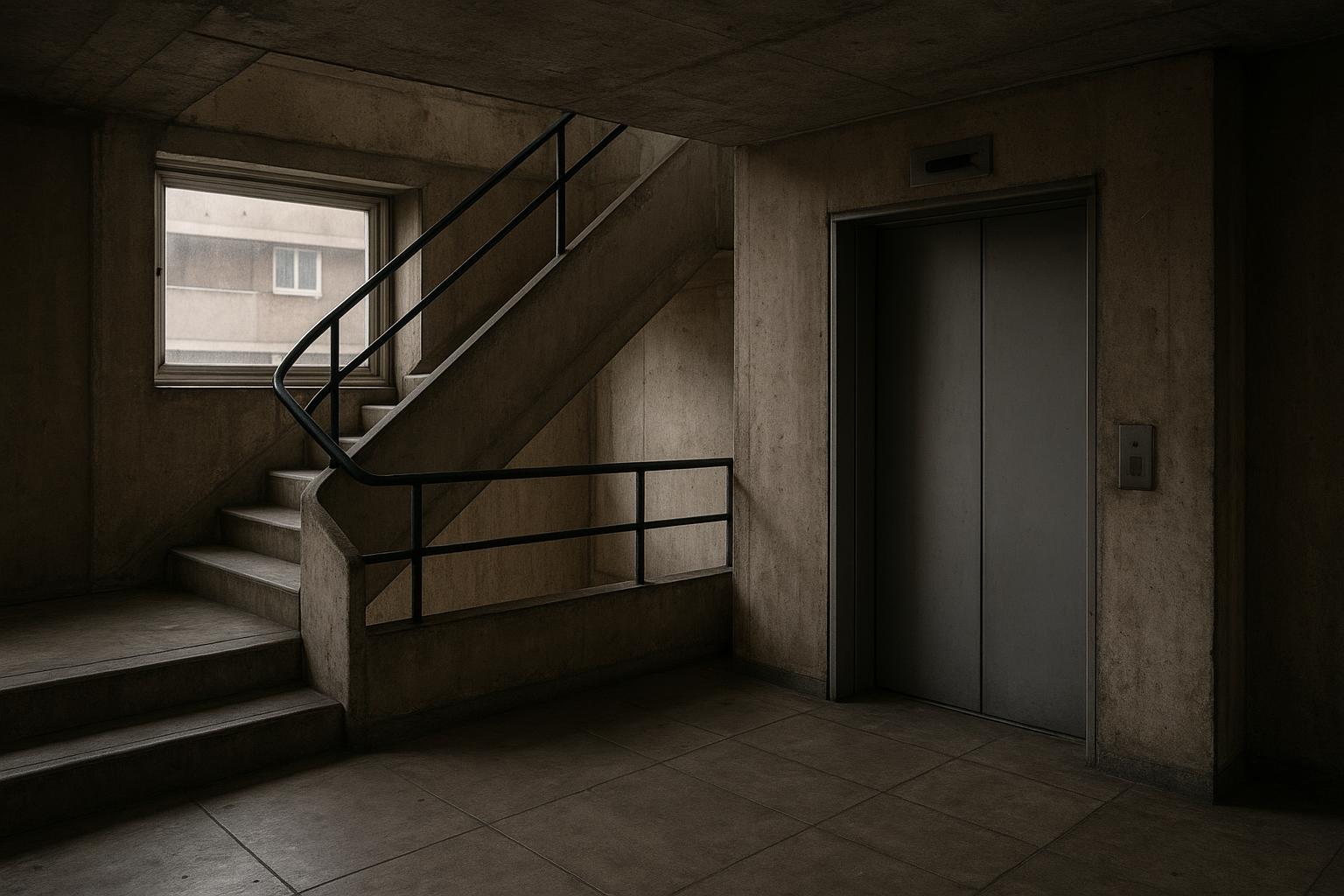
In a ground-floor flat or a house, a clearance crew can walk items straight to a van. On the eighth floor of a tower block with the lift out of order, every sofa, wardrobe and bag of rubbish has to be carried down several flights of stairs, often with tight turns, fire doors and neighbours passing. The job takes longer, needs more physical effort and carries more risk of injury and damage.
The extra work is not only about the person carrying. It also affects the number of people needed, how long parking is required, how often breaks are needed and whether some items can be moved at all. A job that would take half a day with a working lift can easily double, and a crew that was expecting a lift may arrive with too few people.
This is why honest information at the quoting stage matters. If a carrier is told about the stairs in advance, they can plan and price accordingly. If they discover the problem on the day, the usual outcomes are a delay, a revised price or a refused job. This guide is general information, and your own building rules and lease take precedence.
A realistic plan for the day
Sequence the work.
Start with the lightest items and rubbish bags while the crew warms up, then move to furniture, then the heaviest items. If there is a goods lift or a service lift, use it for large items. Keep one person at the top and one at the bottom to hold doors and watch the route.
Build in time for breaks and for an unexpected delay. A crew that rushes on stairs is more likely to drop something or get hurt. If the job is large, consider splitting it over two days rather than pushing through.
What to tell the carrier when you ask for quotes
Be specific and include photographs.
When you post a job on houseclearance.co or contact a carrier directly, give the floor number, the number of flights, whether there is a lift and whether it is working. Mention how wide the stairwell is, whether there are tight turns or narrow doors, and whether there is a goods lift or service lift that can be booked.
Include photographs of the stairwell, the landing, the front door and the largest items. Describe what must be removed: a bed, a wardrobe, a large sofa, white goods and any heavy items. Honest detail helps carriers set their own prices and decide how many people to send. Prices and terms are set by the independent carriers, so compare what each includes.
Ask each carrier how they will handle the stairs, whether the quote assumes a working lift and what happens if the lift stays out of order on the day. Get this in writing, even if only by message, so that there are no surprises. Our house clearance checklist has other questions worth asking.
A short information list
What to include.
A concise message that covers the following helps carriers to give accurate quotes:
- Floor number and number of flights
- Lift status and any goods lift
- Stairwell width, turns and narrow doors
- Largest and heaviest items, with photographs
- Access arrangements, parking and entry system
- Any deadline, such as end of tenancy
If anything changes before the day, tell the carrier quickly. Surprises are what turn a manageable job into a dispute.
Contacting the managing agent, landlord or concierge
They know the rules and the repair timetable.
If you live in a block with a managing agent, landlord, housing association or concierge, contact them before the clearance. Ask when the lift is expected to be repaired, whether a goods lift or alternative route is available, and whether there are rules about moving items, such as set hours, a booking system or a deposit.
Some blocks require that moves and clearances are booked in advance and that protective coverings are used on floors and lift walls. Others restrict noise at certain times. If the lift is out of order for a long period, the agent may be able to advise on whether you should wait or go ahead. Do not assume the rules do not apply because the lift is out.
Keep a record of who you spoke to and what was said. If there is damage to communal areas during the clearance, you may be asked to pay, and a written record of the agreed arrangements helps.
What your lease may say
Check before you act.
Leases for flats often include rules about moving furniture, using communal areas and avoiding damage. Some require notice to the freeholder or managing agent, and some allow charges for damage or extra cleaning. Read the relevant clauses, or ask the managing agent to point them out.
If you are a tenant rather than an owner, ask your landlord or agent what is expected and who is responsible for any damage to communal areas. If you are an executor clearing a flat, the same rules apply to the estate.
Timing: wait for the lift or go ahead on the stairs
It depends on how long the outage is.
If the lift will be back in a few days and your deadline is flexible, waiting can save money and effort. If the outage is open-ended, or you have a fixed handover date such as the end of a tenancy, planning for the stairs is safer than hoping the lift returns.
Lifts that are repaired can fail again, so build in a margin. Ask the agent what the history of the lift is and whether engineers have given a repair date. If you book a carrier for a day when the lift is expected to be fixed, agree what happens if it is not.
For end-of-tenancy or probate deadlines, plan the clearance for the earliest realistic date, not the last day. See our guides to probate clearance timing and end-of-tenancy clearance costs.
Working to a fixed handover date
Do not leave it to the last day.
End of tenancy, completion of a sale and the end of a probate period all create fixed dates. If the lift is out of order, plan to finish the clearance several days before the deadline in case of delays, and keep the managing agent informed. Check whether late handover has a penalty.
Keeping stairwells and escape routes clear
Safety rules in a block of flats are not optional.
Communal stairs and landings in a block of flats are usually fire escape routes. In England, the Regulatory Reform (Fire Safety) Order 2005 applies to the common parts of residential blocks, and responsible persons are expected to keep escape routes clear. Even where the rules are enforced by the building owner, you and your carrier should not stack furniture or bags on landings or stairs.
Plan the clearance so that items are carried straight down and out, and do not stage piles in the stairwell. If you need to stack items temporarily, do it inside your flat or at ground level in an agreed area, not on the stairs or landings. Do not prop fire doors open with items unless the building rules allow it.
If a neighbour has mobility needs or relies on the stairs while the lift is out, be extra careful. A blocked stairwell is a hazard for everyone, particularly in an emergency.
Practical rules for the stairwell
Simple habits.
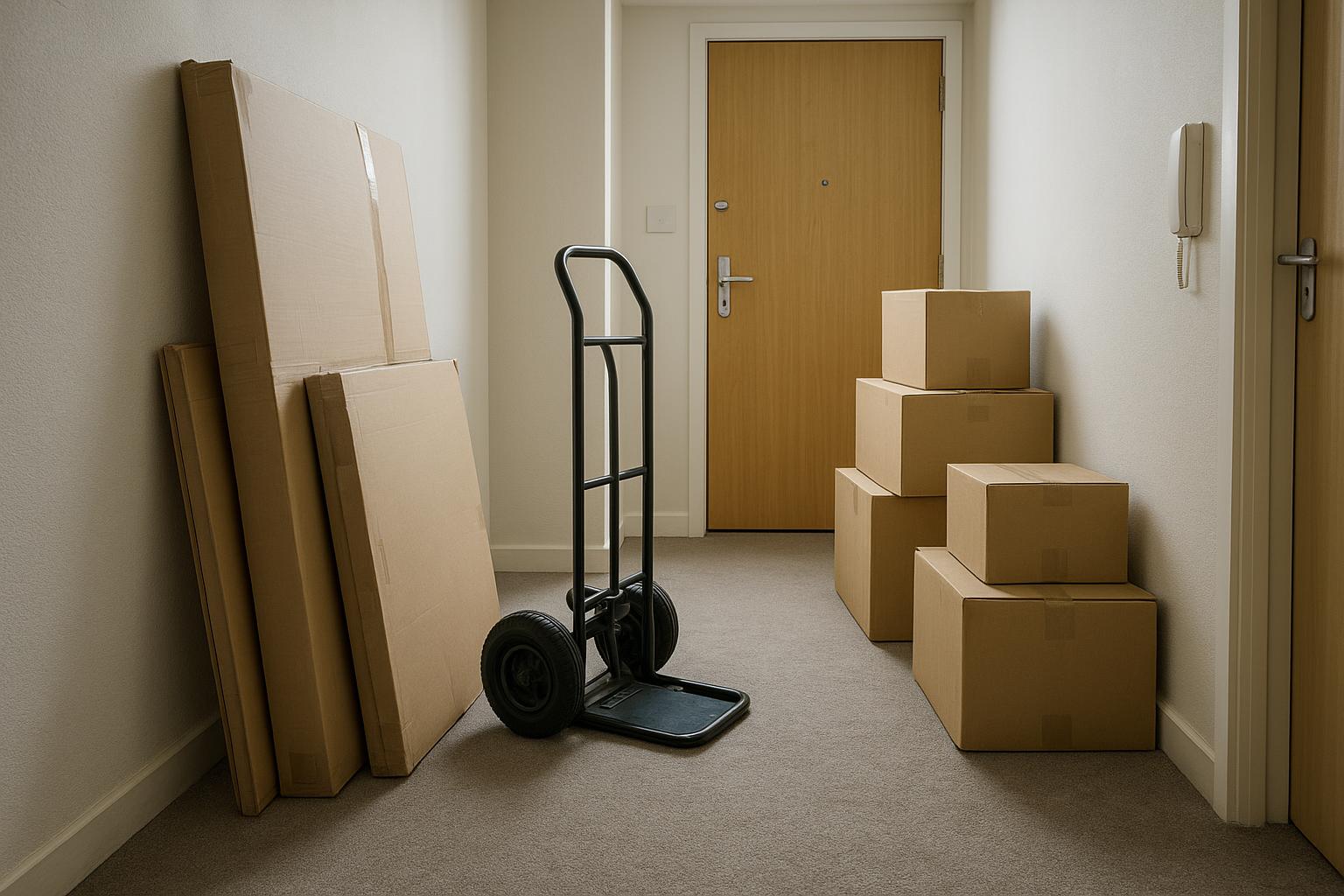
Keep the route clear, do not use the stairwell for storage, and do not leave bags or furniture on landings overnight. If you are carrying, call out when you are about to pass a door or turn. Keep fire doors closed behind you unless the building allows otherwise.
If anyone is struggling on the stairs, stop and let them pass. A moment of patience is better than a collision on a landing.
Safe carrying on stairs
Plan the route and use proper technique.
Carrying heavy items down stairs is one of the more common causes of injury in house clearances. The HSE guidance on manual handling stresses assessing the load, the route and the people before lifting. In practice, this means checking the stairs and landings for obstacles, agreeing signals, wearing sturdy shoes and gloves, and not carrying an item that is too heavy or awkward for the number of people available.
Items should be carried with the heaviest end lower, with one person guiding from below. Straps, sack trucks designed for stairs and carry handles can help, but they need training and the right equipment. A crew that is used to stairs will often have these. If a carrier arrives with no equipment for a high floor, ask how they plan to proceed.
Do not try to help beyond your ability, and do not carry heavy items on your own. Our guide to moving heavy furniture safely has more on technique and equipment.
Equipment that helps
Use what suits the job.
Stair-climbing sack trucks, carrying straps, furniture sliders, moving blankets and corner protectors all help on stairs. Gloves with grip and sturdy shoes matter more than they seem. If you are using equipment you have not used before, practise on a few items with a light load first.
If you are hiring, ask whether the crew bring this equipment, rather than assuming. Do not accept a crew who plan to drag heavy furniture down stairs, which damages the building and risks injury.
Dismantling furniture to get it down
Often the safest and quickest answer.
Beds, wardrobes, tables, shelving units and many sofa beds can be taken apart with basic tools. A flat-packed wardrobe is much easier to carry down six flights than an assembled one, and the same applies to table legs, bed frames and desk sections. Do this inside the flat, where parts are not blocking communal areas.
Keep screws, bolts and fittings together in labelled bags if the item is to be reassembled or sold. If it is going for disposal, it is fine to break it down more heavily, though be careful of splinters, sharp edges and nails. Wear gloves and eye protection.
Our guides to bed frame removal and fitted wardrobe removal cover how particular items are taken apart and disposed of.
Tools and tips
Simple kit.
A screwdriver set, an Allen key set, a spanner, a drill with screwdriver bits, a small saw and a tape measure cover most jobs. Work on a clear floor with a blanket underneath to protect it. Take photographs as you go if you may need to reassemble the item.
Do not saw through structural parts of an item that is leaning or under tension, and take extra care with glass and mirrors. Wrap glass in blankets or cardboard before carrying.
Items that cannot safely go down the stairs
Know when to stop and ask for help.
Some items are simply too heavy, too large or too fragile to carry down several flights. Examples include a piano, a large safe, a heavy fridge freezer or a solid stone table. If an item cannot be dismantled and requires several people, specialist equipment or a crane, say so at the quoting stage rather than on the day.
Our guide to piano disposal explains why pianos in particular need specialist handling. In some cases, the right answer is to leave the item for later, once the lift is working, or to use a service that specialises in awkward moves.
Never lower or throw items from a window or balcony to a van or the ground below. It is dangerous for people below, may break the law and can damage property. Any carrier who suggests this should not be hired.
Options for awkward items
Think before you commit.
Options include waiting until the lift is repaired, hiring a specialist for the single item, selling or giving the item to a buyer who will collect it, or having it dismantled on site. For some items, such as a cast iron bath or a safe, specialist handling is the safest route.
Be wary of quotes that seem very low for a difficult item. The risk is that the crew arrives, sees the difficulty and refuses, or that the item is damaged or dumped.
Parking and access at the ground floor
Time on the stairs means time on the road.
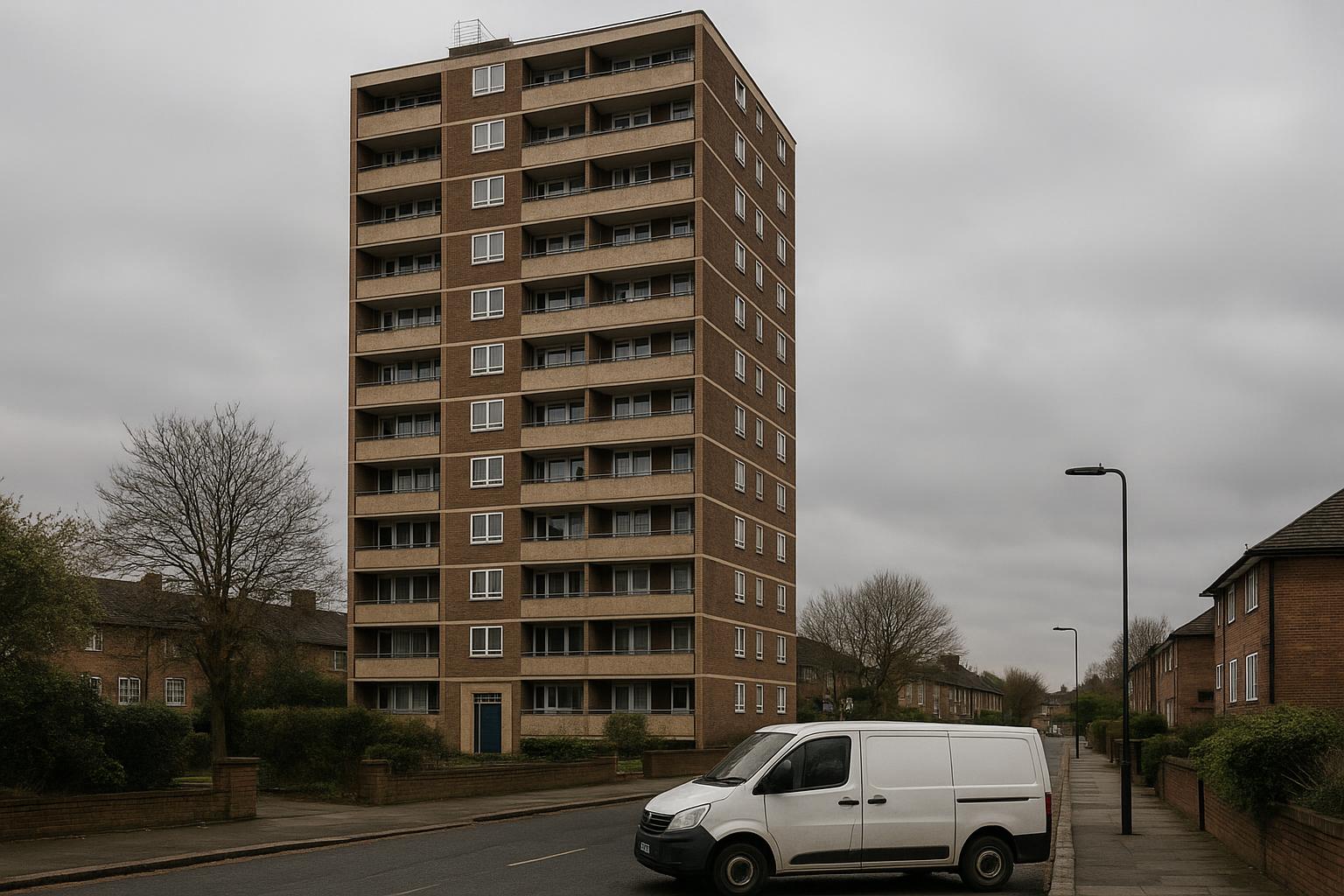
If the clearance takes longer because of the stairs, the van may need to be parked for several hours. Check whether there is on-site parking, a loading bay or on-street restrictions near the block. In London, controlled parking zones and red routes may limit loading, so see our guides to parking a clearance truck in a CPZ and council parking suspensions.
Make sure the route from the front door of the block to the van is clear, the entry system is arranged and someone can hold doors. If the block has a concierge, tell them the expected arrival time and the likely duration.
Remember that more time also means a higher chance of a parking ticket or conflict with neighbours. Agree with the carrier who is responsible for any parking charge.
Permits and suspensions
Arrange early.
If you need a parking bay suspension or a loading permission, apply to the council in good time. The time required varies by borough, so check the council website. Where the carrier is responsible for parking, confirm that in writing.
Neighbours, noise and communal areas
A short note in advance prevents complaints.
Tell neighbours on your floor and the floors below when the clearance is happening and roughly how long it will take. A short note on their doors or a message to the residents' group is enough. People tolerate noise and disruption better when they have been warned.
Protect communal floors, doors and corners with covers or blankets, particularly if the building requires it. Take care at stairwell turns, where walls and banisters are easily scratched. Clean up any dust or debris as you go.
Avoid early morning or late evening work and follow any quiet hours set by the building. A calm, polite approach also makes the managing agent less likely to raise problems later.
A short notice template
Keep it brief.
A note can say that a clearance is taking place on a given date and time, that the lift is out of order so there will be people on the stairs, that you apologise for any noise and that you can be contacted on a given number. That is usually enough.
Personal safety and who should do the work
Know your limits.
A clearance on a high floor is physically demanding. If you are not fit, have a health condition or are helping an older relative, do not take on heavy items yourself. It is reasonable to do the sorting and small bags yourself and leave the large items to a crew with the right numbers and equipment.
Check that any carrier you hire has the right insurance for the job. Our guide to man and van insurance explains what to ask. Carriers set their own terms, so ask what cover they hold for injury and damage in communal areas.
Keep children and pets away from the work area, secure the front door so it does not slam on someone carrying a load, and keep a clear path to the exit at all times.
Basic preparation
Be ready for small accidents.
Keep a first aid kit in the flat, make sure someone has a charged phone and know the address and floor to give if emergency services are needed. If someone is injured, stop work, make the area safe and get help. Do not carry on with a heavy item while someone is hurt.
Frequently asked questions
Common questions about clearing a high-floor flat with no lift.
Will a carrier charge more if the lift is out of order?
Often yes, because the job takes longer and may need more people. Carriers set their own prices, so tell them the floor, number of flights and lift status when you ask for quotes and compare what each includes.
Should I wait for the lift to be repaired?
If your deadline is flexible and the repair is expected soon, waiting can save time and effort. If the outage is open-ended or you have a fixed handover date, plan for the stairs.
Who should I tell before the clearance?
Your managing agent, landlord or concierge, and your neighbours. Ask about booking rules, goods lifts, protection of communal areas and any restricted hours.
Can items be left on the landing for a short time?
Generally no. Stairs and landings are usually fire escape routes and should be kept clear. Carry items straight down and out.
What about items too heavy for the stairs?
Tell the carrier at the quoting stage. Some items can be dismantled, while others, such as pianos or large safes, may need a specialist or to wait until a lift is working.
Can I lower furniture from a balcony or window?
No. It is dangerous and may be illegal. Do not hire anyone who suggests it.
Does the building have rules for clearances?
Many blocks do, such as booking times, deposits and floor protection. Check your lease and ask the managing agent.
How do I protect communal areas?
Use covers on floors and corners, clean up as you go and agree arrangements with the managing agent in writing.