
Direct answer
Waste firms use two measures. Volume, in cubic yards or cubic metres, describes how much space your waste takes up, and it is how skips, van loads and most clearance quotes are described. Weight, in kilograms or tonnes, describes how heavy it is, and it matters because disposal sites commonly charge by weight and vehicles and skips have weight limits. Light, bulky items such as furniture are mainly a volume problem, while soil, rubble, tiles and plasterboard are mainly a weight problem. A fair quote tells you which measure applies, what limits there are and what happens if you go over. One cubic yard is about 0.76 of a cubic metre.
Contents
- Two ways of measuring the same waste
- Why providers use different measures
- Units you will meet in quotes
- What a cubic yard is
- Rough size guide in words
- How loading affects capacity
- Cubic metres and van loads
- Converting between yards, metres and loads
- Why weight matters
- Skip and vehicle weight limits
- Estimating weight roughly
- Overweight charges and how to avoid them
- Heavy materials: soil, rubble, tiles and plasterboard
- Separating heavy waste
- DIY and renovation waste
- Light and bulky waste
- Reducing volume before collection
- How tip charges reach your bill
- Sorted versus mixed loads
- How different providers apply the measures
- Questions to ask any provider
- Common mistakes with volume and weight
- A worked example in words
- Frequently asked questions
Two ways of measuring the same waste
Space and heaviness are different questions.
When you ask a waste firm how much something will cost, you are really asking two questions. How much room will your waste take up in a vehicle or container, and how heavy is it? The first is volume. The second is weight. They are related, but they are not the same, and different services build their prices around different measures.
A wardrobe takes up a lot of room but is not very heavy. A pile of bricks takes up little room but weighs a great deal. A skip that is full of one may be well under its weight limit, while a skip with a quarter of the other may already be heavy.
Understanding which measure drives your price helps you ask better questions, avoid overweight surprises and compare quotes from different types of provider. This article explains both measures in plain terms, without quoting fixed prices, which vary.

Why providers use different measures
Each suits its own service.
Skip companies sell a container of a known size, so volume is the natural way to describe it, and weight limits protect the lorry. Clearance crews load a vehicle, so a load or part-load is how they think. Disposal sites receive loads on a weighbridge, so weight is how they charge.
None of these is wrong. They simply look at the same waste from different positions in the chain. Problems arise when a customer assumes that one measure applies, and the provider is working to another.
Knowing the logic behind each helps you read quotes with more confidence.
Units you will meet in quotes
A short glossary.
Cubic yard and cubic metre describe volume. Kilogram and tonne describe weight, and a tonne is a thousand kilograms. A van load, half load or part load is an informal volume. A skip fill line is the maximum level to which a skip can be loaded.
You may also see terms such as "heavy waste", "inert waste" and "general waste". These describe the type of material and affect where it can go and how it is charged. Inert waste is generally the heavy, non-biodegradable material such as soil, bricks and concrete.
If a quote uses a term you do not understand, ask the provider to explain it in plain words. It is a reasonable request, and the answer tells you how the price was built.
What a cubic yard is
The skip hire measure.
A cubic yard is a volume of one yard by one yard by one yard, which is about three quarters of a cubic metre. Skip sizes in the UK are traditionally given in cubic yards, so you will see skips described as small as a couple of yards and as large as a dozen or so. The numbers are an approximate guide to capacity, not a guarantee of how much will fit.
Real capacity depends on how the skip is loaded. Flat items stacked neatly use space well, while awkward shapes leave gaps. Because of this, a skip that holds a certain volume of tightly packed material may hold less of a mixed load.
Our guides to mini skips and maxi skips describe the typical sizes and what they suit.
Rough size guide in words
Approximate, not exact.
Small skips of a couple of yards suit a bathroom refit or a small garden clear. Mid-sized skips of four to six yards suit a kitchen or a sizeable clear-out. Larger skips of eight yards and above suit major renovation or full-house waste, though they need more space and a permit if on the road.
These descriptions are approximate, and providers use different names and sizes. Always check the dimensions and the weight allowance rather than relying on the label.
Our skip hire cost guide explains what else affects the price.
How loading affects capacity
Technique matters.
A skip loaded with flat boards, broken-down furniture and neatly stacked items holds more than one filled with whole chairs and loose bags. Putting heavy items on the bottom and light bulky ones on top helps, as does filling gaps with smaller items.
You must not load above the top of the skip, because it cannot legally and safely be transported. Items sticking out can lead to a refusal to collect.
If you are unsure, ask the skip company for advice, as they see many loads and know what fits.
Cubic metres and van loads
How crews often describe jobs.
Some providers use cubic metres, particularly for clearances and larger commercial work, and many man and van and clearance crews talk about van loads. A van load is a rough unit that depends on the size of the van, and our guide to van sizes shows how much the common types differ.
Because "a load" varies, it is worth asking what size of vehicle the quote assumes and whether the carrier counts a full load or the actual space used. A half-full large van may be priced differently from a full small one.
Pricing by volume is explained further in our guide to house clearance pricing by volume.
Converting between yards, metres and loads
Simple arithmetic.
To convert cubic yards to cubic metres, multiply by about 0.76. To convert metres to yards, multiply by about 1.3. A rough conversion is enough for comparing quotes, as long as you do not expect exact precision.
Converting to van loads is harder, because vans vary. A large panel van and a Luton van have very different capacities, so ask for the vehicle type and how full it will be.
If a quote only says "one load", ask what that means in volume or in vehicle terms.
Why weight matters
Tips, lorries and legal limits.
Weight matters because most disposal sites charge by the tonne or by the load according to weight, and because vehicles have limits on how much they can carry safely and legally. Skip lorries must not exceed their permitted weight, and a skip that is too heavy may not be lifted.
Skip hire companies therefore often state a weight allowance, or restrict certain heavy materials. If your load goes over, you may be charged extra, or asked to remove some of it. Ask the provider what the limit is and what happens if you exceed it.
Weight limits are not designed to catch you out. They are there because overloaded vehicles are dangerous. It is worth understanding them before you start loading.
Skip and vehicle weight limits
Why they exist.
Skip lorries are designed to lift and carry within legal and safe limits. An overloaded skip can damage the vehicle, break the lifting gear or be dangerous on the road. Providers set weight allowances so that this does not happen.
Allowances vary by provider and skip size, and they may differ between general waste and heavy waste. Ask for the figure, and ask whether it is a hard limit or a charging threshold.
If you are unsure how heavy your waste is, tell the provider what it is and let them advise on skip type.
Estimating weight roughly
A rule of thumb.
You do not need to weigh your waste, but it helps to think in categories. Furniture, boxes and soft furnishings are light for their size. Wet items, glass, stone, tiles, concrete and soil are heavy. Mixed household clearance is generally light compared with construction waste.
If a job contains both, describe each part separately. For example, tell the provider that there are a few bags of rubble and a lot of furniture, rather than just "household waste".
The more accurately you describe, the more accurately the provider can recommend a size and quote a price.
Overweight charges and how to avoid them
Plan before loading.
If a skip is over its allowance, the provider may charge for the extra weight, request that some waste is removed or decline to collect until it is. The way charges are set varies, so ask for the terms in advance.
To avoid problems, order the right skip type for your waste, keep heavy materials to a sensible quantity, and do not top up a heavy skip with more waste than it can take. If you are unsure, ask the provider whether a smaller skip, a second skip or a different service would be better.
Keep any paperwork that states the allowance, so that you can refer to it if a disagreement arises.
Heavy materials: soil, rubble, tiles and plasterboard
Small volume, large weight.
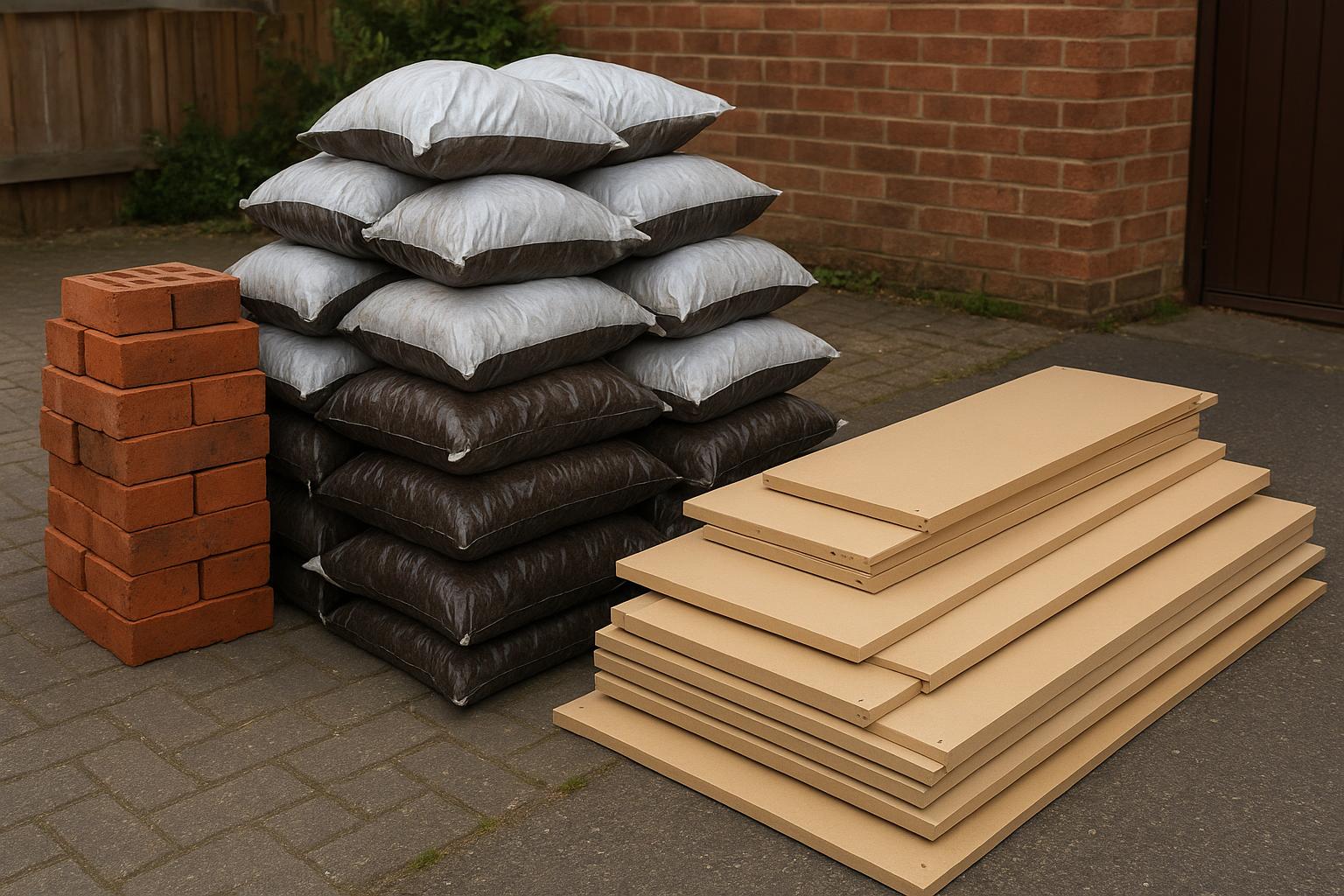
Soil, rubble, bricks, concrete, tiles and similar materials are very heavy for their volume. A small amount fills a skip by weight long before it fills it by volume. For this reason, many skip companies recommend a smaller skip, or a specific skip type, for heavy waste, and some charge differently.
Plasterboard is usually collected separately, because of how it is recycled. Our guides to bricks and rubble removal and topsoil disposal go into these materials.
Mixing heavy and light waste in one skip can lead to an overweight charge or a refusal to lift. Ask the provider how to separate it, and do not assume that a full skip is a safe skip.
Separating heavy waste
Keep it apart.
Heavy waste is often best handled separately, in a skip or collection designed for it. Some skip providers offer a specific type for inert waste such as soil and rubble, and charge accordingly. Clean, uncontaminated loads may also be easier to recycle.
If you mix, the provider may treat the whole load as heavy or mixed waste, which can cost more. Check the rules before you start filling.
Our guide to building waste disposal sets out the common categories.
DIY and renovation waste
Often heavier than expected.
Renovation jobs such as removing a patio, a kitchen floor or a wall produce a lot of heavy waste, and it is easy to underestimate. Tiles, screed, plaster and bricks add up quickly.
Householders doing their own work should check how their local council treats DIY waste, because it may be classed differently from household waste and may be subject to limits or charges at recycling centres.
Our guide to builders and renovation waste clearance costs covers the topic in more depth.
Light and bulky waste
Where volume matters most.
Furniture, mattresses, cardboard, bags of clothing and household clutter are bulky but relatively light. A load of these will normally fill the space before it reaches any weight limit. Here, volume is the main driver of cost.
The best way to save space is to break items down and flatten them, and to follow the advice in our bulky item preparation guide. Flat items use space better than assembled ones.
For these jobs, ask the provider how it counts volume and whether partly filled vehicles are priced accordingly.
Reducing volume before collection
Space is money.
Taking a bed frame, wardrobe or table apart can cut the volume it occupies substantially. Removing legs, shelves and doors, flattening boxes and bagging soft items all help.
Be careful with tools and weight, and do not attempt anything that feels unsafe. Our guide to moving heavy furniture safely sets out sensible precautions.
If you are using a skip, loading flat items first leaves more room for the rest.
How tip charges reach your bill
The disposal cost behind the quote.
Authorised waste sites commonly charge according to the type and weight of the waste. Clean, sorted loads of a single material can cost less per tonne than mixed loads, and some materials are recycled rather than landfilled. Those charges become part of what the carrier or skip company has to recover.
You normally do not see the weighbridge ticket, but you can ask. For heavy waste, some providers will show you the weight and pass on the disposal charge, which is a fair approach as long as it is explained in advance.
Our guide to what happens to your items after a clearance explains where loads typically go.
Sorted versus mixed loads
Why separation can help.
Disposal sites generally prefer loads that are separated, because they are easier to recycle. Some charge less for clean loads of a single material, and some refuse mixed loads for certain categories.
If you are doing a tip run yourself, our guide to tip runs in London explains the rules at household recycling centres, which are usually free for household waste but may have restrictions on vans and trade waste.
Carriers do the sorting as part of the service, and you can help by setting aside items for donation or recycling.
How different providers apply the measures
Compare like with like.
A skip hire quote is based on a skip size and usually a weight allowance. A man and van quote is based on the vehicle, the time and the amount of waste. A clearance quote is based on the estimated volume, the labour and the access. Each is valid, but they are not directly comparable.
Our guide to house clearance versus skip hire compares the two services. For a service where heavy waste is the main issue, a grab lorry may be more suitable, as explained in our grab hire guide.
When you compare, translate each quote into the same terms if you can: what volume, what weight limit, what is included and what happens if you go over.
Questions to ask any provider
Make the measure explicit.
Ask each provider the following, and compare the answers.
- Is the price based on volume, weight, time or items?
- What is the volume or weight limit?
- What happens if I go over?
- Are heavy materials priced differently?
- What size of vehicle or skip does the quote assume?
- Is disposal included?
- Will I see a weighbridge ticket if the price depends on weight?
A clear answer to each question means fewer surprises later.
Common mistakes with volume and weight
Easy to avoid once you know.
The usual mistakes are ordering a large skip for soil or rubble and finding it too heavy to lift, ordering a skip that is too small for bulky furniture, mixing banned or restricted materials with general waste, and underestimating how much a property contains.
- Check the weight limit and ask what the overweight charge is
- Keep heavy materials separate from light ones
- Describe the waste honestly, including soil, rubble and plasterboard
- Do not fill a skip above its fill line
- Ask how volume is measured in the quote
If you are unsure, ask the provider to advise. A good one would rather give guidance up front than deal with a problem afterwards.
A worked example in words
Illustrative only.
Imagine two households. One is clearing a spare room of furniture and boxes. It is bulky and light, so a vehicle or skip will fill by volume, and weight is unlikely to matter. The other is breaking up a small patio. It is a small volume, but very heavy, so a standard skip could hit its weight limit with little in it.
The first household should ask about size and how volume is measured. The second should ask about heavy waste, weight limits and the right type of skip. Both are asking the right question for their waste.
This is only an illustration. The right answer depends on your waste and your provider.
Frequently asked questions
Common questions about cubic yards, volume and weight.
How big is a cubic yard?
It is one yard by one yard by one yard, which is about 0.76 of a cubic metre. Skips are traditionally sold in cubic yards.
Is a skip priced by volume or weight?
Usually by size, which is volume, with a weight allowance or limit. Some providers charge extra for heavy materials or for going over the limit.
Why do clearance firms talk about van loads?
It is a quick way to describe volume, but the size of a van varies. Ask what size of vehicle the quote assumes.
Which materials are heaviest?
Soil, rubble, bricks, concrete and tiles are very heavy for their volume. Plasterboard also needs separate handling.
What happens if my skip is overweight?
The provider may charge extra, ask you to remove some waste or refuse to lift it. Ask about the limit and the charge before you book.
Do tips charge by weight?
Many authorised waste sites charge by weight or by load type. The cost is part of what carriers recover in their prices.
Can I reduce my bill by changing how I load?
Often yes. Flatten and dismantle bulky items, keep heavy and light waste separate and avoid empty space.
How do I compare a skip with a clearance quote?
Compare what each includes: volume, weight limit, labour, permits and disposal. Our skip versus clearance guide explains the differences.
