Direct answer
Quotes differ between London boroughs mainly because the work differs, not because of a hidden borough tariff. Parking restrictions, loading rules, stairs and lifts, the type of housing, the distance to an authorised disposal site, charging zones and local demand all change how long a job takes and what it costs the carrier. Independent carriers also set their own prices, so two quotes in the same borough can differ as well. Because of this, no honest guide can give a single price per borough. The best approach is to describe your property accurately, get several quotes and compare what each includes. Our general house clearance cost guide covers the overall picture, and this one focuses on the local factors.
Contents
- Why a single London price does not exist
- What a quote is actually made of
- Parking and loading rules
- Permits, visitor parking and dispensations
- Why short loading distances save money
- Congestion Charge, ULEZ and other charging zones
- How to check the current charging rules
- Access, stairs and building types
- Lifts, concierges and managed buildings
- Houses, driveways and garages
- Distance to disposal sites
- Authorised sites and why they matter
- Local demand and carrier availability
- Timing, notice and season
- Property type, size and contents
- Flats, houses and commercial premises
- Comparing quotes fairly across areas
- Why consistent information produces better quotes
- Using ranges sensibly
- Common myths about borough pricing
- Warning signs in a low quote
- A short checklist before you request quotes
- What to do once you have quotes
- Frequently asked questions
Why a single London price does not exist
London is many local markets, not one.
Searching for the cost of a house clearance in London can be frustrating because the answers vary so much. That is not necessarily because anyone is overcharging. London has more than thirty local authority areas, and the practical conditions for clearing a property change from one to the next, and sometimes from one street to the next.
A first-floor flat on a busy inner London road with controlled parking is a different job from a three-bedroom house with a driveway in outer London, even if both contain a similar amount of furniture. The crew, vehicle, time and disposal route may all differ, and so may the quotes.
This guide does not publish a borough-by-borough price table, because any such table would imply a precision that does not exist. Instead, it explains the local factors and shows how to use them when you compare quotes. It builds on our main London cost guide and our article on what affects house clearance cost.
What a quote is actually made of
Breaking it down.
A clearance quote is a carrier's estimate of its costs plus a margin. Those costs include labour, the vehicle and fuel, any parking or charging costs, disposal fees and the time spent travelling between jobs. When two quotes differ, it is useful to ask which of those elements differs.
For example, a carrier who has to pay for a parking suspension and a congestion charge will have higher costs than one who can park on a driveway. A carrier who expects a long drive to a disposal site will account for it. A carrier who is quiet that week may price more keenly.
This is why a single price per borough does not work. The factors vary by job, not only by postcode.
Parking and loading rules
The most visible local difference.
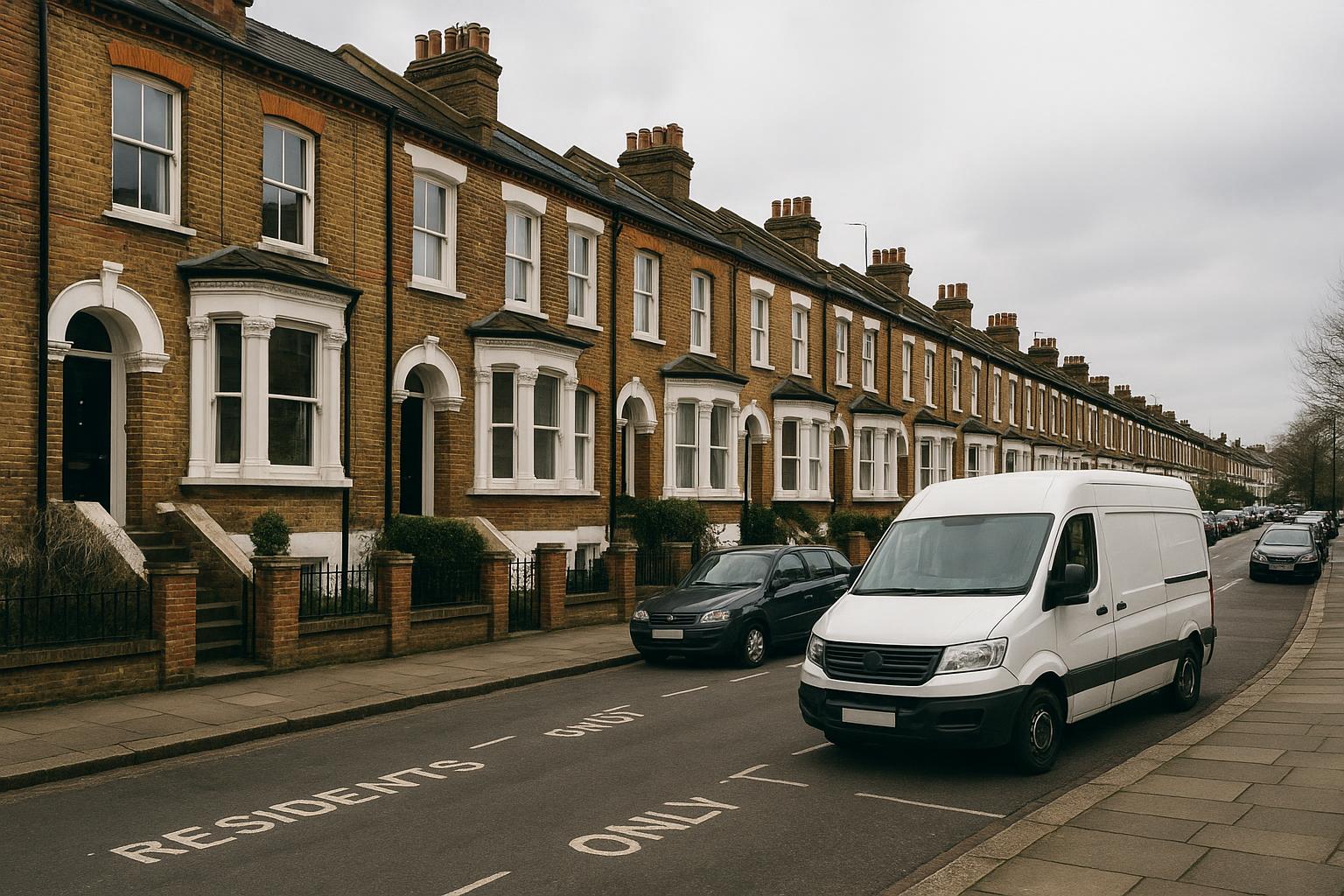
Parking rules vary widely. Many central and inner boroughs have controlled parking zones with limited bays, restricted hours and enforcement by cameras or wardens. Outer boroughs tend to have more driveways and fewer restrictions, though this is a pattern, not a rule.
For a clearance, the vehicle needs to stop close to the property for the duration of the loading. If the crew has to park some distance away, the carry is longer and the job takes more time. If a bay has to be suspended, there may be a council fee and lead time, and the carrier may pass this on.
Our guides on parking a clearance truck in controlled zones and council parking suspensions explain the options.
Permits, visitor parking and dispensations
Options to ask the council about.
Councils differ in how they handle parking for removals and clearances. Some offer bay suspensions, some offer dispensations for vehicles that need to load, and some rely on visitor permits. Each has its own fees, notice periods and conditions, which you can find on the council website.
If you are in a controlled zone, ask your borough what applies and how long it takes. Suspensions often need several days' notice, and last-minute requests can be difficult.
Some carriers know the local process and can arrange permission for you, while others expect you to do it. Ask before you book.
Why short loading distances save money
Time is the main cost.
A crew that can park at the door loads faster. If the vehicle has to be a hundred metres away, every item takes longer to carry, and the number of trips increases. Over a full property, that adds up to a significant amount of time.
This is one reason carriers ask about parking, and one reason the same job can be quoted differently in different streets. It is a real cost, not an invented one.
If you can help, for example by asking a neighbour about space or by arranging a bay, it may reduce the time and the price.
Congestion Charge, ULEZ and other charging zones
Charges that depend on where the van goes.
Transport for London operates a Congestion Charge in a central zone and an Ultra Low Emission Zone, which now covers all London boroughs. Whether a charge applies depends on the vehicle and the location, and the rules and amounts change, so check the current position on the TfL website.
Carriers may build the cost of charges into their quotes, or list them separately. A carrier with a compliant vehicle may avoid the ULEZ charge but still face the Congestion Charge in the central zone. If you are in or near a charging area, ask each carrier whether charges are included.
Our guide to London congestion zone tips gives more background on how the charges affect vehicles working in the capital.
How to check the current charging rules
Rules change.
Charging zone boundaries, amounts, exemptions and vehicle standards can change, so rely on the official source rather than on a guide, including this one. TfL publishes the current information on its website, including tools to check a vehicle against the standards.
Ask your carrier whether its vehicle meets the requirements and whether any charges are included in the quote or added on top.
If a carrier says a charge will apply, ask for it to be shown on the quote, so that you are not surprised afterwards.
Access, stairs and building types
The property shapes the job.
Inner London has many period conversions, mansion blocks and flats, often with stairs, narrow halls and no lift. Outer London has more houses with direct access and parking. A job at the top of four flights of stairs takes longer than a ground-floor one, because every item has to be carried.
Carriers usually price the extra effort. Long carries, awkward turns, communal hallways and concierge or booking rules in managed blocks can all add time. Photos of the stairs and entrance help carriers estimate fairly.
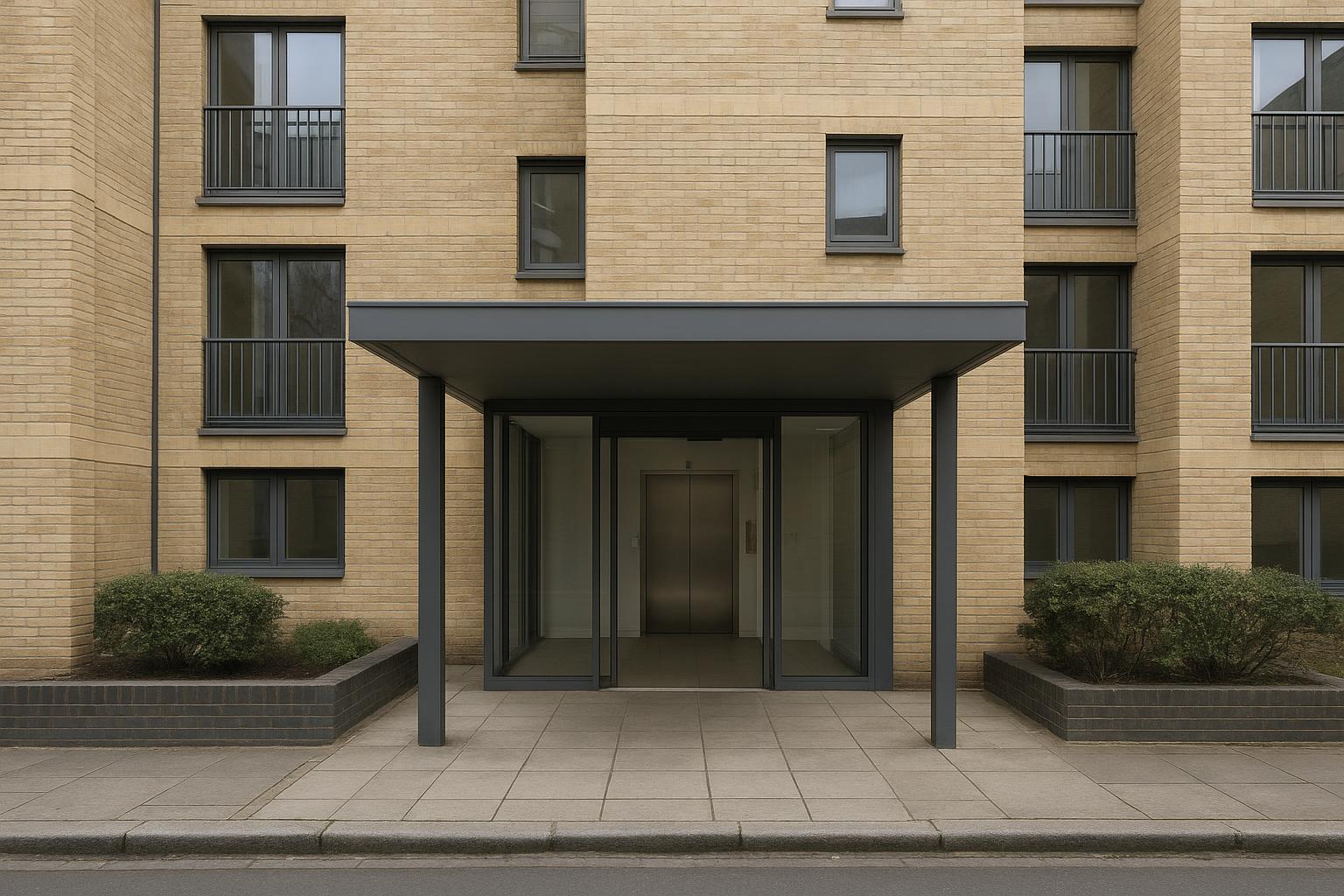
In a new-build block with a goods lift, the work may be quicker, but there may be lift booking windows and rules about protective covering. Tell the carrier about these details.
Lifts, concierges and managed buildings
Rules that can affect timing.
Managed buildings often have rules on when moves and clearances are allowed, such as weekdays only, certain hours or a requirement to book the lift. Some require a deposit or insurance details from the carrier.
If your building has such rules, ask the managing agent for them in writing and share them with the carrier. A carrier arriving without knowing the rules may be turned away, and you may be charged for the wasted visit.
Check also whether there is a loading bay or a place where the vehicle can stand, and whether it has height or weight restrictions.
Houses, driveways and garages
Easier access, different challenges.
Houses with driveways and wide access can be quicker to clear, but they often have more rooms, a loft, a garage and a garden. The larger volume can offset the easier access.
Lofts and garages can contain a surprising amount, and carriers will want to know. Our guides on loft clearance and garage clearance explain how these spaces affect the job.
Tell the carrier about any items that have been stored for years, because older items can be bulky, heavy or need special disposal.
Distance to disposal sites
Where the load has to go.
Waste has to be taken to an authorised site, such as a transfer station, a recycling facility or a reuse outlet. The distance from the property to that site affects the driving time and fuel. Some areas have disposal sites nearby, while others require longer trips, and traffic can make a short distance slow.
Disposal charges also vary by site and by type of waste, and sites may have opening hours and weight or access limits. A carrier typically knows the sites it uses and builds those costs into the quote.
You cannot control this factor, but you can ask what the carrier plans to do with the load. Our guide to the waste journey after a clearance explains the usual routes.
Authorised sites and why they matter
Where the load is allowed to go.
Waste from a clearance should go to a site that is permitted to accept it. That is a legal duty on the carrier and on you, as the householder, to take reasonable steps. Our guide to the householder duty of care explains what that means.
Authorised sites have costs, and those costs are part of the quote. A carrier who quotes far below others may be cutting corners on disposal, so it is worth asking how the waste will be handled and for the carrier's waste carrier details.
You can check a carrier's registration on the Environment Agency public register.
Local demand and carrier availability
Supply and demand still matter.
Prices reflect supply and demand. In busy periods, such as end-of-month tenancy changeovers and the weeks around the school holidays, carriers may be fully booked, and short-notice jobs may cost more. In some areas there are many carriers competing, while in others there may be fewer.
Carriers also decide where they work. A carrier based in one part of London may charge more for a job that requires a long drive, or may decline it. This is normal for independent businesses.
On houseclearance.co, quotes come from independent carriers, so the range you see reflects those carriers and their circumstances, not a company tariff.
Timing, notice and season
When you book matters.
Short-notice jobs, weekends and busy periods usually cost more or may be unavailable. If you can be flexible on date, you may find that quotes improve.
Some times of year are busier, for example the end of the academic year, when many tenancies change, and the weeks before and after bank holidays. This varies by area, and local patterns exist.
Our guide to same-day and urgent clearance costs explains why urgency tends to raise the price.
Property type, size and contents
What is inside matters as much as where it is.
A flat with a few rooms of furniture is a different job from a house with a loft, a garage and a garden shed, and a property that has been lived in for decades may contain far more than one that has recently been furnished. The volume, weight and type of items drive time and disposal cost.
Items that are hard to move or that need special disposal, such as pianos, fridges, mattresses and electrical goods, can affect the quote. Our guide to pricing by volume explains how carriers estimate the amount of waste.
It is also worth checking whether items might be reused or donated, because that can change what has to go to disposal.
Flats, houses and commercial premises
Different jobs, different rules.
Residential flats, houses and commercial premises each have their own challenges. Commercial properties may have different waste rules, and mixed-use buildings can bring both sets into play. Our guide to commercial and household waste law explains the difference.
Tell the carrier exactly what kind of property you have and who the waste belongs to. This affects what can be taken and how it is documented.
If you are clearing a rented property, check who is responsible for the items and whether the landlord needs to agree.
Comparing quotes fairly across areas
Make like-for-like comparisons.
If you read that a clearance in one borough cost one amount and in another borough a different amount, ask what each job included. Was it a flat or a house? Were there stairs? Was parking easy? Was disposal included? Without that information, the figures say little.
When you request quotes, give each carrier the same information and photos, and ask each one to say what is included. This is the best way to see whether a difference is genuine or only the result of different assumptions.
Our guide to hidden fees in man and van quotes lists the typical extras to look for, and the same questions apply to clearance quotes.
Why consistent information produces better quotes
Same input, comparable output.
If you describe the job differently to each carrier, you get quotes for different jobs. Send the same photos and the same description to everyone, including access, parking and special items.
Ask each carrier to confirm in writing what is included, and note any assumptions they make. If one quote assumes easy parking and another assumes a long carry, the assumptions explain the difference.
Once you have two or three comparable quotes, the differences you see are more likely to reflect real differences between carriers.
Using ranges sensibly
Treat figures as indicative.
You may see price ranges for house clearance in London online. Treat them as indicative at best. They are often based on a limited number of jobs, may be out of date and rarely describe your property.
Our London cost guide and the flat clearance cost guide give general context, but the only reliable number is a quote based on your own details.
If a quote seems very low or very high compared with others, ask why. There may be a legitimate reason, or there may be an assumption you can correct.
Common myths about borough pricing
Be cautious about simple claims.
One common myth is that an area is always more expensive because it is wealthy. In practice, access, parking and property type are usually more important than the perceived wealth of an area. Another is that outer London is always cheaper. It often has easier access, but longer travel distances can offset that.
A third myth is that one carrier's price in a borough tells you what all carriers will charge. Independent carriers set their own prices based on their costs and availability.
Be wary of any website that gives a fixed price for a clearance in a specific borough without asking about the property. A realistic quote needs details.
Warning signs in a low quote
Cheap is not always cheap.
A very low quote can mean the carrier has not understood the job, or it may be planning to charge extras on the day. It can also mean that waste will not be disposed of properly. Ask what is included and how the waste will be handled.
Be cautious of anyone who will not give a written quote, who asks for large cash payments in advance or who cannot provide waste carrier details. Our guide to the risks of hiring unlicensed operators explains why.
A fair quote is one that is clear about what is included and what could change.
A short checklist before you request quotes
Prepare once, compare easily.
Gather the information a carrier needs, so that the quotes reflect your actual situation.
- Photos of each room, stairs, entrance and parking
- The floor the property is on and whether there is a lift
- Parking rules outside, including any controlled zone
- Items that need special handling, such as a piano or fridge
- Any items that you want kept or donated
- Your preferred date and flexibility
- Whether a loft, garage or garden is included
With the same details, you should be able to compare quotes sensibly, and you will know which differences are due to the property and which are due to the carrier.
What to do once you have quotes
From comparison to decision.
Lay the quotes side by side and list what each includes. Check the carrier's registration, ask any remaining questions and confirm the date, the arrival window and the payment terms.
Decide based on the total picture: price, inclusions, clarity, reliability and how comfortable you feel with the carrier. The lowest figure is not always the best value.
Keep a record of the agreement and any waste paperwork, as explained in our guide to house clearance invoices and records.
Frequently asked questions
Common questions about why clearance quotes differ across London.
Why do clearance quotes differ between London boroughs?
Because the practical conditions differ: parking, access, stairs, charging zones, disposal distance and local demand. Independent carriers also set their own prices.
Is house clearance always more expensive in central London?
Not necessarily. Central areas often have tougher parking and access, which can add time, but each job is different. Compare quotes for your property.
Does the ULEZ affect clearance prices?
It can, depending on the carrier's vehicle and the area. Ask whether any charges are included, and check the current rules on the TfL website.
Do carriers charge extra for parking suspensions?
Some do, because a council may charge a fee and need notice. Ask each carrier who arranges and pays for it.
Can I get a fixed price for my borough?
A fixed price for a whole borough is not realistic. Carriers need details about your property. Some will fix a price after seeing photos or visiting.
Does property type change the price?
Yes. Stairs, lifts, long carries and the amount of contents all affect time and cost.
How can I compare quotes fairly?
Give every carrier the same photos and details, and ask what each includes: labour, parking, disposal, stairs and any extras.
Is outer London always cheaper?
Not always. Access is often easier, but longer drives to disposal sites or between jobs can offset that. It depends on the job and the carrier.