
Direct answer
A deep declutter before selling will not come with a guaranteed price rise, and headline figures such as up to 10 per cent should be treated as marketing rather than a promise. What it reliably does is make rooms look larger and cleaner, help photographs and viewings work harder, and let buyers focus on the property rather than your belongings. Remove surplus furniture and personal items, clean thoroughly, fix small faults and store or dispose of what you cannot display. Ask two or three local estate agents what presentation they recommend for your home and area, because the effect varies with price, location and market conditions.
Contents
- What the “up to 10%” claim really means
- What the evidence does and does not show
- Why decluttering helps buyers
- Photographs and online first impressions
- Start with advice from local agents
- Questions to ask an agent
- Plan the declutter in stages
- A simple four-week plan
- Depersonalise without making it cold
- What to keep on display
- Furniture: less is usually more
- Layout tips
- Storage: where to put what you keep
- Cupboards, wardrobes and the loft
- Kitchen and bathroom
- Cheap fixes that show
- Bedrooms, hallways and the loft
- Rooms with a different use
- Garden, garage and kerb appeal
- Kerb appeal basics
- Deep cleaning and small repairs
- Professional cleaning and what to ask
- Getting rid of what you will not keep
- Selling and donating what you clear
- Common staging mistakes
- A final walk-through
- Frequently asked questions
What the “up to 10%” claim really means
Treat it with caution.
Articles about staging often quote a figure such as ten per cent more on the sale price. It is a catchy number, but it is not a rule. The effect of presentation varies hugely with the price band, the area, the condition of the property and the state of the market, and some homes will gain nothing from staging at all.
It is also hard to separate decluttering from other things that happen at the same time, such as a fresh coat of paint, a better set of photographs or a more motivated sale. For that reason, we do not quote a percentage here, and you should be wary of anyone who promises one.
What can be said with confidence is that buyers form impressions quickly, and a tidy, bright home is easier to like than a crowded one. A sensible aim is to remove obstacles to a sale, not to chase a number.
What the evidence does and does not show
Be realistic.
Surveys by estate agents and portals often report that tidy, well-presented homes sell faster or achieve closer to the asking price, but these studies vary in quality and are not always independent. Treat them as a signal, not a promise.
Presentation tends to matter more when the market is slow and buyers have plenty of choice. In a very hot market, homes sell almost regardless of how they look.
The safest message is that presentation costs less than a price reduction later, and reduces the risk of a home lingering on the market.
Why decluttering helps buyers
It is about imagination and space.
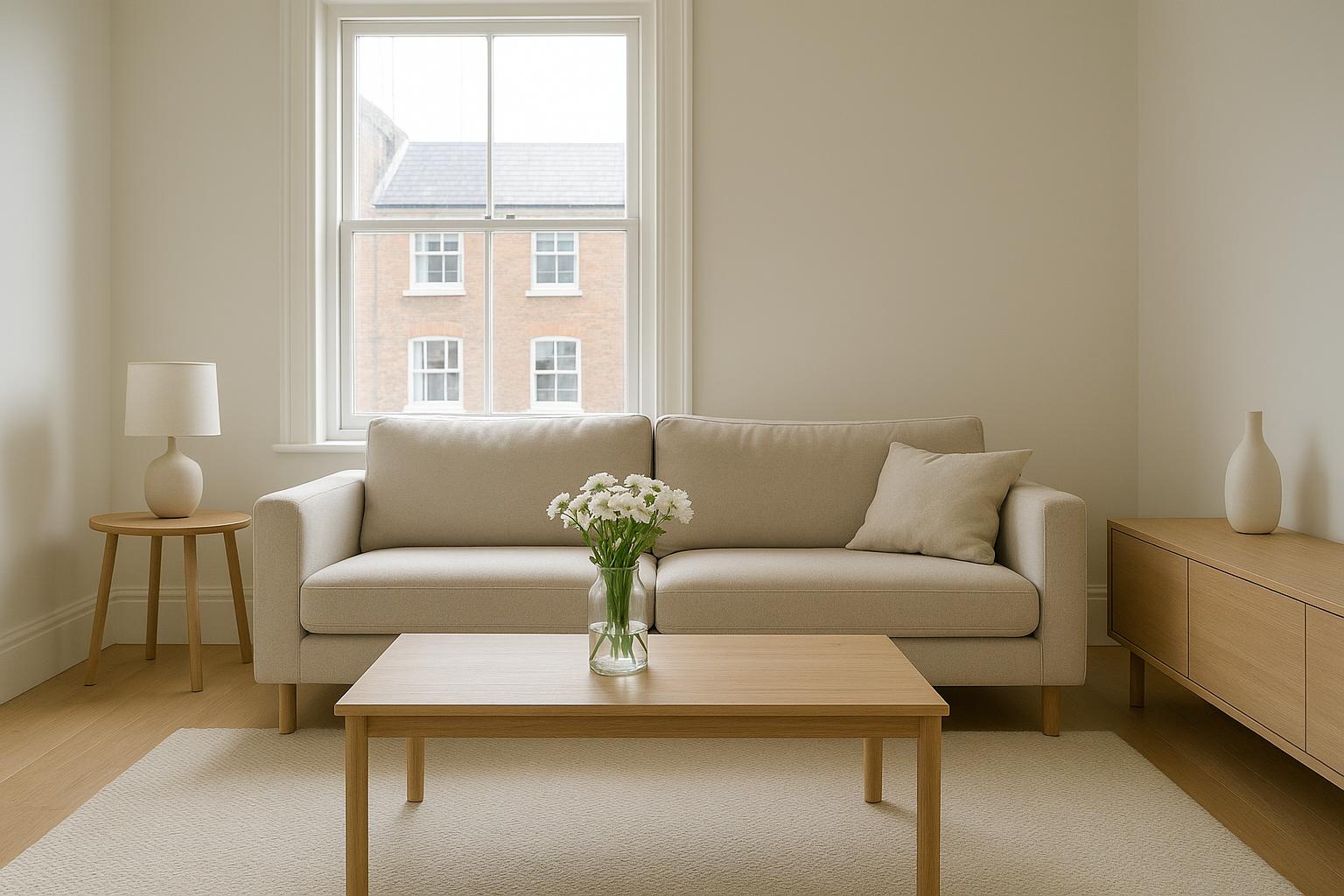
Viewers need to picture their own life in a home. Crowded surfaces, heavy furniture and personal collections draw attention to the current owner and make rooms feel smaller. Clear space helps people see the proportions, the light and the storage.
Clutter can also hint at hidden problems. A wardrobe stuffed to the doors suggests there is not enough storage, and stacks of boxes in a hallway can hide damp or damage. Buyers and surveyors may assume the worst.
A decluttered home also tends to look better online, where most buyers start. Listing photographs are the first viewing, and clean lines and open floors help each room stand out.
Photographs and online first impressions
Where most buyers begin.
Most buyers see photographs long before they see the property. Bright, tidy rooms with clear floors show space and light. Cluttered rooms look smaller and darker, even when they are not.
Take photographs in daylight with the curtains open and lights on. Avoid personal items in the frame, such as mirrors showing you or reflections of clutter.
If the agent uses a professional photographer, ask what they need you to do beforehand and when they will arrive.
Start with advice from local agents
Ask what works in your area.
Before you spend money, invite two or three local estate agents to value the property and ask what they would change. Agents see which homes sell quickly and which ones struggle, and they can tell you whether staging, a light refresh or simply a clean-up is worthwhile.
Be aware that agents have an interest in winning your instruction, so compare their advice and ask for evidence from similar properties they have sold. If the advice differs, ask why.
Ask about timing as well. Some areas have busy seasons, and the moment you list can matter as much as how the house looks.
Questions to ask an agent
Get useful answers.
- Which rooms would you change first, and why?
- Have you sold similar homes nearby, and what presentation did they have?
- Would you recommend staging, and what would it cost?
- How long are homes like mine taking to sell?
- What would you avoid spending money on?
Write down the answers and compare them across agents before you decide what to do.
Plan the declutter in stages
Do not leave it to the last week.
A thorough declutter takes longer than most people expect, so start several weeks before photographs and viewings. Work through the home in a set order, finishing one room before starting the next, and set a date for each stage.
A simple method is to sort every item into one of four groups: keep and display, keep and store, sell or donate, and dispose. Having four labelled boxes or zones keeps decisions moving. Our house clearance checklist gives a longer structure you can adapt.
If you are also moving, remember that anything you do not need before the sale can be packed now. It saves time later and makes the home look better right away.
A simple four-week plan
Adapt to your time.
- Week one: sort every room into keep, store, sell, donate and dispose.
- Week two: remove furniture, arrange storage and book any collections.
- Week three: deep clean, repair small faults and tidy the outside.
- Week four: final tidy, photographs and viewings.
If you have less time, concentrate on the entrance, living room, kitchen and main bedroom first.
Depersonalise without making it cold
A gentle balance.
Family photographs, children’s artwork, trophies and religious or political items are meaningful to you, but they can distract buyers. Take most of them down and store them, leaving a small number of neutral items such as a plant, a book or a lamp.
The aim is not to make the home look empty or sterile. Buyers still want to feel it is a warm place to live. A few well-chosen objects and a clean, simple colour scheme often work better than bare walls.
Remove or tidy items that signal how you live, such as piles of post, pet bowls and toiletries, for photographs and viewings.
What to keep on display
Small touches.
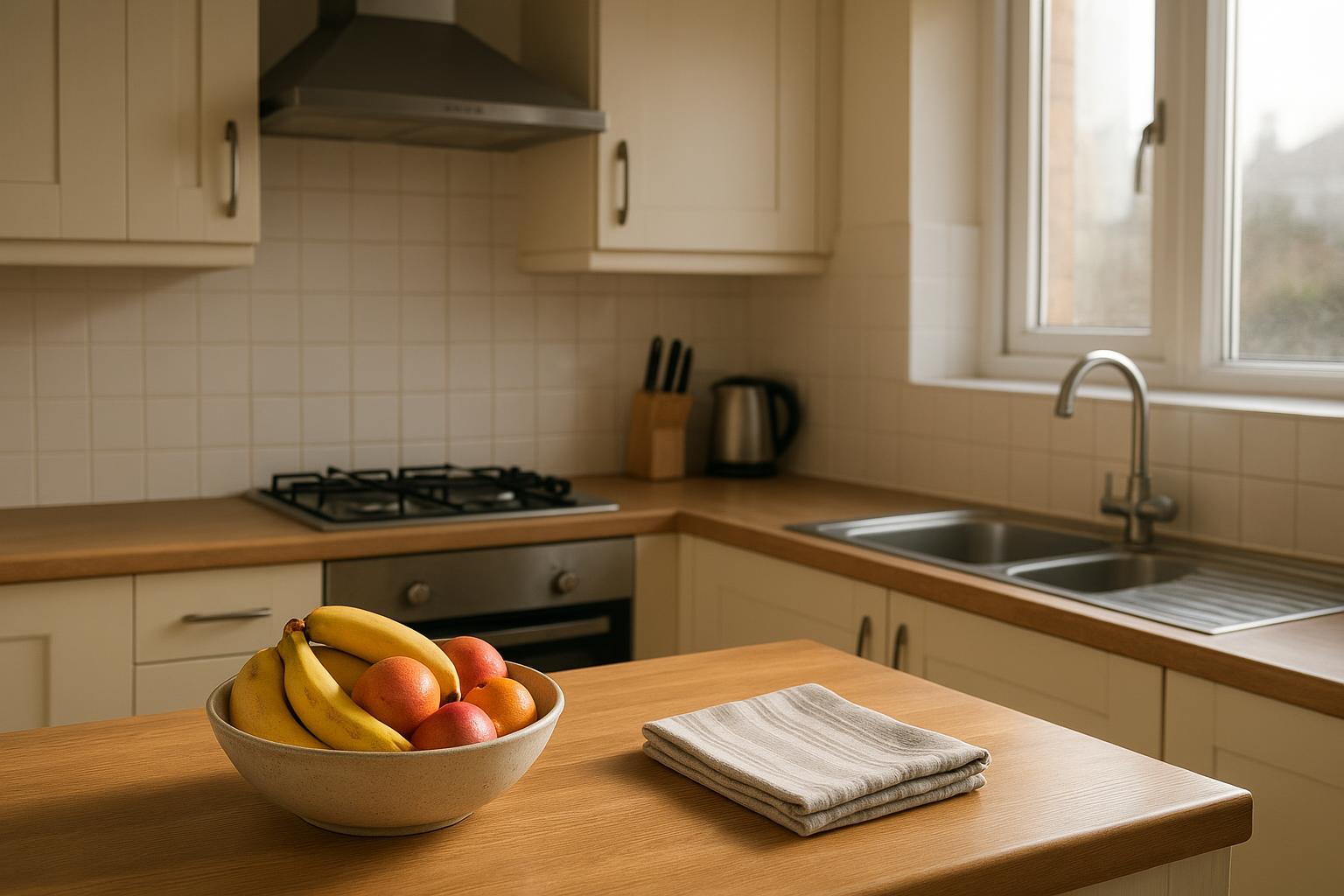
A bowl of fruit, a plant, a stack of books and fresh towels in the bathroom make a home feel lived in. Choose items in neutral colours that do not fight with the decor.
Avoid anything very personal or controversial. A simple vase on a table does more for viewers than a wall of family pictures.
If you have pets, remove litter trays and bowls for viewings, and consider asking someone to look after them during a visit.
Furniture: less is usually more
Edit what stays.
Look at each room and ask whether the furniture helps or hinders. A second armchair, an extra bookcase or a large dining table can make a room feel crowded, even if the pieces are good. Removing one or two items often opens up the layout.
Move large items into storage, to another room or out of the house. For furniture you will not need in your next home, consider selling, donating or arranging collection. Our guides to furniture donation in London and getting rid of a sofa for free explain the main routes.
Keep the main pieces that define the room’s purpose, such as a sofa, a bed or a dining table, and arrange them so that the route through the room is clear.
Layout tips
Show how the room works.
Pull furniture away from walls slightly and arrange it so that the room has a clear purpose. A sofa facing a focal point, such as a fireplace or window, usually looks better than furniture pushed all around the edge.
Leave a clear path from the door to the window so that viewers can walk in without turning sideways. Remove rugs that curl or bunch.
Take photographs of each room from the doorway and check whether the layout reads clearly.
Storage: where to put what you keep
Do not just move the mess.
Stuffing everything into a cupboard or garage is a short-term fix, but buyers open cupboards. Fully packed storage tells them the home lacks space. Aim to leave wardrobes, cupboards and the loft around two-thirds full, with items neatly arranged.
For things you want to keep but do not need until after the move, a self-storage unit or a friend’s spare room can work. Compare costs and keep the contract length in mind. Our guide to storage units in London explains how clearing them works, which is useful if you end up leaving things there longer than planned.
Label the boxes by room so that unpacking in the new home is easier.
Cupboards, wardrobes and the loft
Buyers will look.
Remove at least a third of the contents of wardrobes, cupboards and shelves, and arrange the rest neatly. Fold clothes, align shoes and stack boxes with labels facing out.
The loft is a common place to hide clutter. If it is boarded and accessible, buyers may ask to look, so sort it and remove anything dangerous or obviously unwanted.
Be careful with items you are not sure about, such as electrical equipment and chemicals. Our guide to WEEE regulations explains how to dispose of electrical items.
Kitchen and bathroom
The rooms buyers look at closely.
Clear worktops of everything except one or two attractive items. Put small appliances in cupboards, remove magnets and notes from the fridge and make sure the sink is empty and clean. Wipe the cooker, clean the extractor and check that the bins are emptied.
In bathrooms, clear the shower and bath of bottles, replace old towels and remove mould or limescale where possible. Re-seal where sealant has gone black, and fix dripping taps. These small fixes cost little and are very visible.
A fresh, neutral smell helps, but avoid strong air fresheners that suggest you are covering something up.
Cheap fixes that show
Value for effort.
- Replace worn sealant around sinks and baths.
- Clean or replace cooker hood filters.
- Fix dripping taps and loose cabinet doors.
- Replace blown bulbs and cracked socket covers.
- Deep-clean grout or replace the worst tiles.
Check that all appliances stay working until completion, because buyers often test taps, ovens and showers during viewings.
Bedrooms, hallways and the loft
Often neglected.
Keep bedrooms simple: a made bed, bare bedside tables and cleared floors. Tidy wardrobe interiors, because buyers often check the storage. If a bedroom is used as an office or store, consider setting it up as a bedroom for photographs so that people understand how many rooms there are.
Hallways create the first impression and often collect shoes, coats and bags. Reduce the number of items, and put the rest in a cupboard.
If the loft or under-stairs cupboard is full, sort it. Old paint, chemicals and electrical items need proper disposal, and our guides to household chemicals and loft clearance costs explain what to do.
Rooms with a different use
Show the intended purpose.
A box room used as a store may look like a wasted space. Clear it and set it up as a single bedroom or home office so buyers understand the potential. A bedroom filled with unused gym equipment can be hard to read.
Our guide to moving gym equipment explains how to take large equipment out safely.
If a room is used for a hobby, pack the materials away and leave the room with simple furniture.
Garden, garage and kerb appeal
The first and last thing buyers see.
Cut the grass, trim hedges, sweep the path and remove bins from view. A tidy front door and entrance suggest a cared-for home. In a London flat, a balcony with one chair and a plant looks better than a pile of boxes.
Garages and sheds are often full of bikes, tools and old paint. Buyers like to see how much space they have, so clear what you can. See our guides to garage clearance preparation and shed clearance preparation for a practical plan.
Check that bins, boxes and building materials are not blocking drives or pavements, as this can cause problems with neighbours and councils.
Kerb appeal basics
Quick wins.
Pressure-wash the path and front steps, repaint a tired front door if needed and make sure house numbers are visible. Tidy bins and recycling boxes, and remove cars from the drive for photographs where possible.
For gardens, keep to the basics. A mown lawn, tidy borders and clean furniture are enough. Avoid expensive planting that might not be in bloom when buyers visit.
If you have large garden waste, see our guide to garden clearance costs in London.
Deep cleaning and small repairs
Cheaper than discounting.
A deep clean after the declutter gives the best result. Pay attention to windows, skirting boards, grouting, oven and carpets. Some people hire a professional cleaner for this stage, and it can be worth it for the photographs.
Fix the small things that nag at buyers: loose handles, scuffed paint, blown bulbs, sticking doors and cracked tiles. Each is minor, but together they send a message about how the home has been looked after.
Be careful with large projects. A new kitchen or bathroom is a significant cost and may not return what you spend, so ask the agent before committing.
Professional cleaning and what to ask
Know what you are paying for.
Ask a cleaner for a written scope of work, including whether windows, carpets, oven and grout are included. Compare at least two quotes and check for references.
For after-clearance cleaning, see our guide to professional deep cleaning after clearance.
Book the clean for after the declutter and any minor work, and ideally just before the photographer arrives.
Getting rid of what you will not keep
Do it lawfully.
A thorough declutter generates a lot of waste. Use the household recycling centre, a council bulky waste collection or a registered waste carrier. Our guide to council bulky waste versus private clearance in London compares the options.
If you book a clearance, ask for a written quote, check the carrier’s waste carrier registration and keep the receipt. houseclearance.co is a marketplace that matches you with independent carriers, so what is included and the price are agreed directly with the carrier.
Under the householder’s duty of care, you remain responsible for making sure your waste goes to an authorised person, as explained in our waste duty of care guide.
Selling and donating what you clear
Recover some value.
Items in good condition can be sold online, through a garage or car boot sale or donated. Our guide to organising a garage or car boot sale explains the practical steps.
Charities set limits on what they can take, so check first. Upholstered furniture, in particular, often needs fire safety labels.
Keep a note of items you give away or sell, in case you need to show what you removed.
Common staging mistakes
What to avoid.
The usual errors are leaving the declutter too late, hiding clutter in cupboards, spending heavily on cosmetic work that buyers will change anyway, and over-styling so that the house looks like a show home rather than a place to live.
Another is overlooking smell, whether from pets, cooking or damp. Ask a friend who does not live there to walk through and tell you honestly what they notice.
Finally, do not forget legal paperwork. Staging is not a substitute for disclosing known problems, and sellers should answer property information questions honestly, taking advice from their solicitor or conveyancer.
A final walk-through
Before photographs and viewings.
Walk through the home as if you were a buyer. Start outside, enter through the front door and look at every room, cupboard and view. Note anything that catches your eye, then fix it.
Ask a friend to do the same and listen to their reaction. Fresh eyes spot things you have stopped noticing.
Repeat the check before each viewing, because living in the home means clutter can creep back.
Frequently asked questions
Common questions about decluttering and staging a home for sale.
Does decluttering really add value to a house?
It can help a home sell faster or at a better price, but there is no guaranteed percentage. The effect depends on the property, the area and the market, so treat headline figures with caution.
How early should I start decluttering?
Ideally several weeks before photographs and viewings. A thorough sort, clean and minor repairs take longer than most people expect.
Should I hire a professional stager?
It can help for empty or higher-value homes, but many sellers do well with a thorough declutter, deep clean and advice from a local agent. Compare costs and ask what difference it is likely to make.
What should I do with furniture I want to keep?
Store it in a self-storage unit, a spare room or with a friend, or sell or donate it if you will not need it. Do not just push it into the garage, because buyers look at storage.
How can I get rid of what I clear?
Use a household recycling centre, a council bulky waste collection or a registered waste carrier. Ask for a receipt and check the carrier’s registration.
Should I remove all family photos?
Remove most, leaving a few neutral items so the home still feels welcoming. The aim is to help buyers imagine their own life there.
Is it worth redecorating before selling?
Light touch-ups and neutral paint are often sensible. Large renovations are costly and may not pay back, so ask a local agent first.
Do I need to declare problems even if I have staged the house?
Yes. Staging does not replace honest answers on property information forms. Take advice from your solicitor or conveyancer.
