
Direct answer
To prevent clutter returning after a clearance, give every category of item a defined home, keep storage within easy reach of where things are used, control the entry points where clutter arrives (hallway, kitchen table, post, shopping), use a one-in-one-out rule, leave some empty space on purpose, and schedule short regular resets and a seasonal review. Keep surfaces clear by default, deal with paper straight away, and watch for early signs such as items without a home, piles on the floor or storage you cannot close. If clutter keeps returning despite your efforts, it may be linked to stress, bereavement or a condition such as hoarding disorder, and support from a GP is a sensible step.
Contents
- Why clutter comes back after a clearance
- Start with how you actually use each room
- Give every category of item a home
- Control the entry points
- Layout choices that make tidiness easier
- Simple rules that stop accumulation
- Short routines that keep the home reset
- Seasonal reviews and the donate-as-you-go box
- Garages, lofts, sheds and storage units
- Living with other people
- Early warning signs and when to get help
- A 30-day plan for keeping the space clear
- Frequently asked questions
Why clutter comes back after a clearance
A clearance removes the objects, not the habits or the layout that created the problem.
Many people feel a real sense of relief when a house clearance is finished. The rooms are open, the floors are visible and the home feels bigger. Then, over months, small piles appear, the cupboard under the stairs fills up again and the spare room starts to collect "just for now" items. This is common, and it is not a personal failure. Clutter usually returns because the causes are still in place: not enough sensible storage, no routine for dealing with incoming items, and decisions that have been postponed.
Homes are also dynamic. New purchases, gifts, children's belongings, paperwork, hobbies and online deliveries all add to what you own, and without a way of letting go of items at the same rate, the total only grows. A layout that makes it easy to put things away and hard to leave things out will do much of the work for you, but you also need a few simple habits.
This guide is about practical changes to layout and routine. It is not a substitute for support if clutter is connected to grief, depression, anxiety or a hoarding disorder, which are covered later. If you are reading this because you have just finished a clearance, the best time to act is now, while the space is clear and your motivation is high.
Start with how you actually use each room
Design for real life, not for a showroom.
Before buying anything, spend a week noticing what you do in each room. Where do shoes land when you come in? Where does the post go? Where do you drop your keys, bag and phone charger? Where do items sit waiting to be put away? These "landing spots" are where clutter forms, and they show you what the layout needs.
Note the activities in each room and the items they require. A kitchen needs cooking tools, crockery and food within arm's reach of the places they are used. A home office needs paper, stationery and cables near the desk. A hallway needs coats, shoes, keys and bags. If an item is stored far from where it is used, it will not be put back, because the effort is too high.
Take photographs of the cleared rooms now. They are your baseline, and they help you notice early when things begin to creep back. Make a short list of problem spots and keep it to three or four, so you do not feel overwhelmed. Fix those first, and then move on.
Give every category of item a home
If it has no home, it becomes clutter.
The basic idea is simple: everything you own should have a specific place where it lives. When you finish with an item, you know where it goes. When you cannot say where something lives, either find it a place or ask whether you need it at all.
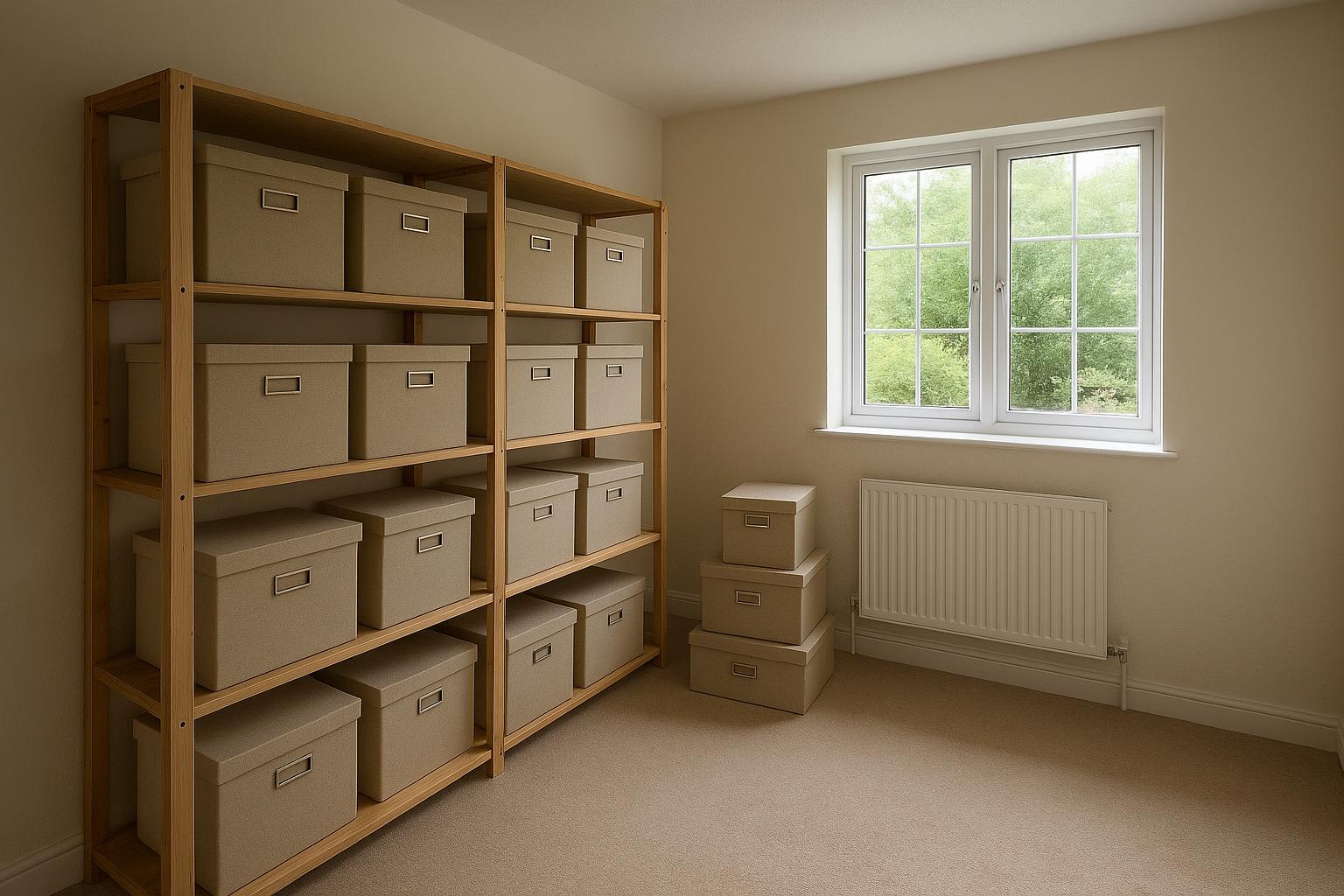
Group similar items together, so that you can see what you have. Keep all batteries, tapes and light bulbs in one box, all cleaning supplies in one place, all paperwork in one filing system. Items that are spread over several rooms are easy to duplicate and hard to find. Label shelves, drawers and boxes where it helps, particularly in shared homes, so other people can put things back.
Store the items you use daily at easy reach, between knee and shoulder height, and put things you use occasionally higher or lower. Keep seasonal items such as decorations, camping gear and winter clothes in sealed boxes in a loft, cupboard or under the bed. Do not fill every inch. Items that are packed tightly are hard to take out and put back, and tight storage is itself a warning sign. Leaving around a fifth of each storage space empty gives you room to breathe.
Control the entry points
Most clutter arrives through a few doors.
Think about how stuff enters your home: through the front door, the letterbox, the kitchen, the bags you bring back from shops and the packages that arrive online. If you control these entry points, you control a large share of the future clutter.
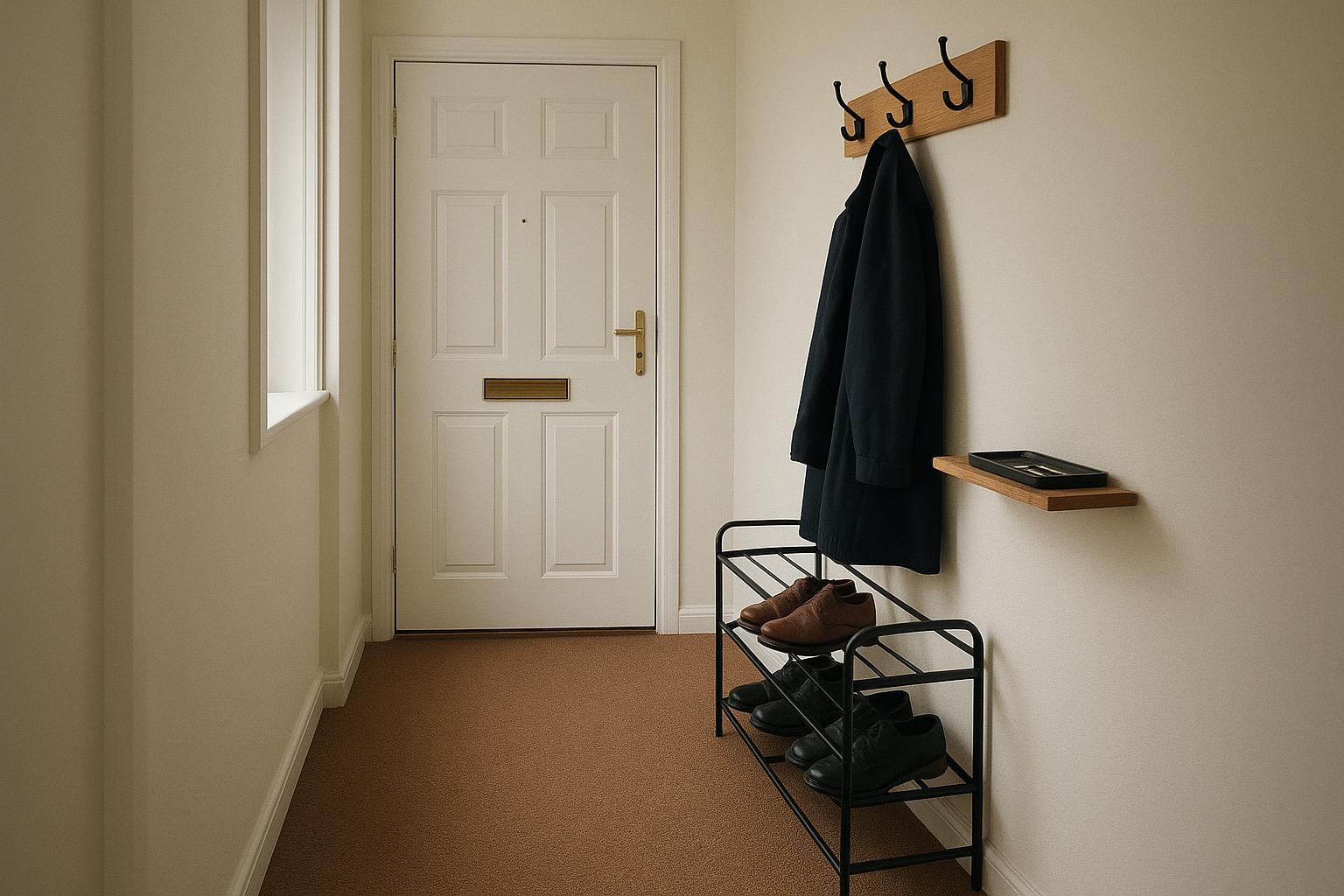
In the hallway, provide hooks for coats, a rack or a closed cupboard for shoes, a small shelf or tray for keys, and a spot for bags. Limit the number of shoes and coats by the door to what the household uses day to day, and store the rest elsewhere. A hallway that is easy to use stays tidy because it takes seconds to put things in their place.
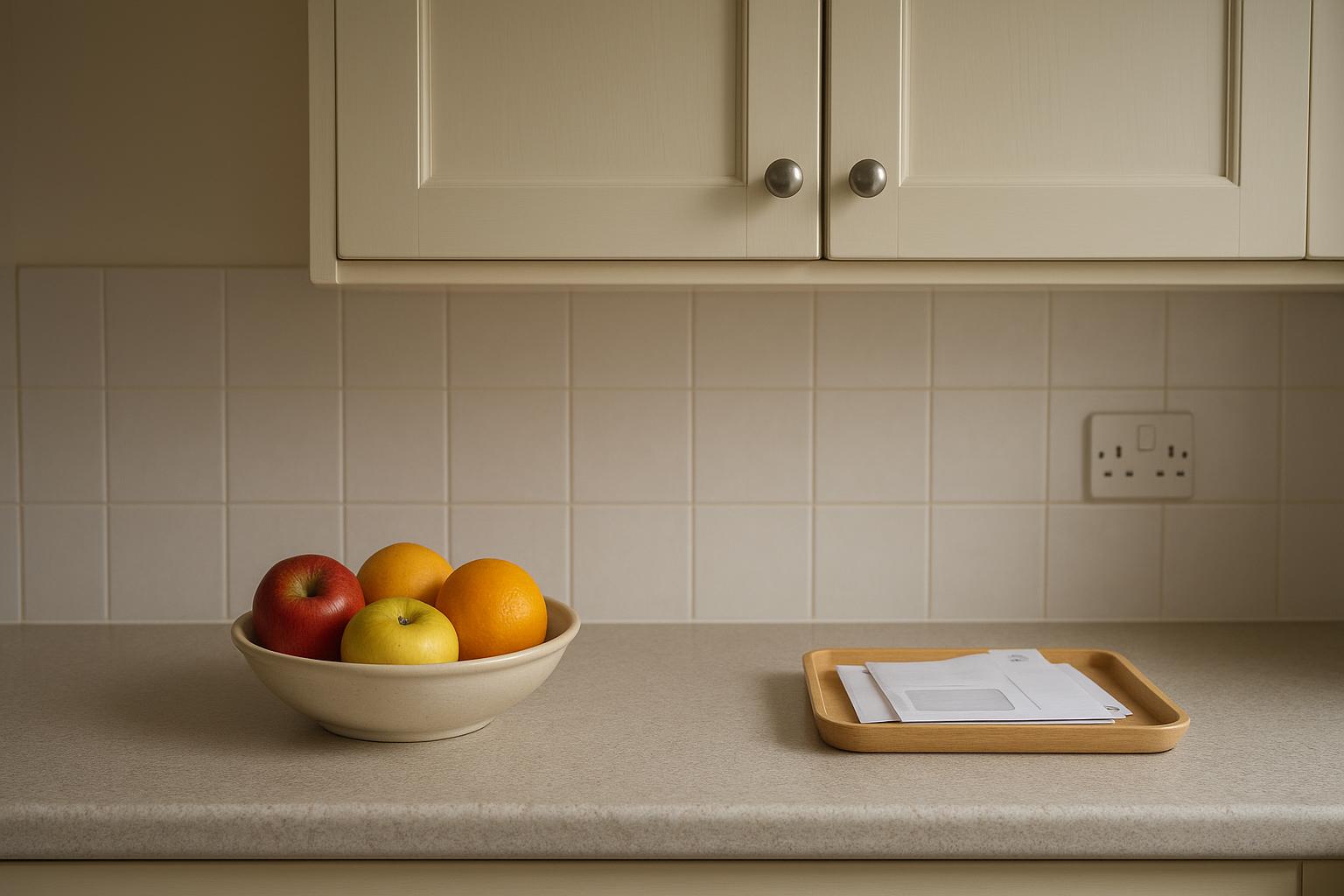
For post and paperwork, use a single tray or inbox and go through it on a set day each week. Open mail as it arrives, recycle junk straight away, and shred anything with personal details, rather than letting it pile up. Switch to paperless statements where you are comfortable doing so. For deliveries, break down boxes and put packaging in recycling immediately, and decide at once where the new item will live.
In the kitchen, keep worktops for what you use daily, and put the rest away. A fruit bowl and a kettle are fine. A permanent pile of paperwork, appliances you never use and bags of things for other rooms are not. A house clearance checklist can help you decide which items were worth keeping in the first place.
Layout choices that make tidiness easier
The way furniture is arranged affects how easily things pile up.
Furniture and layout can either help or hinder good habits. Open, clear floors make it easy to see mess and clean it. Too much furniture, or furniture that does not match what you need to store, encourages overflow. Where possible, choose pieces that do double duty, such as beds with drawers, ottomans that store blankets, or benches in the hallway with space for shoes.
Make sure every surface has a purpose. A flat surface with no job tends to attract piles. A sideboard might hold a lamp and a small tray, but not a stack of unsorted paper. Consider wall shelves, hooks and rails, which use vertical space and keep floors clear. Keep walkways wide enough to move around without squeezing past stacks, because blocked routes are a safety risk and a sign of building clutter.
Be careful with storage furniture. Buying more boxes, shelves and cupboards before deciding what to keep simply gives clutter more places to hide. Measure and plan first, and buy storage to fit what you have decided to keep, not the other way around. Also avoid leaving floor space entirely empty for long periods in a spare room, since it quickly becomes a dumping area. Give it a clear purpose, such as a desk, a guest bed or a hobby corner.
Simple rules that stop accumulation
Few rules, applied consistently, beat a big annual purge.
Rules reduce the number of decisions you have to make. These are the ones that work for many households:
- One in, one out. When something new comes in, something of the same type goes out. It works well for clothes, books, mugs, toys and gadgets.
- Fixed limits. Decide how many of an item you need, such as four towels per person or one shelf of books, and treat the limit as a boundary.
- The two-minute rule. If a task takes less than two minutes, such as hanging a coat or putting a cup in the dishwasher, do it straight away.
- No floor storage. Items should not live on the floor. If they are there, they either need a home or need to go.
- Wait before buying. For non-essential purchases, wait a day or two before buying, and ask where it will be stored.
- Decide at the door. Make decisions about post, packaging and gifts as they arrive, not later.
Pick two or three rules that fit your life and start with those. Adding too many at once makes them hard to keep. If you have family or housemates, discuss the rules together, so everyone understands and agrees.
Short routines that keep the home reset
Ten minutes a day is more effective than a day a year.
A daily reset takes ten to fifteen minutes in the evening. Put things back in their places, clear the kitchen worktop, check the hallway and take rubbish and recycling out. This stops small amounts of mess from building into a large one. A weekly routine can cover paperwork, laundry baskets and a quick look into the fridge, and a monthly one can cover a single drawer or shelf.
Link tasks to events you already do. Sort post as you make a cup of tea, tidy the hallway as you lock up, and put away laundry when it comes out of the dryer. Make it easy for others to join in, with clear homes for things and a sense of shared responsibility. For children, simple, visible systems such as one toy box per room work better than lengthy instructions.
If you slip, do not worry. Restart the next day. Habits take time to form, and the aim is a home that can be tidied quickly, not a perfect one. Treat the routine as an easy habit and not as a penalty.
Seasonal reviews and the donate-as-you-go box
Regular checkpoints stop buildup before it gets serious.
Set a date every three or six months to review the main storage areas, such as wardrobes, kitchen cupboards, the garage and the loft. Take out anything that has not been used, no longer fits or is damaged. Clothes tend to need the most frequent attention, and many people use a change of season as the trigger.
Keep a "donate" box or bag in a cupboard, and add to it whenever you come across something you no longer need. When it is full, take it to a charity shop or recycling point. This avoids the build-up of items waiting for a big sort, and helps items be reused while still in good condition. Check what charities will accept first, and see London charities that collect large furniture for bulkier items.
The three-box approach in the three-box method guide works well for these reviews, and an occasional garage or car boot sale can turn surplus into cash. Sorting stored items often brings back bigger decisions, so keep notes on what you decided and why, which makes later reviews faster.
Garages, lofts, sheds and storage units
Hidden spaces are where clutter hides longest.
Out-of-sight spaces fill up quietly. A garage becomes a store for items nobody decides on, a loft collects boxes that are never opened, and a rented storage unit costs money every month for belongings that may never be used again. Set a purpose for each space, and a limit on what it can hold.
Use shelving, clear lidded boxes and labels so you can see what is stored. Keep an inventory list, even a short one on your phone, and add a review date to it. If you have a storage unit, ask yourself regularly whether you would pay to store each item if you had to buy it again. The guide on storage unit clearances explains how forgotten units become expensive.
Be careful with items that deteriorate in damp or cold places, such as paper, fabrics and electronics, and keep hazardous materials such as paint, chemicals and gas bottles stored safely and legally, or take them to a household waste and recycling centre. It is easier to stay on top of a small number of items than to clear a packed space again in a few years.
Living with other people
Clutter is often a shared problem.
In a household, one person's system will not work unless everyone agrees on it. Hold a short conversation about what matters to each person and what is shared. Give each person a defined space, such as a shelf, a drawer or a hook, for their own belongings, and agree on shared spaces and how they are used.
Children and teenagers will have items that cannot be thrown away without discussion. Give them a defined amount of space, and help them go through it at set times, such as before birthdays or the start of a school year. For older relatives, be sensitive. If you are helping a parent after a clearance, focus on making their daily life safer and easier, such as clear walkways, good lighting and easy access to what they use, and avoid imposing your own idea of tidiness.
Gifts are a common source of clutter. It is fine to tell friends and family that you prefer experiences, consumables or nothing at all, and to pass on items that you do not want without guilt. Treat the gift as the kind gesture it was, not as an obligation to keep the object.
Early warning signs and when to get help
Know the difference between untidy and unmanageable.
Look out for early signs that clutter is taking hold again: items without a home, surfaces that are covered, paths that are narrowing, boxes that stay unopened, duplicates being bought because you cannot find the original, and storage that cannot close. If you notice two or three of these, return to your routines, and take a weekend to reset the problem area.
For some people, clutter is more than a habit. If acquiring or keeping items causes distress, if it prevents you from using rooms in your home, or if you cannot discard things even when you want to, it may be linked to hoarding disorder, anxiety, depression, or the effects of bereavement. These are health matters and not signs of laziness. A GP is a good first step, and there are specialist charities and services. The guides on collecting versus compulsive hoarding, anxiety over discarding items and hoarding and house clearance give more information.
If you are worried about someone else, approach them with kindness, avoid criticism and offer practical help rather than a lecture. If there is a risk to safety, such as blocked exits, fire hazards or sanitary problems, contact the appropriate local services. This guide offers general information and is not medical or legal advice.
A 30-day plan for keeping the space clear
Start small and build the habit.
Here is a simple outline you can adapt:
- Days 1 to 3: Photograph each room, note three problem spots and give every category of item a home.
- Days 4 to 7: Set up the hallway, post tray and a donate box. Pick two simple rules, such as one in one out, and no floor storage.
- Week 2: Start the ten-minute daily reset. Deal with post and packaging on the day it arrives.
- Week 3: Review one storage area, such as a wardrobe or kitchen cupboard, and adjust storage so that it fits what you keep.
- Week 4: Review how the routines are working, adjust them if needed and put a seasonal review date in your calendar.
After the first month, the routines should be easier, and you will have a clearer sense of what your home needs. If you need help with a larger backlog of items that is beyond a routine reset, you can request quotes through houseclearance.co, which connects you with independent carriers, and then use the habits above to keep the space as you want it.
Frequently asked questions
Common questions about keeping a home clutter-free after a clearance.
Why does clutter come back after a house clearance?
Because the causes usually remain: not enough practical storage, no routine for dealing with incoming items and postponed decisions. Setting up homes for items, controlling entry points and using short routines tackles those causes.
How do I decide where things should live?
Store items near where they are used, group similar items together, and keep daily items between knee and shoulder height. If you cannot find a sensible place for something, ask whether you need it.
What is the one-in-one-out rule?
When you bring something new into the home, you remove a similar item. It keeps the total number of belongings stable and works well for clothes, books, mugs and toys.
How often should I review my belongings?
A short daily reset, a weekly check of paperwork and a seasonal review every three to six months suit most households. Adjust the frequency to your situation.
Should I buy more storage after a clearance?
Wait until you have decided what to keep. Buying storage first often gives clutter more places to hide. Measure, plan and buy only what fits the items you have chosen to keep.
How can I stop paperwork building up?
Use a single post tray, sort post on the day it arrives, recycle junk straight away, shred documents with personal details and consider paperless statements where appropriate. Keep important documents in one filing place.
What if I live with someone who keeps accumulating things?
Talk about shared spaces and give each person a defined area of their own. Be patient and avoid criticism. If the accumulation causes distress or safety problems, a GP or specialist support service is a sensible next step.
When could clutter be a sign of something more serious?
If you or someone else is distressed by discarding items, cannot use rooms for their normal purpose, or has blocked exits or safety hazards, it may be linked to hoarding disorder or another health issue. Speak to a GP. This is general information, not medical advice.
Can houseclearance.co help me maintain a clear home?
houseclearance.co is a quote-matching service that connects you with independent carriers for clearances and removals. It does not provide organising or ongoing maintenance services, so the routines in this guide are down to you or your household.
