
Direct answer
Same-day and next-day house clearances often cost more than planned bookings because the carrier has to fit your job into a schedule that is already built, which can mean reshuffling crews, extra travel, overtime and less time to assess the property. Constraints such as parking, access, tip opening hours and the volume of the job still apply, and a rushed booking leaves little room to compare quotes. Prices vary between independent carriers, so there is no standard premium. You can reduce the cost by sending clear photos, being flexible on the time of day, preparing access and asking each carrier exactly what the urgency adds.
Contents
- Why urgent bookings cost more
- Supply and demand in plain terms
- What same-day and next-day really mean
- Time windows rather than exact times
- Crew and vehicle availability
- Job size and crew size
- Routing, travel and the London factor
- Time of day and traffic
- Parking and access at short notice
- Practical parking alternatives
- Tip hours and disposal constraints
- Weekends and bank holidays
- Less time to assess the job
- Taking photos that help
- Fees and conditions to watch for
- Getting it in writing
- The risk of rushing the decision
- Staying safe when letting people in
- How to reduce the urgency premium
- A partial clearance as a compromise
- Comparing urgent quotes fairly
- Asking carriers to explain the difference
- When it is better to wait
- Planning to avoid the problem next time
- A quick urgent-booking checklist
- Frequently asked questions
Why urgent bookings cost more
Capacity, not just convenience.
Clearance crews work to schedules. A planned job slots into a day with an estimated duration, a known route and a disposal stop. An urgent job has to squeeze into that structure or replace something already booked. The carrier has to decide whether it can do that without letting someone else down, and the price tends to reflect the disruption.
The extra cost is not always a single charge. It can show up as a higher hourly or per-load rate, a minimum job size, an evening or weekend uplift, or simply a higher quote because the carrier has less room to be efficient. Different independent carriers handle this differently, so two quotes for the same job can differ in how much of the price is urgency.
Understanding this helps you make sensible choices. If you can allow even a little extra time, you widen the number of carriers who can help, and you give them room to price more competitively. Our guide to same-day urgent house clearance cost in London looks at the pricing side in more detail.

Supply and demand in plain terms
Why the same job varies.
Clearance is a local service with limited capacity each day. When demand for a date is high, carriers can choose which jobs to take, and the price tends to rise. When demand is low, carriers may be happy to fill a gap at a lower price. You rarely know which situation you are in, which is why several quotes are valuable.
This is also why the same job can attract very different quotes on the same day. One carrier may have a crew finishing nearby, while another would have to cancel something or travel across London. Neither is necessarily wrong, they are responding to different circumstances.
What same-day and next-day really mean
Definitions vary.
Same-day usually means a booking made in the morning for a clearance that afternoon or evening, or a request made overnight for early the next day. Next-day means the job takes place the following day, often with a window rather than an exact time. Neither term has a fixed legal meaning, so the carrier’s interpretation matters.
Some carriers treat anything inside 24 hours as urgent. Others only apply the label when the request cuts into their normal working hours or when there is little capacity left. It is worth asking directly what counts as urgent and what, if anything, is added to the price.
Be realistic about what can be done. A single room, a few bulky items or a small flat is easier to clear at short notice than a full house, a hoarded property or a clearance needing specialist handling. The size and complexity of the job affect whether urgent service is possible at all.
Time windows rather than exact times
Expect a range.
Most carriers give a window, such as between nine and twelve, rather than an exact arrival time. Urgent jobs often have wider windows because the crew is fitting you around other work. If you must be present or have to hand over keys at a certain time, say so when you ask for quotes.
Make sure someone can be at the property for the whole window, or arrange access in advance. A missed window can mean a rebooking fee or a lost slot, which is hard to recover at short notice.
Crew and vehicle availability
The main constraint.
A carrier has a limited number of crews and vehicles. If they are all booked, an urgent job may require moving another booking, calling in extra staff or hiring a vehicle. Those steps cost money and can affect other customers, which is why some carriers decline urgent work and others add a premium.
Time of year matters too. End of tenancy periods, school holidays, the weeks around the end of the month and busy seasons for moving house tend to be tighter. In those periods, even next-day slots may be scarce.
Our guide on the best time to move house explains how demand rises and falls across the year, which helps if your dates have any flexibility.
Job size and crew size
Bigger jobs need more.
A small job might be handled by one or two people in a van. A full house may need a larger crew, several vehicles or more than one day. Urgent requests for bigger jobs are harder to meet because they require more resources at once.
If your job is large, ask whether it could be split, with the essential rooms cleared first and the rest later. It can be easier for a carrier to take a smaller urgent job and schedule the remainder at a normal rate, which may suit your budget better too. Our guide on van sizes helps you understand what different vehicles can carry.
Routing, travel and the London factor
Distance and time on the road.
A planned route groups jobs by area so the crew spends less time driving. An urgent job might be on the other side of the city from where the crew already is, which adds travel time, fuel and, in some areas, charges. London traffic and parking restrictions make this more pronounced.
Carriers may also have to consider the Congestion Charge, ULEZ and other schemes that apply to certain vehicles and zones. Rules and charges change, and whether they apply depends on the vehicle and the address, so check Transport for London’s current guidance. Our guide on London congestion zone moving tips covers the basics.
If your property is in a hard-to-reach location or near the edge of a carrier’s normal area, expect the carrier to take that into account when pricing a short-notice job.
Time of day and traffic
Timing changes the journey.
Rush hour in London can double a journey time, and a crew caught in traffic loses productive hours. Carriers may avoid peak times or price them higher, particularly for short-notice jobs where they cannot plan the route.
If you can accept an early start or a mid-morning slot, you may find carriers are more flexible. Ask which times they prefer and whether choosing one changes the price.
Parking and access at short notice
Often the real bottleneck.
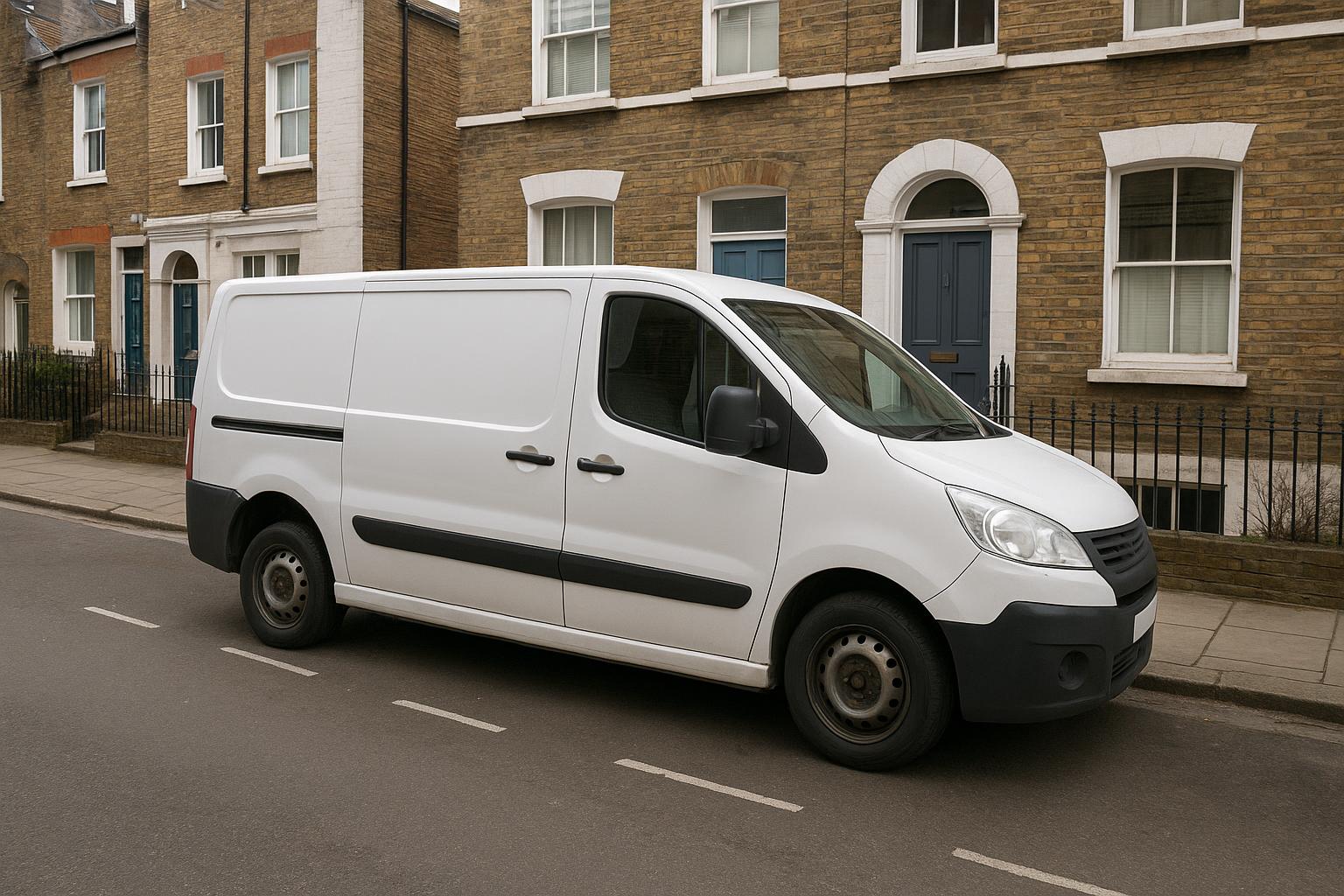
On many London streets, a clearance van needs somewhere legal to stop for a period of time. With a planned job, you can arrange a parking suspension, a permit or a bay. At short notice, that may not be possible, because councils usually require notice for suspensions and have their own processes.
Without a suspension, the crew may have to park further away, carry items a longer distance or move the van repeatedly. All of that adds time, and time is what the price is built on. It can also mean a parking charge or penalty risk, which carriers will want to avoid.
Our guides on council parking suspensions for house clearances and parking a clearance truck in controlled parking zones explain the options and the lead times involved.
Practical parking alternatives
Think through the options.
If you cannot arrange a suspension in time, look at what is available. Some streets have pay and display bays or loading bays where stopping for a short period is permitted, and some properties have a private drive or shared car park. Rules vary by street, so check the signs carefully.
Tell the carrier what you know about parking before the job. A realistic plan, such as a short carry from a nearby bay, is better than an assumption that the van can stop outside. It can prevent delays, penalties and arguments about extra time.
Tip hours and disposal constraints
The load has to go somewhere.
The crew must take the waste to a licensed site, and those sites have opening hours. A job finishing late on a Saturday or after the site closes may mean the load has to wait until the next day, which affects the crew’s schedule and the cost.
Some sites have restrictions on commercial vehicles, loads and materials, and may require paperwork. In London, the nearest suitable site may not be the closest by distance if it cannot accept certain waste. Urgent jobs offer little room to plan around these issues.
For items that are not ordinary waste, such as electricals, mattresses, paint or chemicals, extra handling may be needed. Our guide on hazardous waste classification explains why a crew may refuse certain items.
Weekends and bank holidays
Fewer options.
Some disposal sites and transfer stations have shorter hours at weekends and may be closed on bank holidays. If a job is urgent over a weekend, the carrier may have to hold the load overnight or travel to a different site. Both can add to the price.
If your timing is flexible, a weekday booking often has more disposal options and may be cheaper. If you have to use a weekend, ask the carrier how it handles the load afterwards. Our guide on tip runs in London explains how local sites work.
Less time to assess the job
Uncertainty has a price.
With a planned clearance, a carrier may ask for photos, a video call or a visit to judge the volume and difficulty. With an urgent booking, there is less time for that. When uncertainty is higher, carriers often allow a margin in the quote or reserve the right to adjust it on arrival.
This is why a clear description matters. The more accurate your information, the less margin the carrier needs, and the lower the chance of a price change on the day. Photos of each room, the stairs, the parking position and any large or awkward items are the most useful things you can send.
Be honest about anything unusual, such as heavy items, a loft, a basement, a hoarded room, a lift that is out of order or items that may be hazardous. Surprises on the day are the most common cause of disputes.
Taking photos that help
Show scale and access.
Good photos make a real difference. Take wide shots of each room from the doorway, close-ups of large or heavy items and photos of stairs, narrow doors and the route to the street. Include the front of the property and where a van could stop.
If something is likely to need special handling, such as a piano, a safe, a fridge freezer or a built-in unit, photograph it separately and mention it in your message. The aim is to remove guesswork. Our guide to house clearance pricing by volume shows how carriers think about what is on the photos.
Getting it in writing
Short, clear and dated.
Even for an urgent job, ask the carrier to confirm the price, date, time window and what is included by text, email or message. Keep it. If a dispute arises on the day, a written confirmation is the best evidence of what was agreed.
If the carrier changes the price on arrival, ask them to explain the change and put it in writing before you agree. You are entitled to decline and to ask them to leave. Do not feel pressured into accepting a different price on the doorstep.
The risk of rushing the decision
Speed can cost more than money.
When a deadline is tight, it is tempting to accept the first person who says yes. That is exactly when people are most likely to hire an operator who is not registered, does not have insurance or dumps the waste illegally. Under the duty of care, you are still responsible for checking that your waste is taken by someone authorised.
It takes only a few minutes to ask for a registration number, look it up on the GOV.UK register and request a written quote. Doing so is far cheaper than dealing with the consequences of fly-tipping traced to your address.
Read our guide on the householder waste duty of care and use the waste carrier licence check page before you agree to anything, even under time pressure.
Staying safe when letting people in
Basic precautions.
If you are letting a crew into a property, whether your own or a relative’s, take simple precautions. Remove or lock away valuables, documents, keys and medication, and keep personal papers separate. If you cannot be present, ask someone you trust to attend.
Take photos of the property before and after, and check that nothing you are keeping has been loaded. If the home is empty, make sure it is secured afterwards.
How to reduce the urgency premium
Make the job easy to say yes to.
You cannot always avoid paying more for speed, but you can influence how much. Several practical steps help carriers price confidently and efficiently.
- Send clear photos of every room, the access route and the parking spot.
- Offer a window rather than an exact time, such as morning or afternoon.
- Be flexible on the day if you can; a day or two often changes the price.
- Prepare in advance: clear pathways, group items and remove anything you are keeping.
- Remove small items yourself and take easy loads to a recycling centre.
- Request several quotes so you can see how each carrier treats urgency.
Small changes like these also reduce the risk of misunderstandings, which keeps the job on schedule.

A partial clearance as a compromise
Do the essentials first.
If your deadline is close but the job is large, consider clearing only what is essential first. For example, empty the rooms needed for a handover, an inspection or a sale, and arrange the rest later.
This can reduce the urgent premium because the job is smaller, and it gives you time to compare quotes for the remainder. Make sure each carrier knows exactly which rooms and items are included so there are no surprises.
Comparing urgent quotes fairly
Same information, same questions.
When you request quotes through houseclearance.co, you are asking independent carriers to price the job, and each decides whether it can fit it in and what to charge. Give each one the same details so the quotes can be compared. Note the date and time window, the scope and any conditions.
Ask each carrier what the urgency adds, whether the price is fixed or an estimate and what could change it. Lower is not always better if the quote leaves out items you need. A slightly higher quote that is clear and complete may cost less in the end than a cheap one that adds charges on the day.
Our guide on what affects house clearance cost helps you see which parts of a price are due to the job itself and which to timing.
Asking carriers to explain the difference
Be curious, not combative.
If two quotes differ a lot, ask each carrier what is included and why. It may be that one assumes a larger crew, includes items the other excludes or allows more time. Understanding the difference helps you choose the right one rather than just the cheapest.
Keep the conversation friendly. Carriers appreciate customers who ask sensible questions, and good ones will answer clearly. Any who refuse to explain their price are giving you useful information too.
When it is better to wait
Not every deadline is real.
Some deadlines are firm, such as a handover date or a tenancy end. Others feel firm but have flexibility. If a few days’ delay would save a significant amount, or allow you to do more preparation, it may be worth asking whether the deadline can move.
For example, a landlord, estate agent or solicitor may allow a short extension if you explain the position. In other cases, you can arrange a partial clearance quickly for the essential rooms and complete the rest at a calmer pace.
If your reason is end of tenancy, our guide on end of tenancy clearance cost in London explains how timing and condition affect the final bill.
Planning to avoid the problem next time
Learn from the rush.
If you are clearing a property in stages or expecting to need clearance in future, plan early. Request quotes several weeks ahead, agree a date and keep a short list of what is needed. A planned job is usually easier to price and arrange than an urgent one.
For anyone facing a probate, sale or tenancy end, build a rough timeline backwards from the deadline and book clearance with some spare time. Our guide to probate house clearance timing shows how to do that for an estate.
A quick urgent-booking checklist
Do these in order.
When time is short, a checklist keeps you from missing the basics. Work through it before you confirm any booking.
- Photograph every room, the access route and the parking position.
- List anything unusual, large, heavy or potentially hazardous.
- Decide what you are keeping and set it aside or remove it.
- Request several quotes and give each the same information.
- Ask each carrier about registration, insurance and what the price includes.
- Check the registration on the GOV.UK register and keep a record.
- Get the price, time window and conditions in writing.
- Clear access and arrange parking as best you can.
Our house clearance checklist provides a fuller list for planned clearances.
Frequently asked questions
Common questions about urgent house clearance pricing.
Does same-day house clearance always cost more?
Often, but not always. Carriers price urgency differently. Some add an uplift, others simply have less flexibility, and some may have spare capacity. Compare several quotes.
Why is next-day clearance more expensive than a planned one?
The carrier has to fit the job into an existing schedule, which can mean reshuffling crews, extra travel or overtime, and there is less time to assess the property.
Can I get a parking suspension at short notice?
Councils generally need notice for suspensions and processes vary, so it is often not possible at short notice. Check your council’s website for lead times and alternatives.
How can I reduce the cost of an urgent clearance?
Send clear photos, offer a time window, prepare access, remove small items yourself, be flexible on the day and compare several written quotes.
Should I accept the first carrier who says yes?
Not without checking. Ask for the waste carrier registration number, look it up on GOV.UK and get a written quote. Under the duty of care you are responsible for your waste.
Are there extra charges I should watch for?
Possible extras include minimum charges, evening or weekend uplifts, time limits, stairs or parking charges and items such as mattresses or fridges. Ask each carrier to list them.
Can every property be cleared at short notice?
No. Large, hoarded or complex jobs and ones with hazardous items are harder to arrange quickly, and carriers may need more time or decline.
Is it worth delaying to save money?
Sometimes. If a short delay lowers the price or lets you prepare better, ask whether the deadline can move. Only you can judge whether the deadline is firm.
